


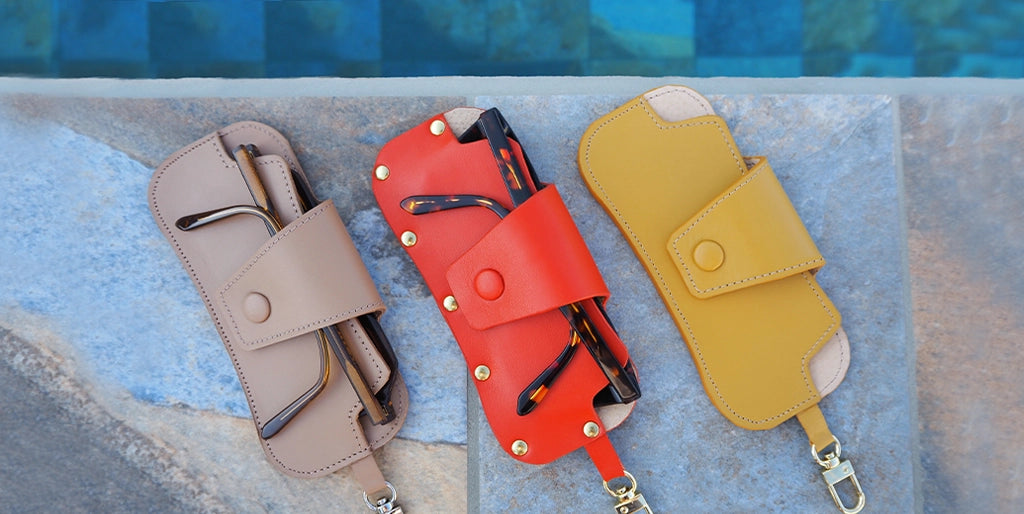

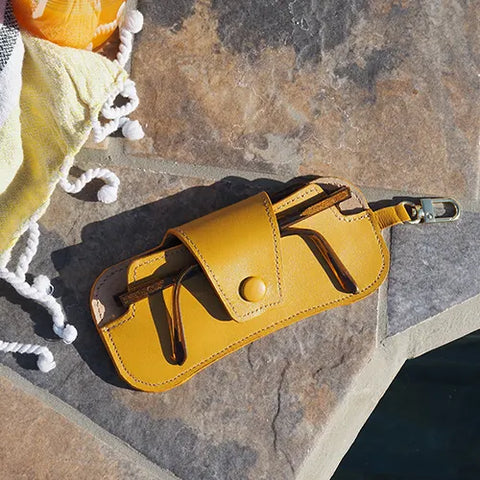












NEW VERSION
THE NECESSARY MATERIALS
- 1 piece of leather 20 x 30 cm - Thickness 1.2 mm - Leather that is somewhat semi-soft/semi-firm (Satinlys range or nappa calfskin).
- 1 piece of leather 20 x 30 cm - Thickness approx. 0.5 mm (to cover the snap button, line the case, and make the tab).
- OPTIONAL: 1 piece of VELVET suede pigskin - NATURAL (if you want a lining "softer" than the 0.5 mm thick lining).
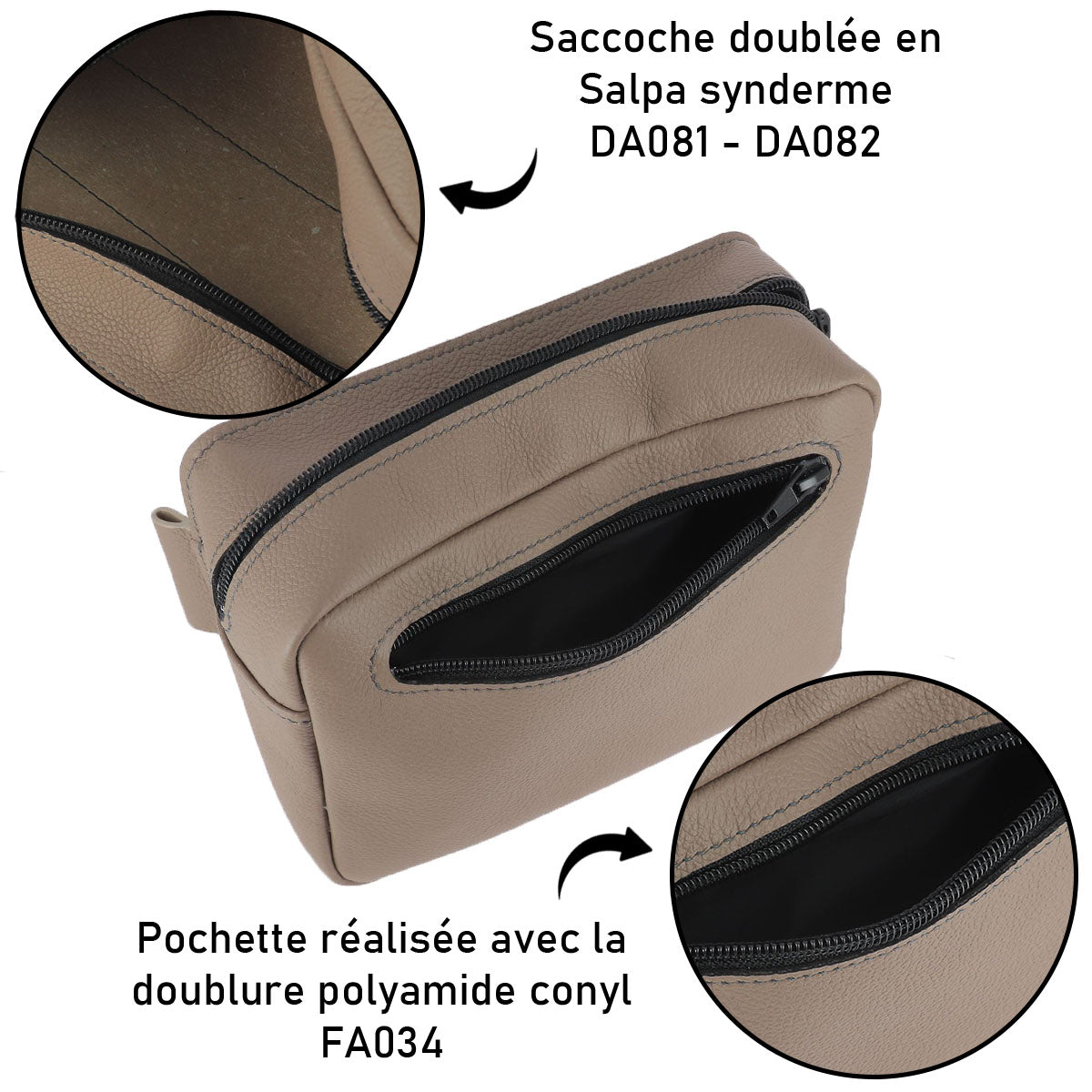
- 1 piece of Salpa bonded leather reinforcement - 30 x 40cm - thickness 0.4 mm (if lined with pigskin) or 0.6 mm (if lined with 0.5 mm thick leather).
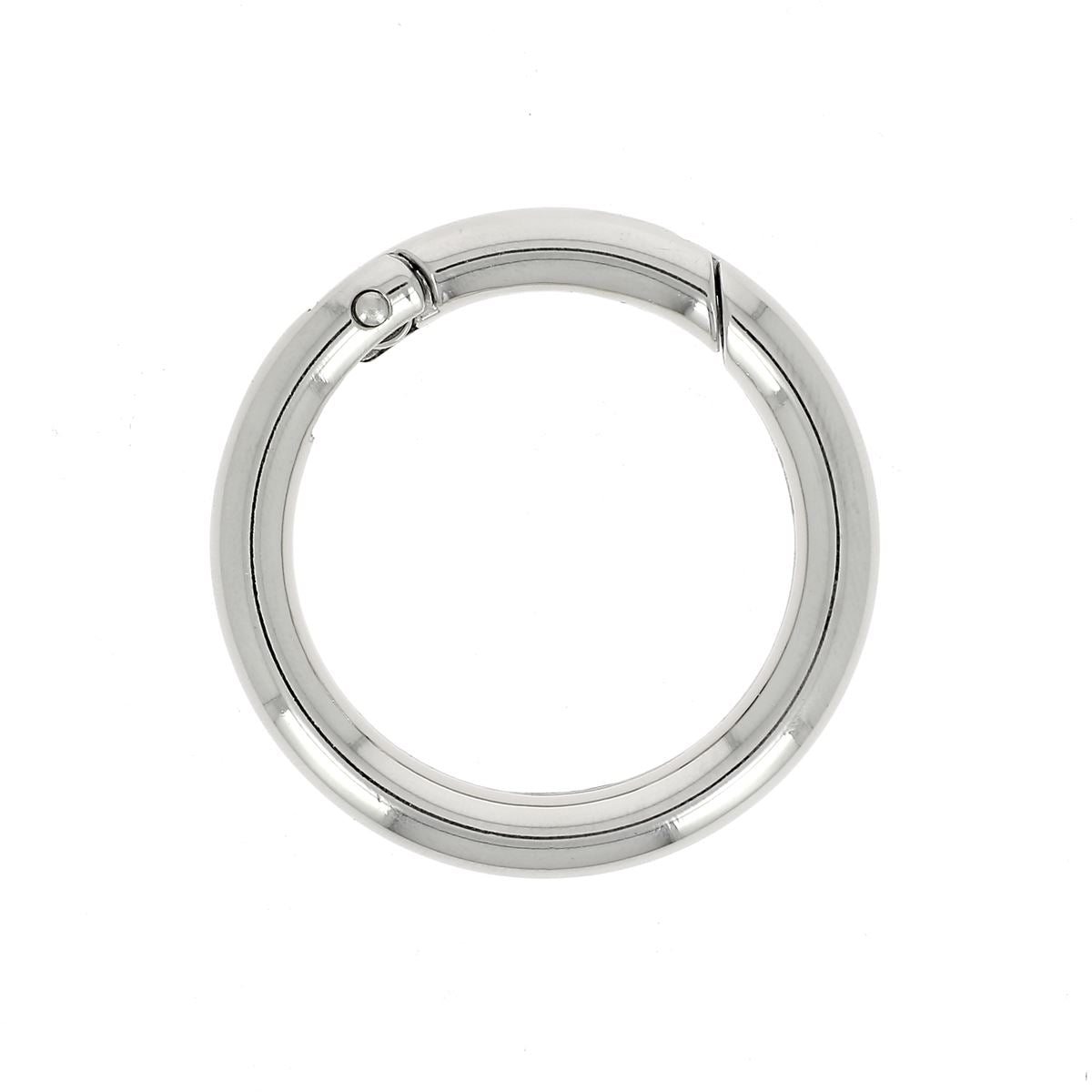
- 1 round spring hook width 10 mm
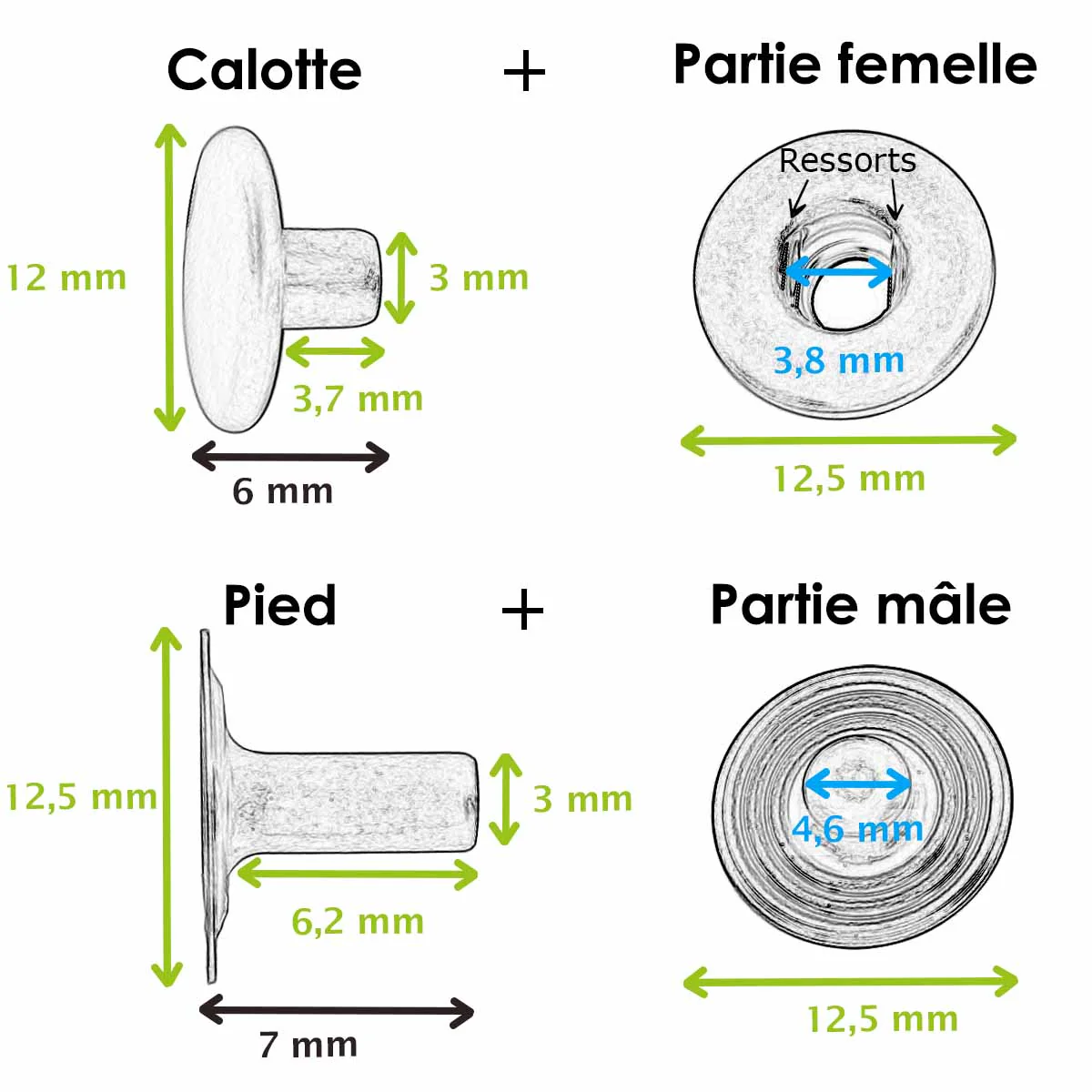
- 1 snap button Ø 12 mm
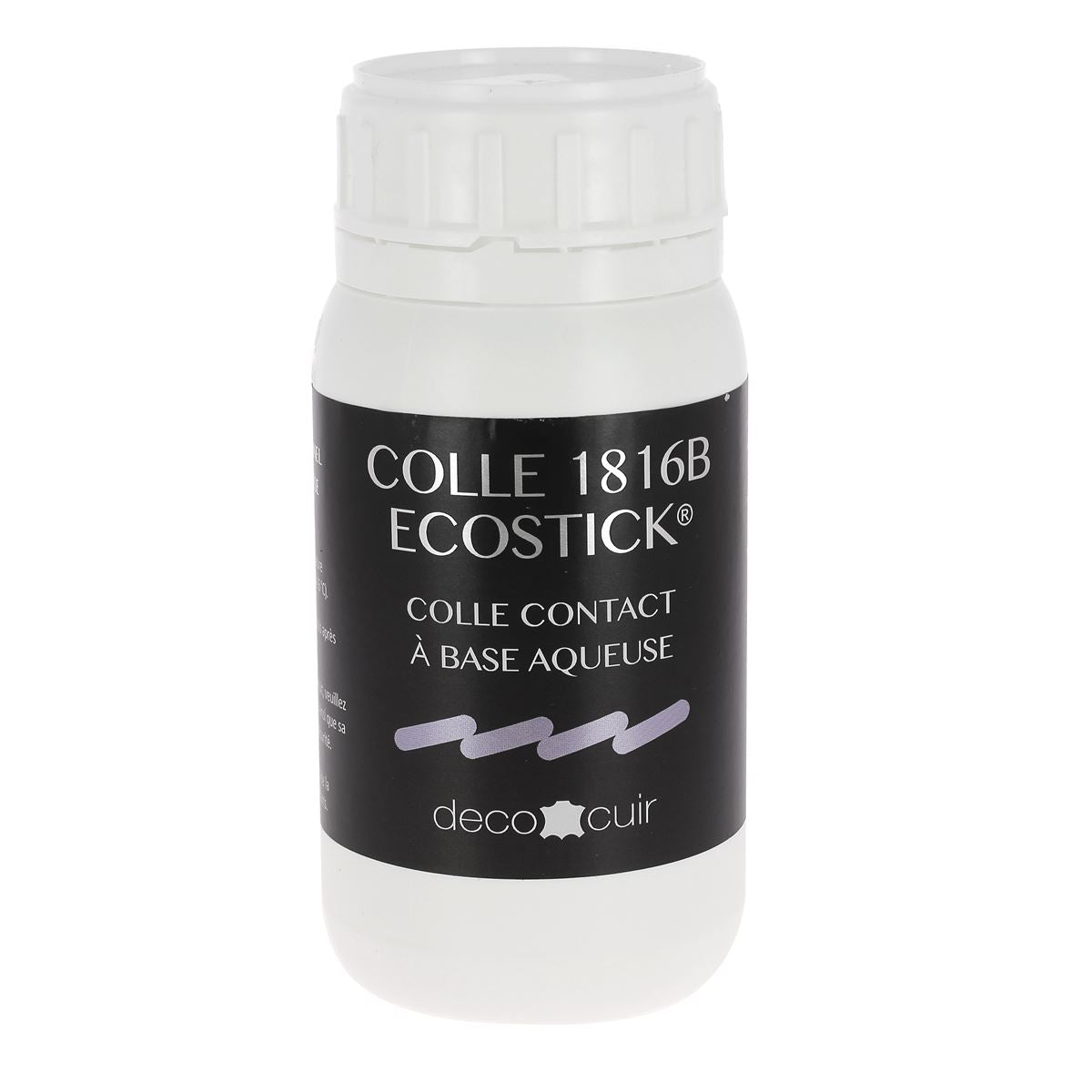
- Contact cement for leather
- 1 edge finish - Colorcut OR Tokonole
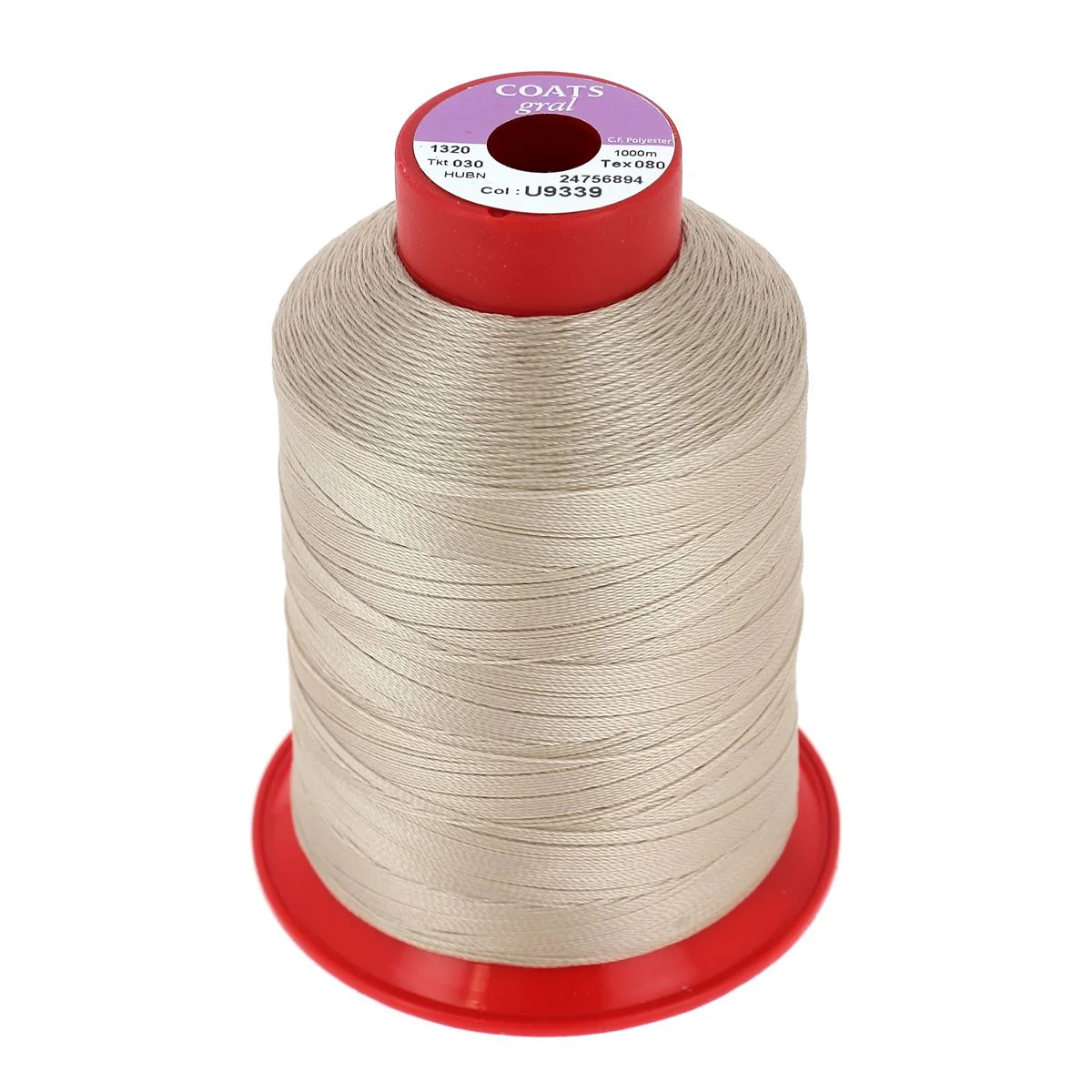
- 1 spool of size 40 polyester thread OR T3 rivets
And the following equipment:
- 1 utility knife
- Tool and setting set for snap button.
- 1 round drive punch - Ø 3 mm
- 1 mallet
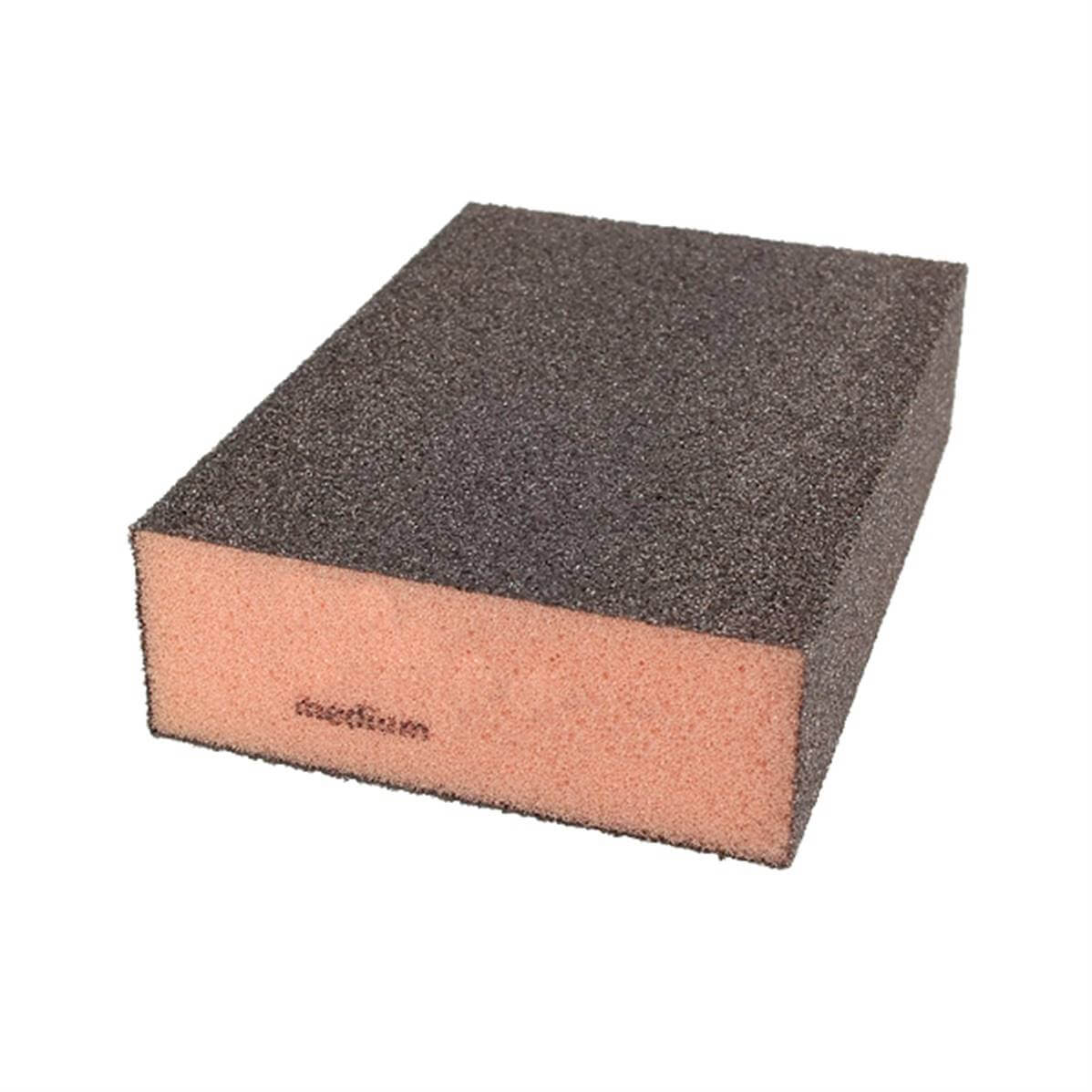
- 1 fine abrasive sponge - 400 grit
 |
 |
Video
1. Download the pattern
Download the pattern and cut out the pieces roughly (at least 1 cm margin). Using masking tape (to avoid damaging the grain side of the leather), tape the pattern pieces onto the full-thickness leather piece.
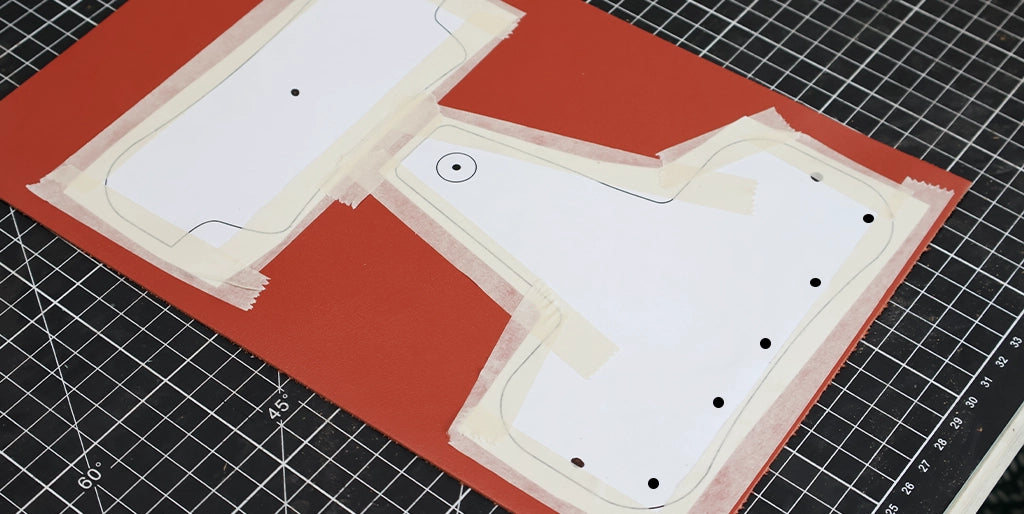
Roughly cut around the pieces, leaving about a 1 cm margin all around.
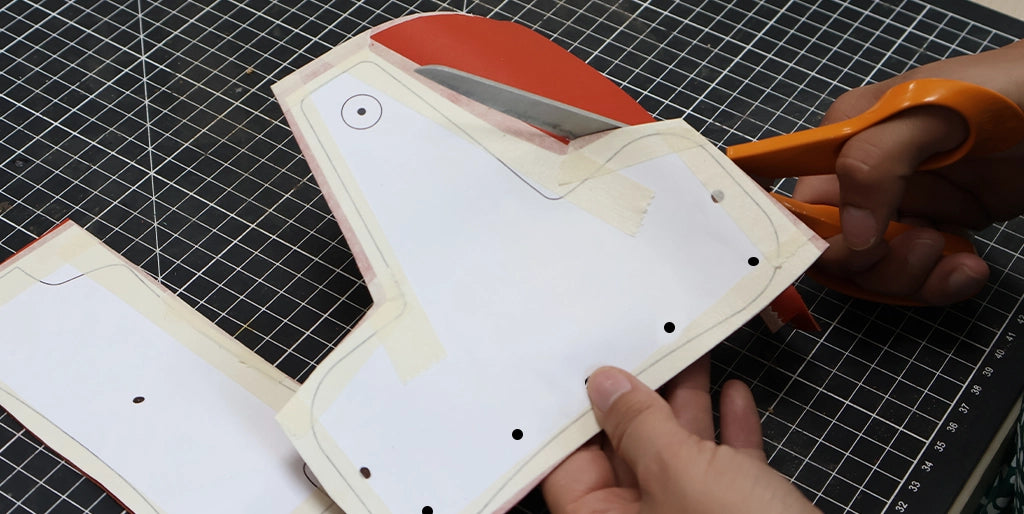
Cut a 1 cm wide by approx. 15 cm long tab from the split leather, as well as a 6x6 cm square for the covered snap button head.
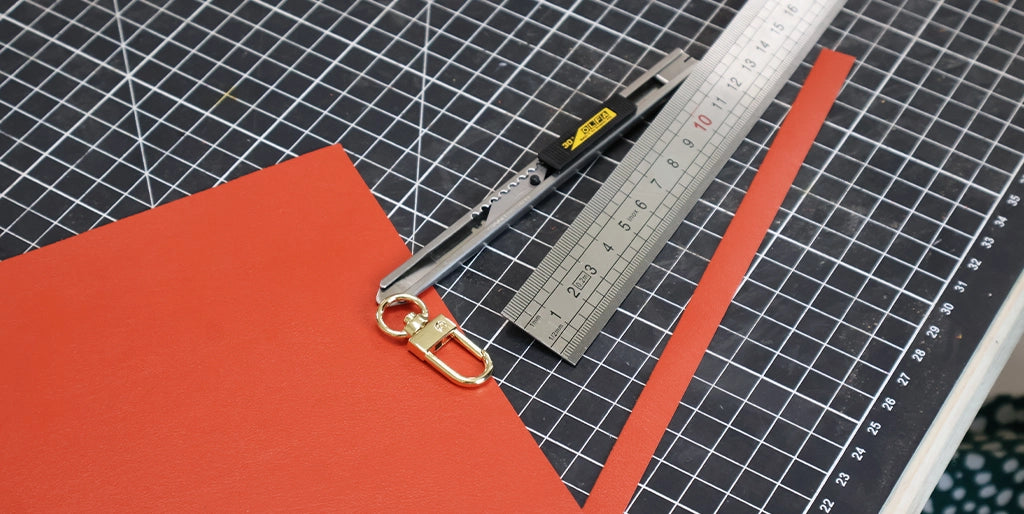
2. Laminate the Salpa
Apply contact cement to the flesh side of the main leather pieces (P1 and P2) as well as to the back of the Salpa.
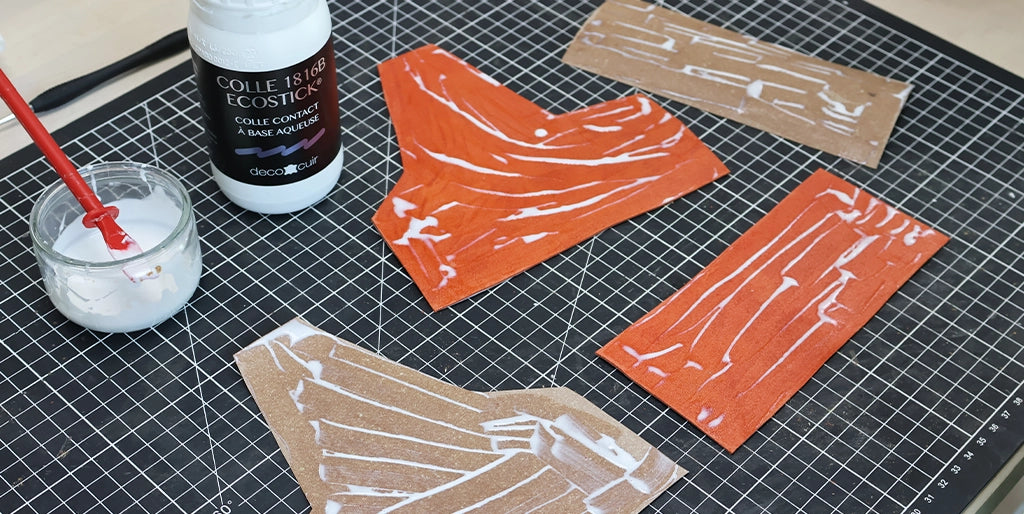
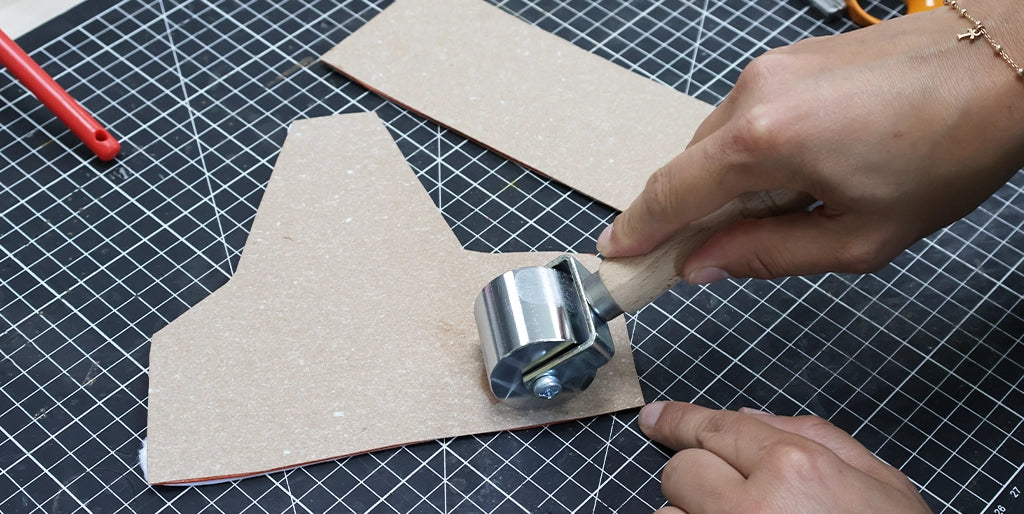
Glue pieces P1 and P2 onto the Salpa and flatten the whole thing using a pressure roller.
3. Install the snap button base
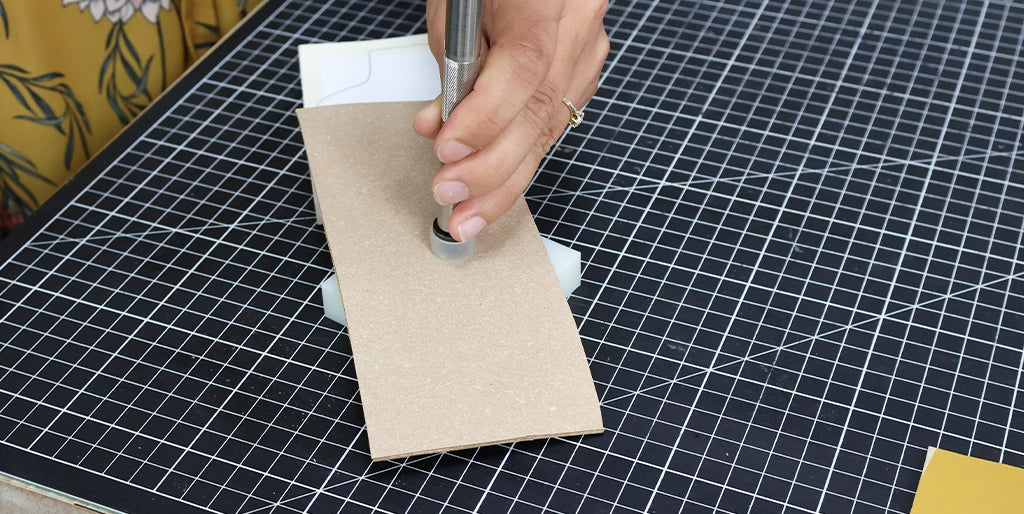
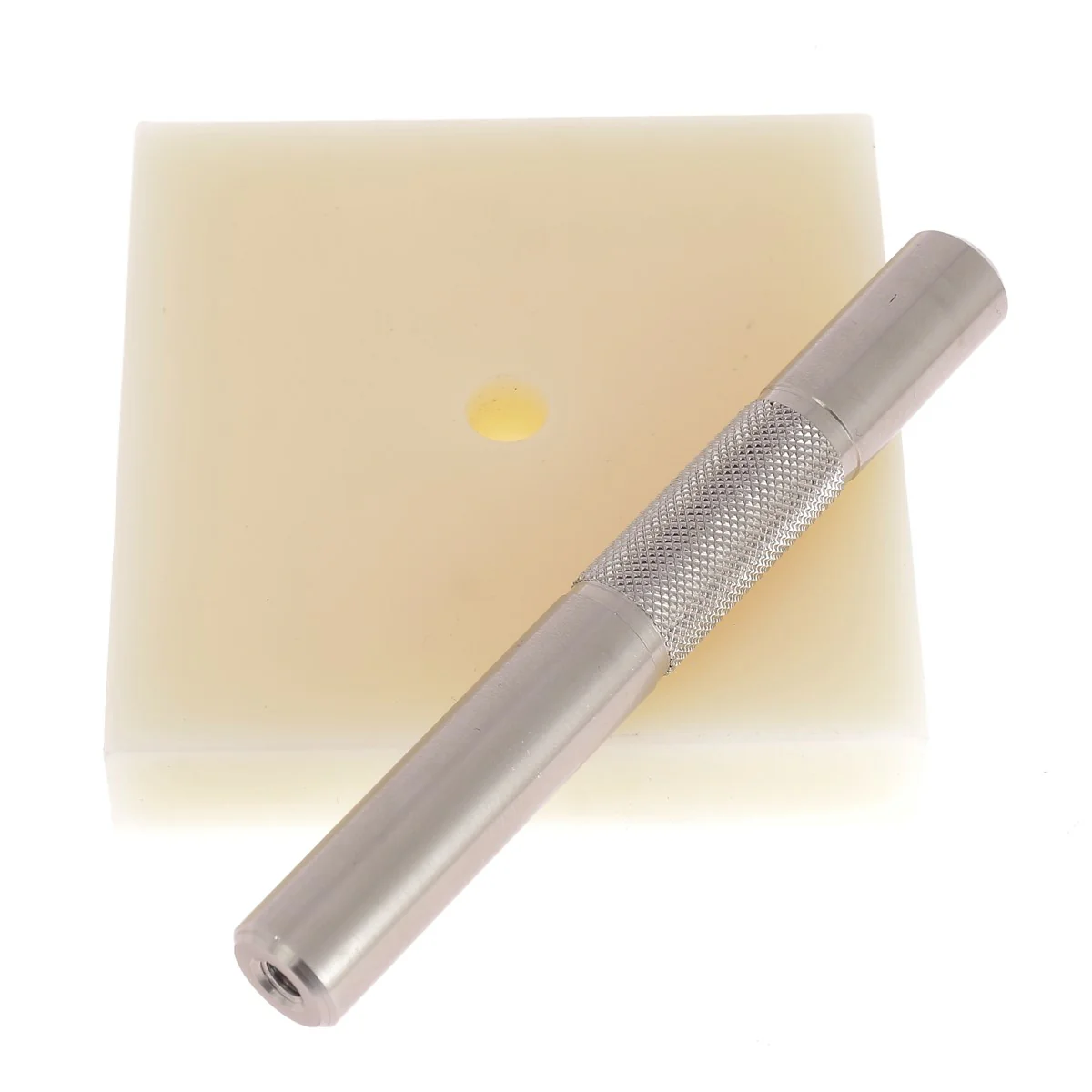
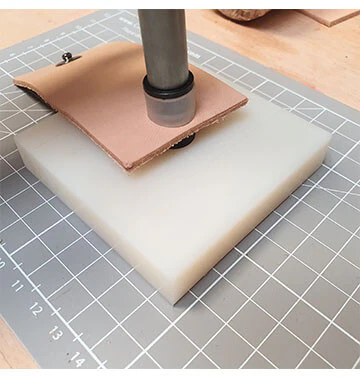
Punch a Ø3 mm hole in the center of piece P2.
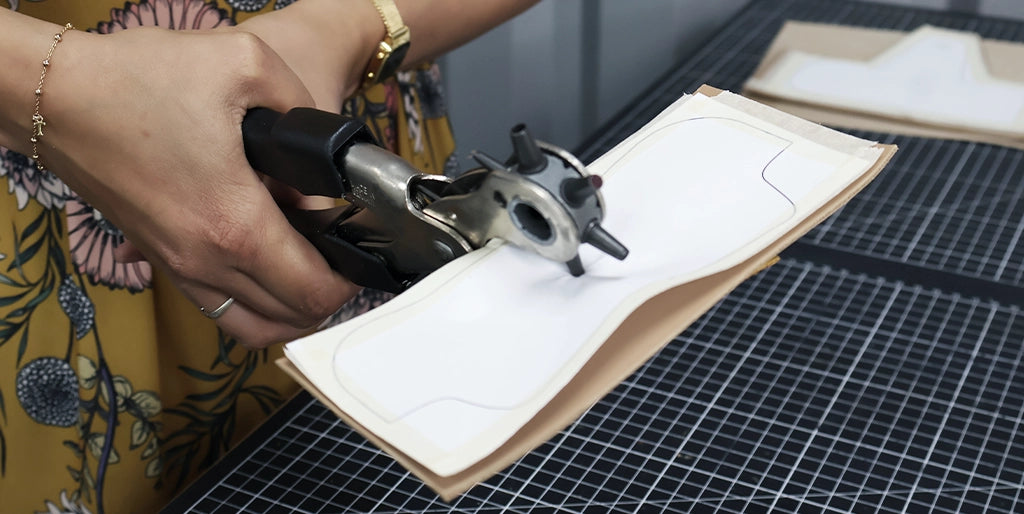
Install the snap button base. This is done at this stage so that the base is hidden by the lining.


4. Laminate with the lining
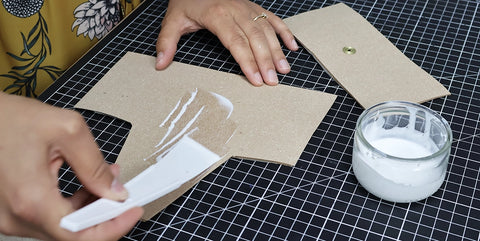
Apply contact cement to the back of the leather/Salpa pieces as well as to the back of the lining (pigskin or 0.5 mm thick leather - your choice).
 |
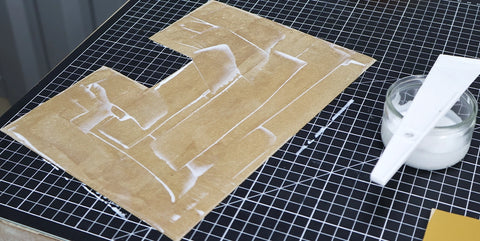 |
Glue the pieces onto the lining, then flatten the whole thing with a pressure roller.
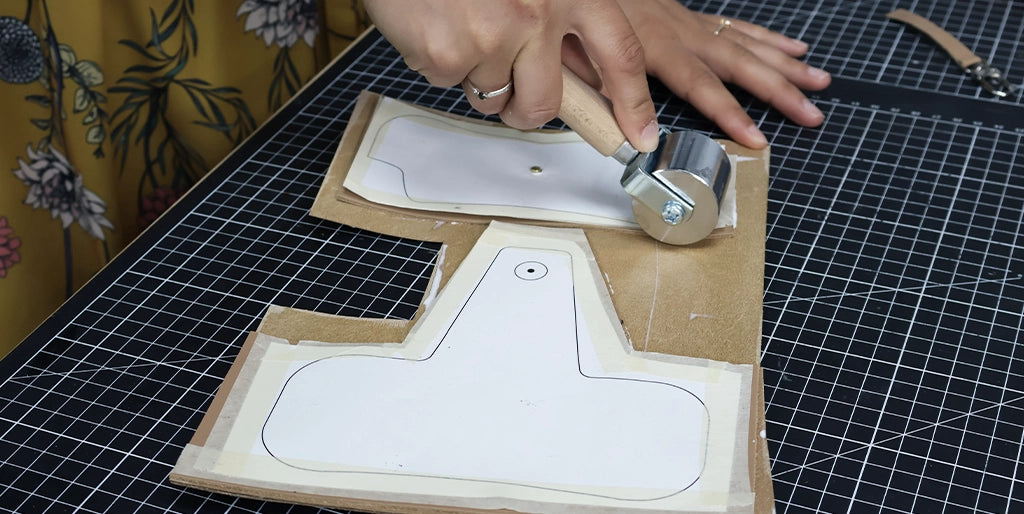
5. Trim the pieces
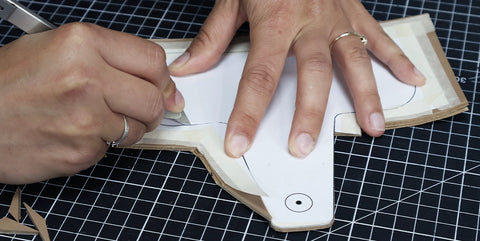
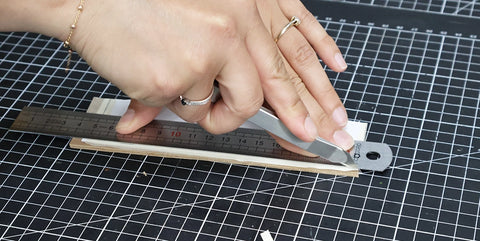
With a utility knife, cut out pieces P1 and P2. Be careful to follow the dotted lines indicated on the pattern for the bottom of pieces P1 and P2. The rounded bottom edges will be cut once the pieces are assembled for a more precise result.
We recommend cutting the external rounded edges in several steps => in quarters (see video at step 10).
 |
 |
6. Finish the edges
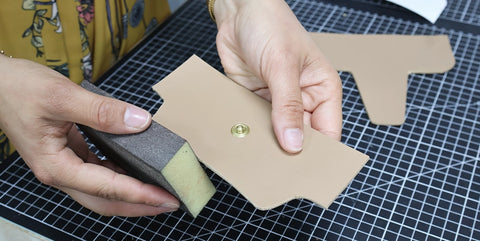
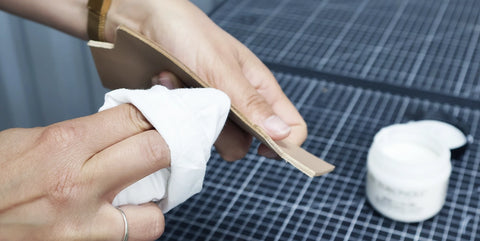
Sand the edges of the pieces you just cut. Then, apply an edge finish to the top of piece P2.
 |
 |
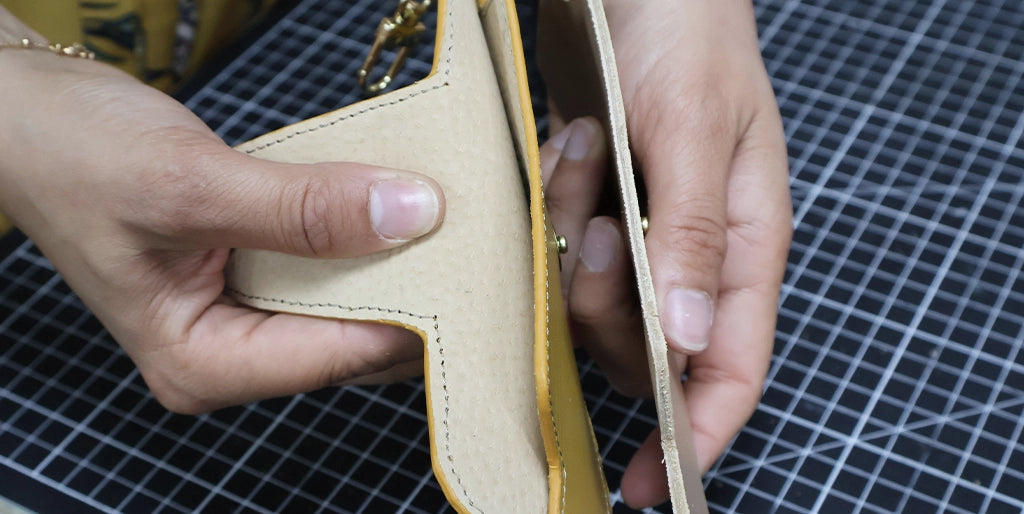
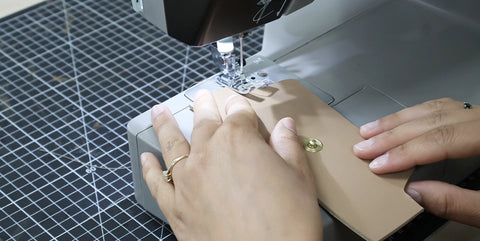
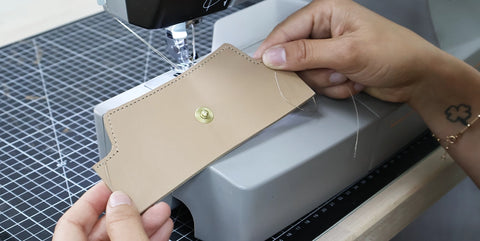
7. Topstitch P2
Create a decorative topstitch on the top of piece P2 (on the part without the dotted lines).
 |
 |
8. Prepare tab P3
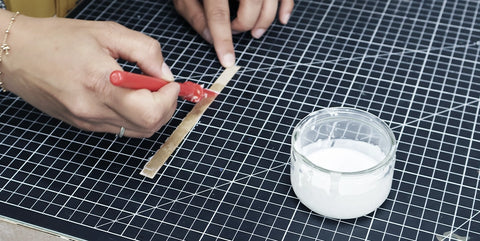
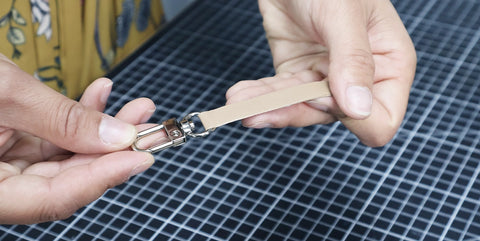
Take the small tab and fold it in two, inserting the spring hook. Apply contact cement between the two faces of the tab, then assemble them to hold the hook securely.
 |
 |
9. Assemble the case
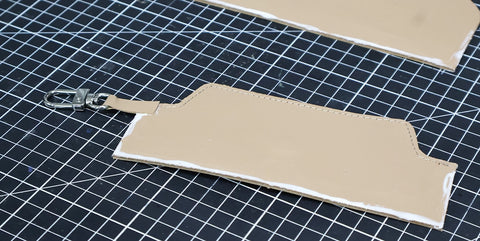
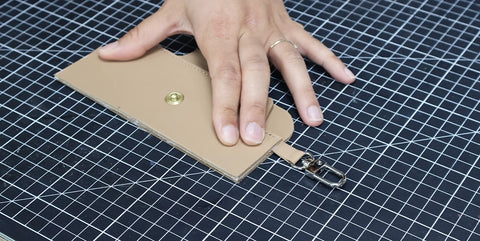
Apply a 3 mm bead of glue to the lining (back) of pieces P1 and P2, along the dotted lines indicated on the pattern.
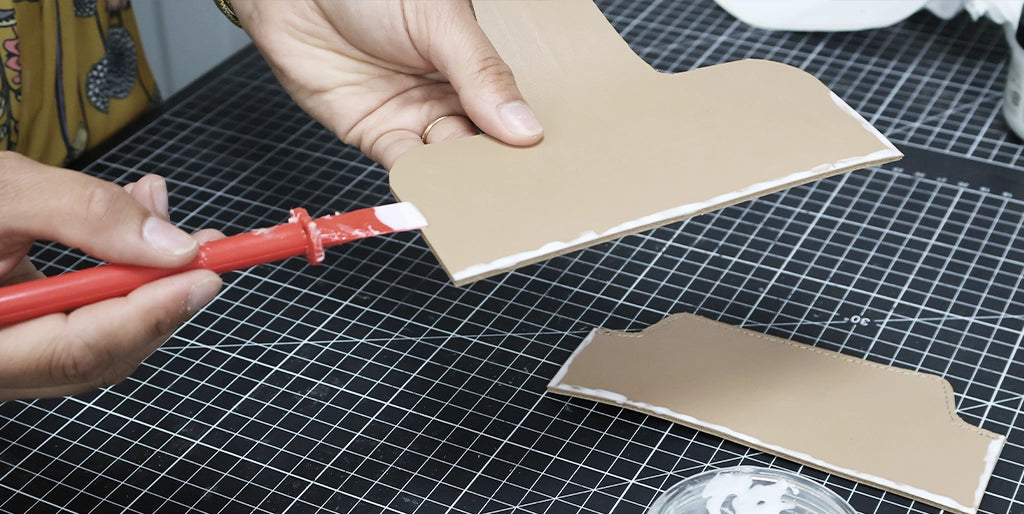
Glue the tab onto one of the two pieces, then glue the two pieces together edge to edge.
 |
 |
10. Cut the rounded edges
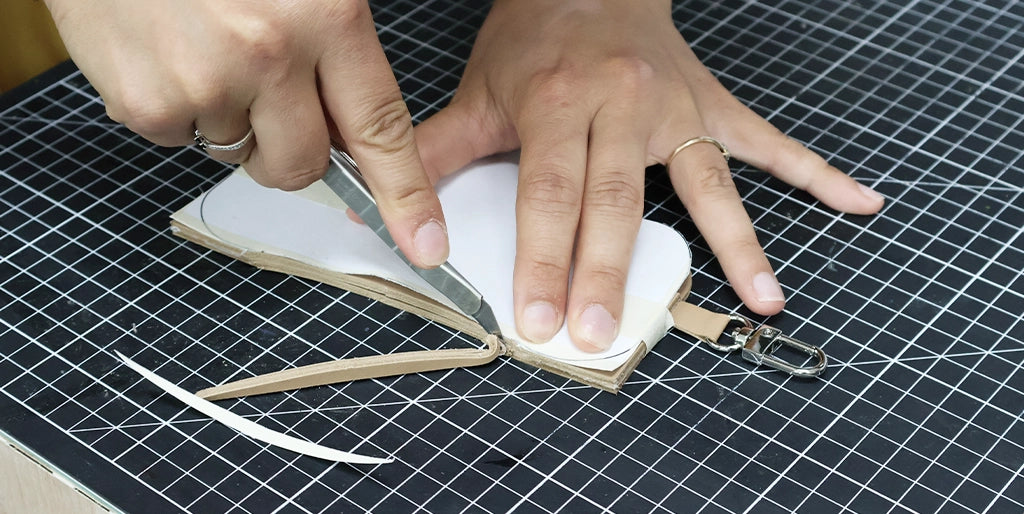
Once the pieces are well assembled and the glue is dry, cut the rounded edges in quarters (for a cleaner result - see video) following the black lines on the pattern.
11. Sew the case
Sew around the entire edge, approximately 3 mm from the border.
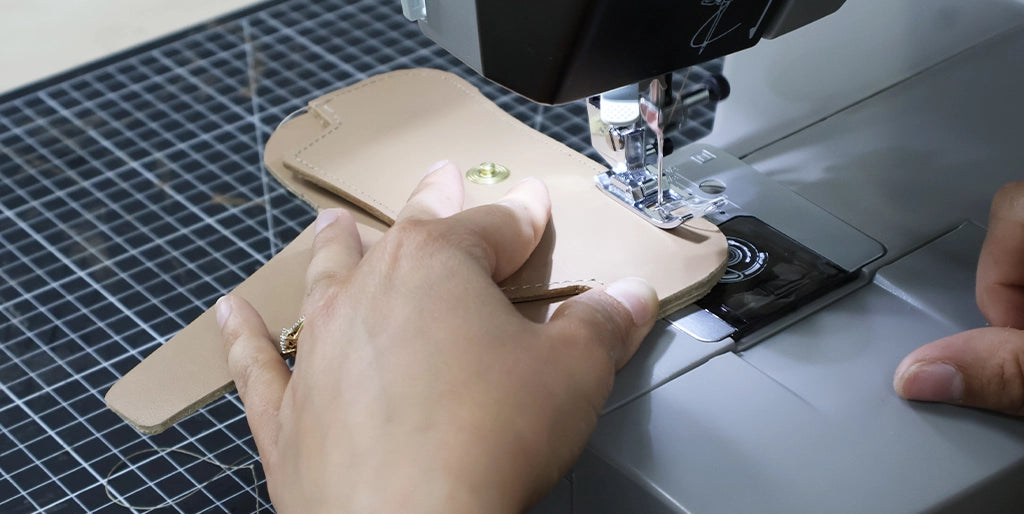
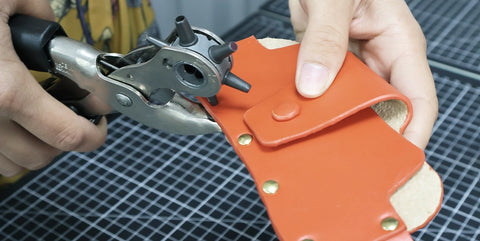
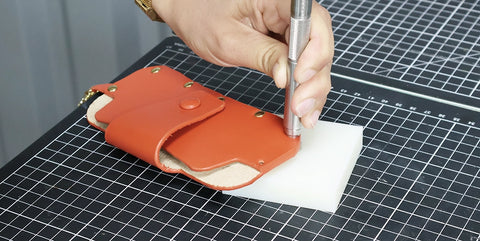
It is also possible to sew by hand, with a simplified stitch or a saddle stitch. Be careful to punch the stitching holes with a 1 mm diameter drive punch in step 5.
Or simply fix the two parts using T3 rivets. The positions for the Ø 3 mm holes are marked on the pattern.
 |
 |
12. Sand and finish the edges
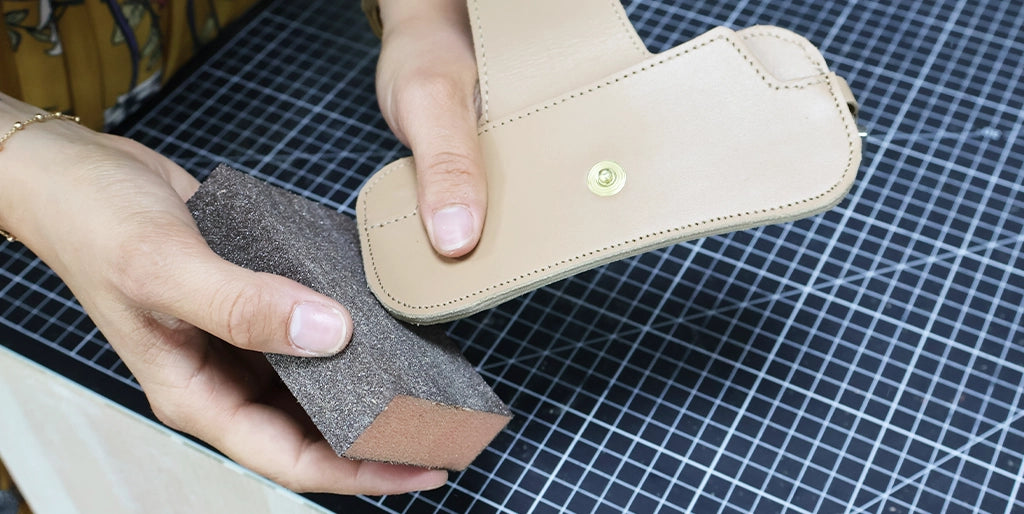
Sand the edges again then apply an edge finish.
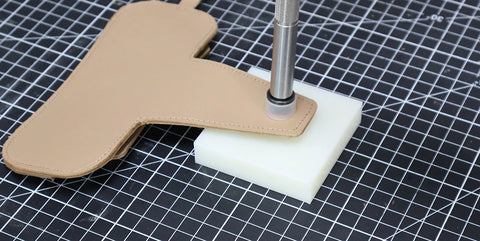
13. Install the snap button head
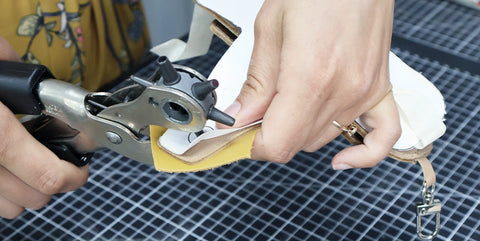
Finally, install the snap button head. We covered the button with 0.5 mm thick leather.
GUIDE: HOW TO COVER A SNAP BUTTON?
 |
 |
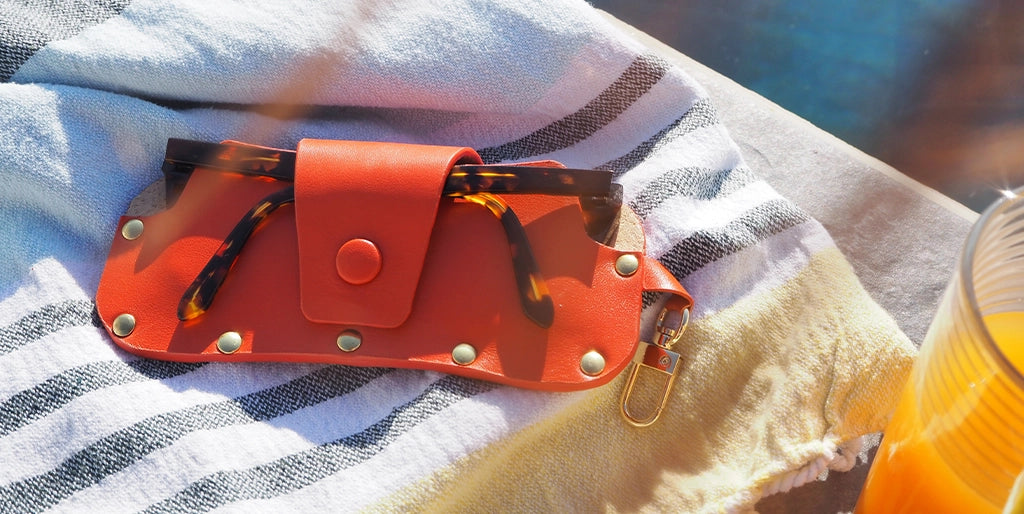
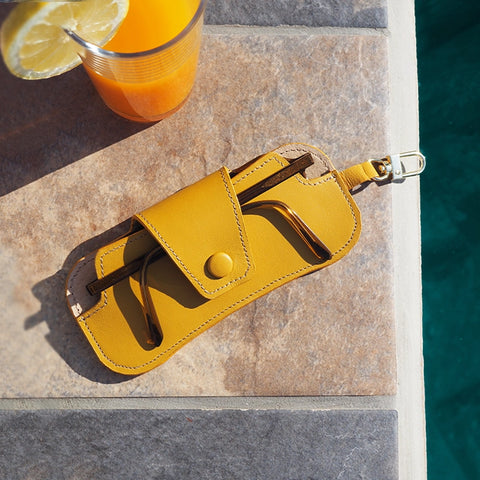
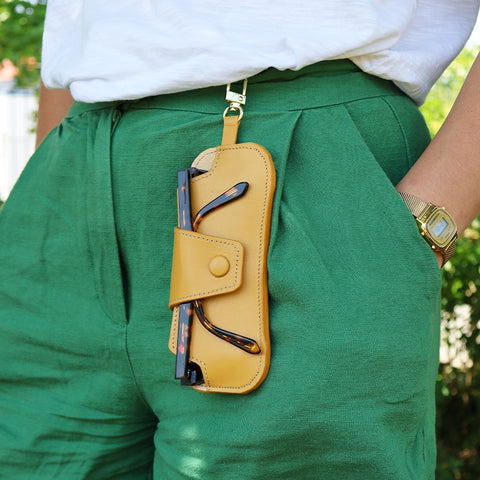
You're done!
 |
 |
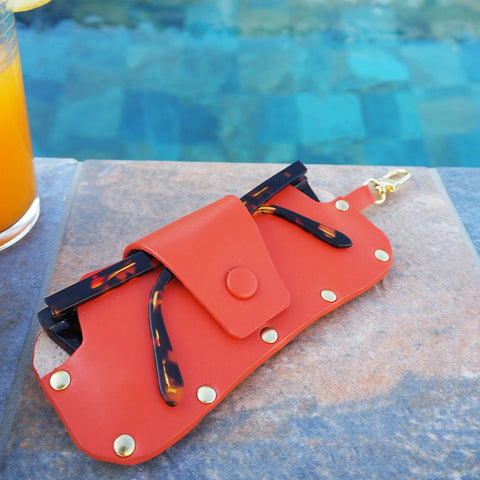 |
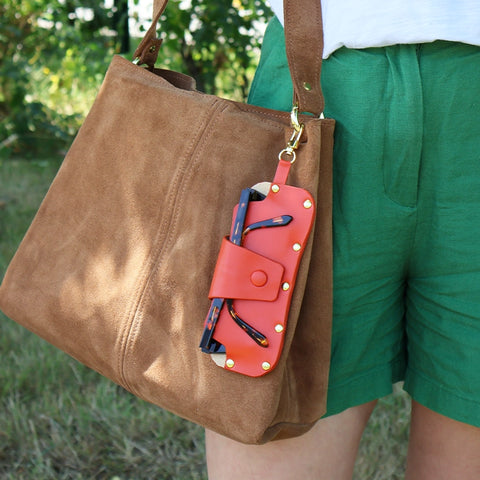 |
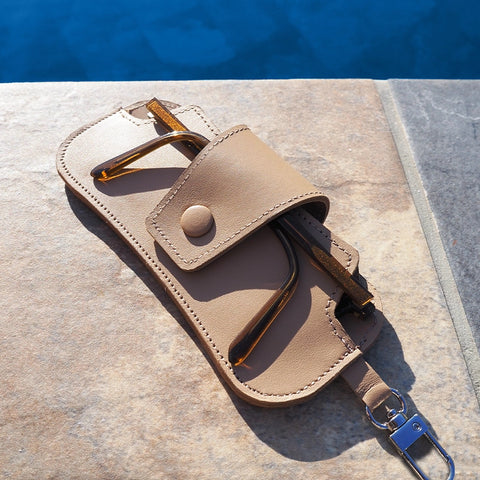 |
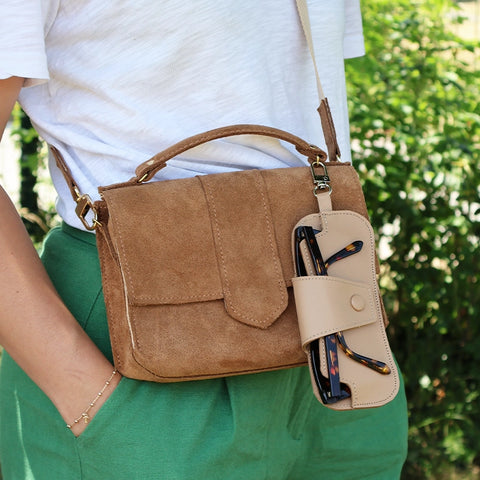 |
OLD VERSION
THE NECESSARY MATERIALS
To complete this tutorial, you will need:
- 1 piece of leather 20x30 cm - Thick between 1.2 and 1.5 mm - Leather rather firm
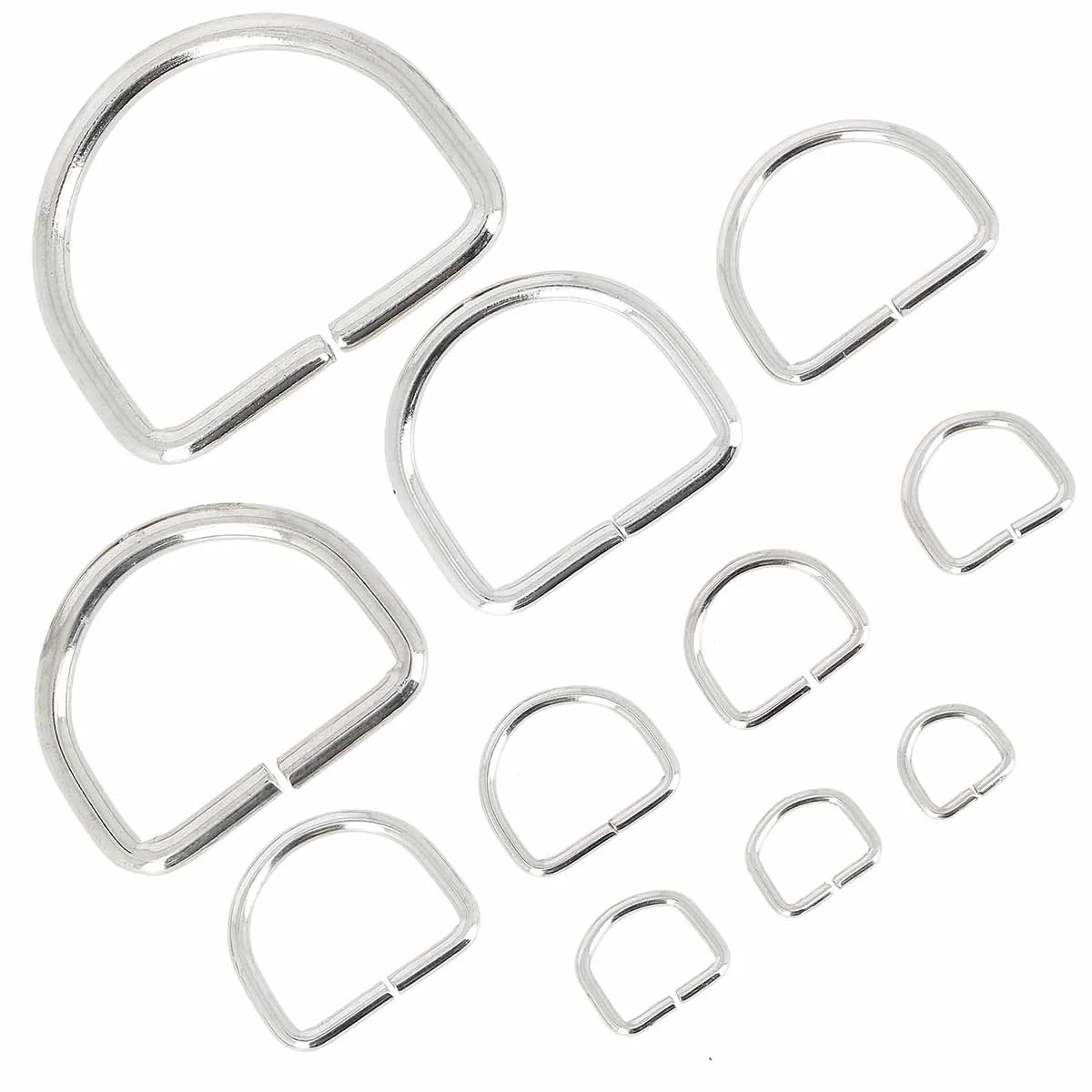
- 1 half-round ring - 10x10x2 mm
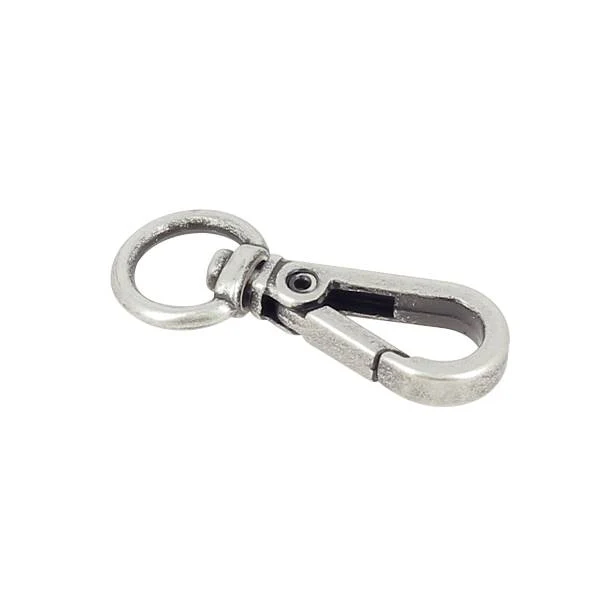
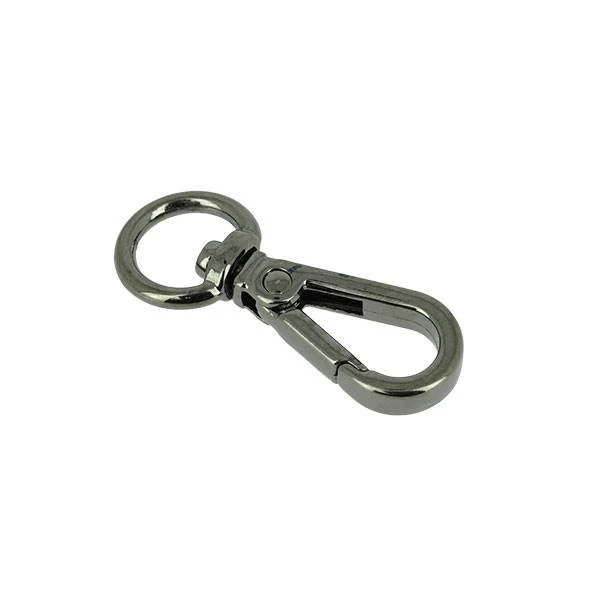
- 1 mini spring hook 9 mm diam OR 1 round hook
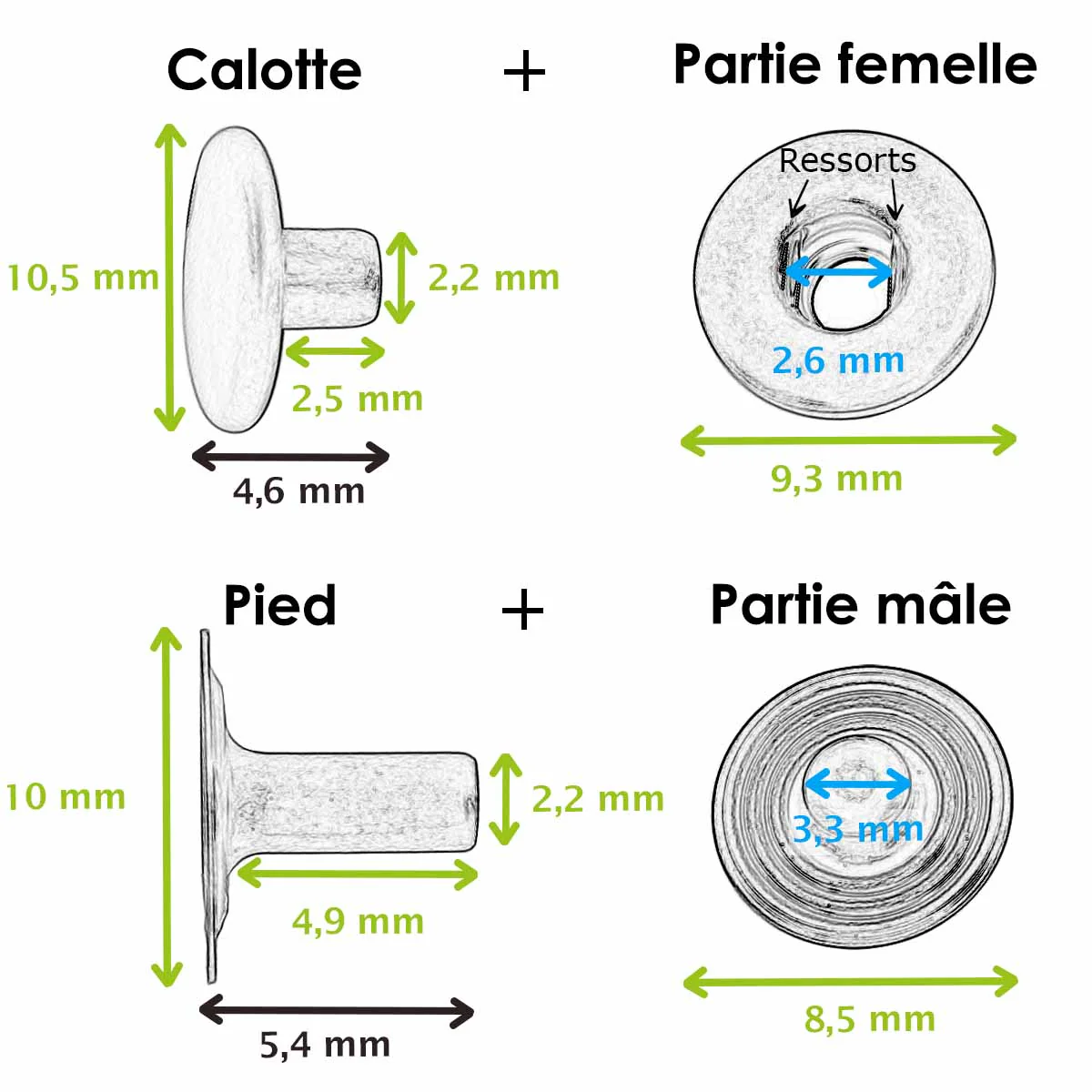
- 1 nickel-plated snap button - diam. 10.5 mm OR 1 collar button
- Leather glue
- Edge finish - Colorcut - 30ml
- Tokonole
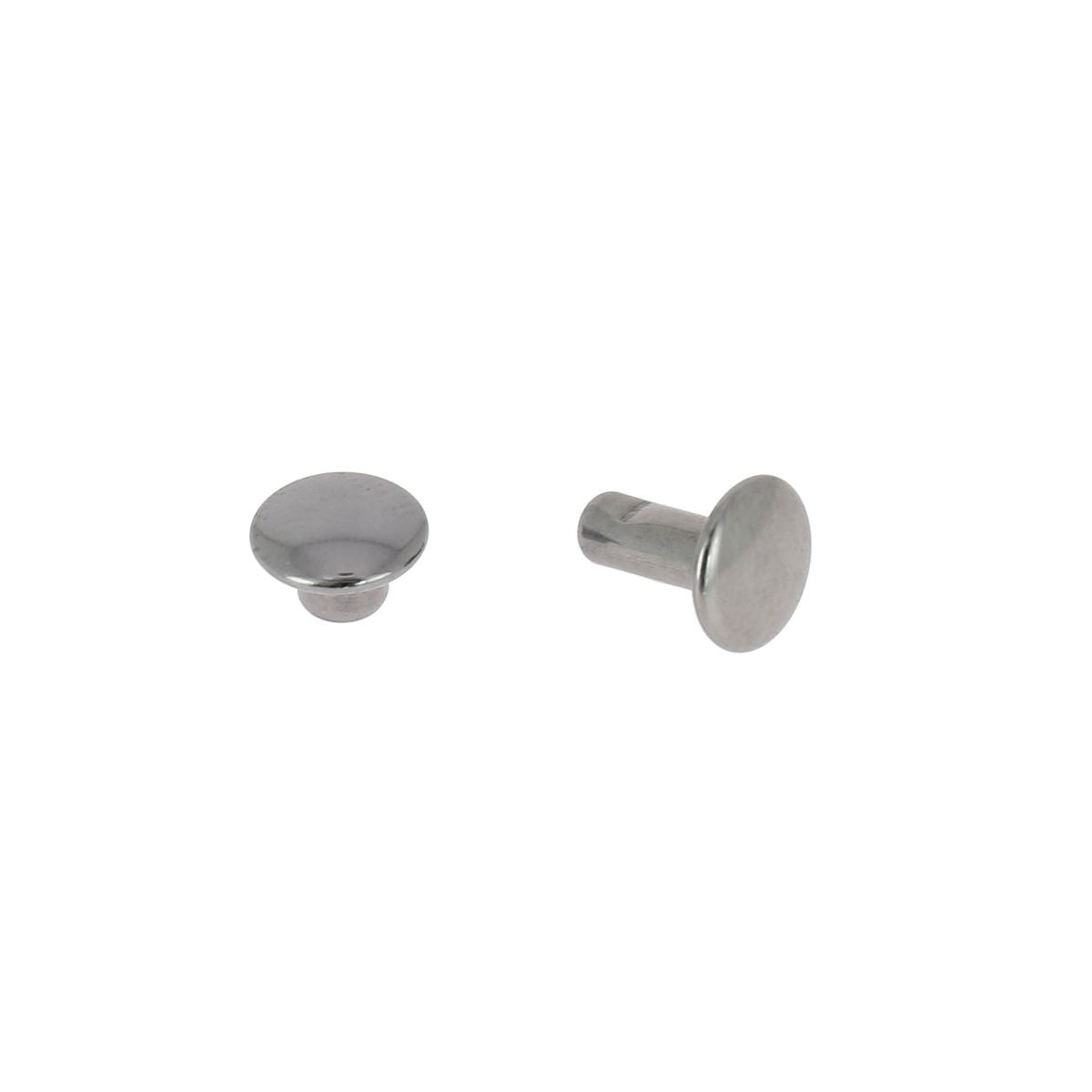
- 4 nickel-plated T3 rivets (non-stitched version only)
- 1 spool of size 30 polyester thread - Chocolate (stitched version only)
- 1 strip of tooling leather. Wide: 10mm - Long: 120 cm (optional)
And the following equipment:
- Tool and setting set for accessories
- 1 round drive punch - Ø 3 mm
- 1 mallet
- 1 silver pen
- 1 pair of scissors
- 1 fine abrasive sponge - 400 grit


-
Blue



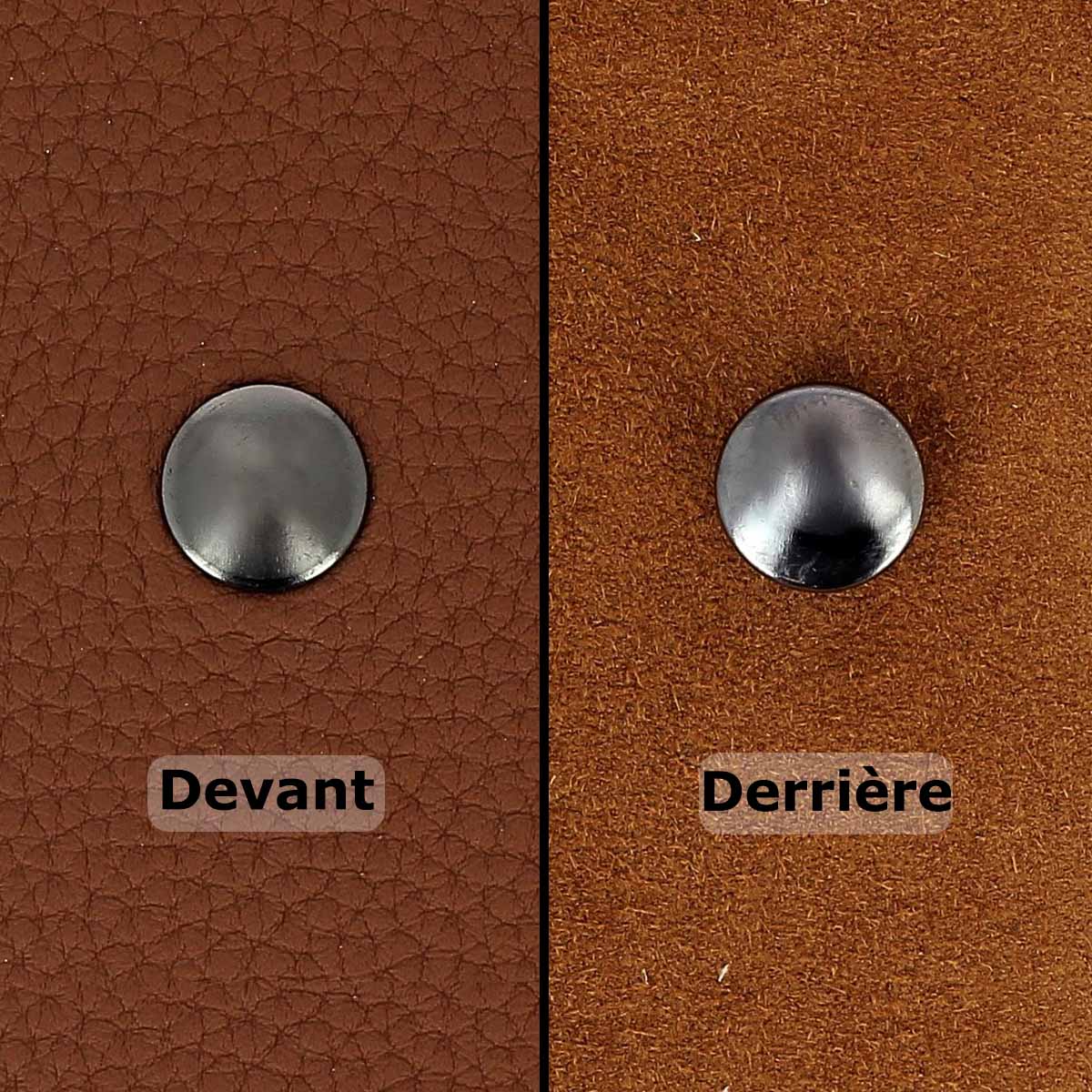
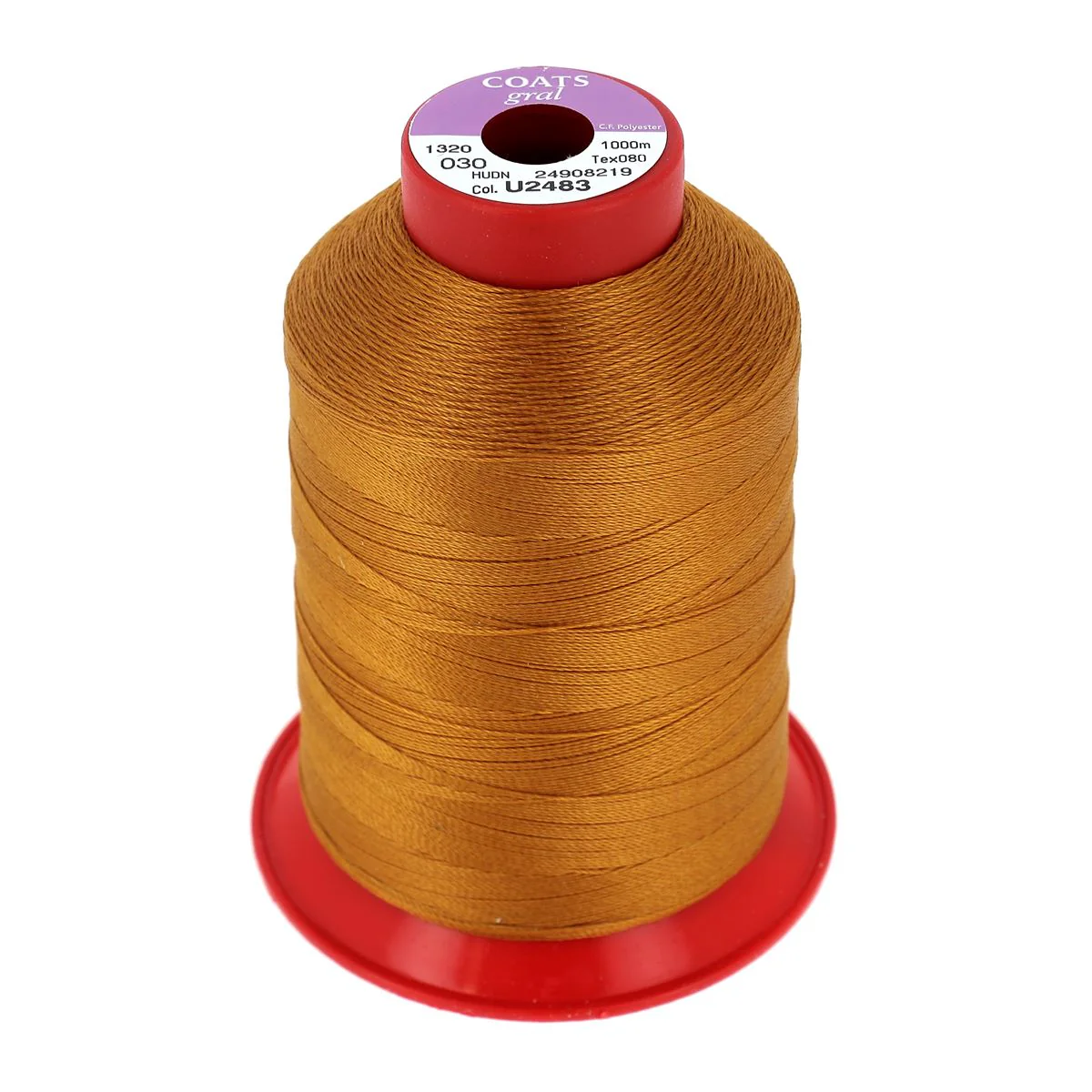


1. Cut the leather using the pattern
Download the leather glasses case pattern and print it to full scale. Cut it out, making sure to punch the holes using the 3 mm hole punch. Trace the pattern onto the piece of leather using a silver pencil and cut out the 3 pieces with a pair of sewing scissors or a utility knife (depending on your leather).
We advise you to cut/finish the rounded sides once the pieces are assembled.
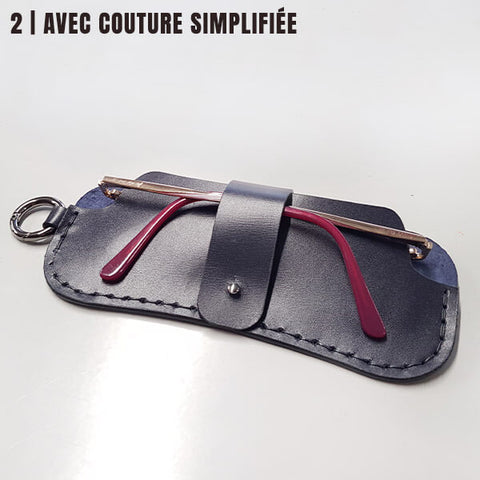
 Simplified sewing version: punch the sewing holes using a hole punch with a maximum diameter of 1 mm.
 Do you have a Cricut? Download the pattern (sewing version) in SVG at the top of the page. Be sure to resize the shape in the Cricut software. It must be 26.8 cm wide and 22.4 cm high.
2. APPLY TOKONOLE
Apply Tokonole to the flesh side of the leather to give it a smooth, shiny appearance and to prevent fuzz from getting on your sunglasses. 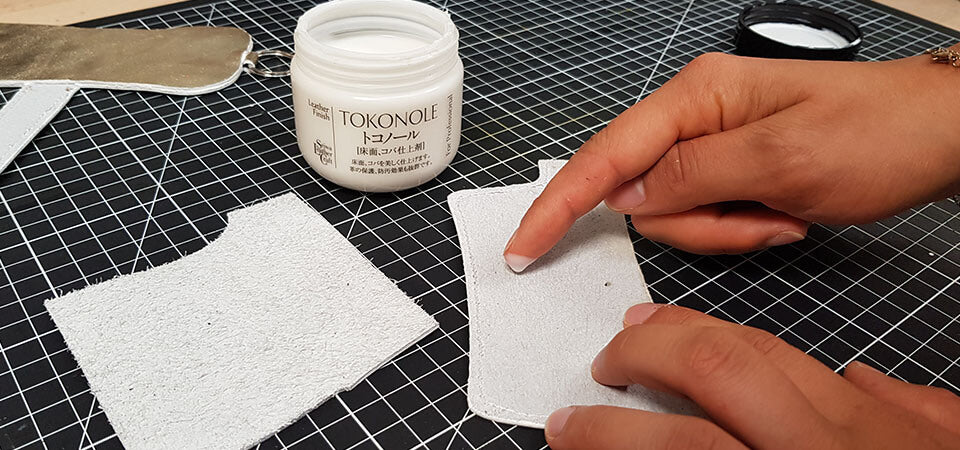
3. BEGIN EDGE DYEING
Before assembly, finish the edges of the small tab, the large tab, and the top of piece no. 3 (the part that will not be assembled with the other pieces). Dye the edges with leather paint (see the materials list).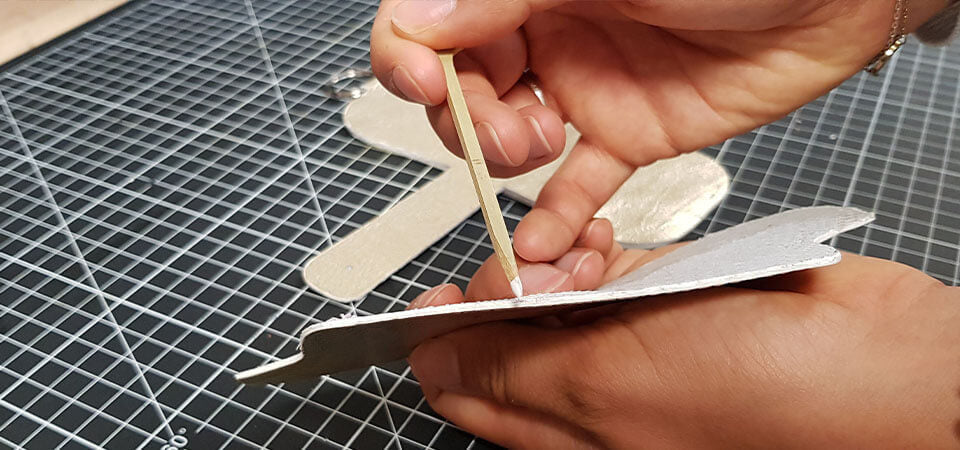
4. ASSEMBLE PIECES NO. 1 AND NO. 2
Fold and glue the small tab of piece no. 1, inserting the D-ring or lobster clasp. Apply leather glue to the flesh (fuzzy) side of pieces no. 1 and no. 2. Wait a few moments, then press the pieces together.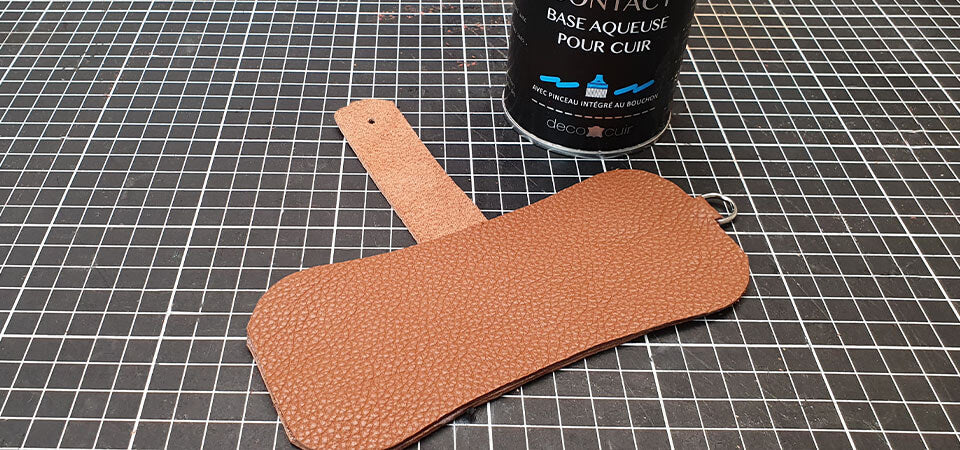
5. DO THE DECORATIVE STITCHING (VERSION 1 ONLY)
For the version with stitching, perform a decorative stitch on the large tab and the top of piece no. 3.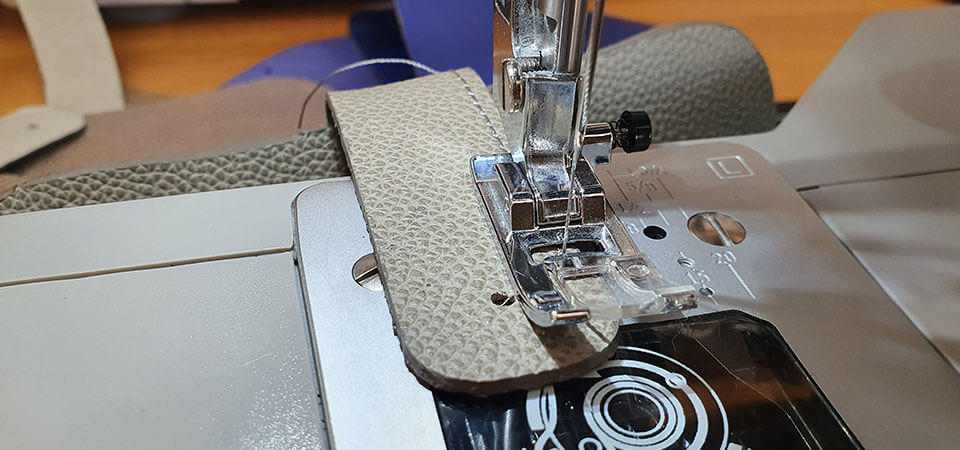
6. FINISH ASSEMBLING THE PIECES
Apply a thin layer of glue to the edge of the main piece and piece no. 3 and assemble the pieces.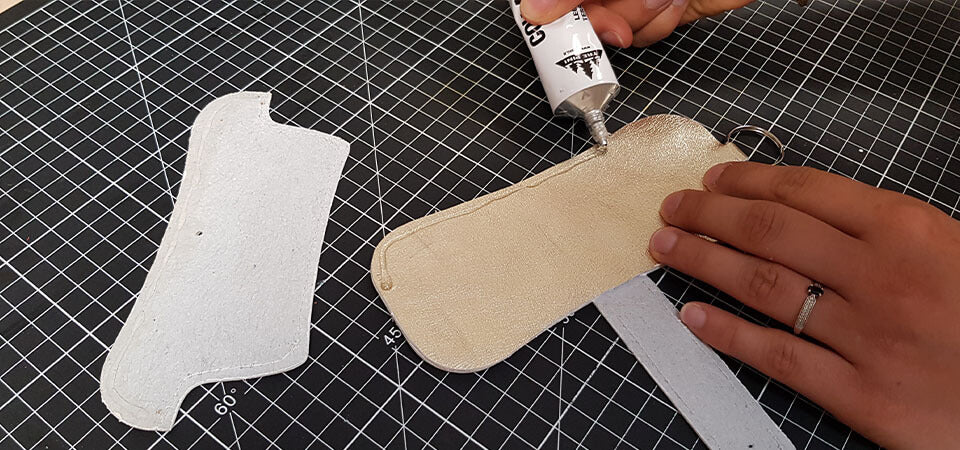
7. STITCH THE PIECES TOGETHER OR ATTACH RIVETS
Version with rivets: attach T3 rivets as indicated on the pattern to hold the layers together.
Stitching version: sew the pieces together.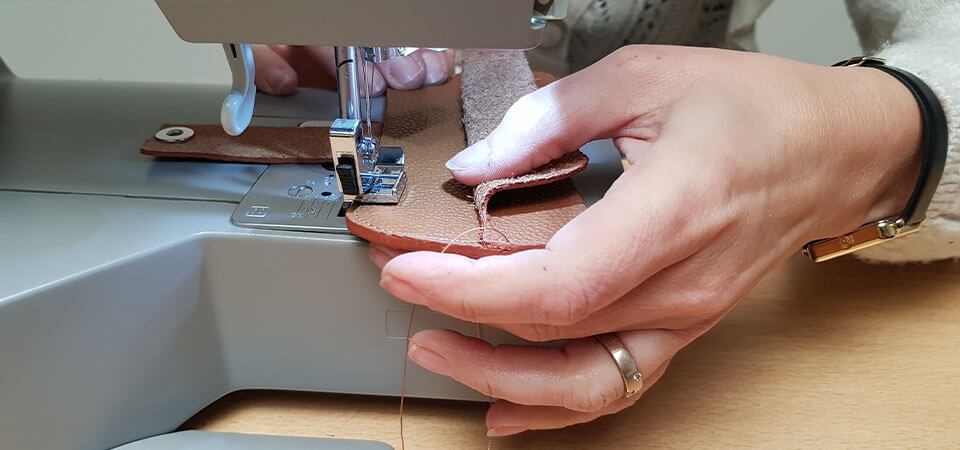
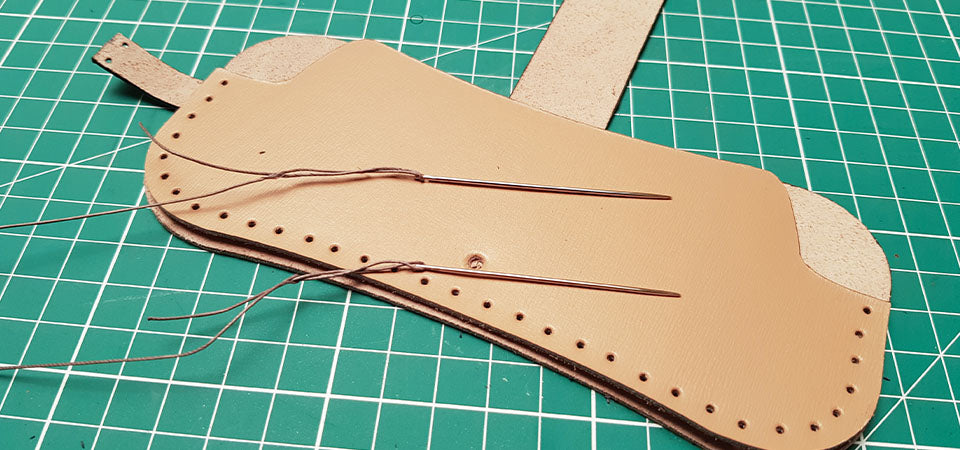
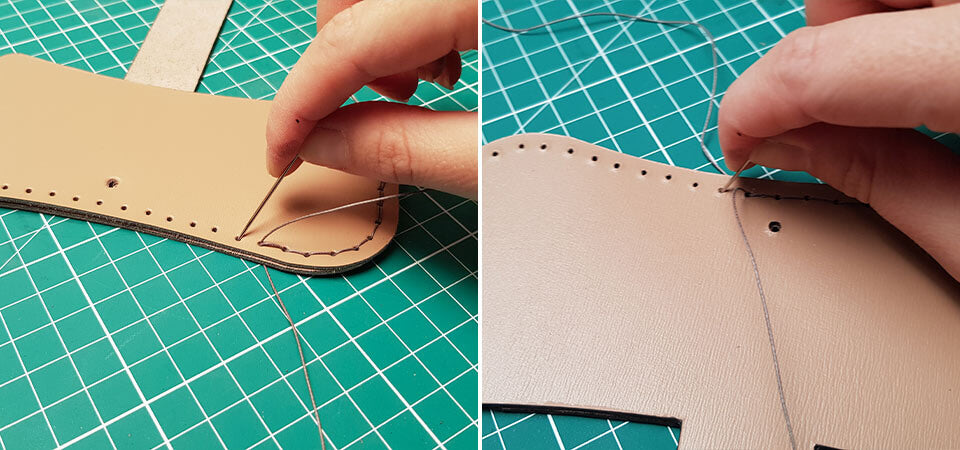
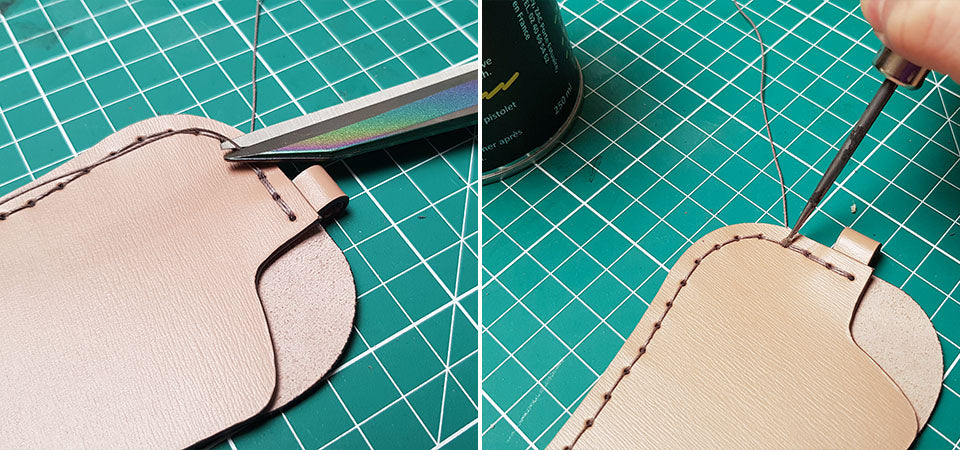
Simplified sewing version: to start, cut a thread equivalent to 5 times the length of the seam line. Then, thread a needle through each end of the thread. Sew the two pieces together by passing each needle through each hole. Make 3 backstitches to secure.
To finish the stitching, cut the thread flush and add a dot of glue. Then, tap the seams down.

8. FINISH THE EDGES
To better handle the curves and have a uniform edge: sand the edges (always in the same direction) with an abrasive sponge or 400-grit sandpaper. Apply finish to the edges of the case. Then sand with the abrasive sponge and apply a second coat. If necessary, apply a third coat.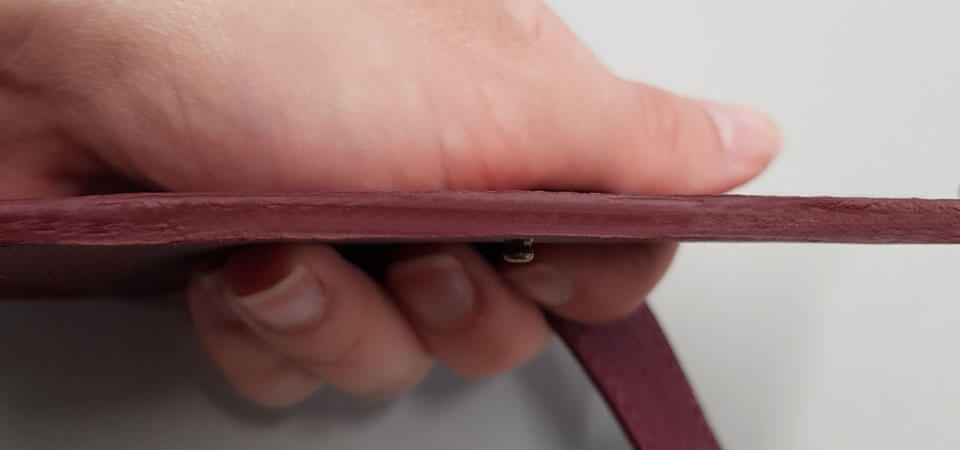
9. ATTACH THE SNAP BUTTON OR STUD
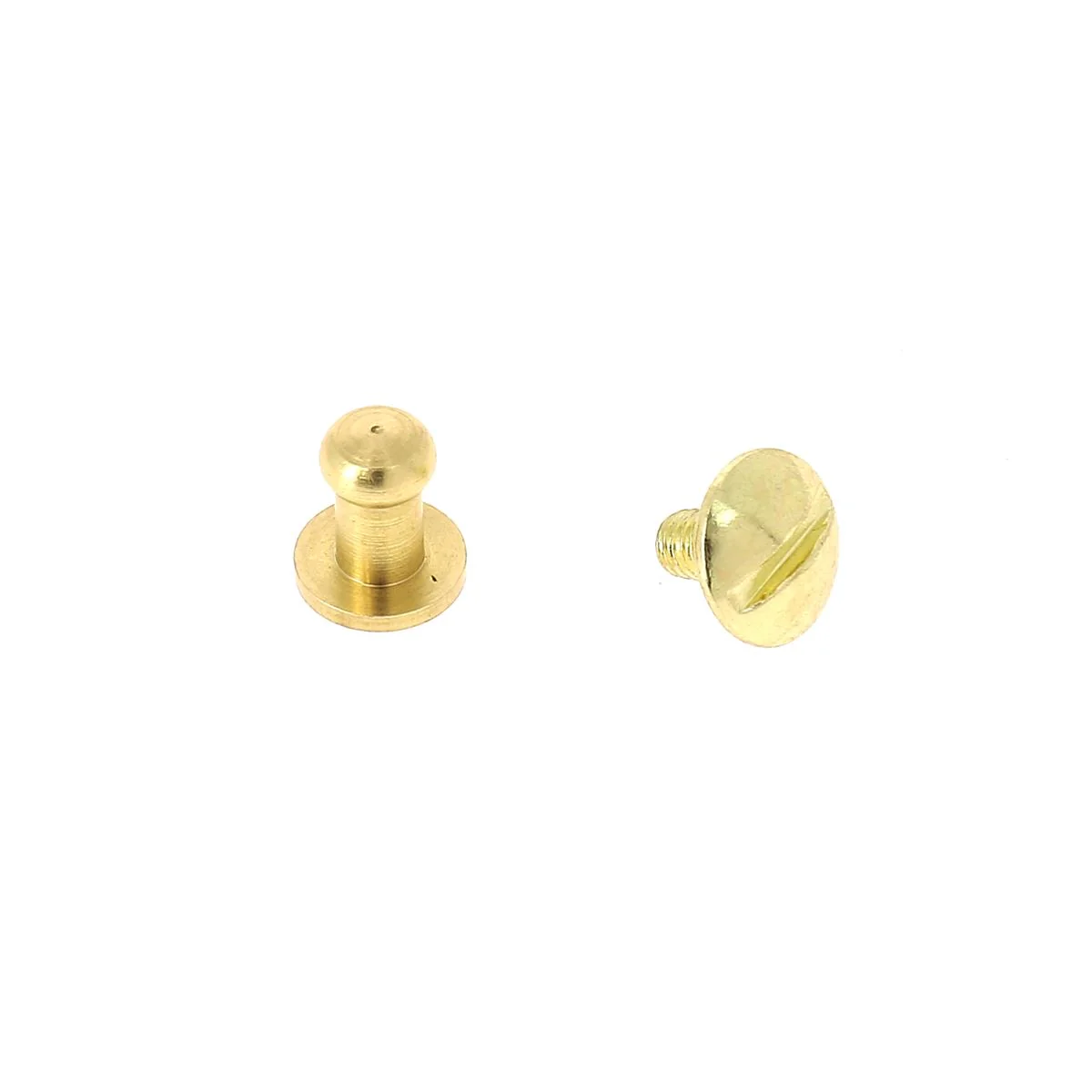
Attach the snap button using a setting tool (the head on the tab and the base on piece no. 3).
VIDEO: HOW TO INSTALL A SNAP BUTTON >
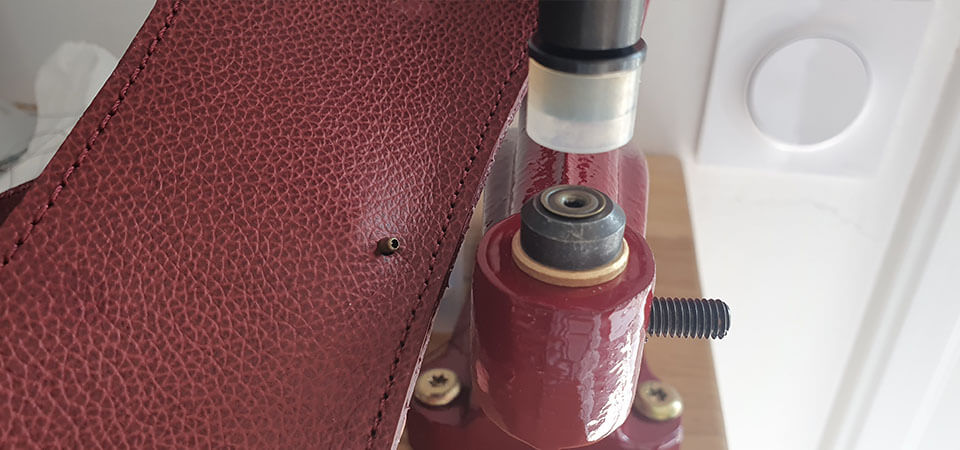

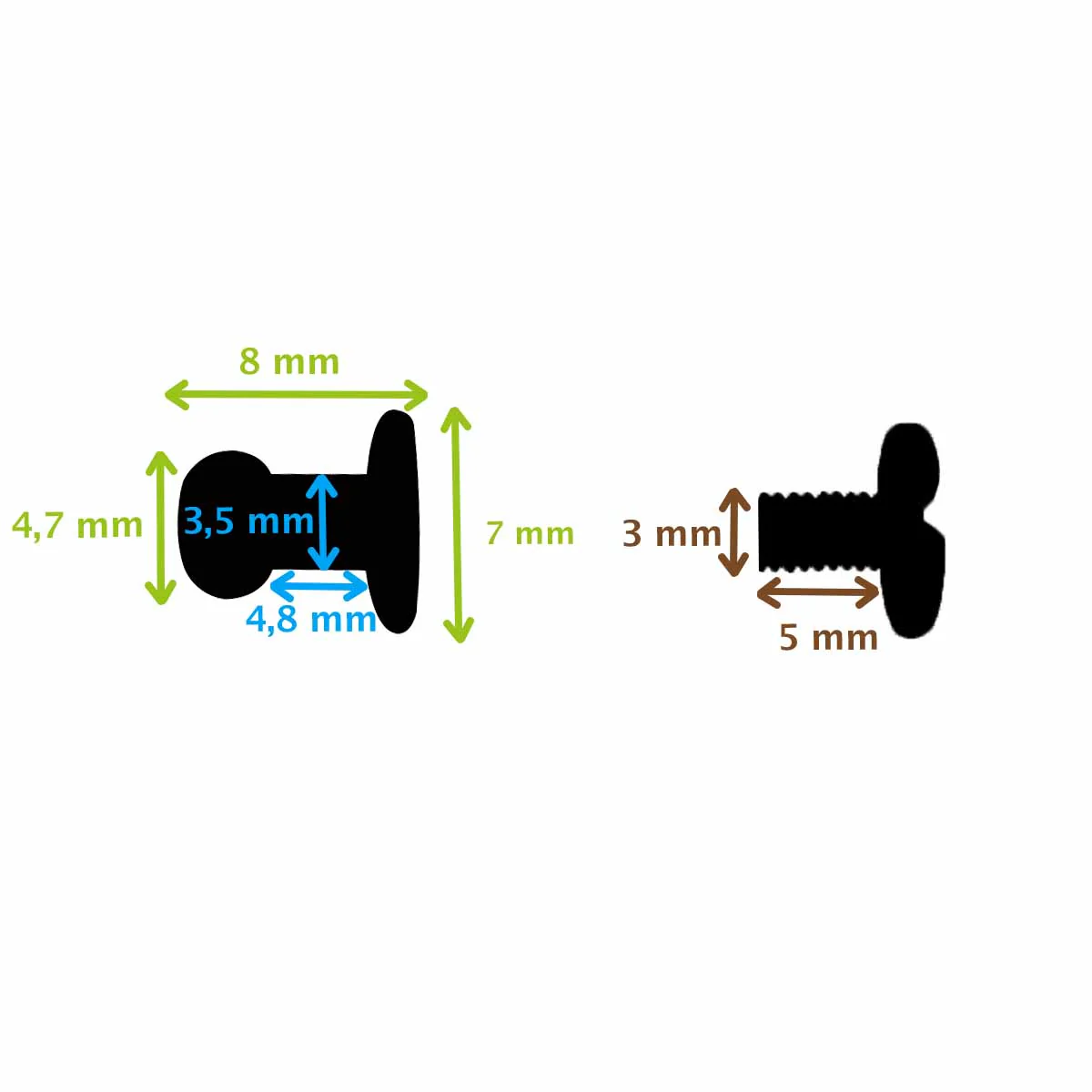
 You can choose to close your case with a screw-back stud.
To do this, make a 3 mm diameter hole that goes through all 3 layers of leather, then screw on the stud.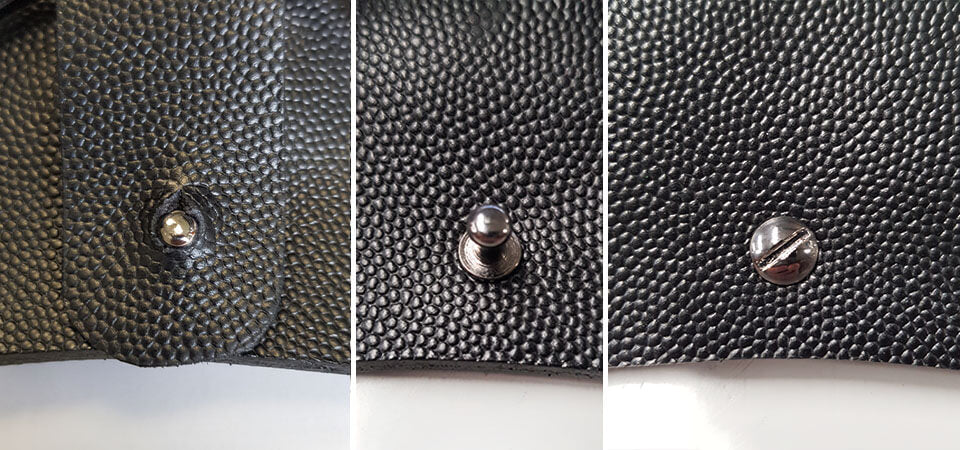
10. OPTION: PREPARE A STRAP
If you wish to wear your glasses case around your neck, make a leather strap. Punch 3 holes of 3 mm in the strap, feed the lobster clasp through, and close the strap using a rivet.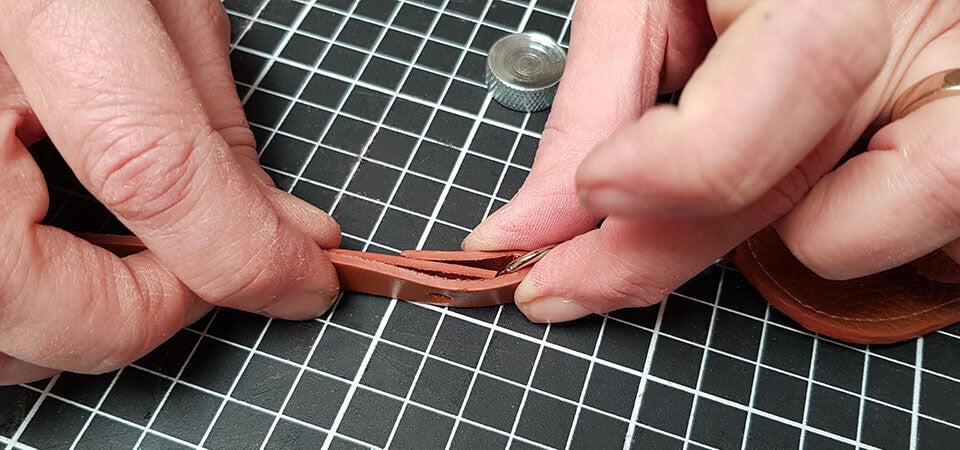
 All that remains is to attach the clasp to the case! It is also possible to swap the lobster clasp and the D-ring so that you can attach your glasses case to a belt, a handbag, etc.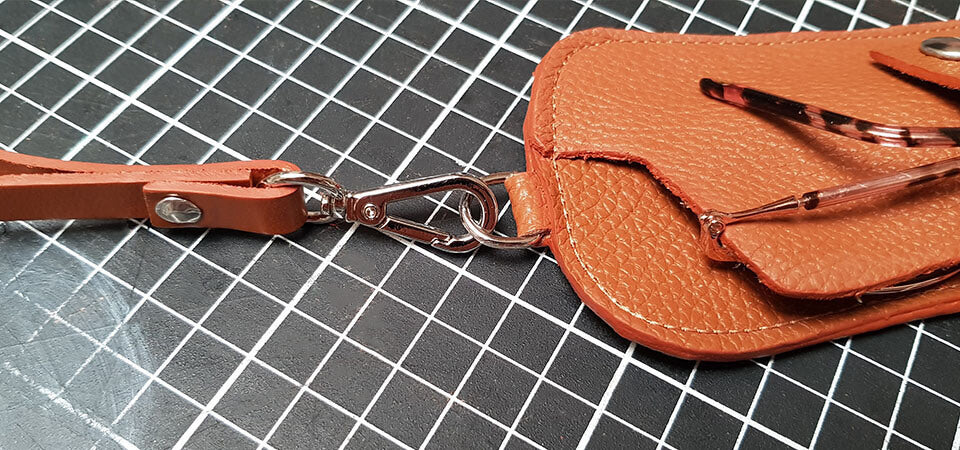
Your glasses case is finished
Ready to go everywhere with you!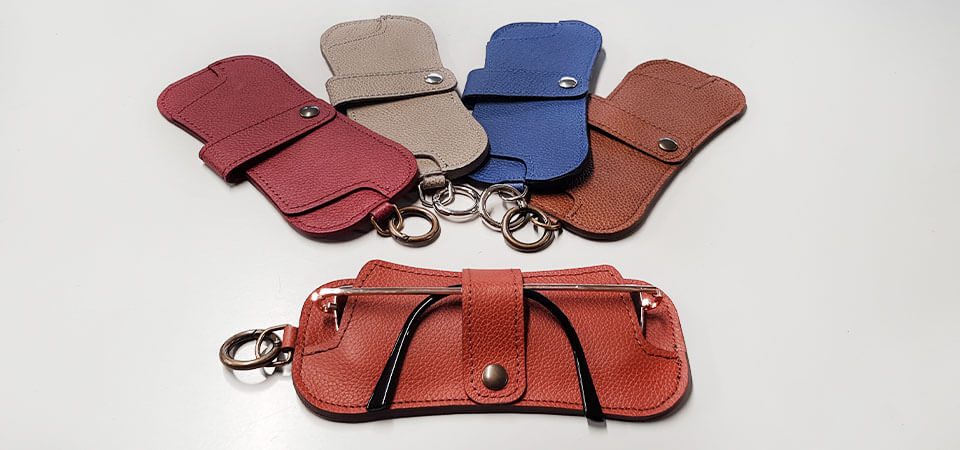
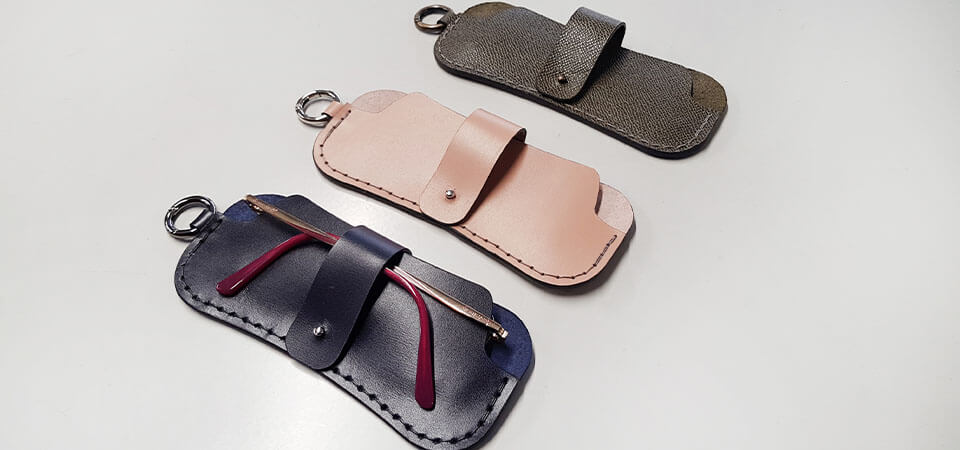
Here are other examples of finished work:
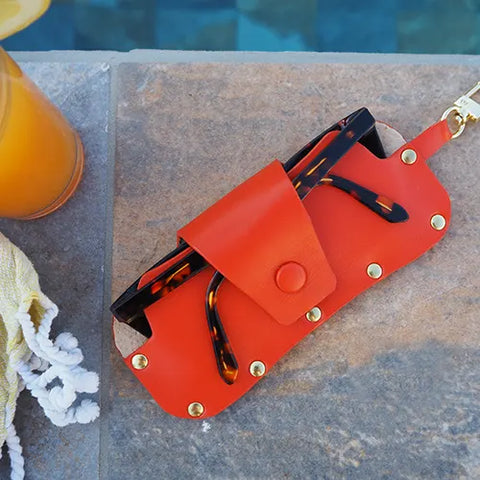
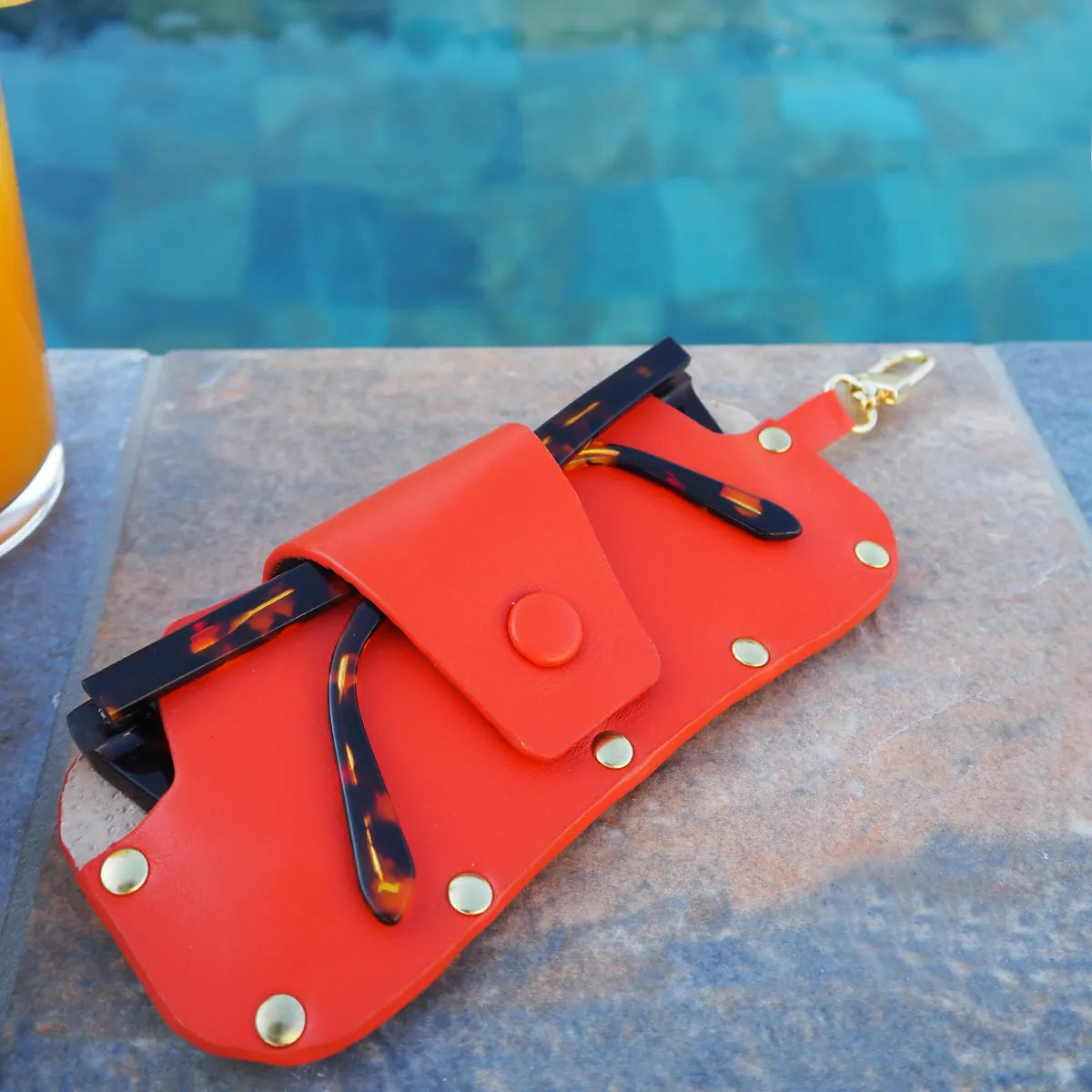
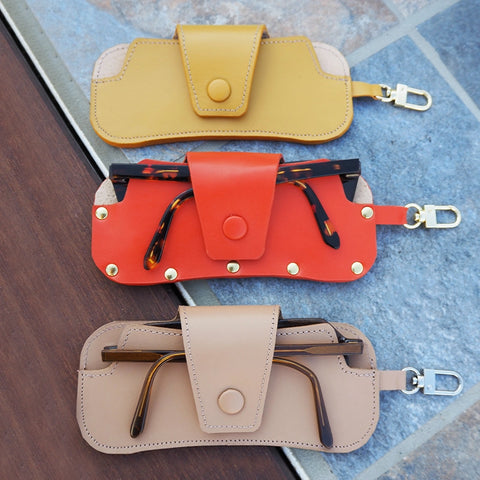
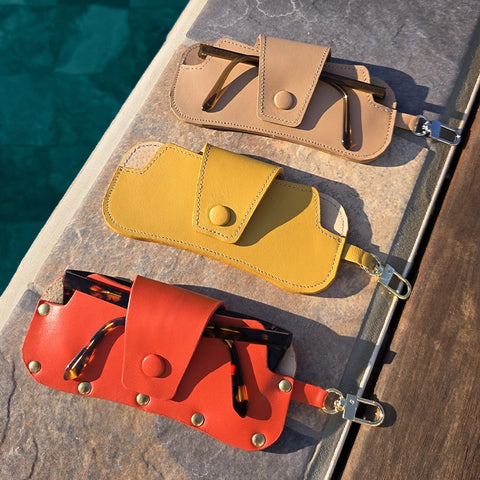
Case made without stitching using rivets. Can be hung around the neck with a chain or attached to a handbag.
Leather from the PETIT GRAIN CAVIAR range
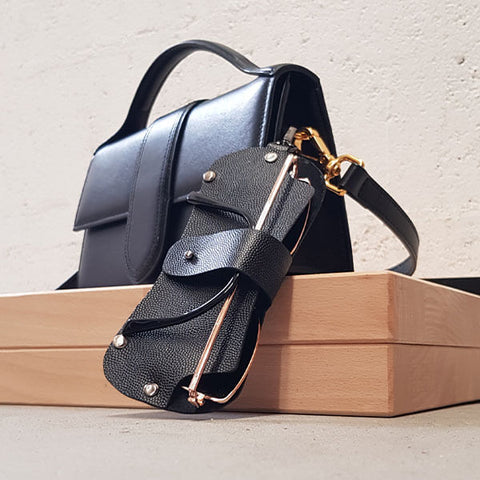 |
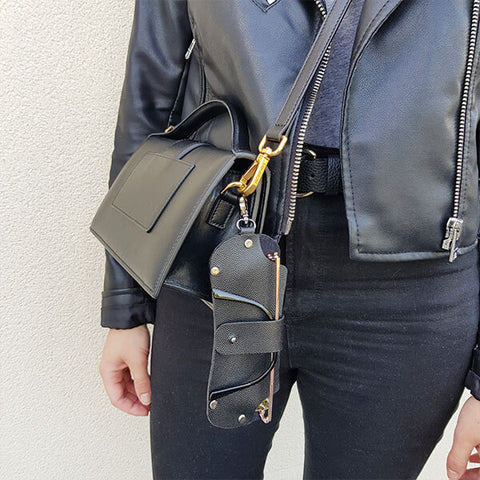 |
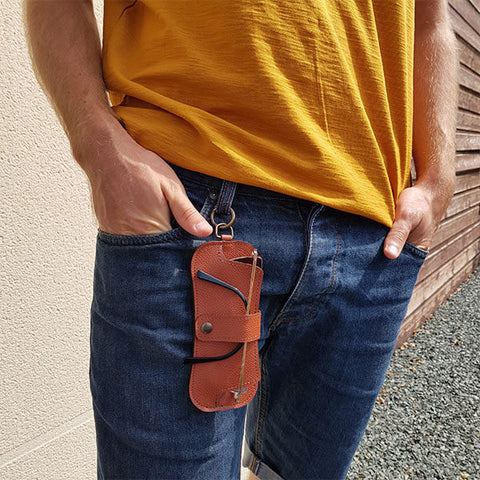
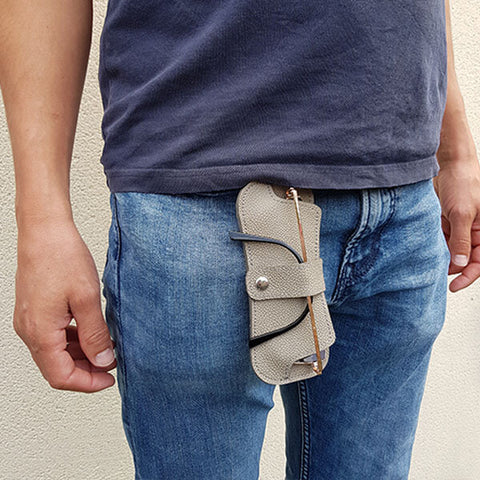
The cases below were made using the stitching version. We used round clasps to easily attach the case to a belt.
Leathers from the ARIZONA range
 |
 |


9 comments
Deco Cuir
Bonjour,
Une licence commerciale (permanente) est effectivement en vente sur notre site au prix de 20 € : https://www.decocuir.com/collections/patron-modele-tuto-cuir-creation-maroquinerie
Merci pour votre commentaire, l’équipe Deco Cuir
Amarande GRAND GNIEWEK
Est il possible d’acquérir une licence commerciale s’i vous plait?
Anonymous
Hello,
The pattern is free 😊 Unfortunately our site is currently not available in English. You can still use Google Translate to translate it (open with browser Google Chrome):
https://www-decocuir-com.translate.goog/blogs/blog-tutoriel-patron-cuir/tutoriel-etui-lunettes-soleil-cuir?x_tr_sl=fr&x_tr_tl=en&x_tr_hl=fr&xtrpto=wapp
Have a good day,
Deco Cuir
Valerie grossmsn
Bonjour! I’d like to purchase the pattern, but I can’t get the tutorial to change to English. Can you tell me if instructions are available in English? Merci!
Olga B Campbell
Thank you so much for the beautiful and quick pattern. Those cases look amazing!
Anonymous
Bonjour Jay,
Nous venons de rajouter le patron SVG de la version “Couture simplifiée” dans l’onglet de téléchargement.
Bonne journée, l’équipe Deco Cuir.
Anonymous
Bonjour, est-il est possible d’ajouter le patron cricut (svg) de la version “couture simplifiée”. Le SVG actuel ne propose que la version “avec couture” dont la partie découpée s’arrête plus bas (avant le bas du mousqueton). J’aurai aimé avoir celui qu’on reçoit avec le tutoriel du kit. Merci d’avance.
Anonymous
Merci!!! Vraiment Jolie!!!
Anonymous
Merci à vous pour ce partage, je vais m’en faire un très vite !