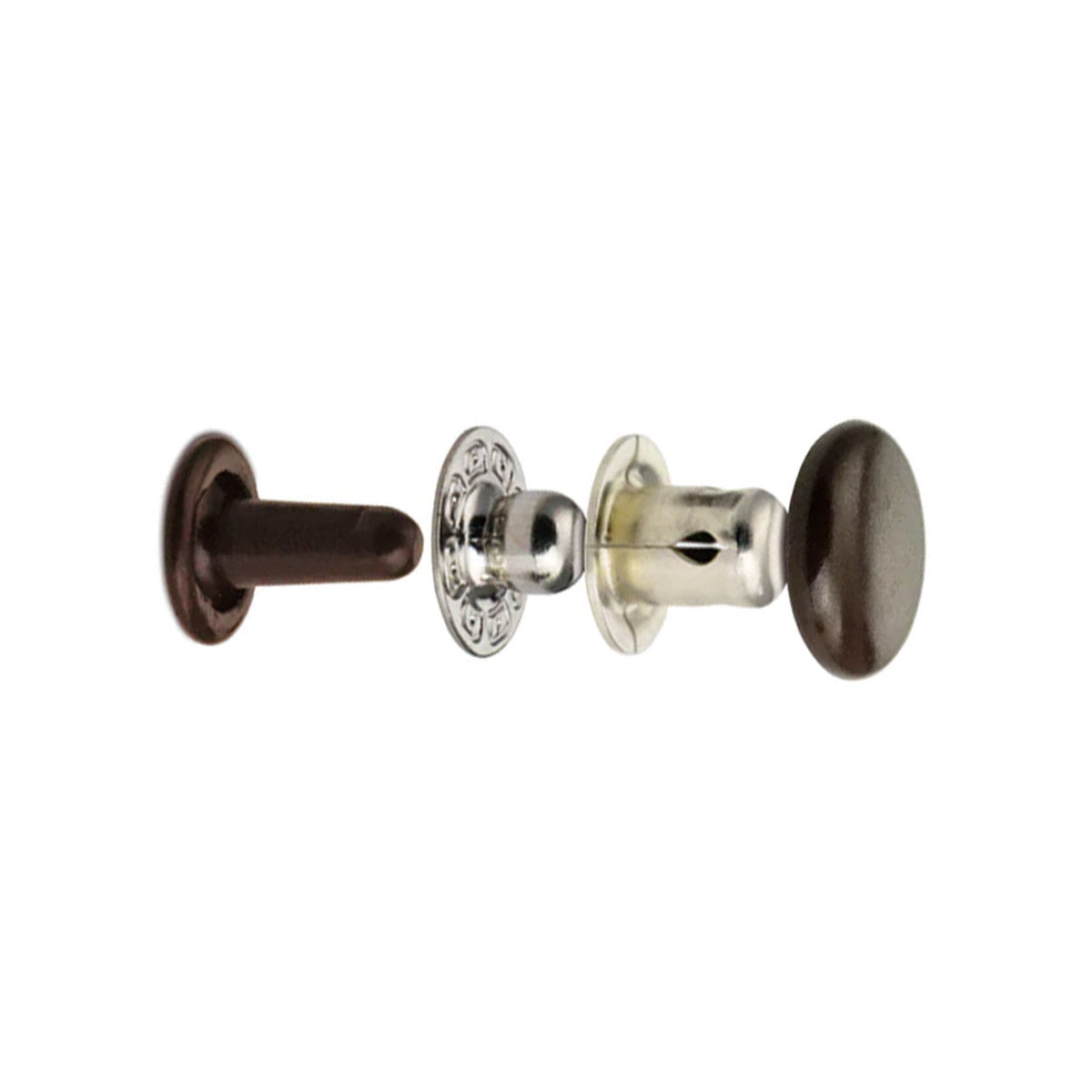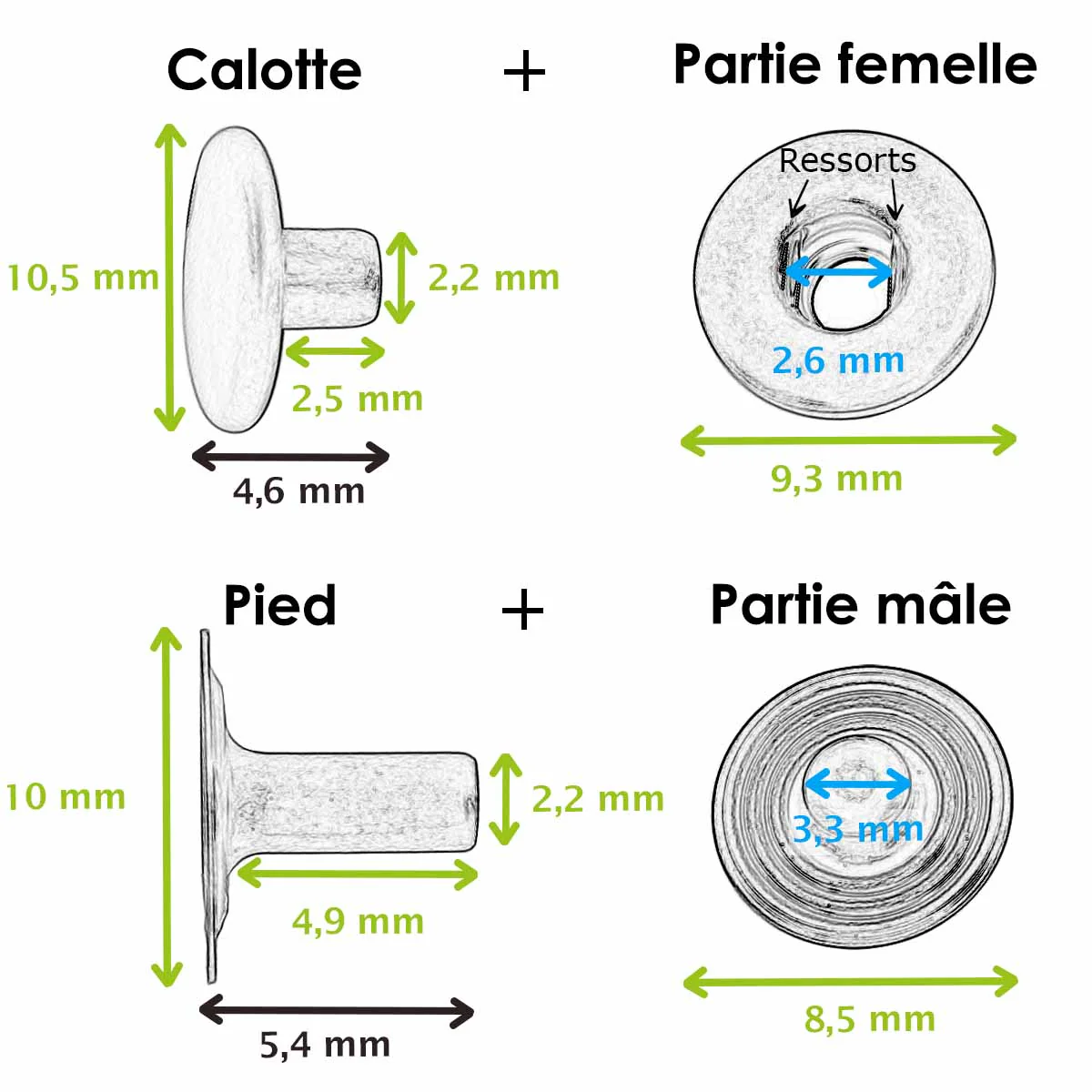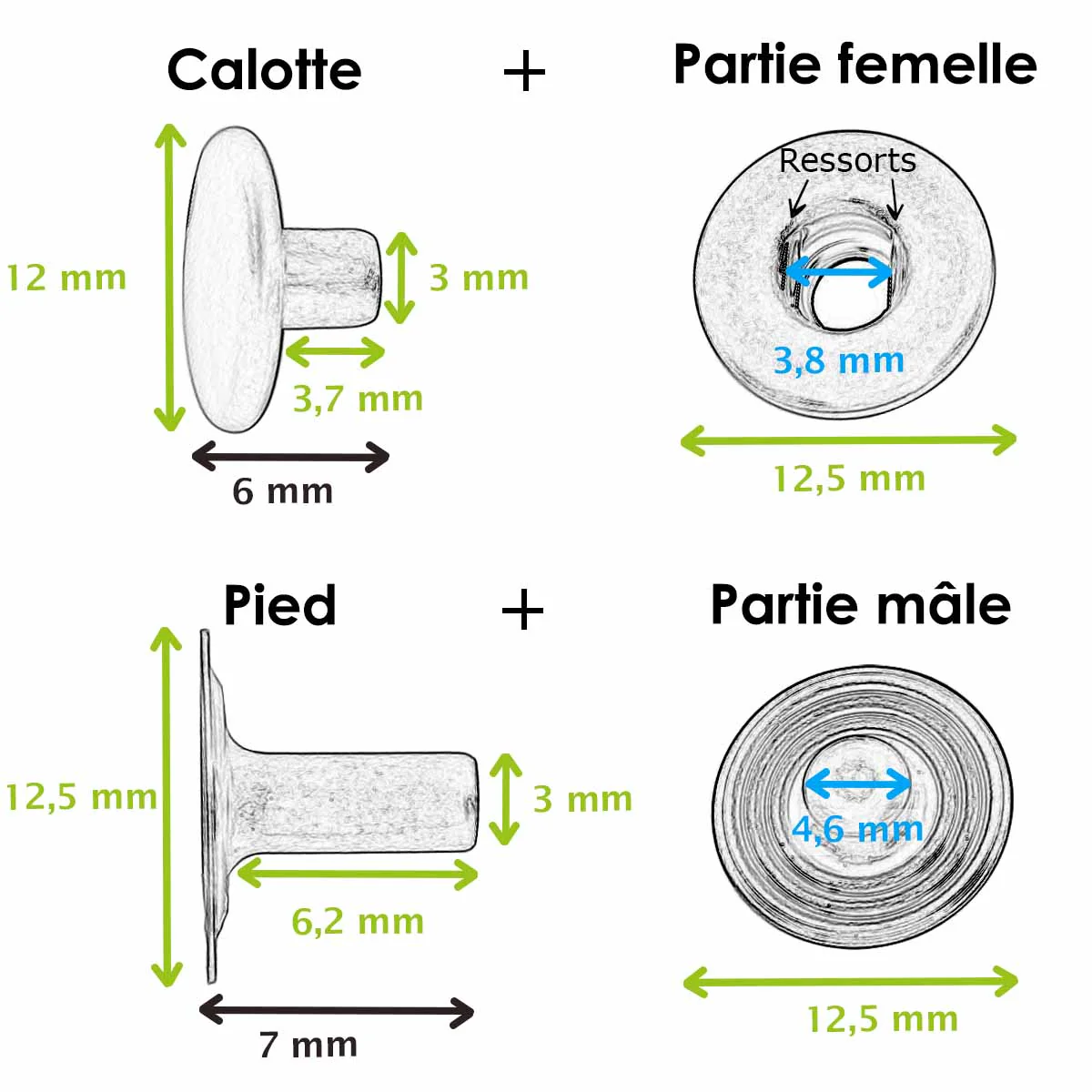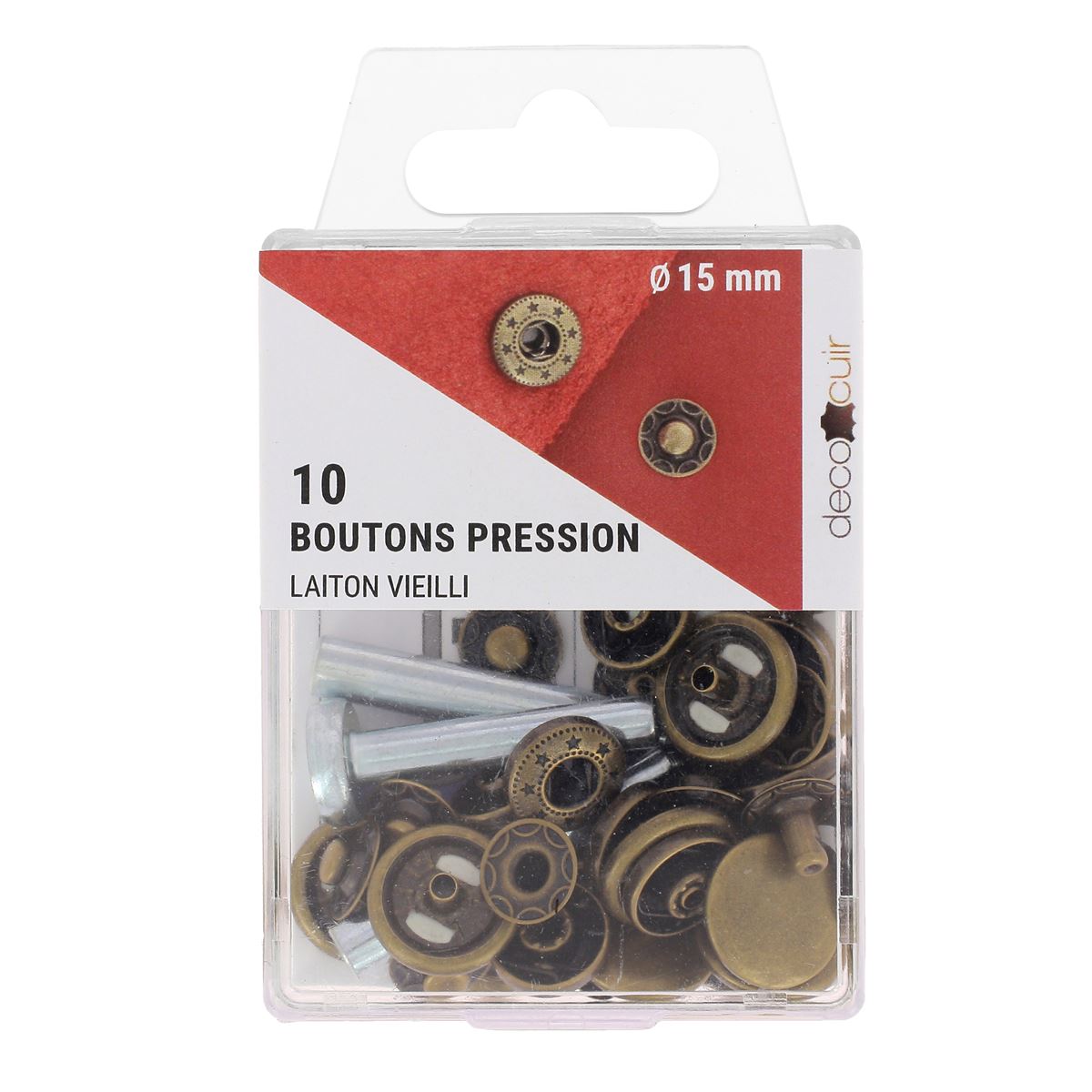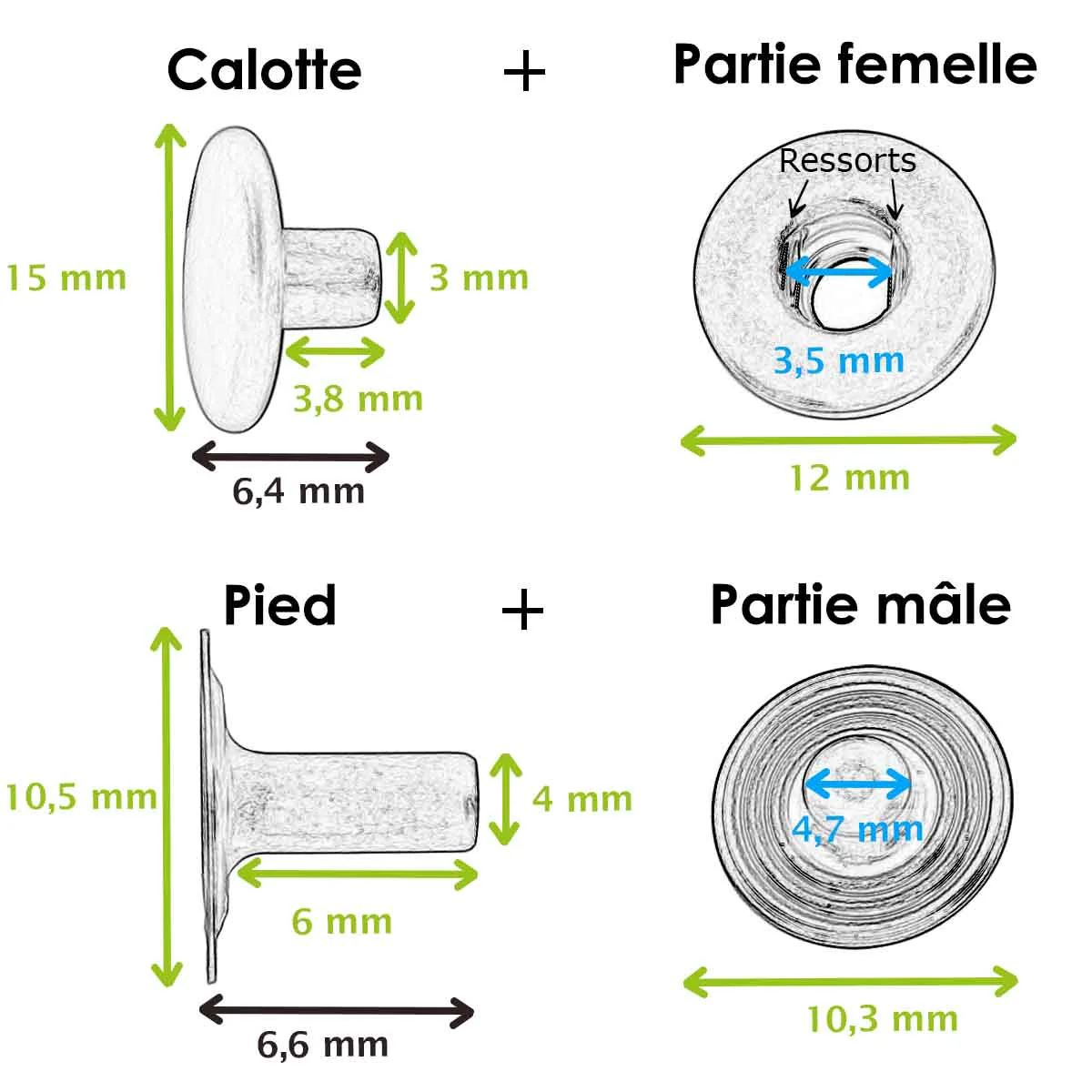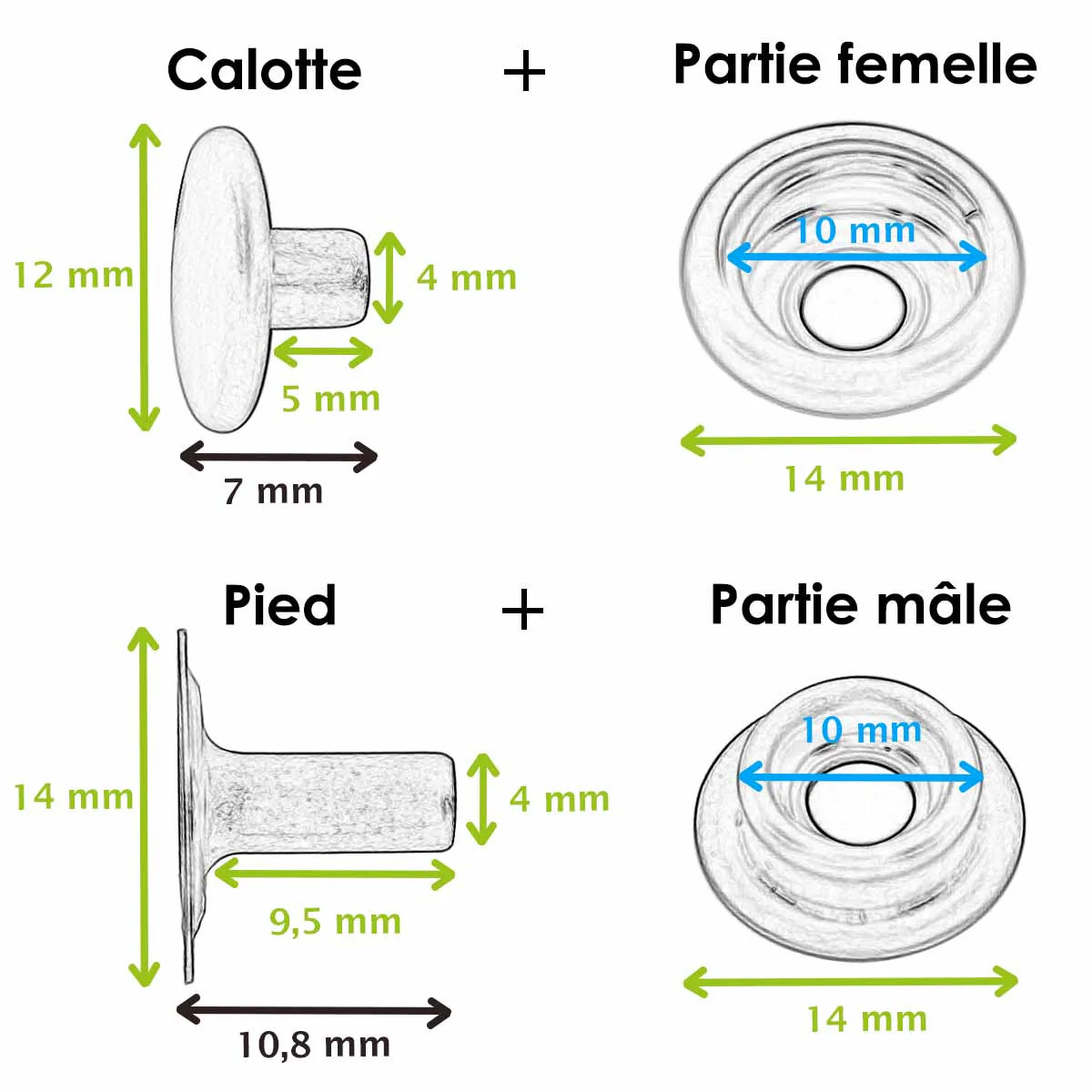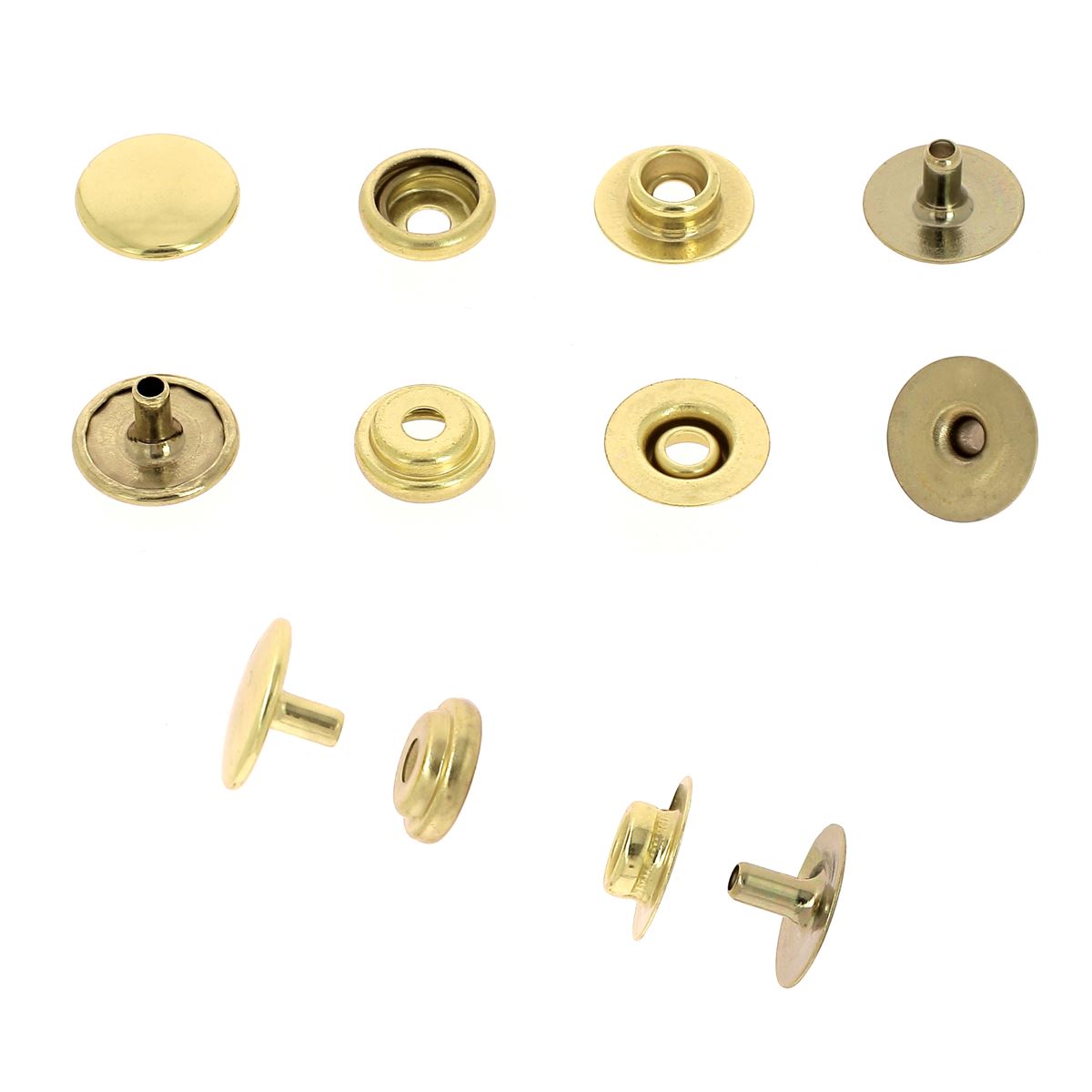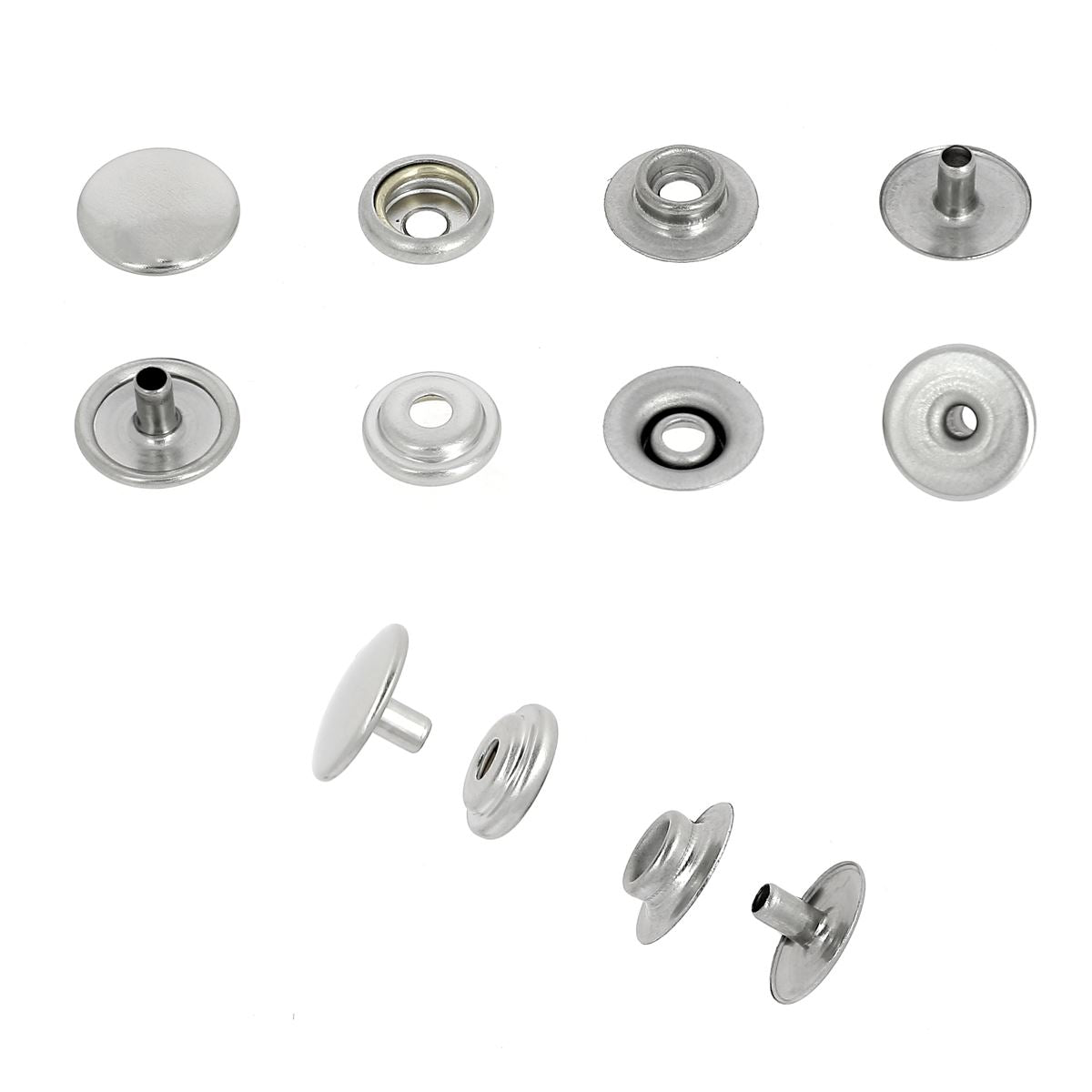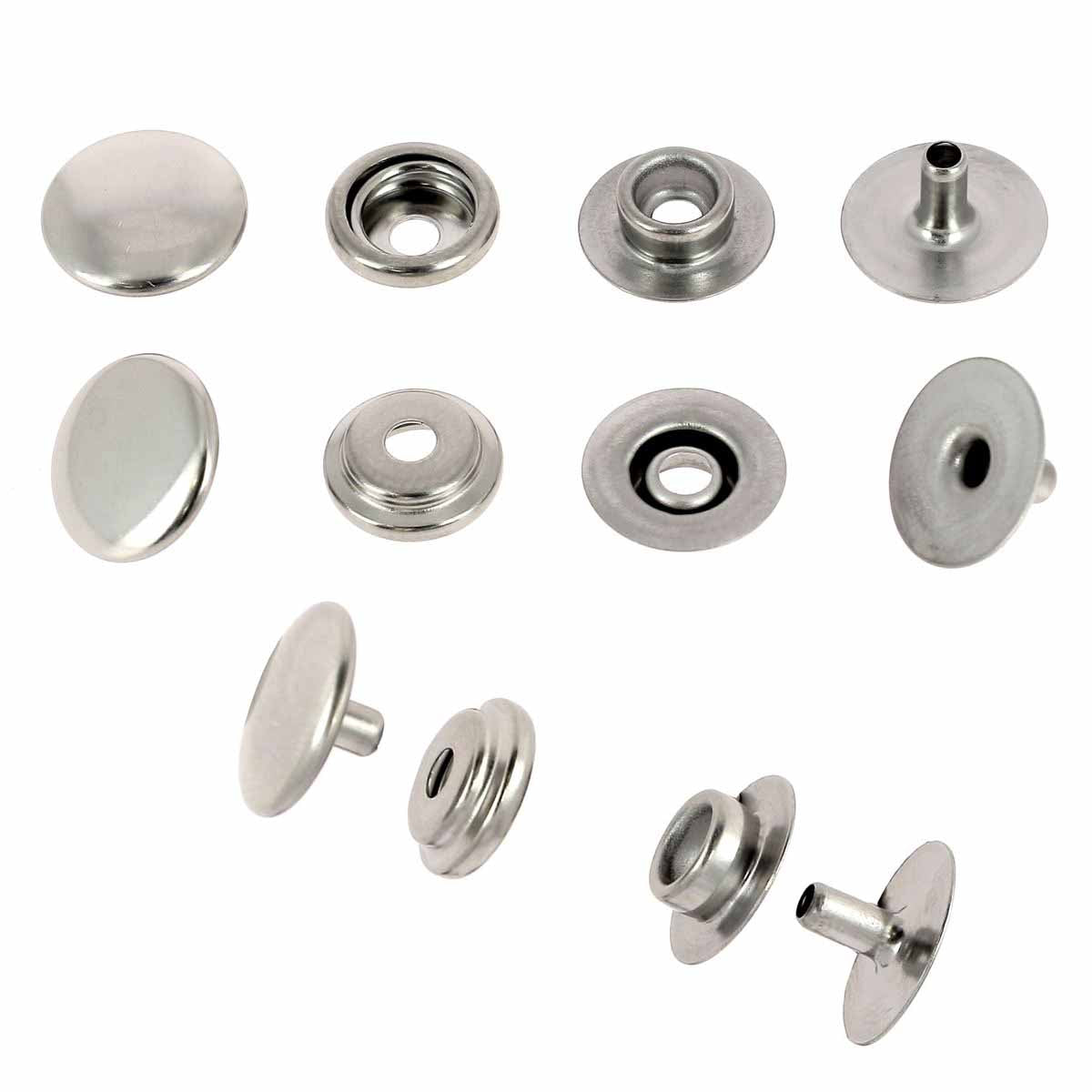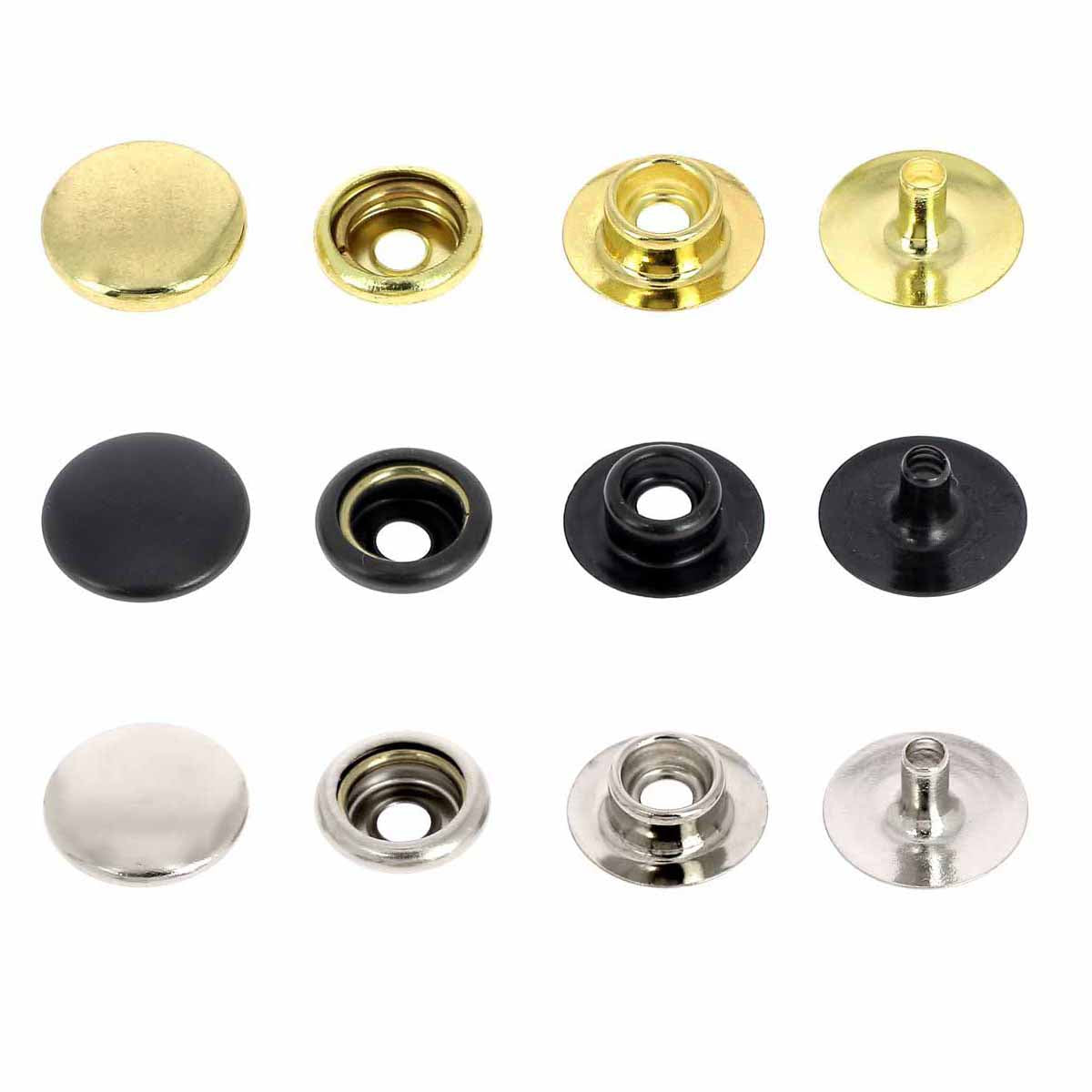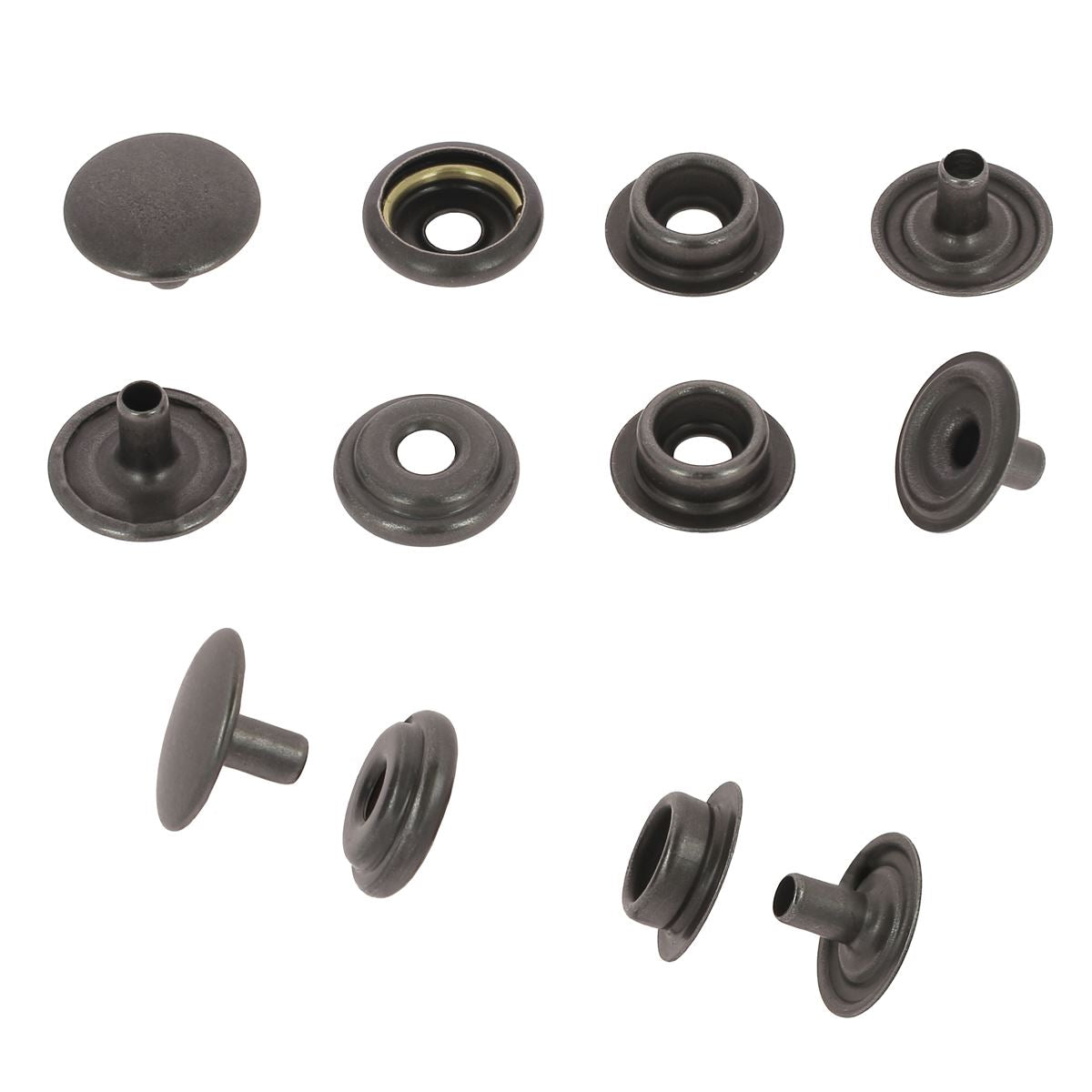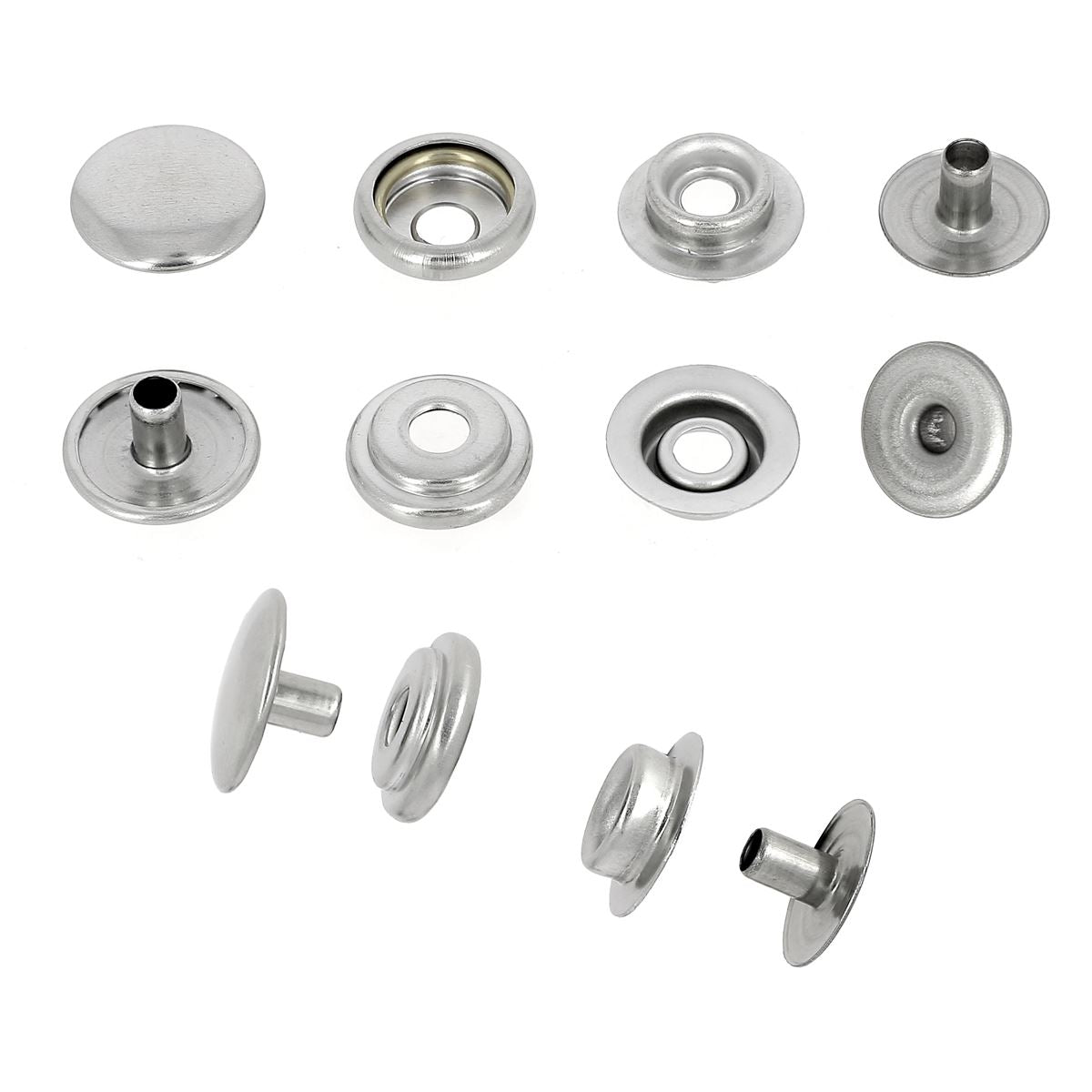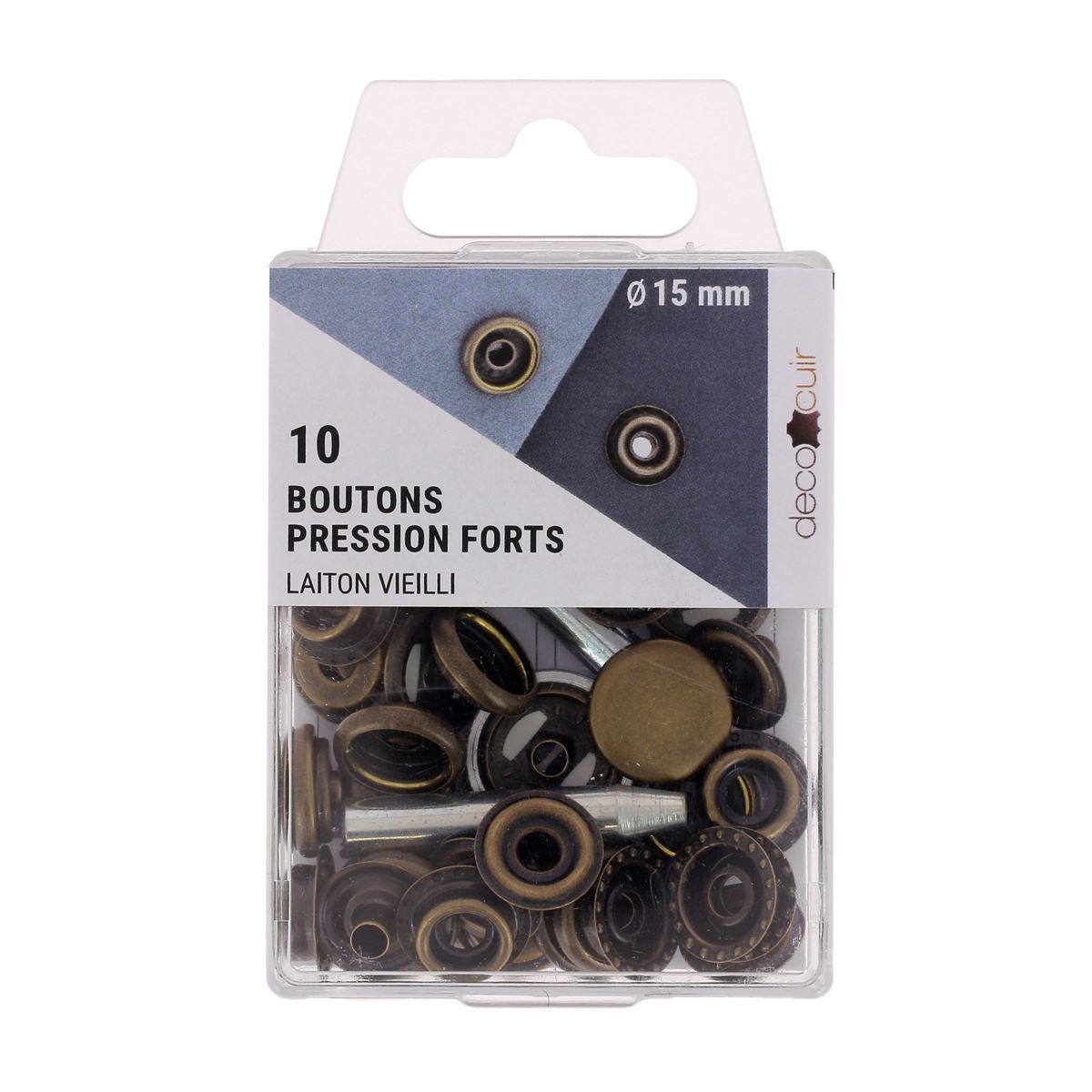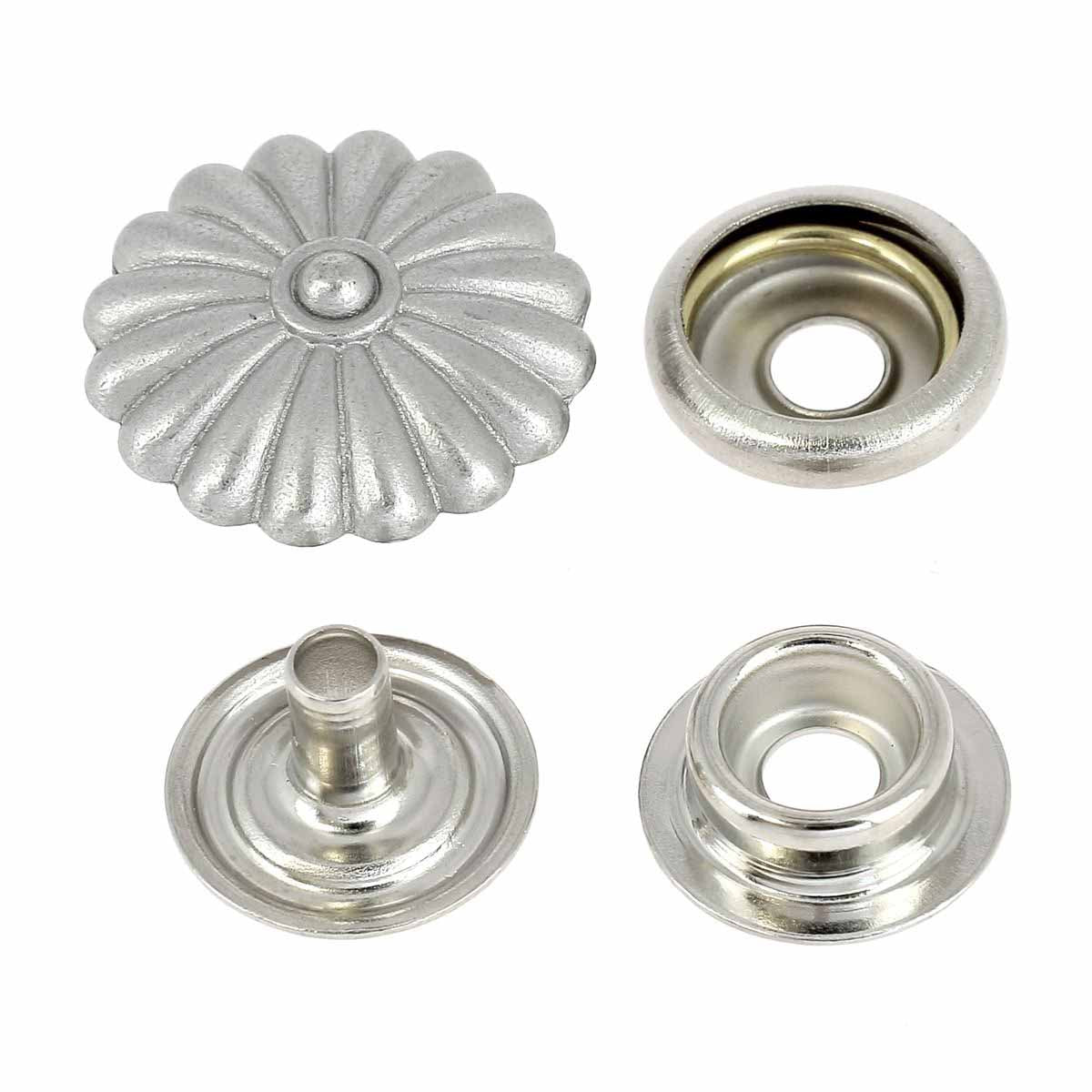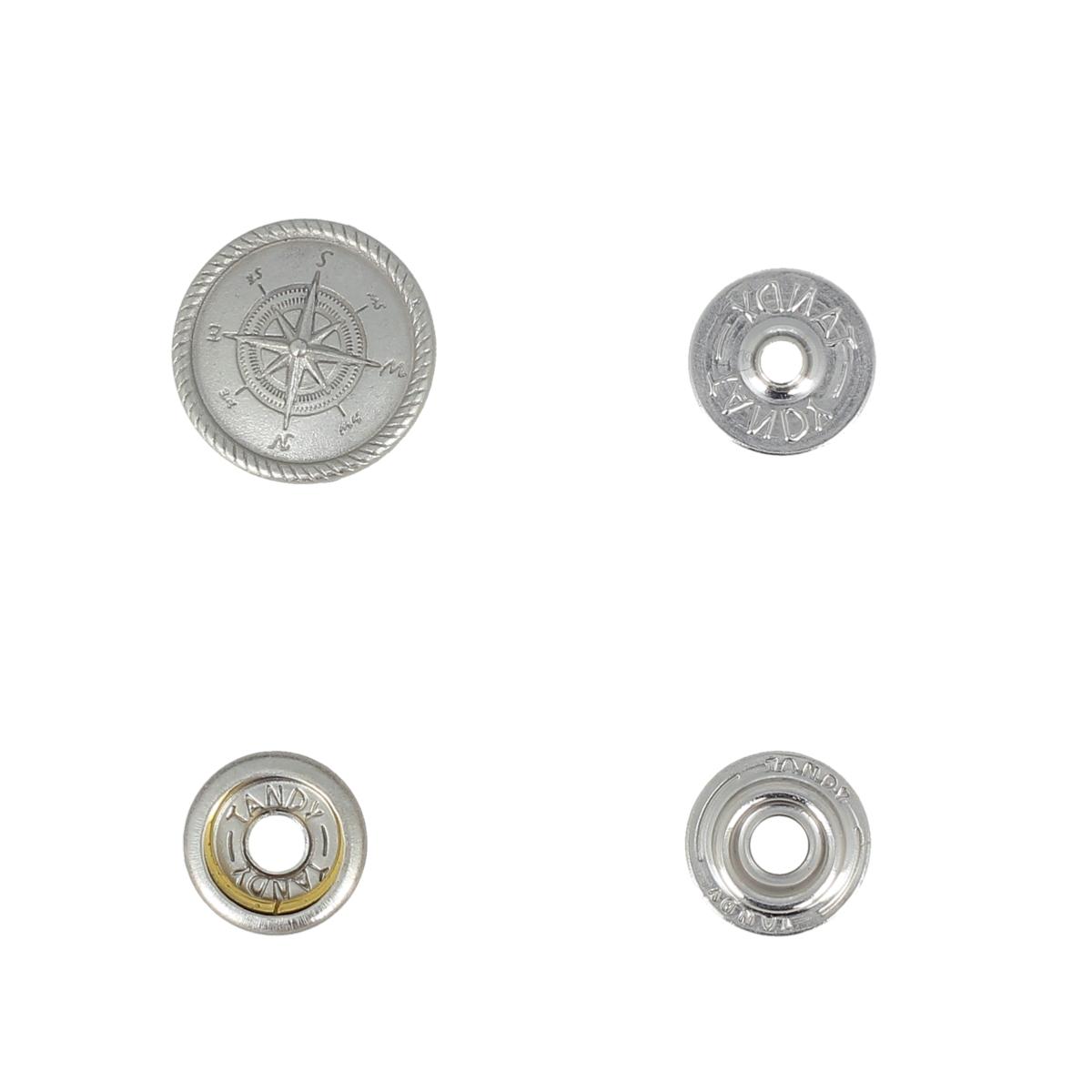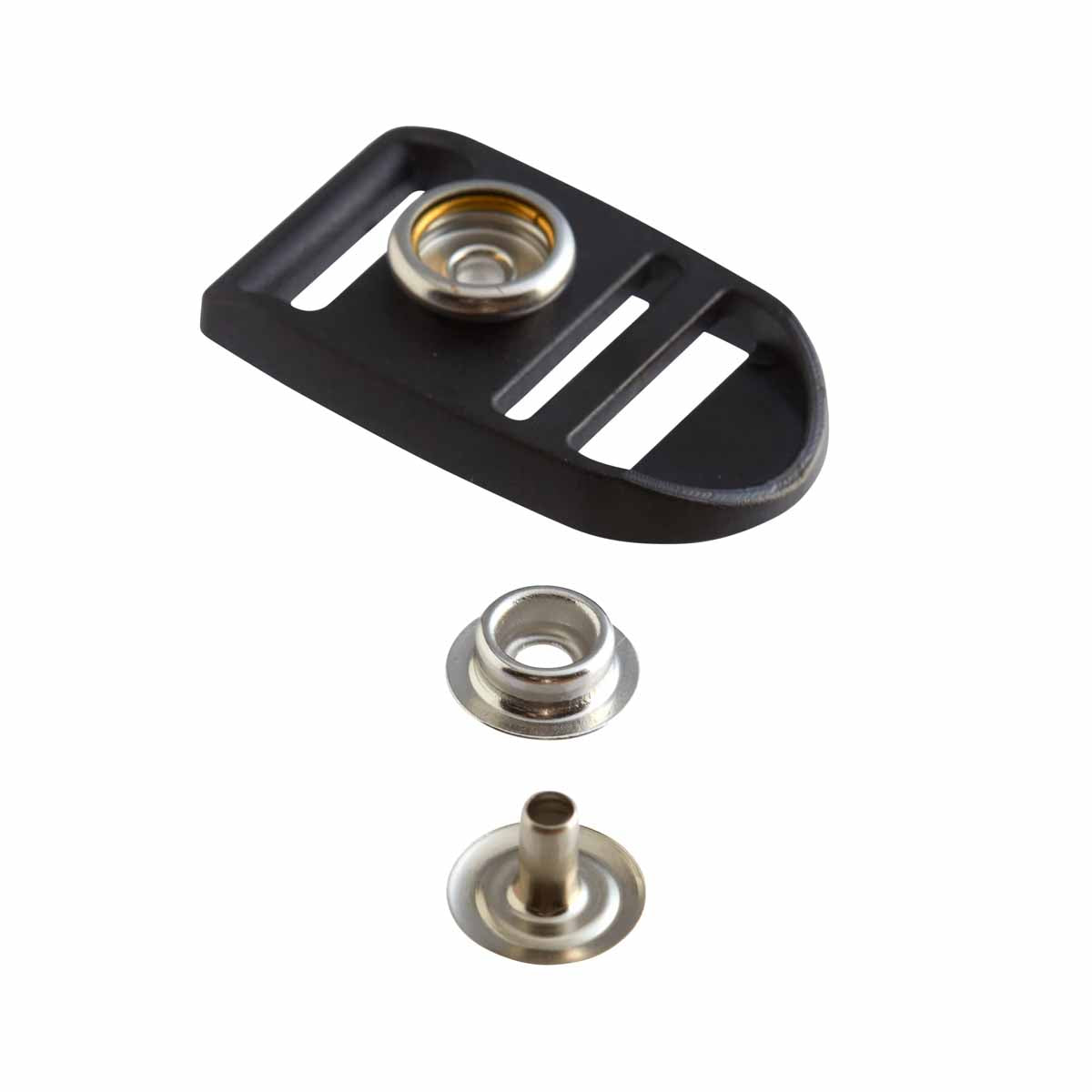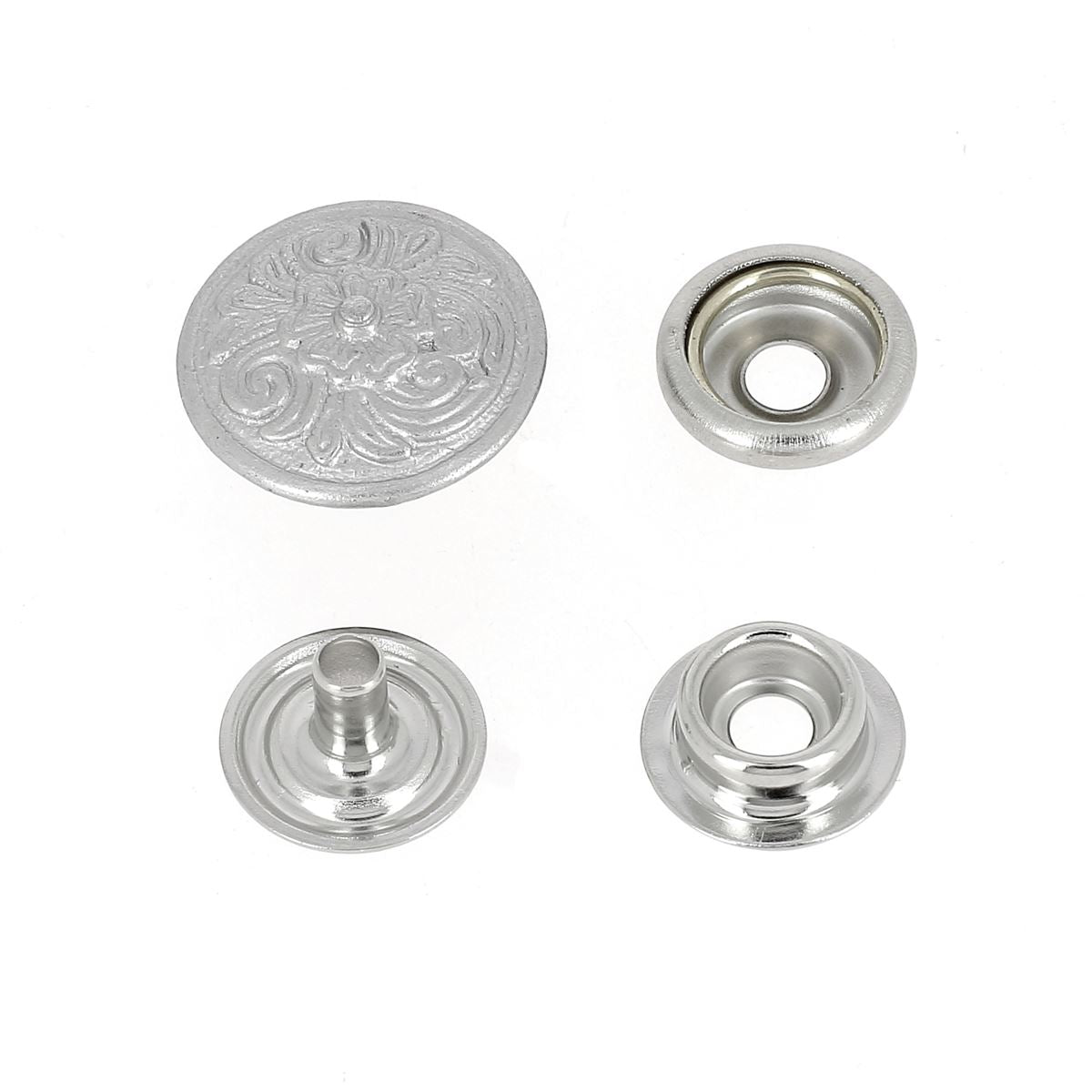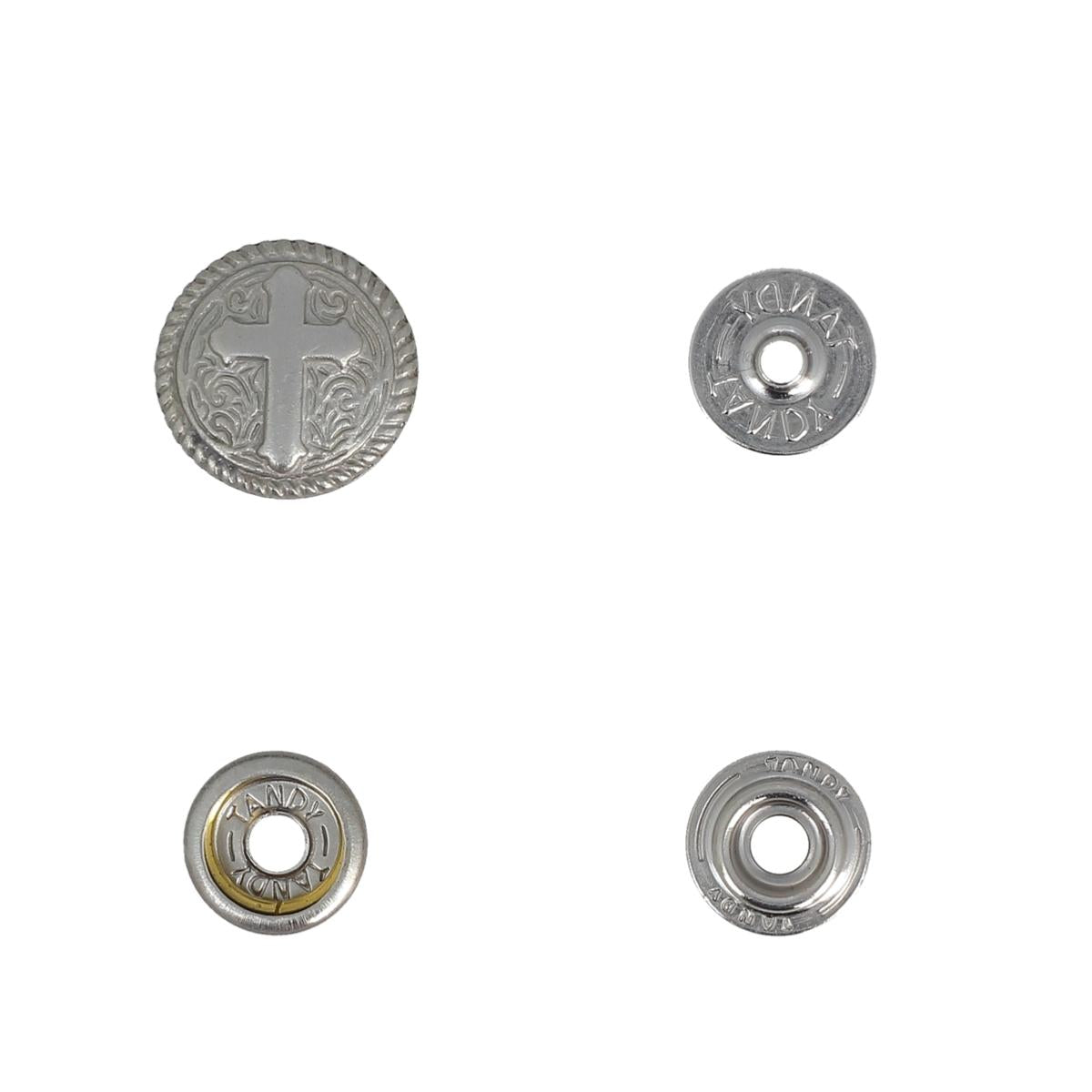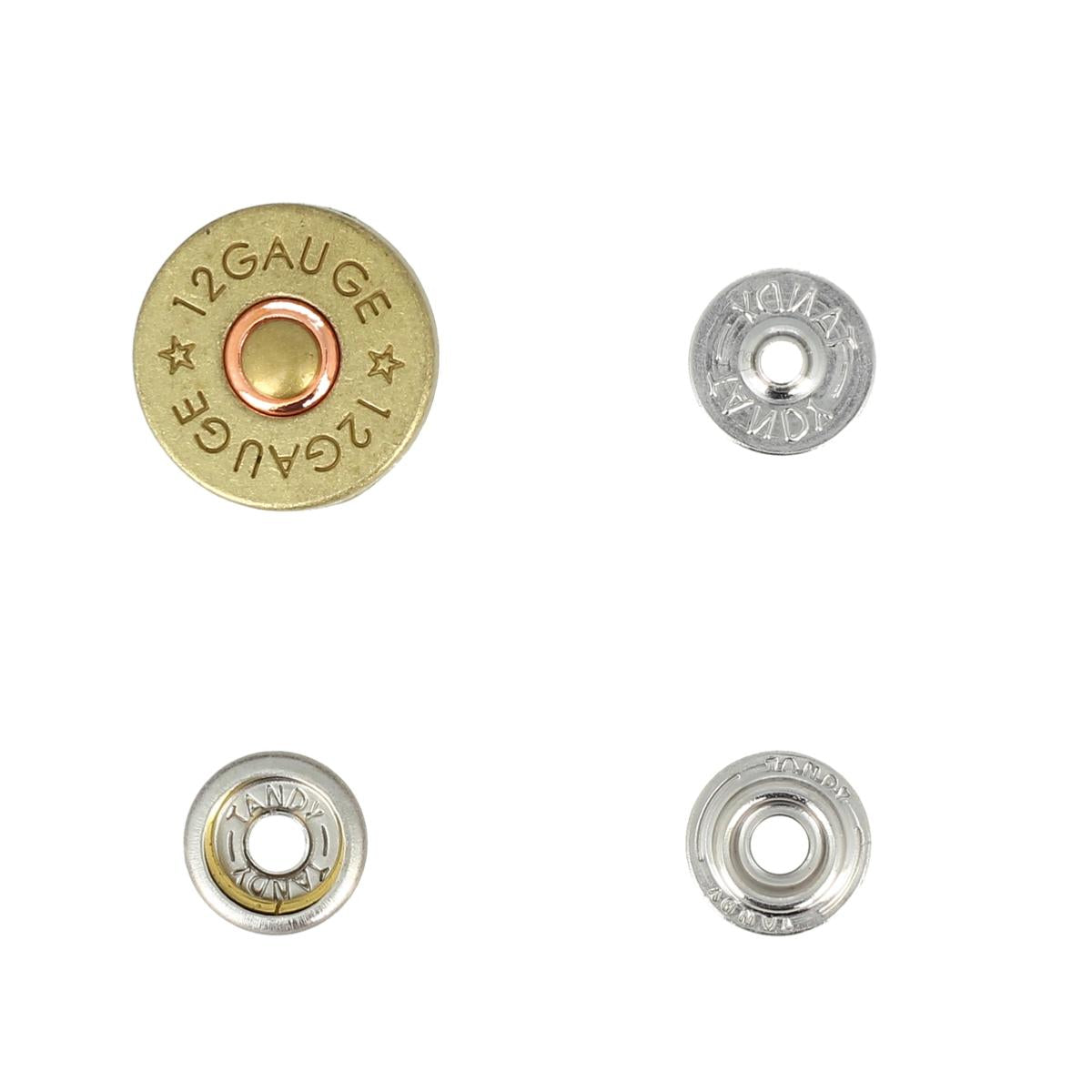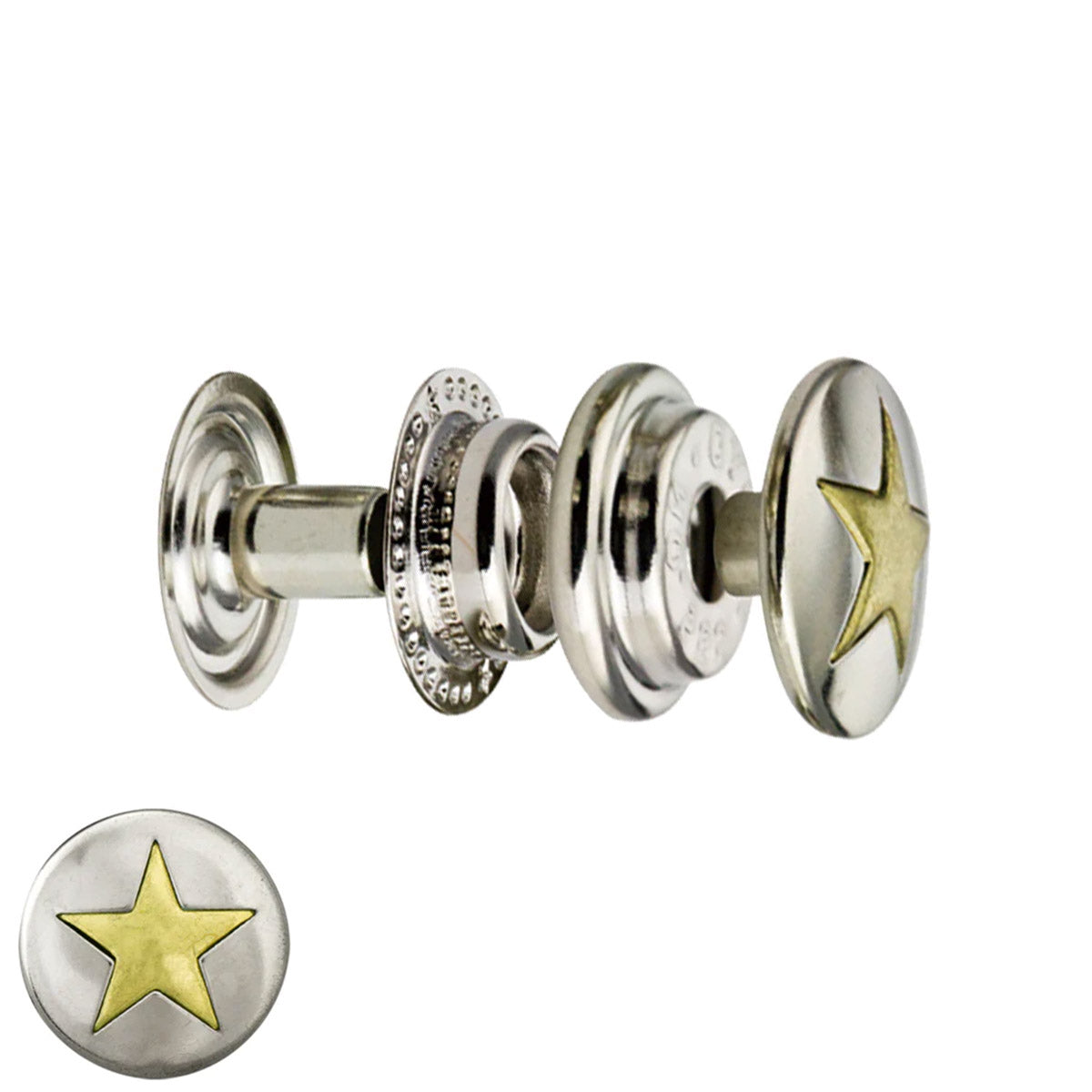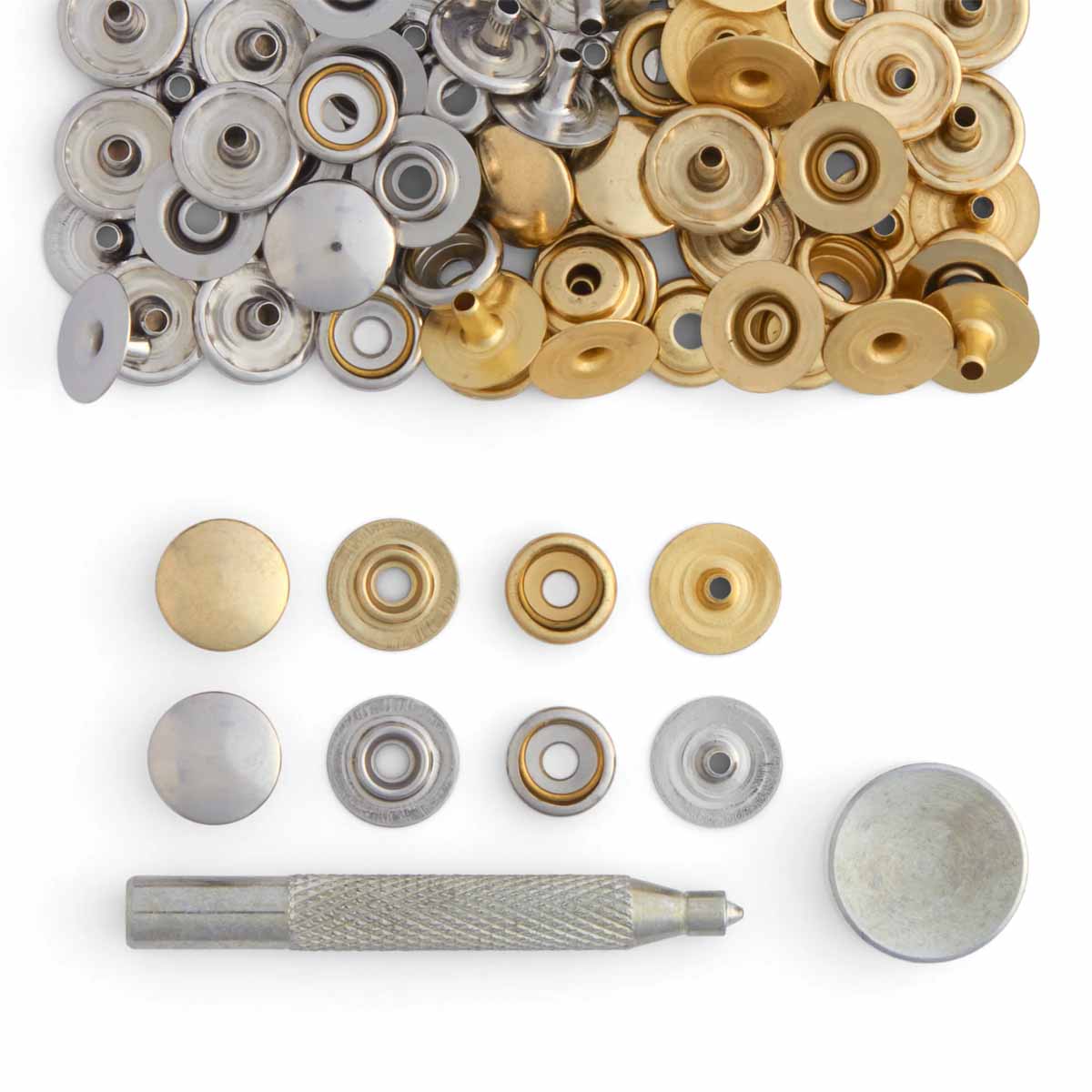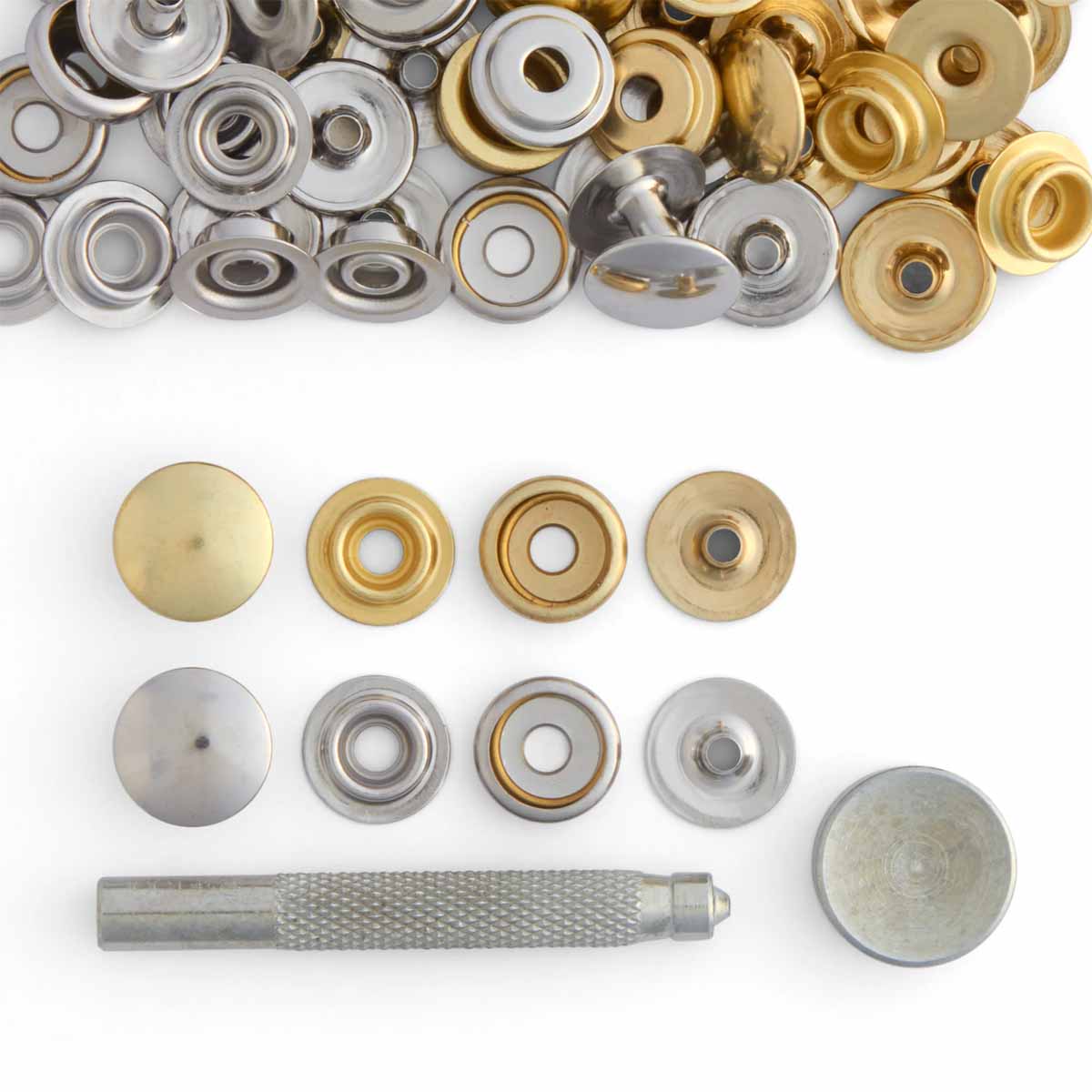
Thanks to our extensive catalog of snap fasteners and other attachable accessories, all your leather craft and haberdashery projects can be completed. Whether you're a beginner or an experienced creator, you're sure to find the snap fasteners you need within our range.
Our snap fasteners, in sets, with or without an installation tool, are the missing element to bring your creative inspirations or customization projects to life!
Our Range of Snap Fasteners: Finishes and Mechanisms
To support you in all your artisanal creations, Deco Cuir offers a wide range of snap fasteners.
Finishes
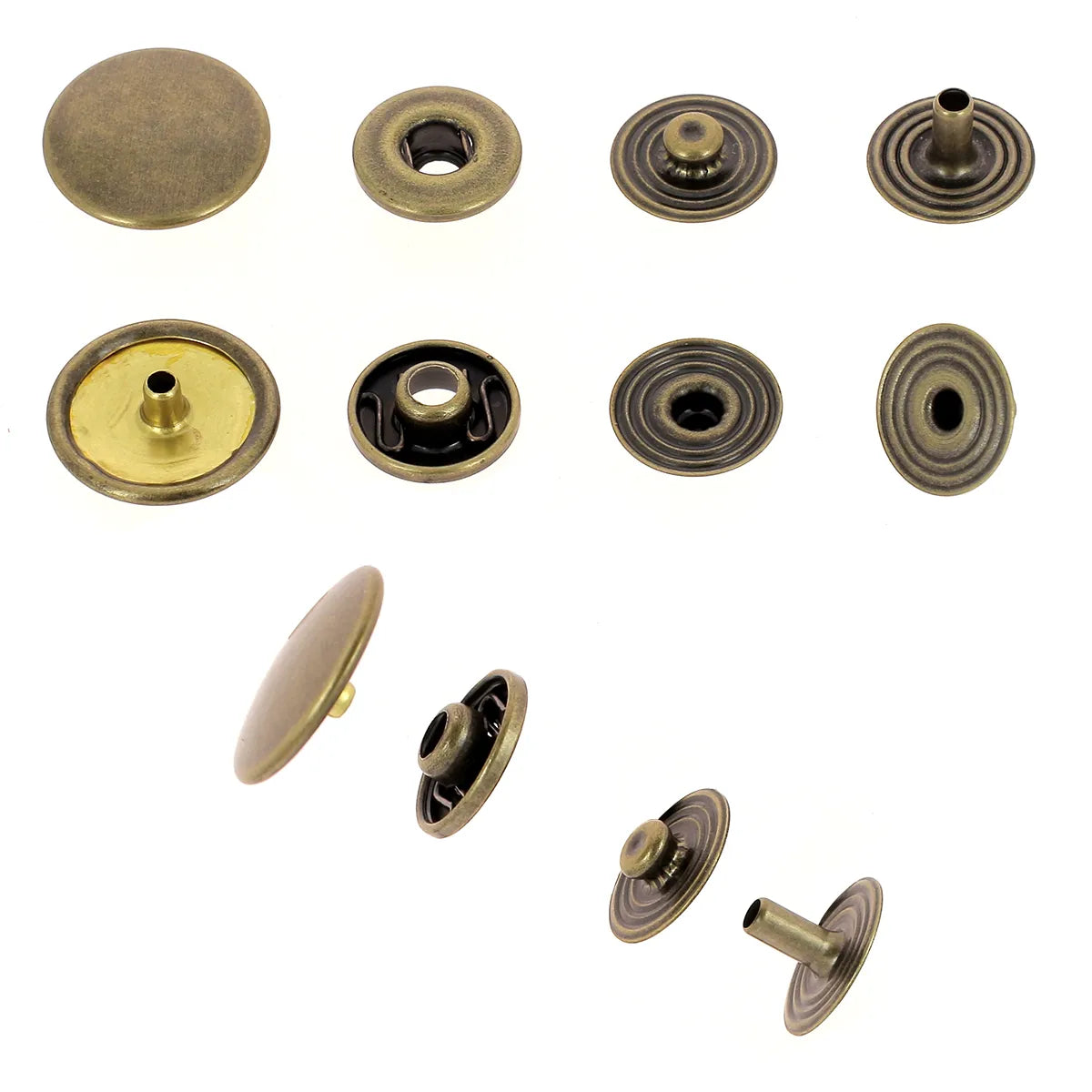
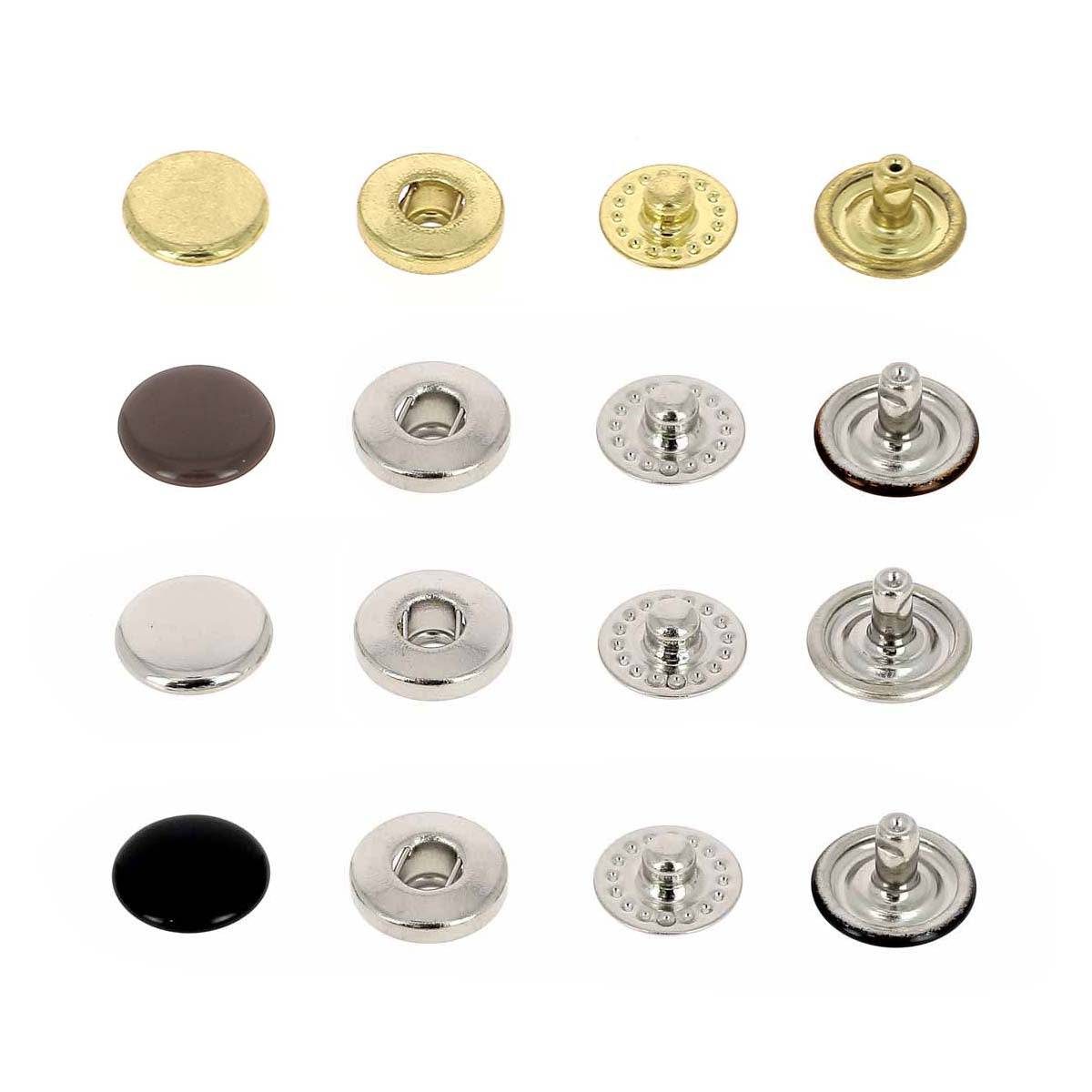
The single cap, double cap, and fancy cap should be chosen according to the nature of your creative project. A single cap is suitable when the back of the snap is hidden between two layers of leather. The double cap, on the other hand, is suitable for unlined works.
The Closure Mechanism
Again, everything depends on what you want to achieve. The S-spring is the standard mechanism. It can be used for thin to medium leathers and small leather goods. The ring spring (heavy-duty snap fasteners) should be preferred for thick leathers or pieces under significant mechanical tension (such as heavy jackets or blousons).
Discover Some Use Cases for Snap Fasteners
Snap fasteners can be used in a great many creative and assembly projects. Indeed, they are perfect for designing closures for small leather goods (wallets, pouches, purses), handbags, and satchels.
These accessories are also very useful for creating leather jewelry, leather belts, and even original clothing, effectively replacing a zipper.
How to Choose Snap Fasteners?
To choose snap fasteners suitable for your artisanal project, it is necessary to review a certain number of essential elements.
First, you must select the material of these snaps, knowing that each has its advantages. Stainless steel (inox) is robust, while brass does not rust. Zamac, for its part, is particularly appreciated for fancy designs.
You must then choose the color that best matches your creation. We offer a wide variety of finishes: nickel-plated, aged brass, gunmetal, luxury gold, glossy black, or even chocolate brown. It all depends on your desires!
Let's not forget the question of diameter, which is fundamental:
For thin bracelets and wallets, choose a diameter of 10 to 12.5 mm;
If you are making a satchel or a force bracelet, a diameter of 15 to 17 mm will be more appropriate;
The 20 mm diameter is intended for large luggage and belts.
Finally, a fundamental criterion is the mounting method. Depending on the equipment at your disposal, you can choose between a mallet setting tool set (requiring a polymer or wood mallet), a plier setting tool set, or the purchase of a hammer-in kit.
The 3 Methods for Attaching Snap Fasteners to Leather
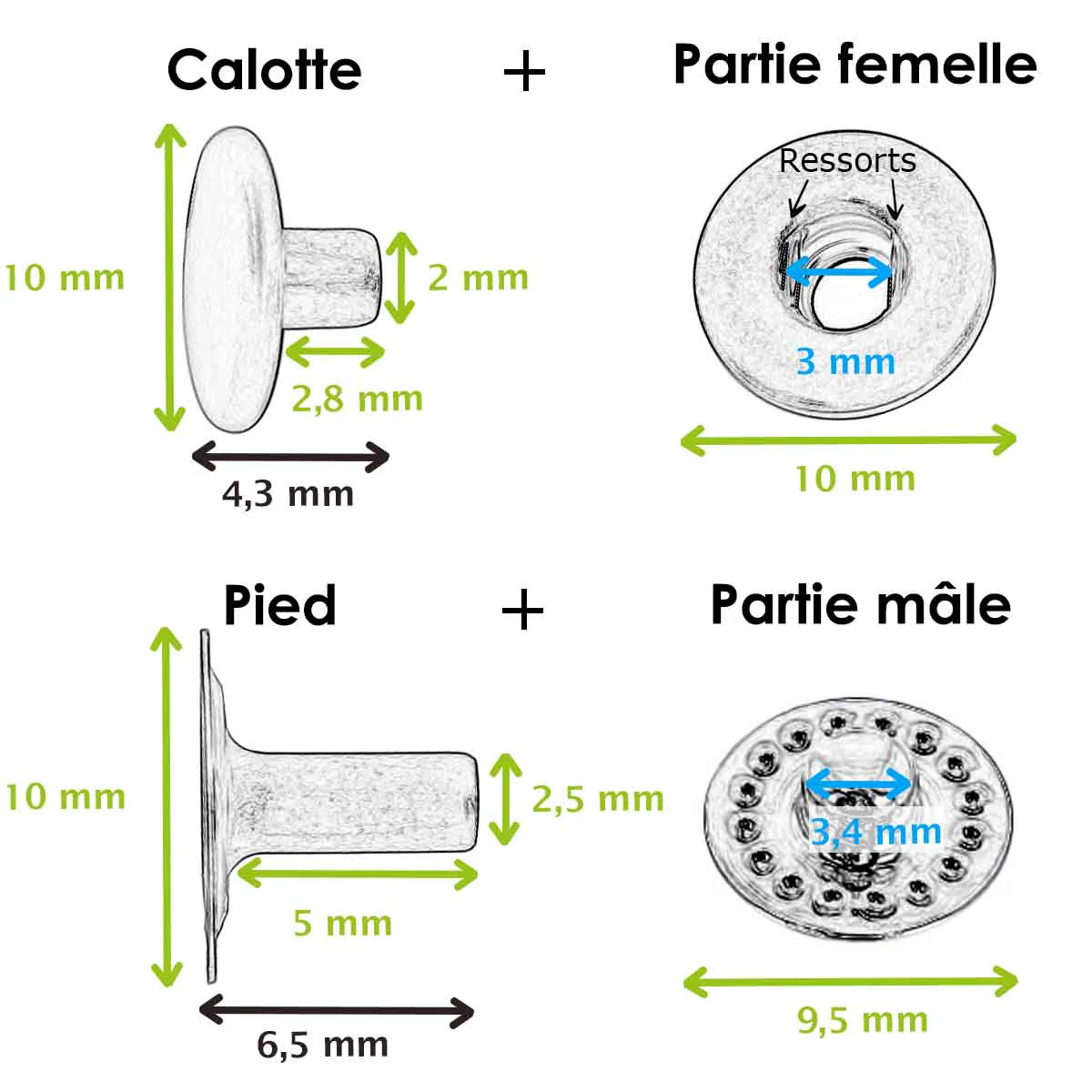
To attach snap fasteners (which consist of 4 parts) to leather, three methods are possible.
But, first of all, it is essential to prepare the material. Indeed, you should never pierce leather with the nail of the stem, as there is a risk of damaging the support. Therefore, equip yourself with a punch tool or a punch plier to make a hole whose diameter corresponds exactly to the diameter of the nail of your metal parts.
Once this step is completed for piercing the material, opt for one of the following methods to attach your snap fasteners.
Method 1: Mallet Installation
You will need a mallet with a polymer or raw leather head, a set of hammer-in setting tools, and an anvil or an Ertalon plate with a hole in the center. In this method, the tool flares the internal metal tube to rivet it (this technique is also the same for attaching your rivets).
This is an effective way to attach your snaps.
Method 2: Manual Plier Installation
For this approach, equip yourself with crimping pliers and interchangeable tips. Here, a squeeze of the handle is enough to crimp (you need to have a minimum of strength).
The advantage of this method is that you don't need heavy support and it is quiet. However, it is unsuitable for ring-spring snaps or thick leathers.
Method 3: Bench Press Installation
With this method, you multiply the mechanical force by using a lever. To do this, you need a manual press and a set of dies.
While it requires no physical strength, this way of attaching your snaps requires a more significant investment budget than the others. In addition, as the tool is fixed and heavy, you need to have space to set up a workshop.