


How to install accessories?
For your sewing projects (fabric, leather, imitation leather...), installing accessories is often necessary: eyelets, snap fasteners, rivets…
Each of these accessories must be mounted with an appropriate tool and setting die/matrix. There are 3 tools for installing a rivet, eyelet or snap fastener on your creations: the hand press, the manual press pliers, and the bench press.
The choice of installation tool should be based on your intended use and your budget.
-
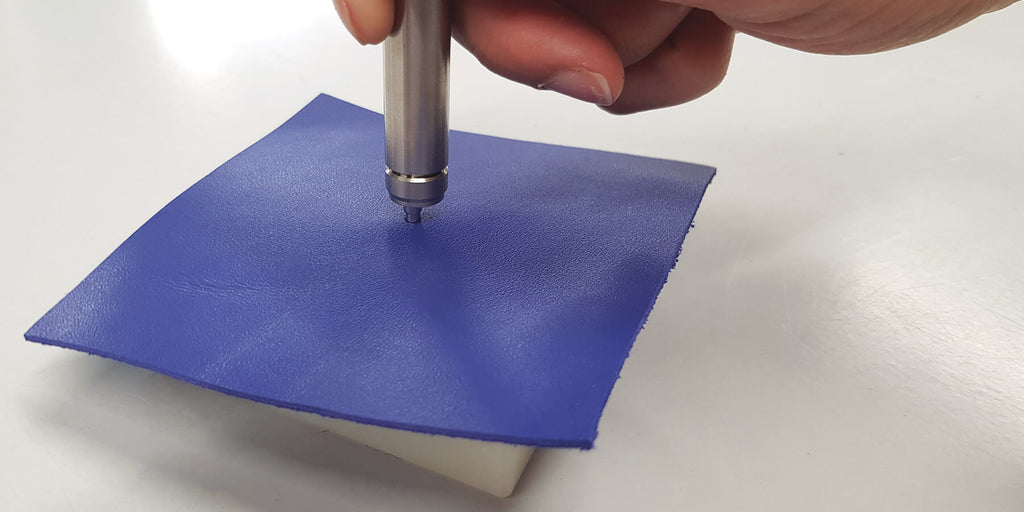
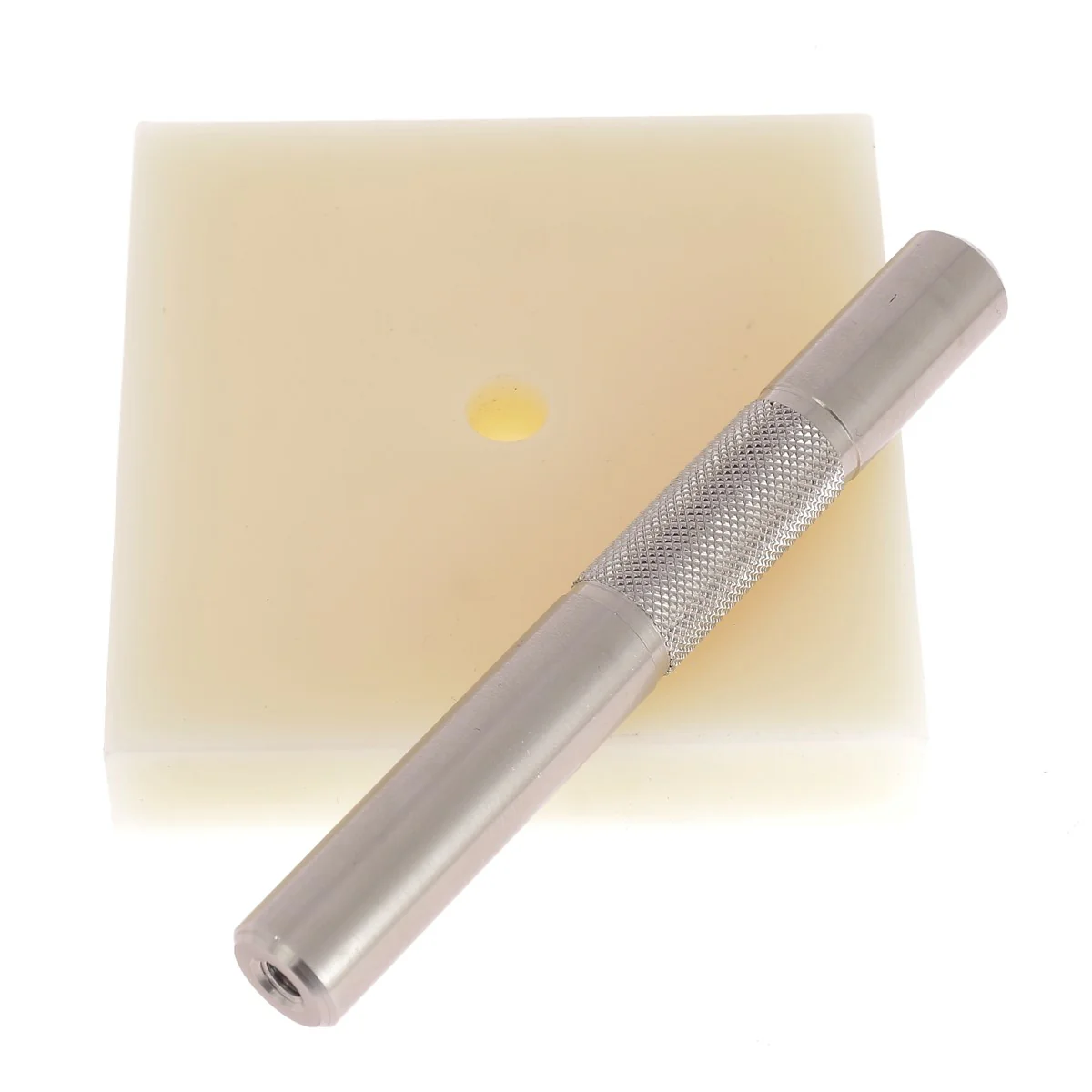
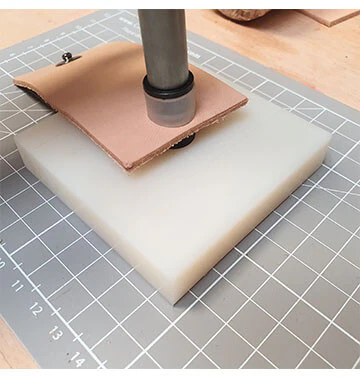
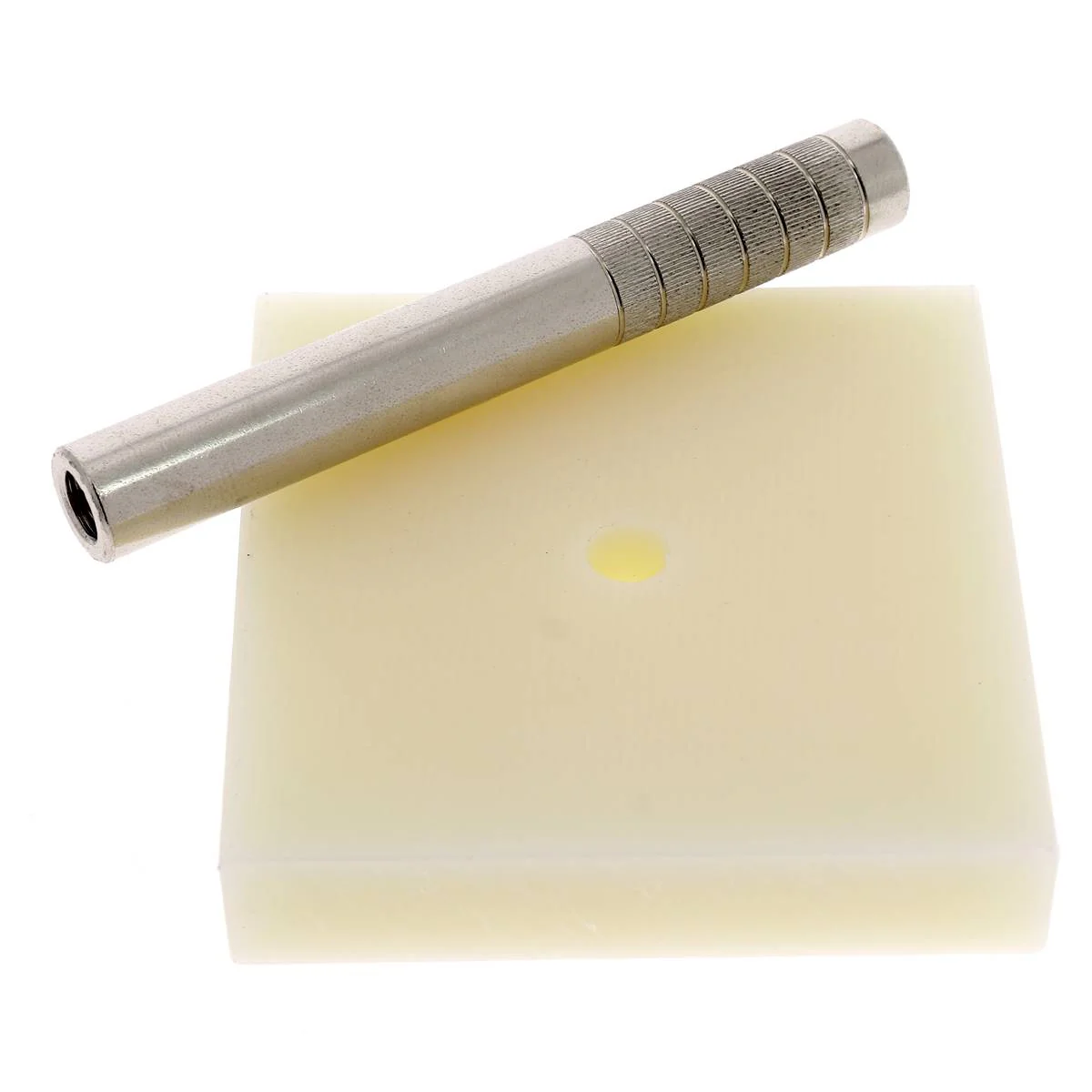
THE HAND PRESS: practical for installing accessories anywhere on your creation. It does not require particular strength.
Ease of installation: installation is not very difficult, however, you need to be comfortable handling a hammer. Prior practice is necessary to master the technique. You should use a heavy hammer of at least 500g to install accessories more easily. Prefer wooden mallets, which do not damage your tools, unlike steel mauls. Note that using a hammer can create noise pollution for your neighbors or prevent children from sleeping.
Quality of installation:
- Requires the correct striking technique on the accessory with adequate force.
- Possible variations in appearance between several accessories installed next to each other.


-
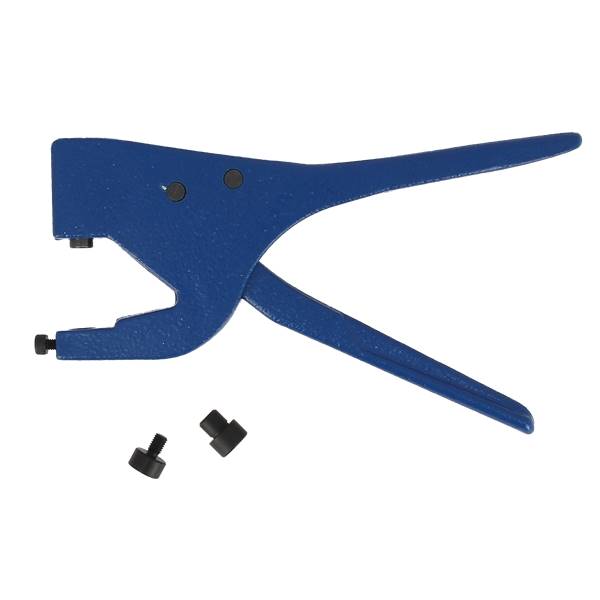
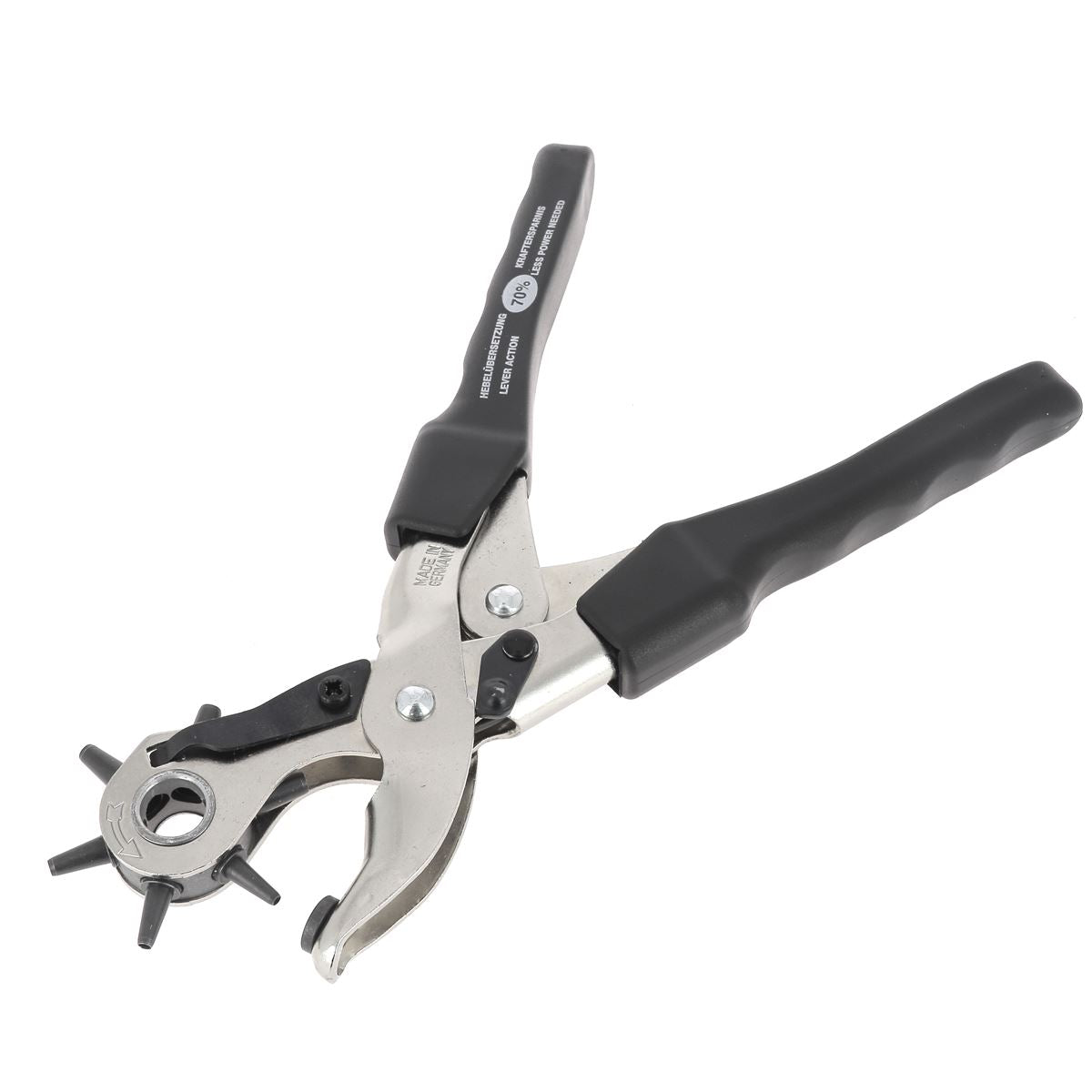
THE MANUAL PRESS PLIERS: practical for installing rivets. We do not recommend it for installing snap fasteners as it requires a lot of wrist strength.
Ease of installation: the use of lever pliers allows you to control the force you manually apply to the accessory to achieve the right tightness. Be careful, the shape of the pliers does not allow for the installation of accessories in the center of large pieces of leather. It should also be noted that to install 12mm diameter snap fasteners, some hand strength is required. This tool allows for silent accessory installation, which can be an advantage when crafting at home in the evening.
Quality of installation: this tool provides a well-controlled tightening during accessory installation, leading to optimal installation quality.




-
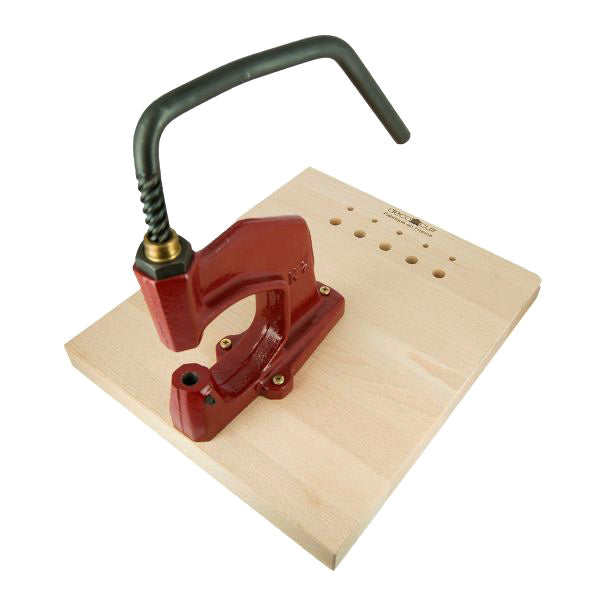
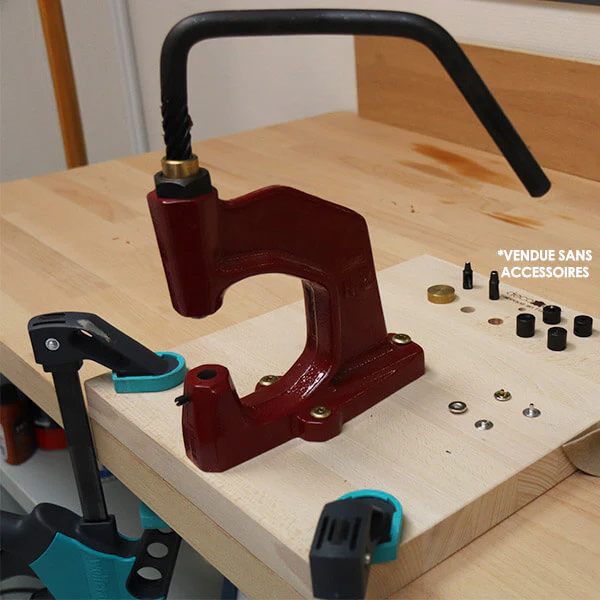
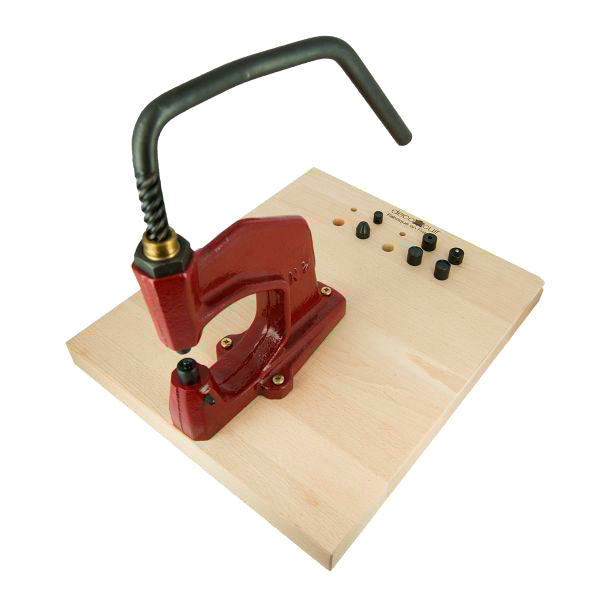
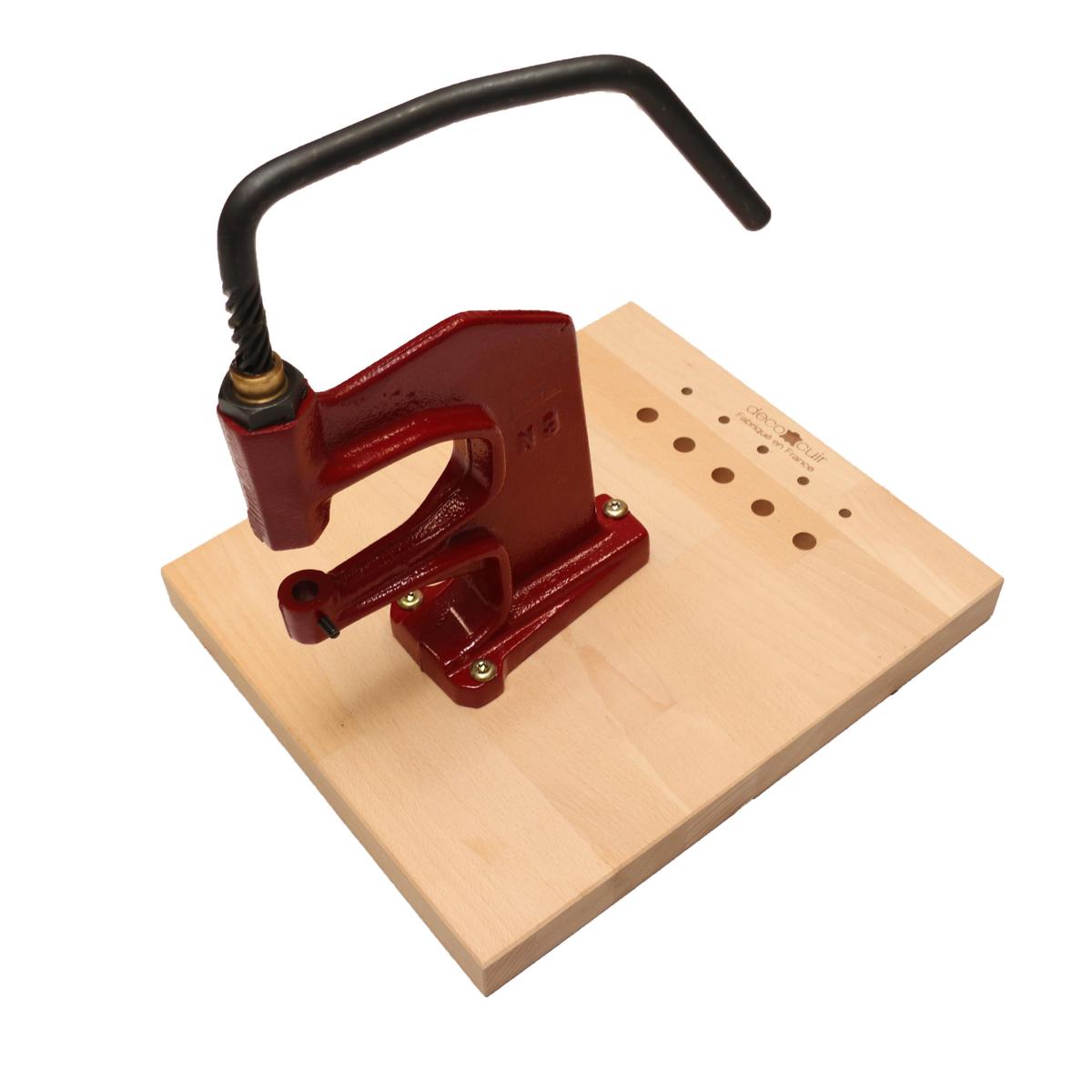
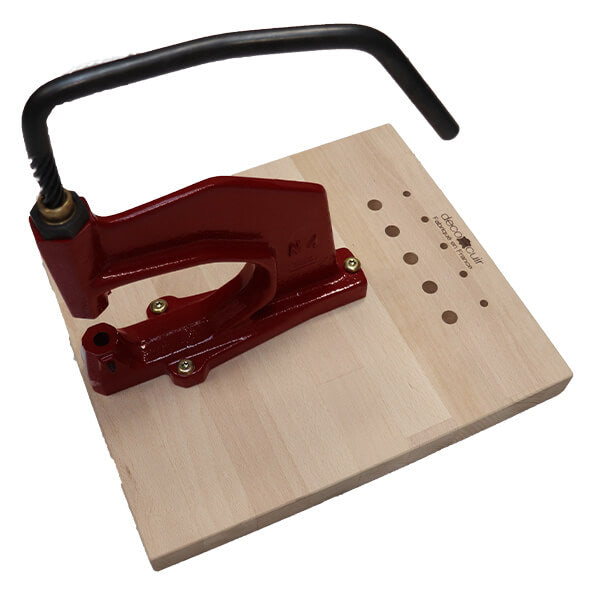
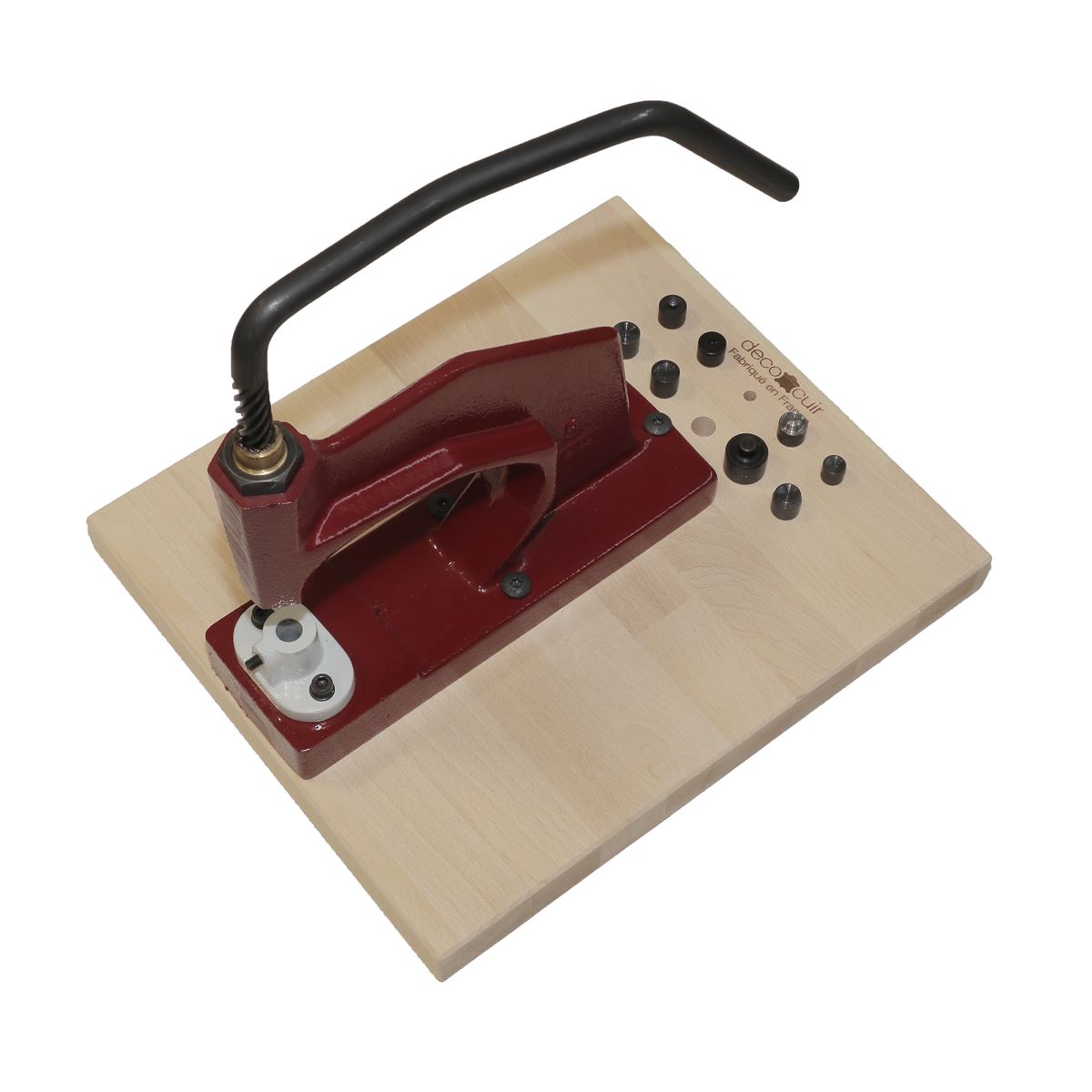
THE BENCH PRESS: perfect for professional installation of your accessories. It will save you a lot of time if you regularly install accessories on your creations.
It is a professional and high-quality tool. The purchase of a bench press should be considered an investment that will pay off in the long term. There are several sizes of presses. The larger it is, the more powerful it will be and therefore more suitable for installing large accessories. There are also several shapes. The N3 with its raised base allows accessories to be installed on pieces that are already closed. Presses can also make holes by replacing the setting dies with appropriate punch tools for the press and a brass or Ertalon anvil called a "TAS". However, small presses (2 and 3) may not be able to make large diameter holes (generally greater than 12 mm), but this depends on the firmness and thickness of the leather.
Quality of installation: the bench press has a high pressing force, allowing accessories to be installed with perfect tightening. The rotating handle that lowers the setting die allows you to control the force applied to your accessory. This tool allows you to install your accessories silently and like a professional.
Note: if you have already invested in a PINCE hand press or a blue manual press pliers before adopting the press and you already have setting dies, there is an adapter that allows you to use the PINCE setting dies on the bench press.
Which press to choose according to my usage?
| Use for rivets and eyelets | ||||
| Diameter | Press N2 | Press N3 | Press N4 | Press N5 |
| Up to 12 mm | ✔ | ✔ | ✔ | ✔ |
| 13 to 15 mm | ⚠ | ✔ | ✔ | ✔ |
| 16 to 20 mm | ✘ | ⚠ | ✔ | ✔ |
| 21 to 25 mm | ✘ | ⚠ | ⚠ | ✔ |
| Over 26 mm | ✘ | ✘ | ✘ | ⚠ |
| Use for punch tools | |||
| Hole diameter | Press N2 - N3 | Press N4 | Press N5 |
| 1 to 10 mm | ✔ | ✔ | ✔ |
| 11 to 15 mm | ⚠ | ✔ | ✔ |
| 16 to 18 mm | ✘ | ⚠ | ✔ |
| 19 to 20 mm | ✘ | ⚠ | ⚠ |
| 21 to 25 mm | ✘ | ✘ | ⚠ |
✔ For all types of leather
⚠ For thin and soft leathers
✘ Not recommended
The values above are indicative and may vary up or down depending on the material of the accessories (brass, iron, stainless steel, aluminum) and the thickness of the leather.
What do the numbers for each bench press mean: N2 - N3 - N4 - N5?
The larger the number, the larger the handle will be, and therefore the more force the press will have. The internal clearance dimensions will also be larger (easier to reach the center of a large piece). For installing accessories on thick materials, we recommend the N4 press.
What is the difference between "S" and "N" presses?
The main difference between "N" and "S" bench presses is the brand; the dimensions (within a few millimeters) are the same, as are the setting dies. The bestsellers are the N3 and N4 presses.






After selecting the installation tool, you need the appropriate setting die for installing your accessory (cf. see in the rivet, snap fastener, or eyelet guide).
Before installing an accessory, it is also necessary to pierce (where your accessory will be placed) your fabric, leather, or imitation leather with a round punch, compound pliers, or a bench press (with the appropriate tip).





How to install a rivet?
On our site, we offer 5 "standard" rivet sizes: T1 to T6.

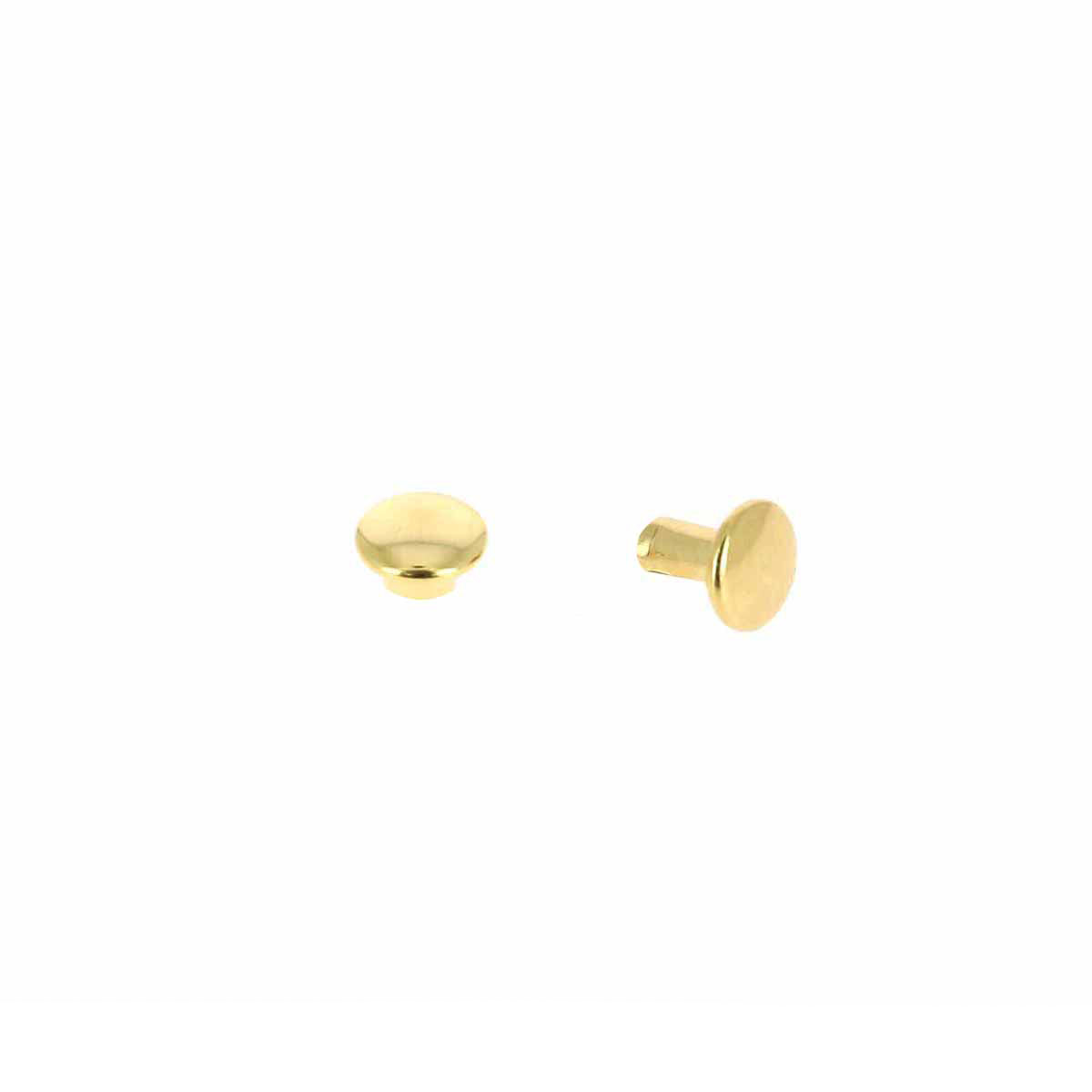
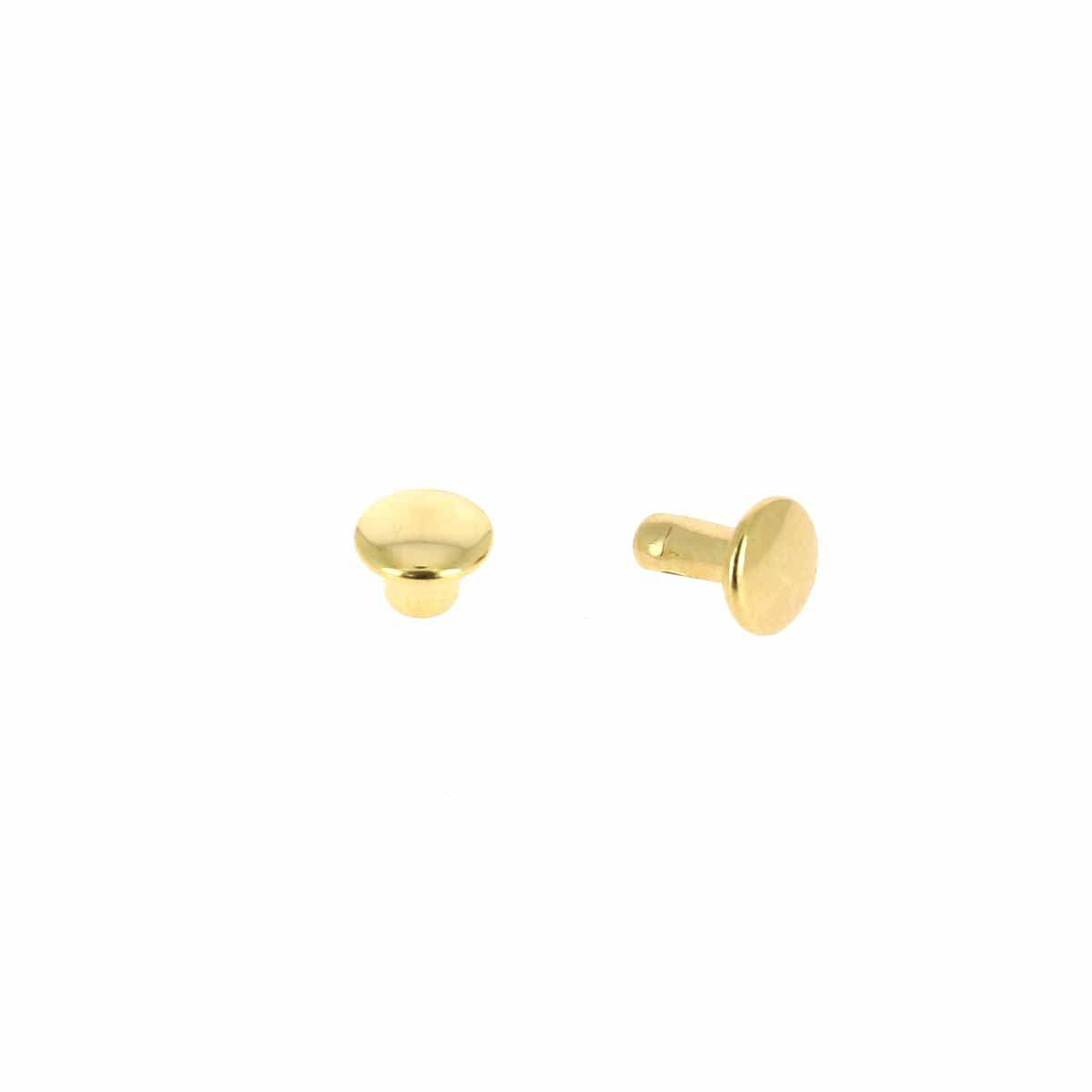
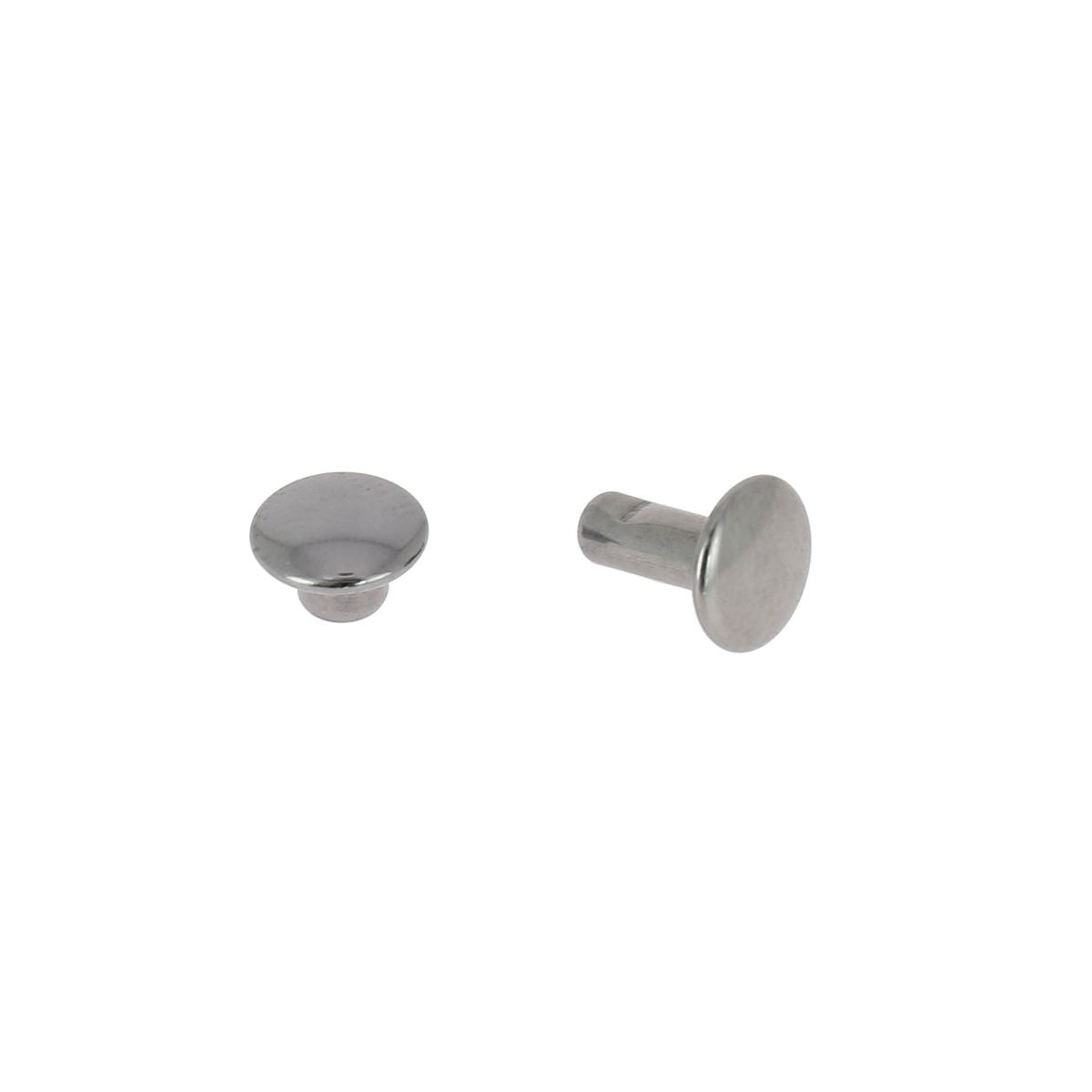
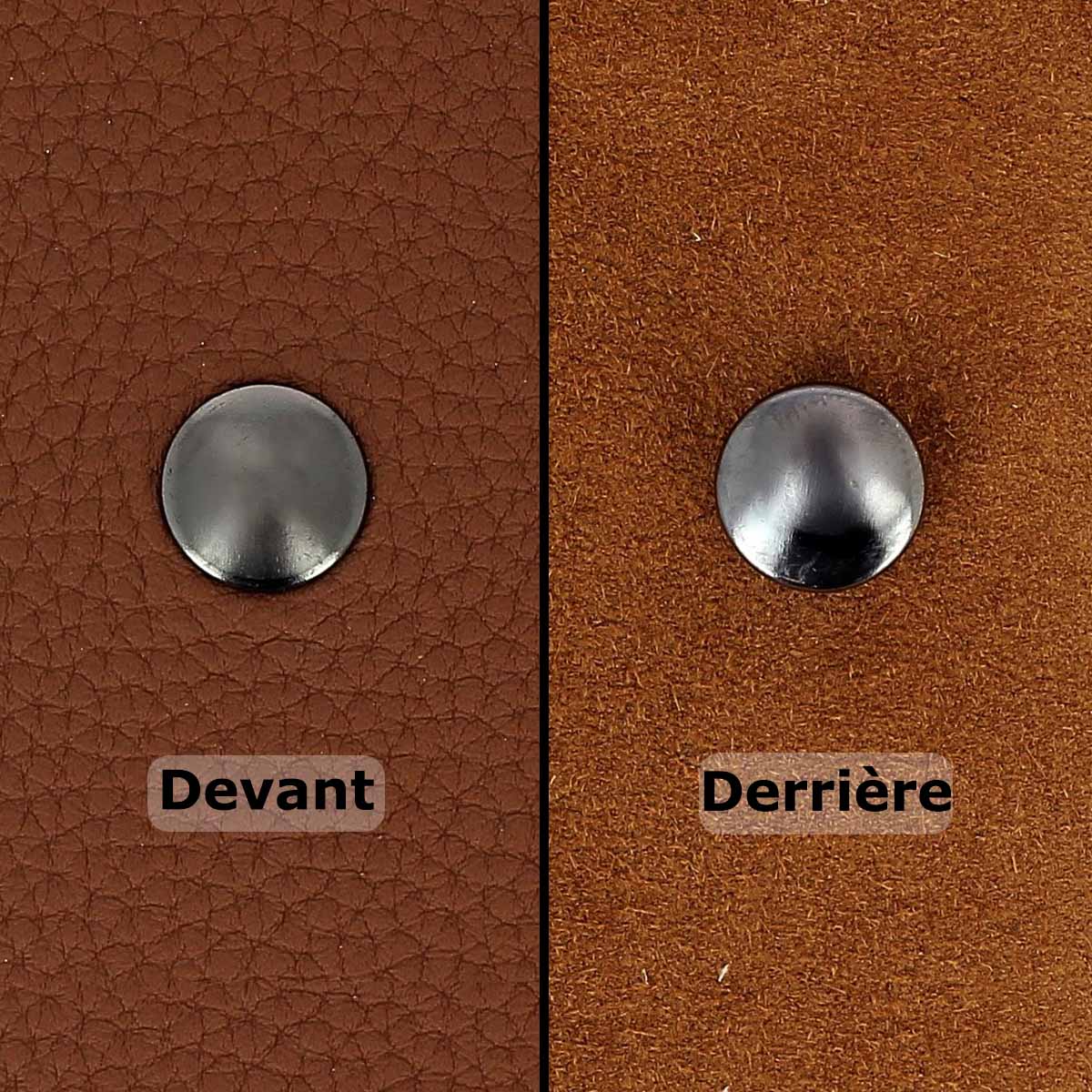
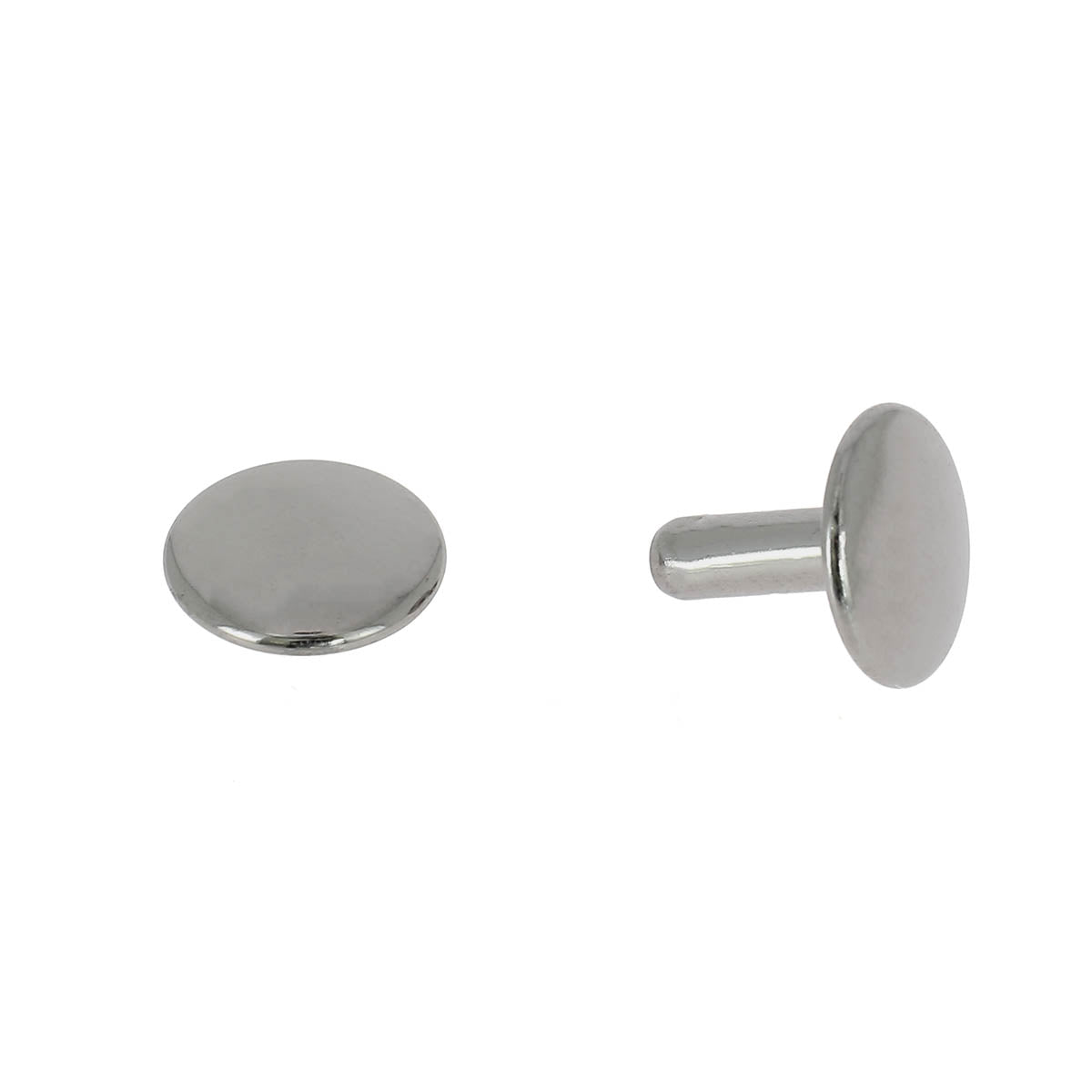
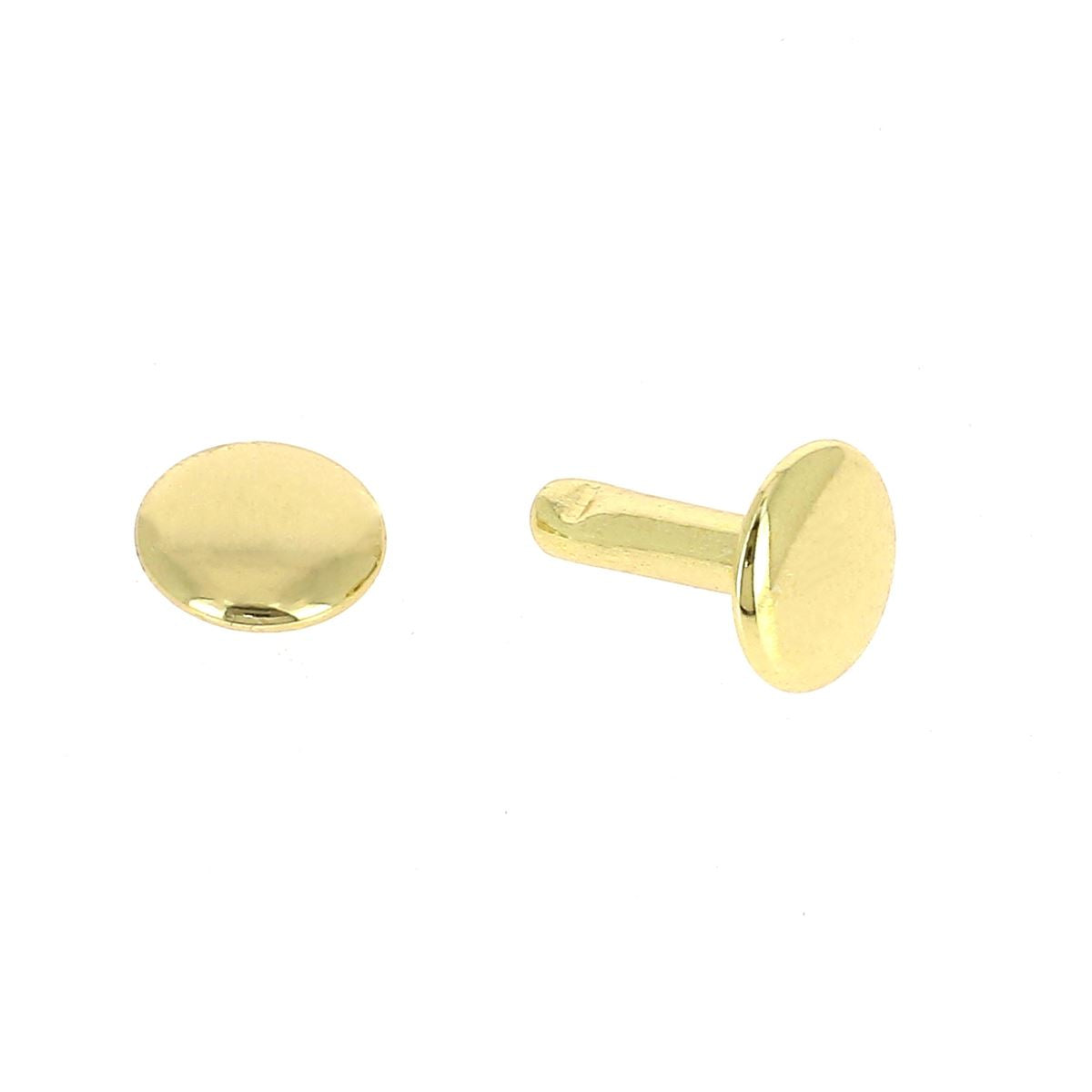
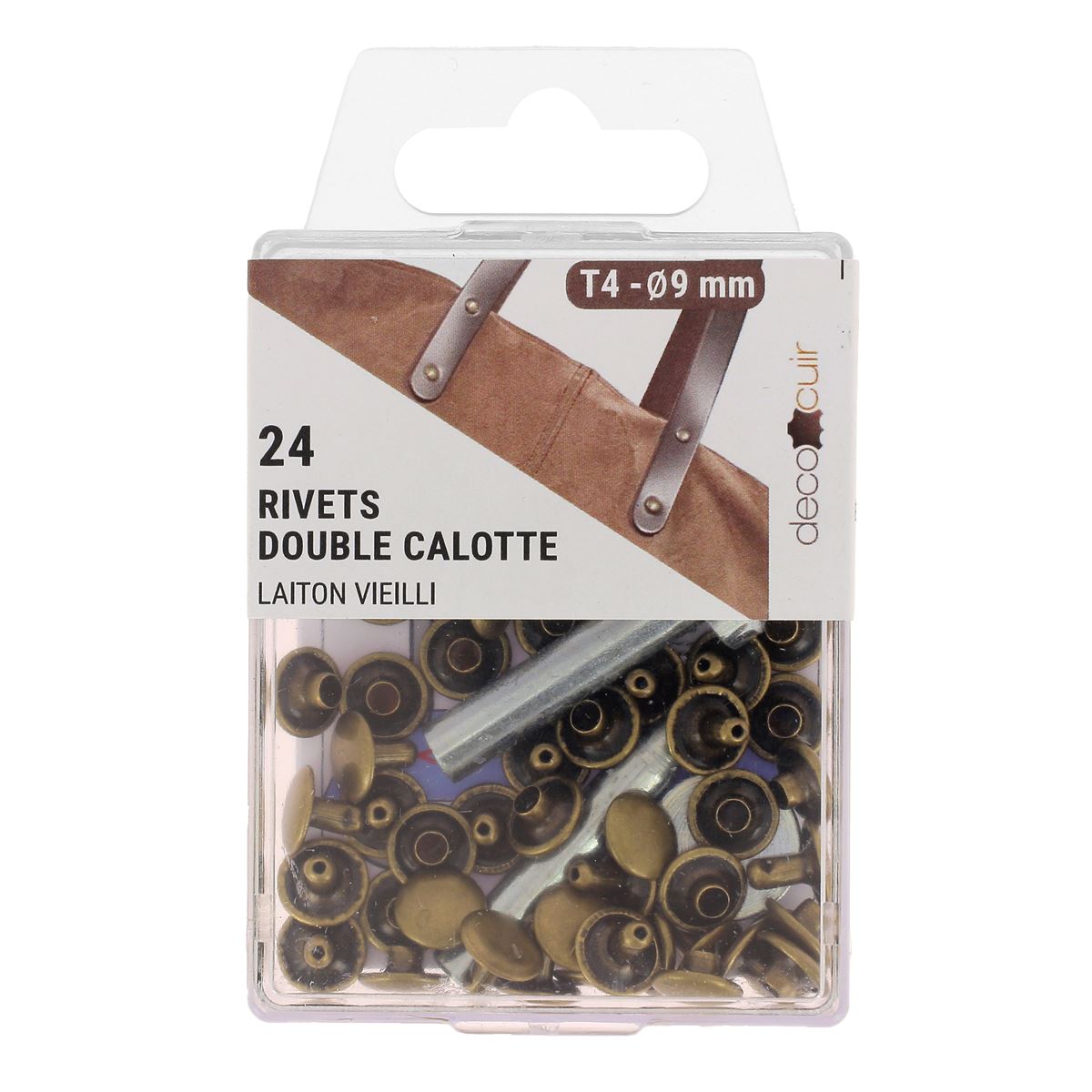
There are then 2 types of rivets: single cap rivets (1 head (conical shape) on only one side) and double cap rivets (1 head on each side of the rivet).
Choice of accessory material: you need to pay attention to the material used (under the surface finish). Steel ones are economical but can oxidize after some time and damage your creation. Brass ones are a little more expensive, they will not rust and your creation will keep its shine for a long time. Deco Cuir mainly offers brass accessories.
Single-cap rivets are generally used when the post (lower part of the rivet) is hidden by a lining or another layer of leather, fabric, etc.
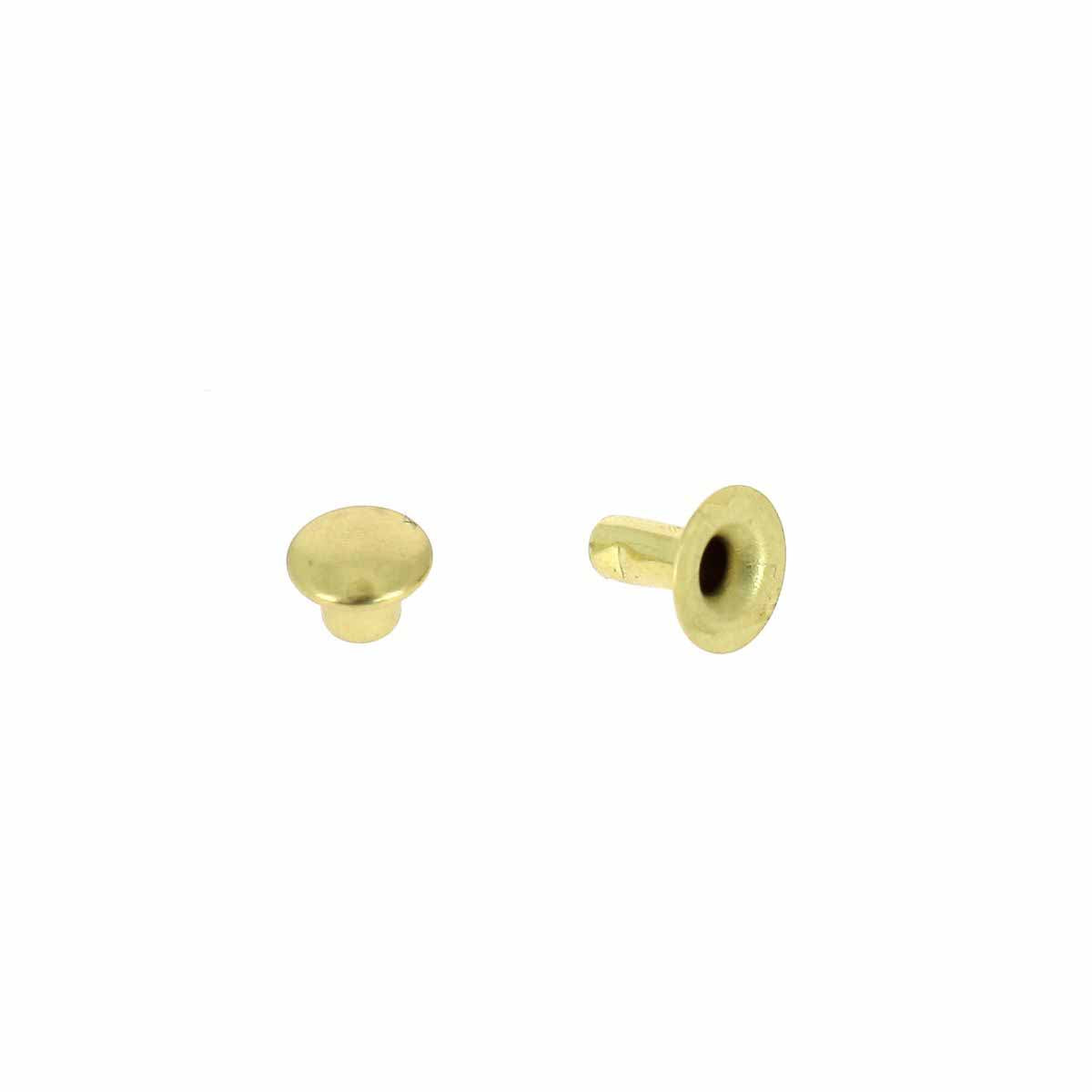


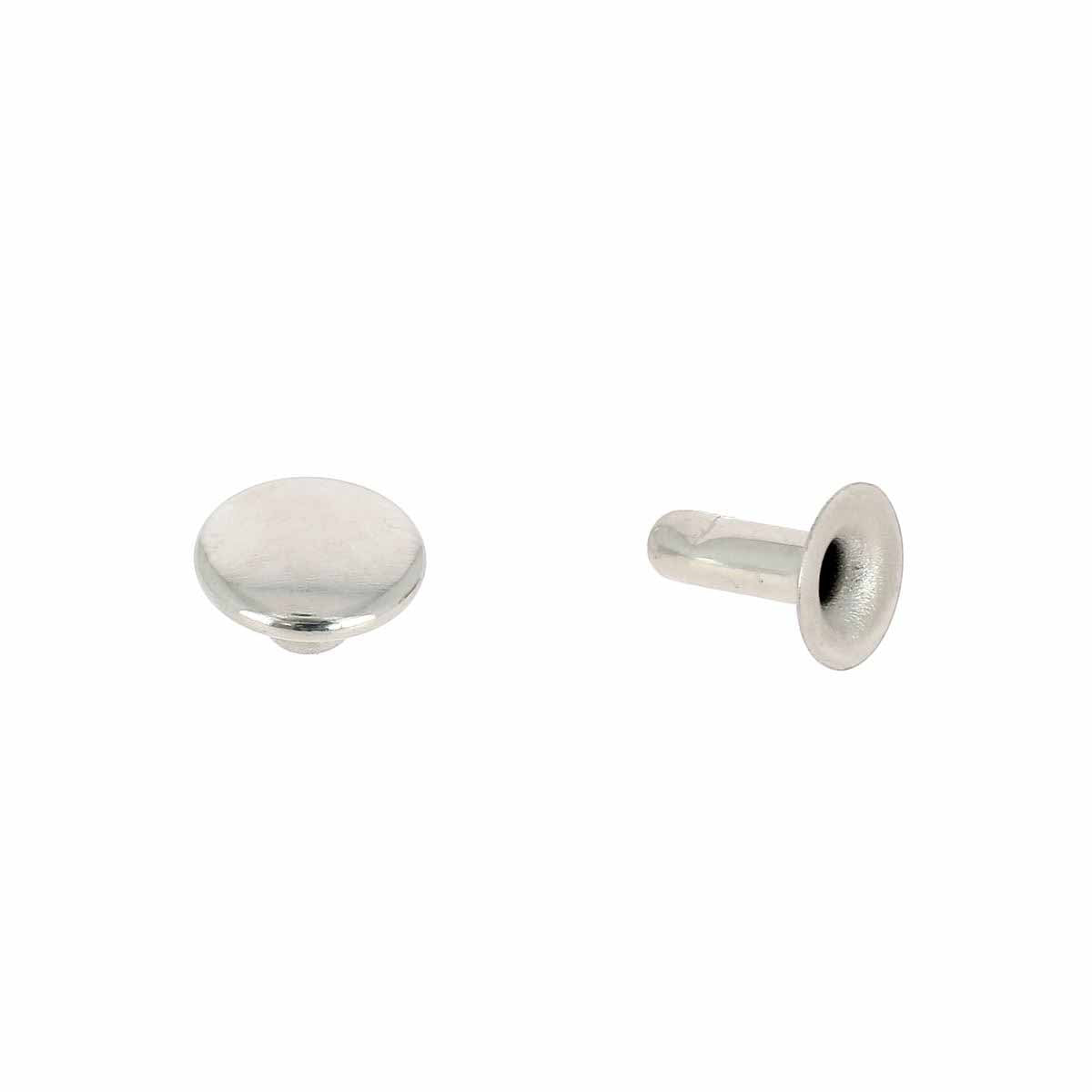

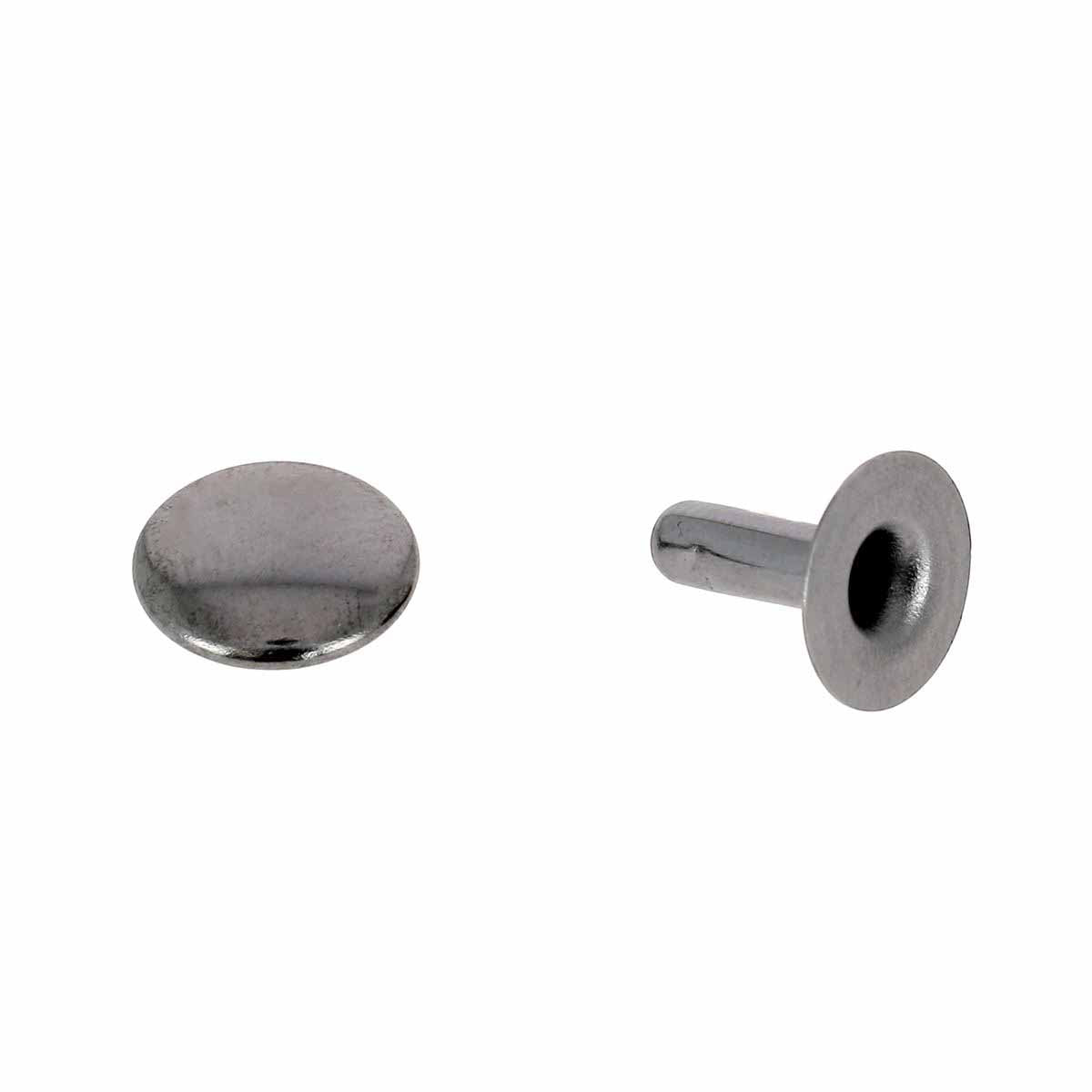

Double-cap rivets are generally used when the post (lower part of the rivet) is visible on both sides of your creation.






How to attach a rivet to your creation?
After making a hole for the rivet in the two parts to be assembled, you will need a setting tool and a setting die set to set a rivet.
We presented the 3 existing setting tools earlier in this guide: an arbor press, a manual press plier, and a bench press.
If you have a manual press plier or a PINCE arbor press kit, here are the appropriate setting die sets. Be sure to select the correct setting die set according to the size of your rivet (T1 to T6) and its type (single or double cap).


If you already have PINCE setting die sets and have just purchased a bench press, there are adapters available to use them on your press.


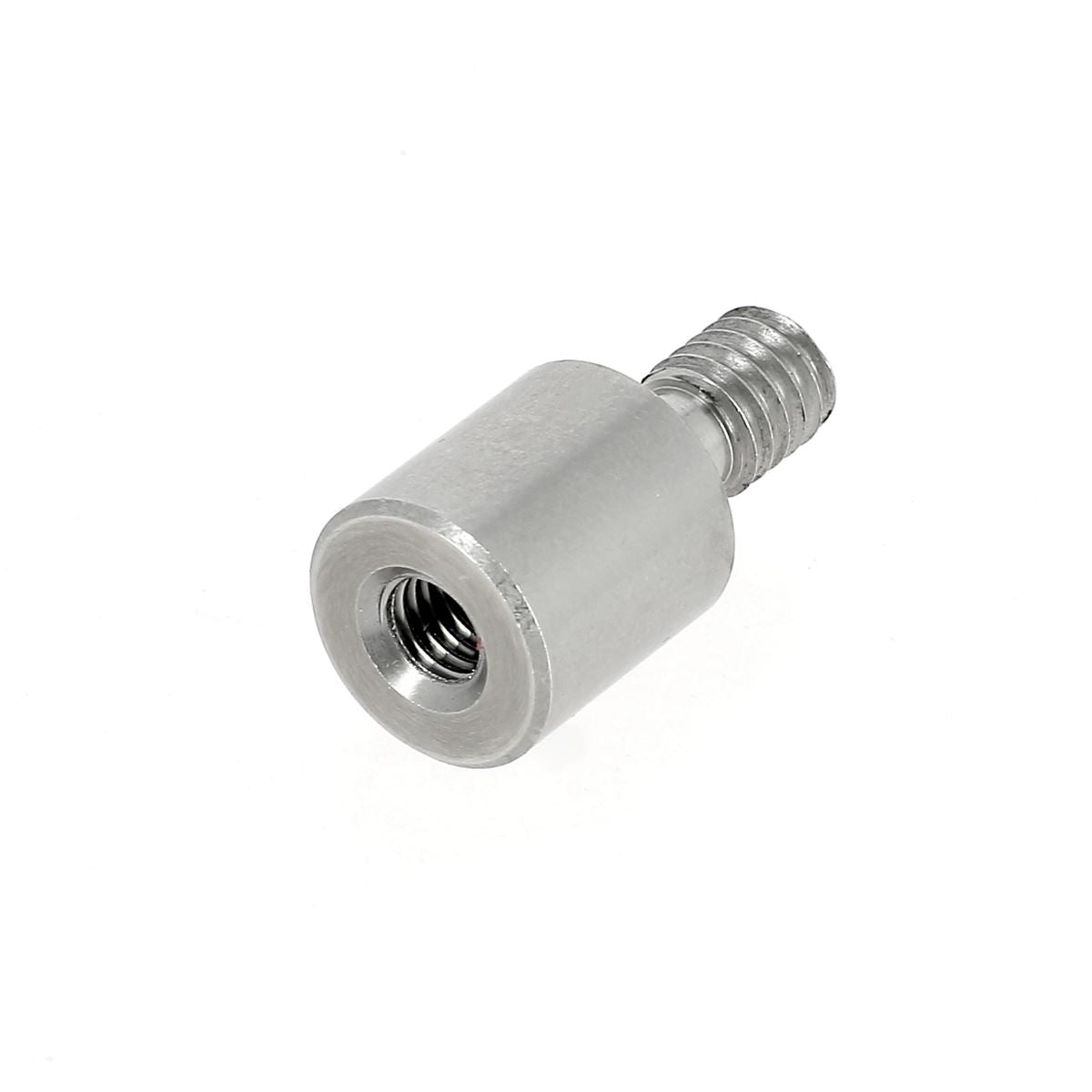

Unlike the arbor press and manual plier, which use the same setting die sets. The bench press has its own setting die sets. Be sure to select the correct setting die set according to the size of your rivet (T1 to T6) and its type (single or double cap).


Is there a complete kit?
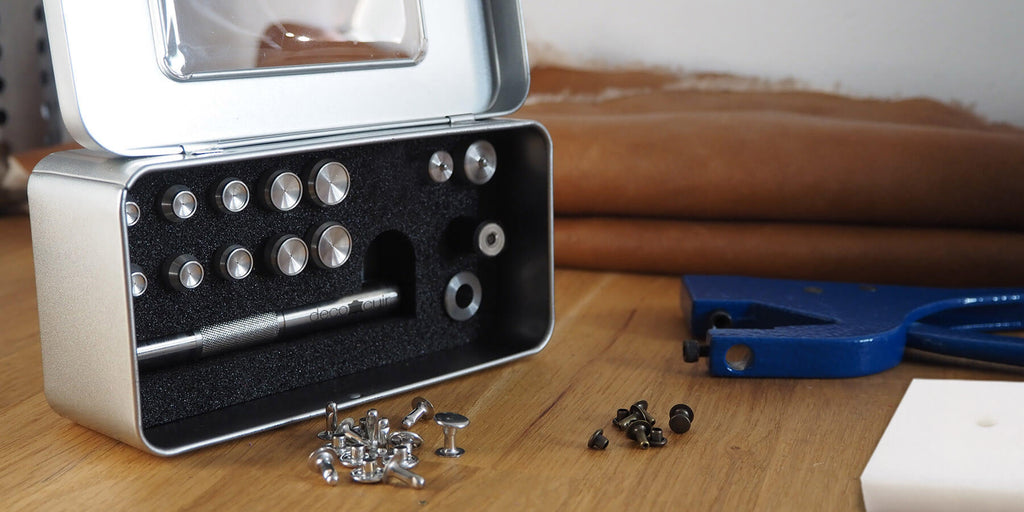
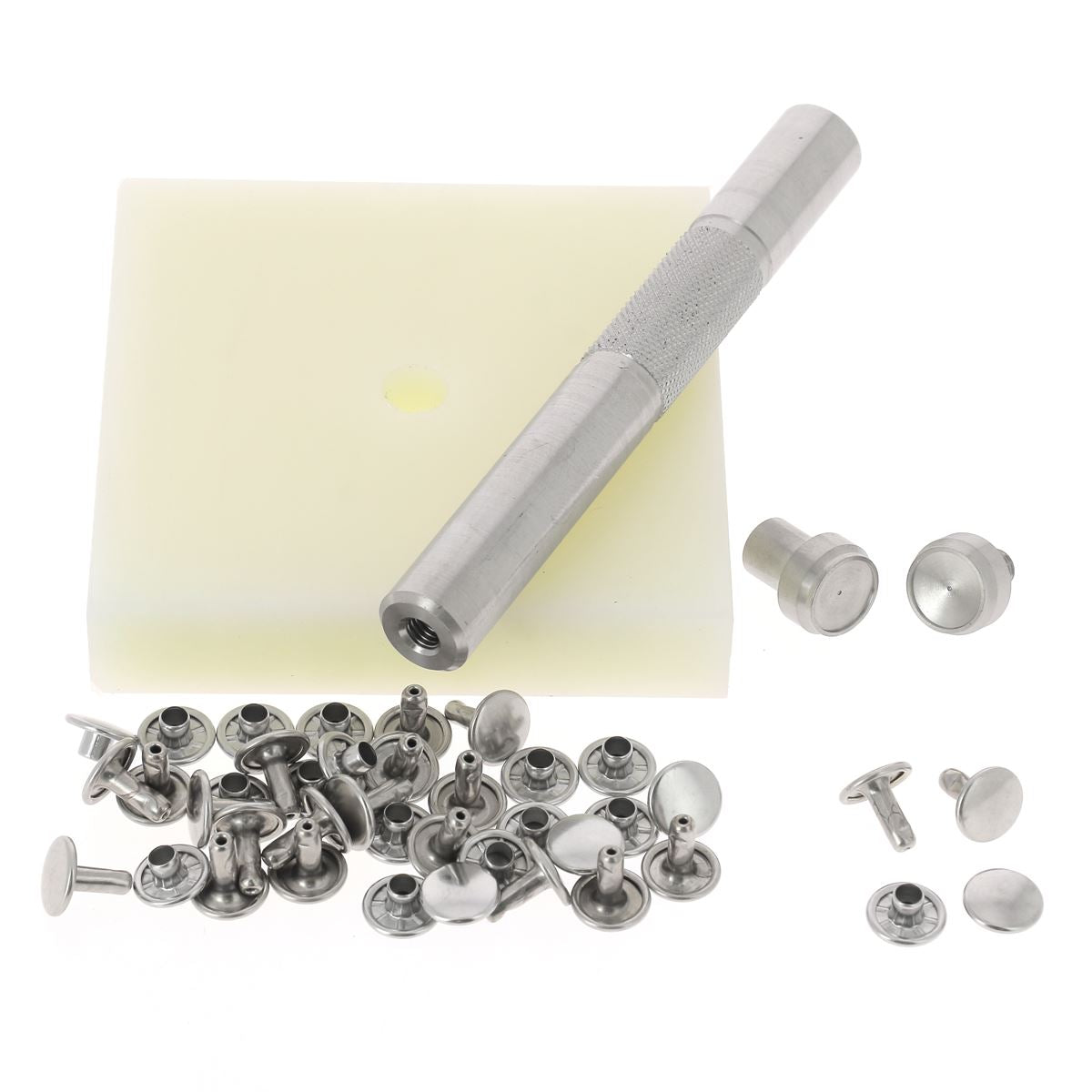
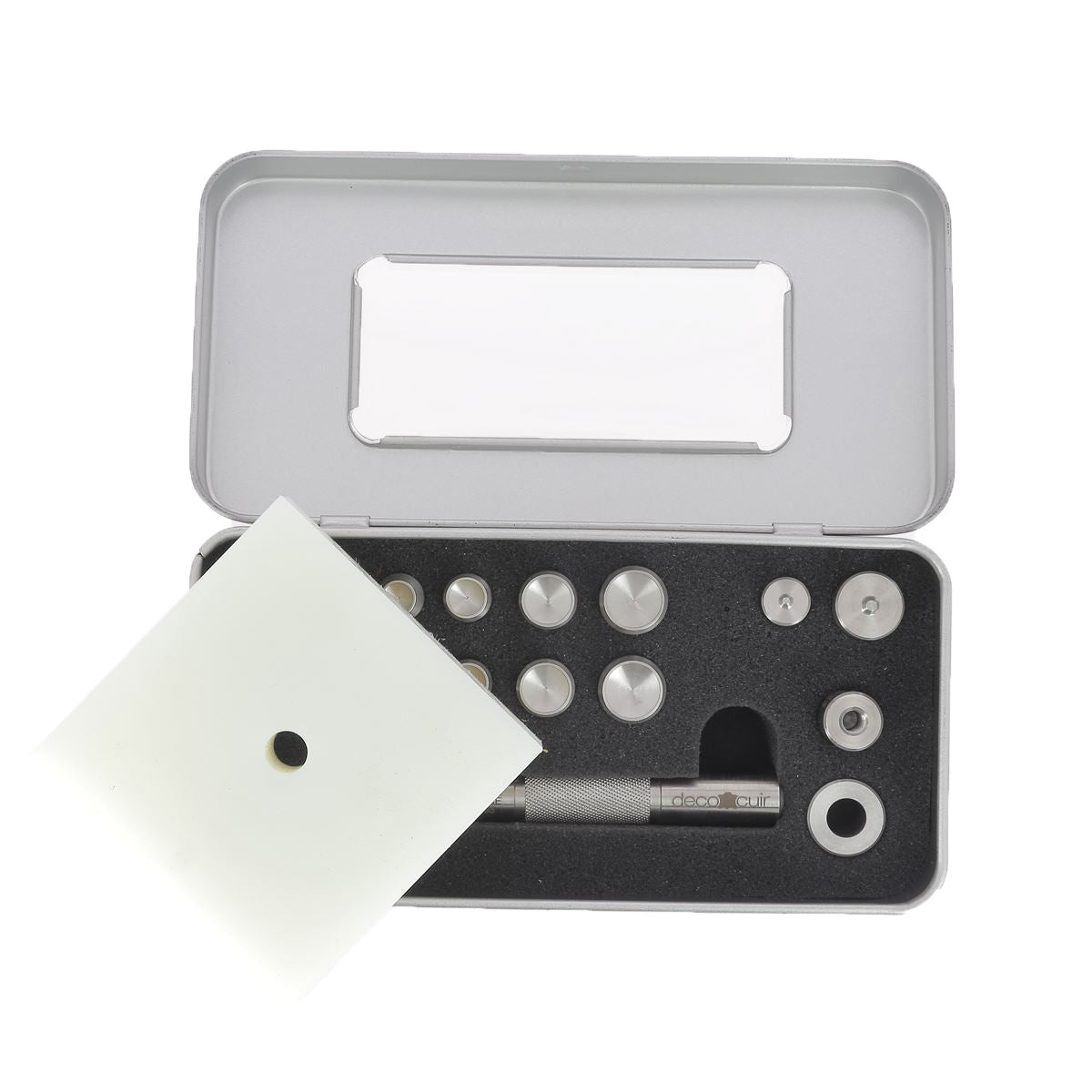
Discover the exclusive Deco Cuir product for setting rivets! A complete kit with all single and double cap setting die sets (in stainless steel), the press adapter, and the arbor press with its Ertalon plate.
All setting die sets are also compatible with the blue manual press plier. With the arbor press and Ertalon plate, you can also set your snap fasteners with the PINCE setting die sets for snap fasteners (sold separately).




Below, a summary video of the 3 methods for setting a single or double-cap rivet.
We also sell rivet boxes with the setting tool included!
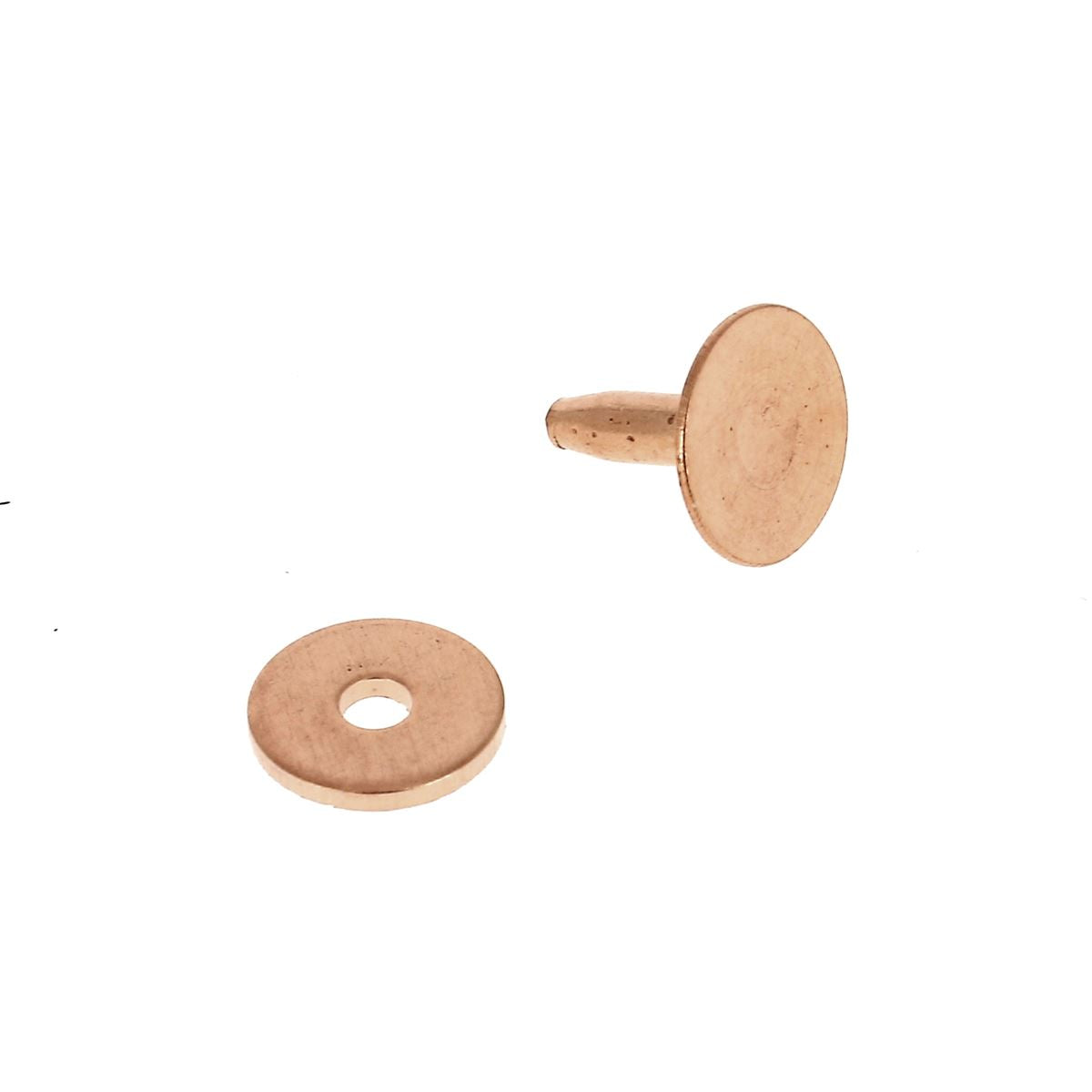
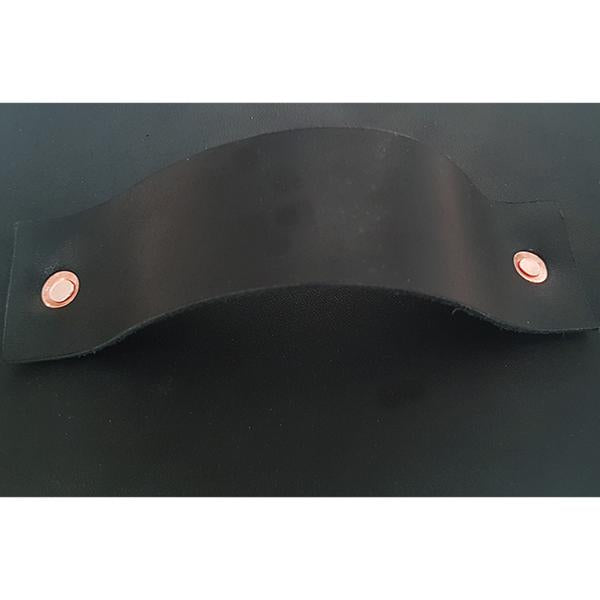
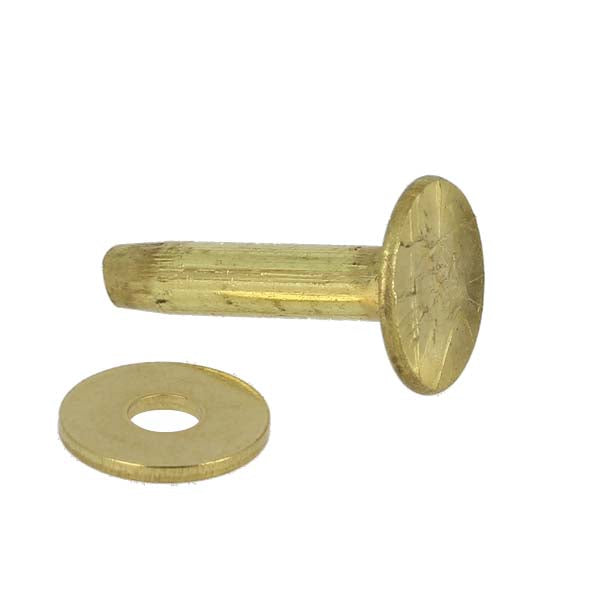
How to set a peened rivet?








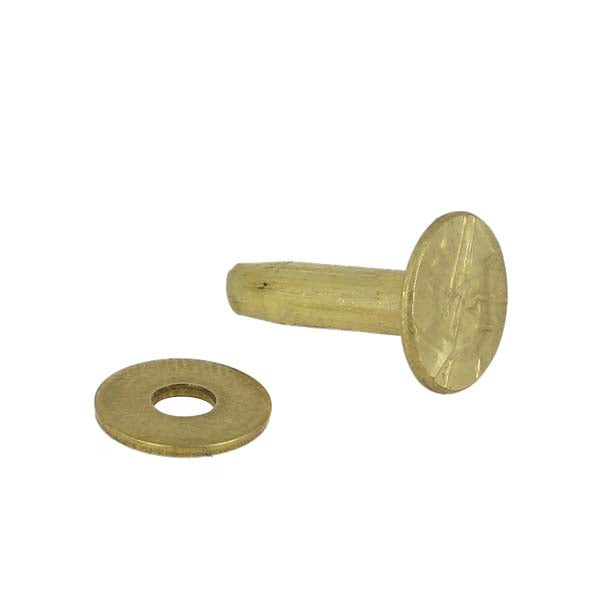

How to install a snap fastener?
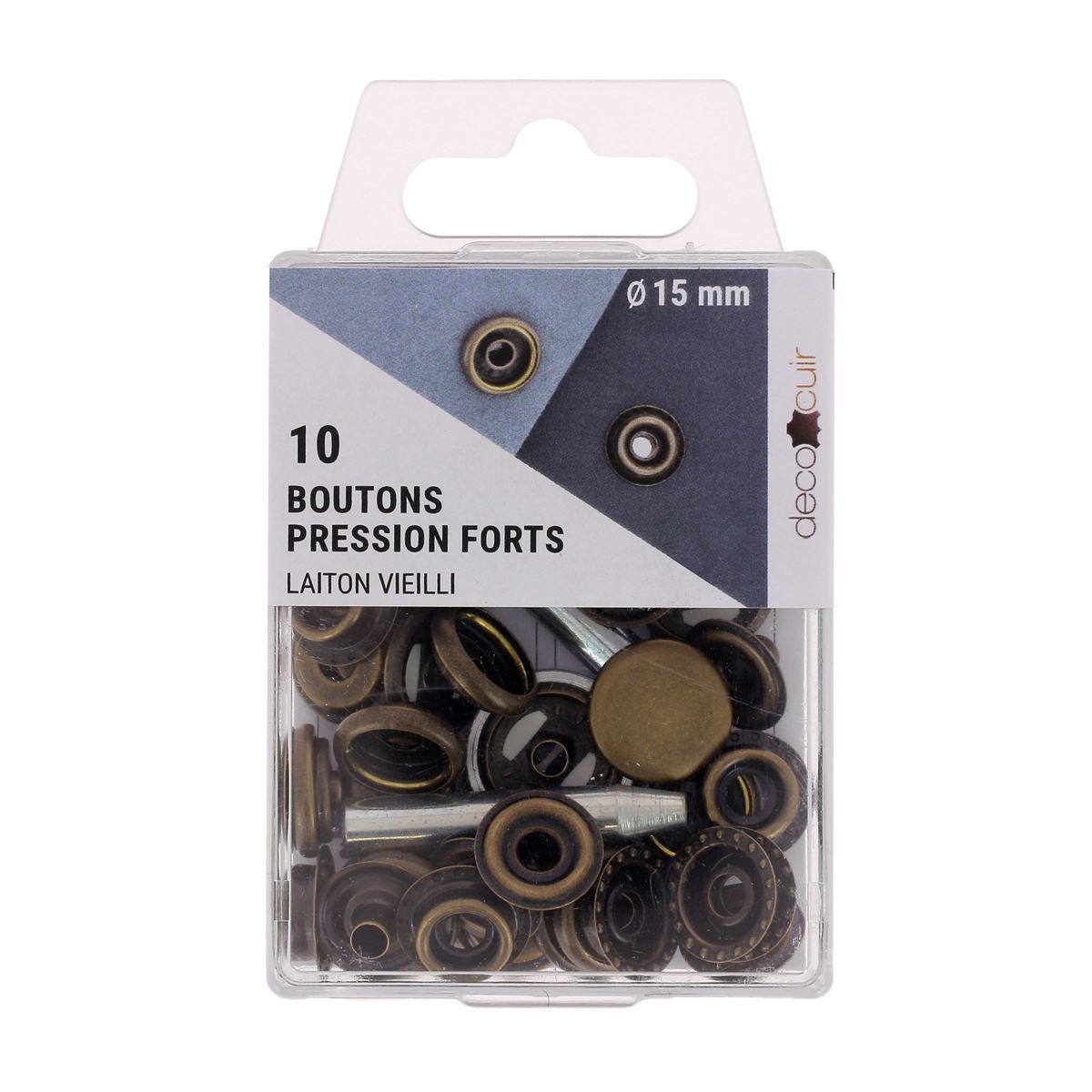
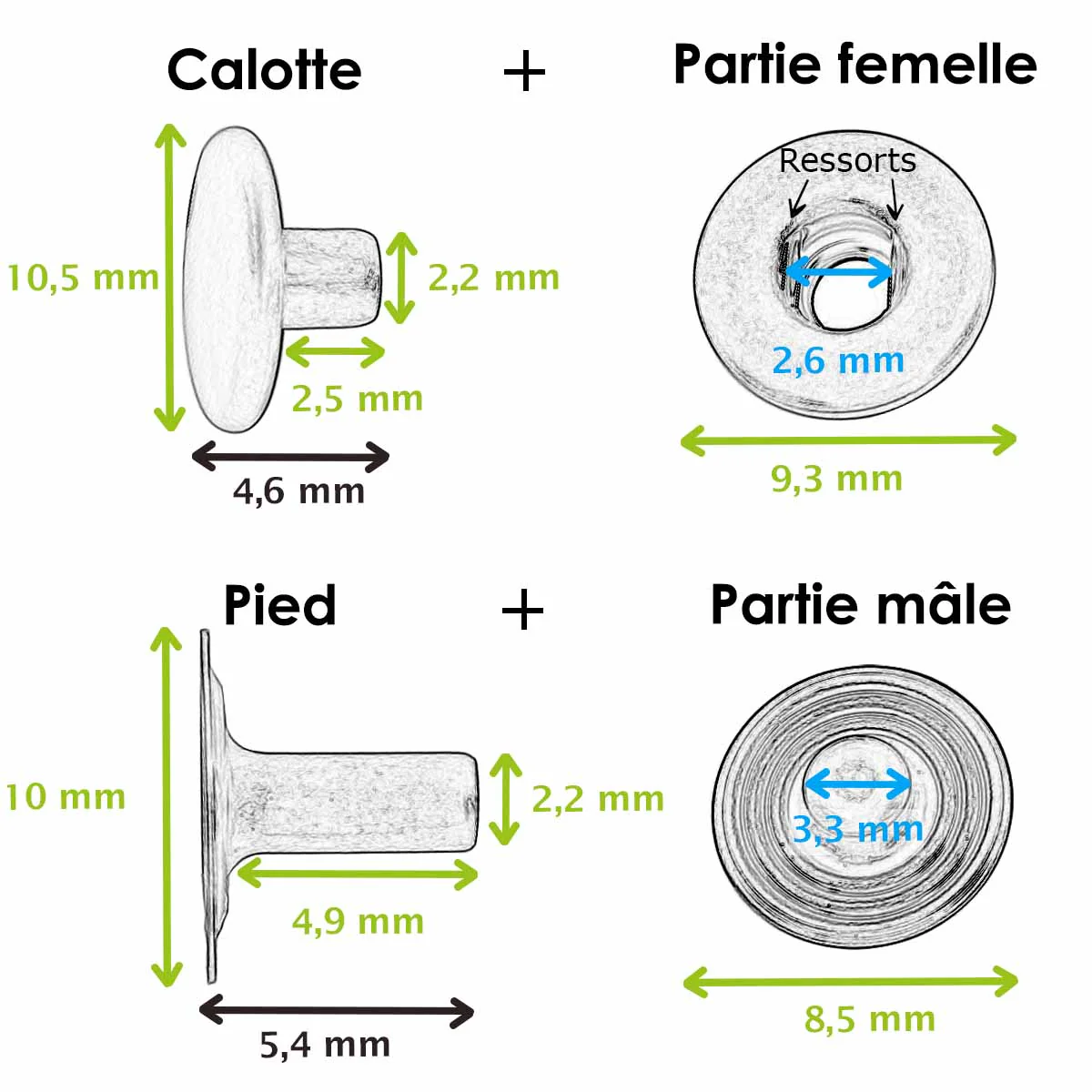
On our website, we offer several diameters of snap fasteners: 10.5 mm, 12 mm, 15 mm...
There are 2 types of snap fasteners: simple snap fasteners (S-spring)...


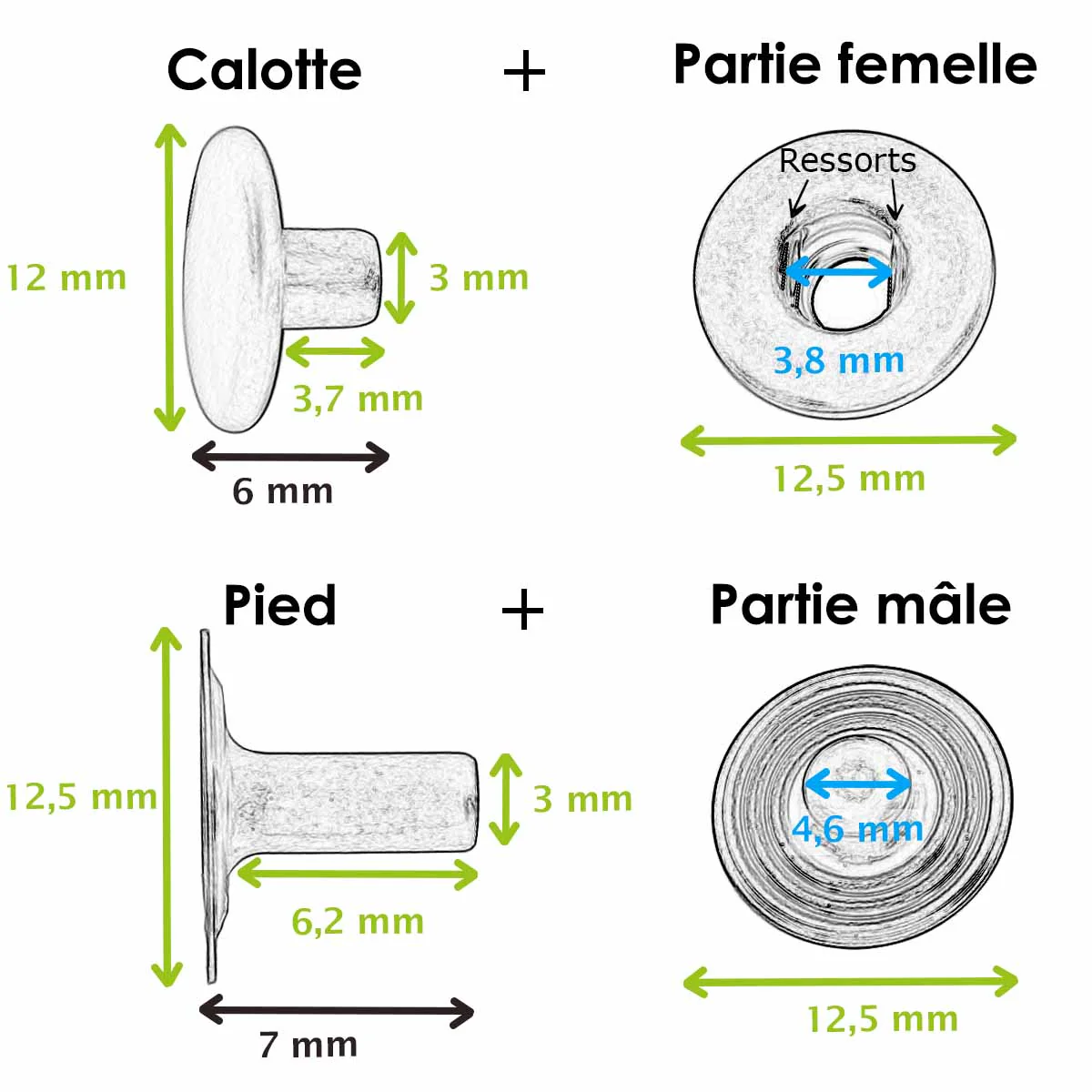
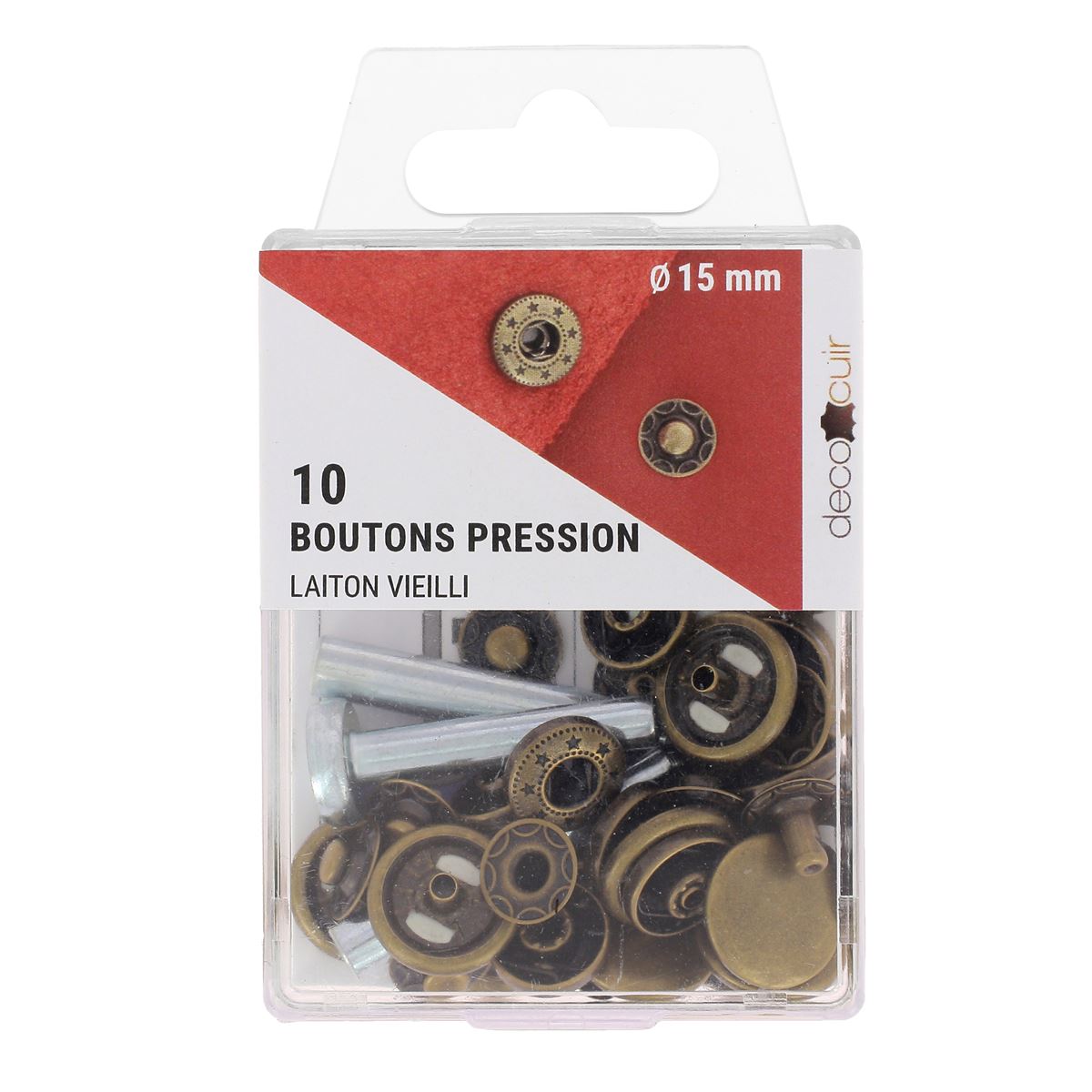
...and heavy-duty snap fasteners (ring spring). Heavy-duty snap fasteners withstand greater pressure than simple snap fasteners. They can only be installed with a bench press or the PRESS arbor press kit.

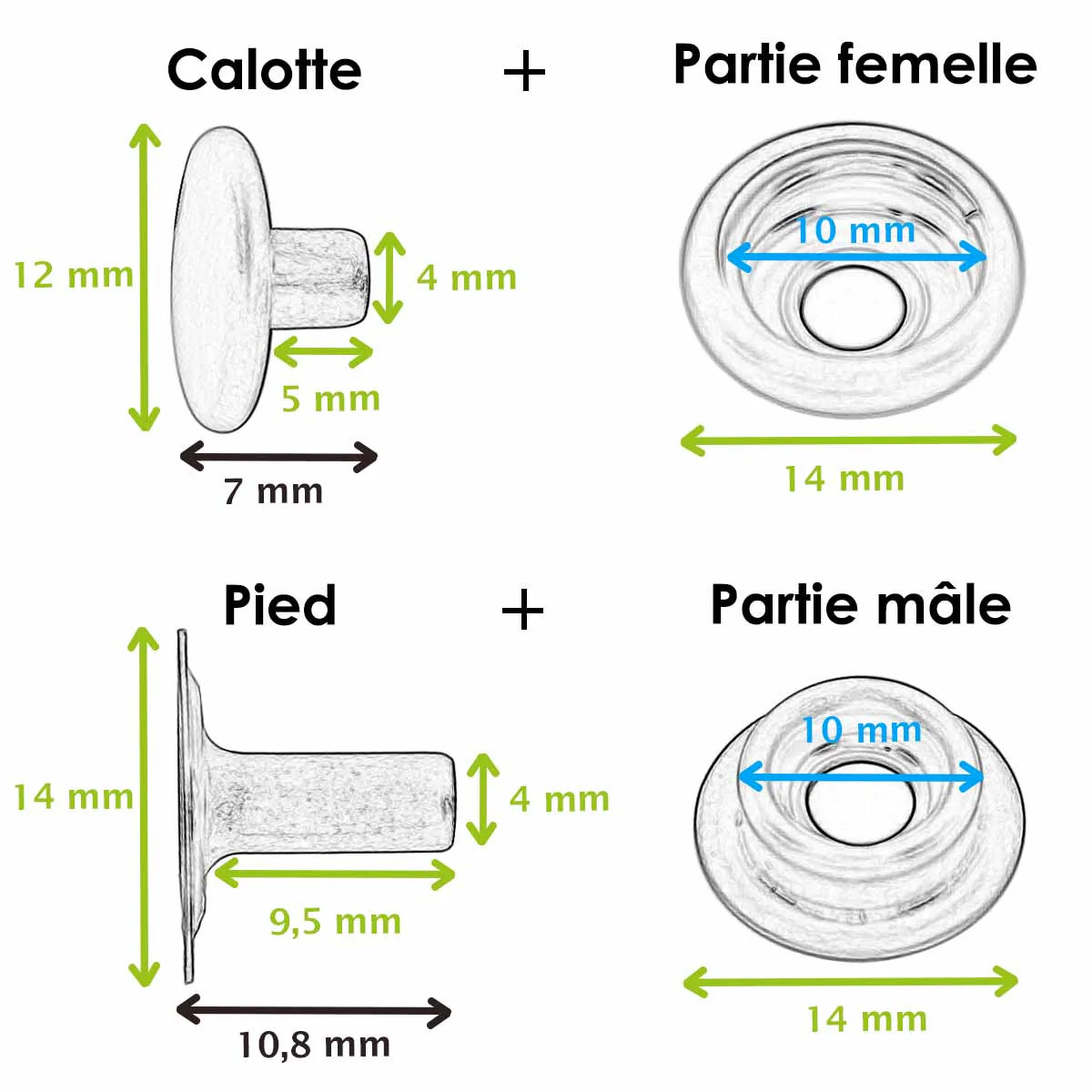



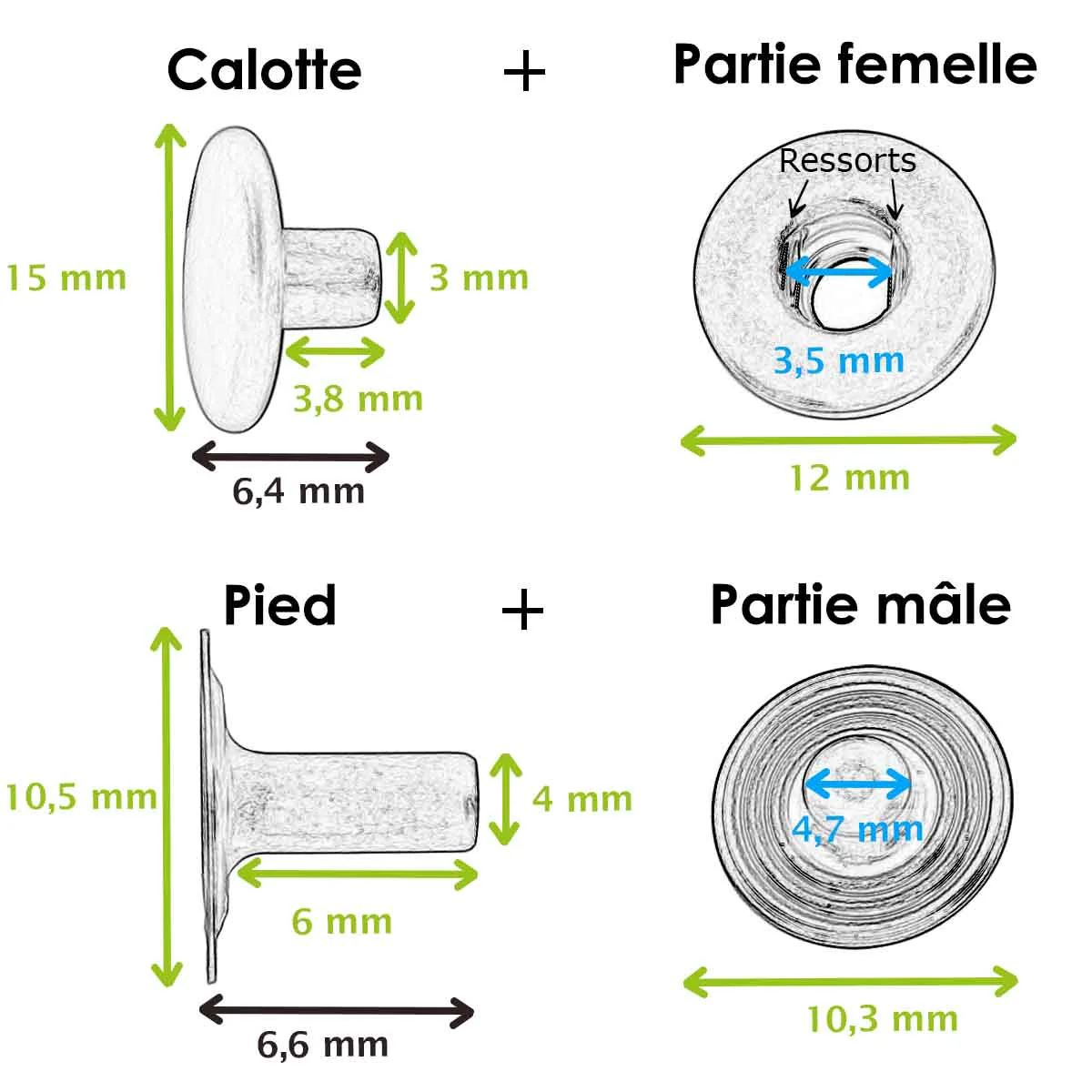
To install the snap fastener, the post is assembled with the male part and the head/cap with the female part (see image below).

Choice of accessory material: you need to pay attention to the material used (under the surface finish). Steel ones are economical but can oxidize after some time and damage your creation. Brass ones are a little more expensive, they will not rust and your creation will keep its shine for a long time. Deco Cuir mainly offers brass accessories.
After making a hole for the head (generally the hole diameter is larger than that of the post) and the post of the snap fastener, you will need a setting tool and a setting die set to install the parts.
We presented the 3 existing setting tools in the introduction to this guide: an arbor press, a manual press plier, and a bench press.
If you have a manual press plier or a PINCE arbor press kit, here are the appropriate setting die sets. Be sure to select the correct setting die set according to the diameter of the snap fastener. Heavy-duty snap fasteners can only be installed with a bench press.


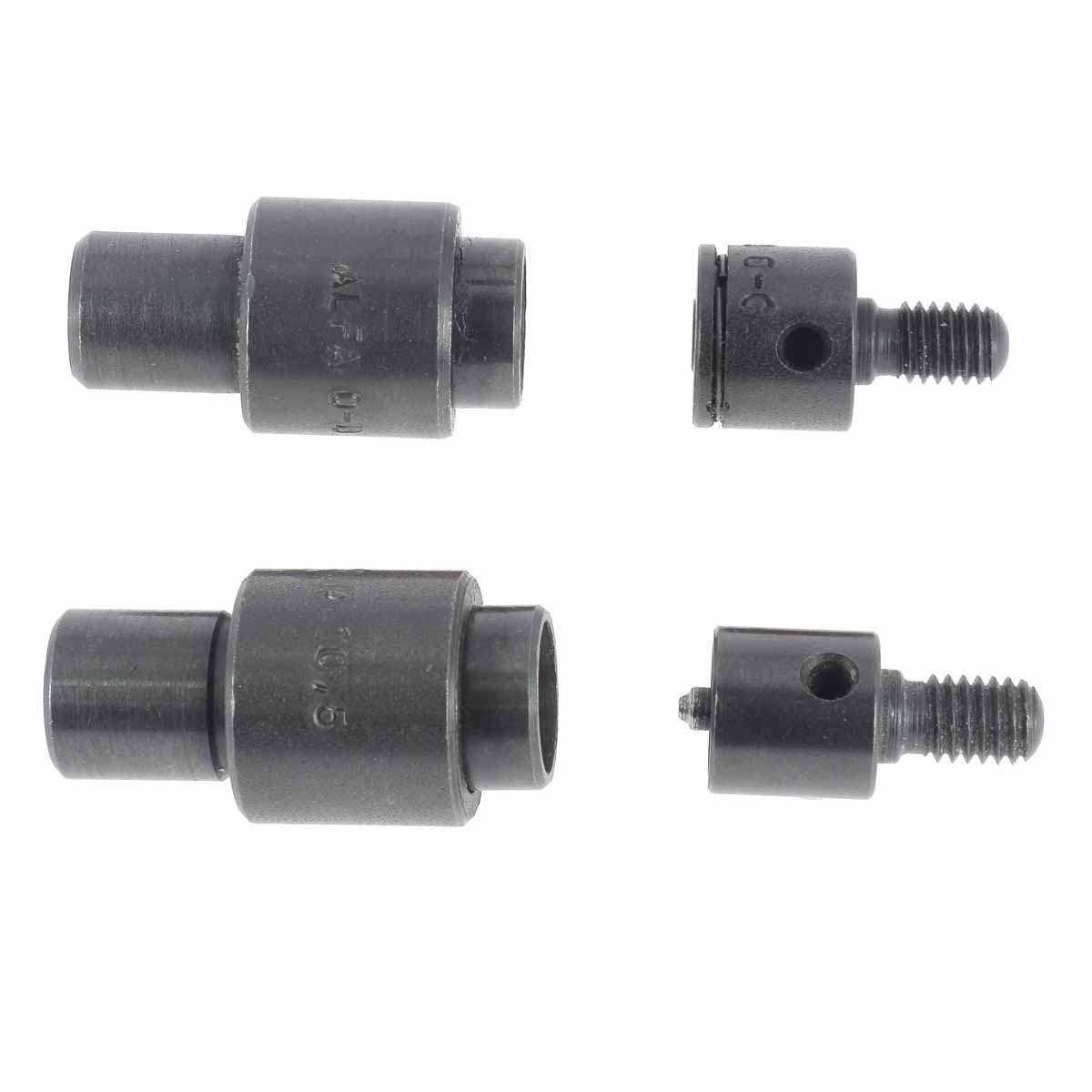
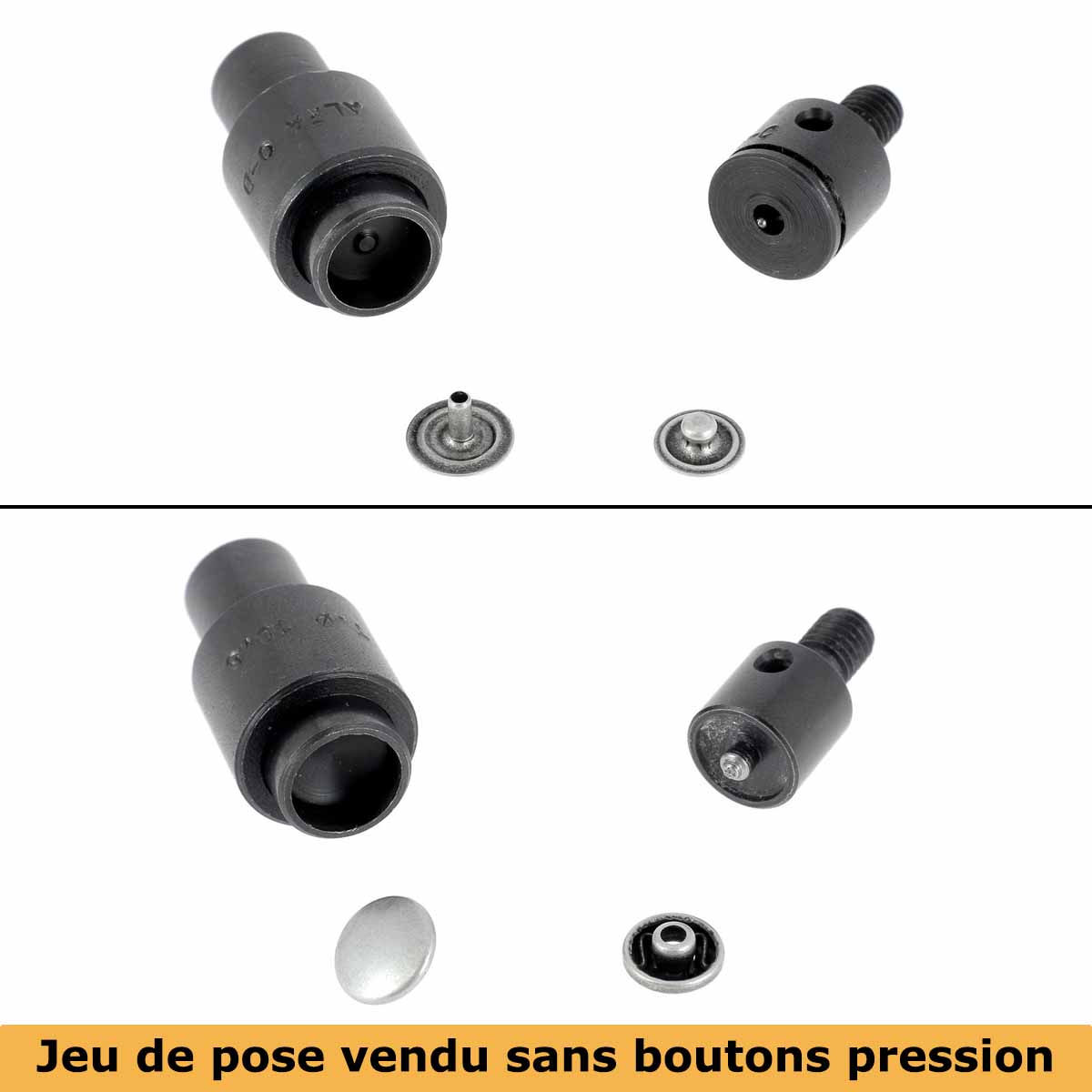
3 methods for installing a snap fastener.
We also sell boxes of simple or heavy-duty snap fasteners with the setting tool included!
How to remove a snap fastener or rivet?
A rivet or snap fastener poorly installed? Here's the solution to easily remove them without damaging your creation!
You've spent hours creating a perfect piece, but a simple snap fastener or poorly placed rivet can ruin everything. Don't let these mistakes spoil your leather creations anymore! This arbor press and these anvils are specially designed to easily remove snap fasteners and rivets, without damaging the leather.
These tools allow you to remove:
- Single and double-cap rivets from T2
- Male and female parts of heavy-duty snap fasteners (ring spring)
- Female parts of S-spring snap fasteners (to remove the male part, you need to use cutting pliers).


How to cover a metal snap fastener with leather?
How to install an eyelet?


The different types of eyelets and their setting tools.
We also sell boxes of star-opening or rolling eyelets with the setting tool included!
How to install an accessory without a specific tool?
Some accessories can be installed without a specific tool or with a simple screwdriver. This is the case for:
- Magnetic tops
- Round claw eyelets
- Chicago screws
- Collar buttons
Accessory price: These accessories are the most expensive because they are composed of more parts and are produced in limited quantities. Nevertheless, installing accessories without the help of special tools allows you to dismantle them to reuse them on a new piece of leather or to re-install them better.
Tool price: There is no specific tool for their installation. The use of a screwdriver, a utility knife, or a hammer may sometimes be necessary.
Ease of installation: These accessories have been developed for DIY enthusiasts; their installation is generally easy.
Installation quality: Deco Cuir has selected well-designed accessories for you, which offer satisfactory installation quality.
 |
 |


2 comments
Deco Cuir
Bonjour,
Quand nous regardons l’historique de vos commandes nous constatons que vous avez acheté des rivets et les jeux de pose pour presse d’établi. Je vous invite à regarder la vidéo suivante à partir de la minute 2 :20 : https://youtu.be/WF1KNuuasec?si=UE1LBRzLIOU0tmpd&t=140 pour savoir comment les poser.
Vous n’êtes pas obligée de percer votre matière à l’aide de la presse d’établi, vous pouvez utiliser un simple emporte-pièce.
Bonne journée,
L’équipe Deco Cuir
Anne France PUISEUX
Bonjour
J ai achete des pressions aimamtees avec les emporte pieces pour presse mais je cherche un tuto pour savoir comment faire car je n y arrive pas;
Merci bcp
Bonne soiree