








REQUIRED MATERIALS
To complete this tutorial, you will need:
- 1 sheet of soft calfskin leather or sheepskin - Thickness: 1.4 mm maximum - Surface area 1.50 m² minimum (or 2 sheets of 0.85 m²).
- 1 piece of split leather 20x30 cm - Thickness: 0.7 mm maximum
- 1 zipper over 55 cm (length)
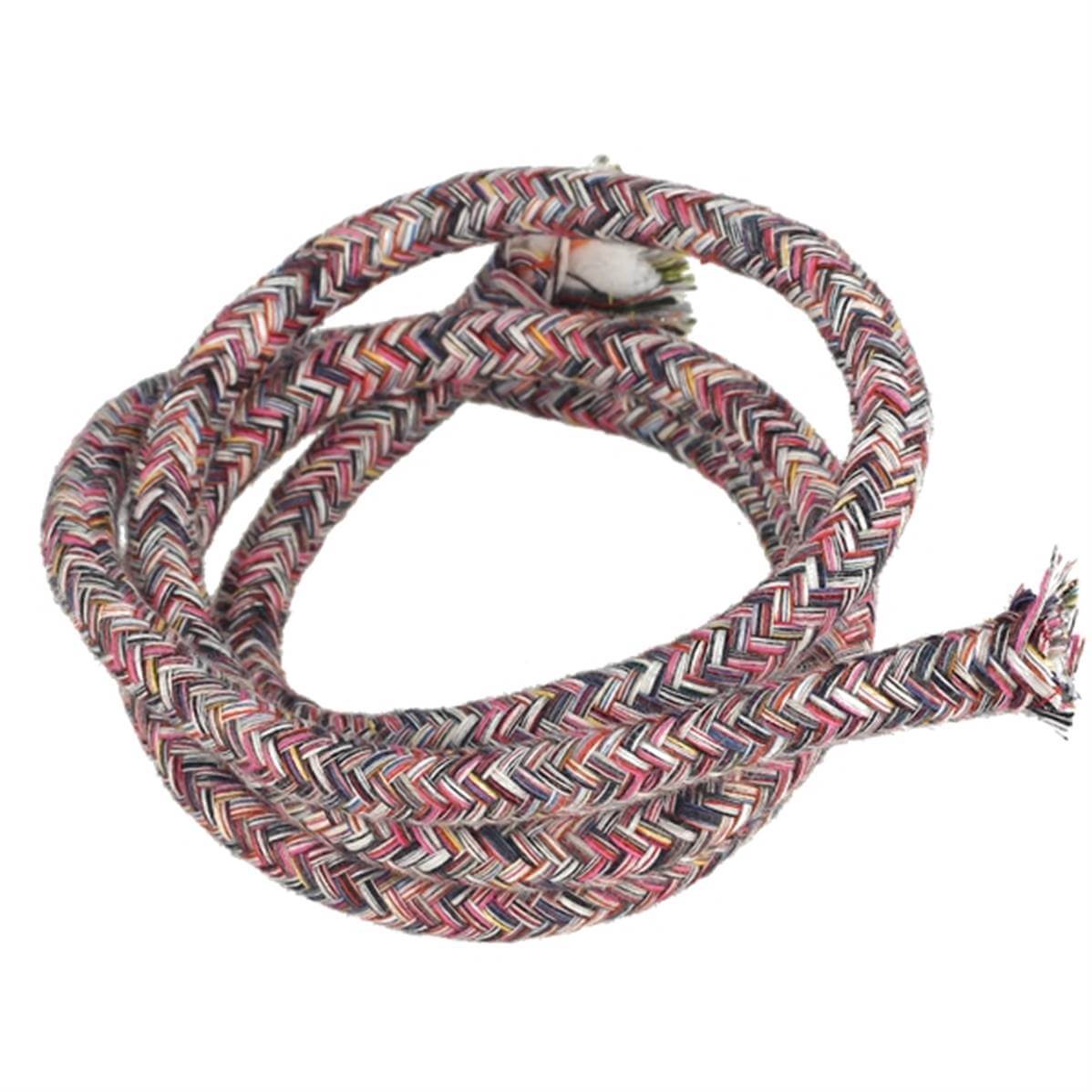
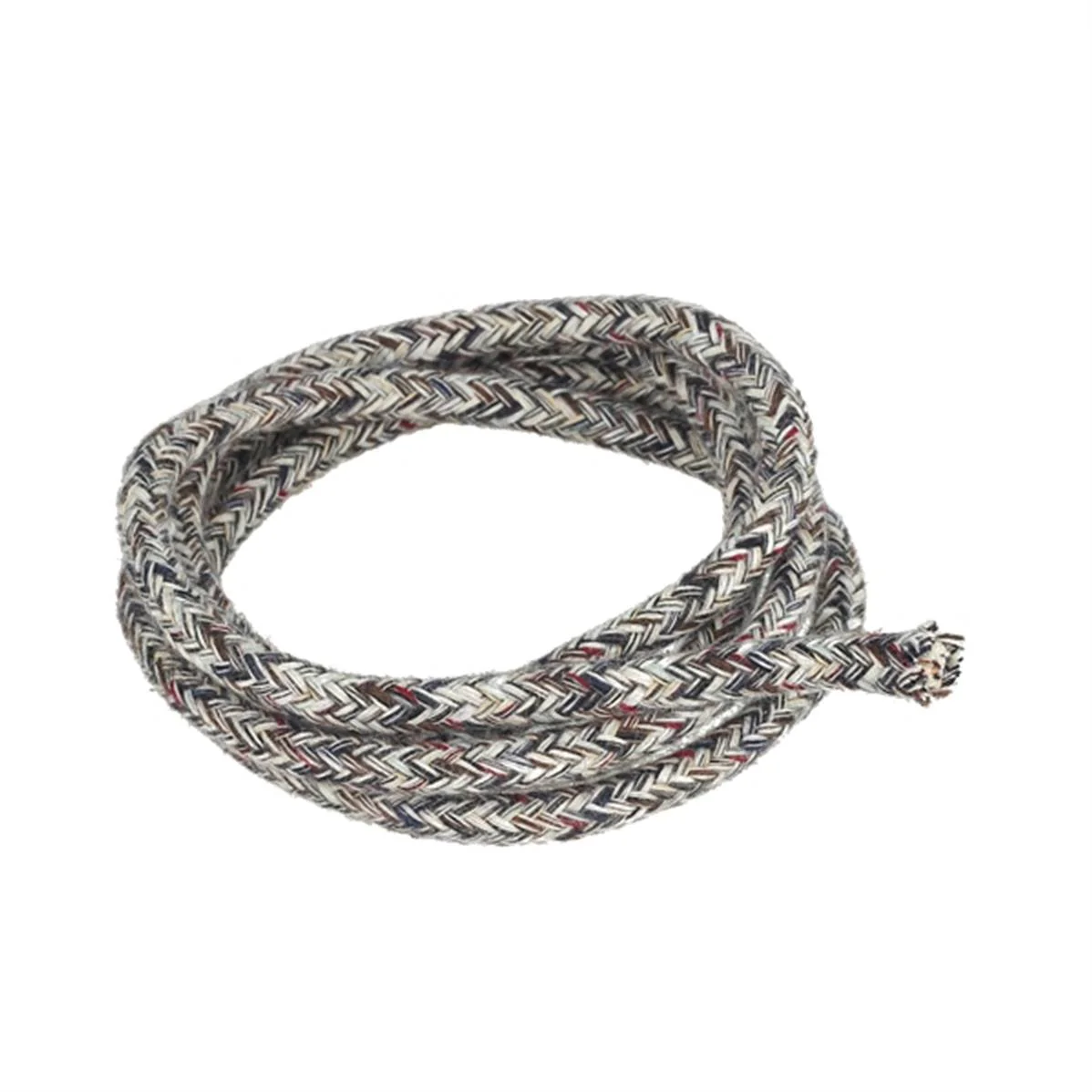
- 2 meters of cord for bag handle, 8 mm diameter
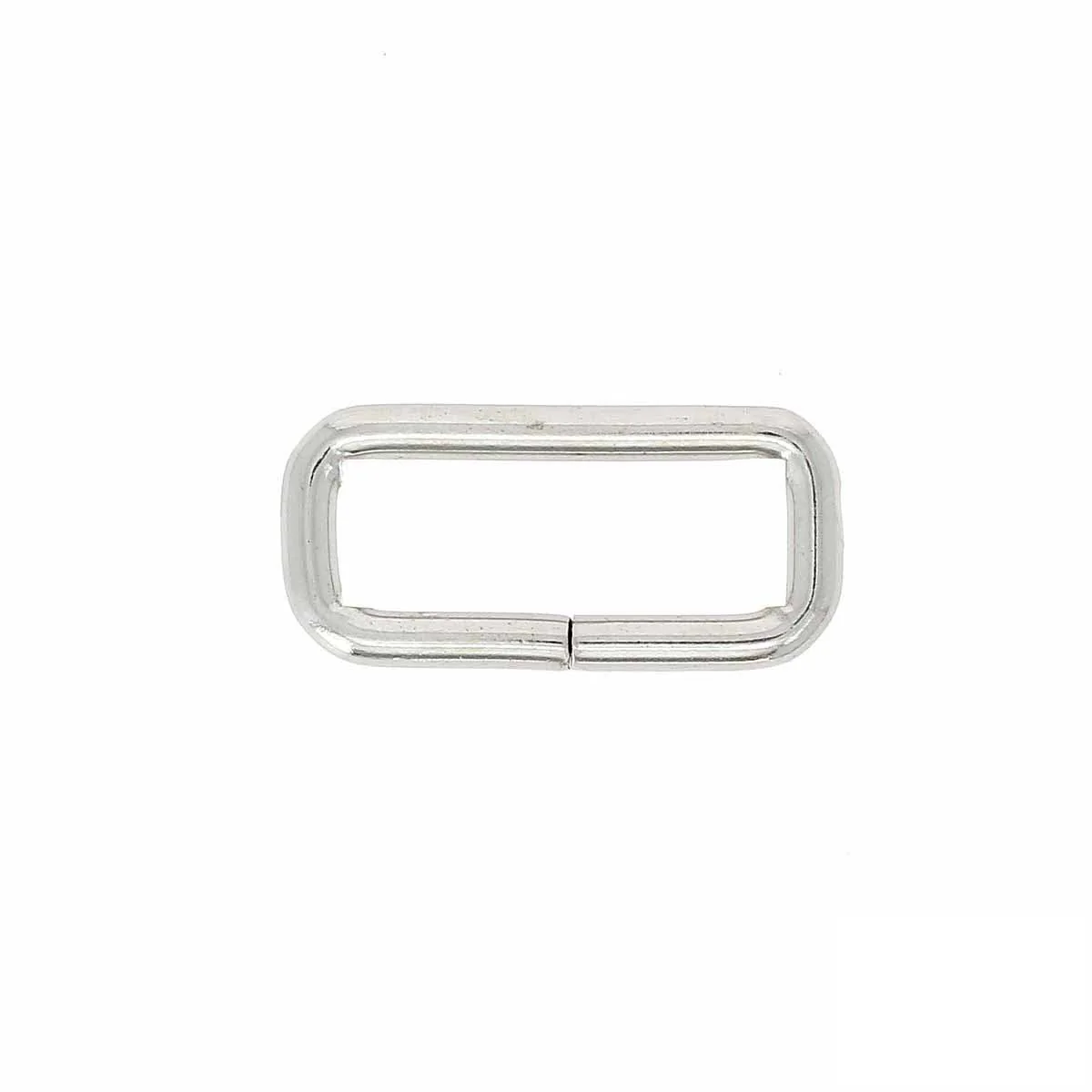
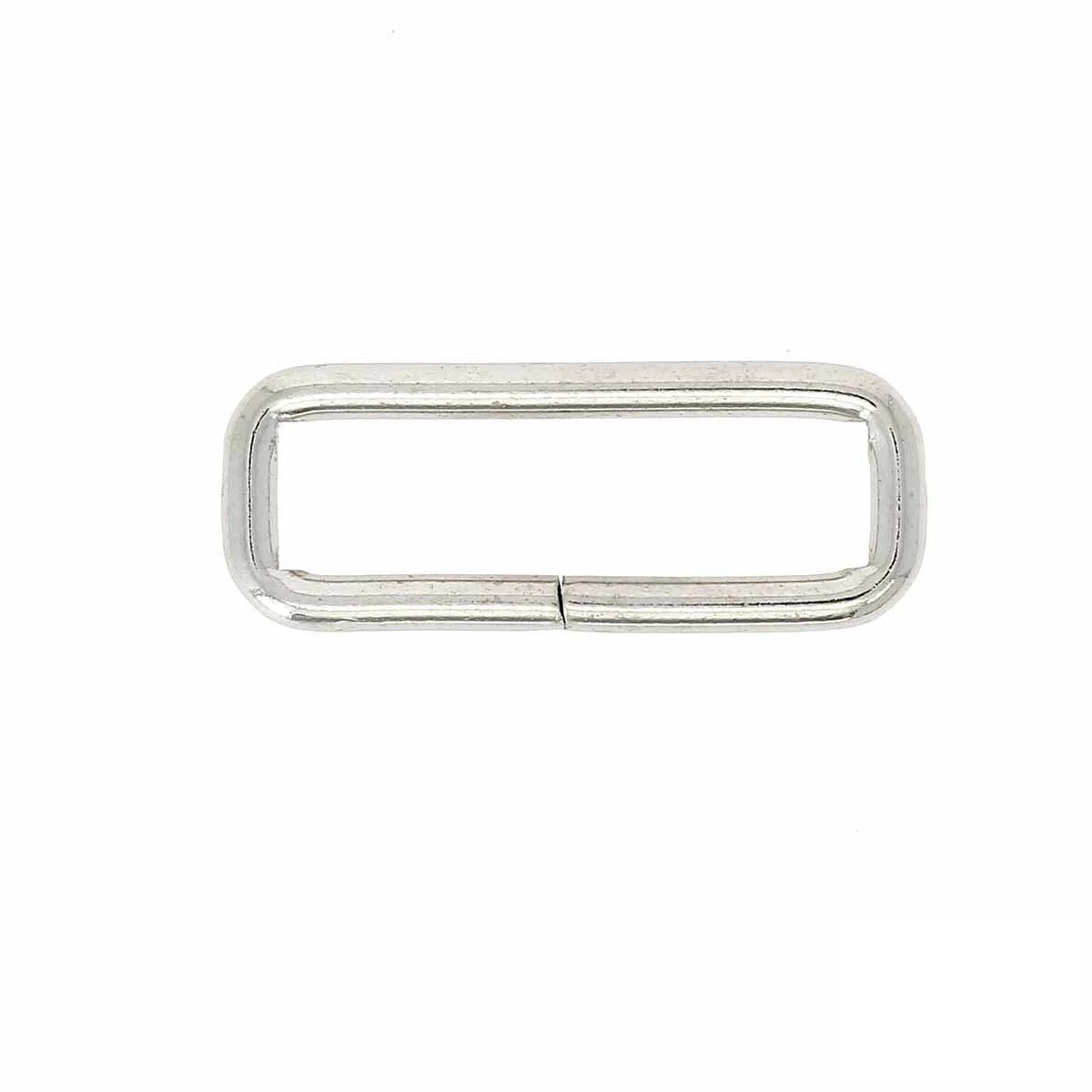
- 4 rectangular loops with rounded corners - 4 mm wire - 30 mm
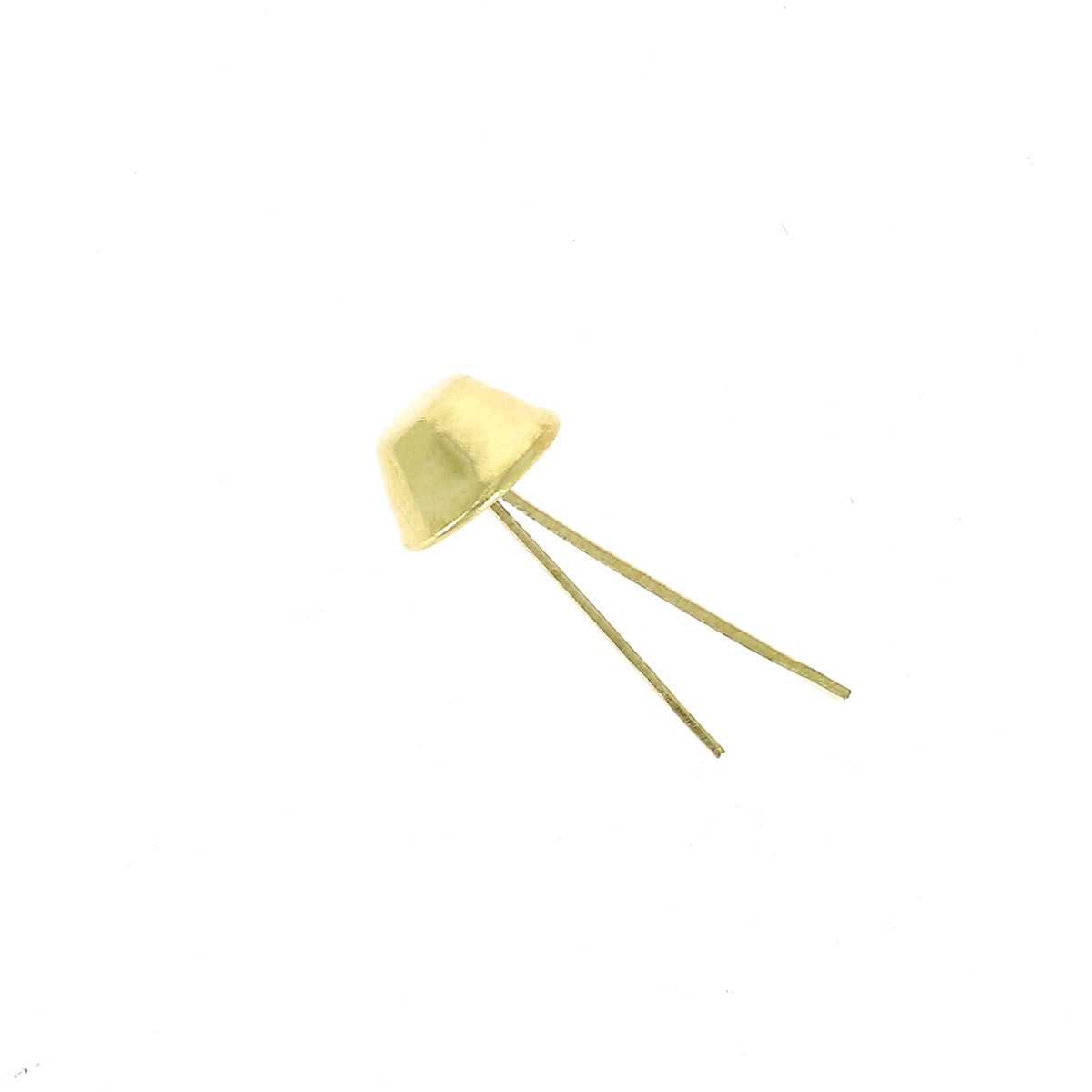
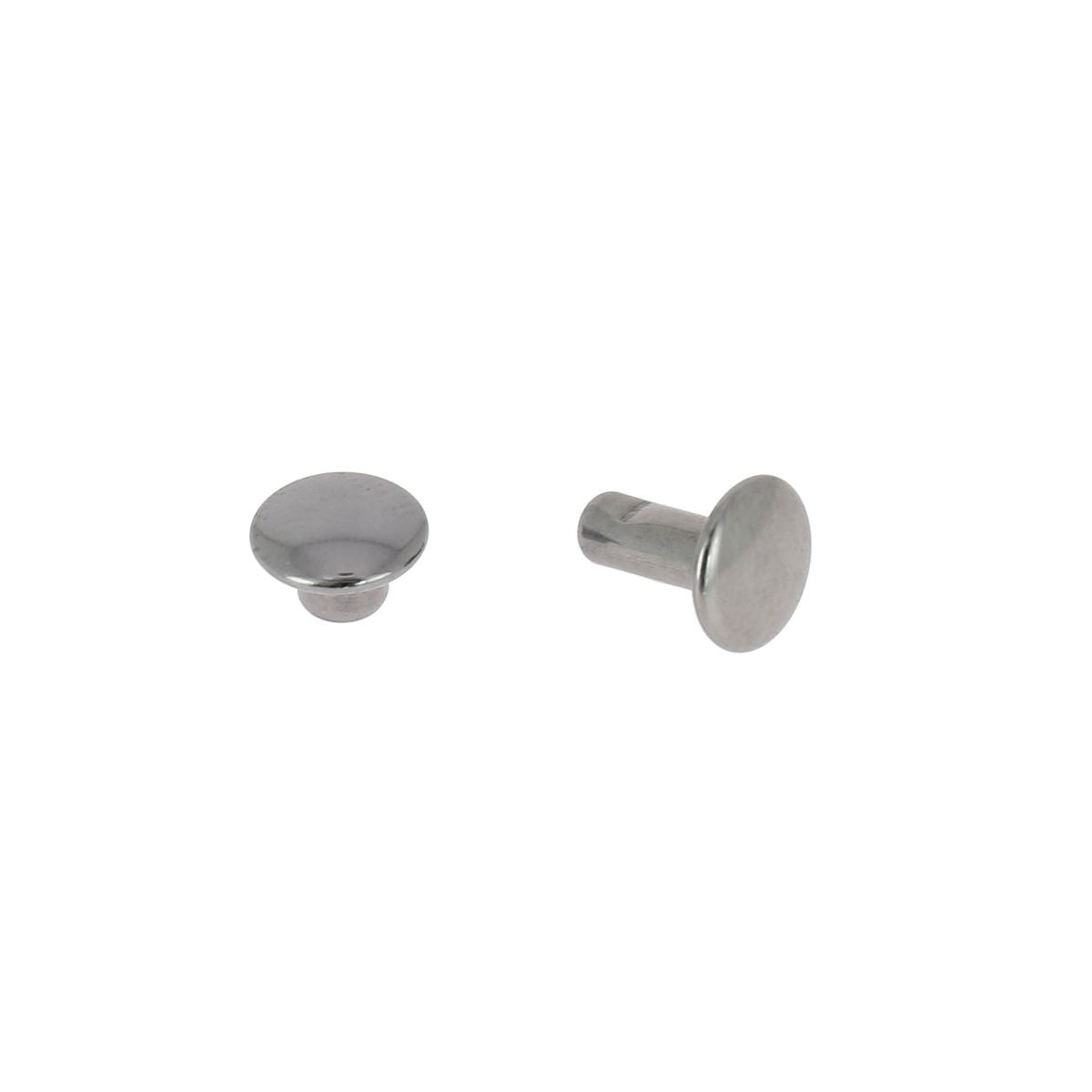
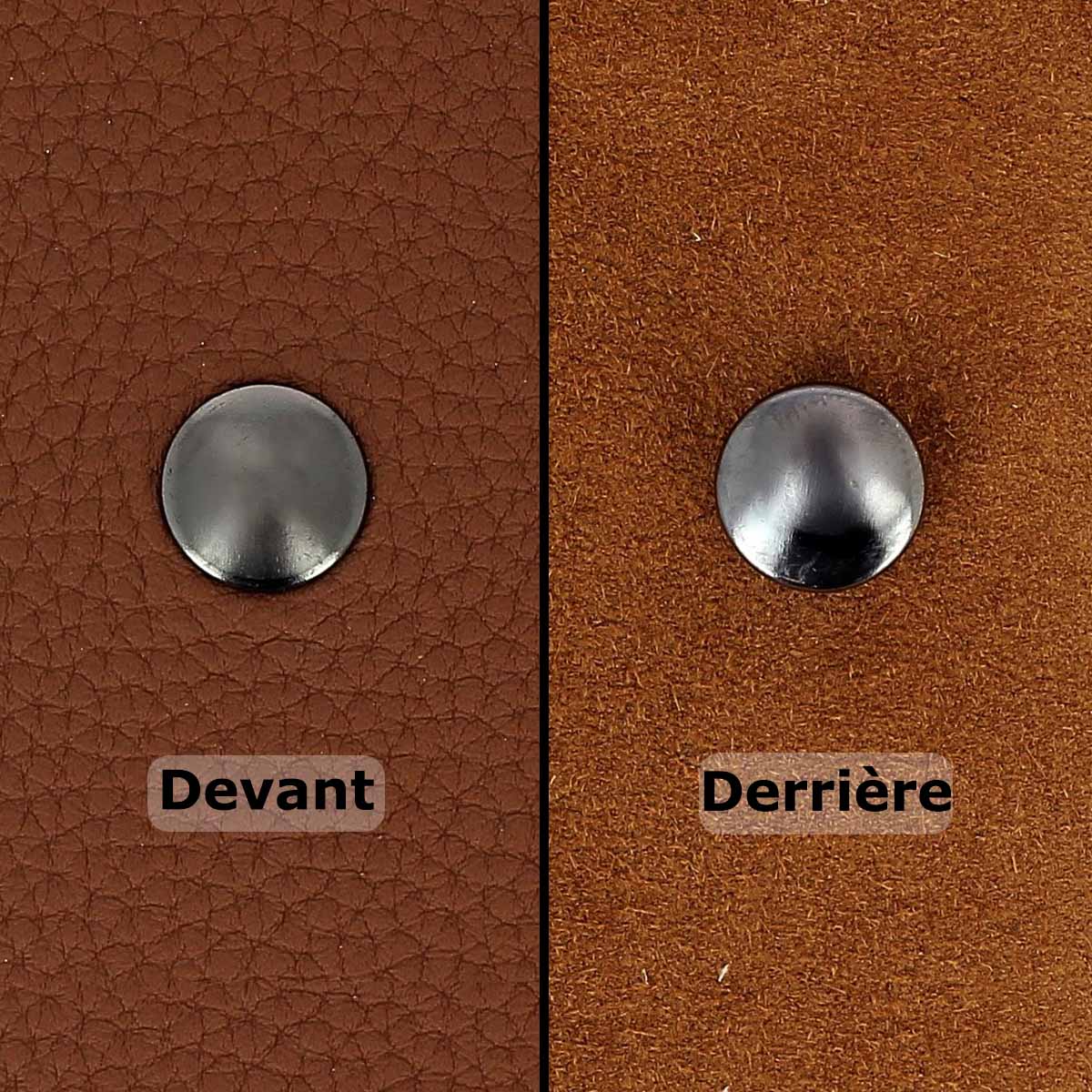
- 16 medium brass double cap rivets (T3)
- 1 sheet of Texon reinforcement - 25x50 cm - Thickness: 0.6 mm
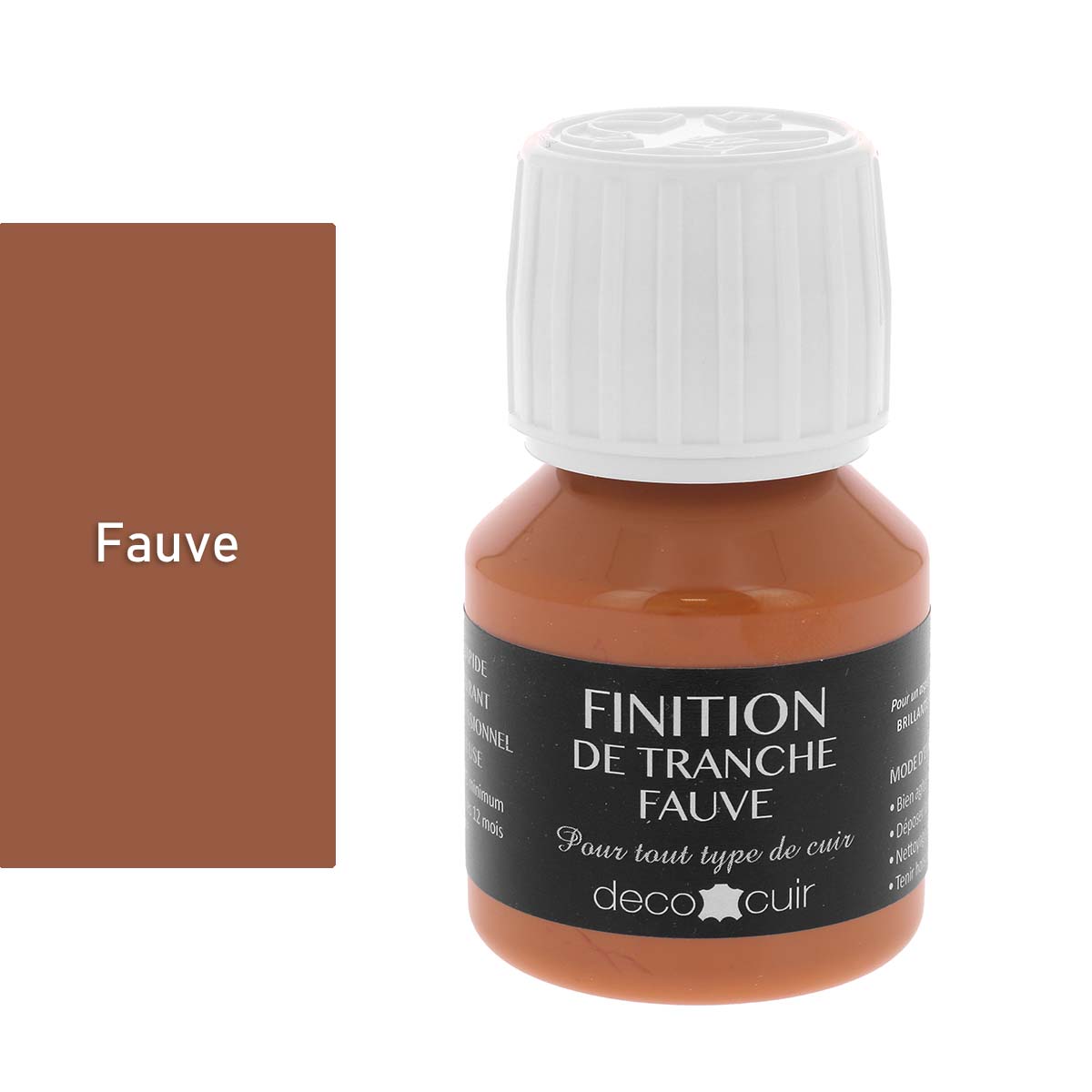
- An edge finish
- Fabric for the lining: 140 or 120 cm wide x 90 cm.
And the following equipment:
- 1 cutter and a pair of scissors
- 1 punch, 3 mm diameter
- 1 sewing machine
- 1 spool of polyester thread n°30 (0.41 mm diameter)
- Glue for leather
- Double-sided adhesive tape
- Tear-resistant adhesive tape
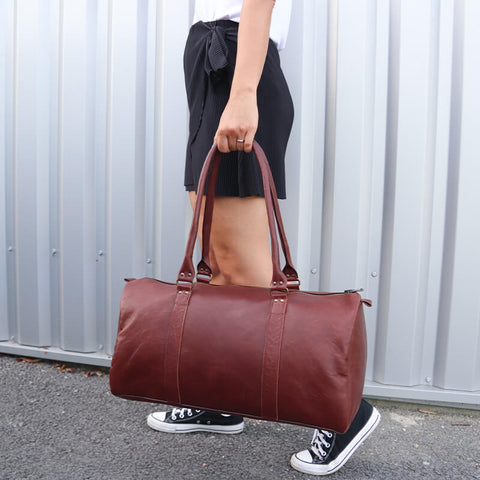
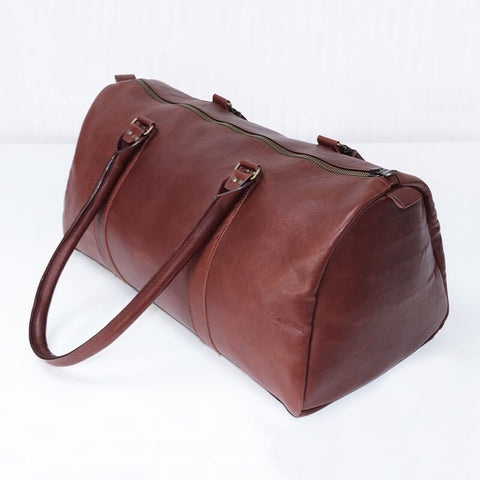
Premium version: with sheepskin leather
 |
 |
TUTORIAL VIDEO
1. PRINT AND TRACE THE PATTERN
Purchase the paper or PDF pattern (print at actual size).
Seam allowances are included.
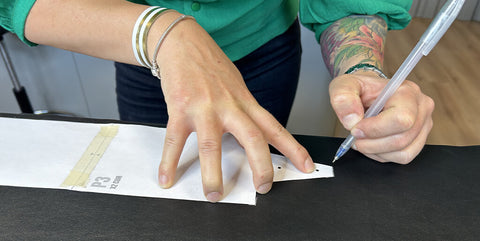
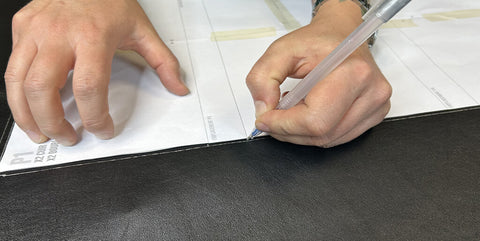
Using a silver pencil, trace the pattern pieces onto the grain side of the leather. Mark the centers of each piece with a silver pencil or by making a small 1 mm notch in the leather (see pattern). Also mark the locations of the P4 straps and the holes (for rivets and bag feet).
Also trace the pieces onto the lining fabric. For the P1 lining pieces, add 1.5 cm to the height.
 |
 |
2. Cut out the different pieces
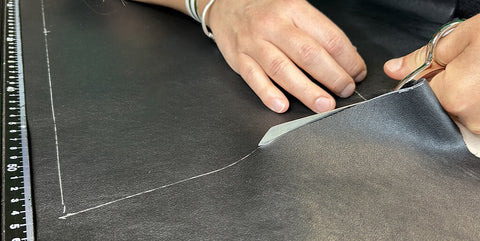
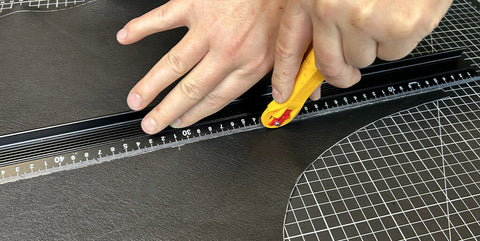
Cut out the different leather and lining pieces with a cutter or scissors. Remember to add 1.5 cm to the height of the two P1 lining pieces.
Cut all sides that will be visible at the end of assembly with a cutter (raw edges). The sides concerned are: the top length of the P1 pieces, the lengths of P2, the P4 straps, and the P6 and P7 straps.
 |
 |
3. Finish the edges
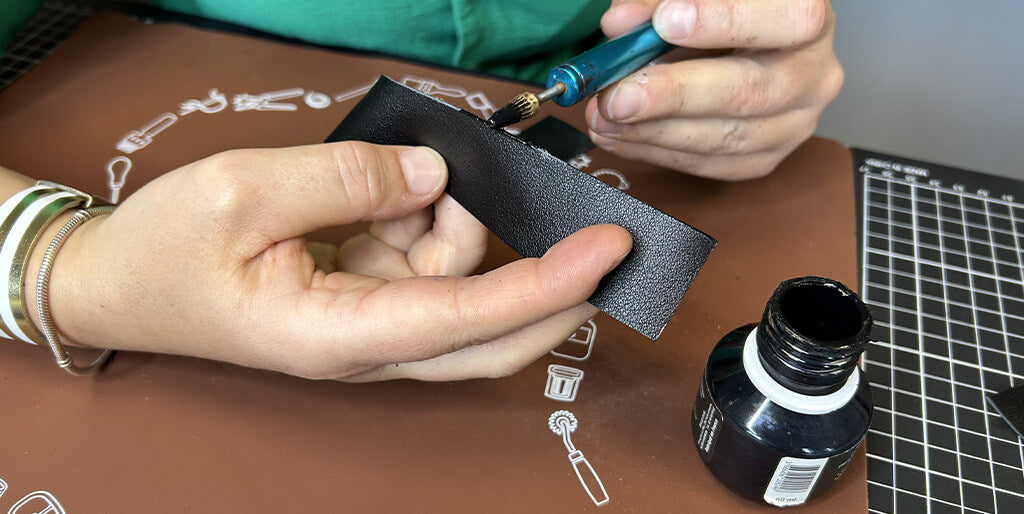
Finish the edges (with edge paint) of the top of the P1 pieces, the P2 lengths, the 4 P4 straps, and the 2 P6 and P7 tabs.
LEARN MORE ABOUT EDGE FINISHING >
4. Prepare the bag handles
Apply tear-resistant tape* for 10 cm on each end of the P3 handles.
* Tear-resistant tape is ideal for reinforcing and consolidating areas where your creation is under stress. It will prevent the leather from stretching.
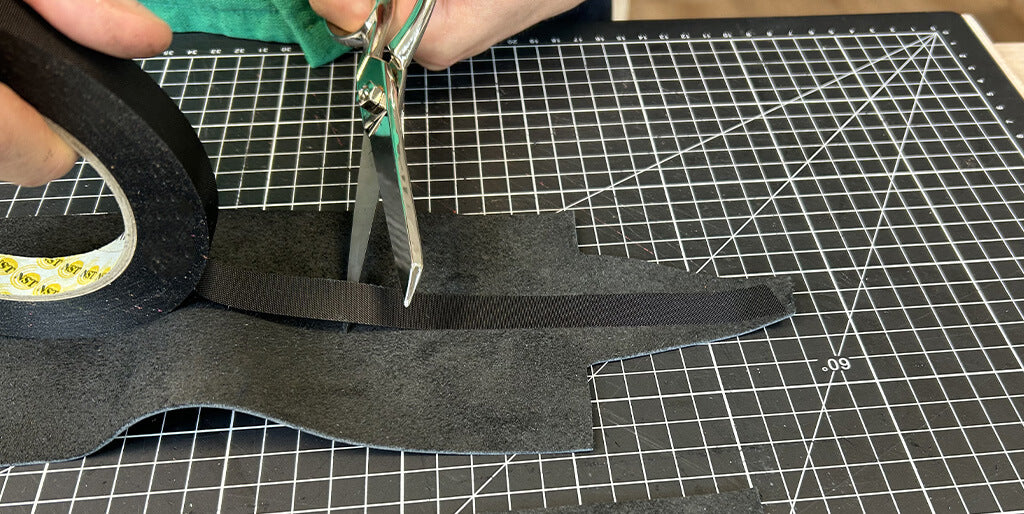
Then apply double-sided tape in the center and along the entire length (except at the 2 ends) of the P3 pieces.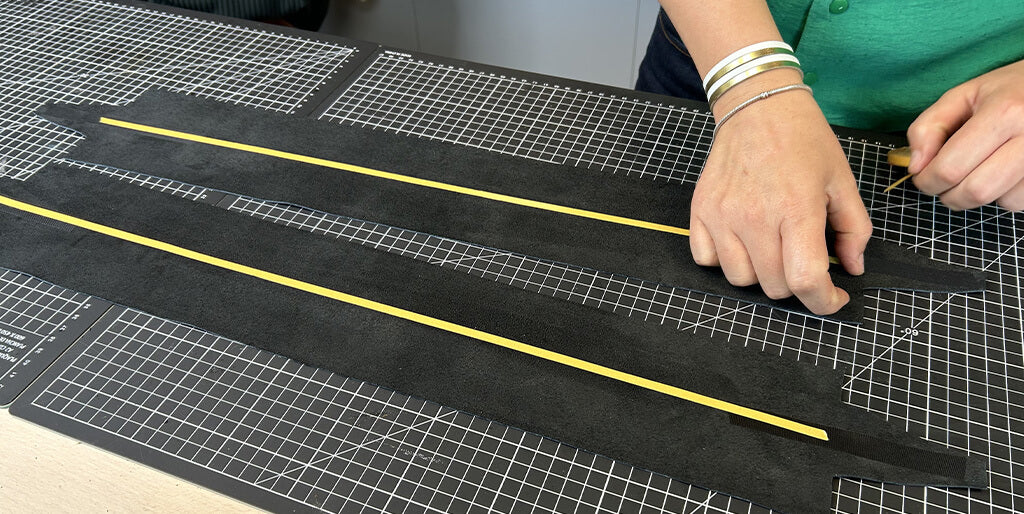
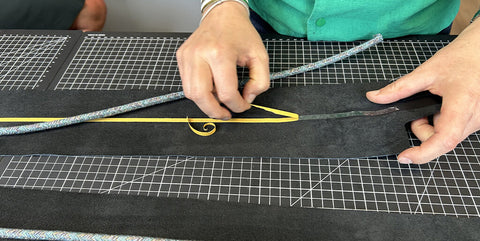
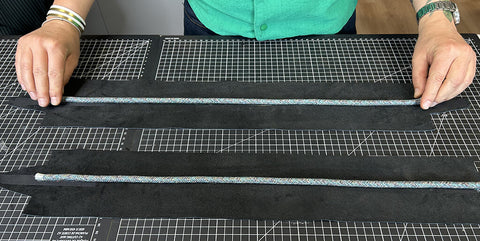
Cut about 58 cm of 8 mm diameter cord (x2) and glue them onto the double-sided tape.
 |
 |
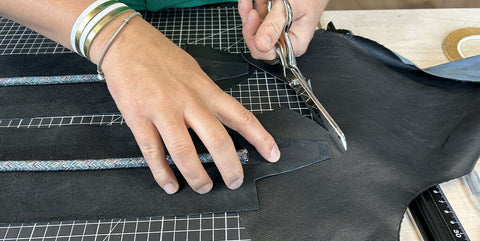
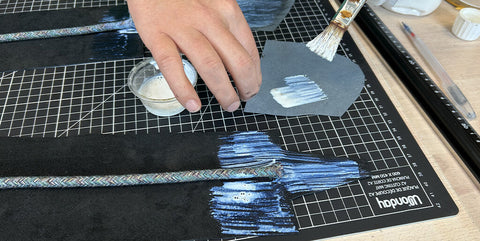
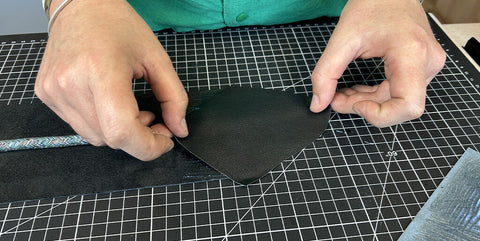
From a 20x30 cm piece of split leather, 0.7 mm thick, cut 4 pieces of 10x13 cm to cover the ends of the P3 handles. Then glue (with leather glue) these pieces to each end of the P3 handles, wrong side to wrong side.
 |
 |
 |
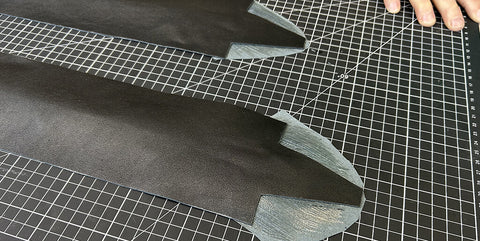 |
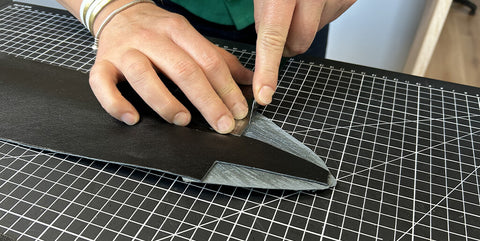
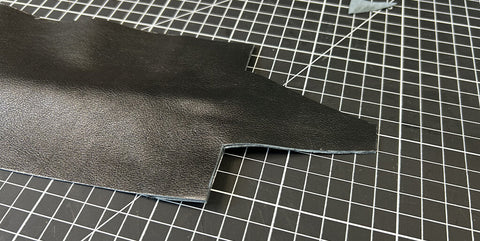
Trim the excess leather with a cutter.
 |
 |
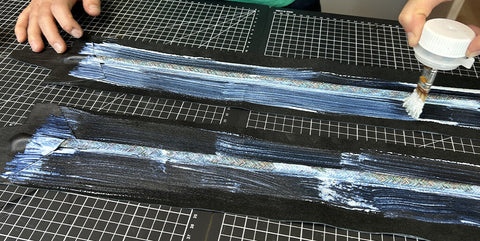
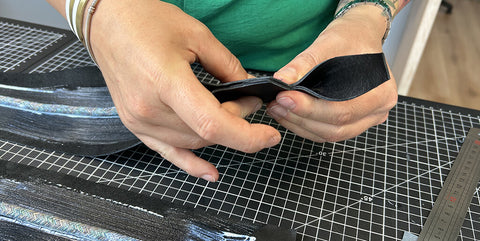
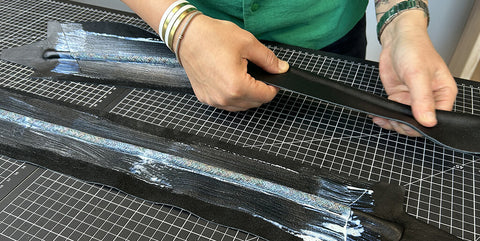
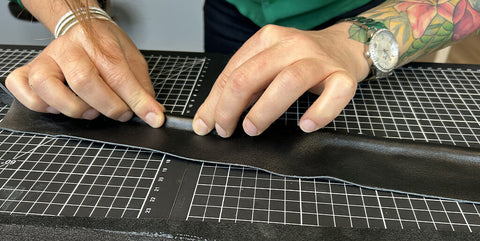
Apply contact adhesive along the entire length of the P3 pieces (except the ends). Then, glue the handle, making sure to tightly wrap the leather around the cord.
 |
 |
 |
 |
Topstitch all along as close as possible to the cord using the zipper foot.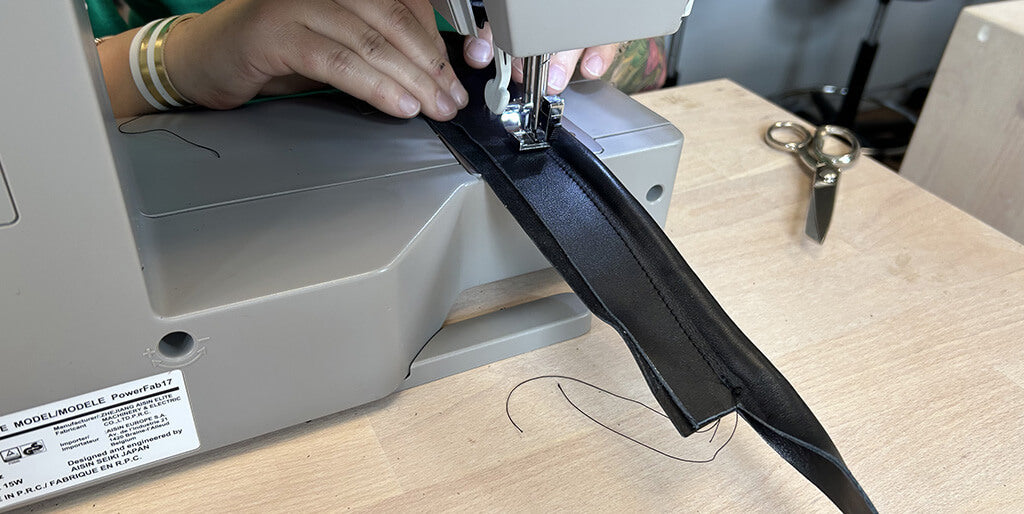
Trim the excess leather 2 mm from the seam with a long ruler and a rotary cutter.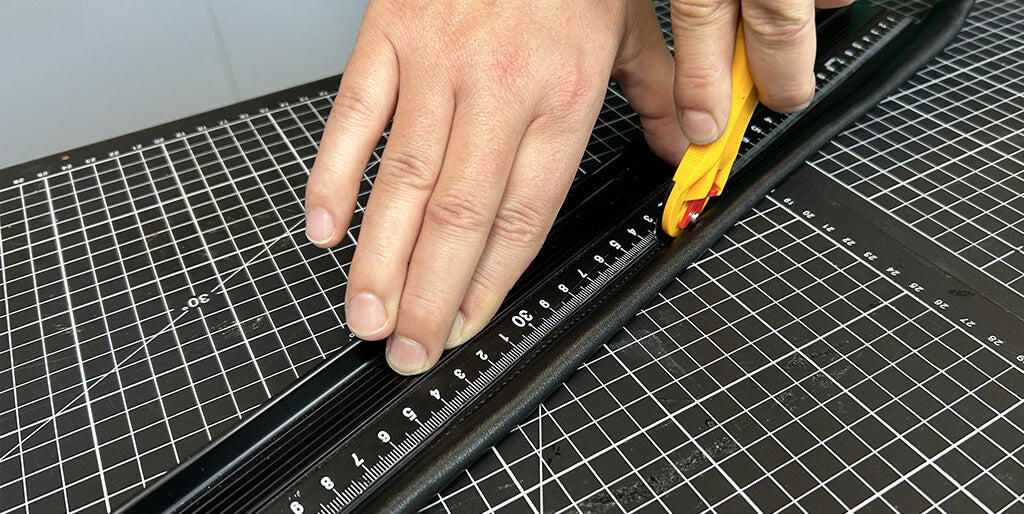
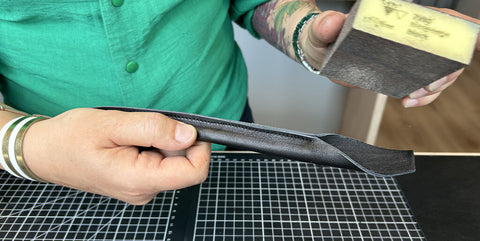
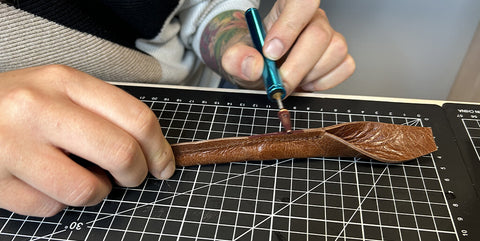
Finish the edges of the handles. Sand with an abrasive sponge, then apply 2 to 3 coats of edge finish (sanding between each coat).
 |
 |
5. Attach the P4 straps to the P1 pieces
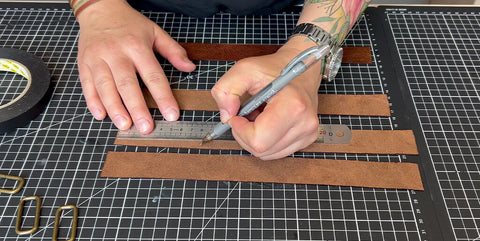
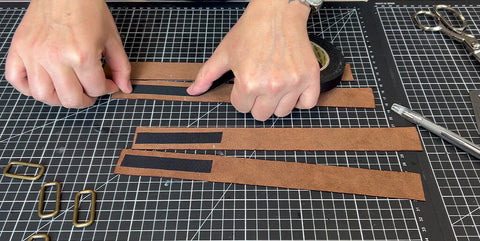
Make an 8 cm mark on the top of the P4 straps and apply tear-resistant tape over these 8 cm.
 |
 |
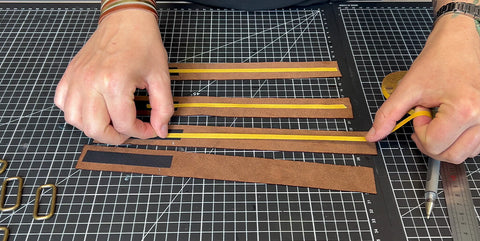
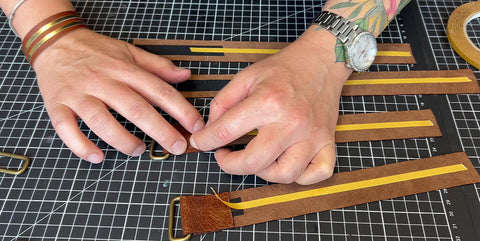
Place double-sided tape along the length of the P4 pieces, in the middle. Then, insert the rectangular loop and fold the end of the P4 strap up to the 8 cm mark. Glue with the double-sided tape.
 |
 |
Still using double-sided tape, glue the P4 straps to the designated locations on the P1 pieces (see pattern).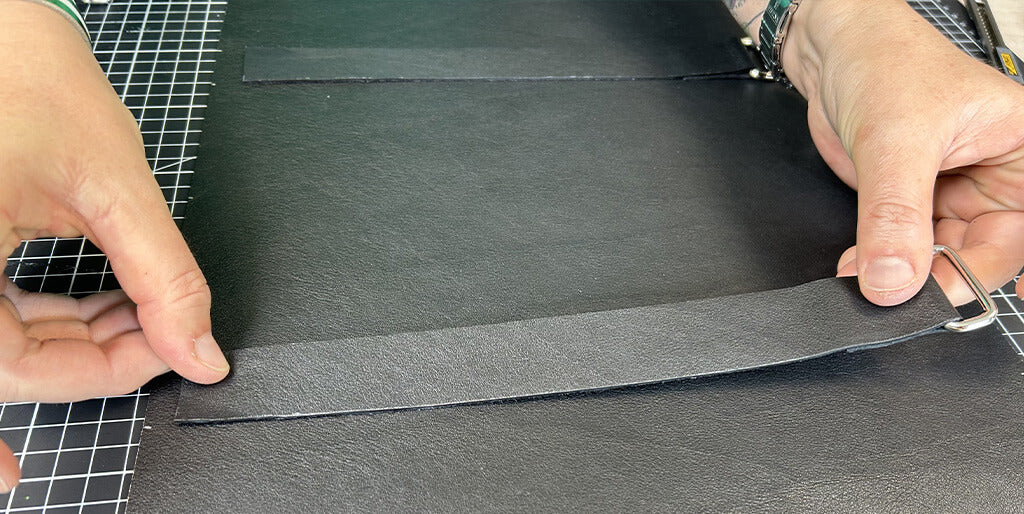
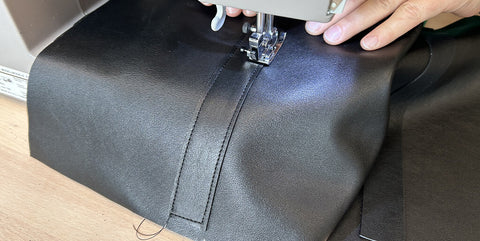
Topstitch the P4 straps along both lengths 2 mm from the edge and across the bottom width. Finish the stitching as close as possible to the rectangular loop.
 |
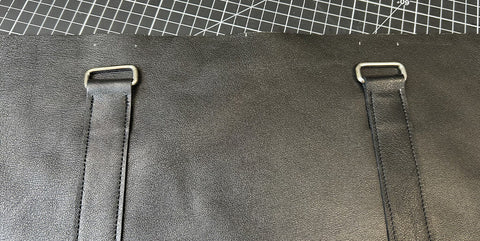 |
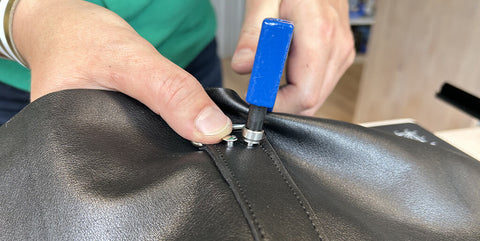
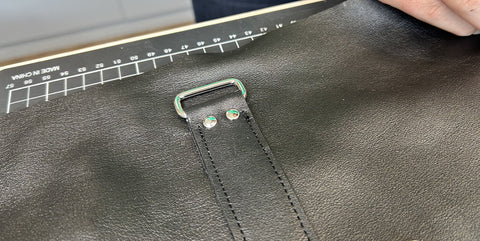
Attach 2 T3 rivets (with the tool of your choice) below the rectangular loops. The holes should have been punched when cutting the pieces (step 2).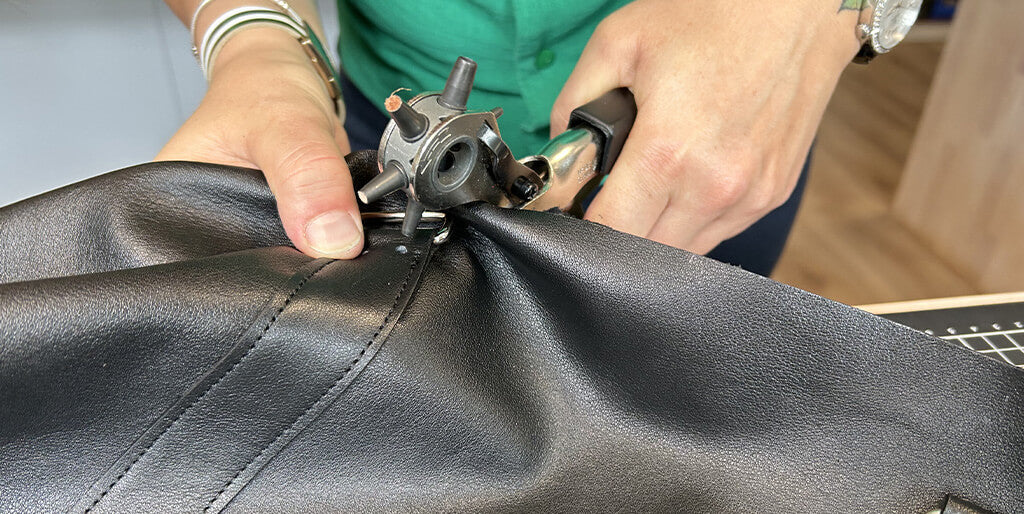
 |
 |
6. Attach the zipper guard strips
Apply double-sided tape along each length of the P7 strip.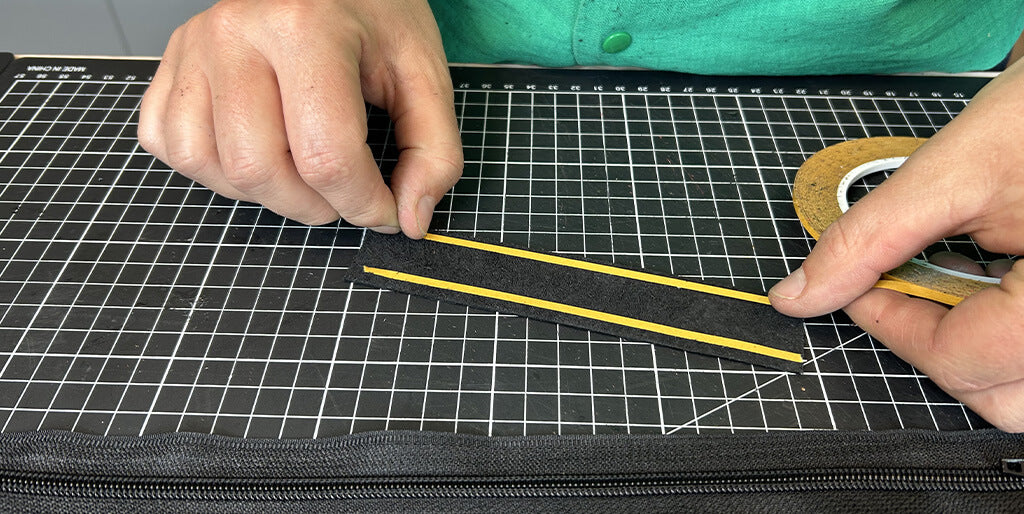
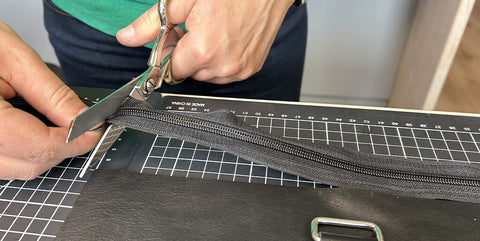
Take the zipper, open it, and cut a few centimeters so that there is only 1 cm left between the beginning of the teeth and the end of the zipper.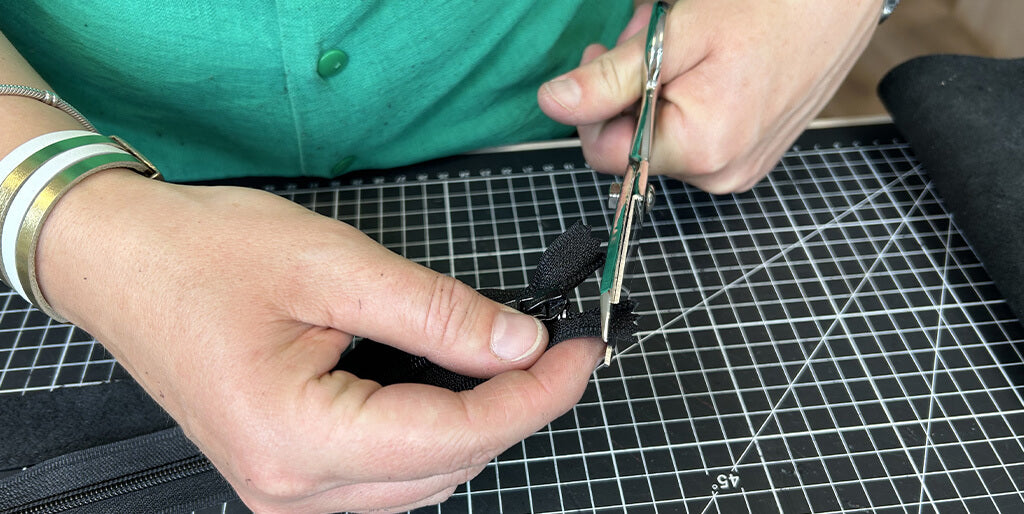
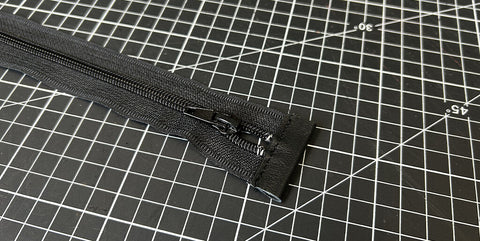
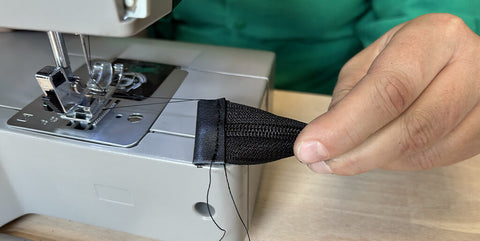
Fold the P7 strip in half (lengthwise) and glue it with double-sided tape to the end of the zipper. Do not glue it all the way along, as the P7 piece will also be used for the other end of the zipper. Trim any excess on each side.
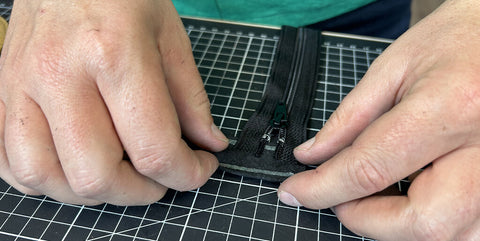 |
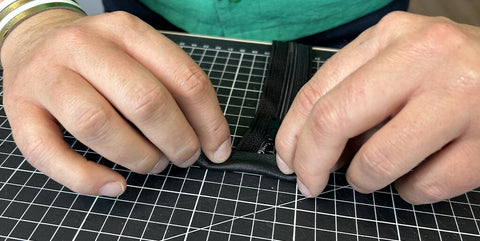 |
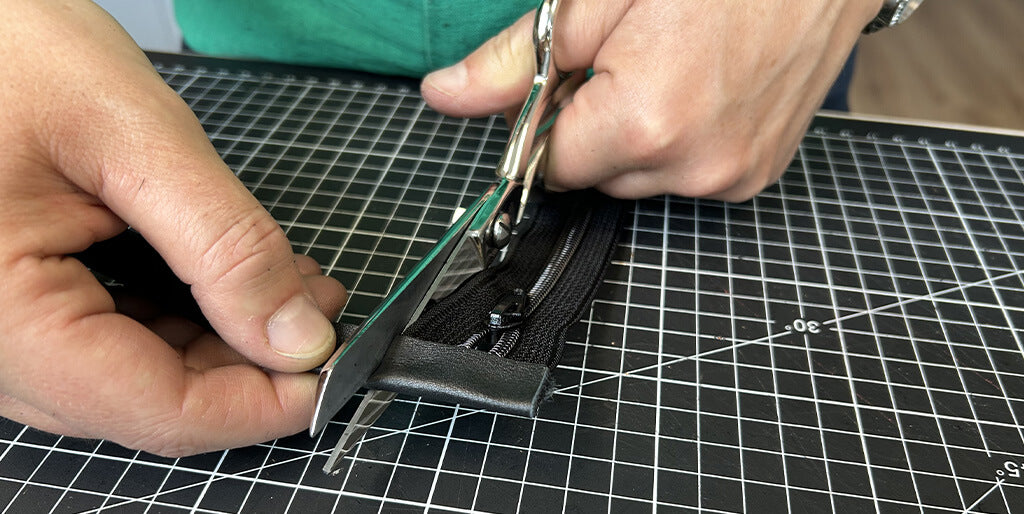
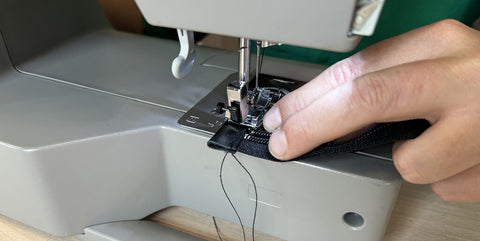
Stitch 2 mm along the length to secure the guard strip.
 |
 |
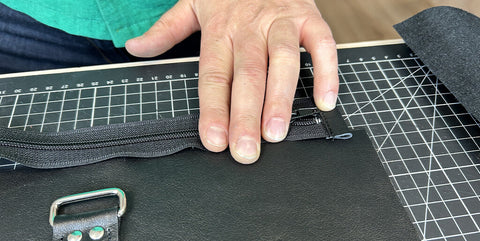
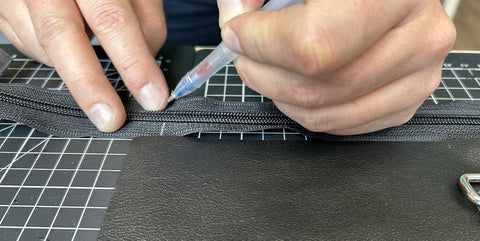
Before cutting the other end of the zipper, you need to determine its size. Place the zipper on top of piece P1, 1 cm from the edge of the width. Cut the other end of the zipper so that it reaches 1 cm from the other edge of piece P1. Finally, sew the guard strip (P7) in the same way as in the previous step.
 |
 |
 |
 |
7. Sew the zipper to the lining
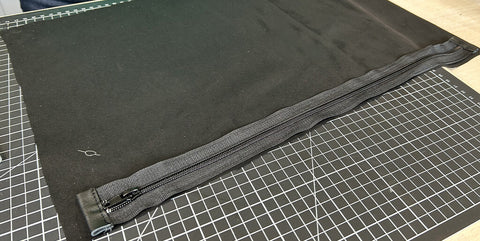
Align the wrong side of the zipper with the right side of the P1 lining. The lining should extend 1 cm beyond each side. Stitch as close as possible to the teeth with the zipper foot.
 |
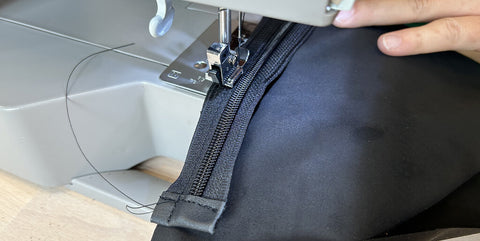 |
Turn and flatten the lining, then topstitch along the edge of the zipper tape.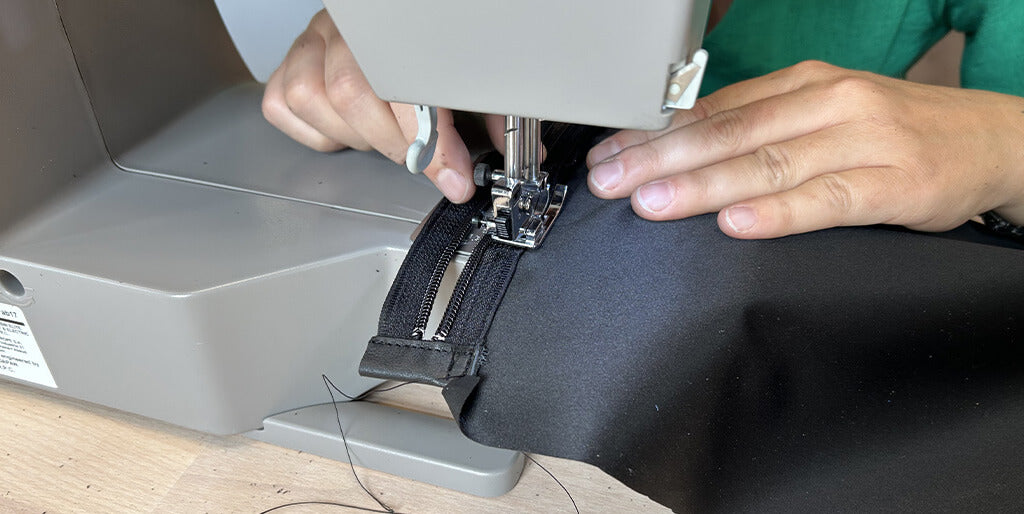
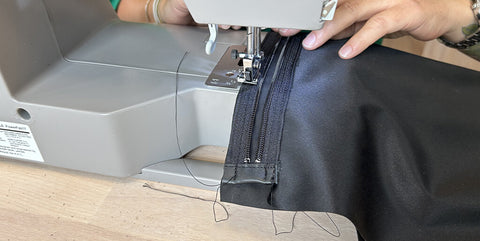
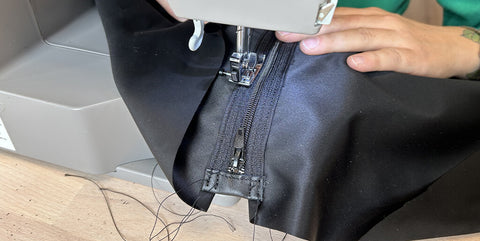
Sew the second lining piece P1 to the other side of the zipper, in the same way as the first lining piece P1.
 |
 |
8. Start assembling the bag
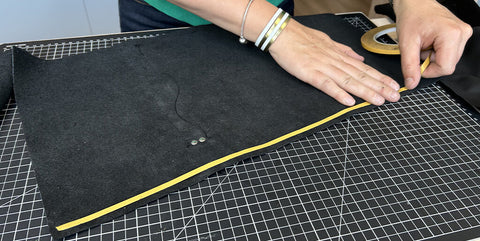
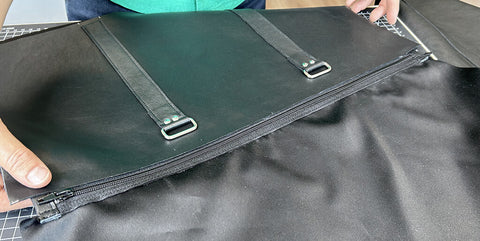
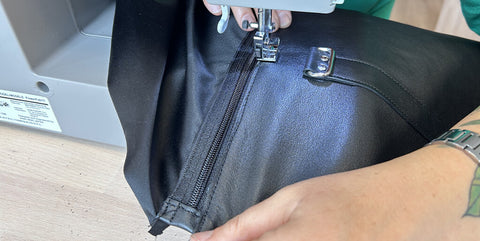
Apply double-sided tape to the top and suede side of one of the leather P1 pieces. Then, glue it to the right side of the zipper, 2 mm from the teeth. Topstitch 2 mm from the edge.
 |
 |
 |
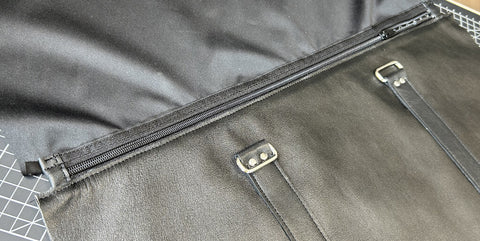 |
Place both P1 linings on the same side so as not to interfere with subsequent seams.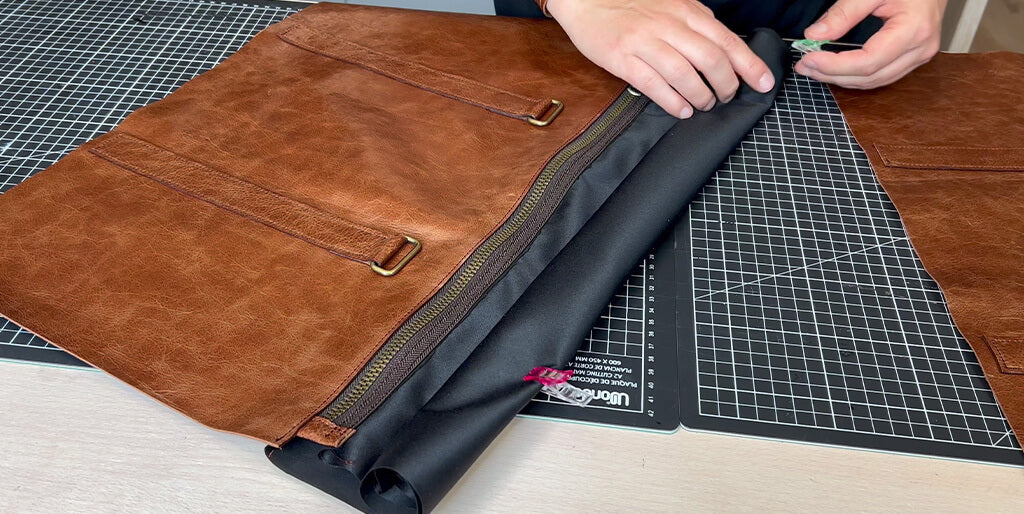
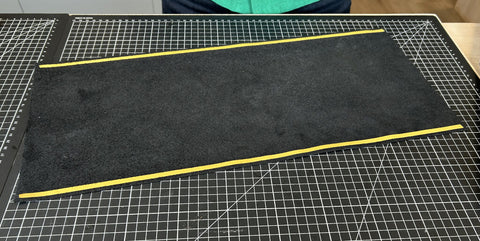
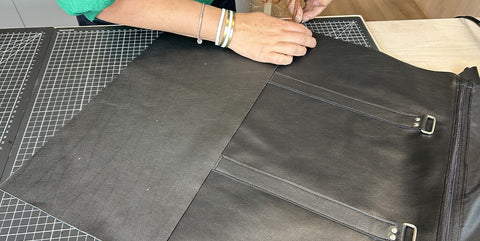
Apply double-sided tape to both long sides of the bottom P2 (suede side of the leather). Then, glue one of the long sides of P2 to the bottom of the already sewn P1 piece (wrong side to right side). Glue about 1 cm, touching the bottom of the P4 strips. Topstitch 2 mm from the edge.
 |
 |
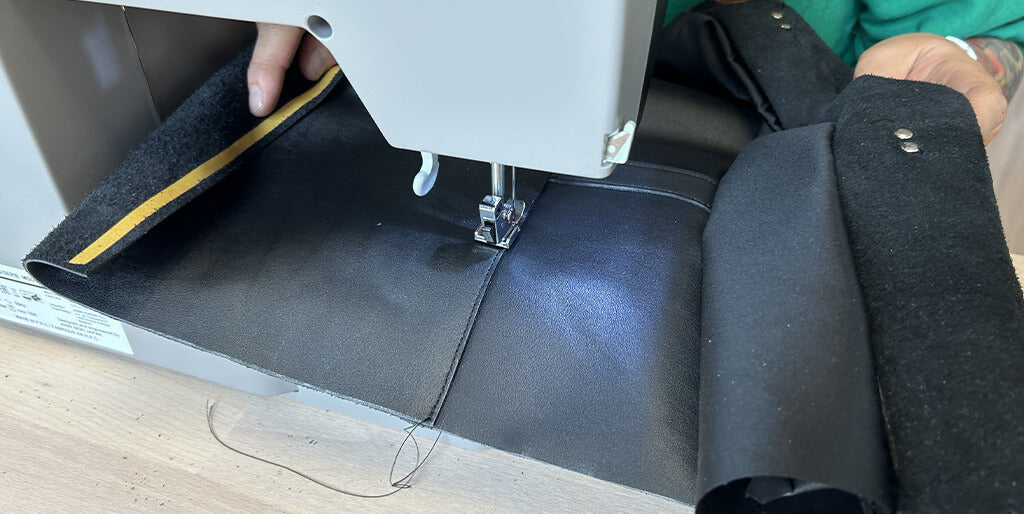
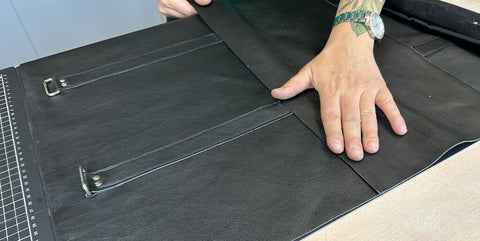
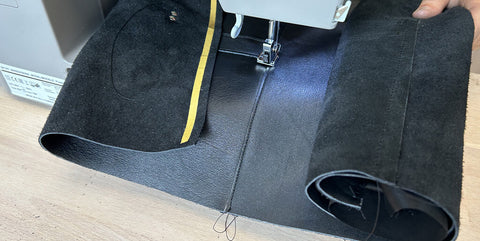
Glue the second long side of the P2 bottom to the second P1 leather piece. Sew 2 mm from the edge. Roll up the other part to sew more easily.
 |
 |
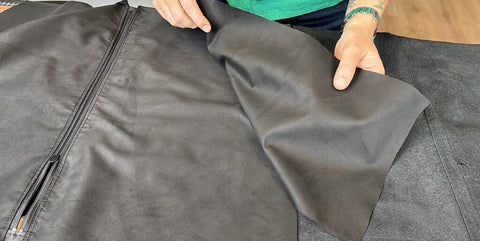
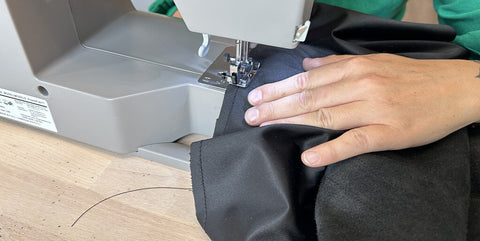
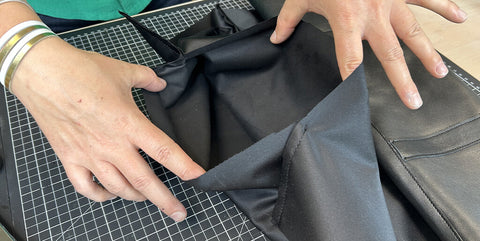
Sew the P2 lining bottom, right sides together, with one of the P1 lining pieces.
 |
 |
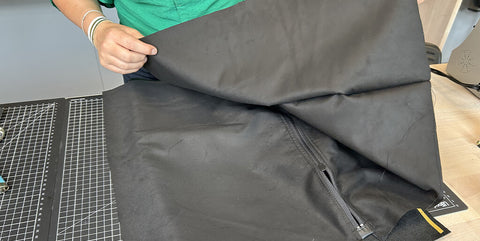
Sew the other side of the bottom to the second P1 lining piece. Sew only 10 cm on each side to leave a large opening (this will make it easier to insert the Texon later).
 |
 |
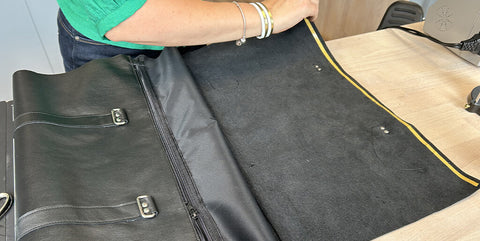
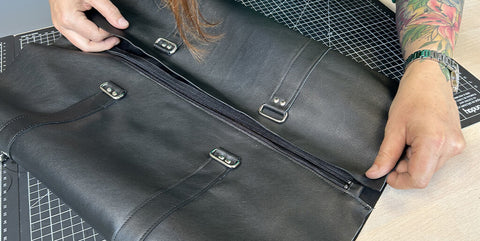
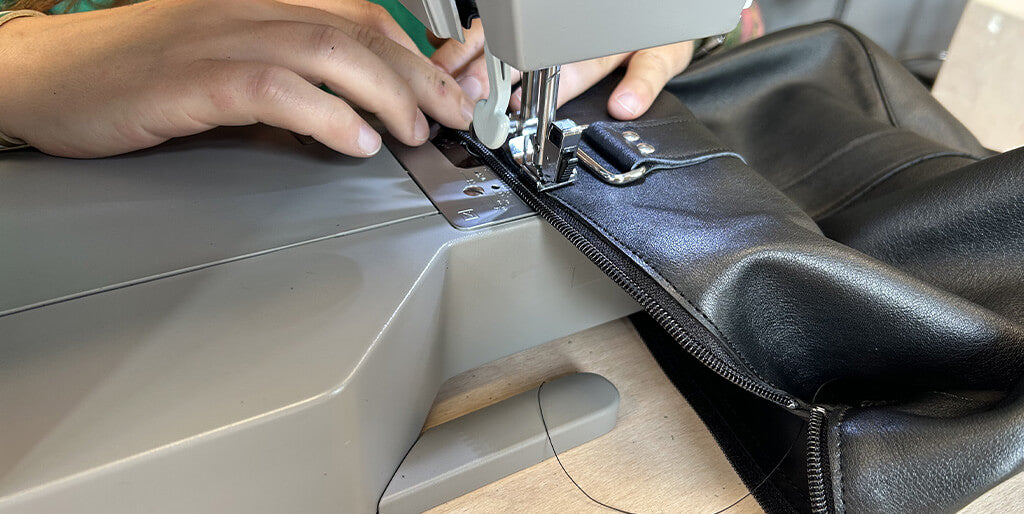
Glue the last long side of piece P1 to the zipper with double-sided tape, 2 mm from the teeth. Then, stitch 2 mm from the edge. Caution: this is a delicate sewing step; the zipper must be opened as much as possible.
 |
 |
9. Sew the sides
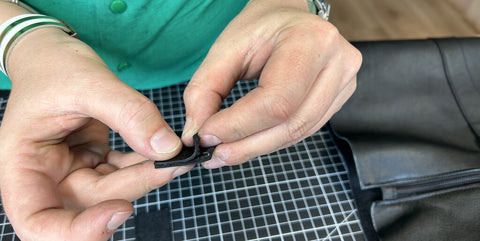
Fold the P6 tabs in half and glue them with double-sided tape.
 |
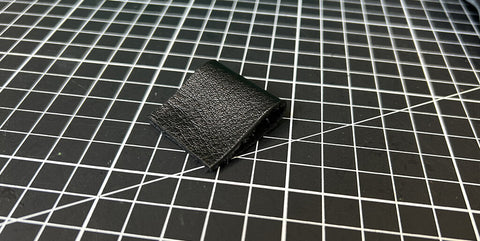 |
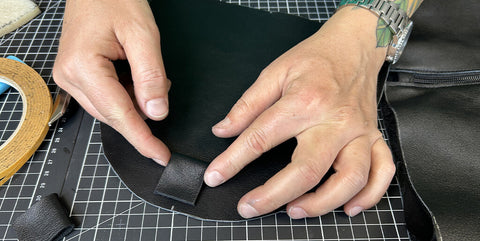
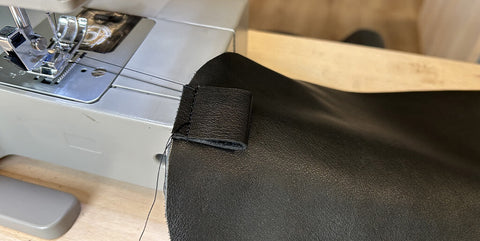
Sew these tabs at the notches on the rounded top of the P5 sides. Position them "downwards".
 |
 |
Using double-sided tape, glue the P5 linings to the leather P5 pieces, wrong sides together.
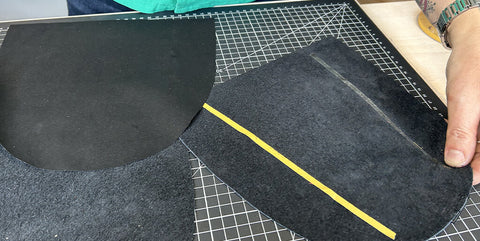 |
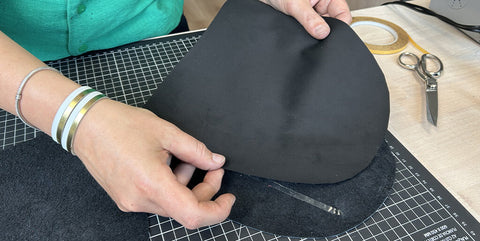 |
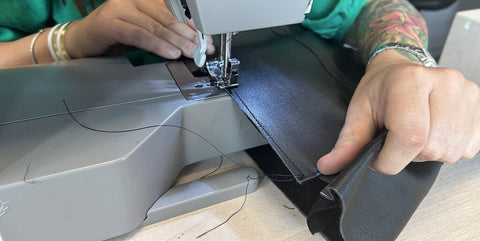
Stitch 5 mm all around the P5 piece (leather and lining).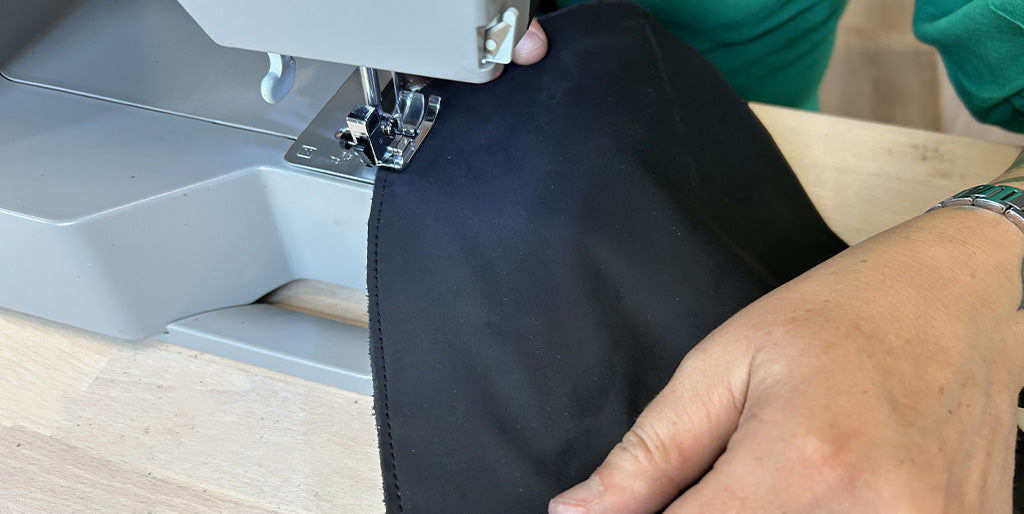
Do the same for the bag body: stitch the leather and lining together 5 mm from the edge all around. Use sewing clips to help.
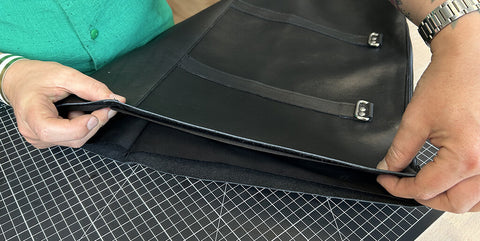 |
 |
Turn the bag body right side out.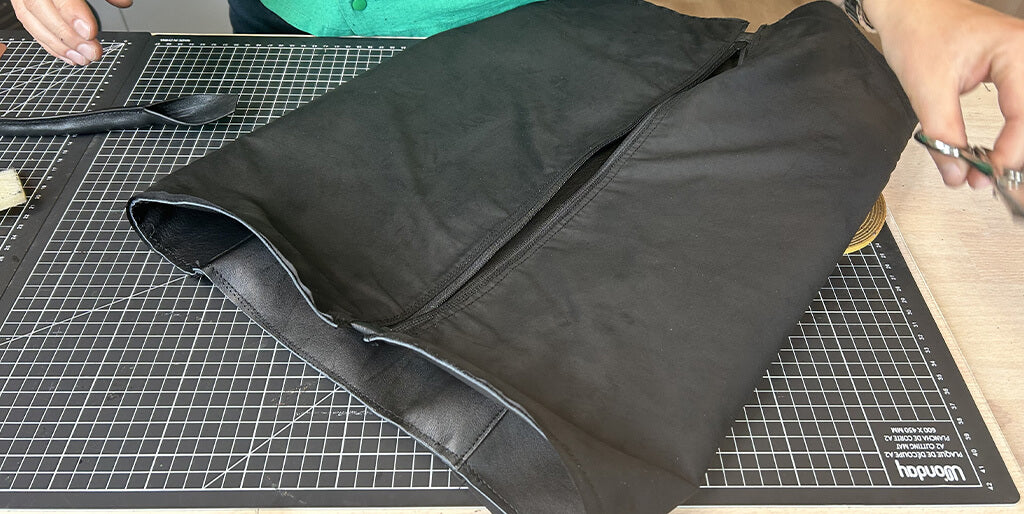
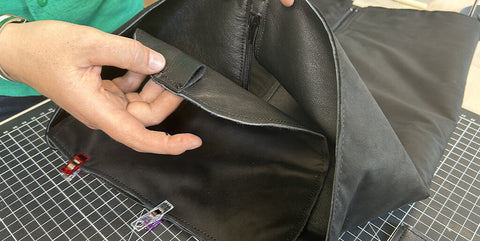
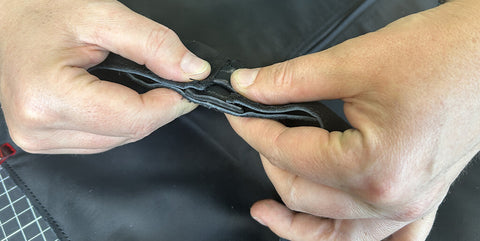
Place the P5 sides, right sides together, on the body of the travel bag. Align the center of the bottom of the side with the center of the P2 bottom. At the top of the bag, the P6 tab should be perfectly aligned with the zipper. Hold all around with sewing clips.
 |
 |
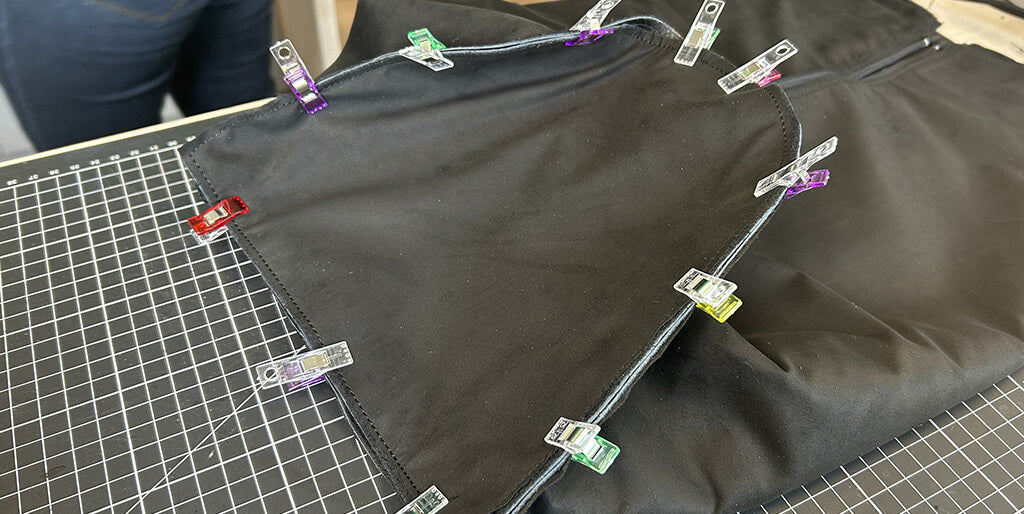
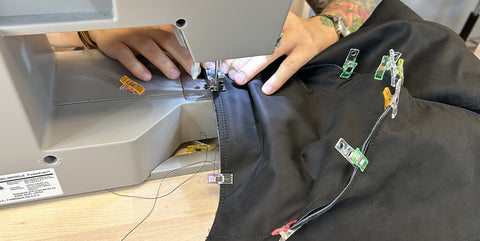
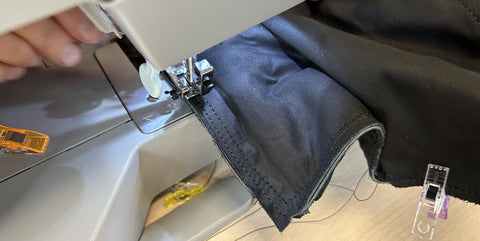
Stitch all around 1 cm from the edge. Start sewing from the middle of the bottom of the P5 piece at the notch. Be careful to stop 1 cm from the edge to be able to sew the right angle.
Before sewing the second side, remember to open the zipper so you can turn the bag right side out at the end.
 |
 |
Trim the corners.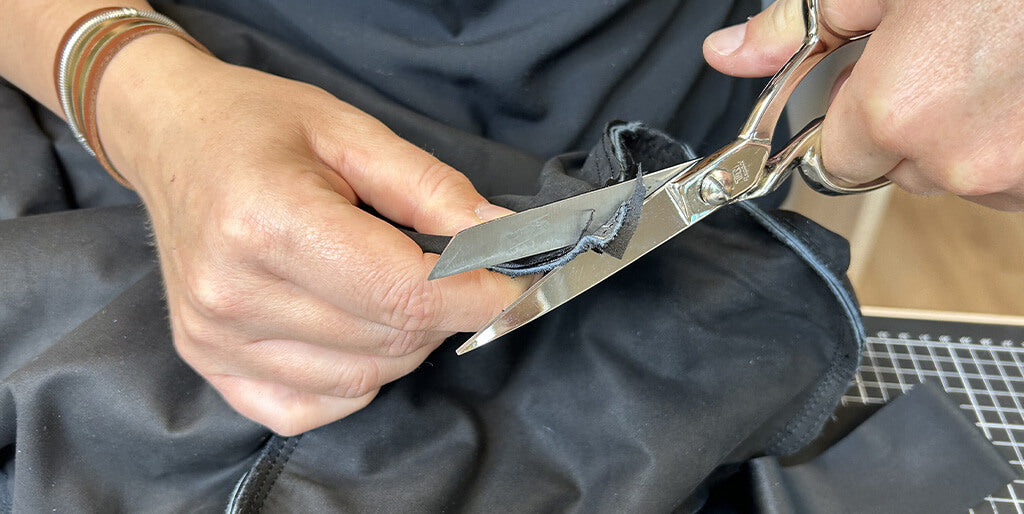
10. Make two bias bindings
Cut 2 long strips of fabric lining, 5 cm wide and approximately 90 cm long.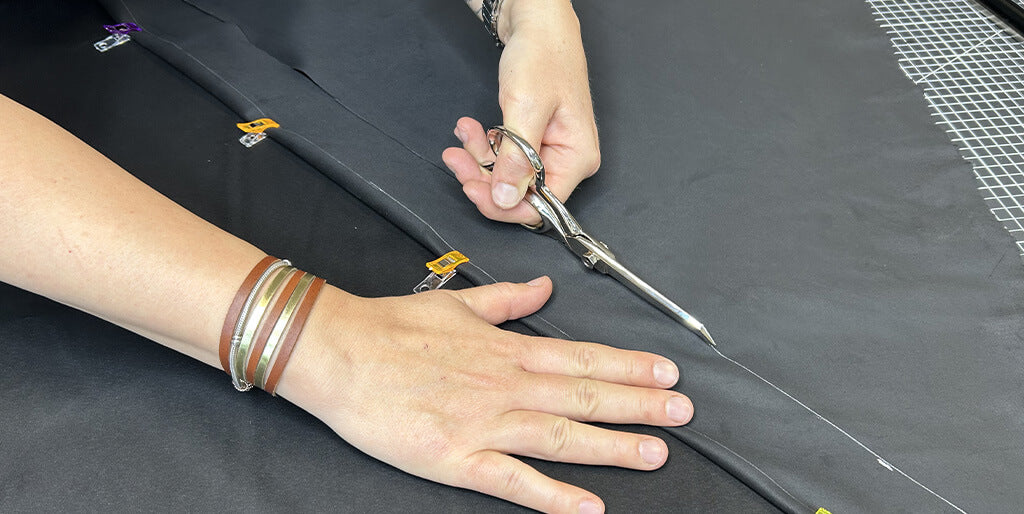
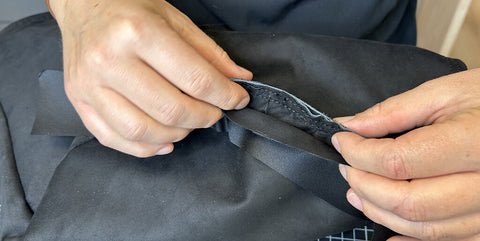
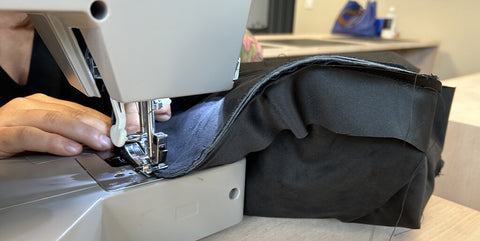
Sew the right side of the bias binding to the wrong side of the side seam. Sew 1 mm from the previous seam; do not exceed it (so it won't show when the bag is turned right side out at the end).
 |
 |
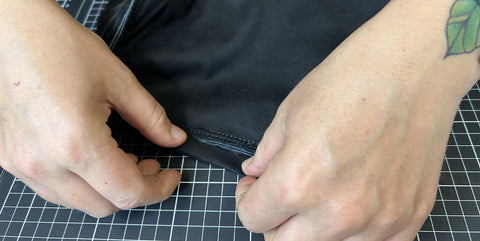
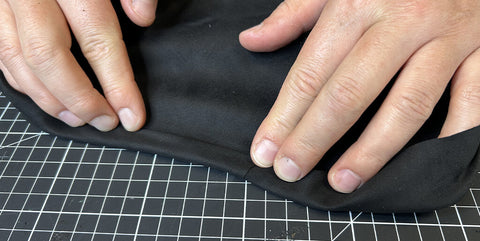
Take the bias binding and fold it twice over itself, on the second side of the P5 side seam.
 |
 |
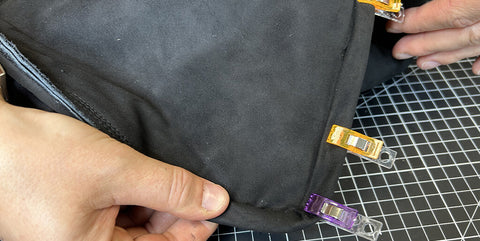
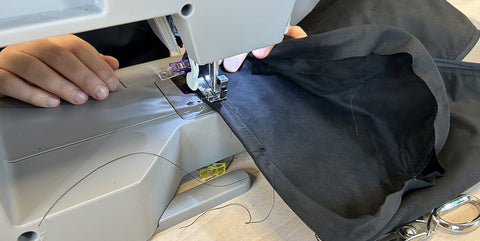
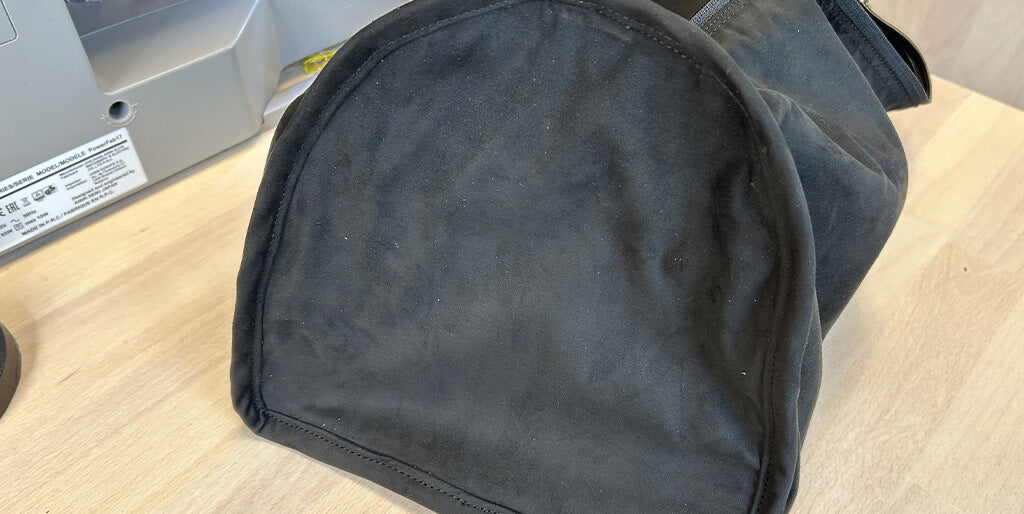
Hold in place with sewing clips and stitch again along the previous seam.
 |
 |
11. Prepare the bottom of the bag
Turn the bag right side out.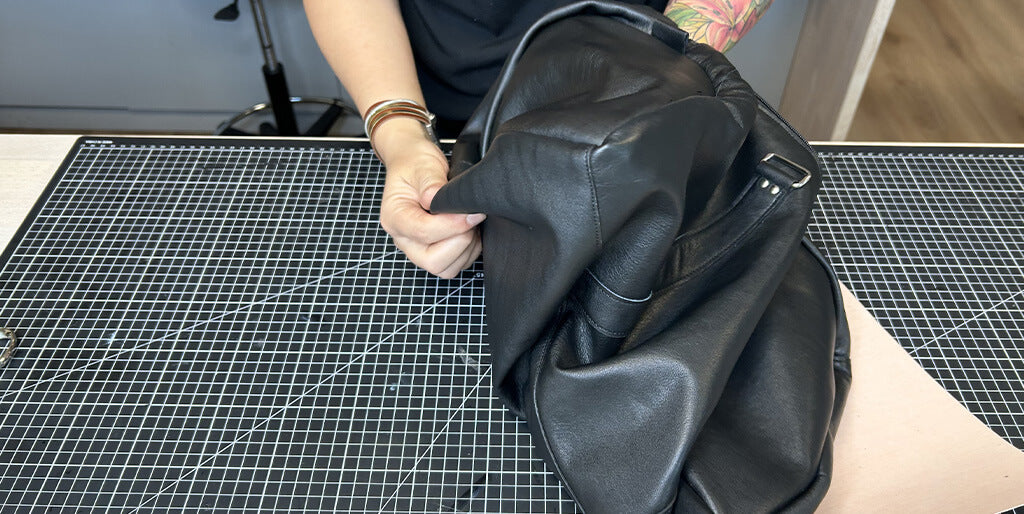
Cut a piece of Texon measuring 49 x 23 cm (0.6 mm thick).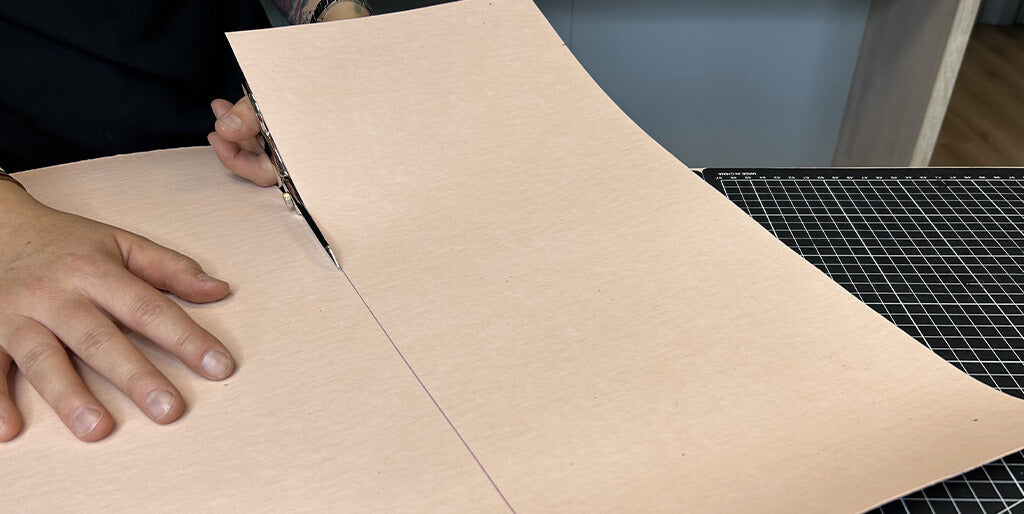
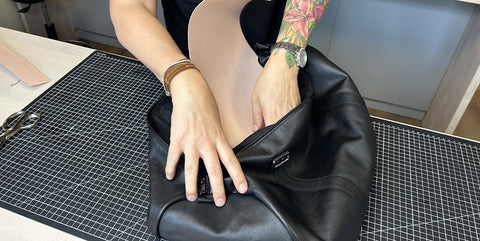
Insert the Texon board through the large opening in the lining. Make sure the Texon is well placed in the corners of the bag.
 |
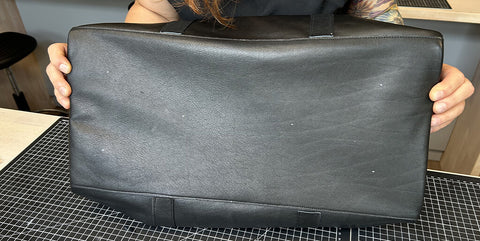 |
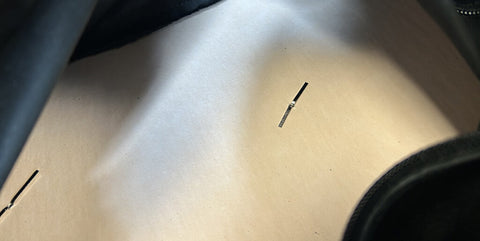
Pierce holes for the bag feet through the leather and Texon using a round awl.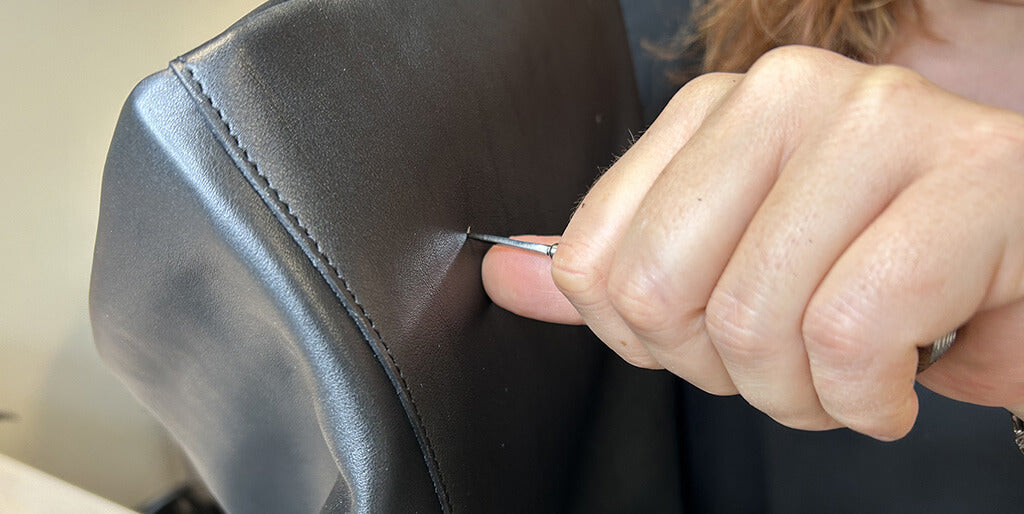
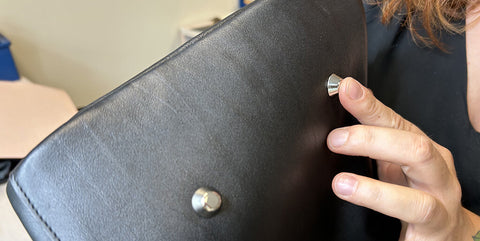
Attach the bag feet to the Texon (so they are hidden within the lining).
 |
 |
12. Close the bag
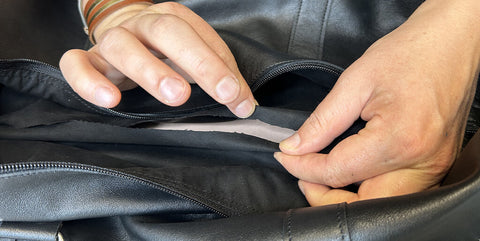
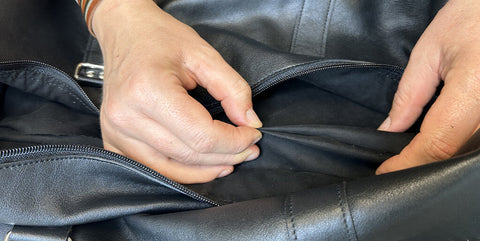
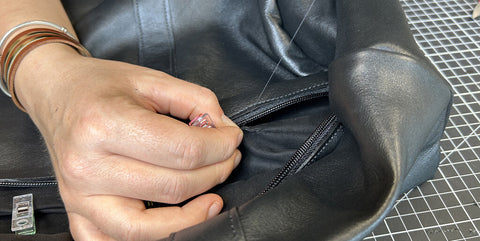
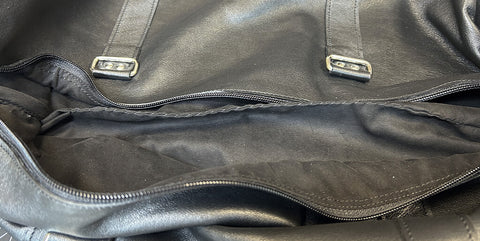
Hand-sew the opening in the lining closed.
 |
 |
 |
 |
13. Attaching the handles
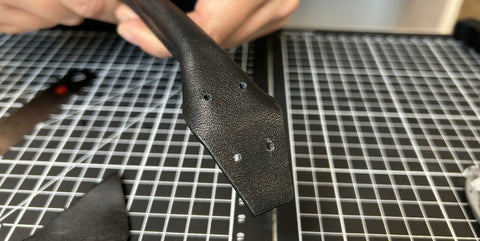
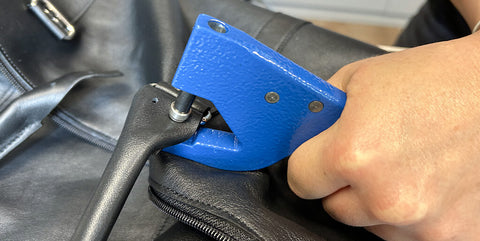
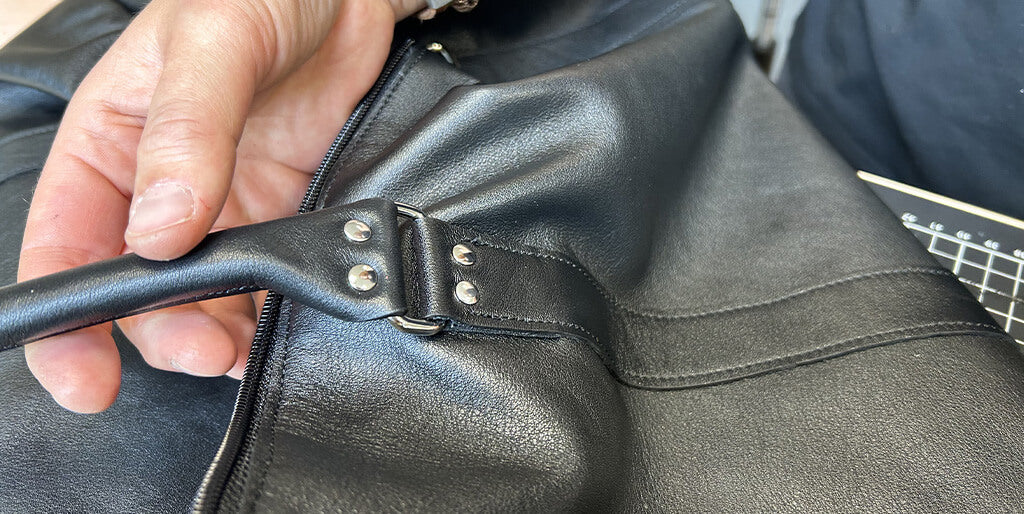
Thread the handle ends through the rectangular loops and fold them in half. Mark the position of the upper holes (referencing the existing holes) then punch them. Then secure the handles with 2 T3 rivets.
 |
 |
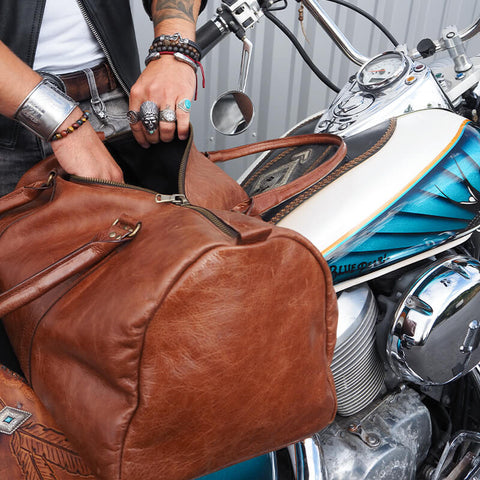
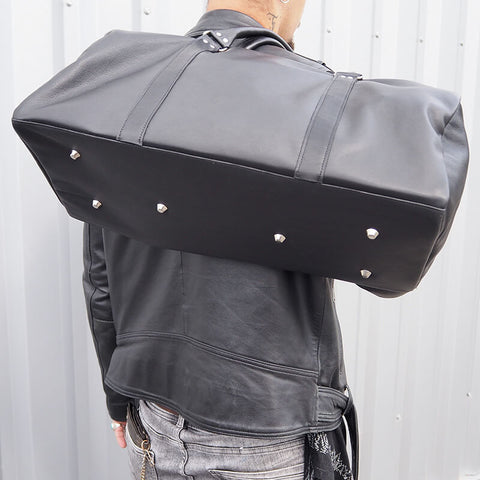
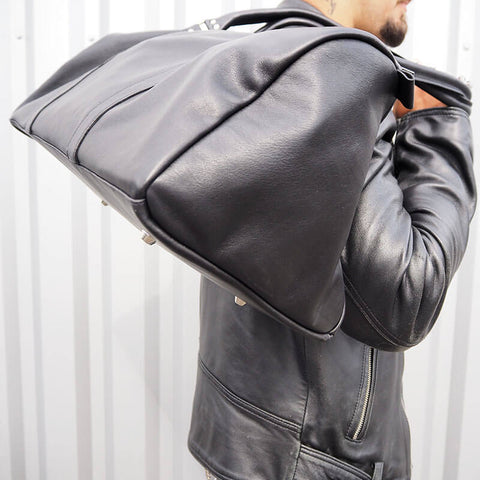
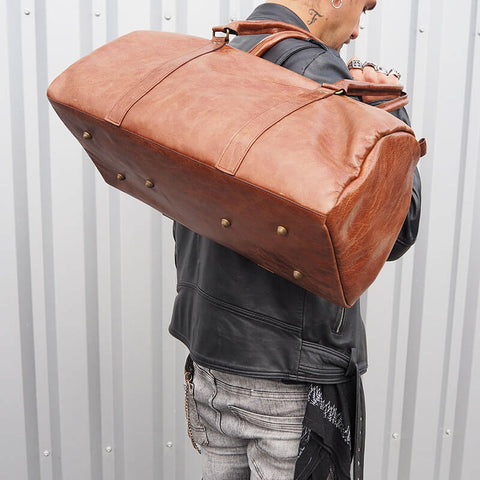
You're done!
 |
 |
 |
 |
 |
 |
 |
 |


7 comments
Anonymous
Bonjour Denis,
Il faut compter environ deux jours de travail pour un débutant, en veillant à bien respecter les différents temps de séchage et avec une marge d’erreur.
bonne journée, l’équipe Deco Cuir
Denis Balland
Bonjour, pouvez vous me donner un temps approximatif du montage pour ce sac, merci
Anonymous
Bonjour Mme. RAFFIN,
Nous utilisons la Toyota power fabriq pour tous nos tutoriels mais elle n’est plus commercialisée, il faut la trouver d’occasion. Attention cependant, cela reste une machine familiale elle a ses limites en matière d’épaisseur.
Il faut une machine double ou triple entrainement, ce qui peut être compliqué à trouver dans votre budget.
On vous conseille de regarder d’occasion et de vous renseigner auprès de groupe de maroquiniers.
Très bonne journée,
L’équipe Deco Cuir
Raffin
Bonjour
Pouvez-vous me renseigner sur une machine à coudre le cuir epais.
D’un bon rapport qualité prix ( moins de 1000€, voir autour de 500€
Cordialement Martine
Anonymous
Bonjour Pascal,
Les peaux du kit font environ 1,2 mm d’épaisseur :)
Bonne journée,
L’équipe Deco Cuir
Pascal François
Bonjour,
Merci pour ce tutoriel. Pouvez vous m’indiquer avant de passer commande, dans le kit d’accessoires vendu pour le réaliser l’épaisseur du cuir fournis.
Par avance merci
Cordialement
Pascal
Mogia
super, un grand merci, je vais essayer