


Sharp tools = Easier work
It is very important to sharpen your tools (skiving knife, awl, edge beveler, leather cutting knife, Indispensable knife, etc.) before or after each use to ensure their longevity and maintain a sharp cutting edge. Learn in a few minutes how to prepare a strop and sharpen your leatherworking tools.

WHAT IS THE DIFFERENCE BETWEEN SHARPENING AND HONING?
- Sharpening involves removing a layer of metal from your cutting tool to restore its edge and reshape the bevel (the sharp edge of the blade). Generally, tools are sharpened with sandpaper or a sharpening stone (dry or with oil).
- Honing involves preserving and maintaining the edge of your tool, thereby delaying its wear (delaying the next sharpening). We recommend honing your cutting tools after each use (at least for knives). Generally, tools are honed using a strop (made of leather).
HOW TO SHARPEN MY CUTTING TOOLS?
As explained above, tools are sharpened using sandpaper or a sharpening stone. The grit size is chosen according to the condition of the tool (always finish with a finer grit => the larger the number, the finer the grit). Example: start with 400 grit and finish with 800 grit. Always respect the cutting angle when sharpening.


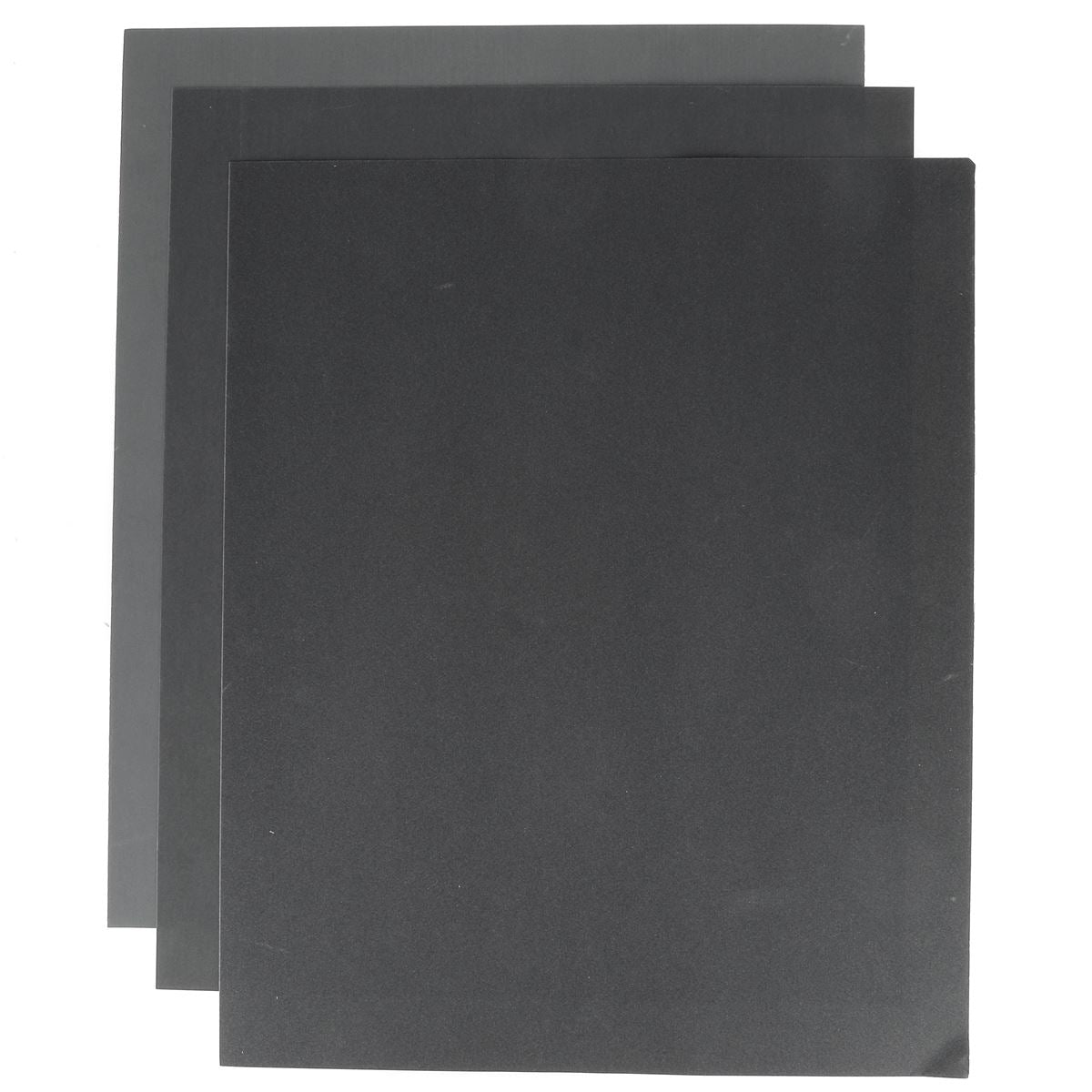

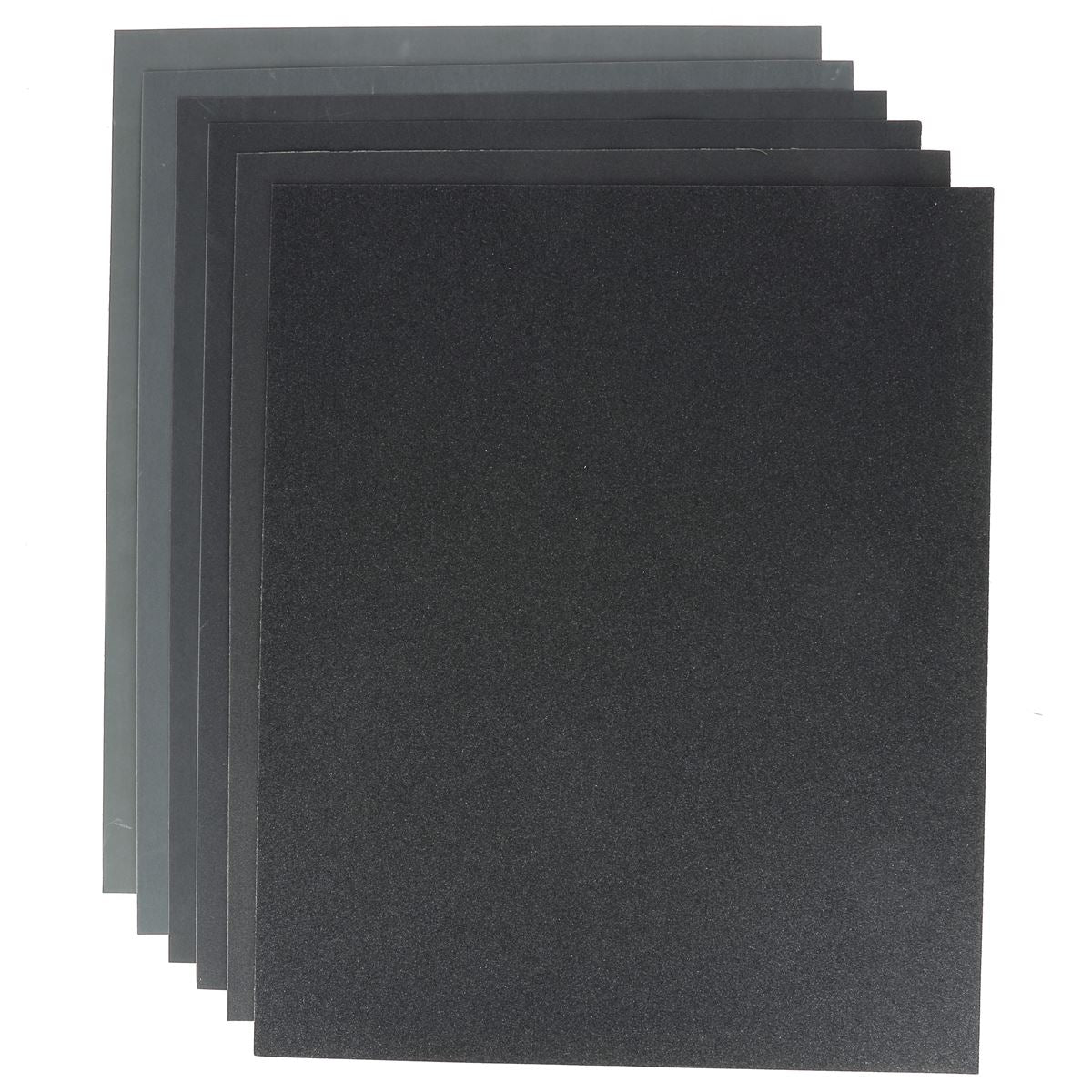

In this video, we show you how to sharpen the Indispensable leather cutting knife. The steps are the same for sharpening a rhomboid awl (diamond point awl) or a skiving knife. In the video below, we recommend starting sharpening with 1000-grit sandpaper and finishing with 3000-grit for an optimal edge (the blade was not cutting). Always maintain the same angle at approximately 20 degrees. The smaller the angle, the easier and deeper the cut will be.
Tool sharpening and leather skiving training
We organize skiving and sharpening training in our premises in Loire-Atlantique. More information here:


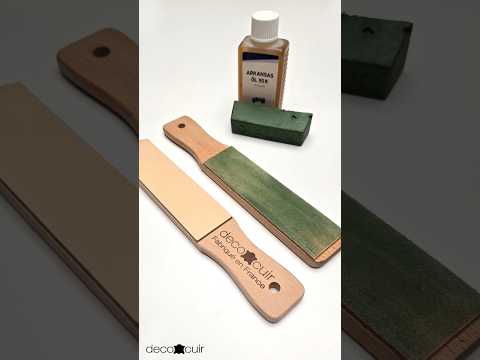
HOW TO PREPARE A STROP / POLISHING BOARD?
The "Sharpening Oil" and "Polishing Compound" mixture on the polishing board will take several days to dry completely.
Watch the video ⬇️📽️
Don't hesitate to reapply polishing compound regularly depending on your use. There is no need to reapply sharpening oil. The more the strop is soaked in paste and the older it gets, the more effective it will be.

WHAT LEATHER TO USE FOR MAKING A STROP / POLISHING BOARD?
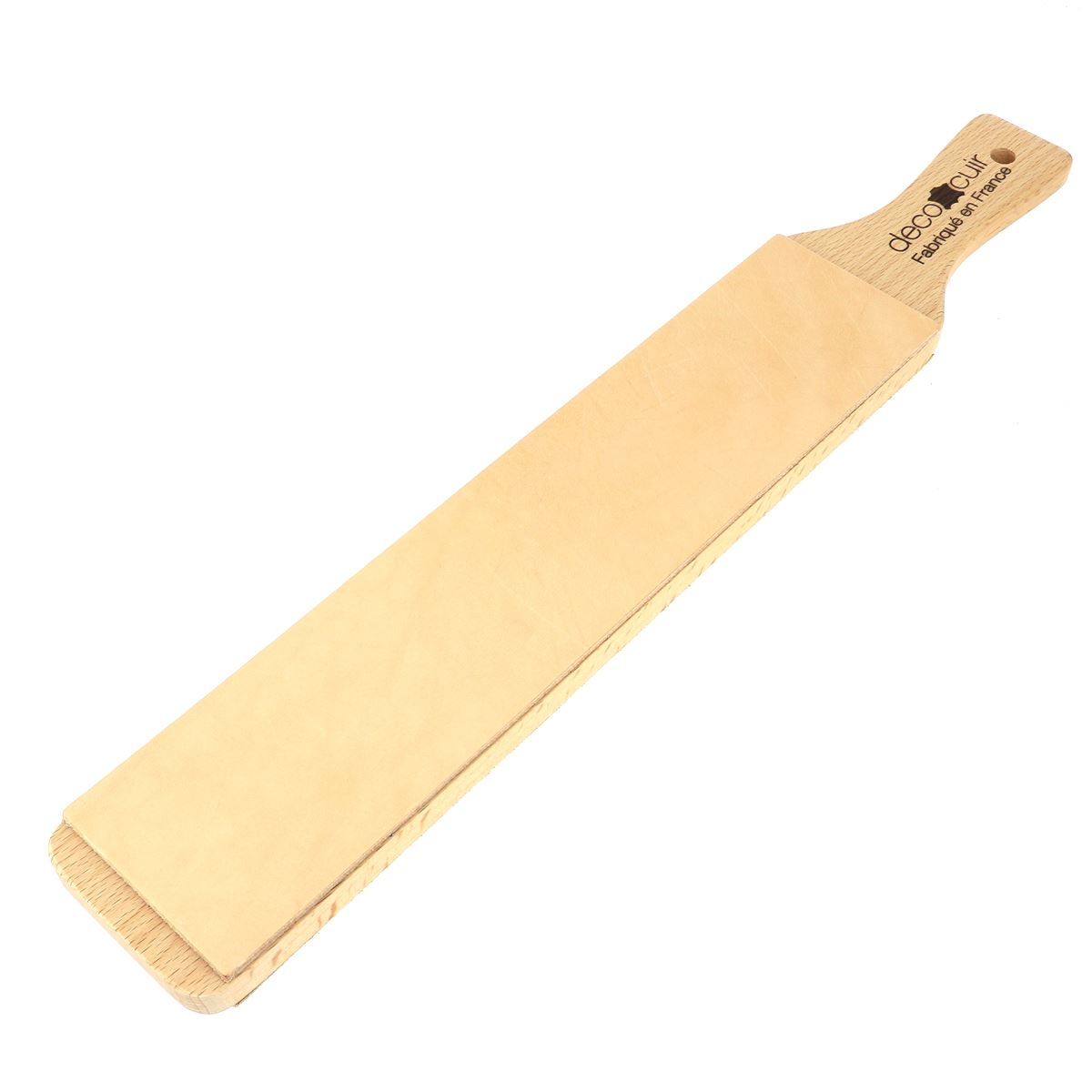
If you want to make your own strop or change the leather on your strop, we recommend using PREMIUM vegetable-tanned leather (reference: with a significant thickness: at least 3.3 mm (so that the flesh side of the leather is still fuzzy and not split). We sell pieces measuring 8x50 cm in 3.3 mm thickness.
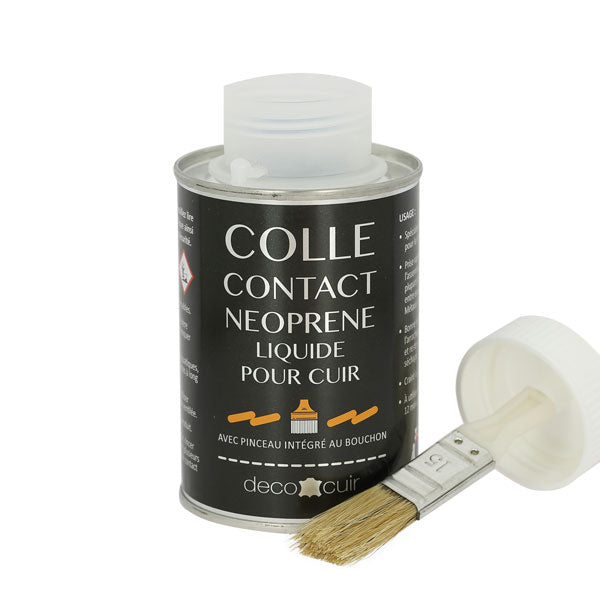
To glue the leather onto the wooden board, we recommend using neoprene glue. We also sell ready-to-use strops with an ergonomic handle for better grip on our website.




WHAT COMPOUND TO USE FOR HONING?
We recommend DIALUX polishing compound. The compound should be applied to the leather piece (flesh side) that has been previously oiled by vigorously rubbing the stick.
There are two schools of thought regarding which side the honing compound should be applied: the grain side or the flesh side of the strop. Knife makers tend to recommend the flesh side, as its fuzzy texture allows it to retain the honing compound better. Indeed, the "flesh side" retains more compound due to its fibrous structure, while the "grain side" offers a smoother surface that can provide a finer polish. We will therefore let everyone experiment for themselves.


HOW TO MAINTAIN THE EDGE OF MY CUTTING TOOLS?
The edge/sharpness of your cutting tools is maintained using a STROP before or after each use.
HOW TO SHARPEN A RHOMBOID AWL (DIAMOND POINT AWL)?
Learn in a few minutes how to sharpen the 4 faces of a rhomboid awl (also called a diamond point awl). This tool, very useful for piercing leather when saddle stitching, is often sold pre-sharpened, so you need to finish sharpening it.
HOW TO SHARPEN A SWIVEL KNIFE?
To properly sharpen a swivel knife, we invite you to use the Tandy Leather guide reference TL_88118_00 which will help you maintain the blade at the appropriate angle during sharpening (avoid rounding the blade). Be careful, each side of the blade must be sharpened in the same way on the sharpening stone or strop (same number of passes).


HOW TO SHARPEN A ROUND PUNCH OR A BISSONNETTE?
We offer a specific tool for sharpening your round punches (diameter 4 to 16 mm) and bissonnettes. The sharpener (ref. TA759) is made of stainless steel and covered with emery powder inside and out.


HOW TO SHARPEN AN EDGE BEVELER?
The edge beveler must be sharpened regularly, especially for beveling thin leathers. An 800-grit abrasive sheet will be necessary to sharpen the tool. Sharpening jigs are available for easier sharpening.
LEARN MORE ABOUT THE EDGE BEVELER >


KNIFE FAN VIDEO:
We also invite you to watch the video from "Knife Fan" which approaches sharpening technique from another angle.
SADDLERY-LEATHER GOODS TECHNIQUES BOOK:
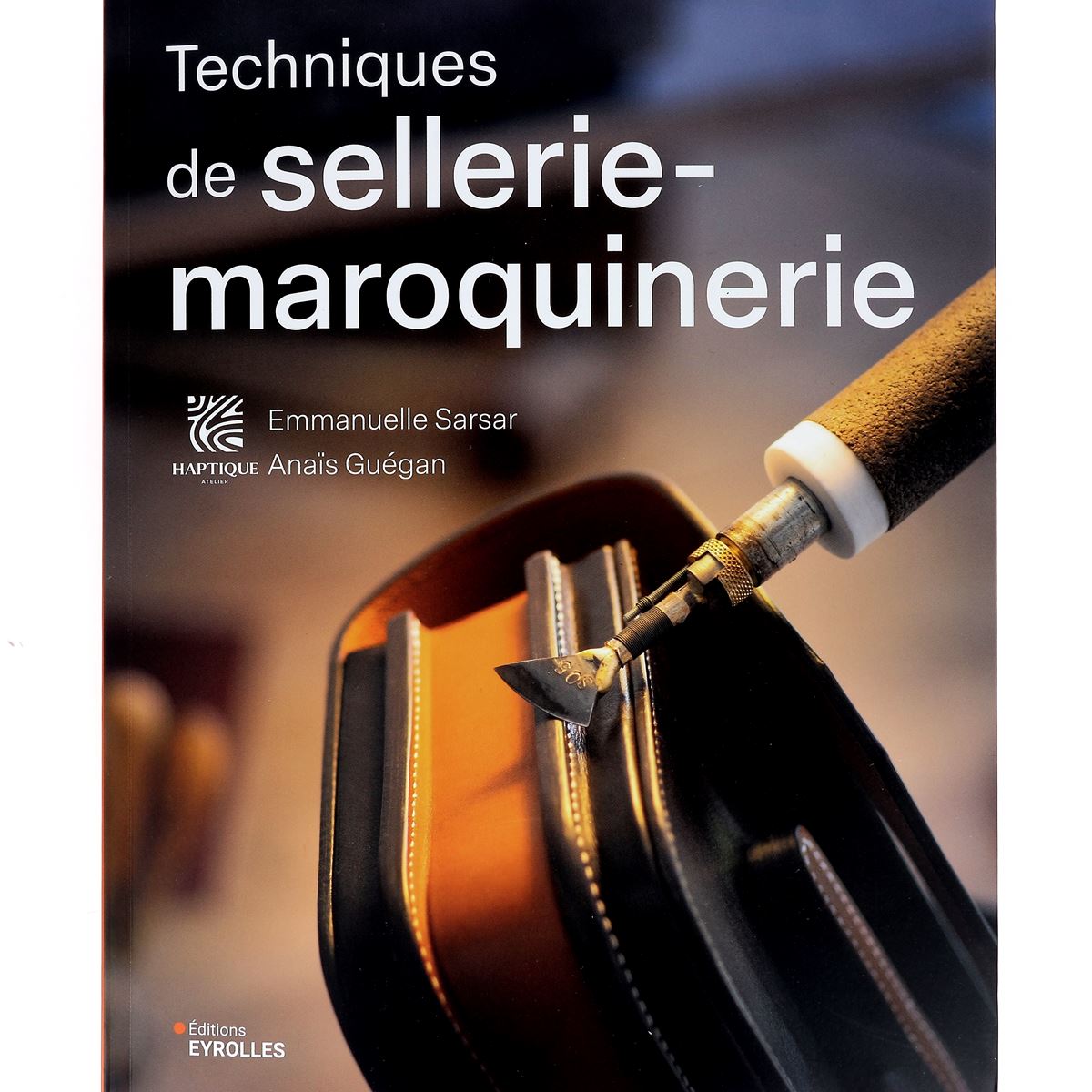
In this book, about ten pages are dedicated to sharpening leather goods tools: round awl, Indispensable leather cutting knife, rhomboid awl, skiving knife... (with diagrams). We recommend it!

TUTORIAL
THAT MIGHT INTEREST YOU
LEATHER FIXED KNIFE SHEATH
SEE THE TUTORIAL >


1 comment
Exotica leathers
A very well-written and informative tutorial. A perfect guide for anyone looking to sharpen leather tools effectively and maintain precision.