


Rediscover traditional craftsmanship by working with vegetable-tanned leather!
This guide presents the different parts of bovine leather and their respective qualities. You will also discover the different ranges of vegetable-tanned leather and our products.
Here are the different parts of bovine leather:
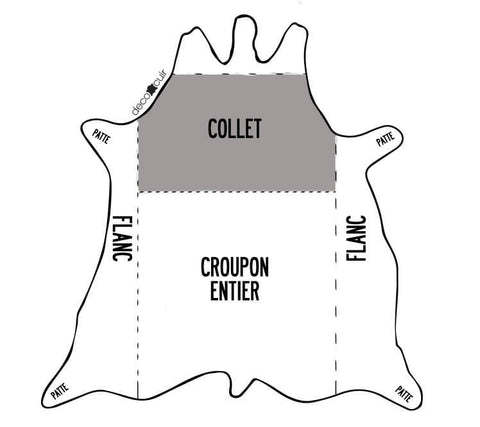
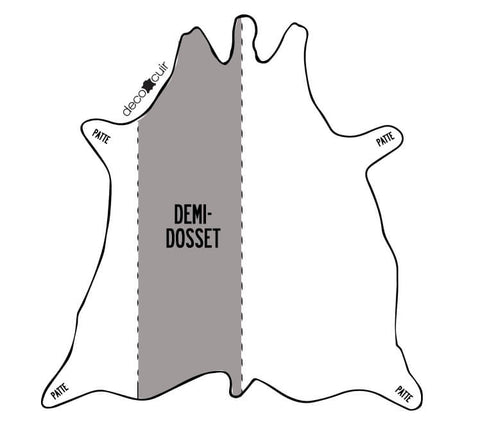
1. THE NECKThe NECK is the skin located around the animal's neck. Since this part is very mobile on the animal, the leather may show some wrinkles (in our opinion, this adds visual richness). It remains a very resistant part of the leather. |
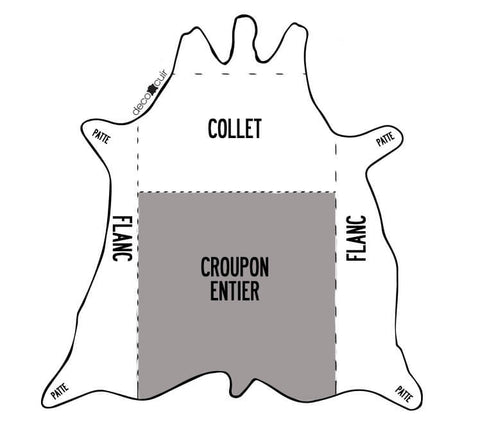
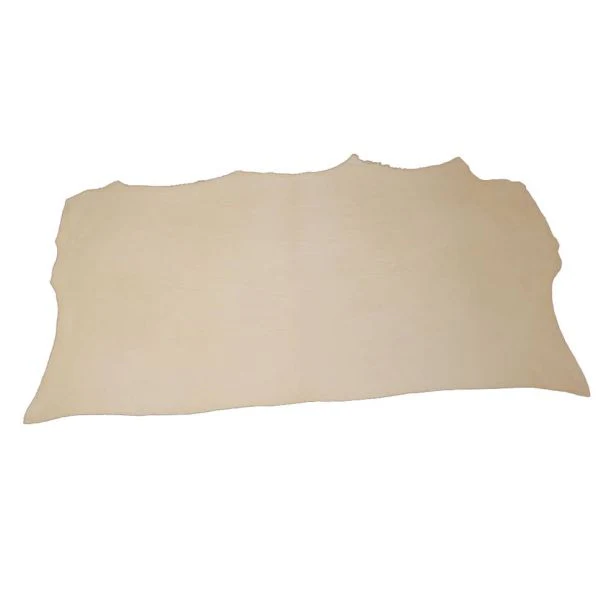
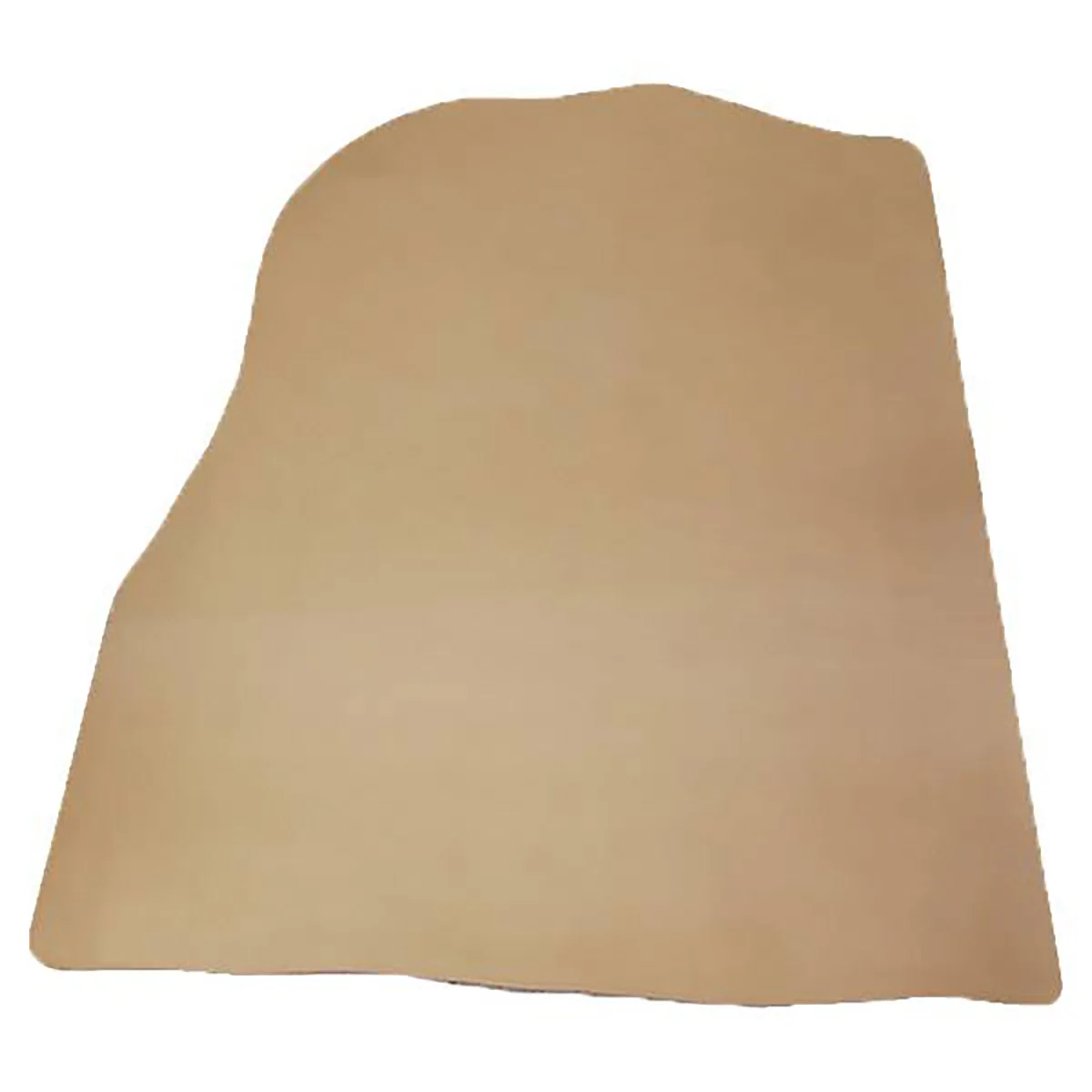
2. THE BUTTThe BUTT is the part of the skin covering the back down to the rump (i.e., the hindquarters). This part is renowned as the noblest part of the leather: regular, dense, and thick. Its stretch* is almost nil. At the end of the butt is the croupon: this part is less regular but remains a good part, especially in small animals. |
 |
 |
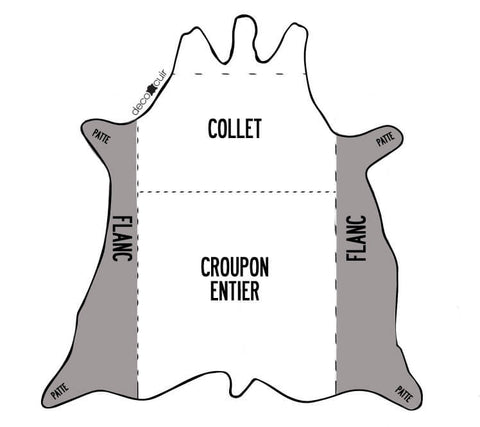
3. THE BELLYThe BELLY corresponds to the underside of the animal (i.e., its stomach). It is the least noble part of the leather with a high stretch* (elasticity) which limits its use. Its use should be limited to items that are not subject to significant traction. |
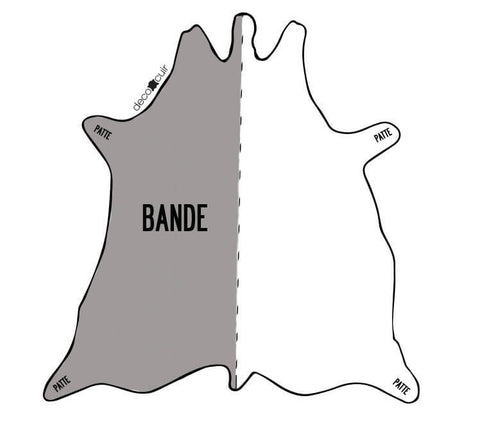
4. THE STRIPA strip corresponds to a half-hide. |
 |
 |
5. THE HALF-BACKA half-back corresponds to a strip without the bellies, so only the noble parts of the leather remain. This part is used for creations requiring great lengths (more than 2 meters): for example, saddlery and equestrian items. By deduction, a full back is a whole hide sold without the bellies. |
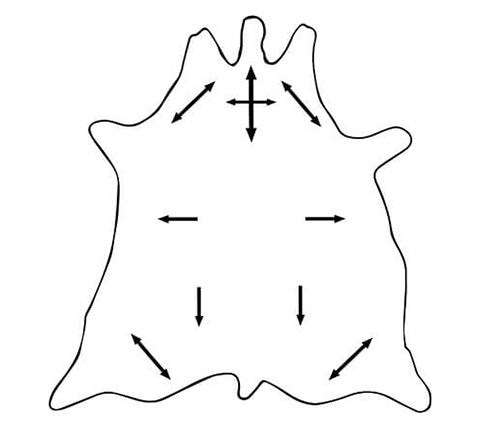
6. *THE STRETCHThe stretch direction of leather refers to the direction of the skin's elasticity, specifically the direction in which the leather will lengthen and deform the most. The stretch direction is distributed differently across the same hide. Generally, for an adult bovine hide, the stretch direction is lengthwise in the rump and crosswise in the butt, neck, bellies, and legs. |
 |
 |
The different ranges from Deco Cuir
- CLASSIC and PREMIUM : PREMIUM leather is softer than CLASSIC leather because it is more nourished. PREMIUM leather has the advantage of making carving work easier.
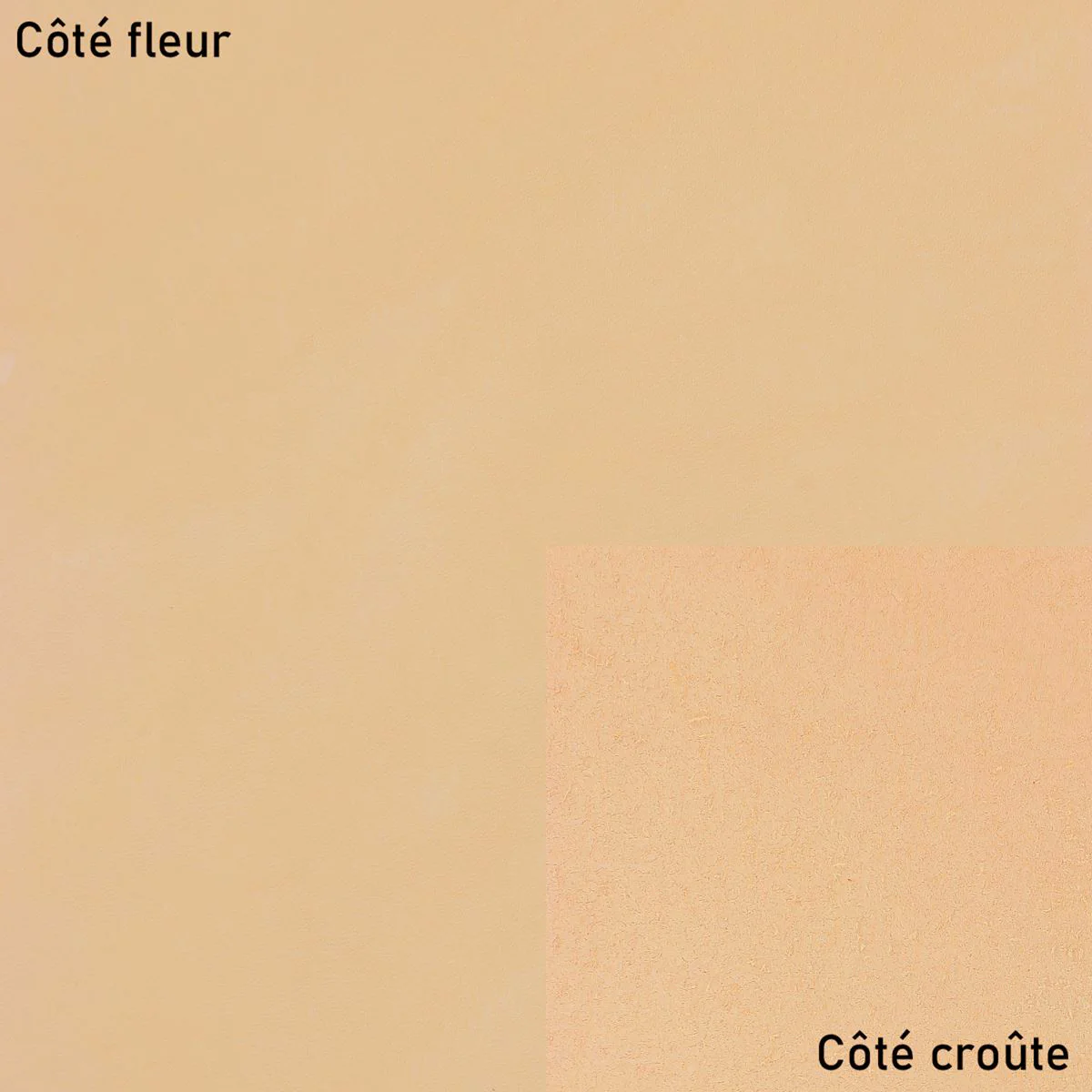
- CLASSIC RESIN-BACKED : the flesh side of the leather is resin-backed, which gives it a beautiful finish.
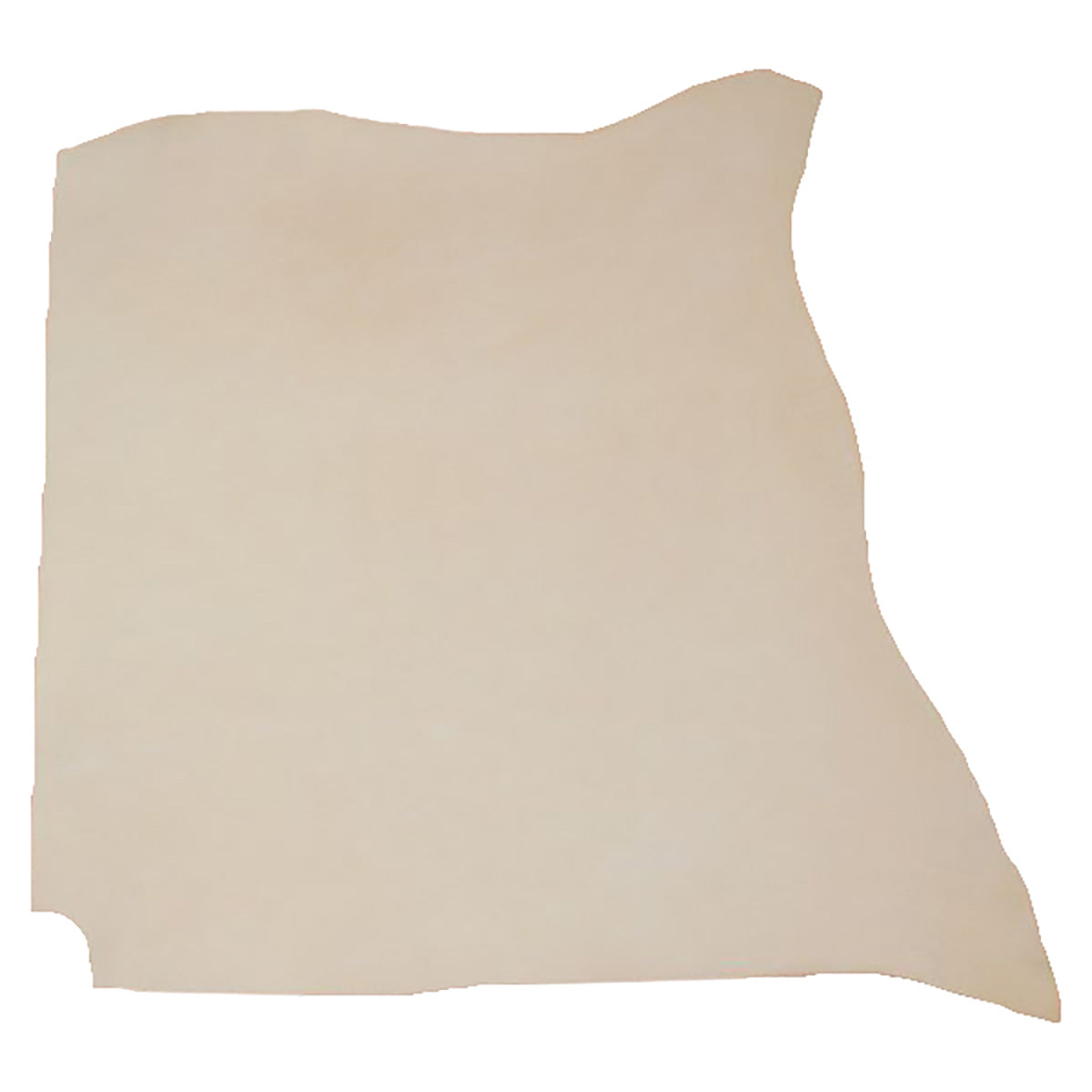
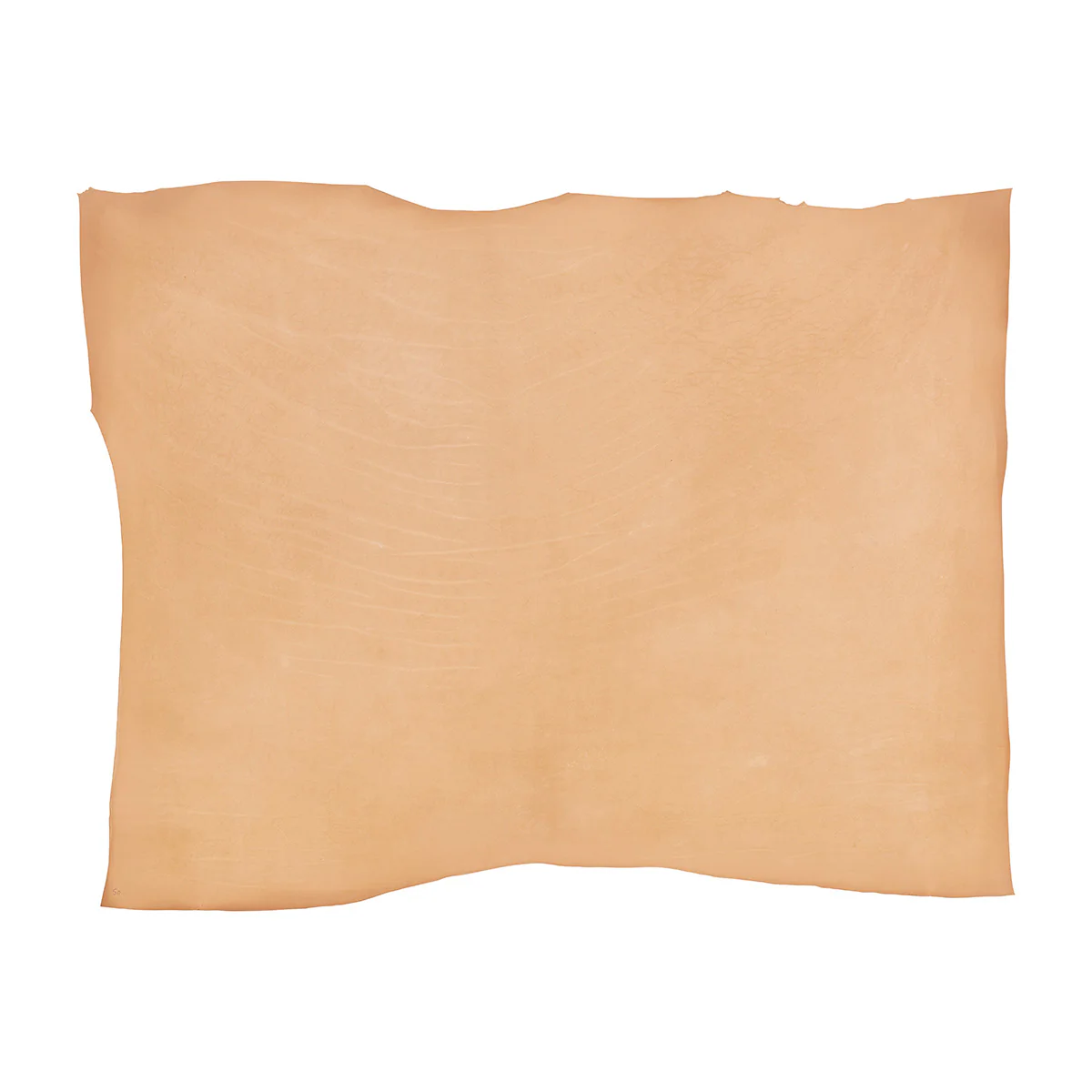
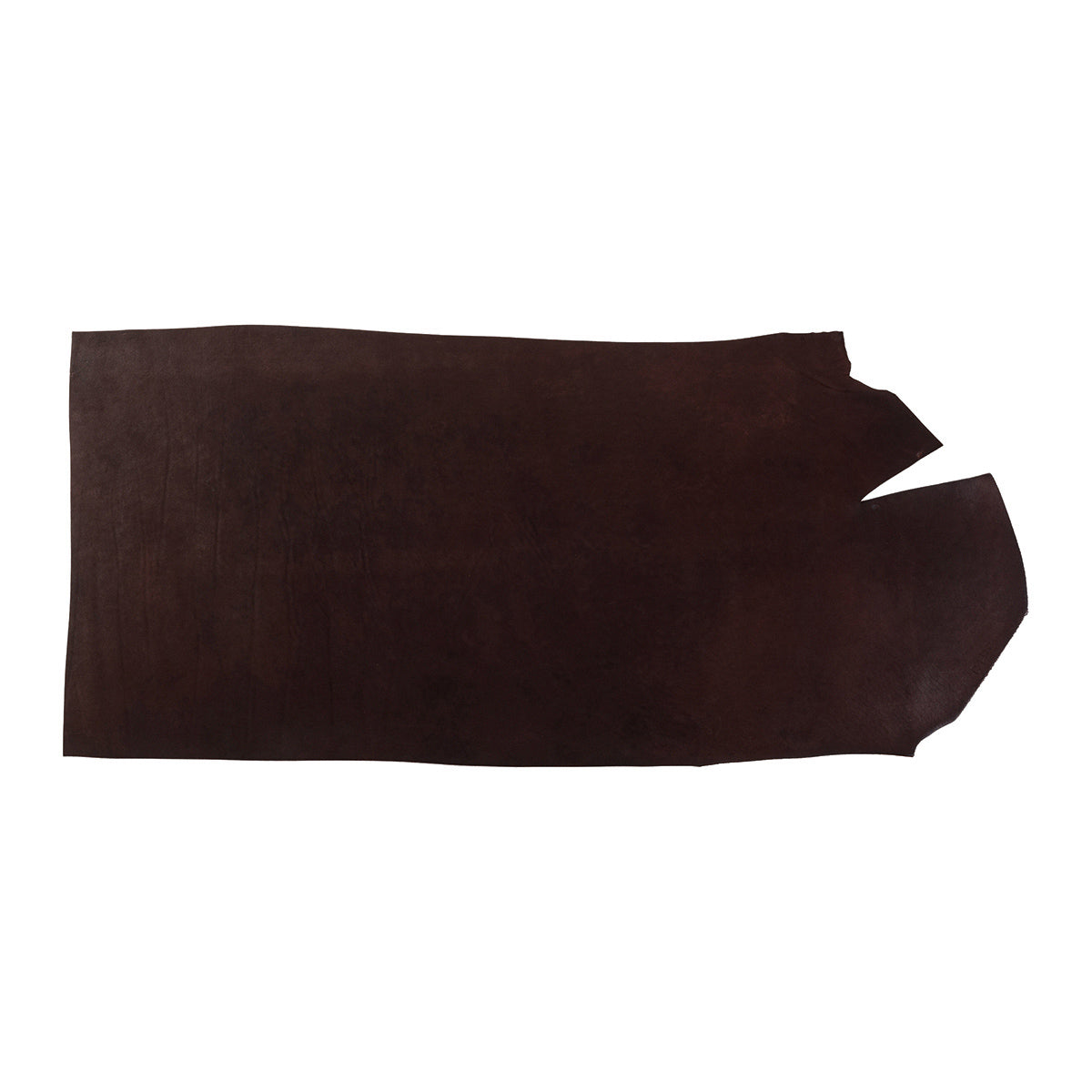
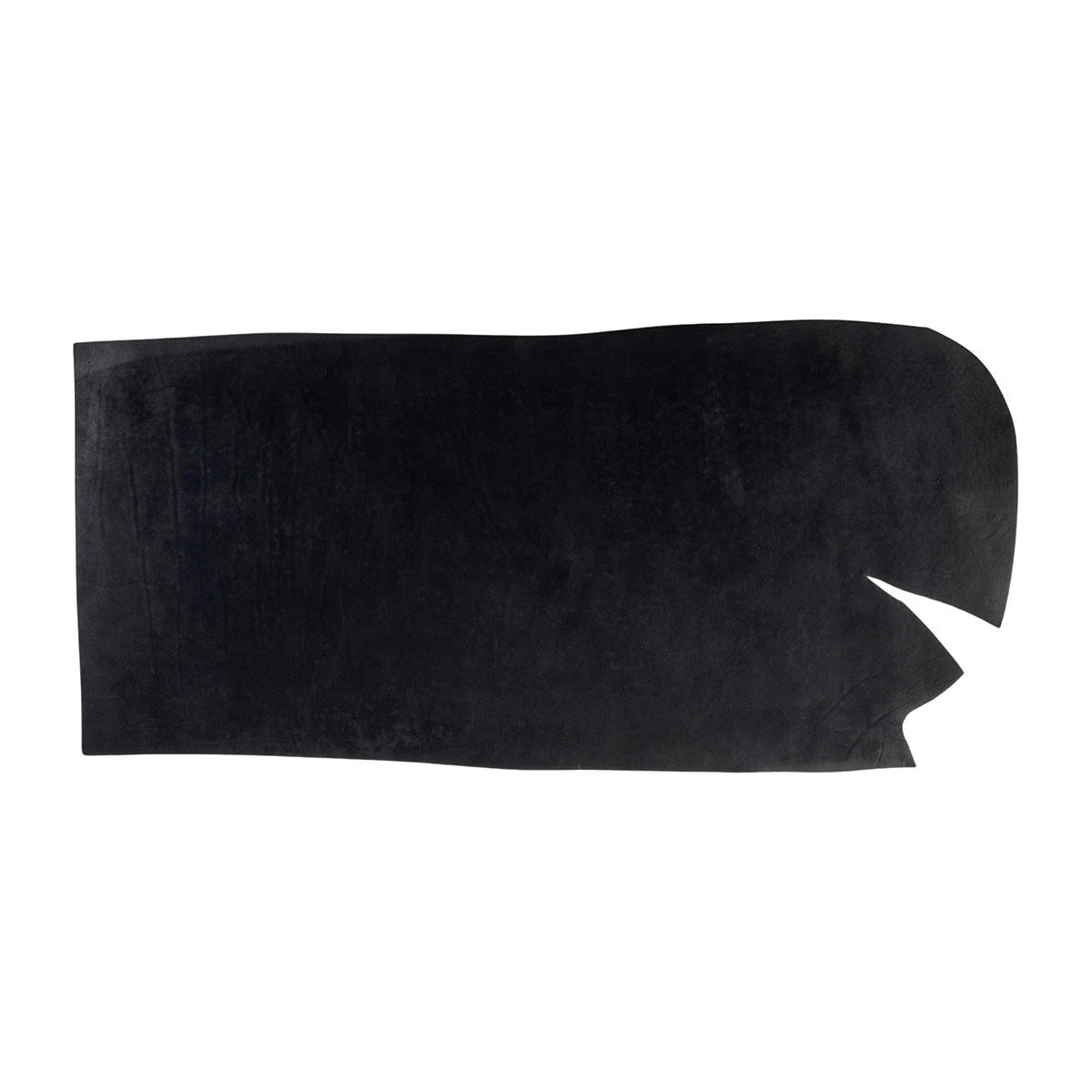
- VVN : this vegetable-tanned calf leather is cut from a strip (see diagram) and is offered for sale in half-strips or pieces.
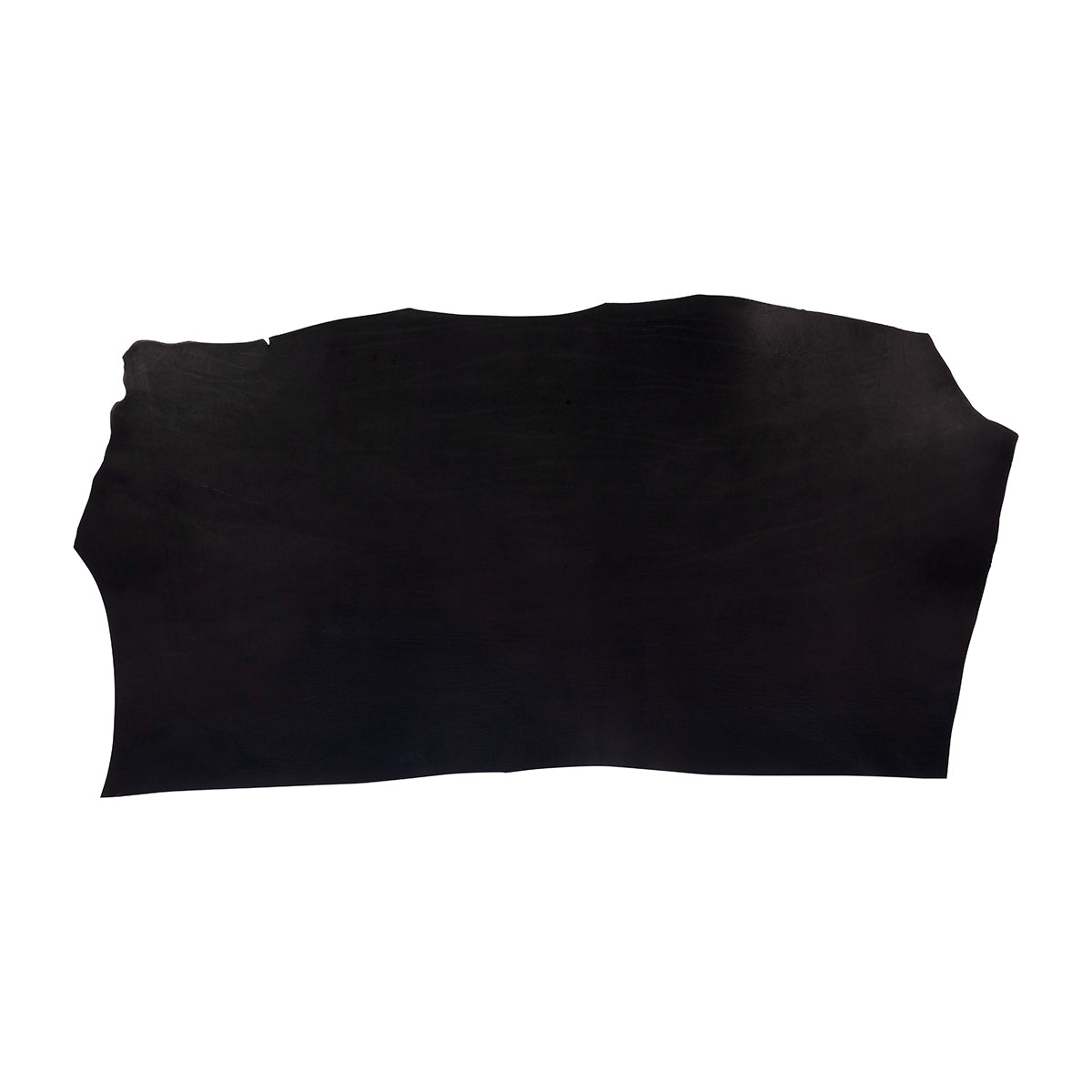
- MAYA : this vegetable-tanned leather has received a waterproofing treatment. If you wish to dye it, you will need to choose an alcohol-based dye.
Leather available in different thicknesses ranging from 0.5 to over 3.8 mm.
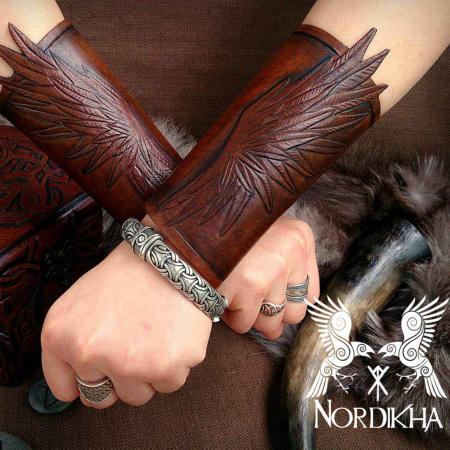
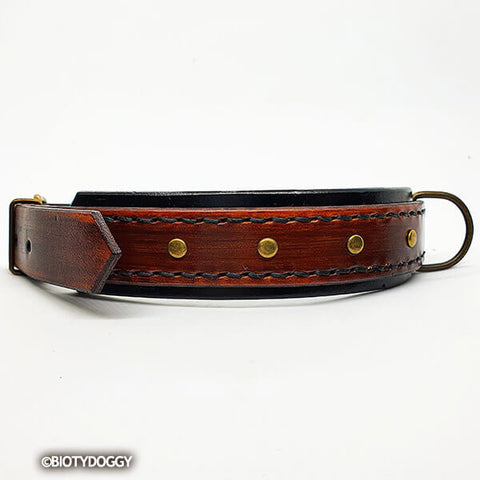
Vegetable-tanned leather is highly valued by enthusiasts and has the advantage of being able to be dyed, hammered, or carved. It therefore offers many creative possibilities for those who wish to work with it: bag, satchel, saddle, dog collar, halter, belt, cuff...
All leathers are carefully selected according to Deco Cuir's quality criteria.
Still undecided about your leather choice?
Visit our complete guide "Which leather to buy for your creation":
VIEW THE GUIDE >













SOME CREATIONS FROM OUR CUSTOMERS
 |
 |
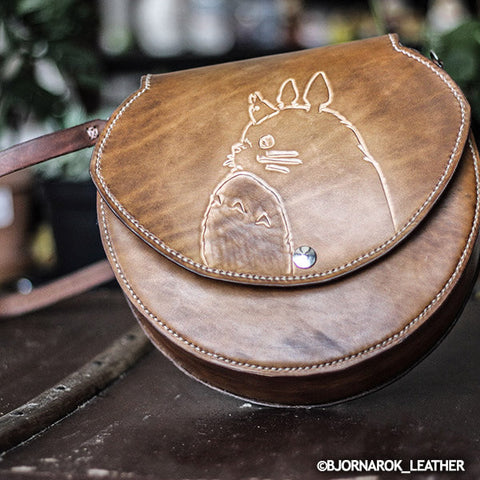 |
| ©NORDIKHA | ©BIOTYDOGGY | ©BJORNAROK_LEATHER |


2 comments
DECO CUIR
Bonjour Hassan,
Il est difficile de répondre à votre question, tout dépendra de la surface de la peau sélectionnée et de la largeur de vos ceintures 😊
Pour confectionner des ceintures en cuir nous vous conseillons de privilégier du cuir de dosset : https://www.decocuir.com/collections/peau-tannage-vegetal-cuir-suiffe ou du cuir de collet (épaisseur 3,5 à 4,5 mm) : https://www.decocuir.com/collections/peaux-cuir-tannage-vegetal
Nous proposons sinon des lanières déjà coupées : (Cuir de collet) https://www.decocuir.com/collections/laniere-cuir-collet-tannage-vegetal-ceinture (Cuir de dosset) https://www.decocuir.com/collections/lanieres-de-dosset
L’équipe Deco Cuir
Hassan
Combien de ceintures peut découper dans une peau et dans quelles parties ?