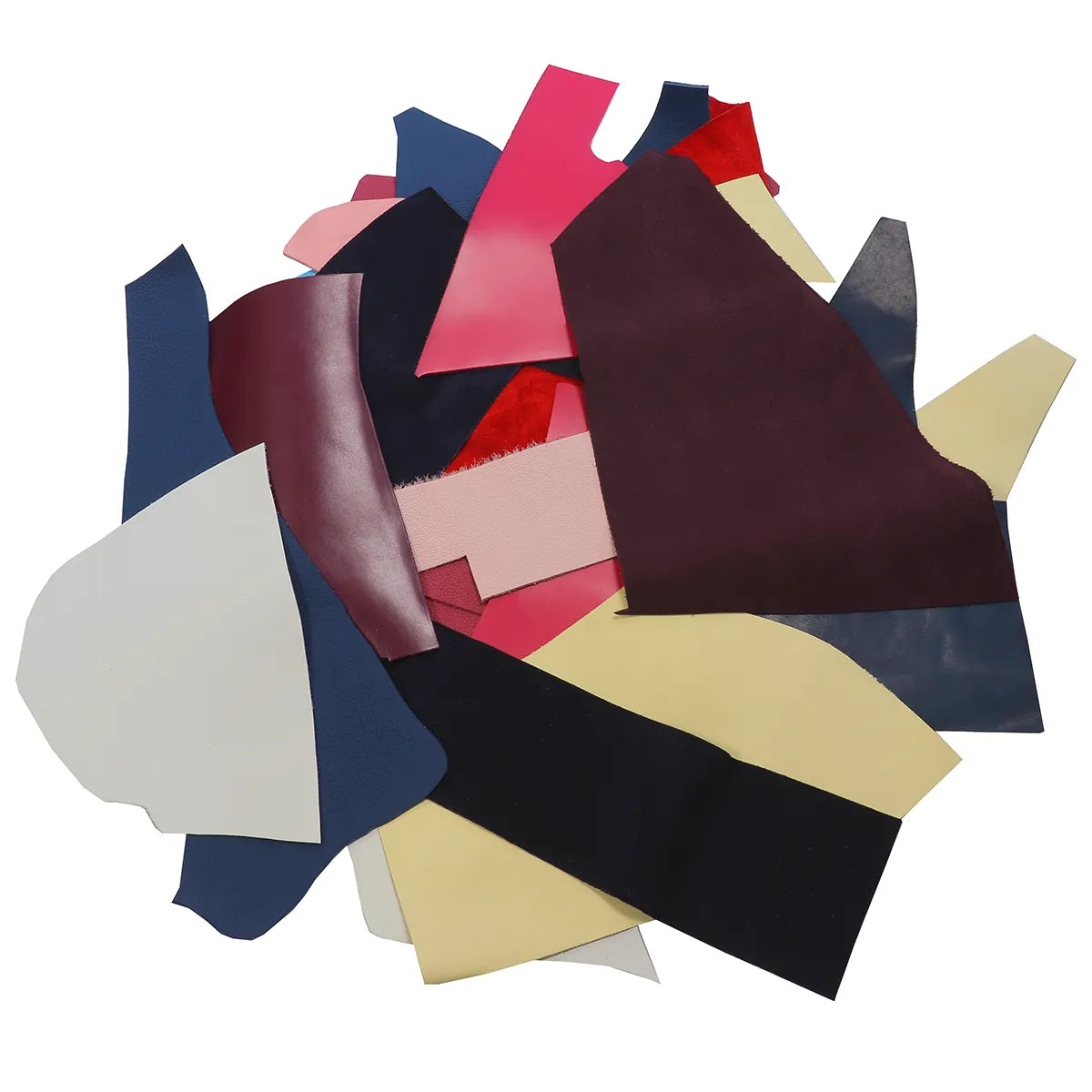
At Deco Cuir, you can easily find leather scraps for your project. Whatever your needs, we certainly have the scrap you're missing to create your most high-quality and original designs.
Order leather pieces today, suitable for designing the jewelry or small decoration you have in mind. Combine durability and creativity by helping us recycle this noble material.
The advantages of leather scraps
Opting for a leather scrap offers many benefits. To start, you give the material a second life through an eco-responsible approach (upcycling). This approach, in addition to being sustainable, is also a good way to acquire leather at a lower cost.
Furthermore, the versatility of a leather scrap is ideal for quickly running tests before embarking on your major creative project.
Discover our leather scraps
Our range of leather scraps includes a wide variety of finishes, origins, textures, and grains to meet all inspirations.
Finishes and tanning methods
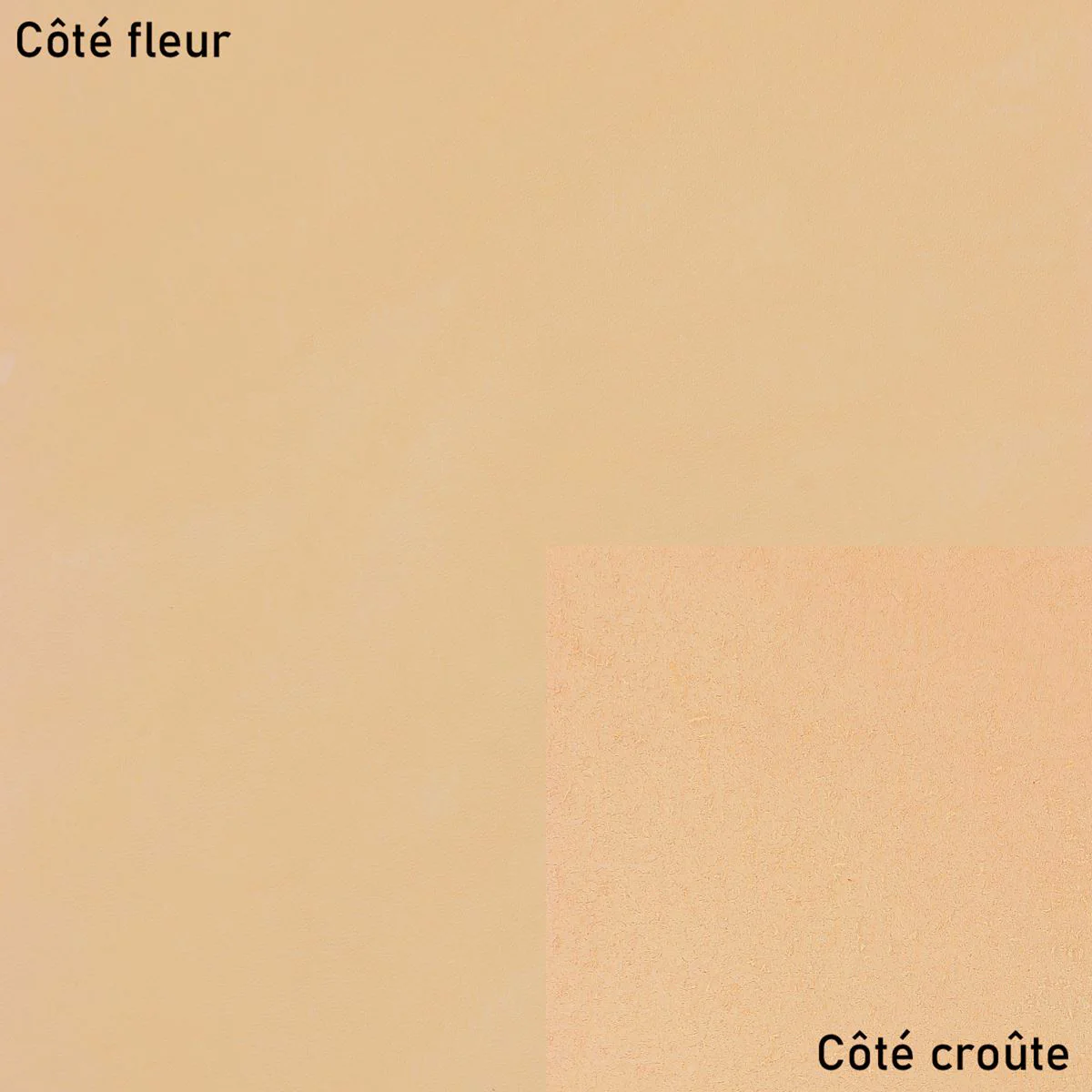
We offer full-grain leather scraps (natural leather look and high quality) as well as corrected-grain leather (sanded surface and uniform appearance).
You can then opt for natural vegetable tanning, which is perfect for tooling or dyeing. If you prefer, we also have leather scraps from mineral tanning, which are very flexible and come in a wide range of colors.
Animal origins: classic and exotic leathers
Deco Cuir offers traditional and supple lamb, sheep, and goat leathers. Robust and structured leathers from calf leather or cowhide are also in stock, as are premium scraps of alligator, ostrich, and shark leather.
Textures, visual aspects, and grains
In terms of texture, our catalog includes leather scraps with a smooth surface for a classic and refined look, as well as textured scraps for a granite appearance.
What to do with leather scraps?
Leather scraps offer you the opportunity to start various creative projects. Indeed, you can use a leather scrap for creating jewelry (earrings, brooches) as well as for leather goods (bracelets, belts, straps, handles) and even for stationery (covers and notebook protectors).
Thus, the use you make of leather scraps depends primarily on your inspiration!
Which leather scrap to choose?
To find the leather scrap perfectly suited to your needs, consider these essential criteria:
Thickness: opt for a very thin thickness (0.5 mm to 1 mm) for internal linings or small jewelry, a medium thickness (1.5 to 2.5 mm) for small pouches and bags, or a very thick thickness (over 4 mm) if you want to make bag handles or belts.
Flexibility: choose a flexible leather scrap for clothing, inserts, or pouches, and prefer firm scraps for load-bearing parts (handles, straps).
Packaging: 50-gram packs are perfect for small inlays or texture tests, 200 to 250 grams for making one or two small items. Opt for 500-gram or 1-kg packs for small bag projects or cushion design.
Shades: you can choose classic leather goods colors like black or brown for timeless items, or brighter shades for contrasting inserts on a leather bag.
Essential equipment for working with leather scraps
To fully utilize leather scraps and facilitate your leather work, you need to gather the necessary tools. For cutting leather, we recommend a cutter, special scissors, and a punch for small pieces.
The assembly phase requires linen thread (hand sewing) or polyester (machine sewing), round-tipped needles, an awl, and suitable glues. Finally, for an exemplary finish, plan for tools to work the edges.
How to preserve and store your leather scraps?
If you plan to buy leather scraps in large quantities, make sure to store them optimally to preserve their qualities.
First and foremost, storage must be away from humidity and direct light to avoid any risk of drying out and discoloration.
Also, separate greasy leathers from natural vegetable tanned leathers to prevent grease transfer, which could alter the quality of your leather scraps.
And to maintain them in the best possible way, use a nourishing cream or oil to reduce any risk of drying out.