


COMPLETE GUIDE: SADDLE STITCH SEWING
Learn the "traditional" leather craftsmen's sewing technique!
Saddle stitching leather creates a beautiful angled stitch on both sides (front and back).
VIEW GUIDE >
Simplified leather sewing
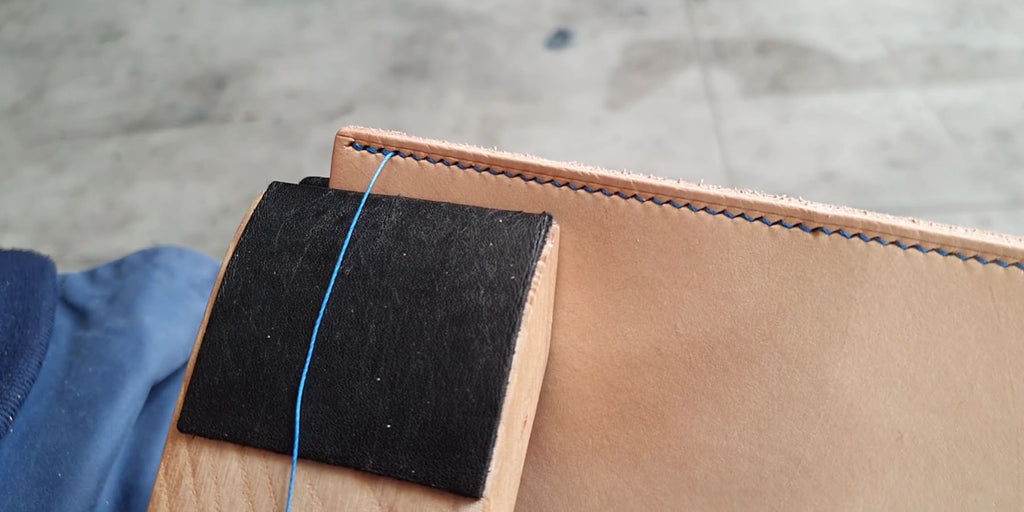
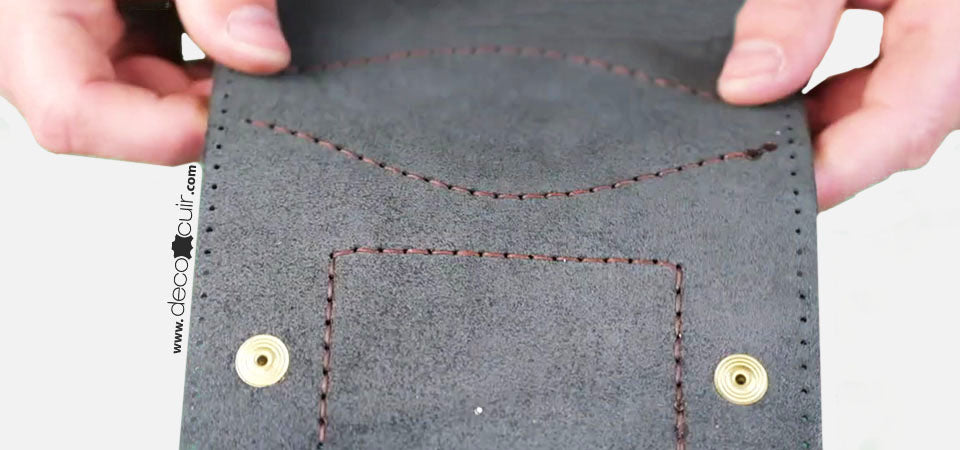
Simplified hand leather sewing involves piercing/marking stitch holes using a round punch. Therefore, there's no need to pierce the leather with a diamond awl (and no need for a stitching pony). This "hole" sewing with straight stitches is ideal for beginners.
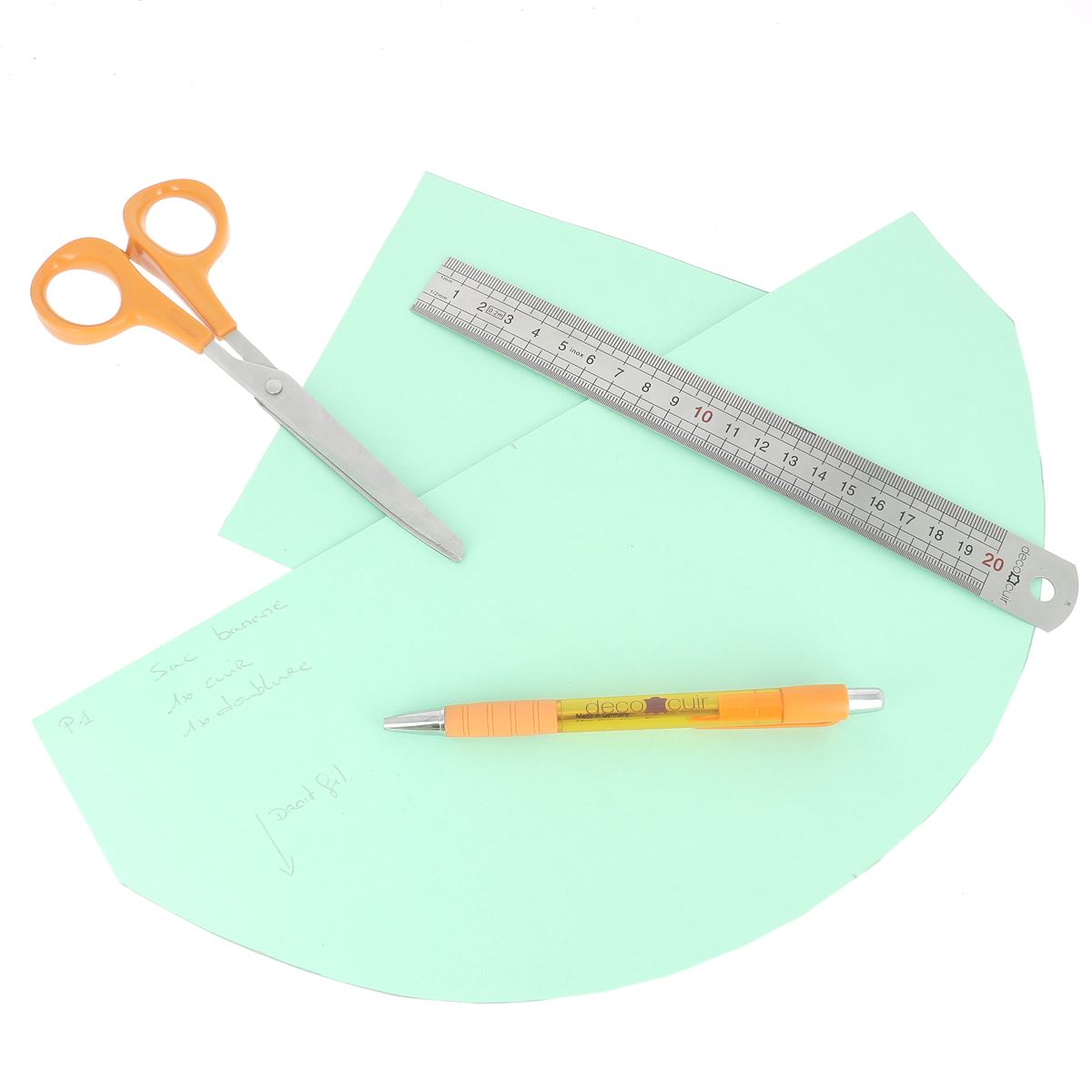
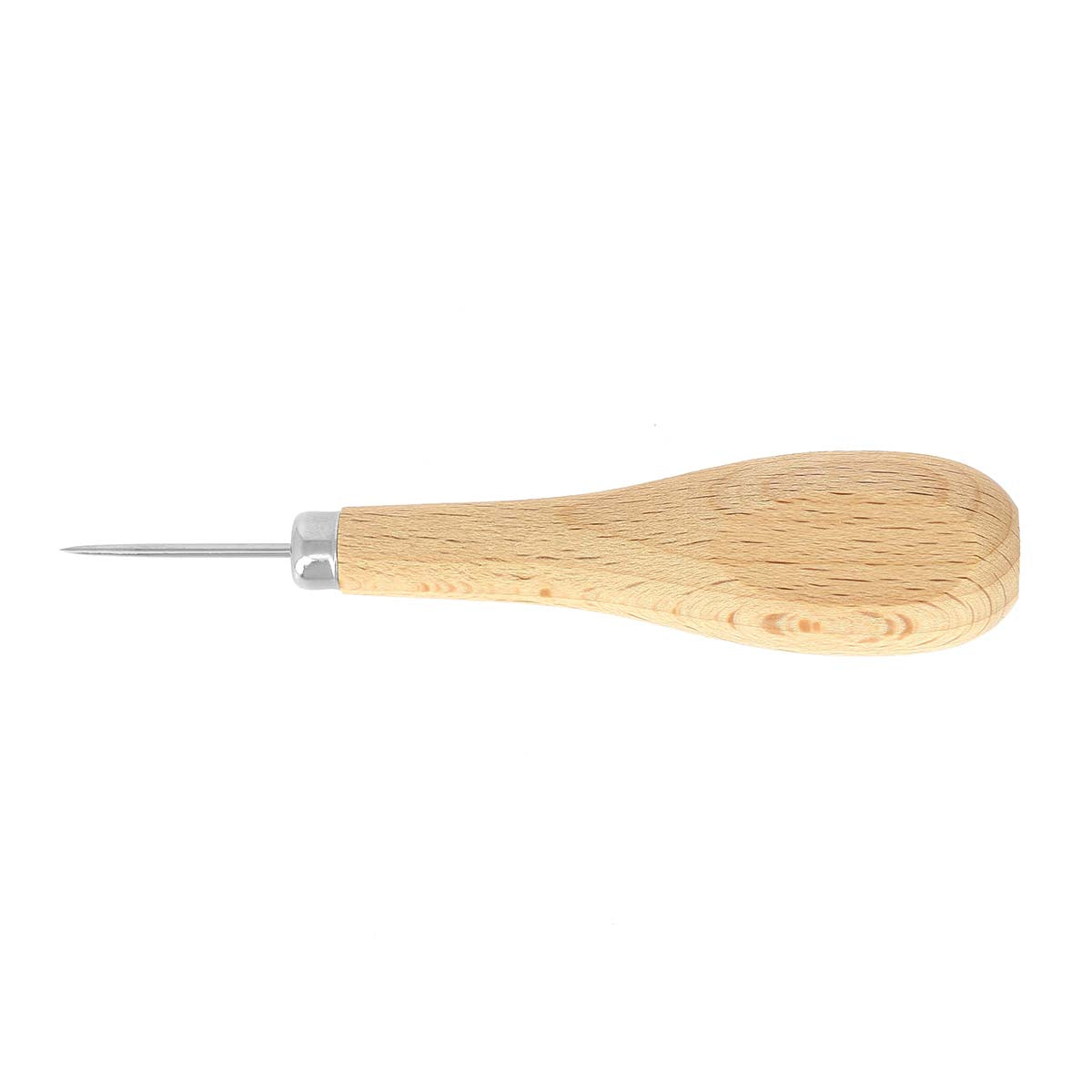
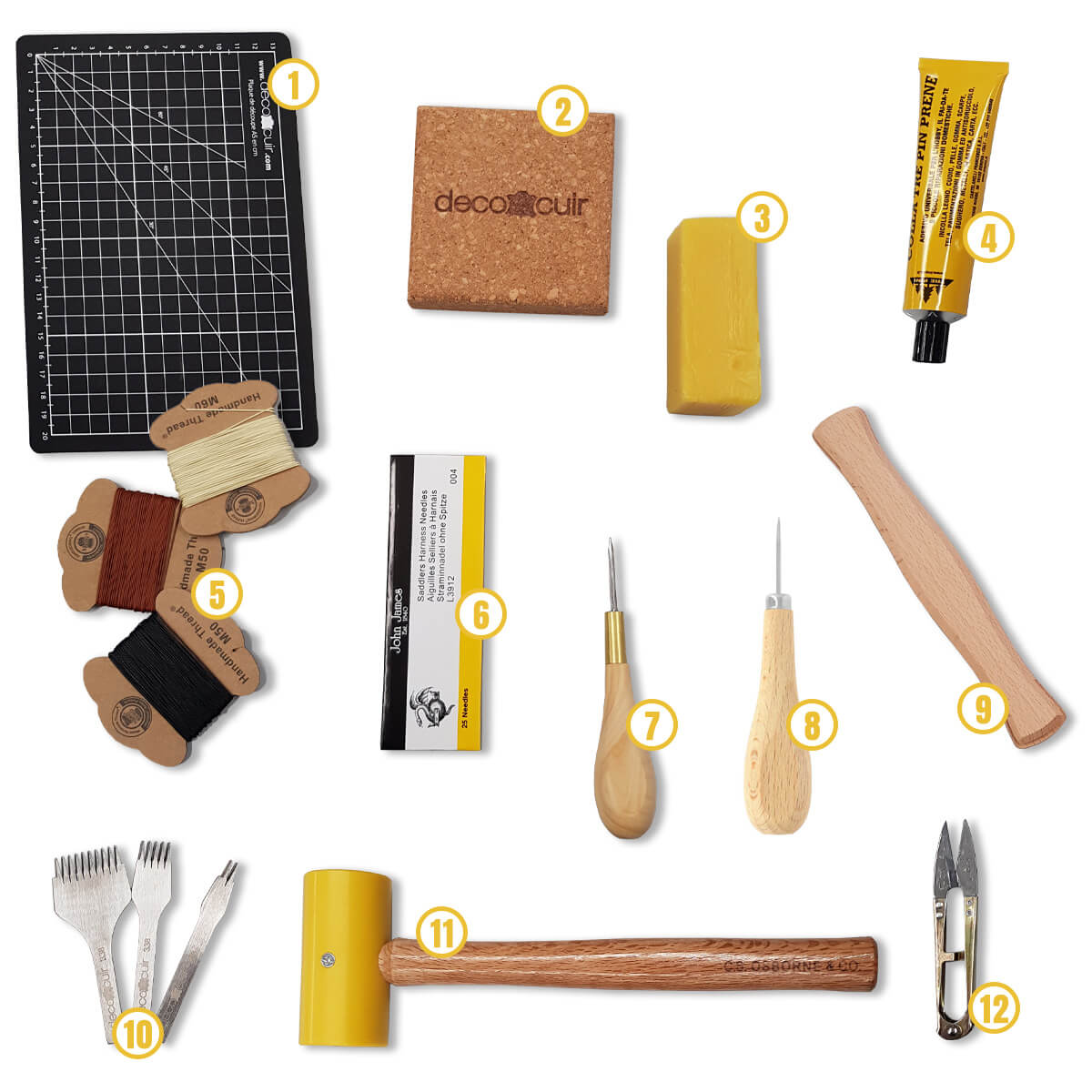
Tools needed for simplified leather sewing
CHOOSING THE THREAD
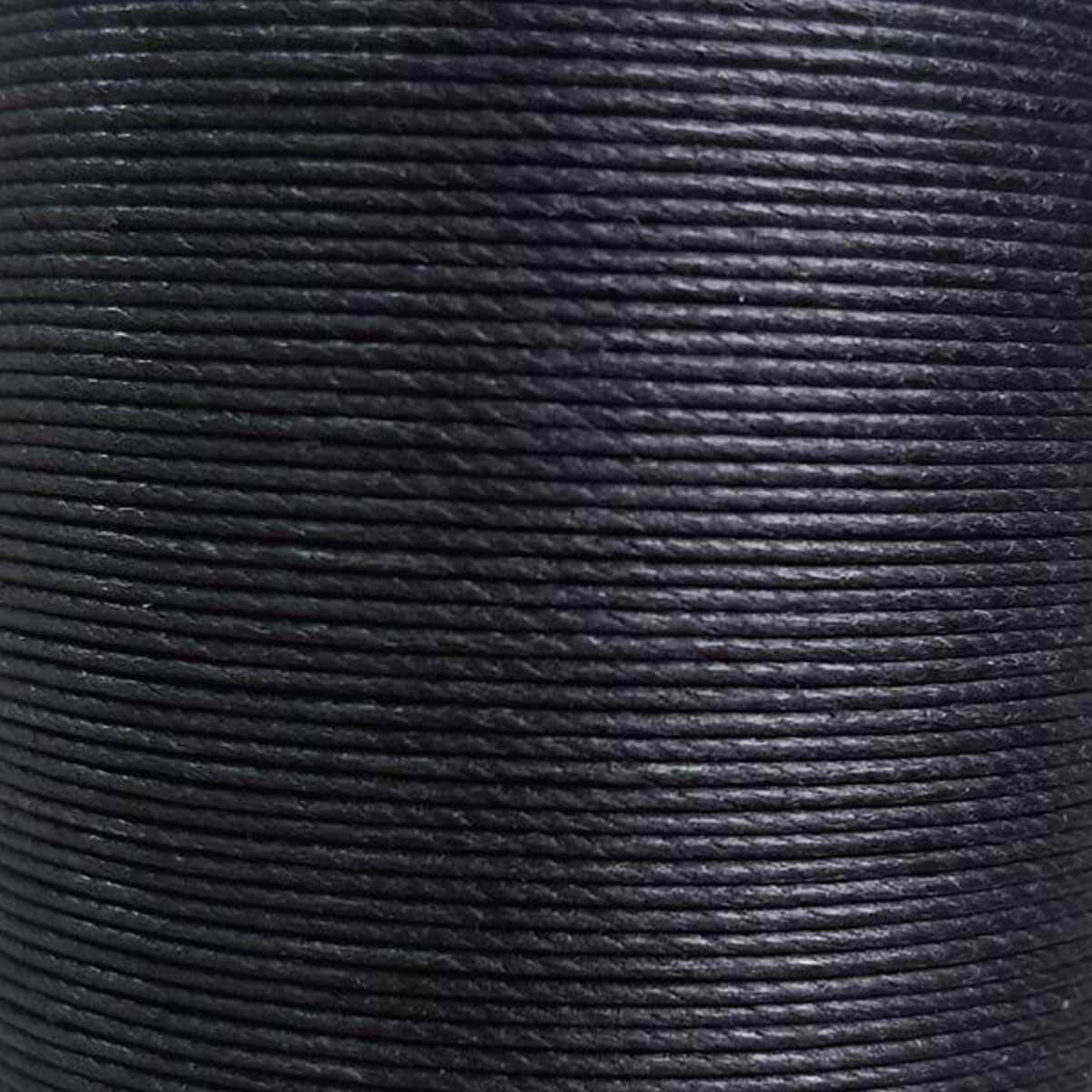
It is necessary to use a polyester or linen thread, thick enough, with a diameter of approximately 0.60 mm, to properly fill the stitch holes. The thread diameter used in the photos is 0.6 mm (braided and waxed polyester thread).
For small leather goods creations, we recommend using a thread with a diameter of approximately 0.50 mm, such as Meisi M50.
CHOOSING THE NEEDLE
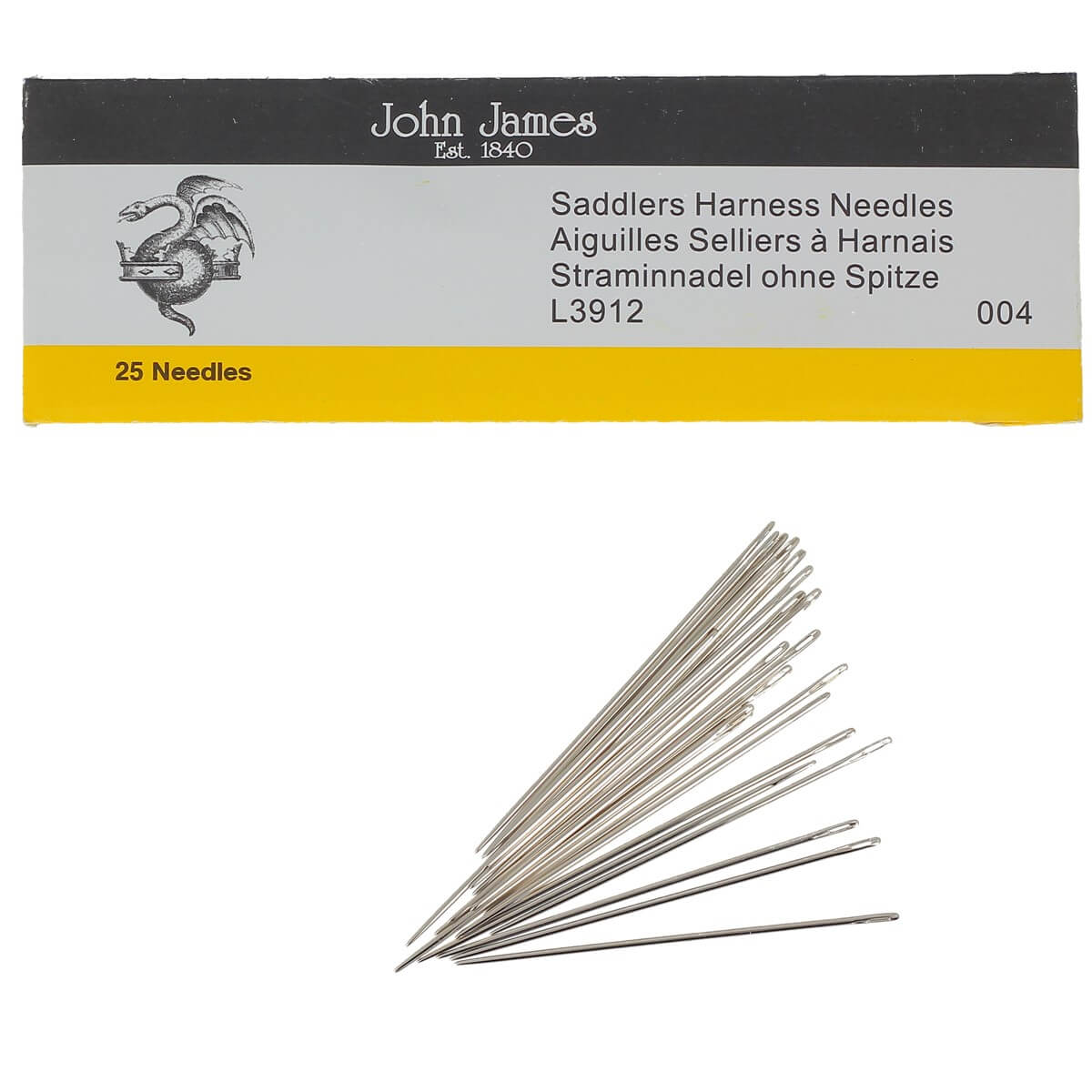
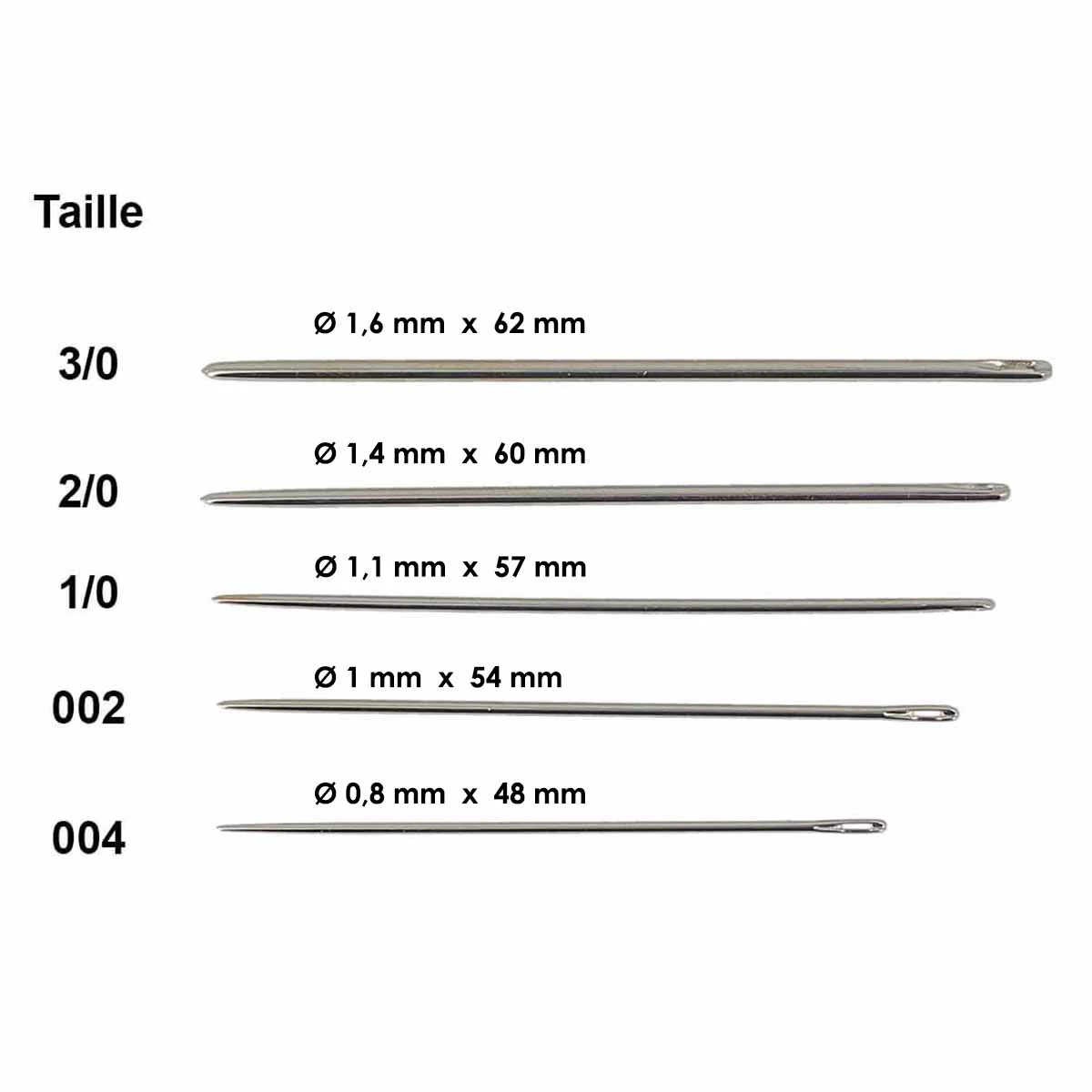
We recommend using round-tipped needles with a maximum diameter of 1 mm, corresponding to the diameter of the stitch holes (Size 002 - Ø1 mm (ref. CA118_010)).
As a reminder, as with saddle stitching, it is necessary to thread a needle on each end of the thread.
GUIDE: WHICH NEEDLE TO CHOOSE FOR MY THREAD?
Unlike saddle stitching, there's no need to make a "comma" (passing the thread over the needle) to get an angled stitch on both sides => simplified sewing has a straight stitch.
CHOOSING THE PUNCH
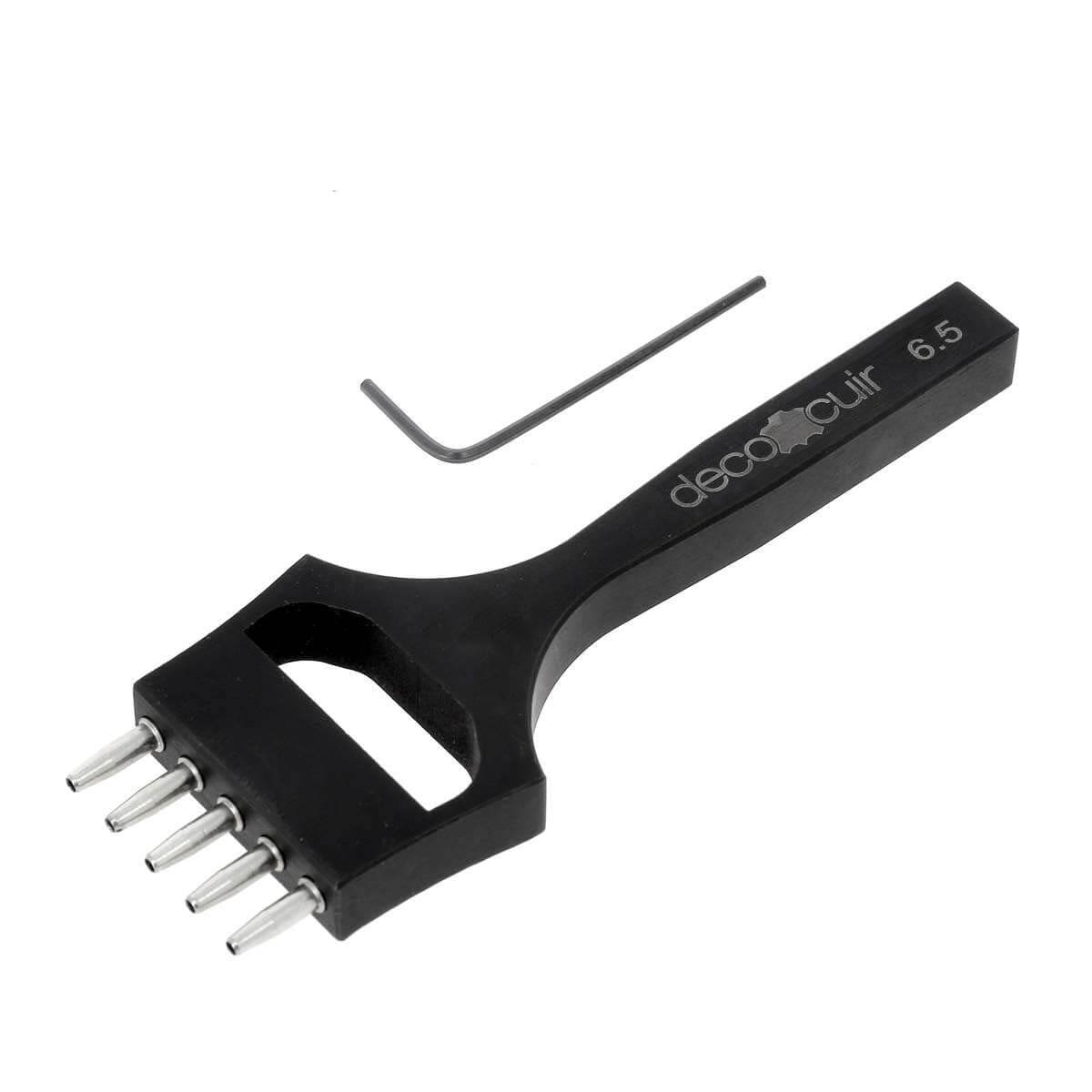
Simplified leather sewing involves making stitch holes of approximately 1 mm in diameter, with a pitch of 4 to 5 mm (distance between the centers of the holes).





HOW TO POSITION THE STITCHES?
Ideally, position the stitch points directly on the pattern, especially with the help of drawing software. Many patterns today include the stitch points directly in the design.
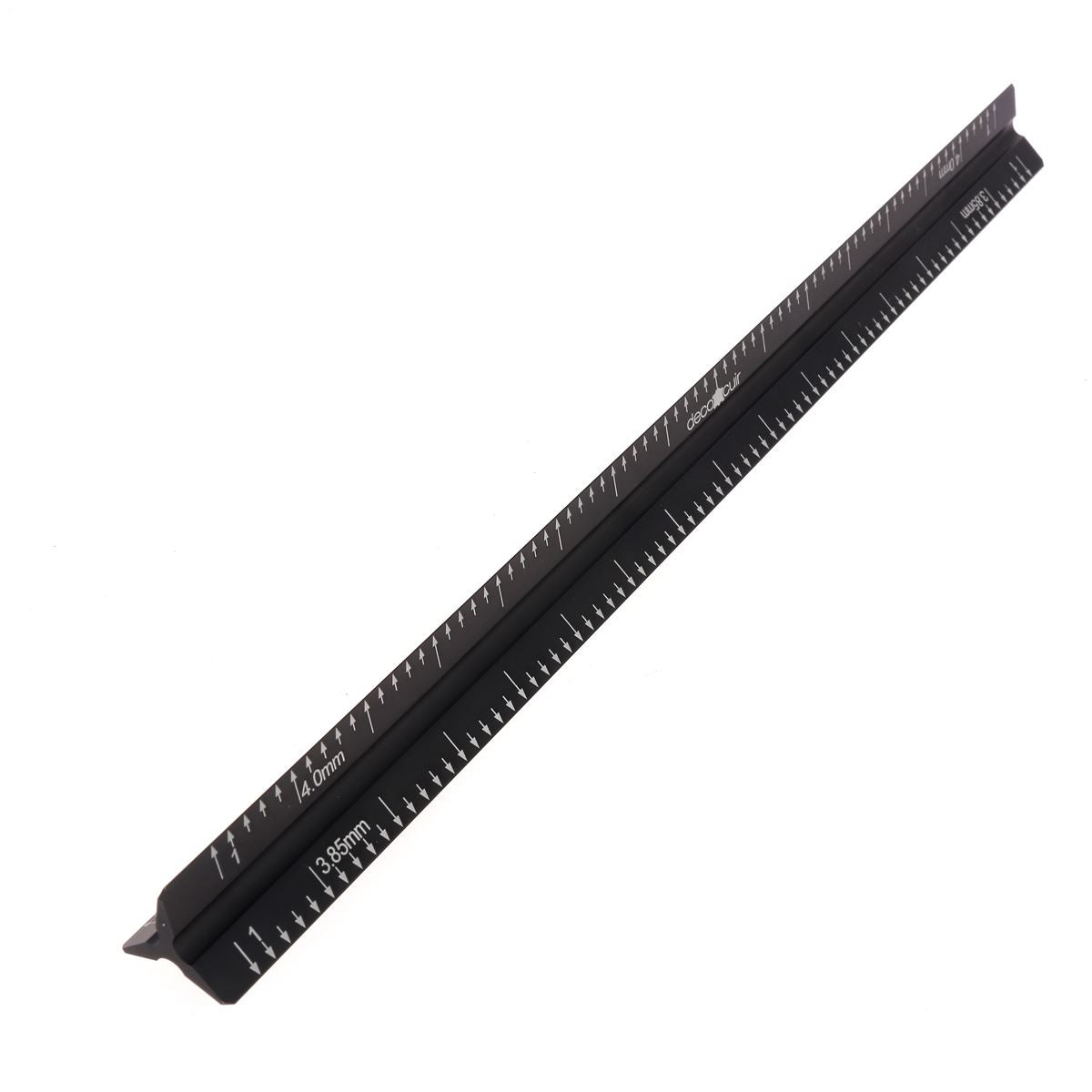
Otherwise, you can position them using a ruler. As a reminder, stitch points are generally located about 3 mm from the edge and spaced 4 to 5 mm apart. We recommend using our Kutsch ruler (ruler for marking stitch points) and a round awl.
For hole stitching, we recommend prioritizing the larger pitch of 4.00 mm.
As a reminder, for simplified sewing, we generally space our stitches (center-to-center pitch) every 4 to 5 mm.




SEWING STEPS
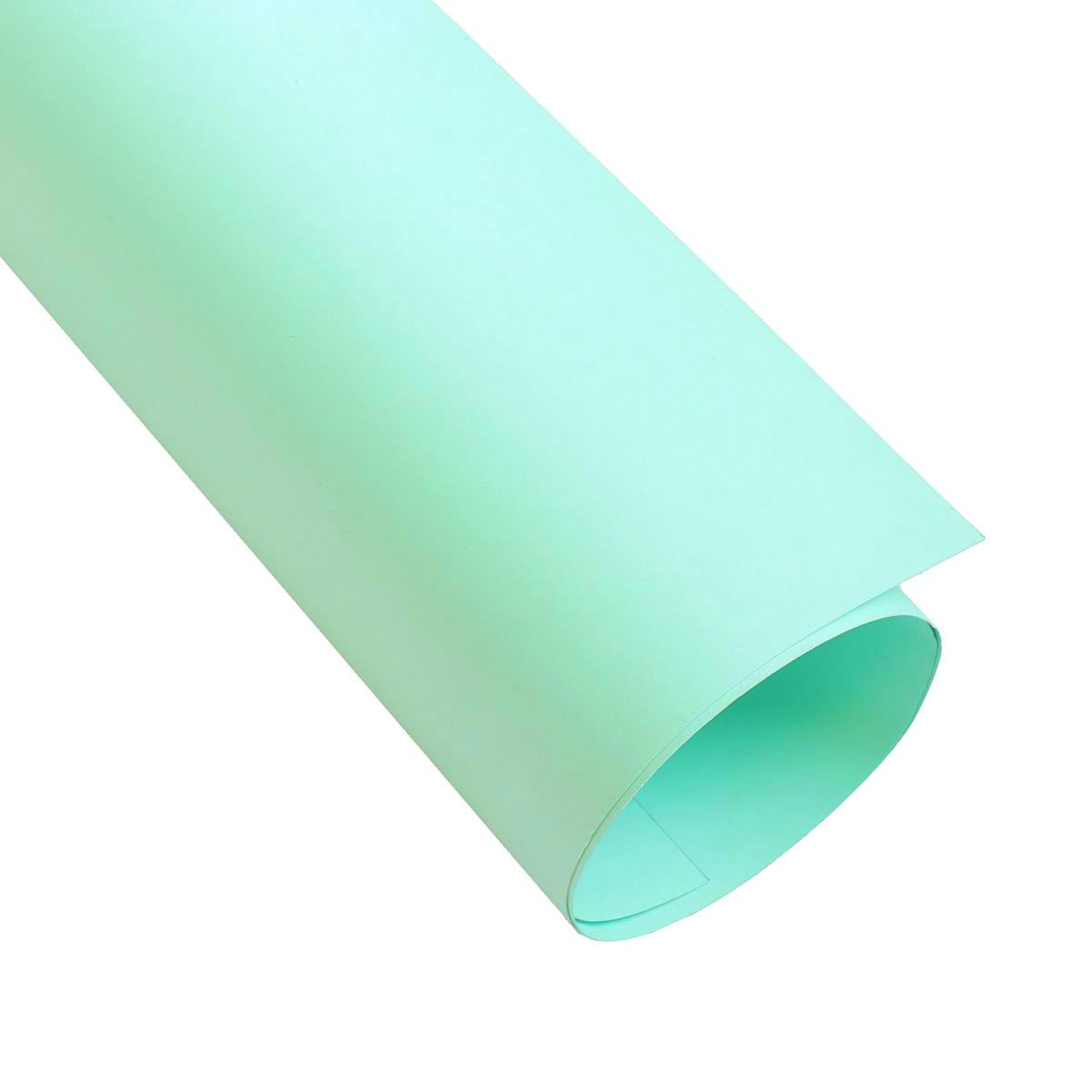
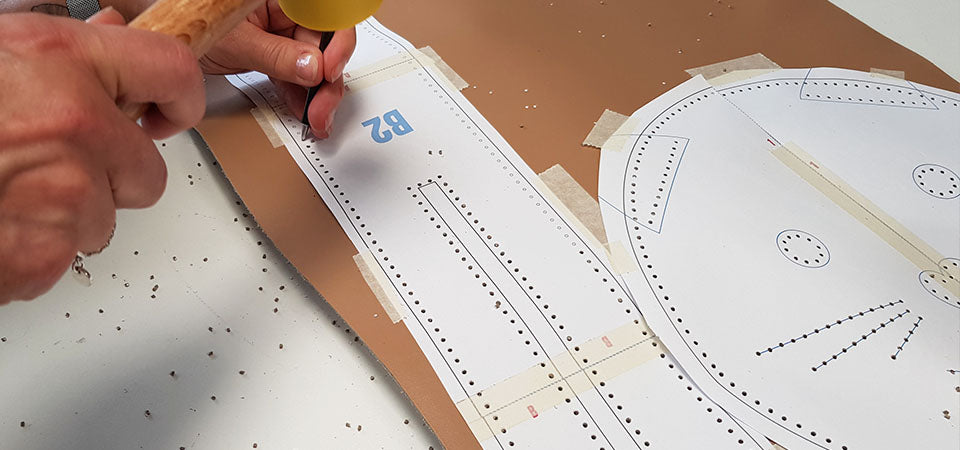
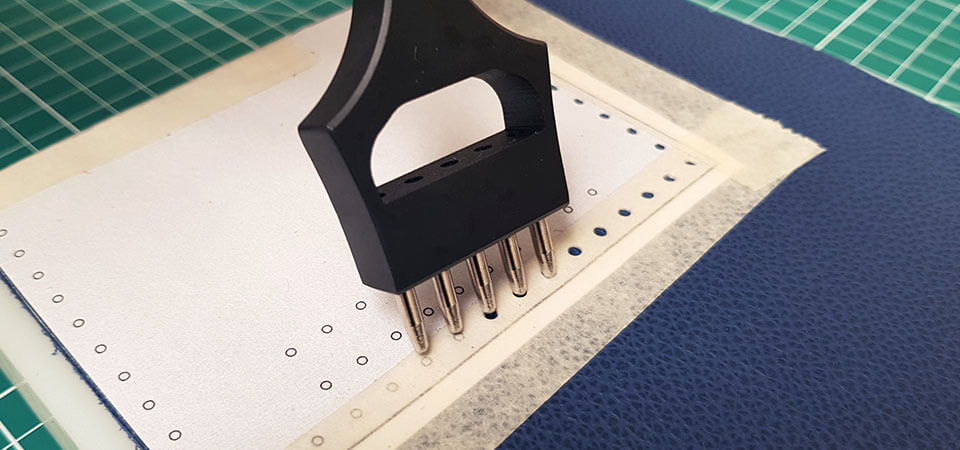
1. Place the template on the leather and secure it with masking tape to avoid marking or damaging the leather. Then, pierce the stitch holes using a 1 mm Ø punch.
2. Cut out the leather piece(s) using a craft knife.
3. Take a length of thread equal to four times the length of the stitching line. For long stitching, take an arm's length of thread, corresponding to the length of outstretched arms, to avoid handling several meters of thread. Then, plan to make a join when the thread runs out.
If the thread is linen, wax it with beeswax. Pass the thread three times over the wax, then wipe off the excess with a cloth.
Then thread one needle onto each end of the thread:
- Pierce the thread about one needle length from its end, then pierce it twice again.
- Lightly flatten the end of the thread, then pass it through the eye of the needle.
- Pull the longer part of the thread towards the eye to form the knot that will hold the needle in place.
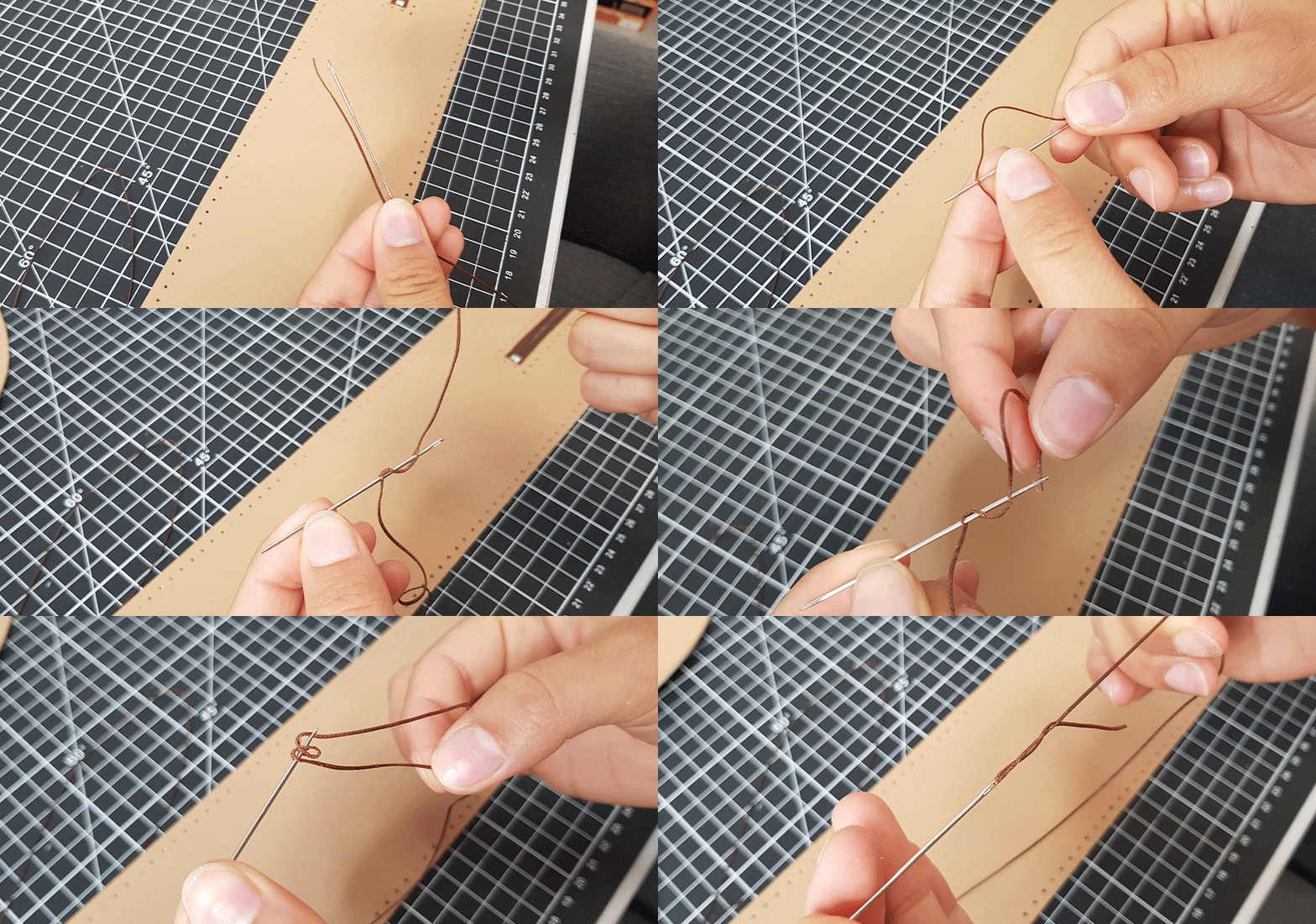
4. Start sewing
Before sewing, if necessary, assemble the pieces with a thin line of leather glue. Don't hesitate to use needles to correctly position the pieces and align the stitch holes.
Begin sewing by passing one needle through the first stitch hole, then even out both ends of the thread.
Sewing can begin from the first stitch, by evening out both ends of the thread, or by making a backstitch when starting at the edge of a piece, for example, on a cardholder.
For a more aesthetic and symmetrical finish, you can also start sewing at the 4th stitch. This gives you three double stitches at the beginning of the seam, mirroring the three backstitches made at the end. This method should only be used when the two ends of the seam do not meet.
5. Stitch
Stitch by passing, one by one, each needle through each stitch hole. To facilitate the passage of the second needle through each hole, be sure to pull the thread tightly to avoid creating a "marriage", meaning piercing the thread with the needle.
Repeat the same actions regularly throughout the stitching to achieve consistent stitches and a neat finish.
Another important point: thread tension. Always tighten the thread with the same angle and force to maintain a consistent seam.
6. Finish the stitching
Finish the stitching with 3 backstitches (3 stitches backward), making sure the thread does not overlap.
Cut both ends of the thread flush, then apply a small dot of glue using a round awl.
If the thread is polyester, it is also possible to lightly burn the end of the thread to secure it.
Optional: gently hammer the stitches with a shoemaker's hammer to flatten them and achieve a consistent finish.
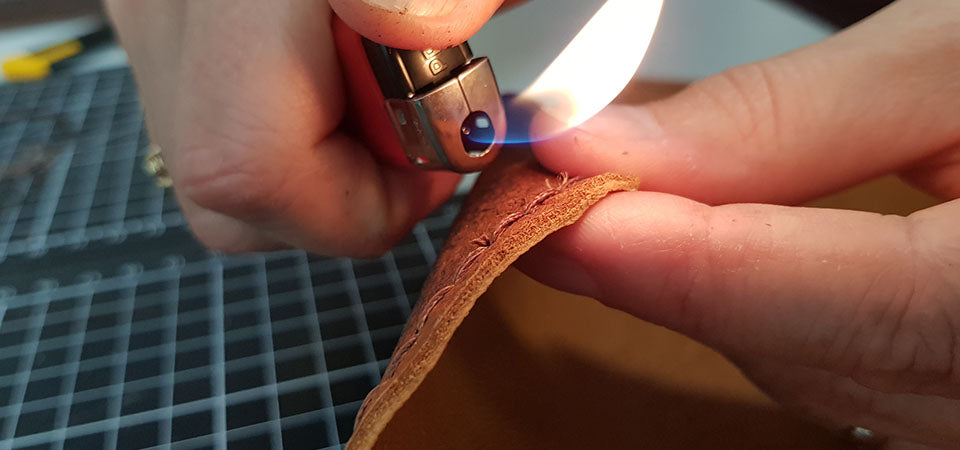
All that's left is to work the edges with an edge beveler and then an edge finish or tokonole / tragacanth gum.
USING THE EDGE BEVELER >
WHICH LEATHER TO CHOOSE FOR HAND SEWING?
Ideally, select a thick leather (at least 1.2 mm thick) that is not too soft. We invite you to consult our guide on different leather finishes.
WHICH LEATHER TO CHOOSE FOR MY CREATION >
IDEAS FOR FREE TUTORIALS TO PRACTICE WITH
 |
 |
|
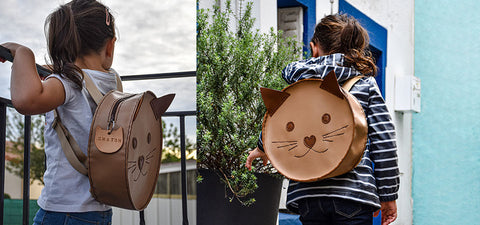
Leather Cat Backpack for Children |
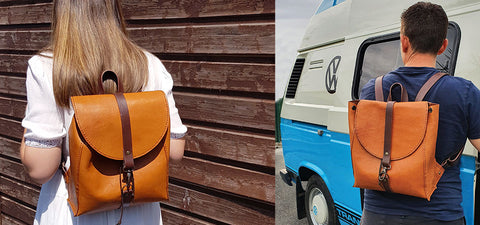
Sheepskin Leather Backpack |
 |
 |
|
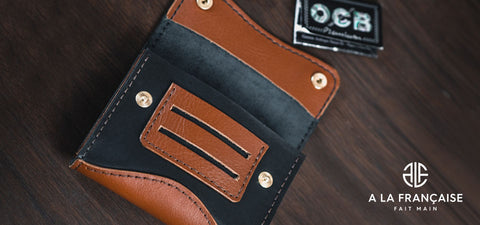
Leather Tobacco Pouch |
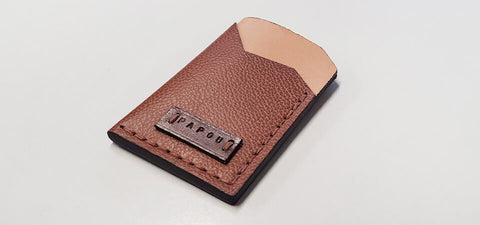
Minimalist Card Holder |
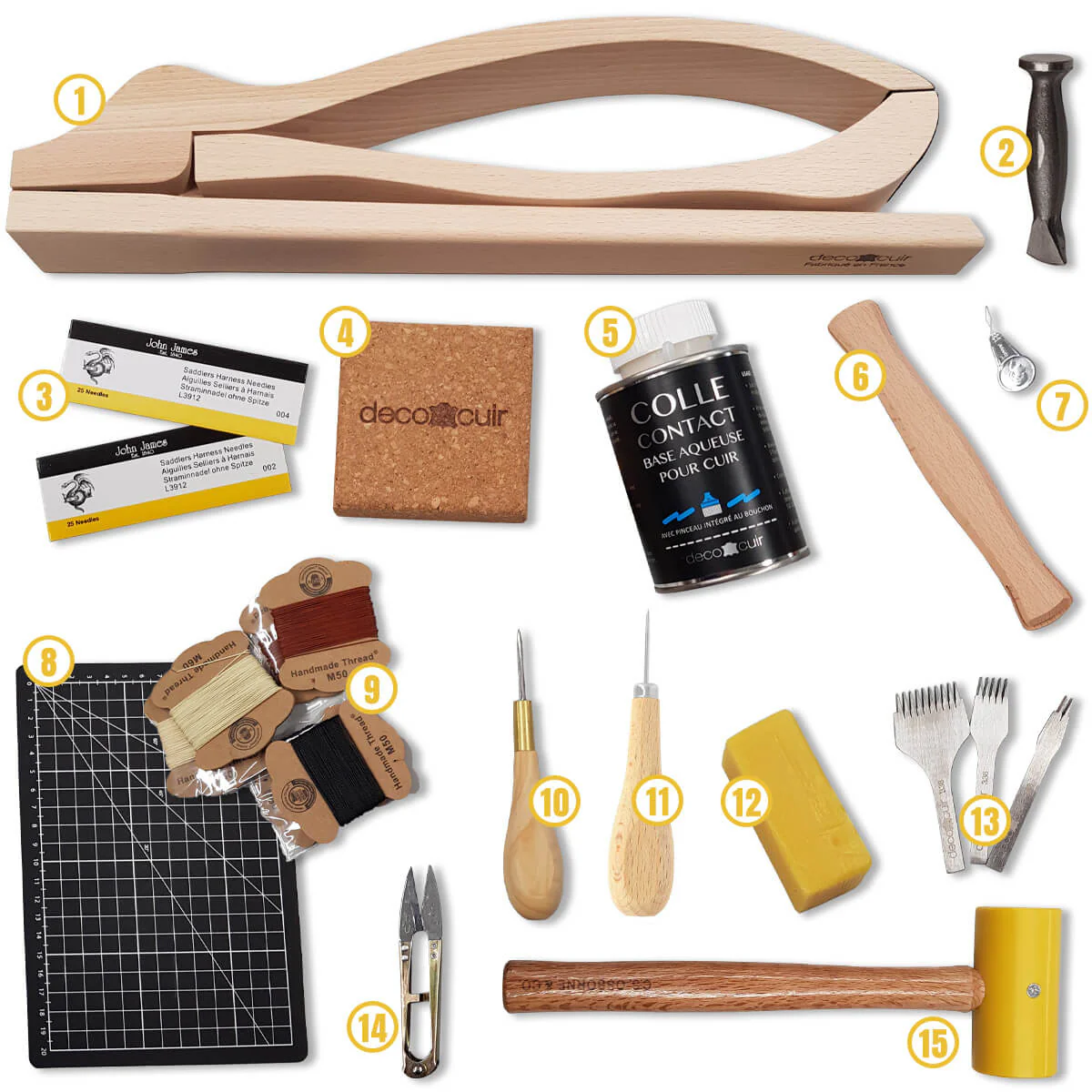
DECO CUIR TOOL KITS
We have leveraged our experience to offer you a starter kit with the essential tools for hand-stitching leather.
Other hand stitching techniques
Saddle stitch:
the saddle stitch is the most popular stitch among leather enthusiasts because it is the strongest stitch. The specificities of this stitch: two needles are necessary to sew leather with a saddle stitch and the stitch is angled.

Backstitch:
Discover the backstitch technique: a simple and accessible method for everyone. Backstitching is done with one thread and one needle. In upholstery, the backstitch is called "backstitch" and in embroidery "stem stitch".


4 comments
merah
bonjour
je me suis inscris pour apprendre le métier du cuir donc je remercie les responsables du site pour le partage un grand merci
Laura Verónica Chámarez
Soy Argentina, quiero agradecer todo lo que aportan para la persona que desea trabajar de manera honrada.
Gracias, aprendo mucho con ustedes.
Gracias a Dios existe el traductor para que podamos expresarnos.
Saludos
Taleb
Bonjour
Merci pour tout les Tutos.
Mon rêve serais de pouvoir faire une formation dans vos locaux pour faire des sacs.
Maria cristina leal
Super