









MATERIALS NEEDED
To follow this tutorial, you will need:
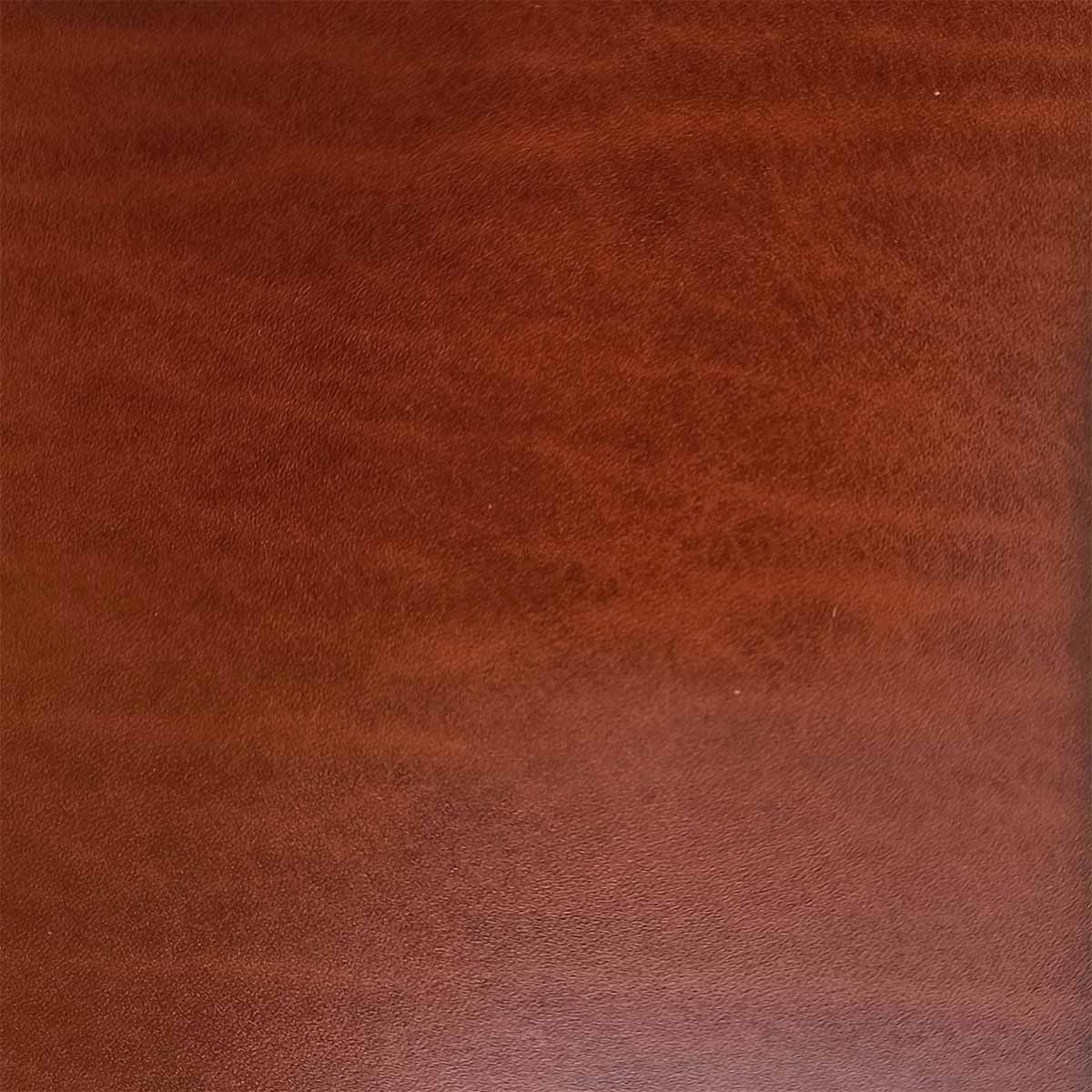
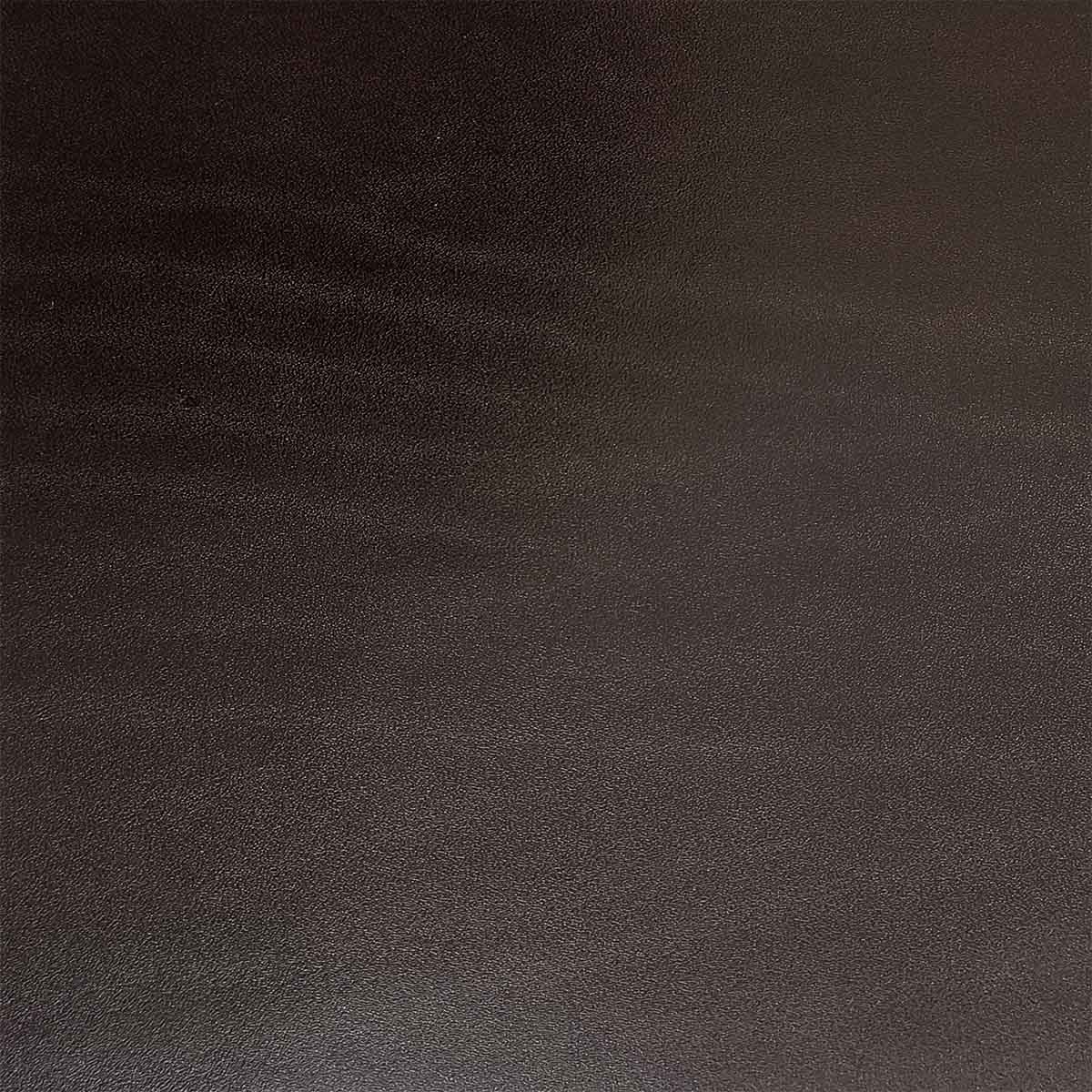
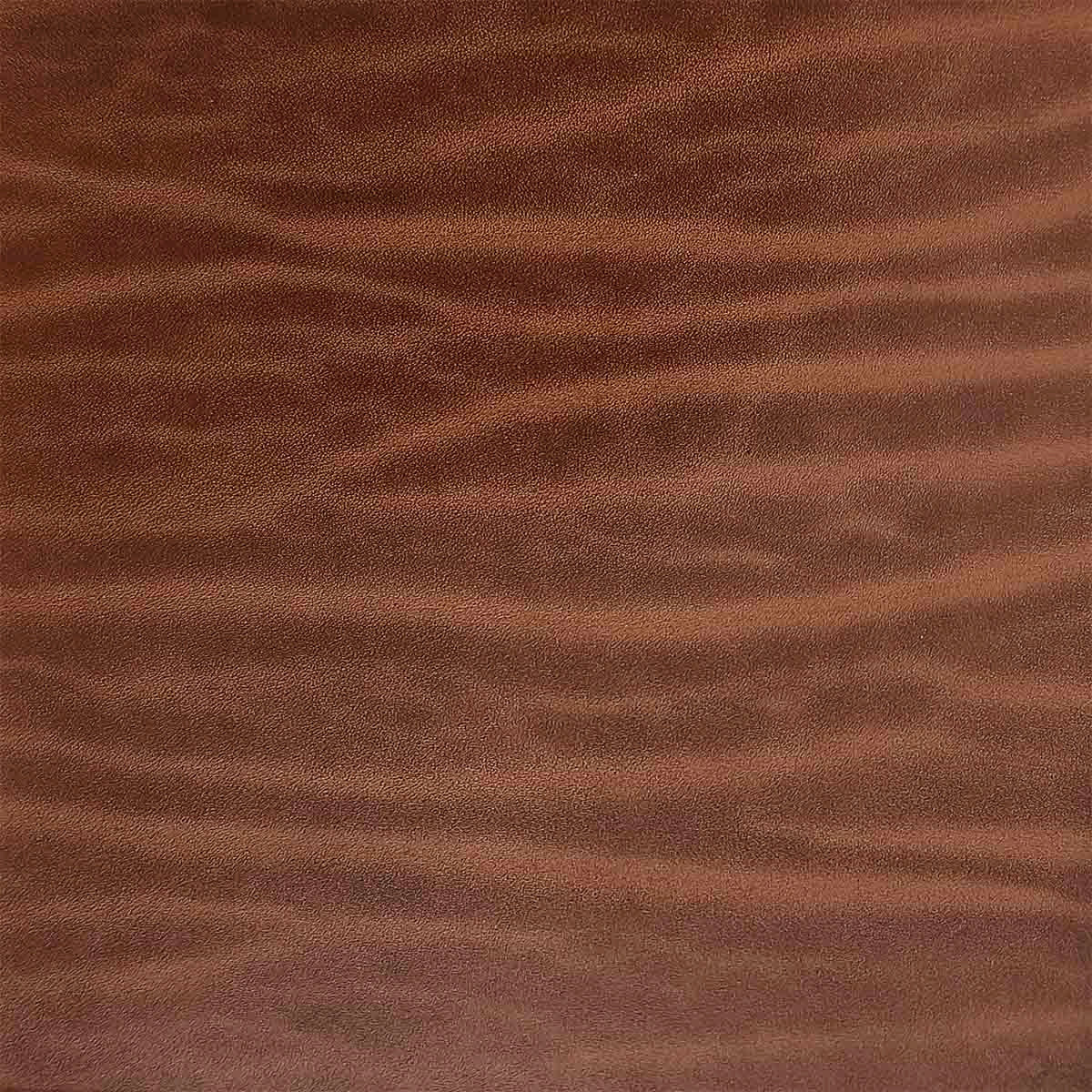
- 1 piece of vegetable-tanned shoulder leather, dyed or natural, 30 x 40 cm (to make 4 lined coasters) and 1.5 mm thick
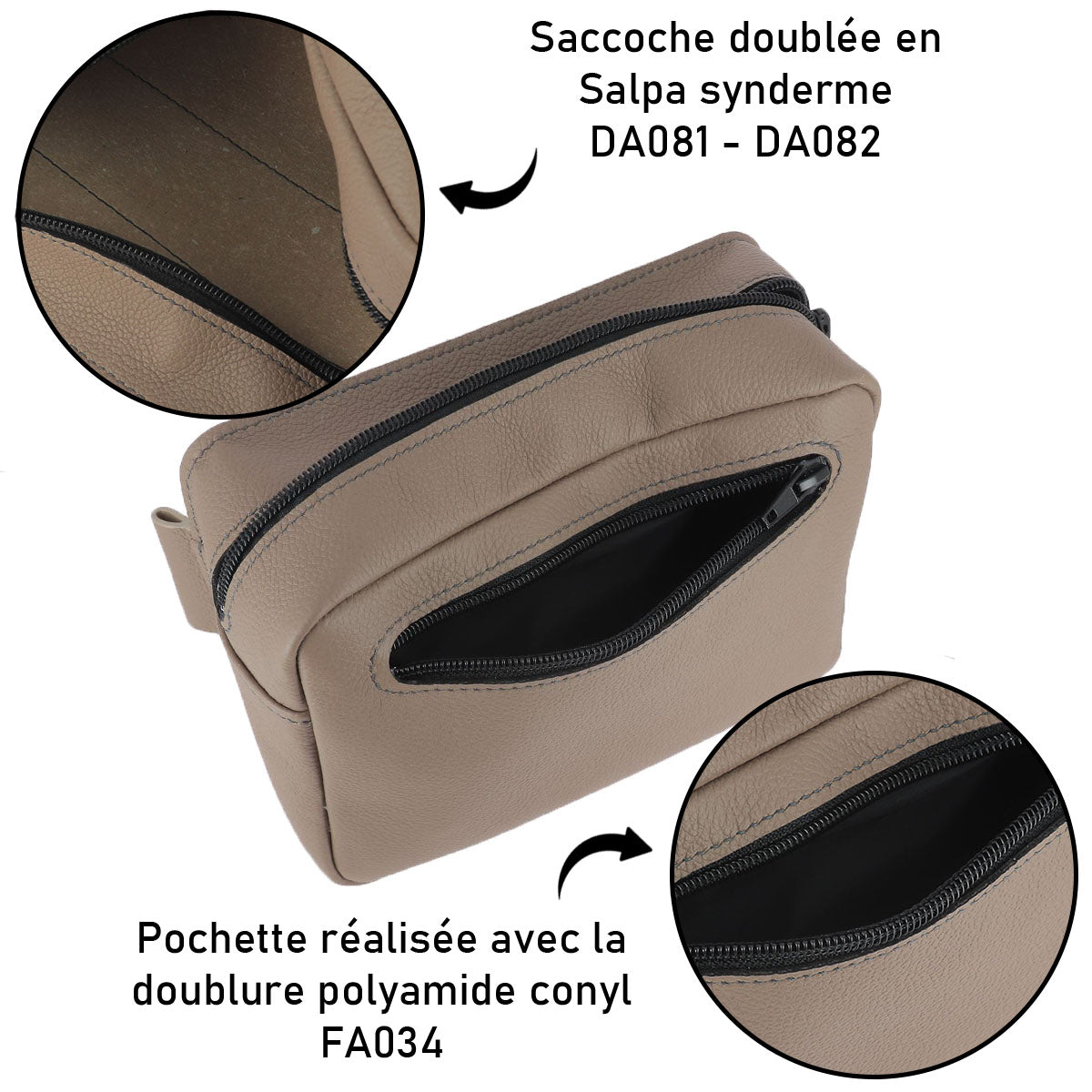
- 1 piece of Salpa bonded leather reinforcement - 30x40cm - 1 mm thick
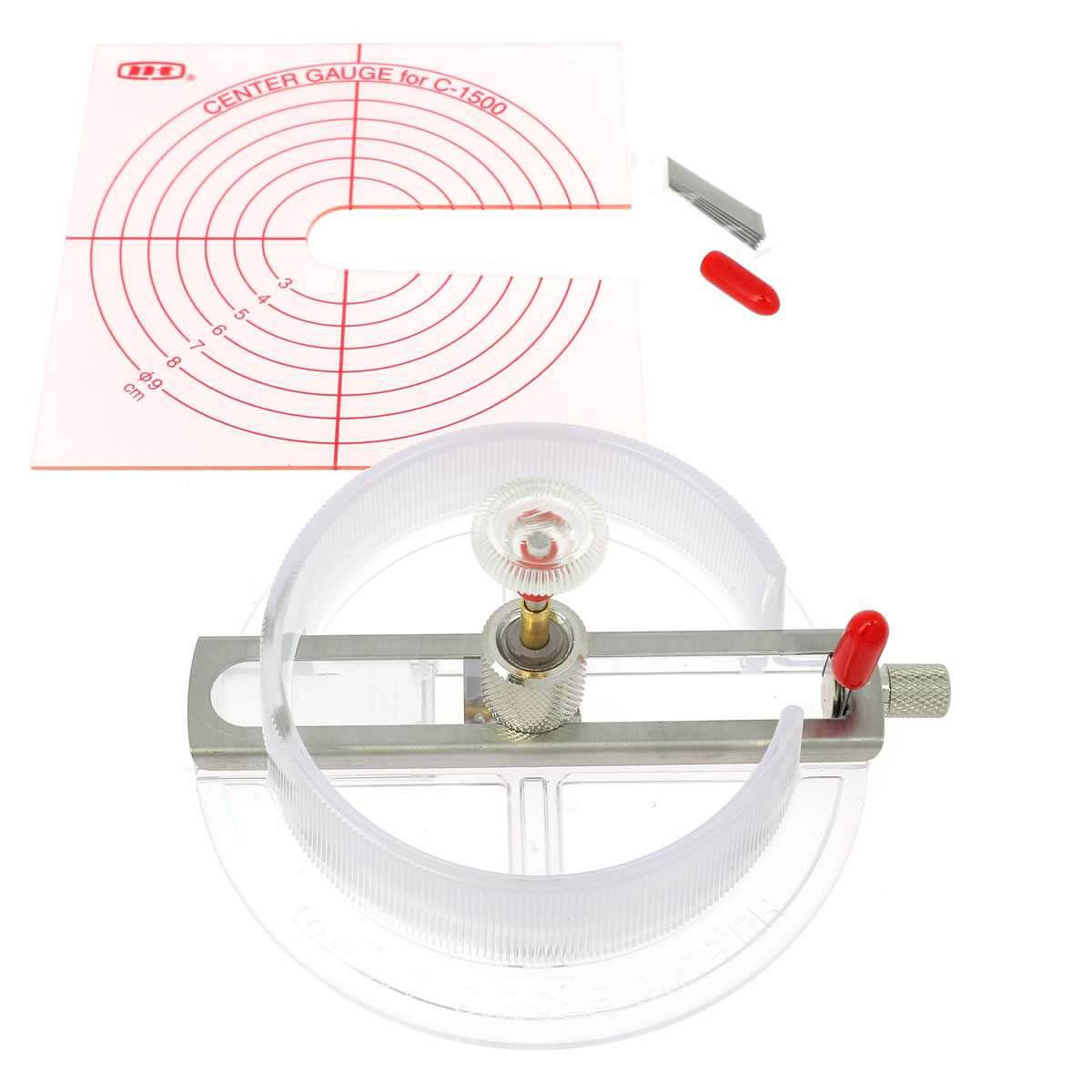
- 1 circle cutter 1.8 to 17 cm NT Cutter - IC-1500P
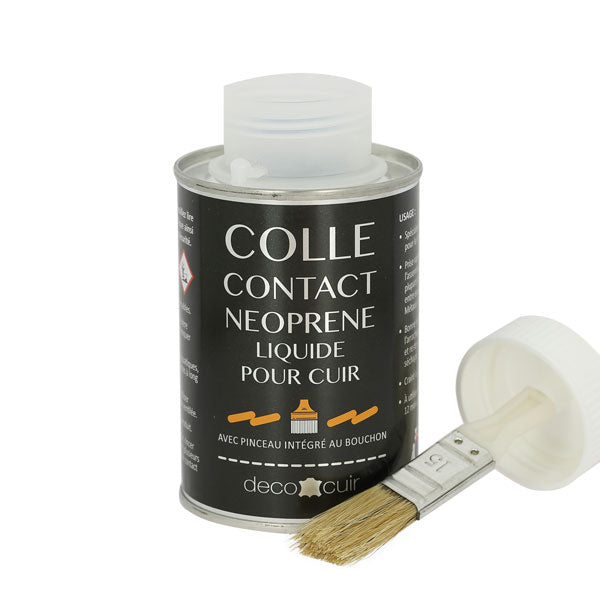
- 1 pot of neoprene glue
- 1 pot of Tokonole or other edge finish
- 1 abrasive sponge
- 1 protective finish such as varnish, waterproofing spray, leather grease, etc.
For saddle stitch sewing:
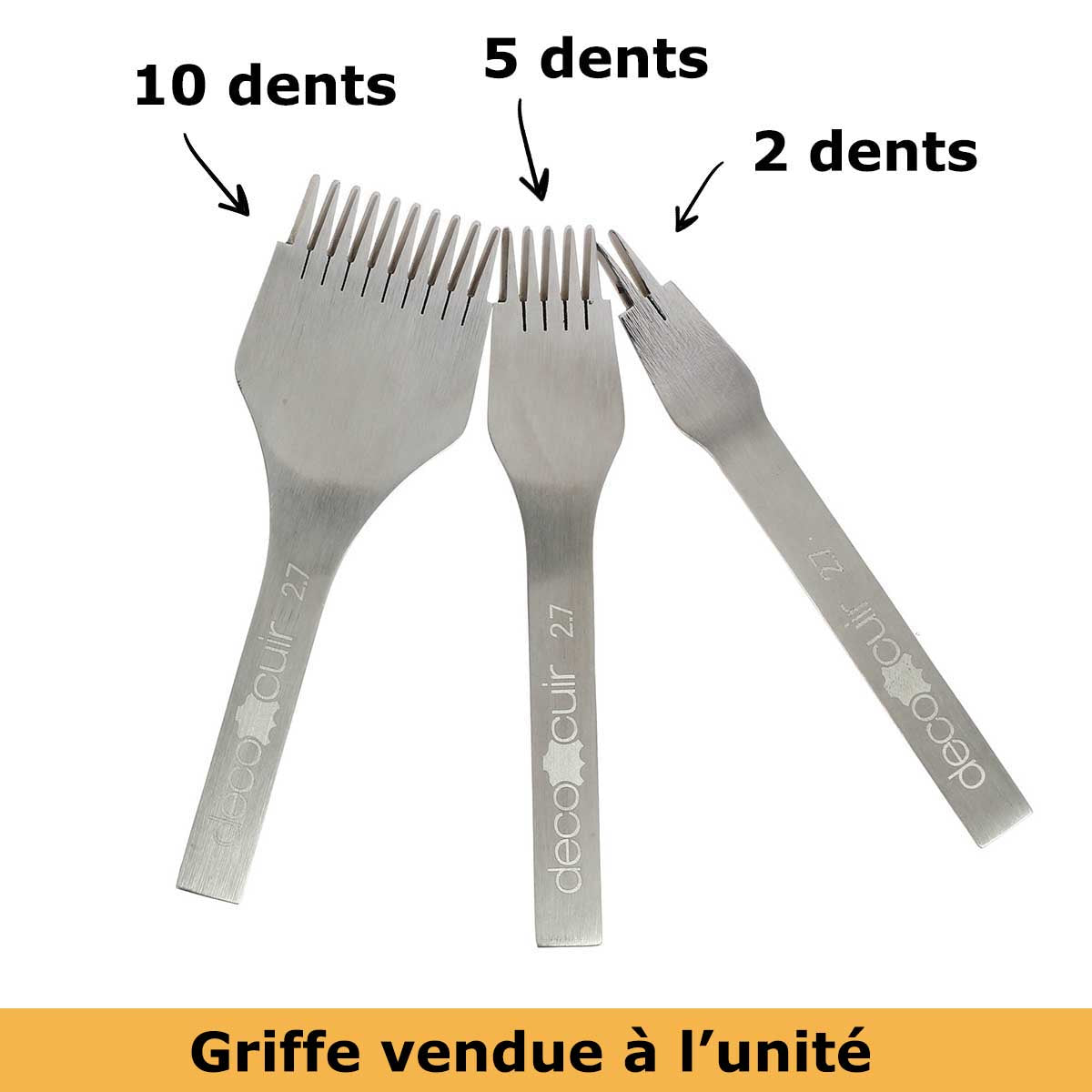
- 1 precision stitching chisel - 3.38 mm - No. 8 - 2 prongs
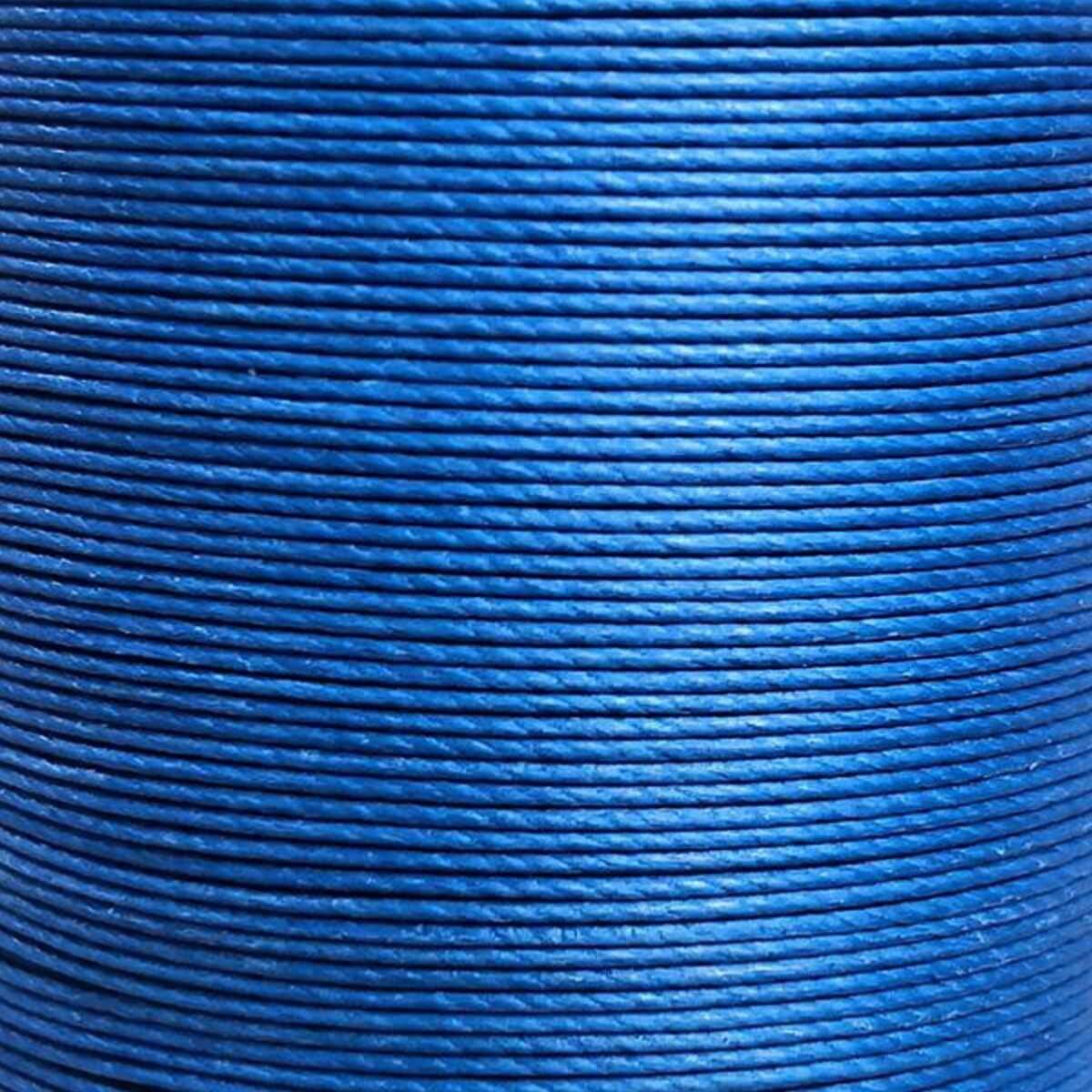
- 1 card of 8m of waxed linen thread MeiSi super fine M40 - Ø 0.45 mm
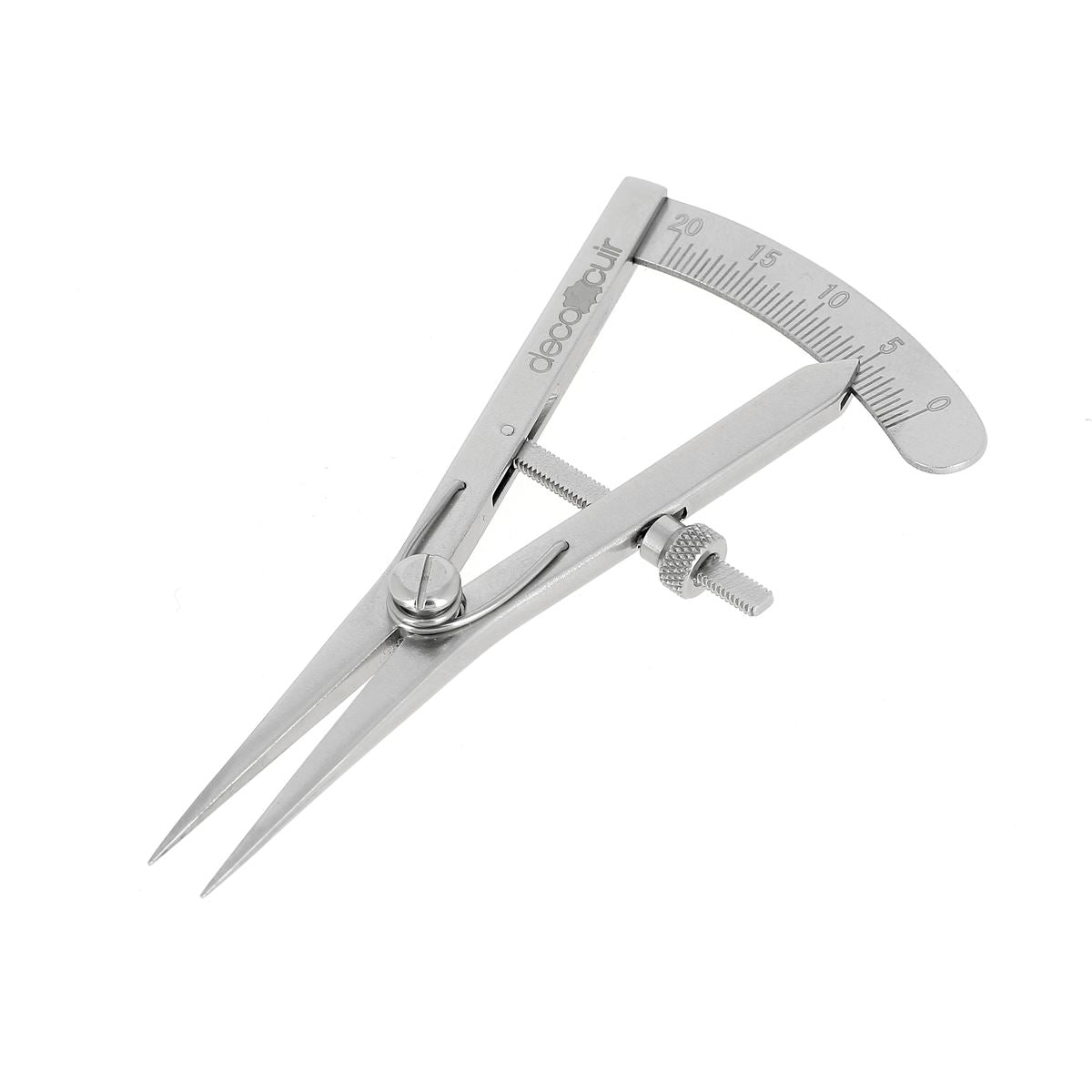
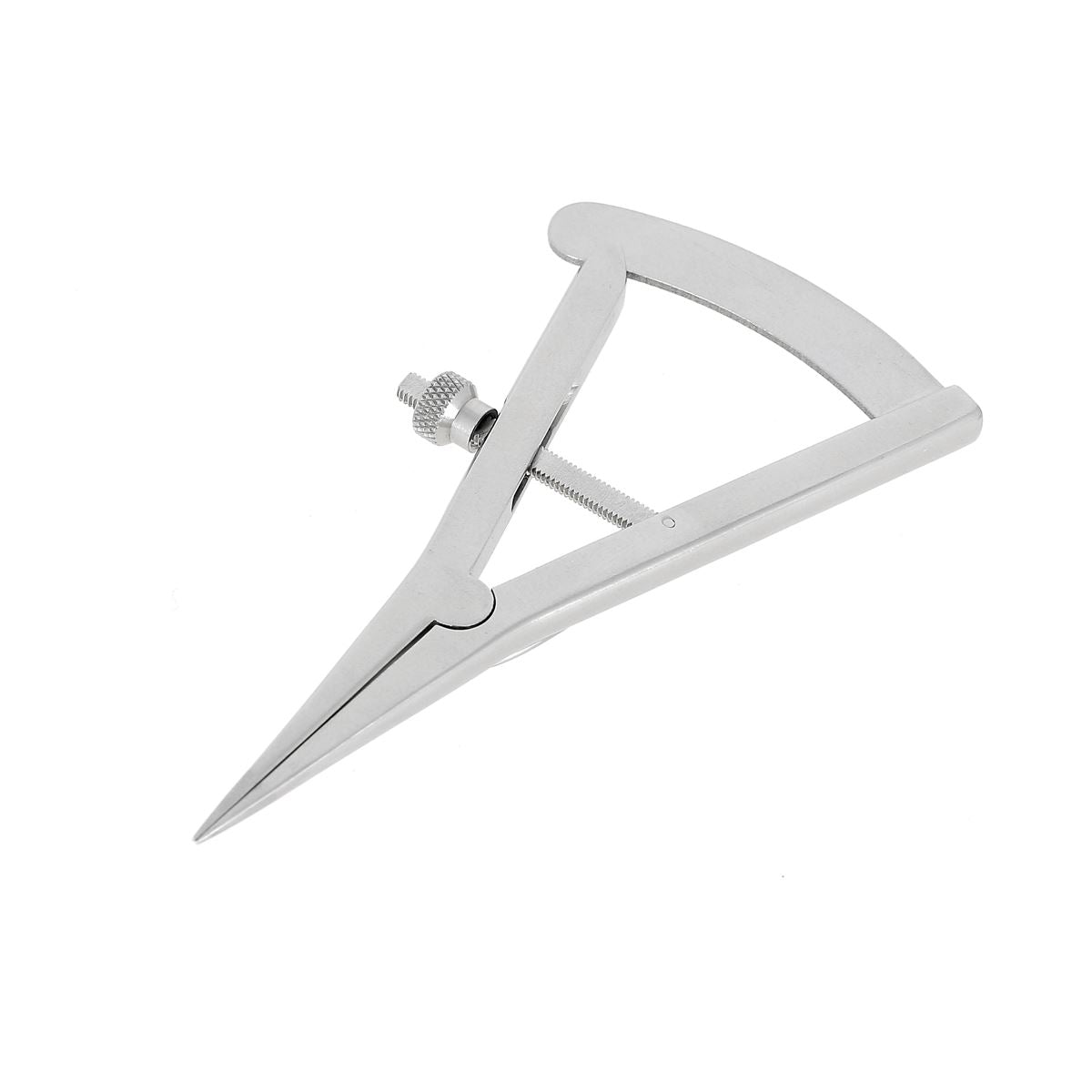
- 1 mini divider - sharp point


For simplified sewing:
- 1 round hole punch - Ø 1 mm
- 1 card of 8m of waxed linen thread MeiSi super fine M60 - Ø 0.65 mm





Full tutorial video
Option: dyeing natural vegetable-tanned leather
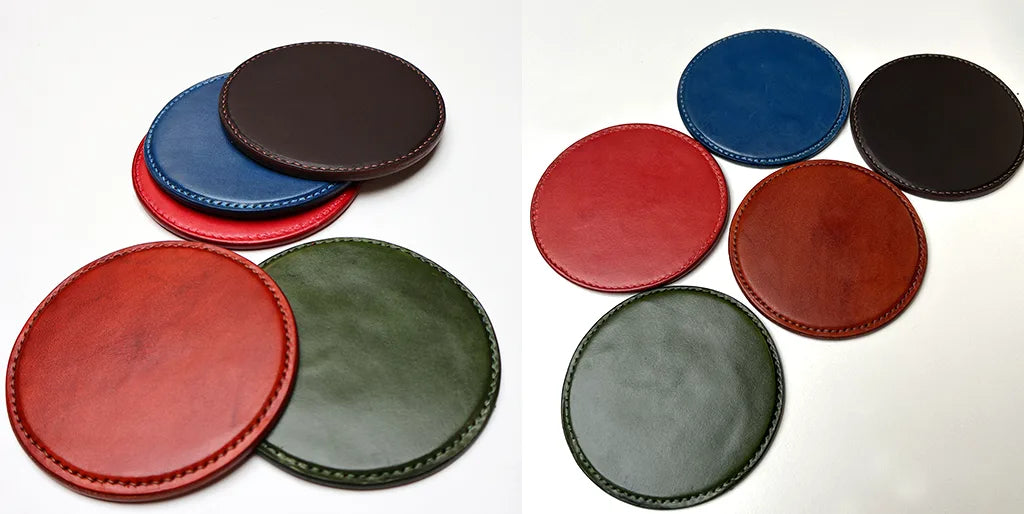
If you wish to create your own colors for your leather coasters, you can select natural vegetable-tanned leather and dye it!
LEARN MORE ABOUT LEATHER DYEING


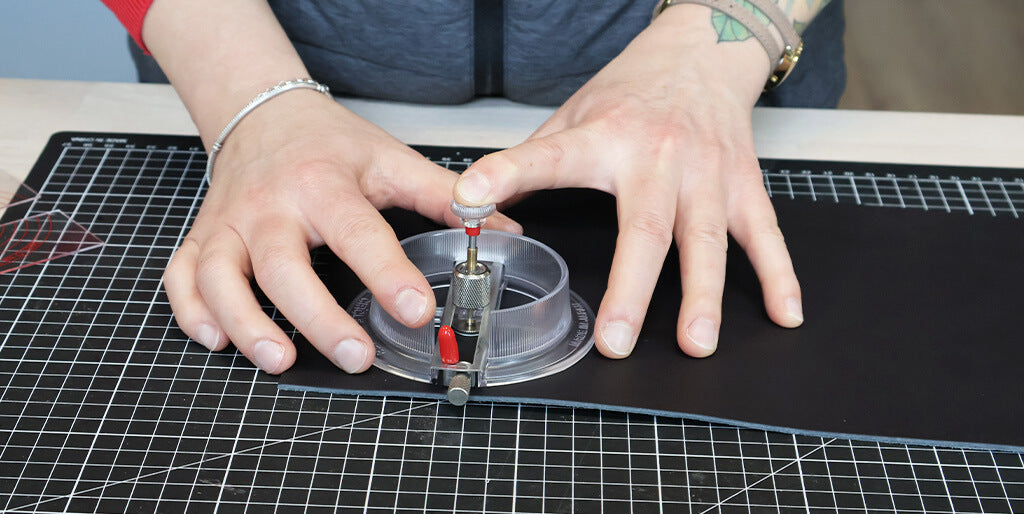
1. Cut the different pieces
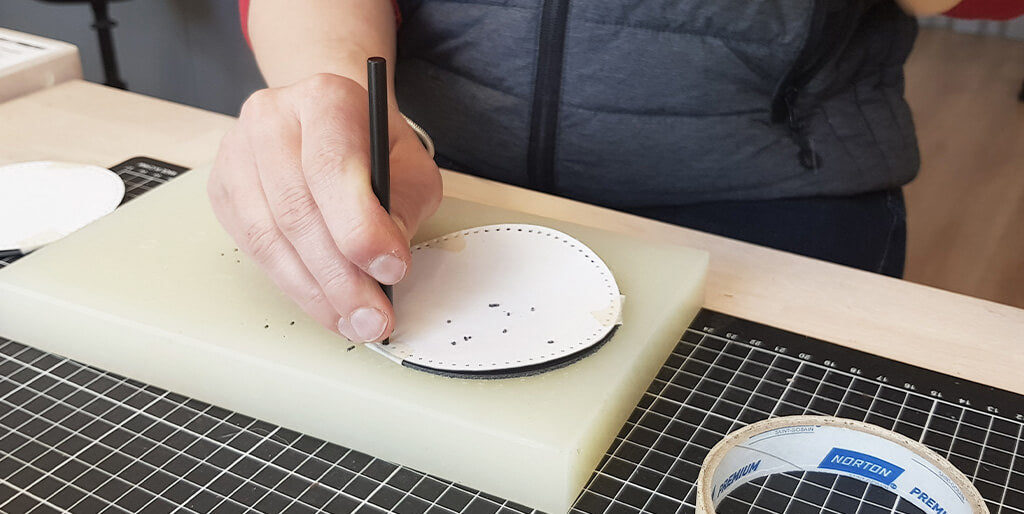
Cut two circles 10 cm in diameter from the leather using the cutting tool of your choice. Here, we decided to use a circle cutter (available for sale on our site - reference ).
It is possible to make 4 coasters, or 8 circles, from a 30x40 cm piece.
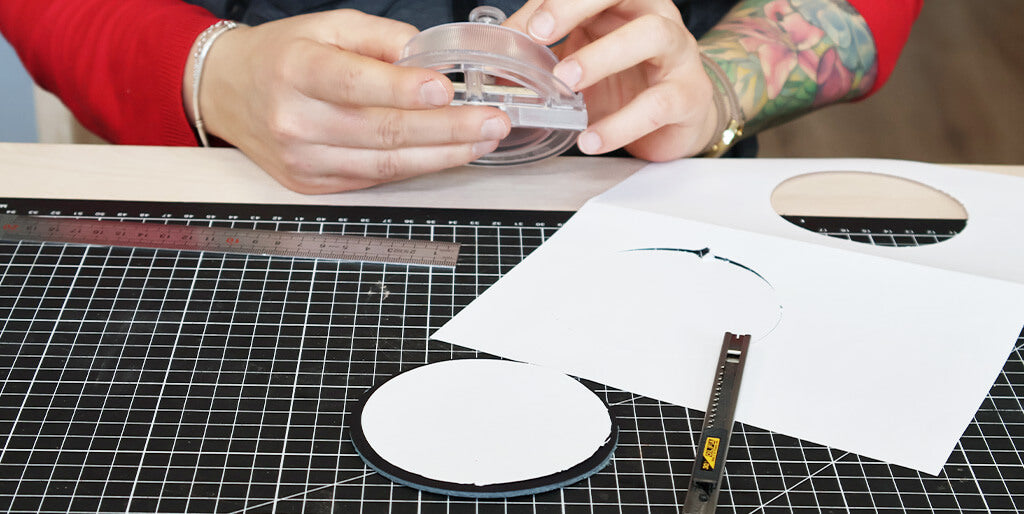
*If you use the circle cutter, do a test run on paper first to ensure your diameter is correct.
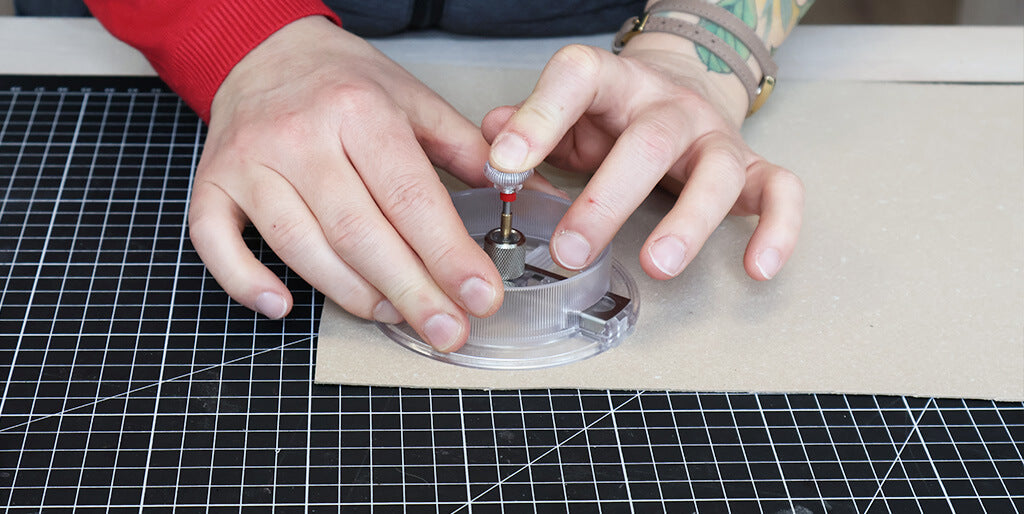
Then, cut a 9.2 cm circle from the Salpa using the circle cutter. Salpa is bonded leather (ground leather scraps bound with natural latex) and helps add relief or reinforce your creations.
For the simplified sewing version: Salpa is not mandatory because the "domed" effect is much less pronounced than with the saddle stitch version. You can directly punch the Ø 1 mm sewing holes and glue the 2 leather pieces together.
2. Glue the Salpa and the leather
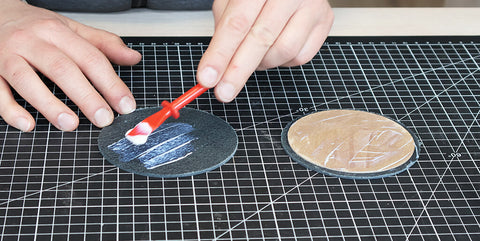
Apply contact glue to the flesh side of one of the leather circles and to one side of the Salpa.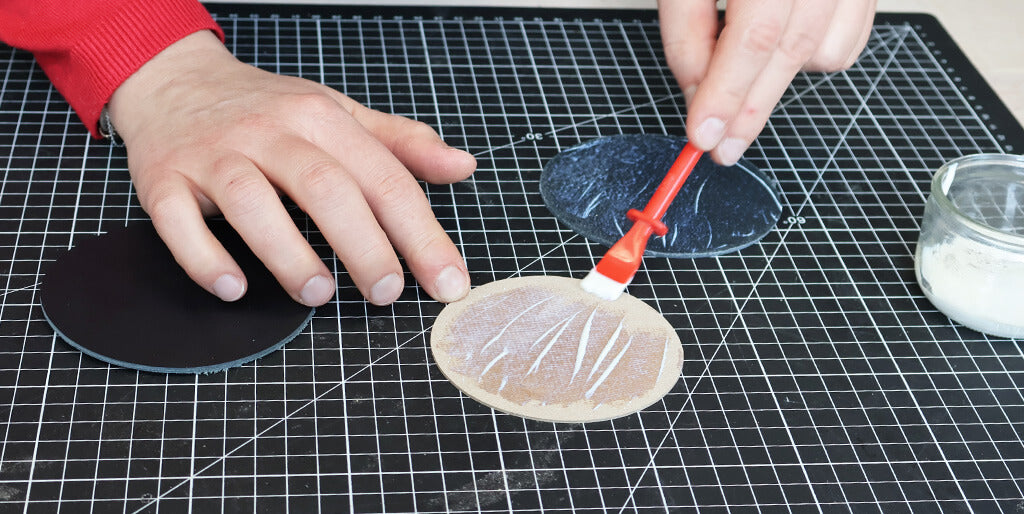
Glue the Salpa to the center of the leather circle.
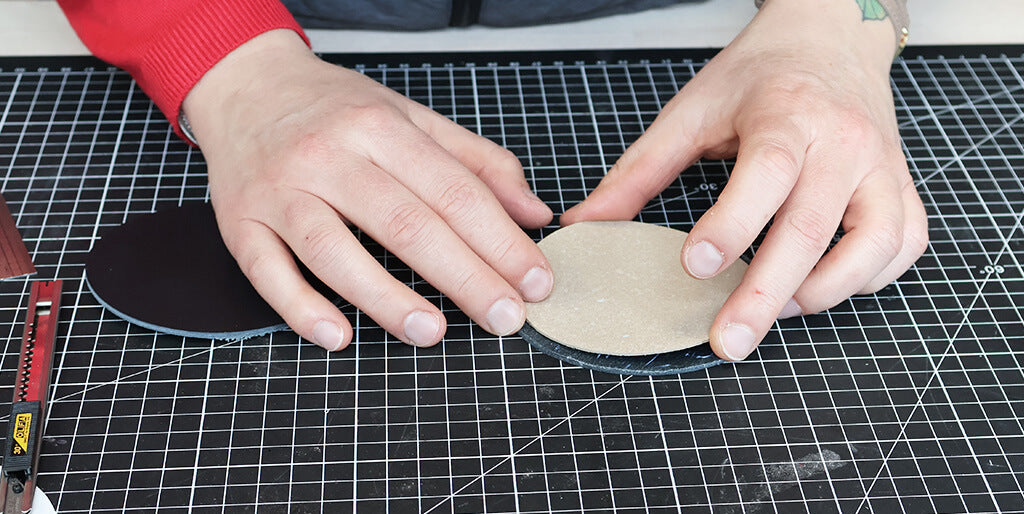
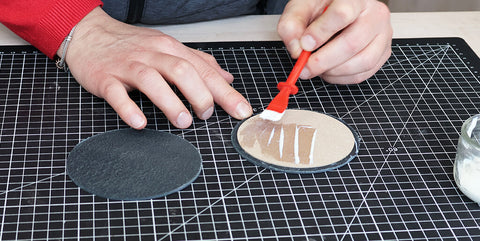
Then, apply glue to the flesh side of the second piece of leather and to the second side of the Salpa. Apply a thin layer of glue and spread it well everywhere (go to the edge but do not go over).
 |
 |
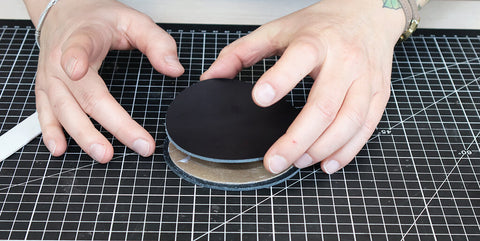
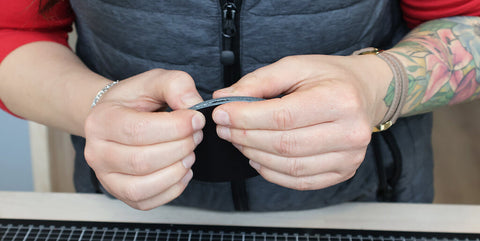
Glue the second leather circle onto the Salpa, edge-to-edge with the other leather circle.
 |
 |
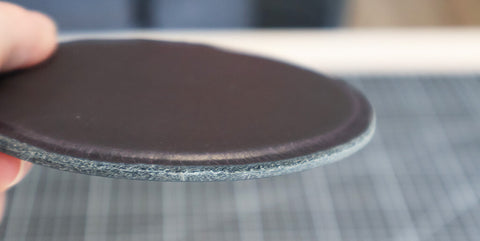
3. Emphasize the domed effect of the Salpa
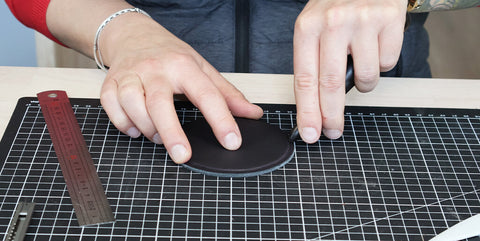
Using a bone folder, flatten the glued area at the edge of the Salpa to emphasize the "domed" effect (on one side only).
 |
 |
4. Sew the coaster
There are 2 techniques for sewing:
- Saddle stitch sewing
- Simplified hole-punch sewing
SADDLE STITCH SEWING
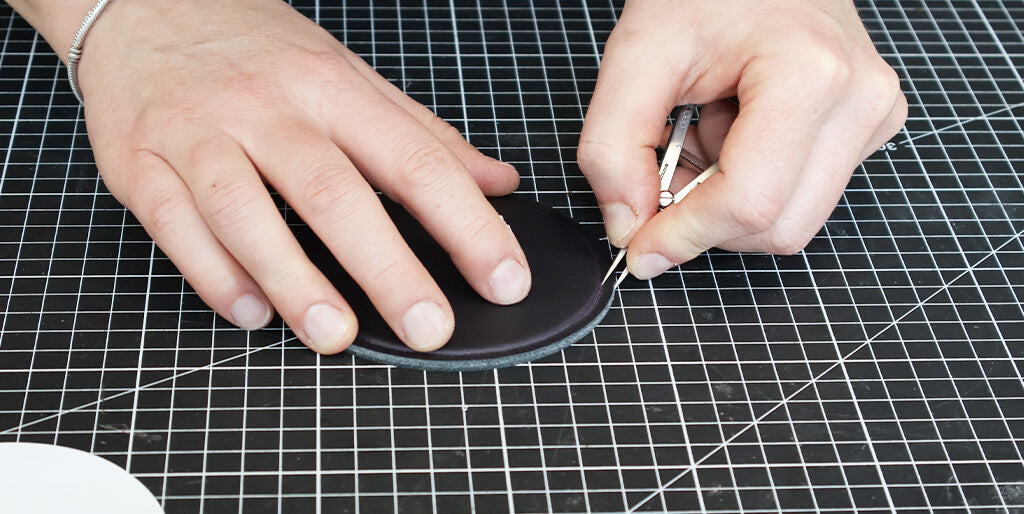
A. Mark the stitching line
Using a wing divider, mark the stitching line as close to the Salpa as possible (about 3 mm from the edge).
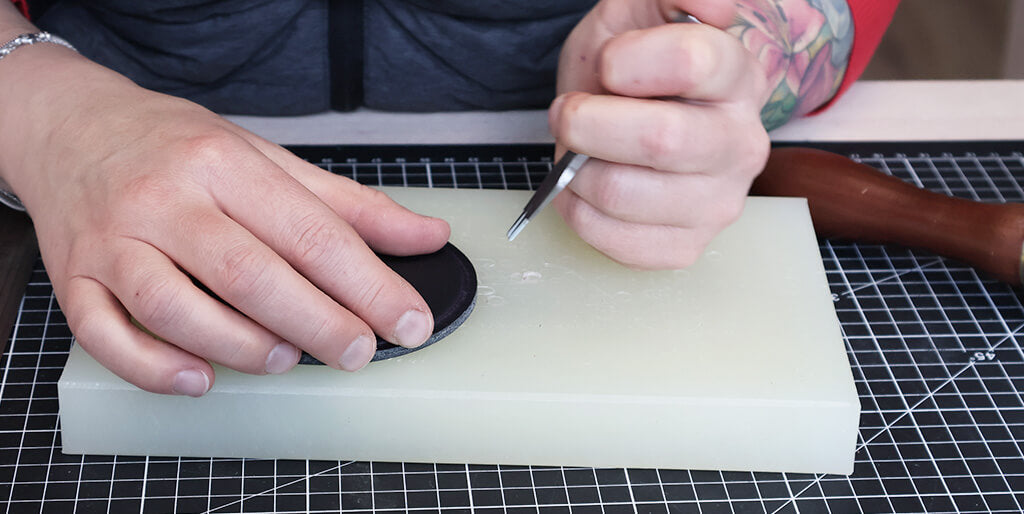
B. Use the stitching chisel
With a 2-prong stitching chisel (3.38 mm spacing): mark the stitch points on the traced line.
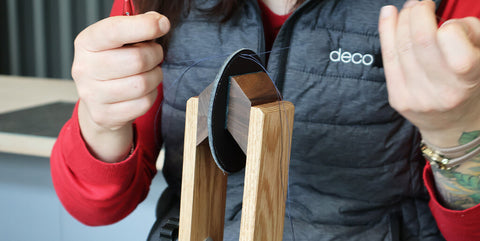
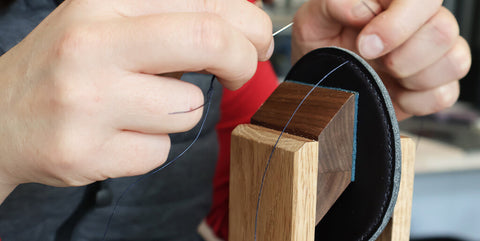
C. Saddle stitch
Sew around the entire leather circle using the saddle stitch.
 |
 |
SIMPLIFIED SEWING
A. Punch the holes
Punch the Ø 1 mm holes if they were not already punched in step 1.
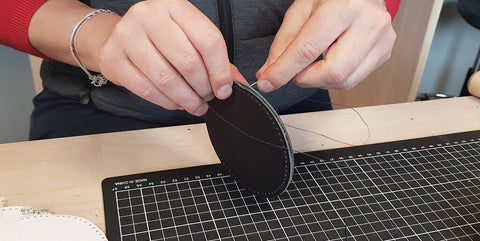
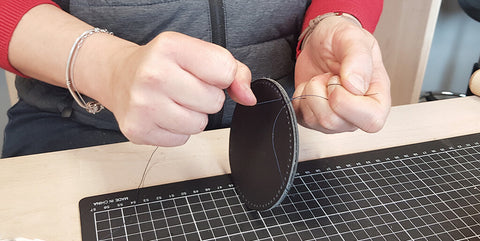
B. Sew with simplified stitching
Sew around the entire leather circle using simplified hole-punch stitching.
 |
 |
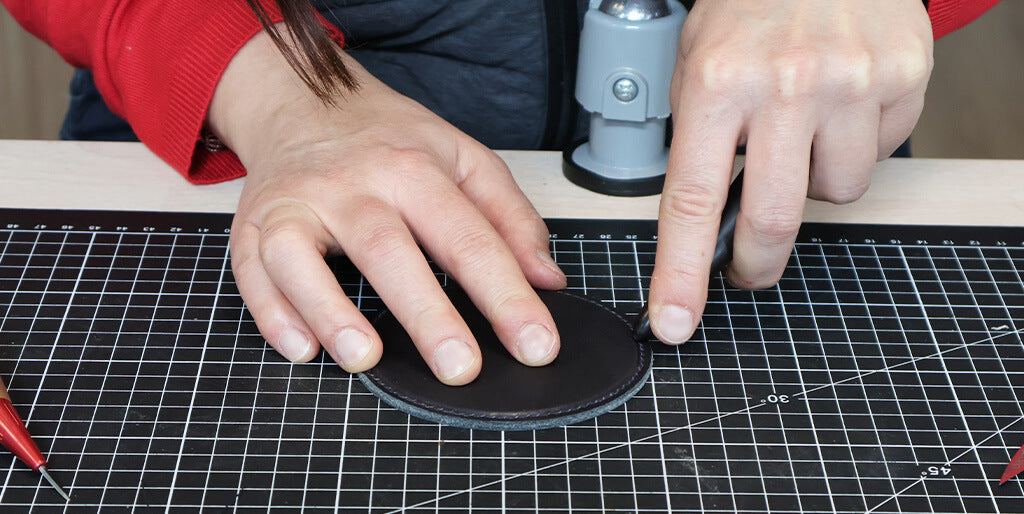
5. Hammer the stitches
Flatten the stitches with a bone folder or a mallet/shoemaker's hammer. If the coaster is domed, it will be easier to use a bone folder.
6. Finish the edges
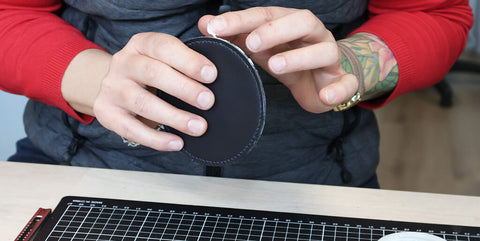
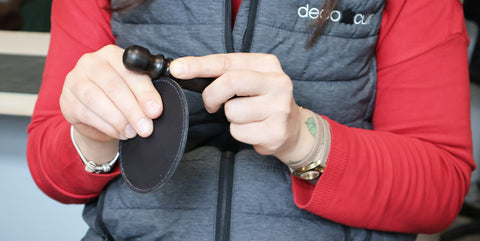
Finish the edges of the coaster. Sand with an abrasive sponge, apply Tokonole, and burnish with a wood slicker.
 |
 |
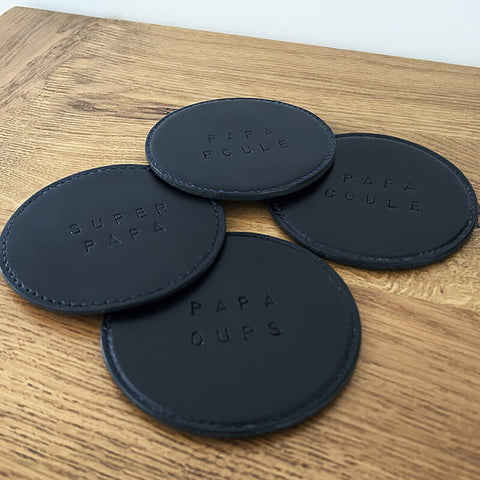
7. Alphabet stamping
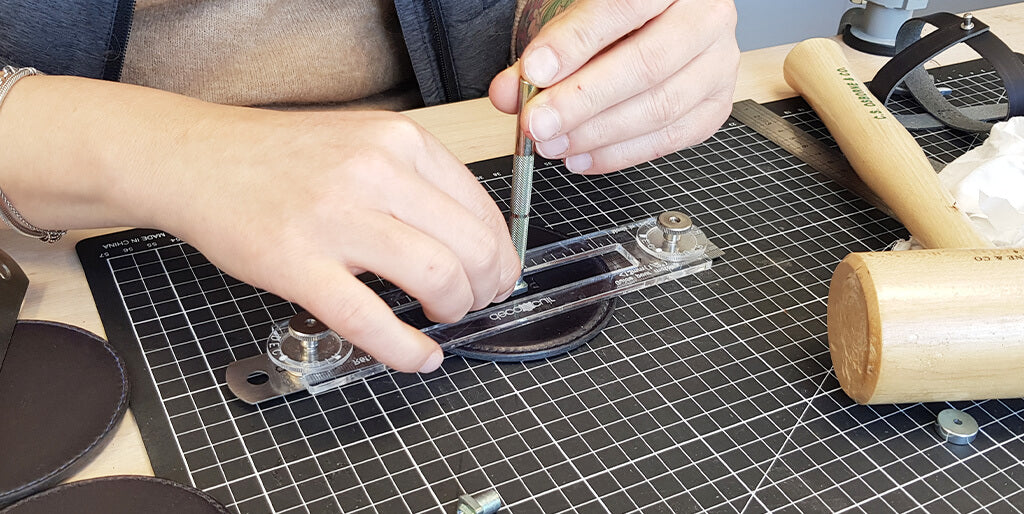
Slightly dampen the leather and stamp it with alphabet letters.


8. Protect
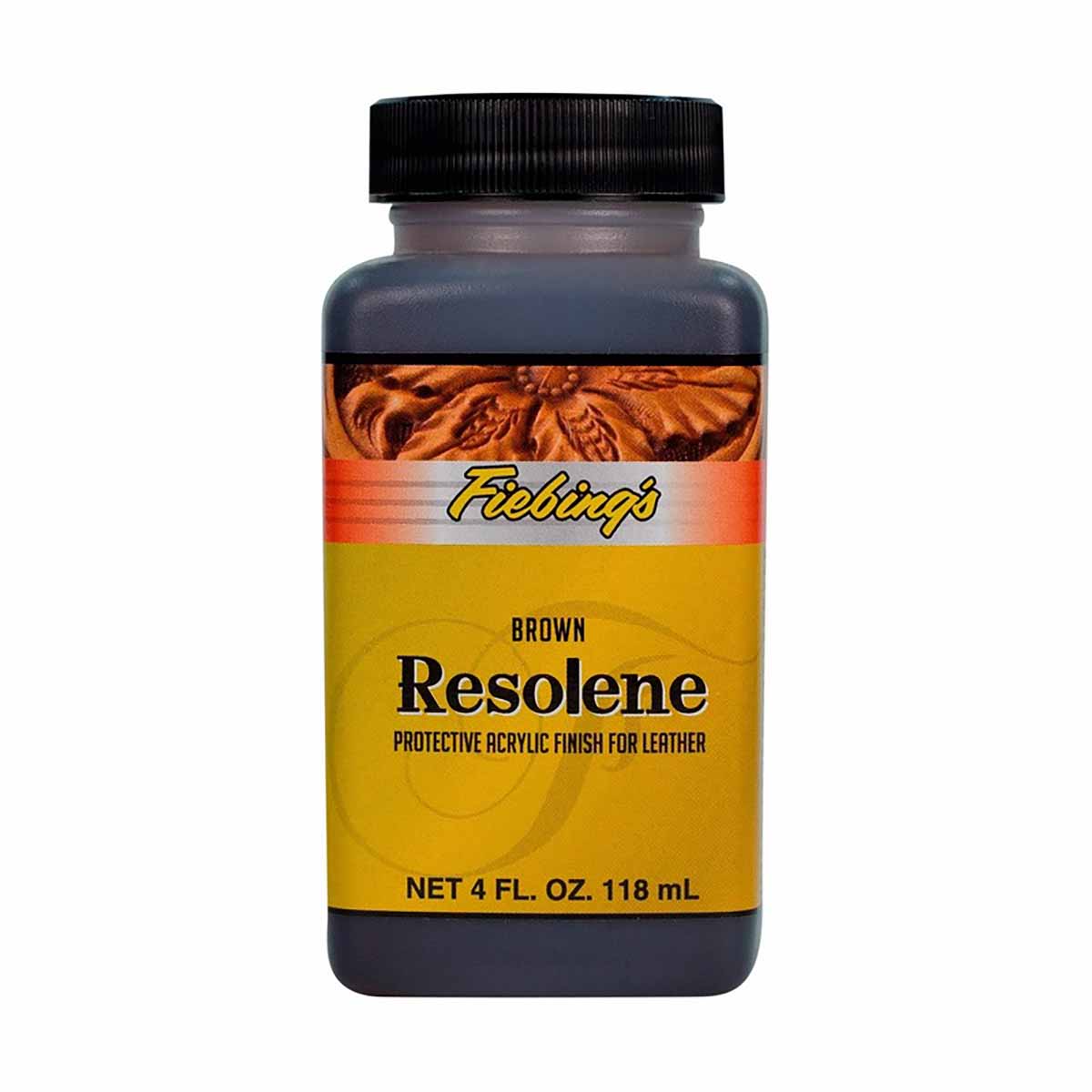
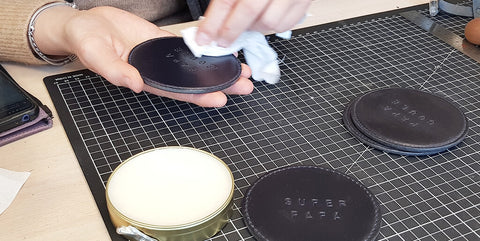
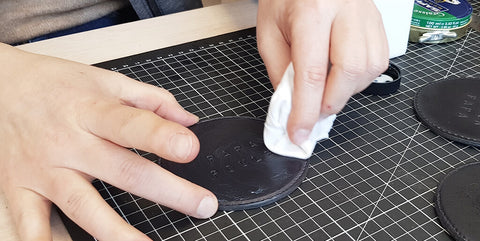
Apply the protection of your choice to protect your coasters from water droplets. We recommend applying leather grease first, then a waterproofing spray or varnish (e.g., Fiebing's Resolene) 24 hours later, once the grease has fully absorbed.
Here, we applied 1 coat of seal oil/grease and 2 coats of Resolene.



 |
 |
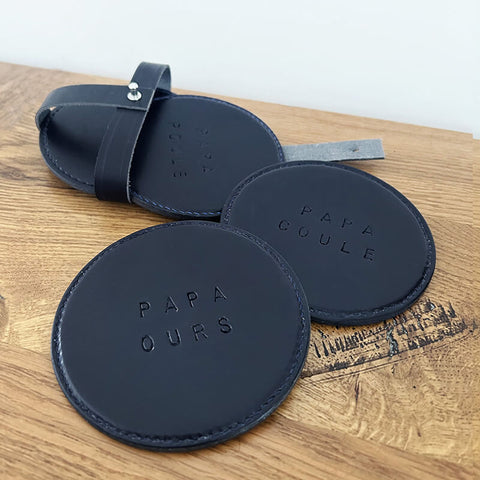
Make a holder for the coasters
To store the coasters together, make a simple holder using leather scraps.
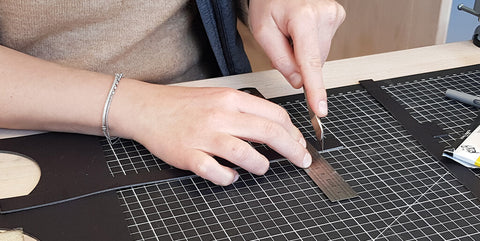
Cut 2 strips, 1.5 cm wide and approximately 30 cm long.
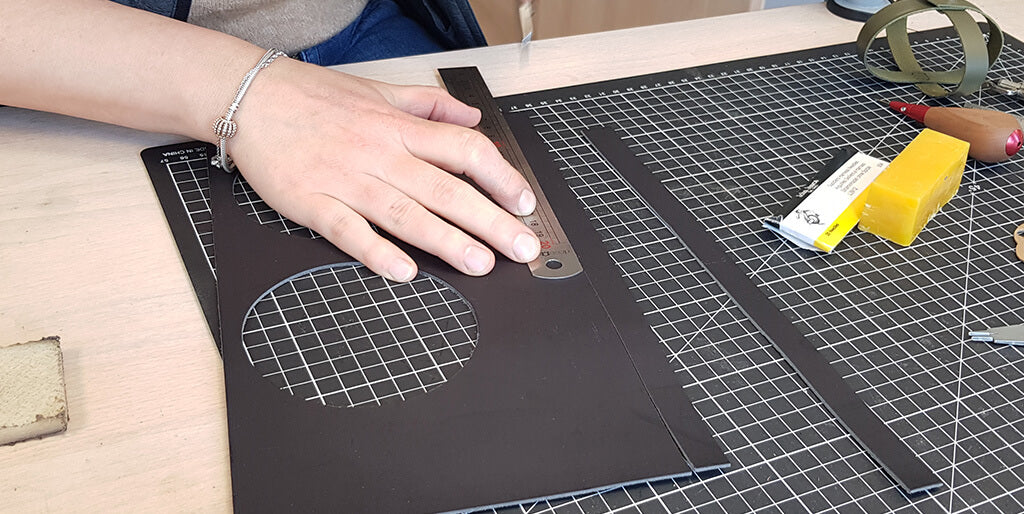
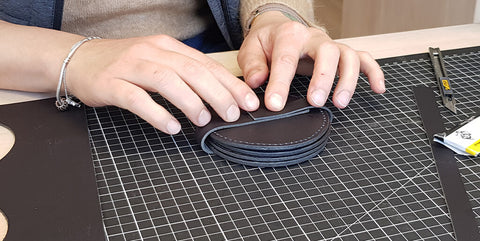
Wrap one of the strips around the coasters and take measurements. The strip should overlap by about 1.5 cm.
Cut off the excess and do the same for the second strip.
For example, for 4 coasters, you need two 27 cm strips.
 |
 |
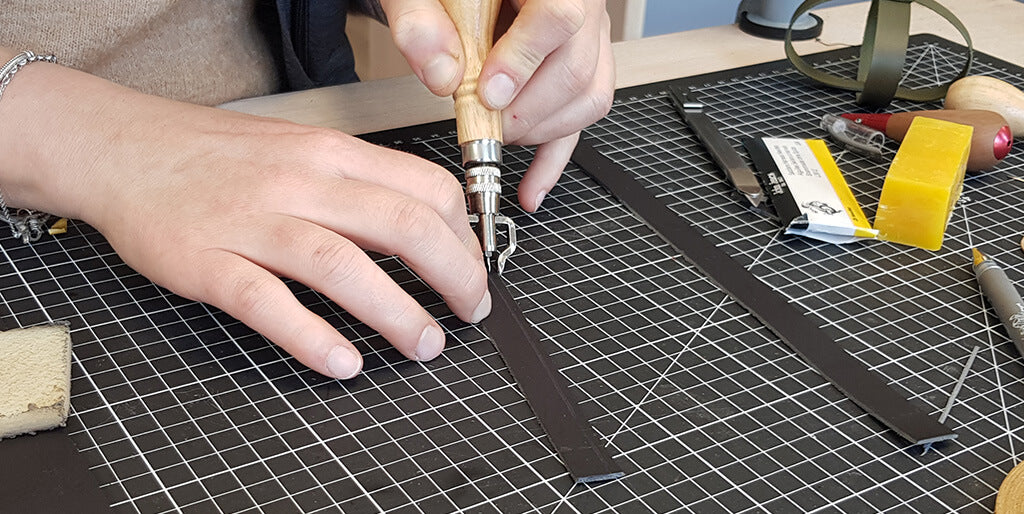
Make a decorative creased line on both strips using a creaser or groover.
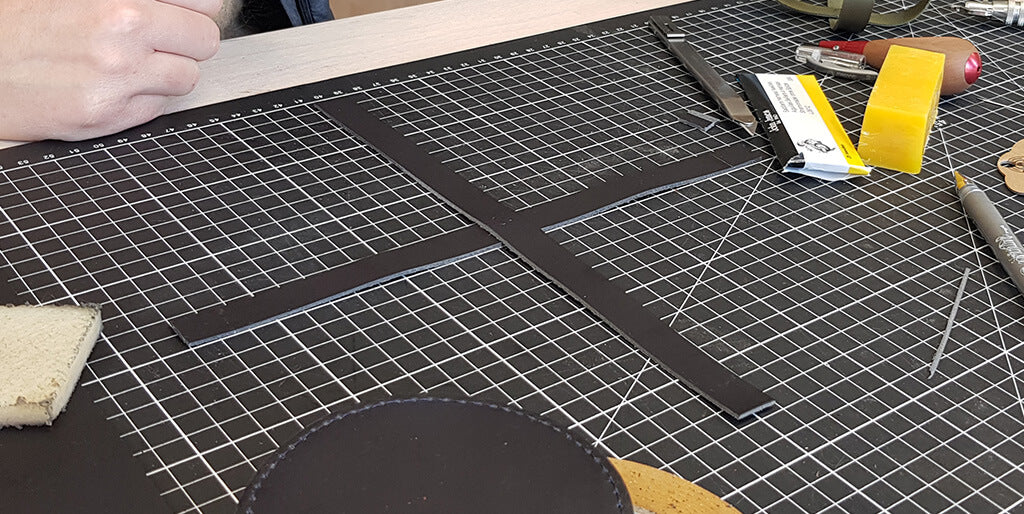
Using double-sided tape, glue the two strips together to form a cross.
 |
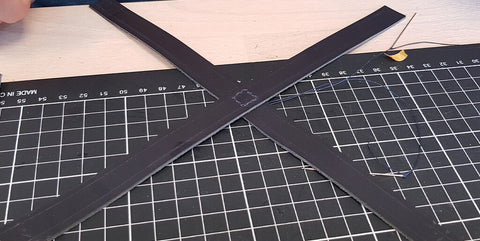 |
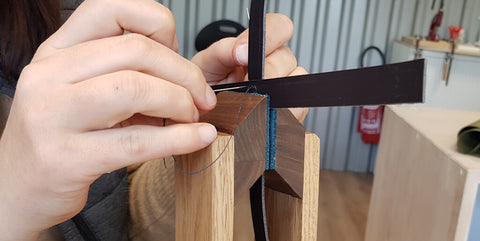
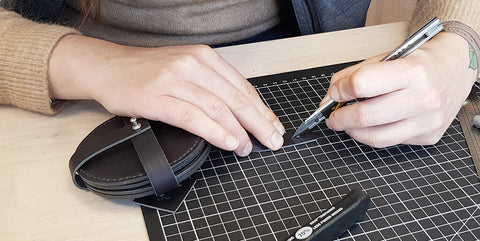
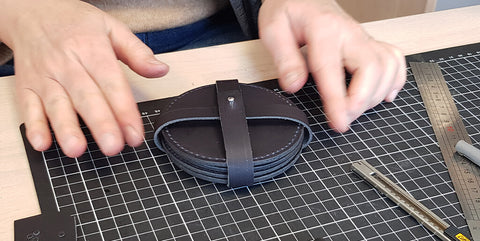
Place the coasters in the center of the cross and bring 3 ends of the strips together. Mark the center of these three ends.
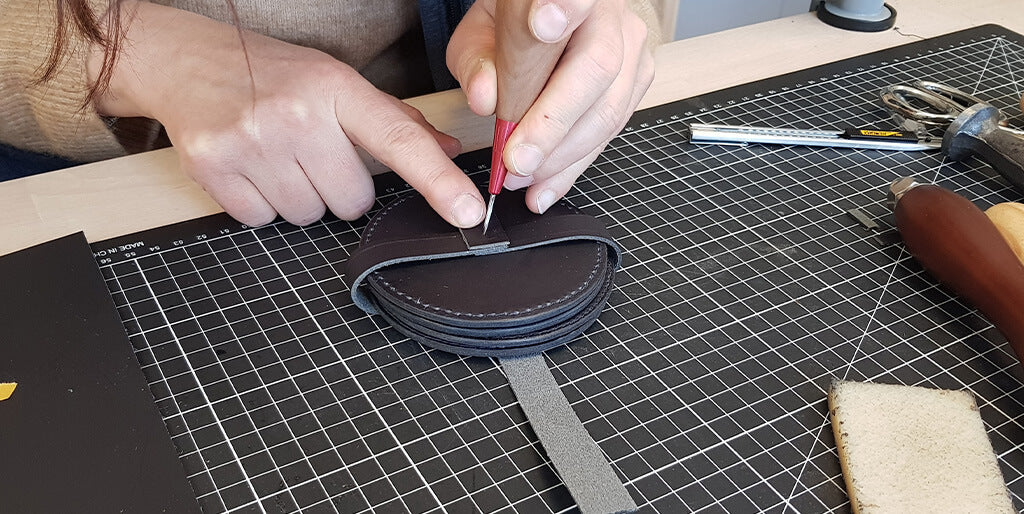
Punch a Ø 3 mm hole through the 3 ends at the marked position.
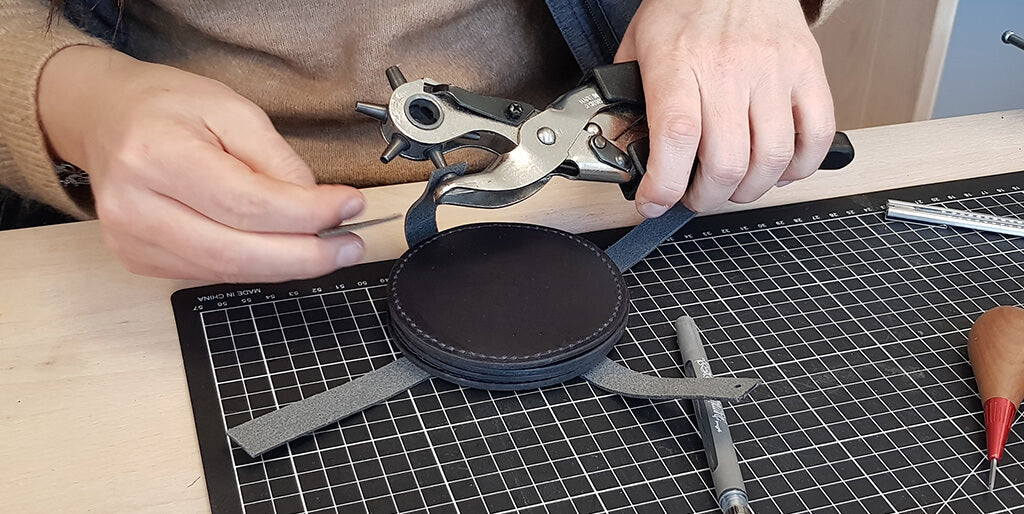
Then, screw in a Chicago screw to hold the 3 layers together.
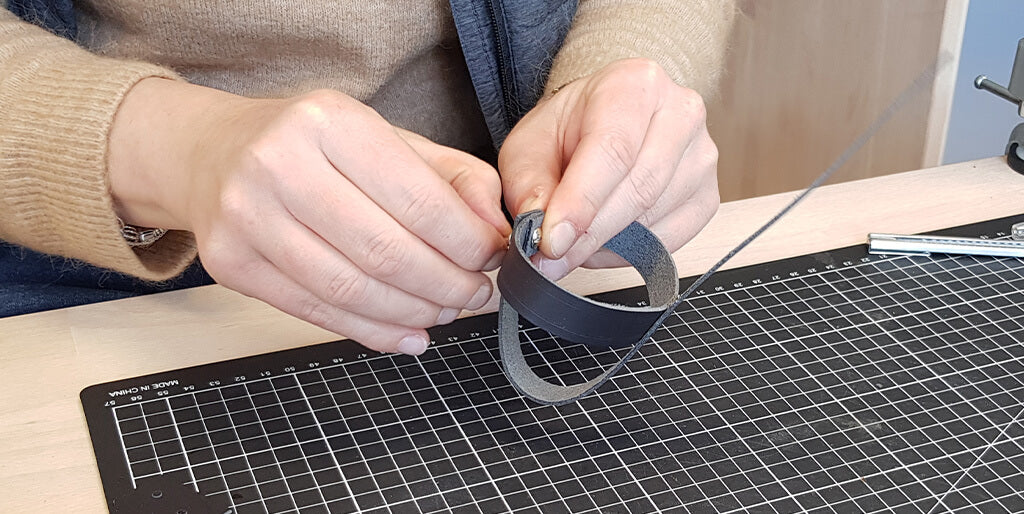
On the remaining end, make a hole with a Ø 3 mm round punch and a 3 mm slit with a cutter to allow the head of the Chicago screw to pass through.
 |
 |
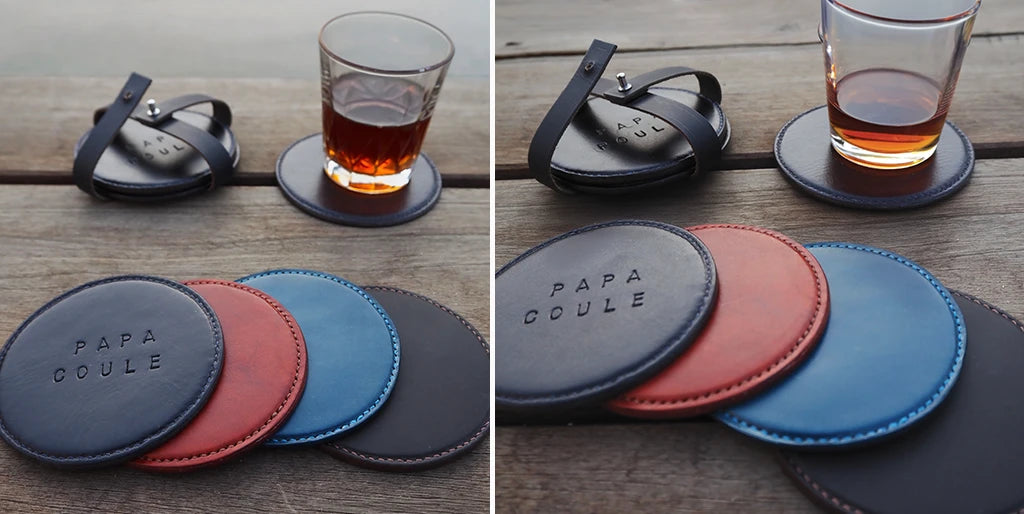
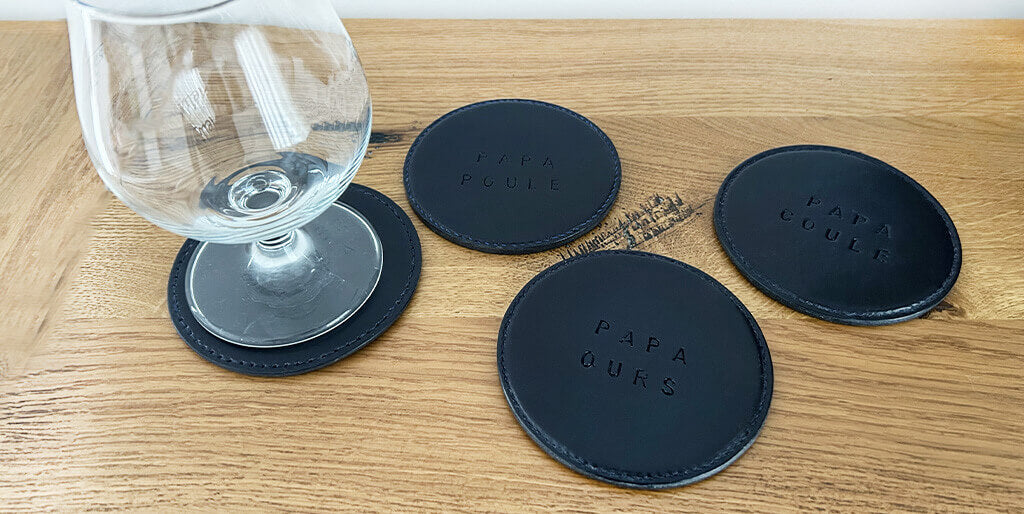
You're done!
 |
 |


1 comment
Valérie ARNO
Bonjour, j’aime beaucoup l’idée des sous-verres et du porte-sous-verres. Je débute dans les créations d’accessoires en cuir et je recherche justement des accessoires simples à faire. Je ne cous qu’à la main, et j’avoue que mon point sellier s’améliore assez bien après 2 ou 3 petits travaux. Je tenterai les sous-verres :-) Ça me plait beaucoup. Merci beaucoup pour les tutos et les patrons gratuits.