













REQUIRED MATERIALS
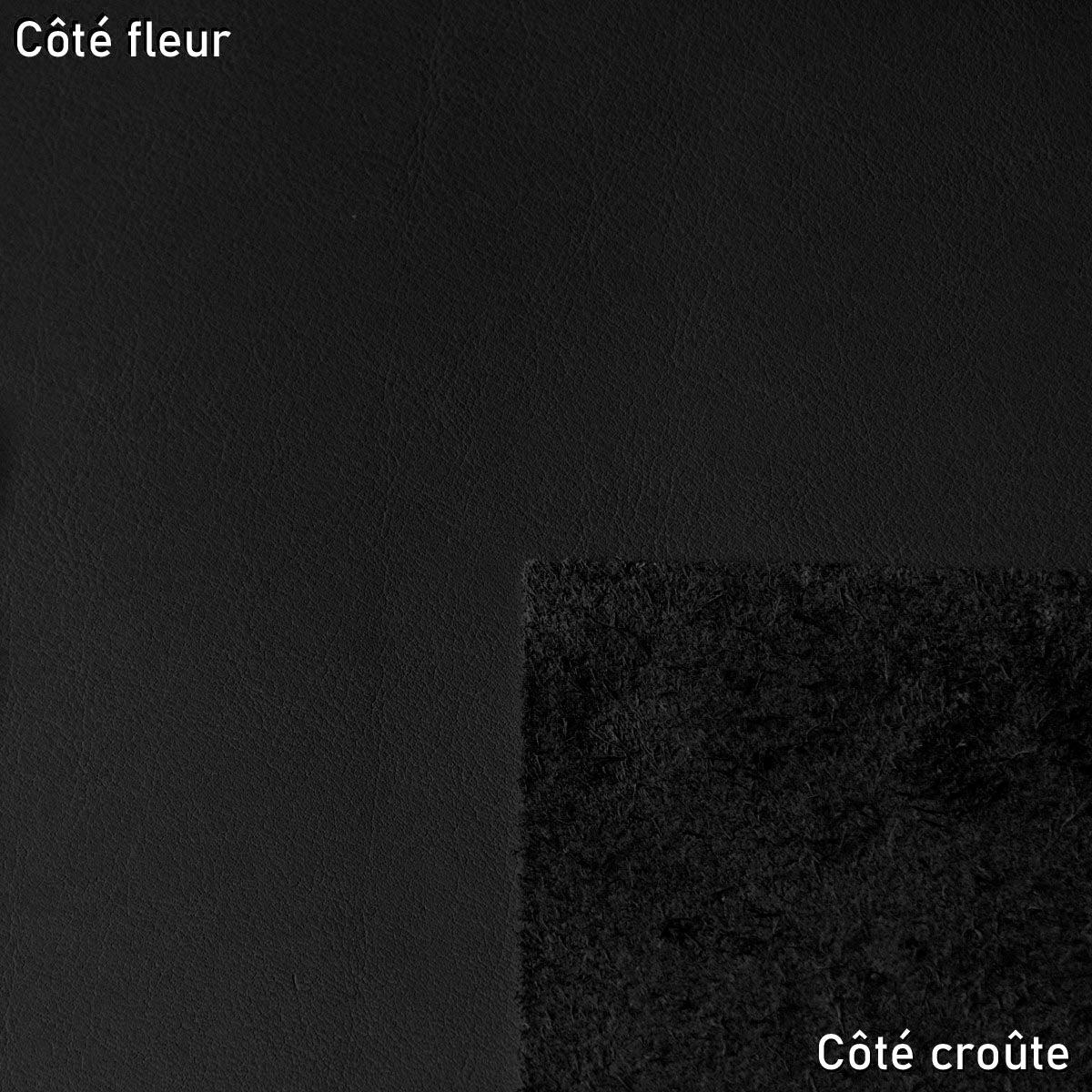
- 1 piece of leather 20 x 30 cm - Soft - Between 1 and 1.3 mm thick
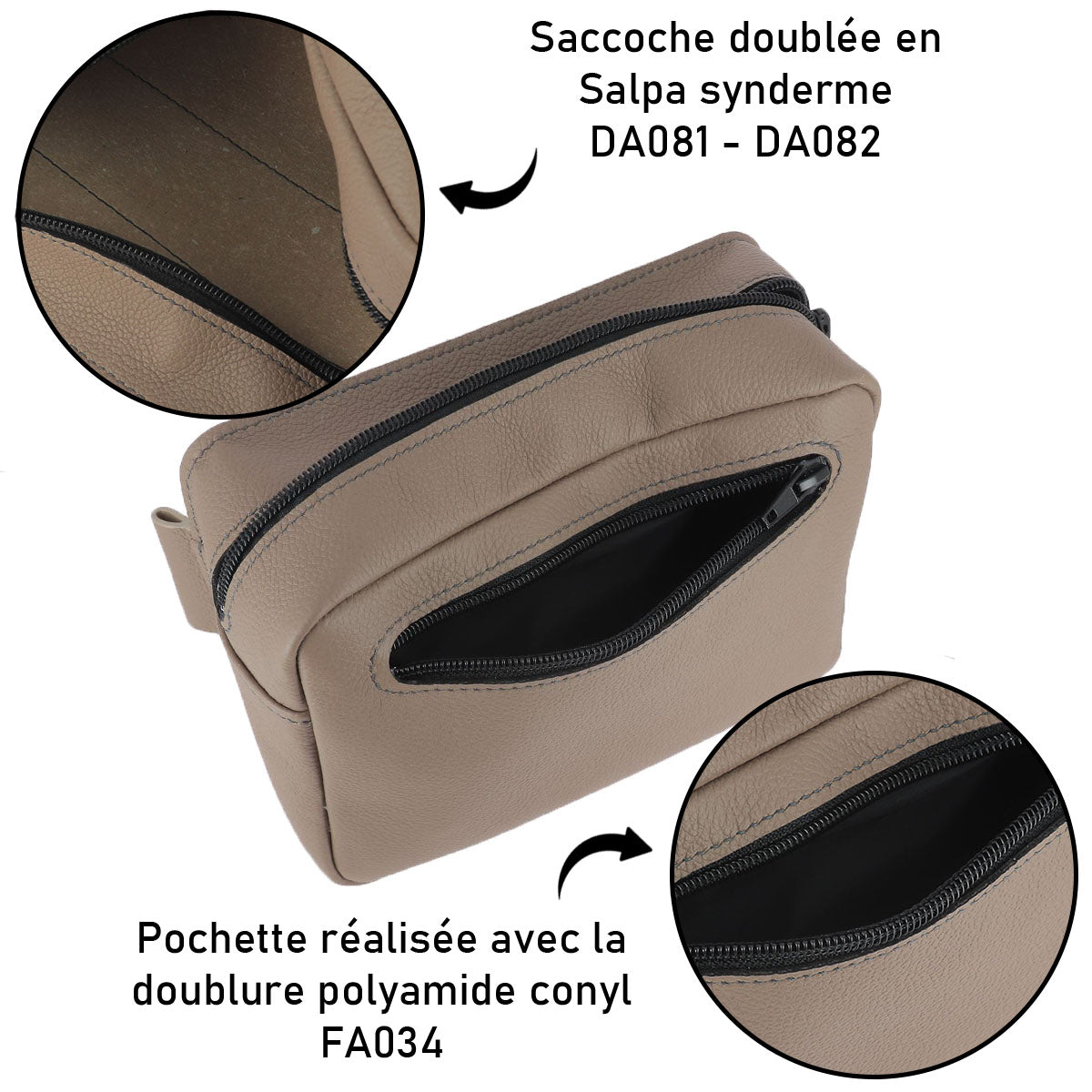
We recommend the SUAVE leather range or the consistent SWEET 2 range. - 1 piece of Salpa bonded leather reinforcement - 20 x 30 - 0.6 mm thick
- 1 VELVET soft suede pigskin - Surface area of approx. 0.25 m²
-
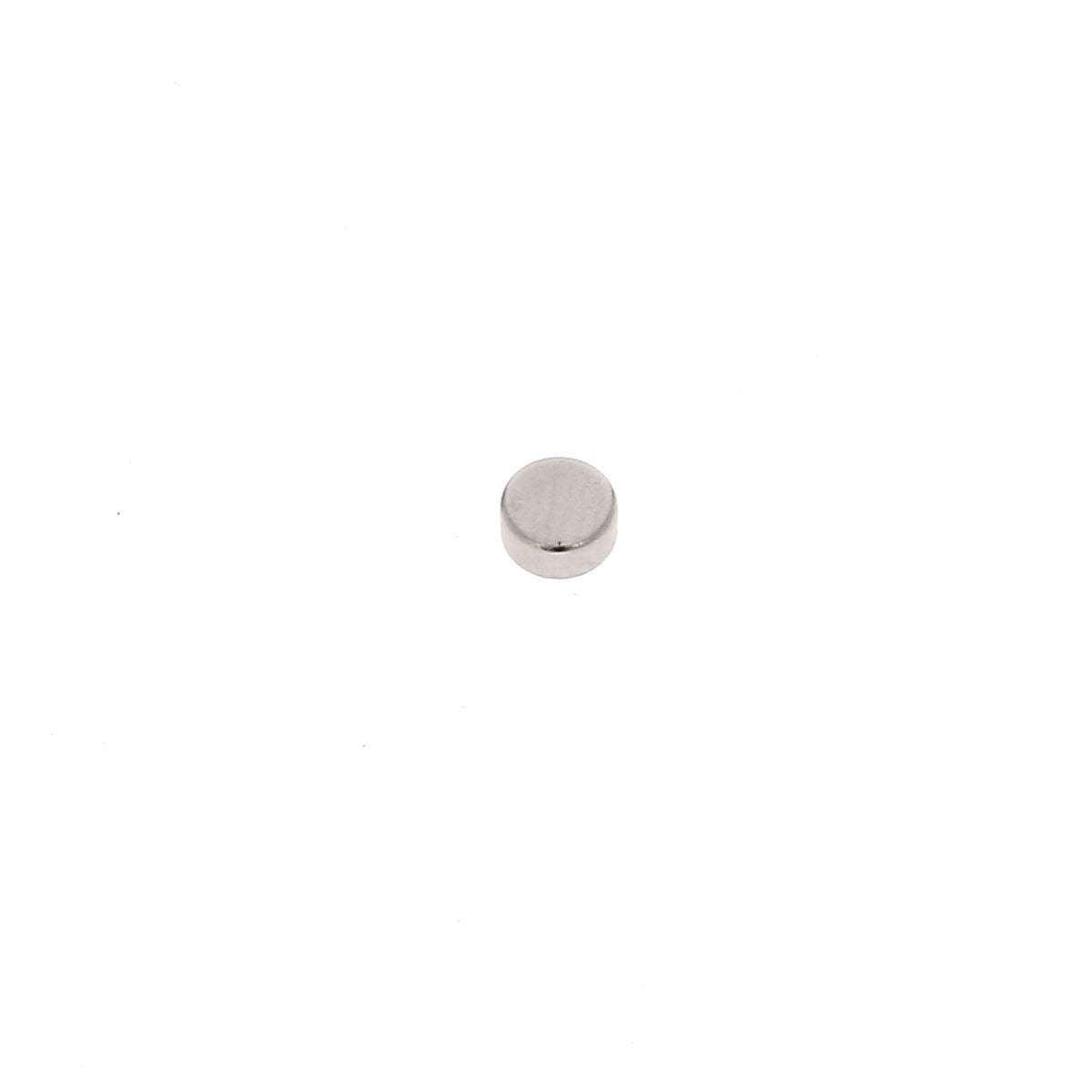
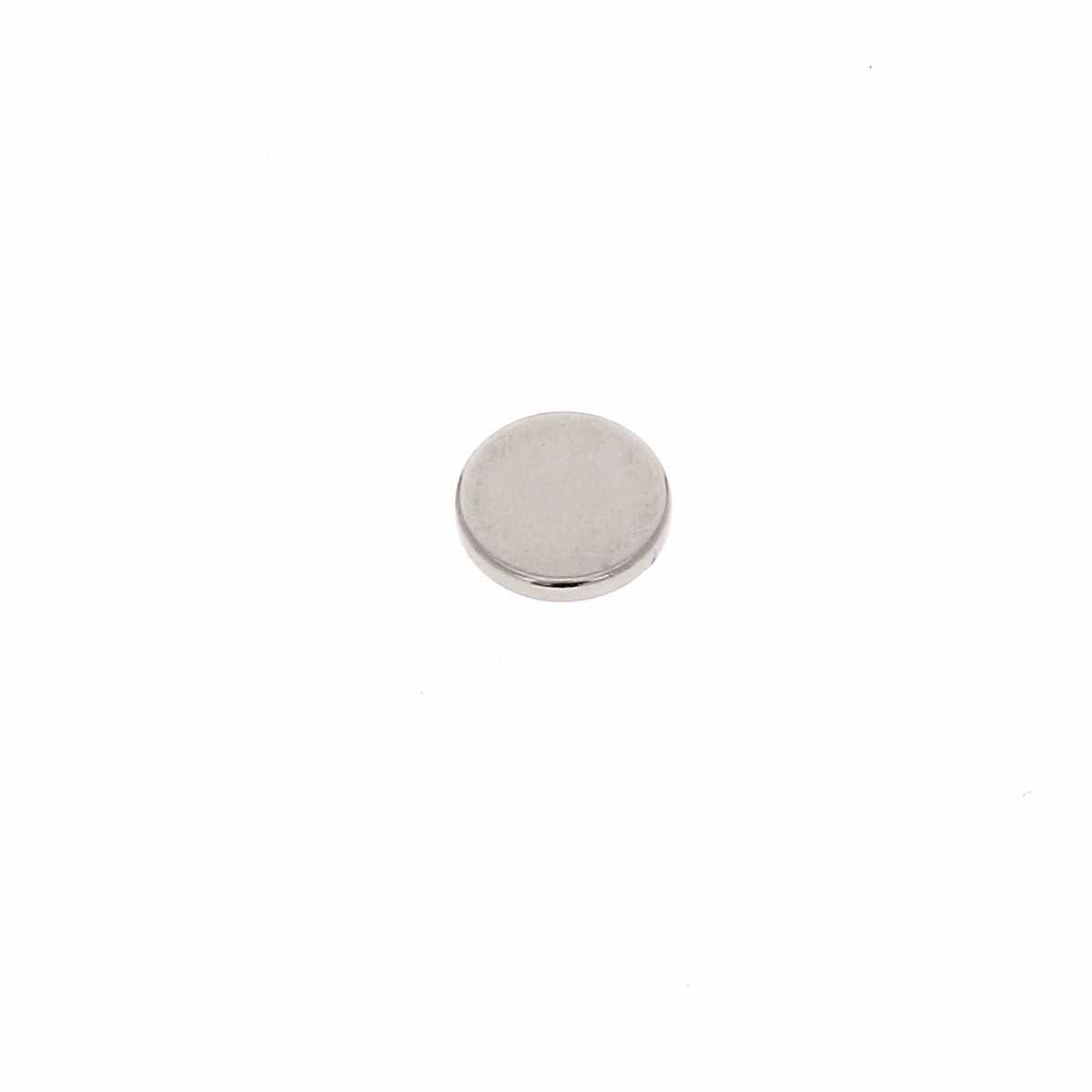
4 round neodymium magnets - 20 x 2 mm
- Polyester thread (machine sewing No. 40) or linen thread (hand sewing M40/M50)
- Leather glue
- A utility knife

COMPLETE VIDEO TUTORIAL
1. Cut out the pattern pieces
Cut out the pattern, then trace pieces P1 and P2 onto the piece of leather.

Using a utility knife, cut out the different leather pieces.

2. GLUE THE SALPA
Apply contact cement to the back of piece P1 and to one side of the Salpa reinforcement.
 |
 |
Bond the leather and the Salpa together. Flatten the glued area well with a pressing roller.
 Trim the Salpa to align perfectly with the edges of the leather.
3. GLUE THE MAGNETS
Glue the four magnets (using neoprene glue or super glue) in the locations specified on the pattern. Test their magnetism to ensure proper final positioning (a red mark is usually visible on one of the faces of our magnets; glue the magnets with this red mark visible for all 4 magnets).
 |
 |
4. GLUE THE LINING
Apply contact cement to the back of pieces P1 and P2 and to the back of the pigskin lining. First, cut a piece large enough from the pigskin hide.

Bond pieces P1 and P2 onto the lining. Flatten well and shape around the magnets (using a bone folder).

Trim the lining to even out the edges.

5. STITCH PIECE P2
Punch a small hole at each end of piece P2 using a round awl. On piece P1, mark the four holes for the inner reinforcement P2 (see pattern). For each pair of holes, pass a needle or a round awl from one hole to the other, going through the lining only (do not pierce the Salpa and leather reinforcement). This method creates a discreet path to secure piece P2.

Using thread and a needle, stitch into the first hole of piece P1, come out through the second, then pass through one of the holes in piece P2. Pull the thread tight and repeat the operation several times to ensure a solid hold. Finish with a knot.
 |
 |
Proceed in the same manner for the other end of piece P2.

6. STITCHING THE CASE
Option: add decorative stitching along the long edge of the case as well as on the flap. For machine sewing, we recommend using a zipper foot to make sewing near the magnets easier.

Apply a line of glue only to the edges of the case (on the pigskin), along the stitching line. Fold and glue the bottom of the case. Hammer the glued edge with a riveter's hammer.
 |
 |
Form the case into its final shape (see video).

The case can also be stitched by hand. We recommend a simplified stitch for beginners or a saddle stitch for more experienced makers. Be careful when gluing the edges: the pattern has 14 stitch holes on the front of the case and 15 on the back in order to do an overlapping stitch (it is therefore normal to have an extra stitch visible when gluing the edges).

 |
 |
7. FINISH THE EDGES
Option: for a professional finish, treat the edges with an edge finish.

OPTION: personalize your glasses case
Personalize the case with a date, a word, or a name using our brass characters.

You are finished!
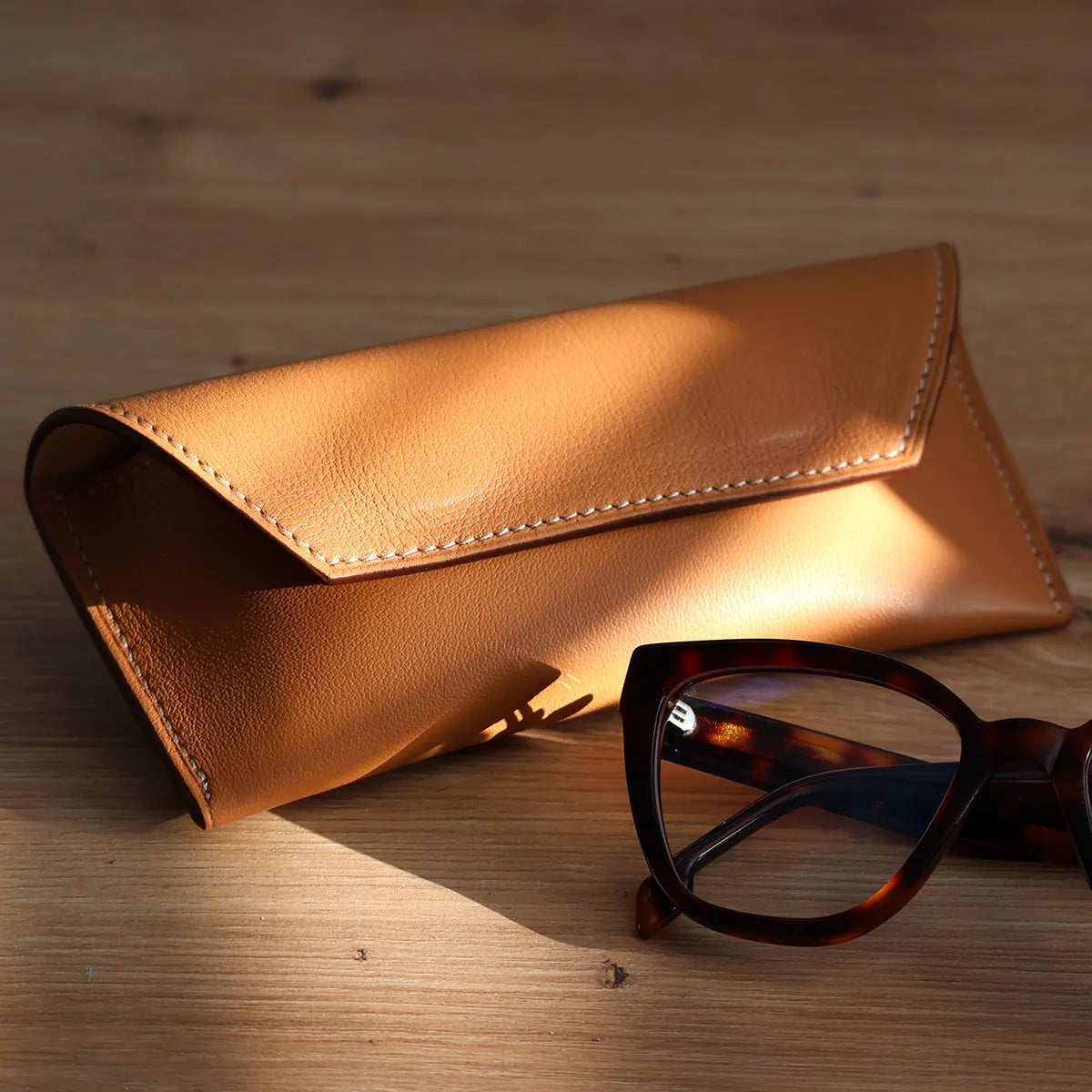
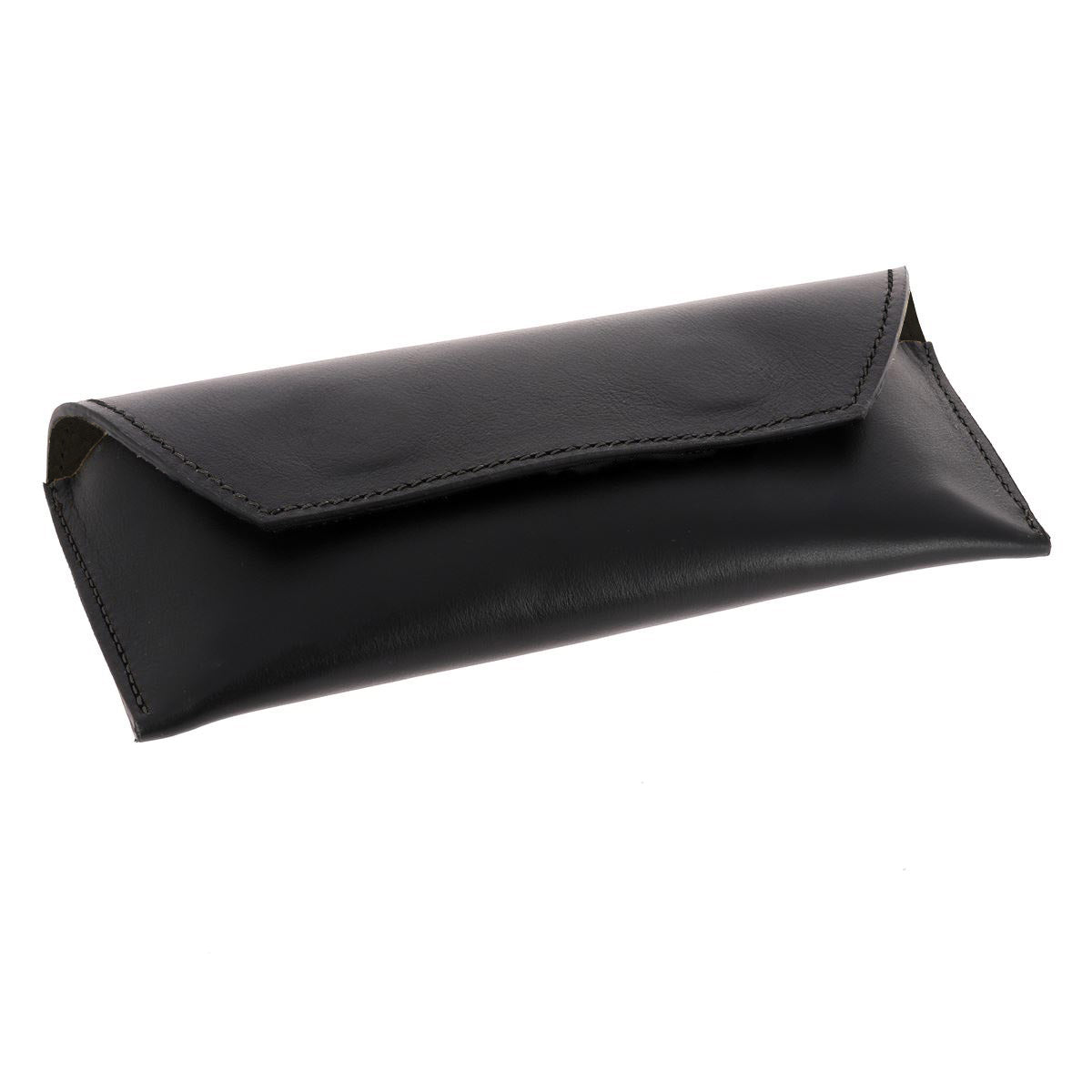
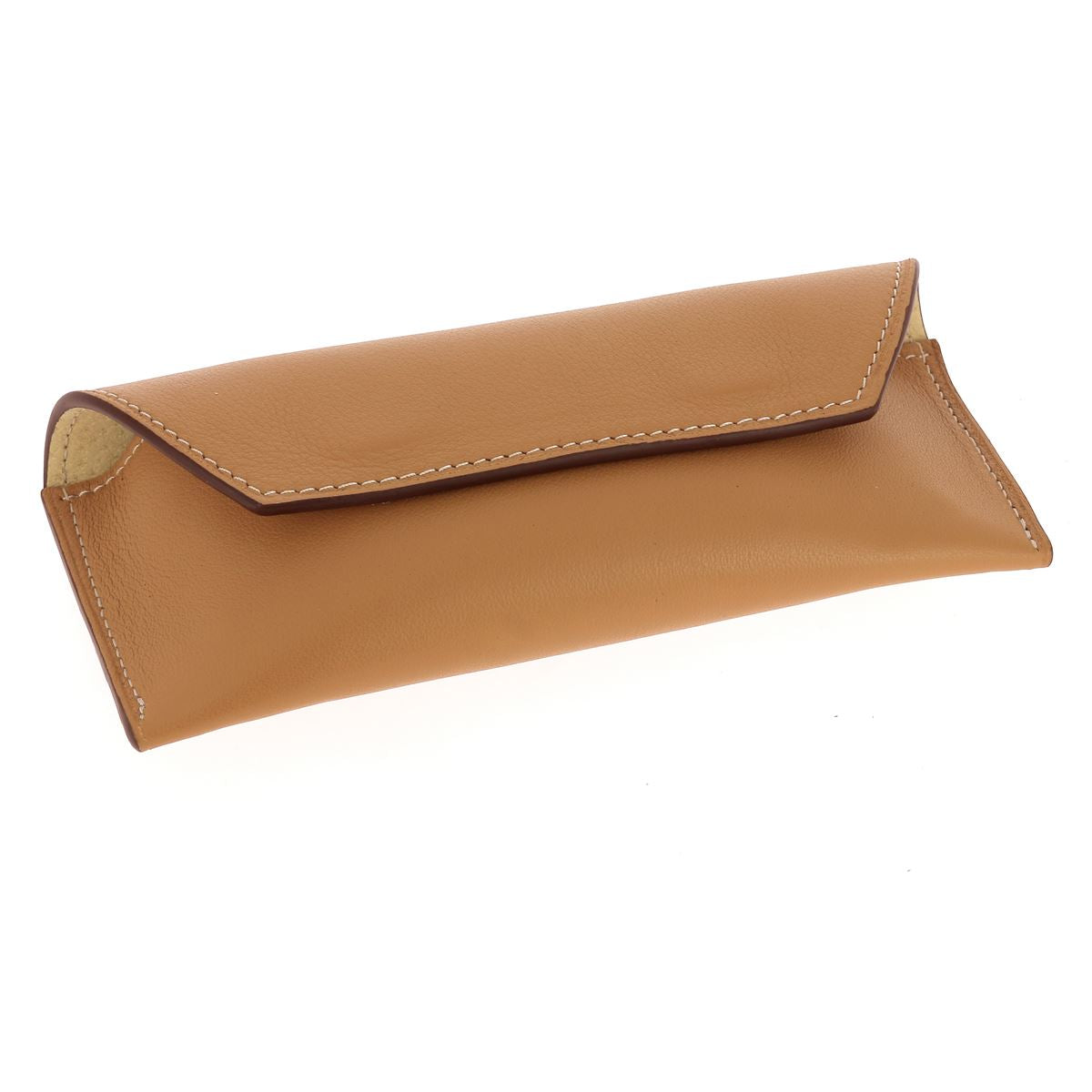
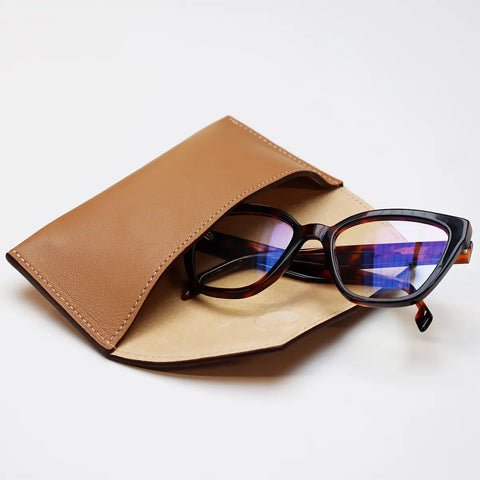
And there you go, your glasses now have their own little handmade cozy nest! Practical, stylish, and above all, unique. Now you just need to pick the color for your next one!
 |
 |
 |
 |


