







THE NECESSARY EQUIPMENT
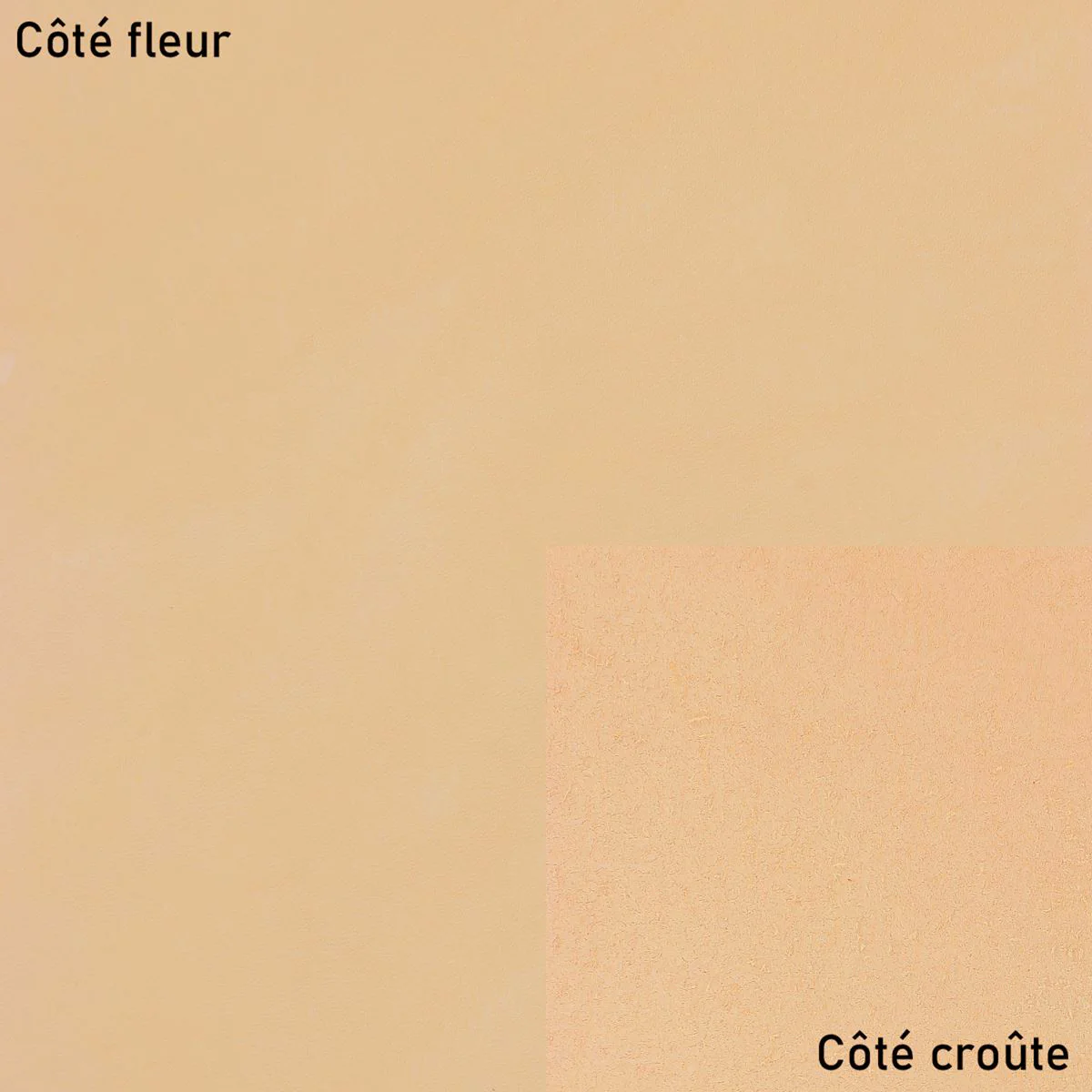
- 1 piece of vegetable-tanned NATURAL neck leather - PYKARA - 30 x 40 cm - 1.8 mm thick
For this tutorial we have selected a leather from the Pykara range by the Radermecker tannery (available for sale on our website) . - 1 oil-based dye - Fiebing's Pro Dye - ROYAL BLUE
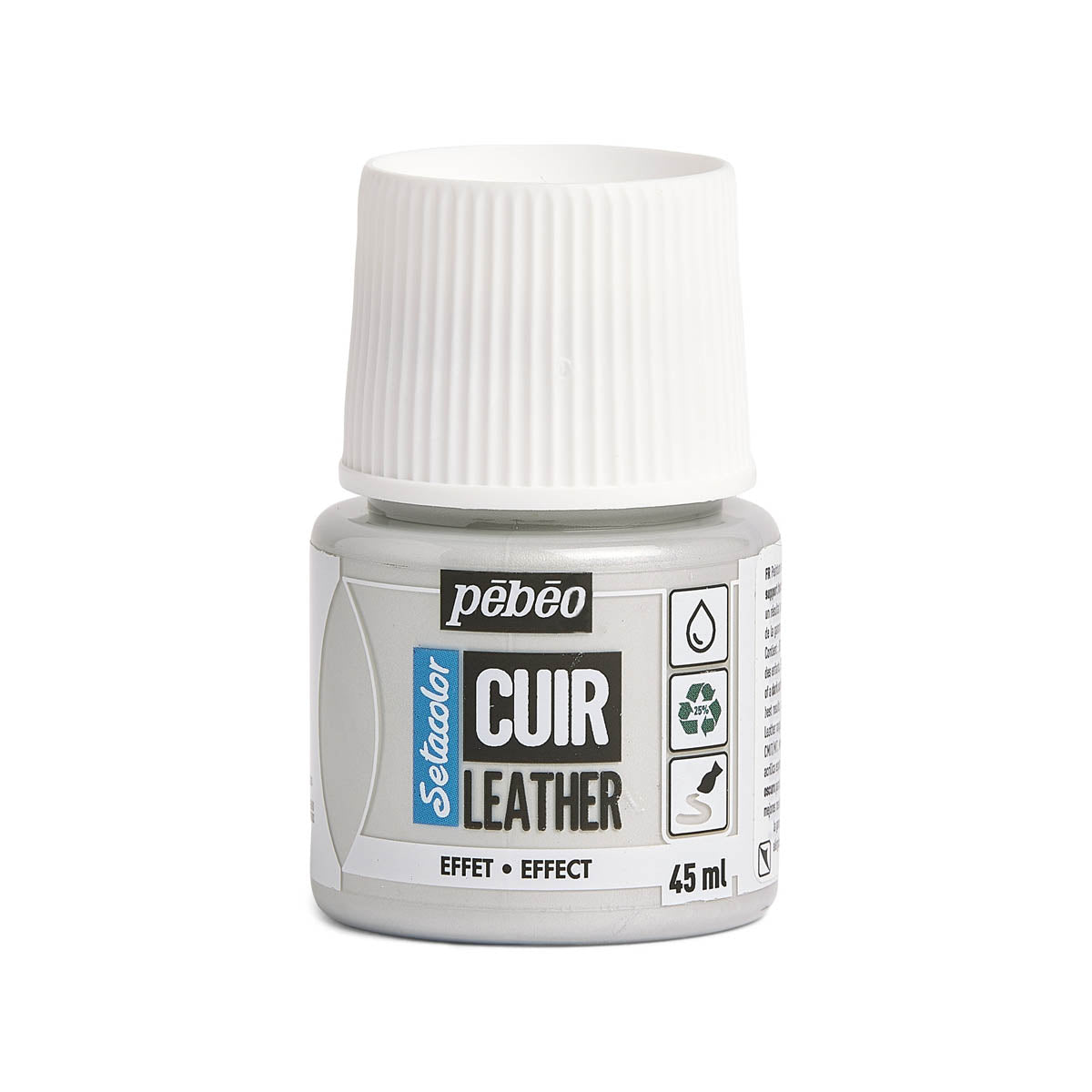
- 1 Setacolor acrylic leather paint - SILVER METAL
- 1 Fiebing's Antique Finish leather patina 118ml - DARK BROWN
Tools needed:
- Cutter
- round awl
- Dry point compass
- Circle tracers
- Swivel knife (opening knife)
- Smooth bevelers – 3 sizes
- Square lamp
- Round brush
- Dye sponge
For saddle stitching:
- Diamond awl (with pliers)
- Striking claw with 3.00 or 3.38 mm center distance
- Round-tipped needles
- Saddler's clamp or sewing valet
FULL VIDEO TUTORIAL
Video Part 1 - Leather embossing:
Video Part 2 - Dyeing and Sewing:
1. Cut the leather
Trace the pattern pieces onto the vegetable-tanned leather.
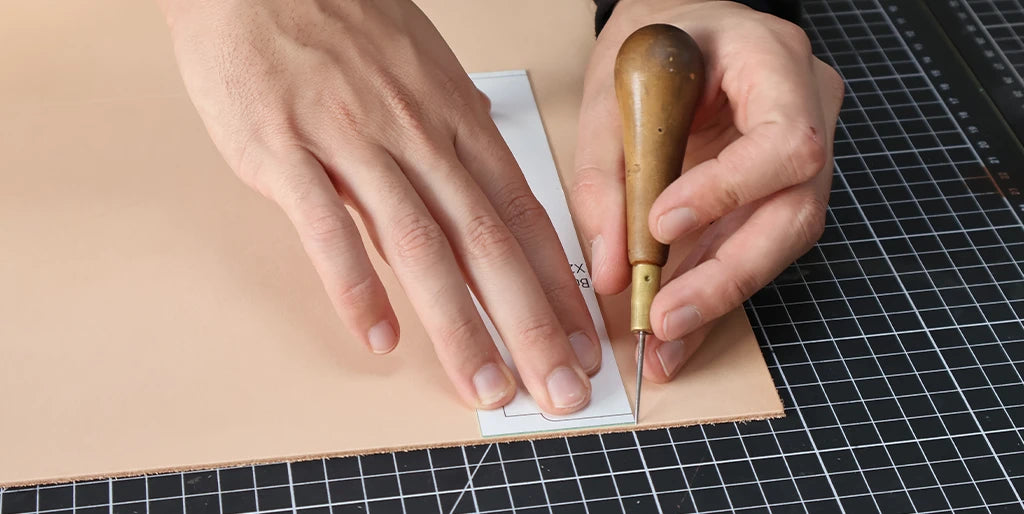
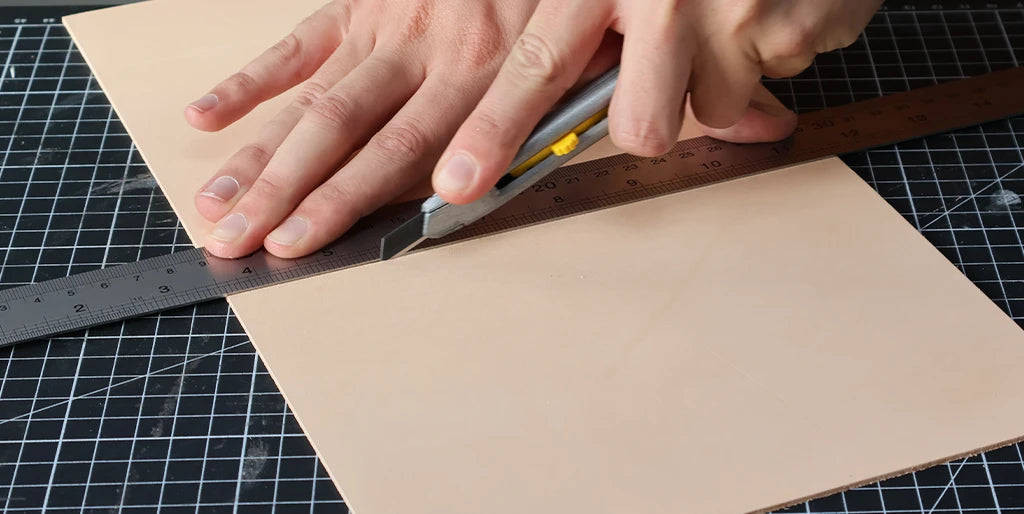
Cut out the pieces using a cutter and a ruler.
2. Draw the frame
Using a round awl, mark the pattern references (in pink) for embossing the frames of the different pieces.
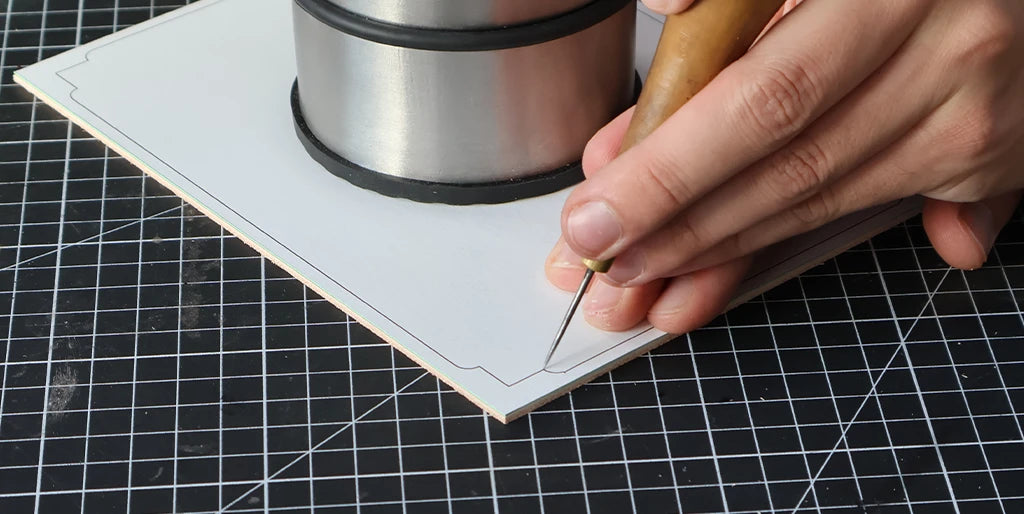
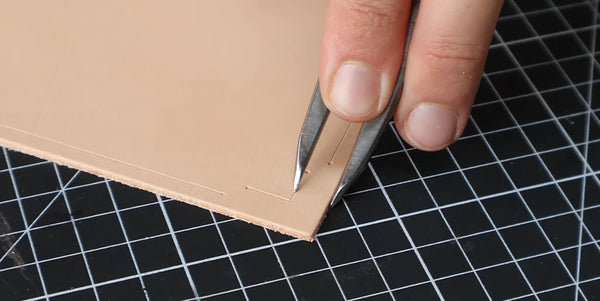
Trace the outline of the frames with a dry-point compass, following the markings.
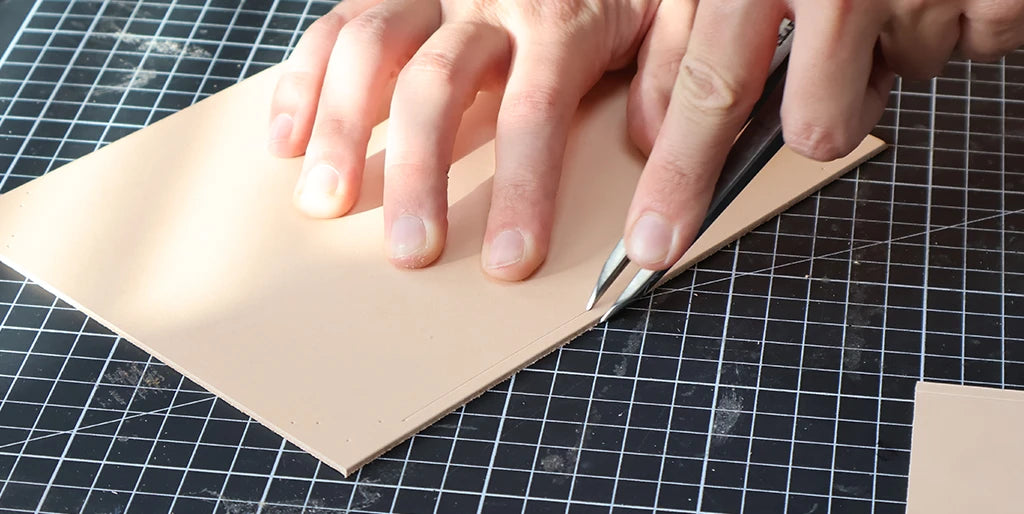
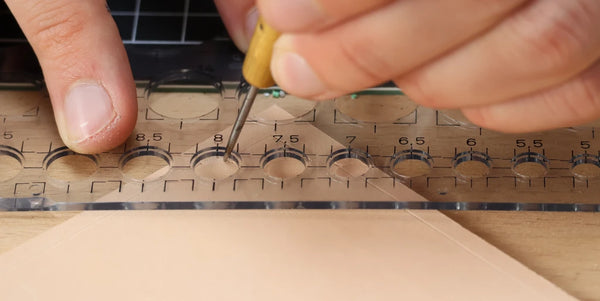
Draw the angles and then connect them with an 8mm circle tracer to form rounded corners.
 |
 |
3. Transfer the pattern
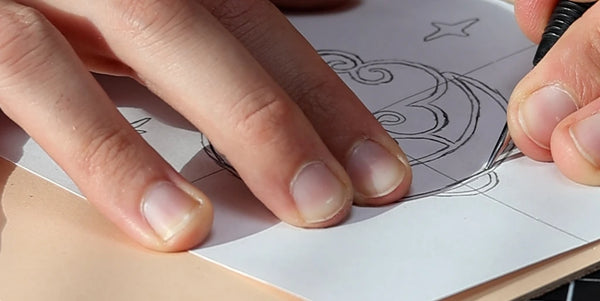
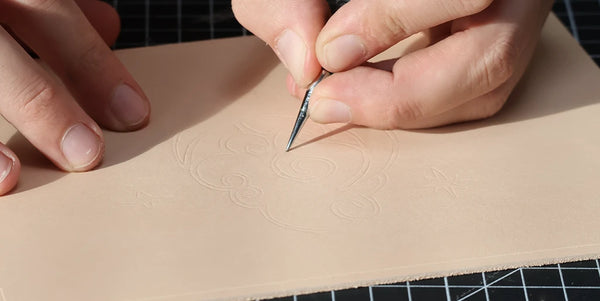
Print the design of your choice or the one provided by Deco Cuir. Tape it to the leather using masking tape. Using a modeling tool, trace over the lines of the design to transfer it onto the leather.
 |
 |
4. Push back the pattern
Trace all the lines of the drawing and the frames with a swivel knife.
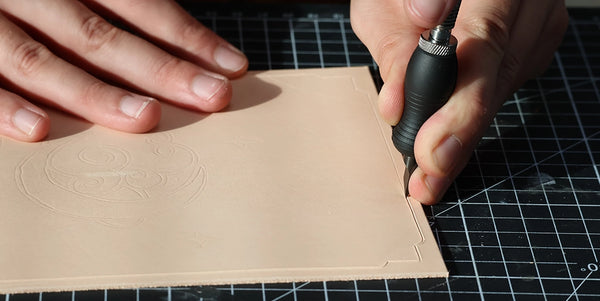 |
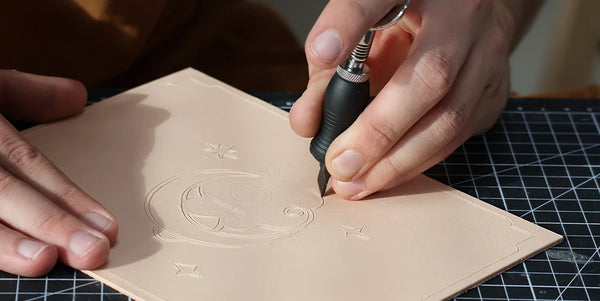 |
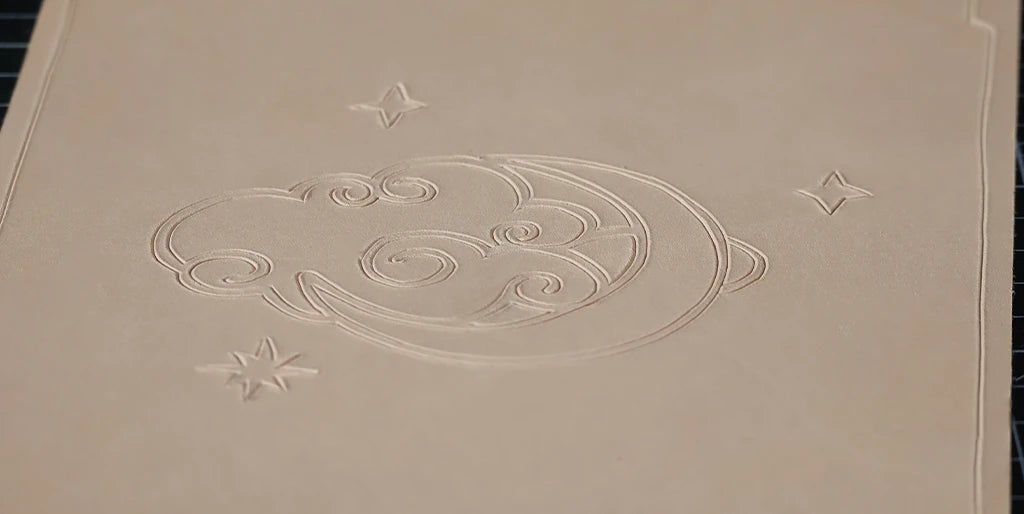
Moisten the leather with a mixture of one part Easy Carve to ten parts water.
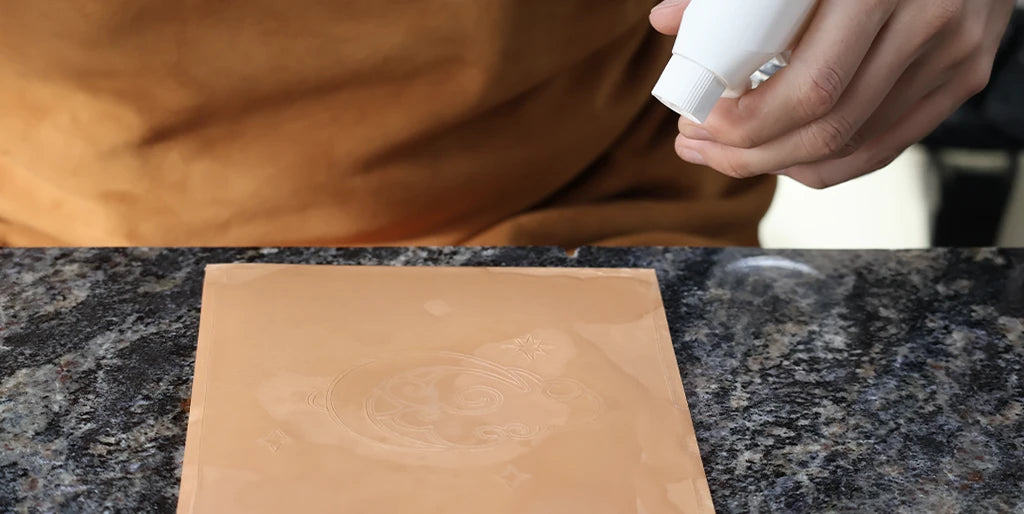
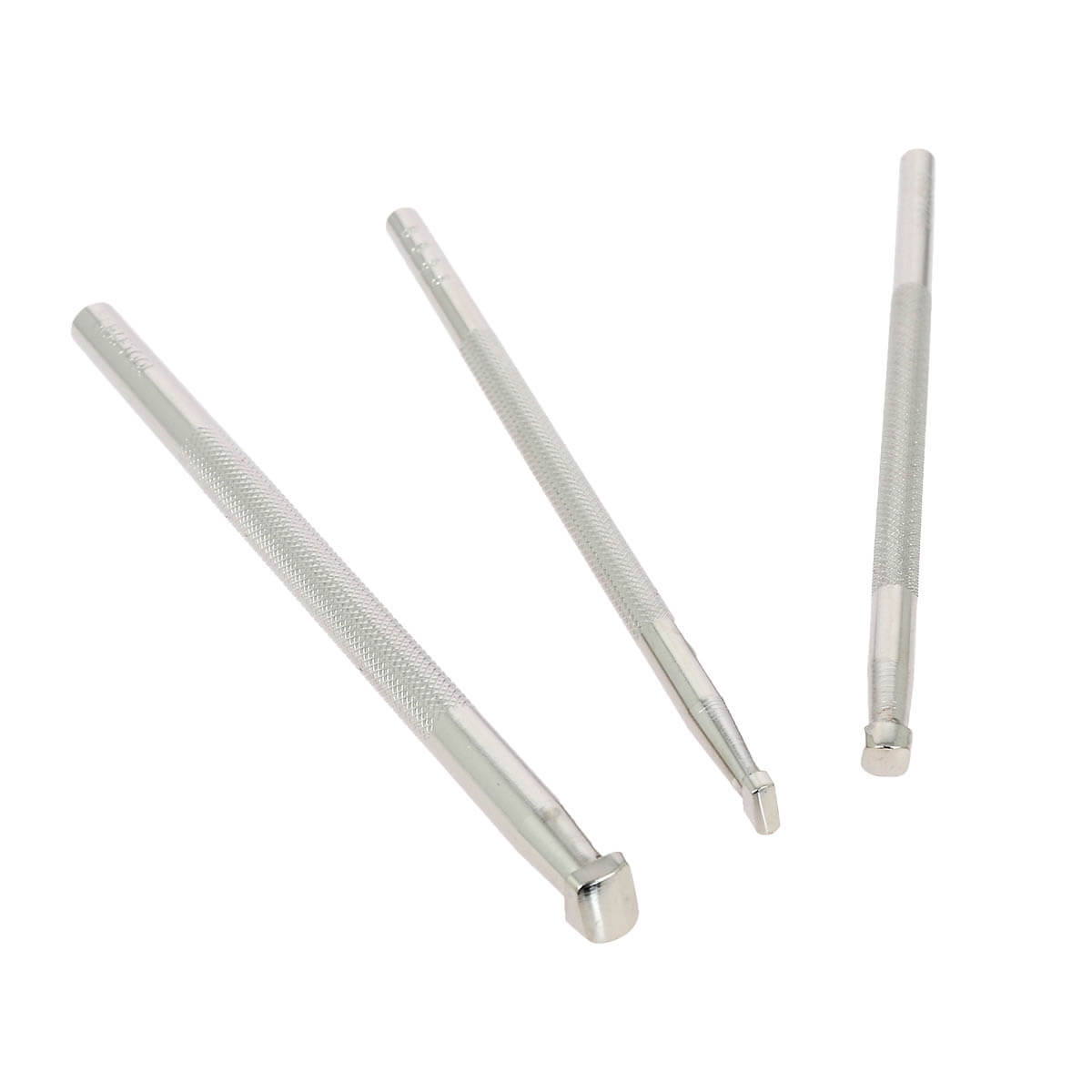
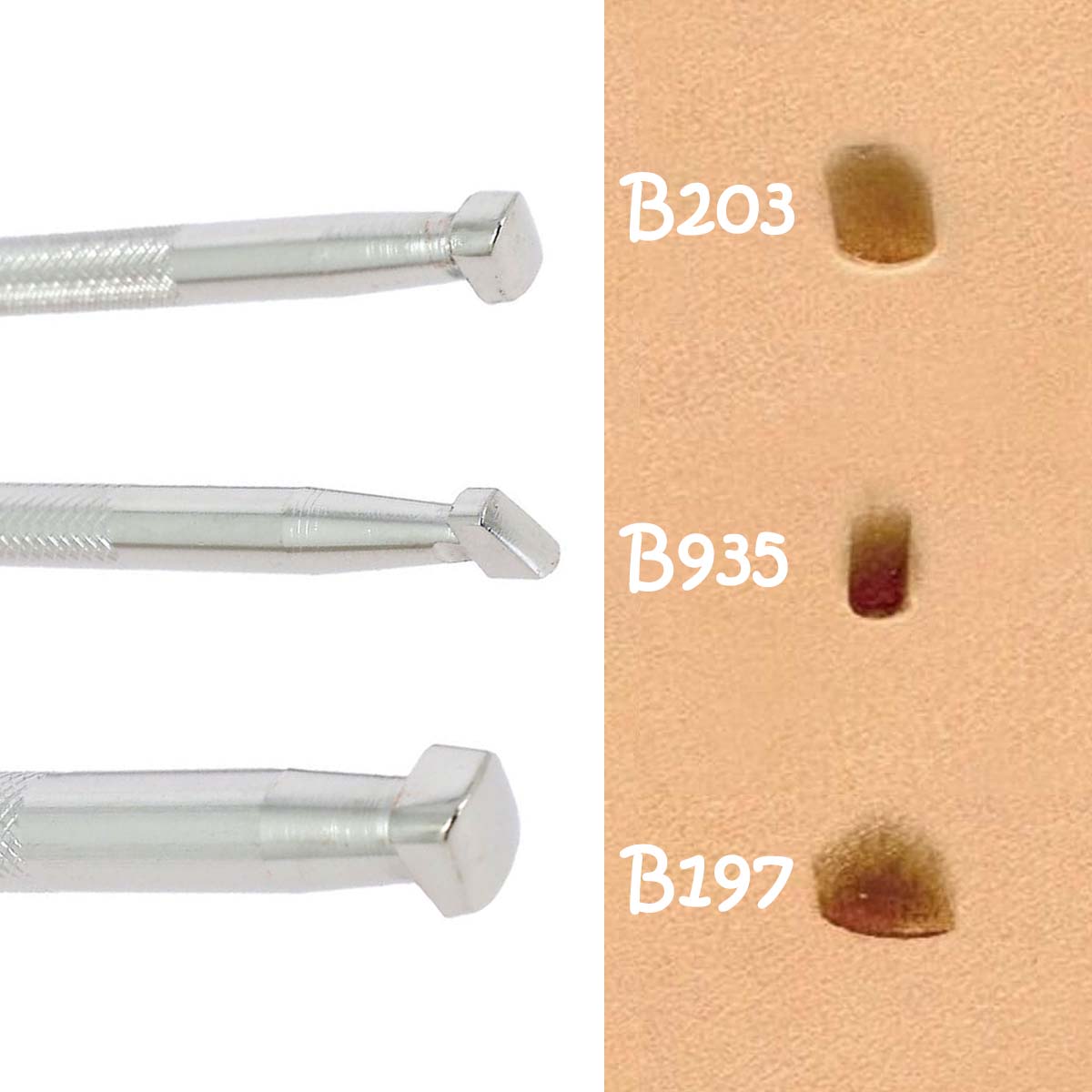
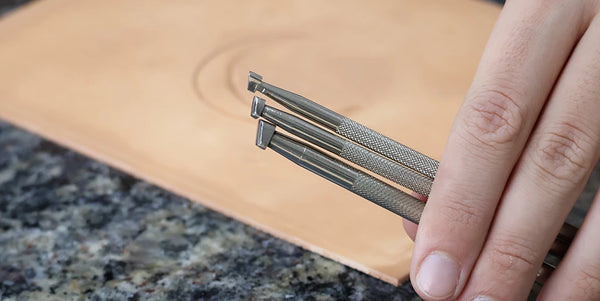
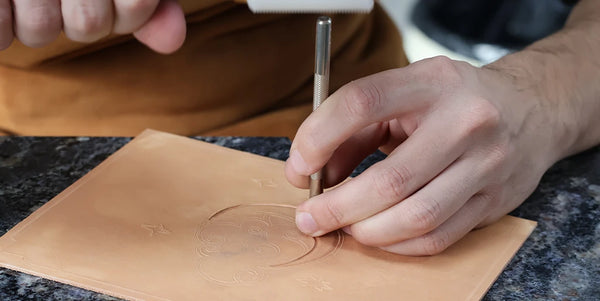
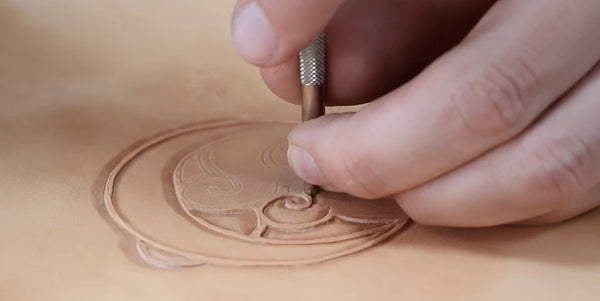
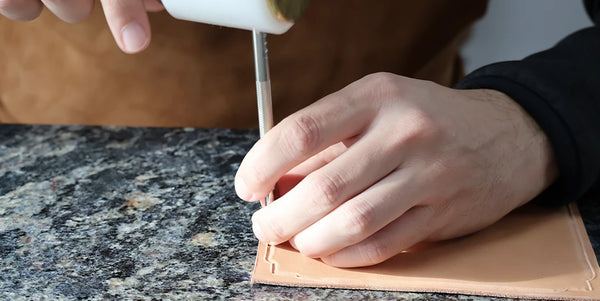
Push back the pattern and the frames. Use three smooth bevelers of different sizes:
- Use the largest size for large areas (e.g., the moon).
- Use the smallest ones for the details.




 |
 |
 |
 |
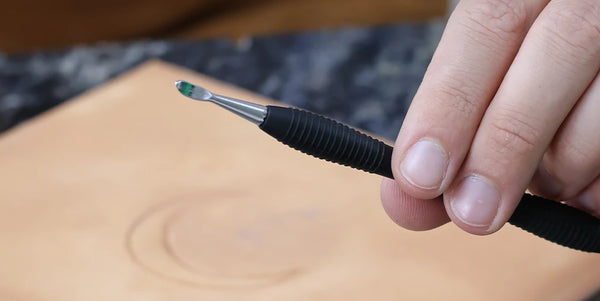
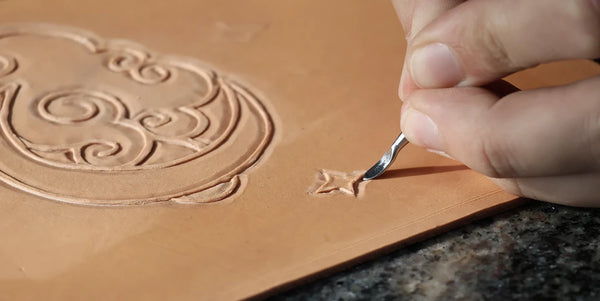
Use a spoon to smooth out the lines of the pattern.
 |
 |
5. Trim the edges
Trim the two lengths of P3, then one length of P1(a) and one length of P1(b). Trim to approximately 1 cm.
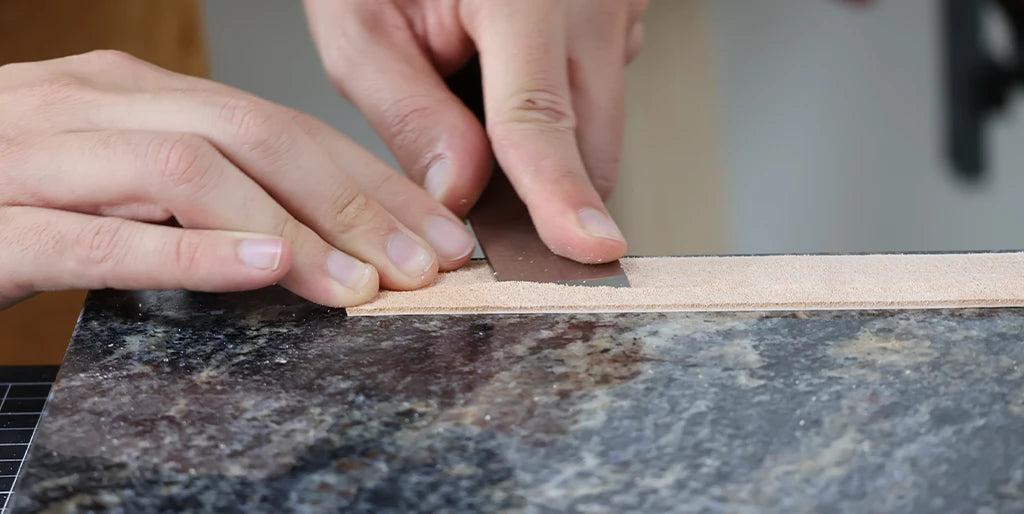
6. Bevel the slices
Bevel all the edges of the pieces.
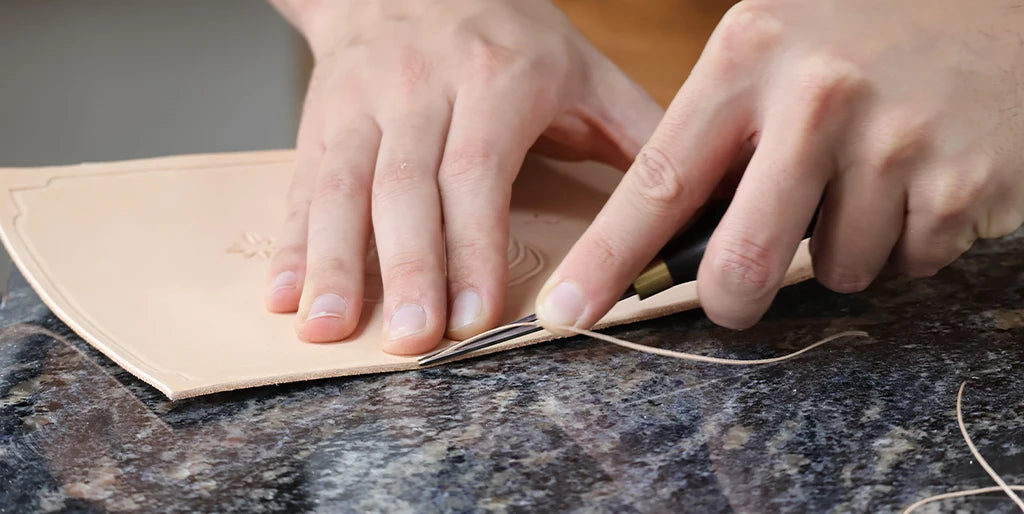
7. Dyeing the leather
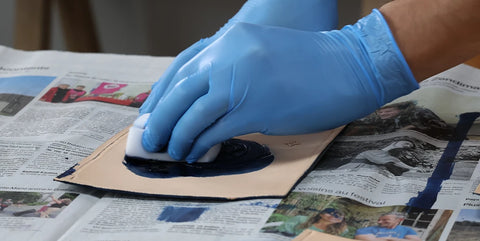
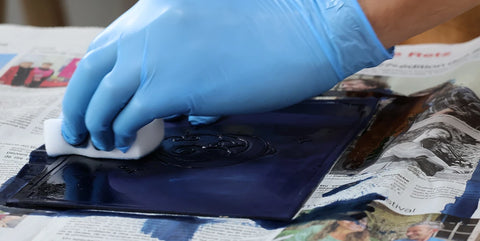
Using a slightly damp sponge, apply the dye in circular motions. Apply several coats if necessary and allow to dry.
 |
 |
8. Apply the paint
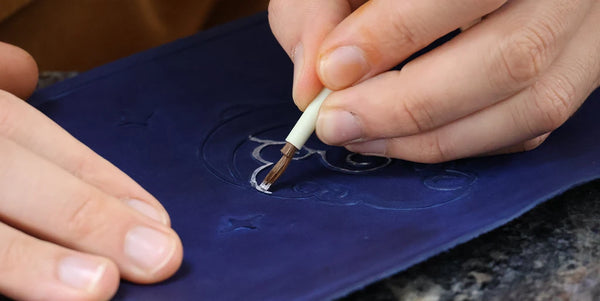
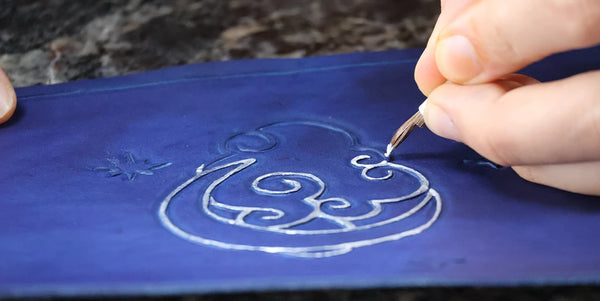
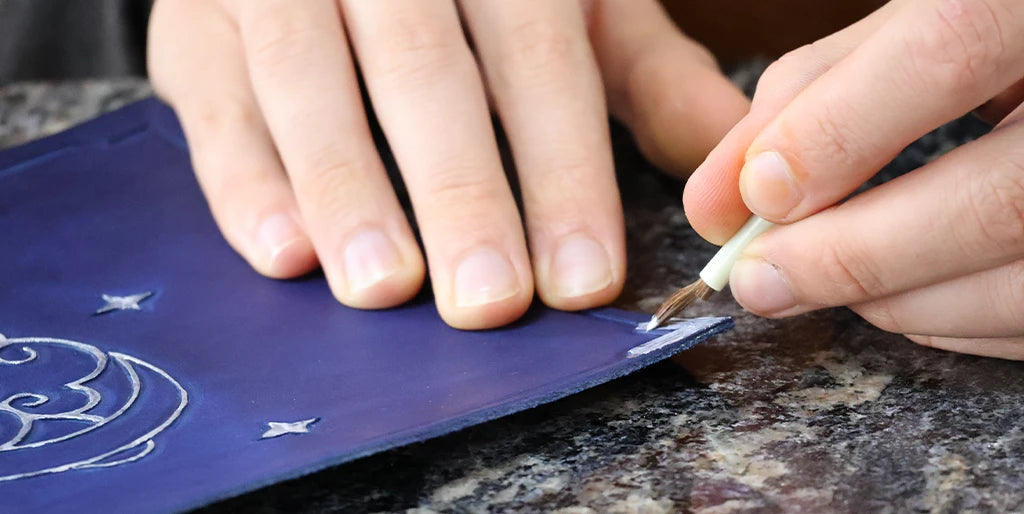
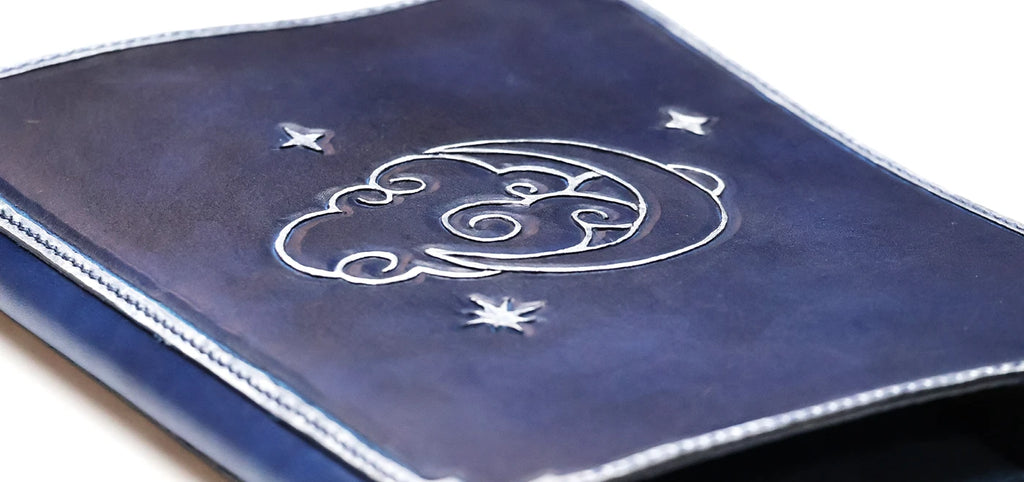
Using a fine brush, apply leather paint (here Setacolor Metal Silver 31) to the lines of the design to give it more relief.
 |
 |
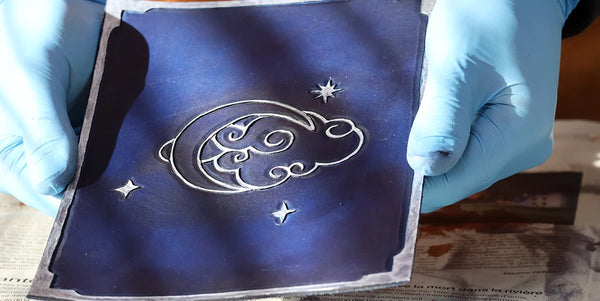
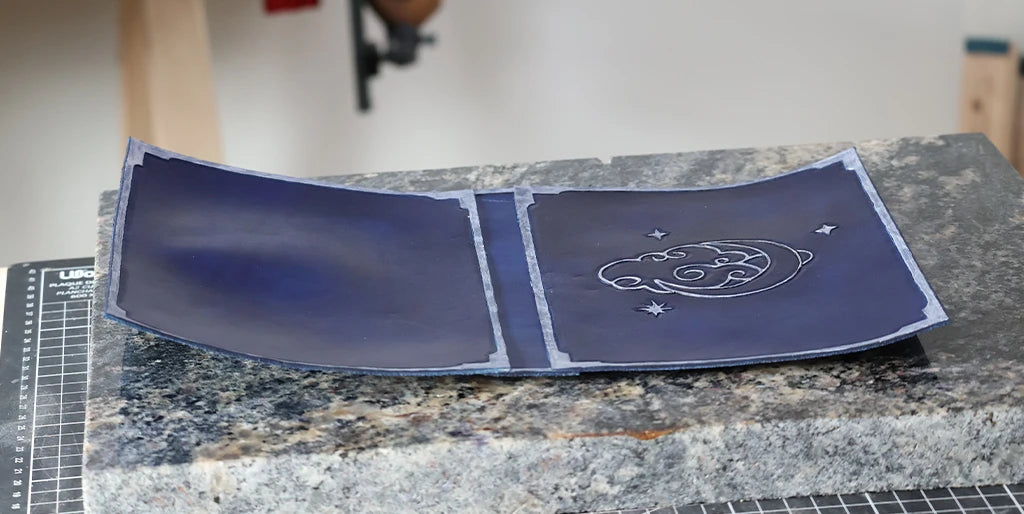
9. Apply antique gel
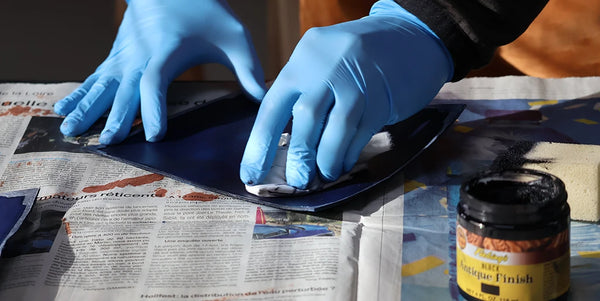
Using a clean cloth, apply Antique finish in circular motions.
 |
 |
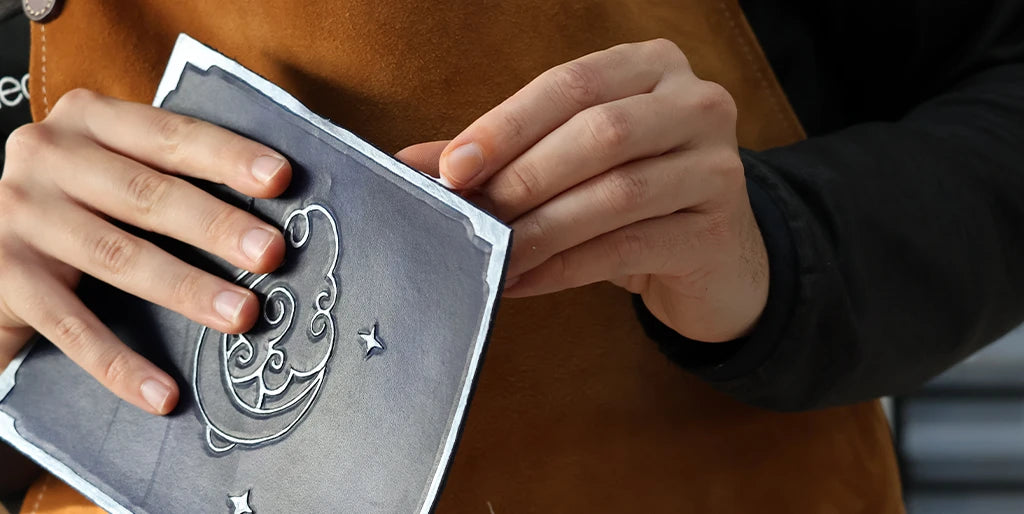
10. Working with the trimmed slices
Work the trimmed edges of pieces P1 and P3 with Tokonole.
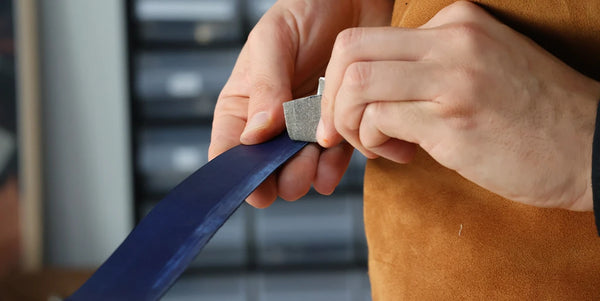
11. Glue the binding
Sand the grain of the leather on piece P3, to a depth of 7 mm on both lengths.
 |
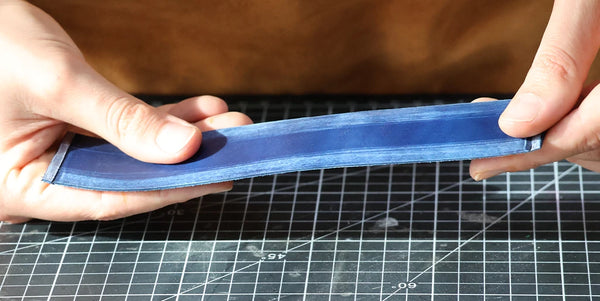 |
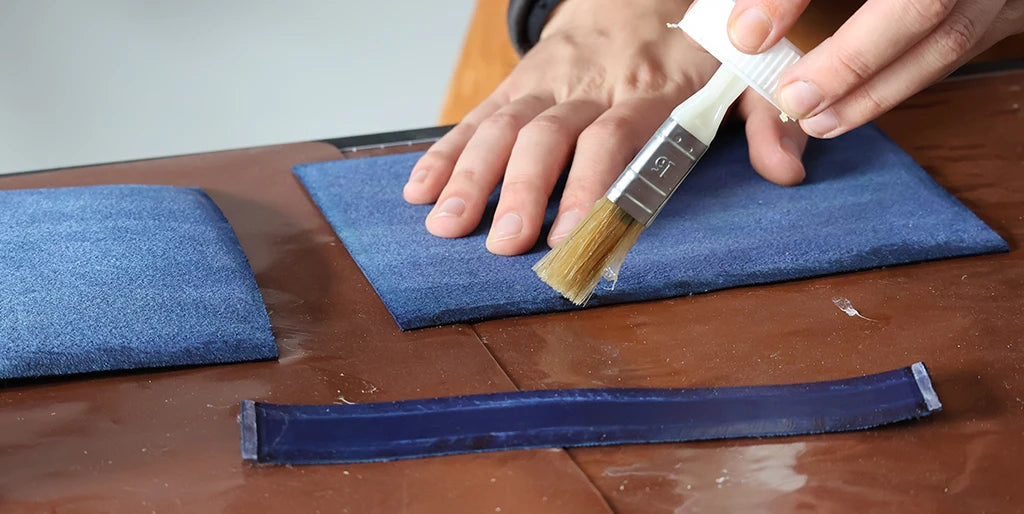
Apply contact adhesive to these same lengths for 10 mm. Also apply the adhesive to the reverse side of P1(a) and P1(b) on the trimmed areas.
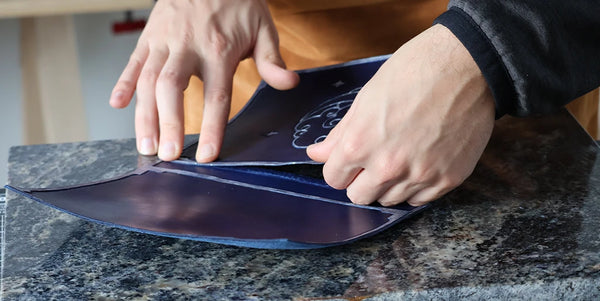
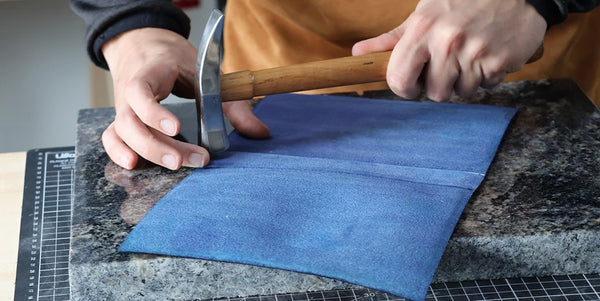
Glue pieces P1 onto piece P3 and flatten the glued area.
 |
 |
12. Sew the binding
Mark the stitching points with a hammer and nail set:
- 3 mm from the ends of P1
- 3 mm from the edges of P3
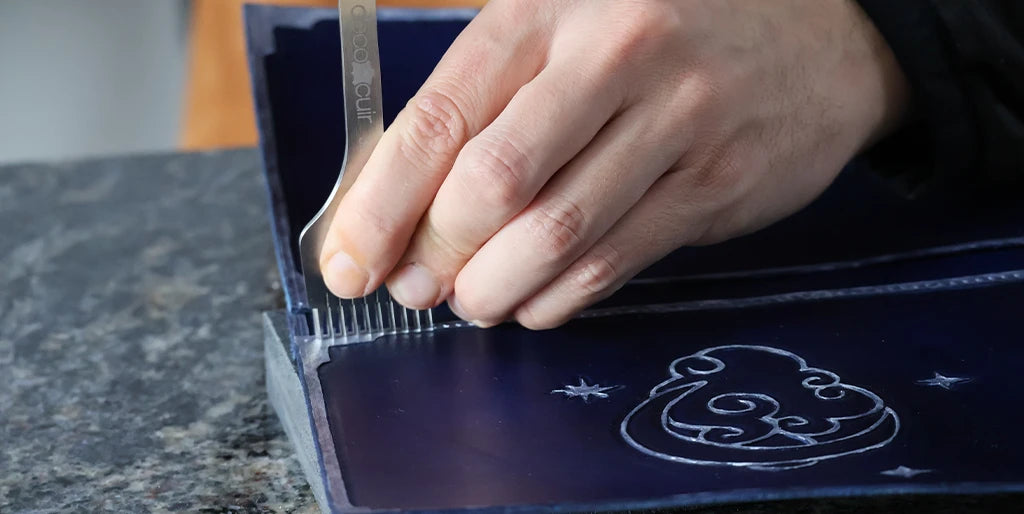
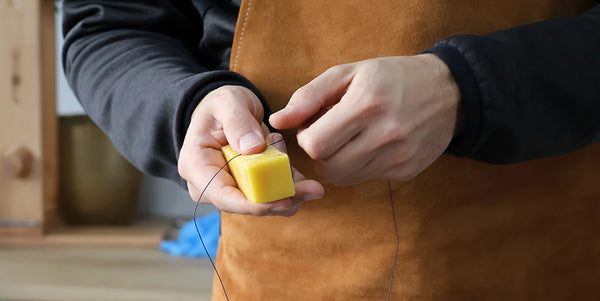
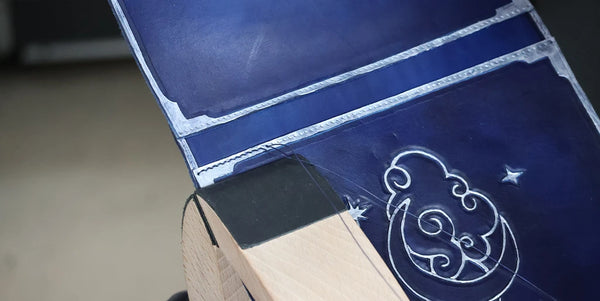
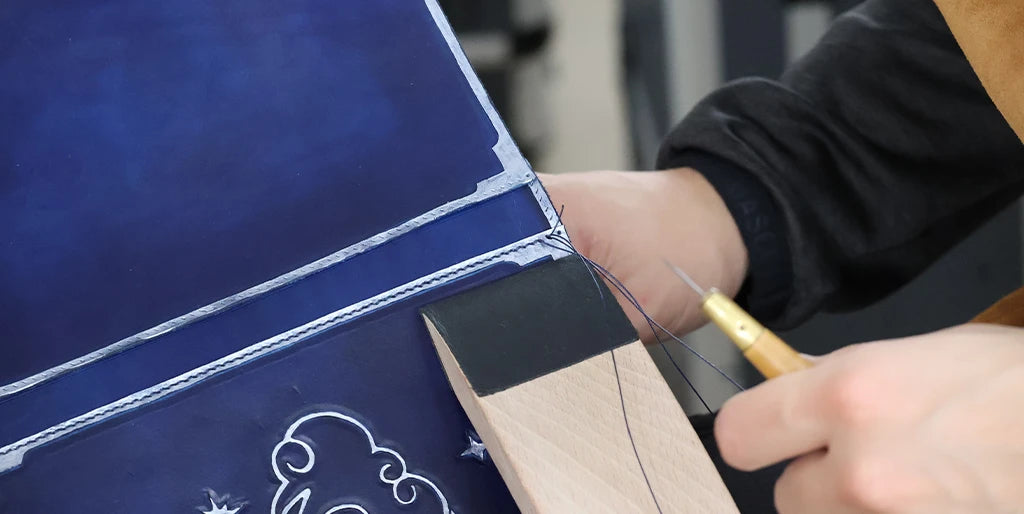
Take a large bundle of thread, wax the thread and sew using the saddle stitch.
 |
 |
13. Working on the bellows
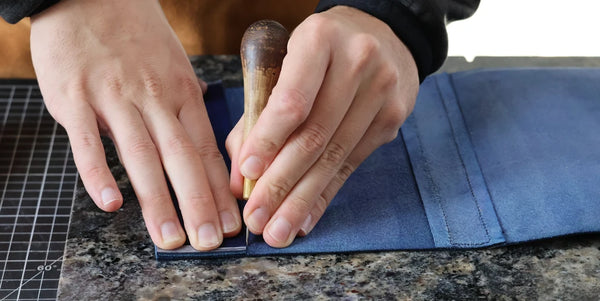
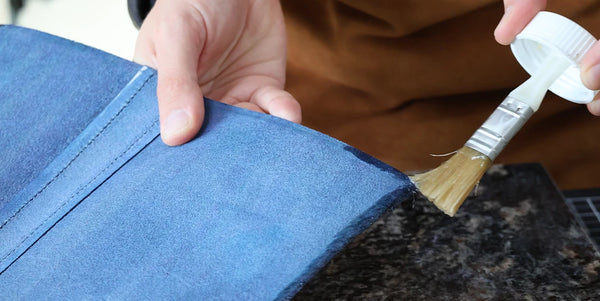
Mark the position of P2 on the reverse side of P1 and apply glue to the reverse side of P1, for 5 mm in the places where the P2 pieces will be glued. Also apply glue to the three sides of P2 that will be sewn (reverse side of the leather, for 5 mm) .
 |
 |
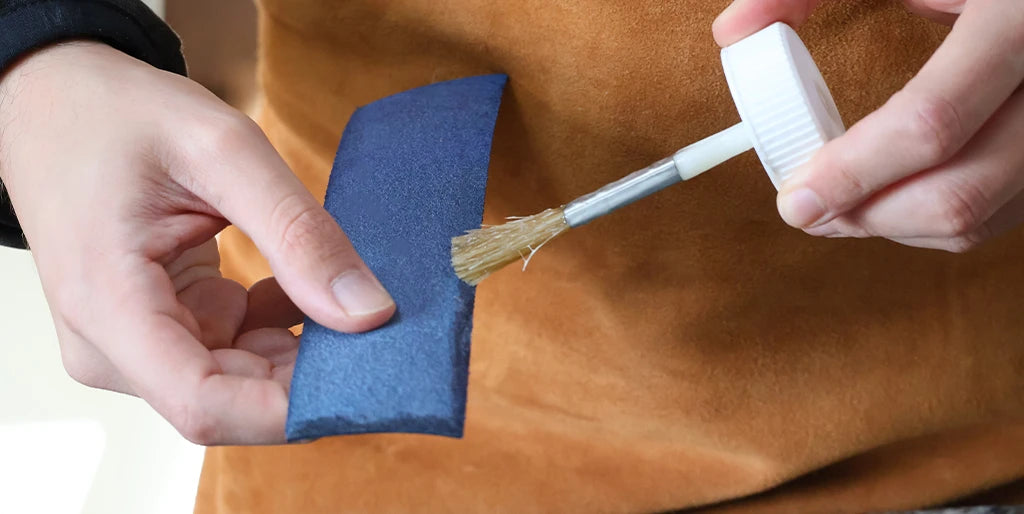
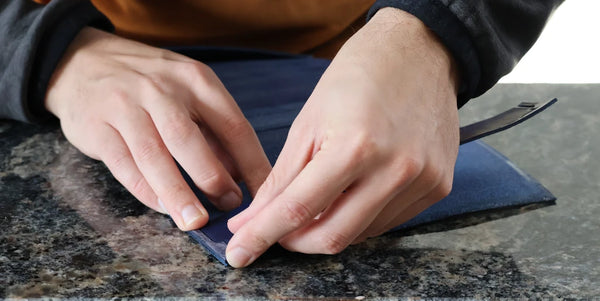
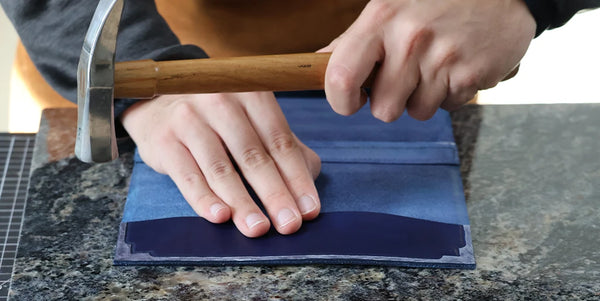
Glue the bellows P2 onto P1 and flatten the glued area.
 |
 |
14. Sew the notebook cover
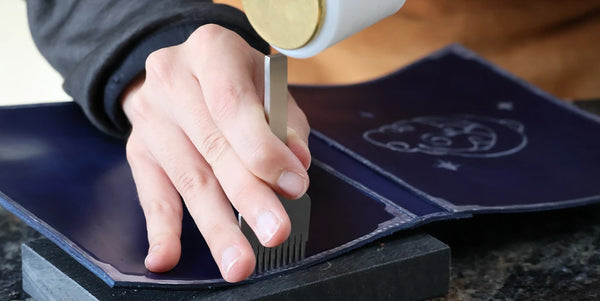
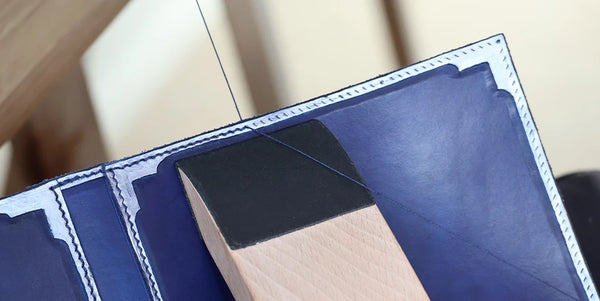
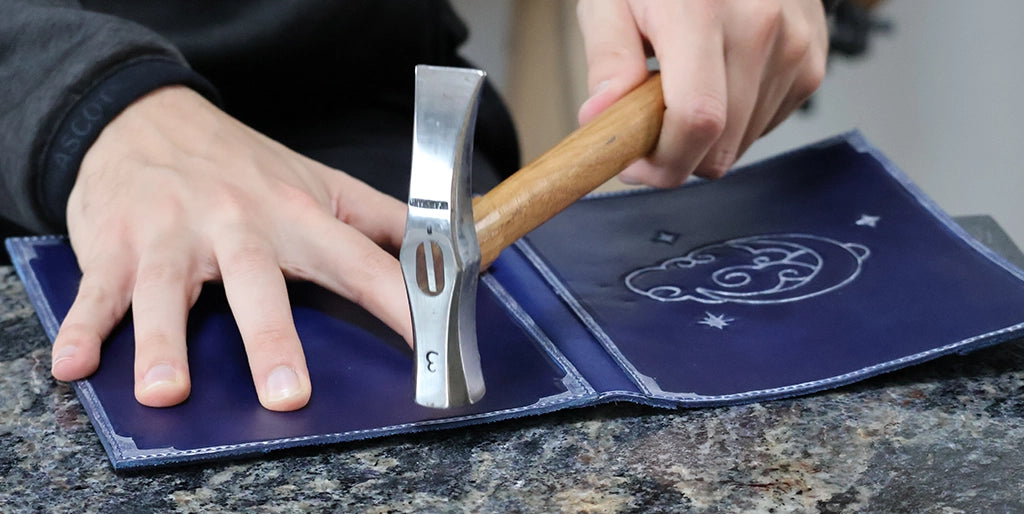
Using the awls, mark the stitching points all around the pieces. Sew with a saddle stitch all around the notebook cover.
 |
 |
15. Working the slices
Sand the slices with an abrasive sponge.
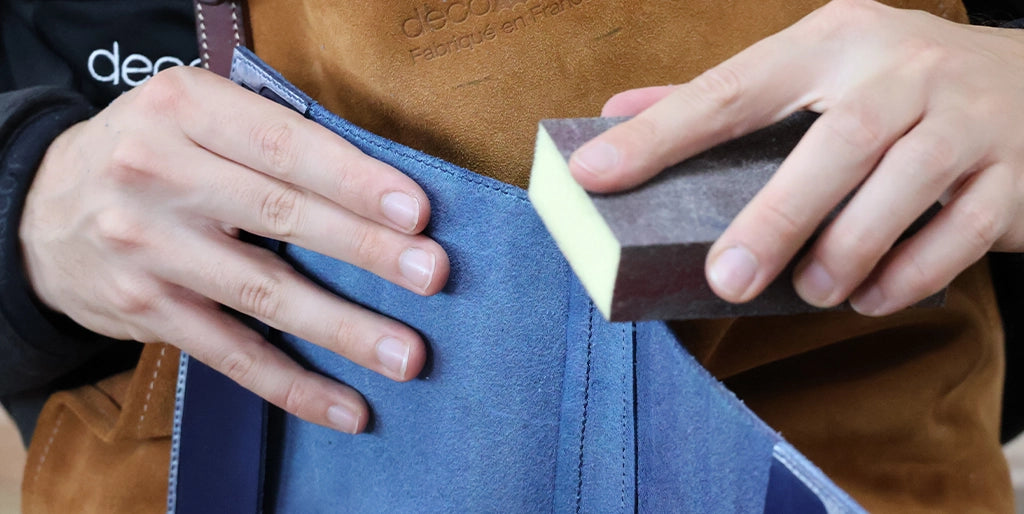
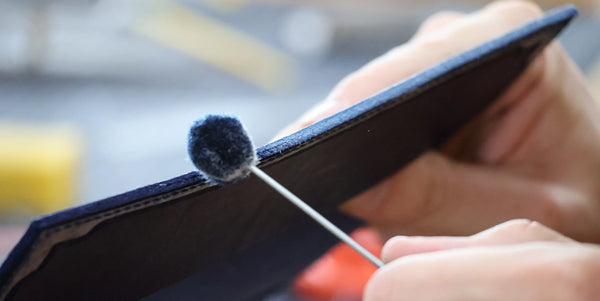
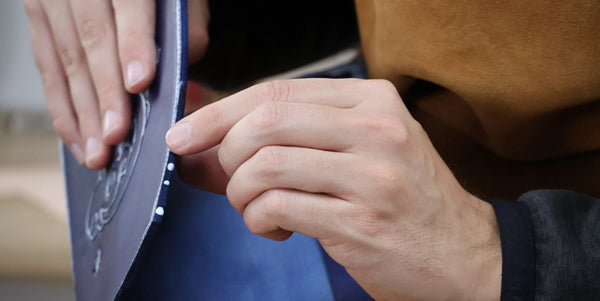
If necessary, reapply Fiebing's dye to the edge of the leather. Then, apply Tokonole.
 |
 |
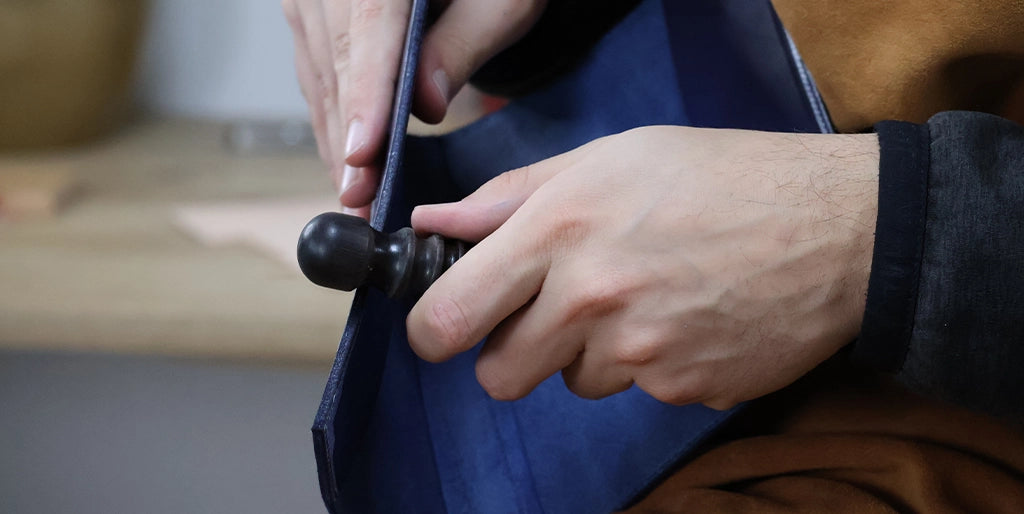
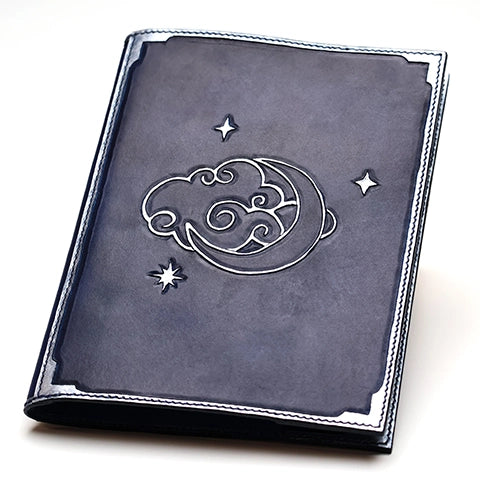
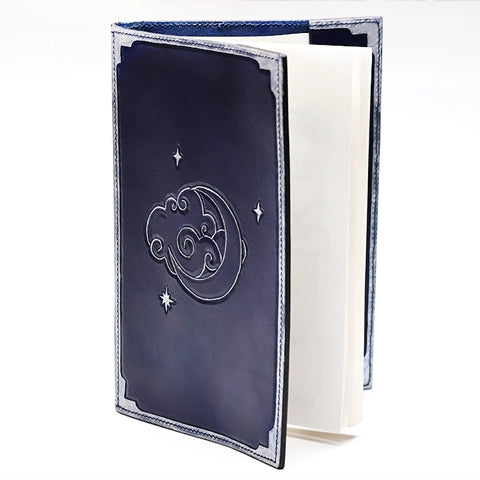
You're finished!
 |
 |


