











REQUIRED MATERIALS
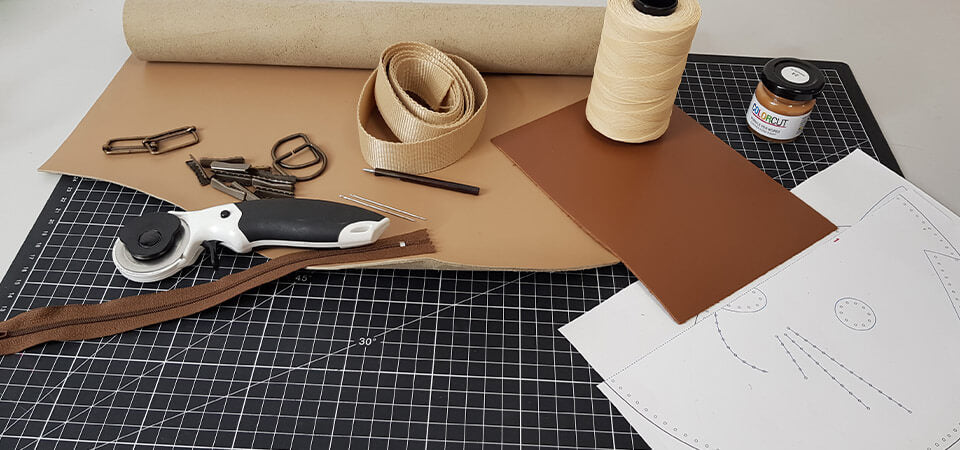
To complete this tutorial, you will need:
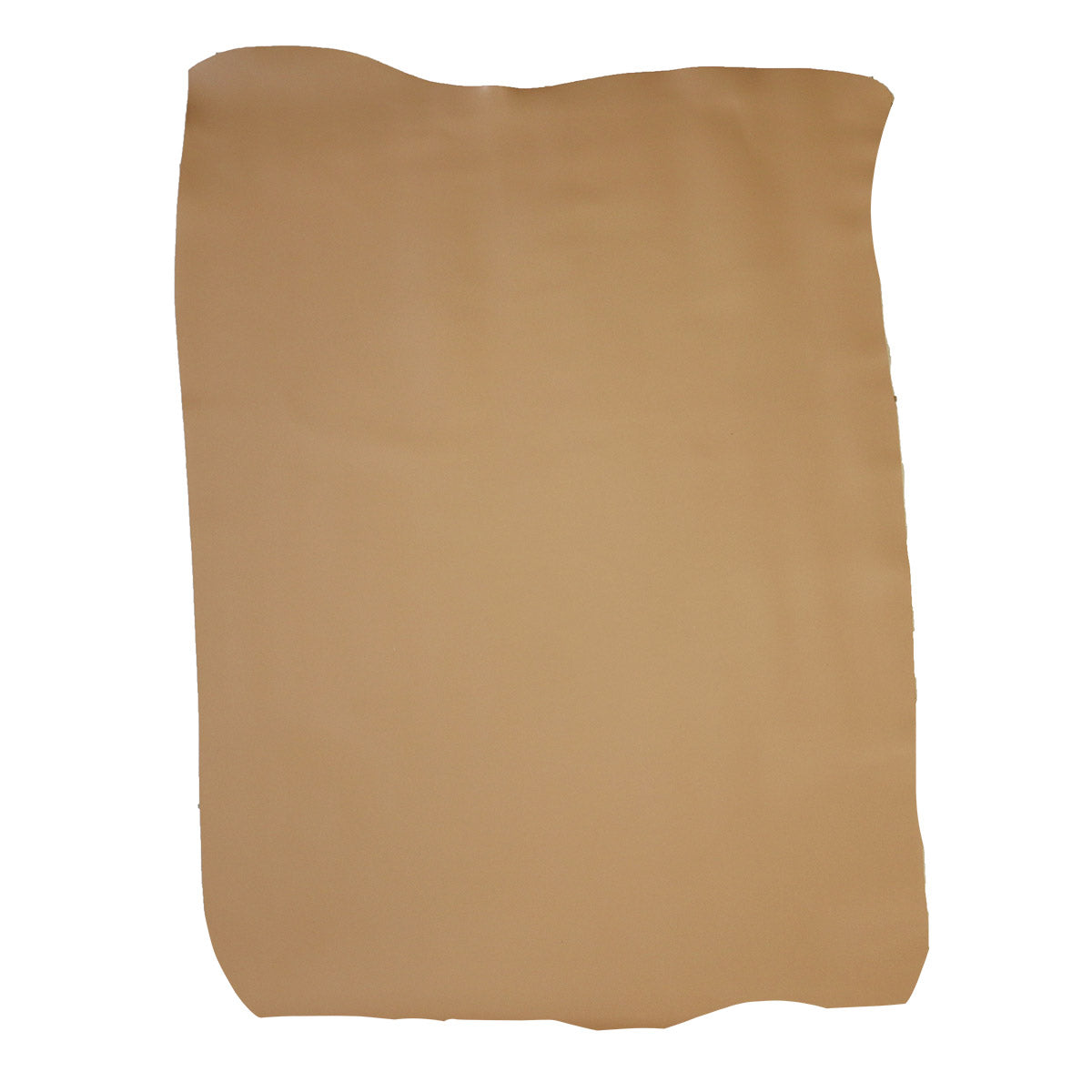
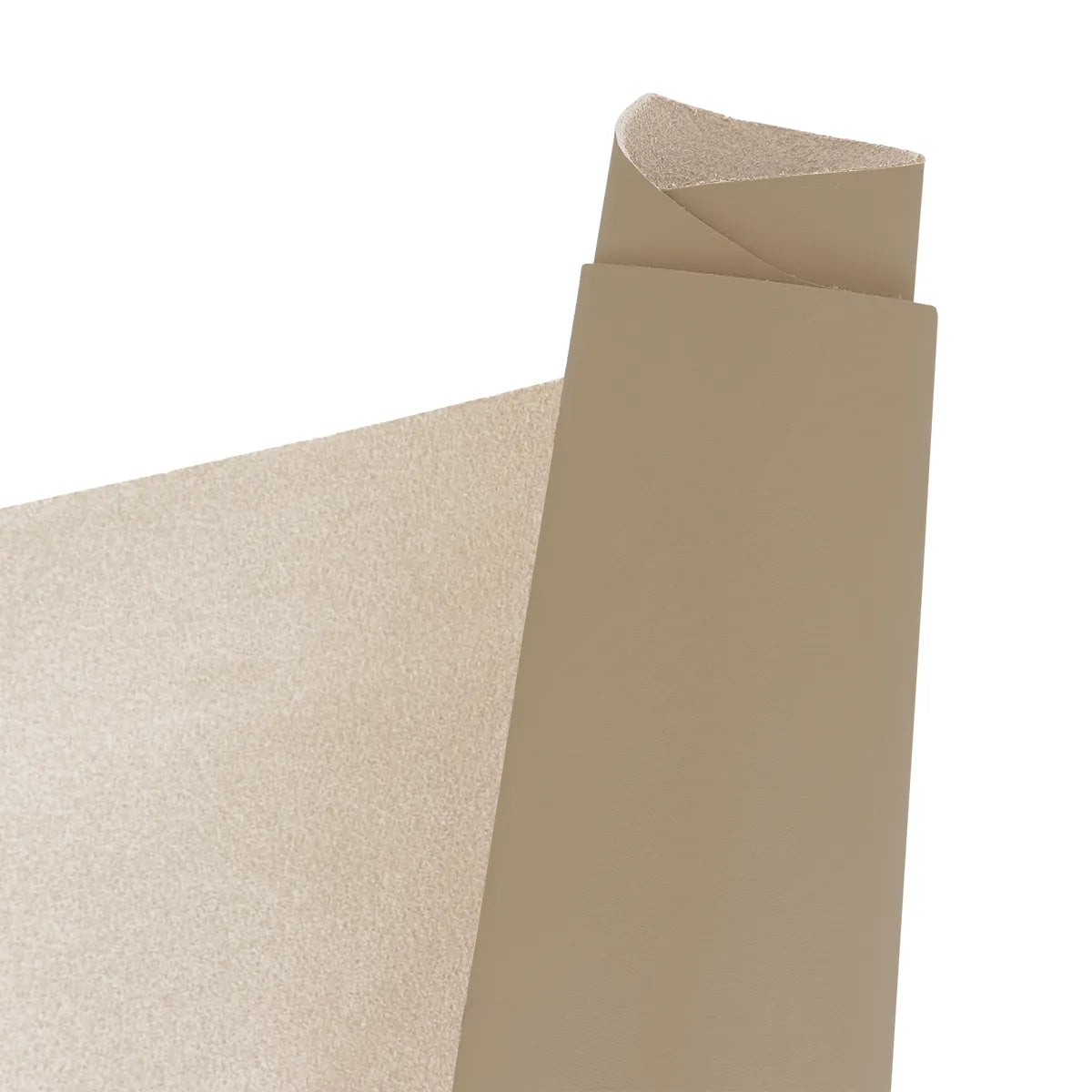
- 1 piece of SATINLYS or NAPPA CALF leather - 0.35m² (minimum). Please contact customer service for the hide dimensions. For nappa calf, you can slightly reinforce the leather with a 0.4 mm thick Salpa reinforcement.
- 1 piece of SATINLYS leather - Brown - 15 x 20 cm - 1.2 mm thick
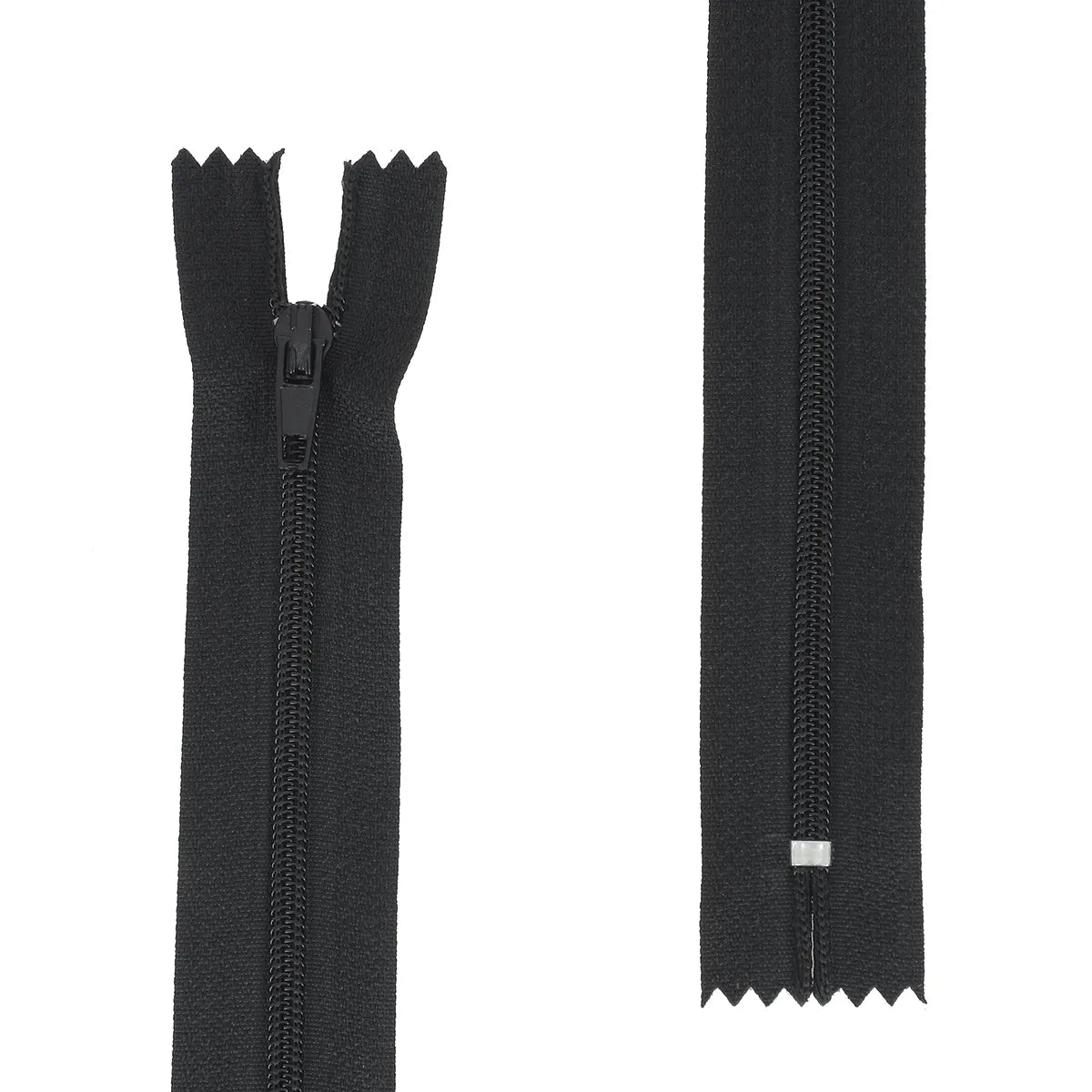
- 1 NYLON zipper #4 - Brown - 25 cm length
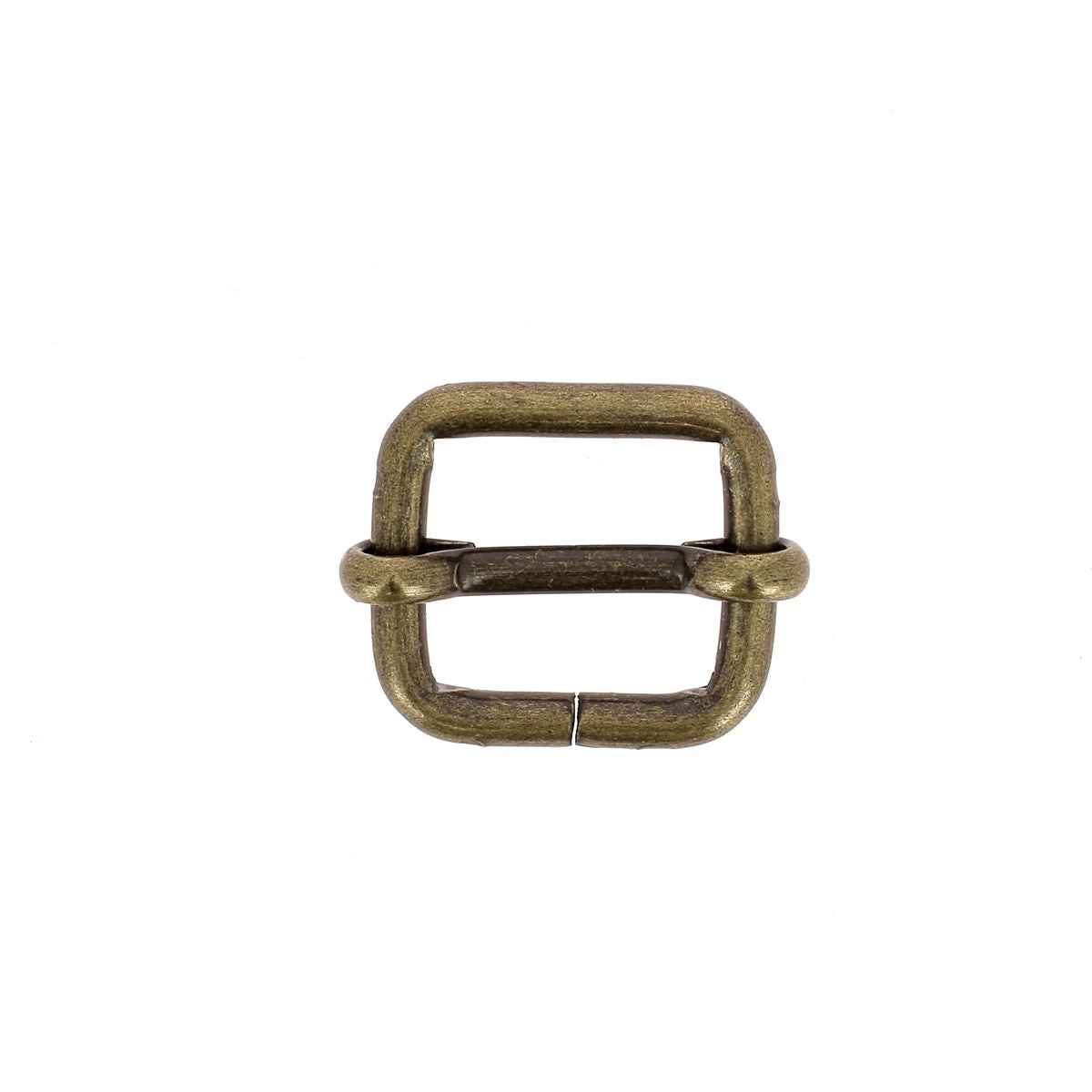
- 2 slide buckles - antique brass - 30 x 13 mm
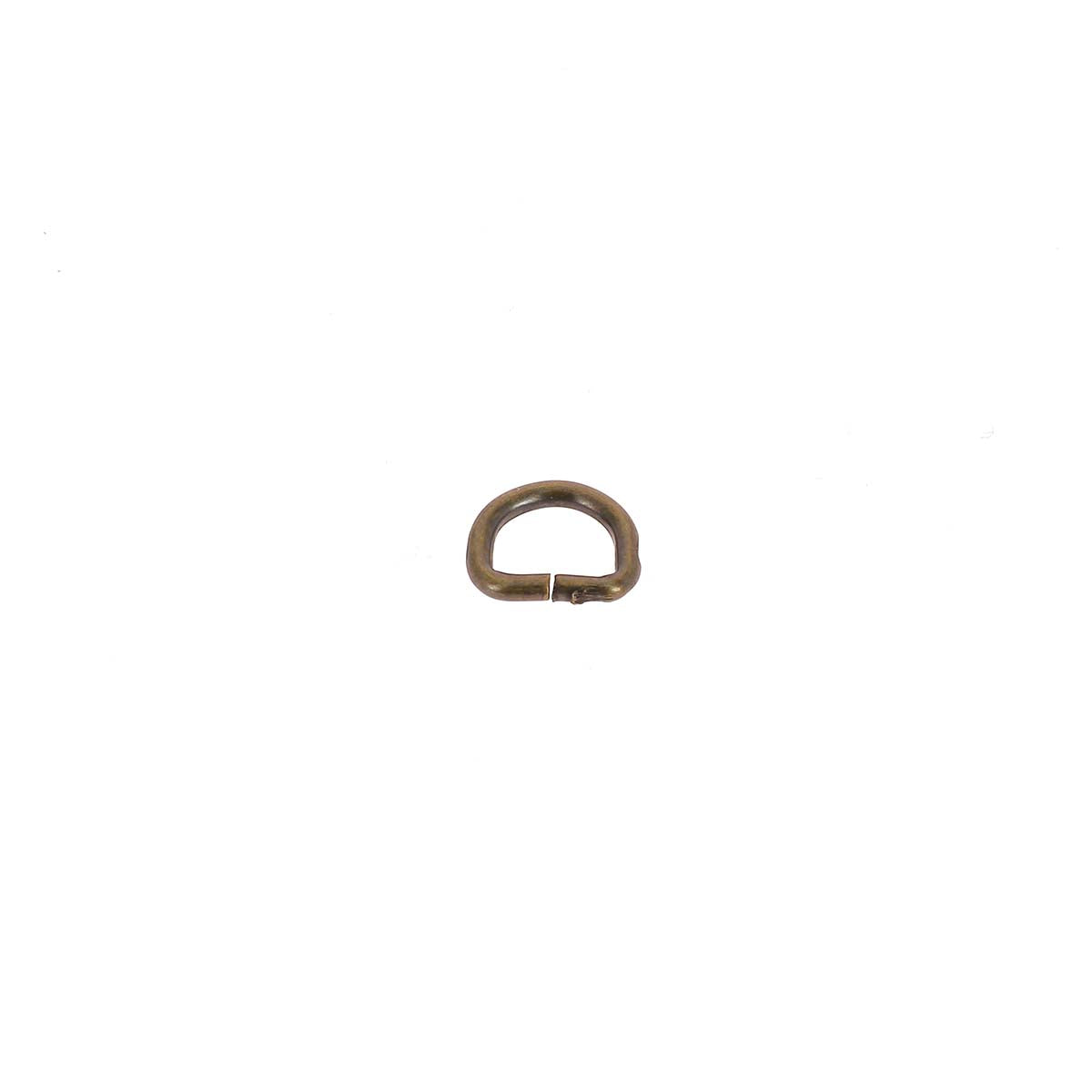
- 2 D-rings - antique brass - 30 x 25 x 3 mm
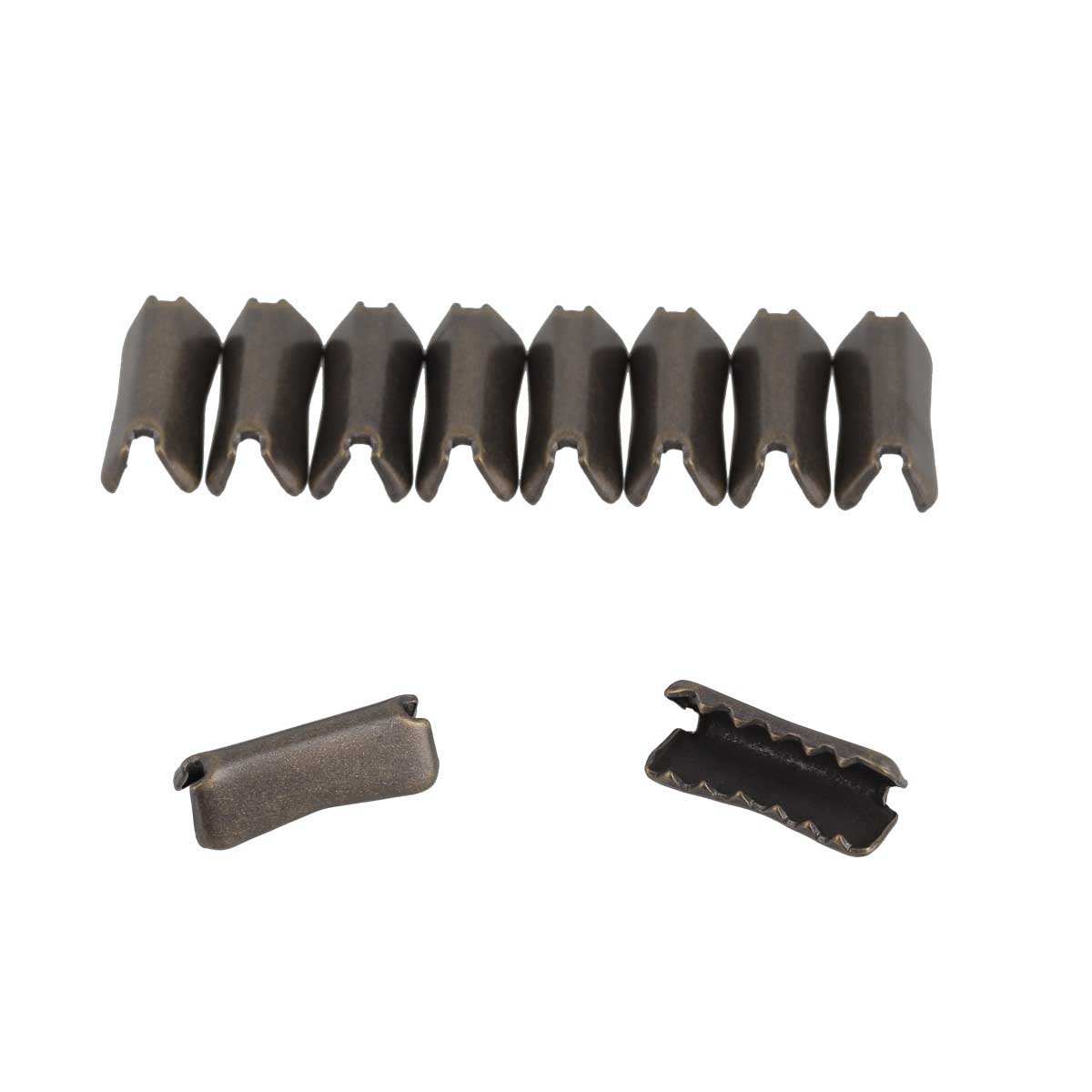
- 2 DESIGN claw strap ends - antique brass - 29 mm
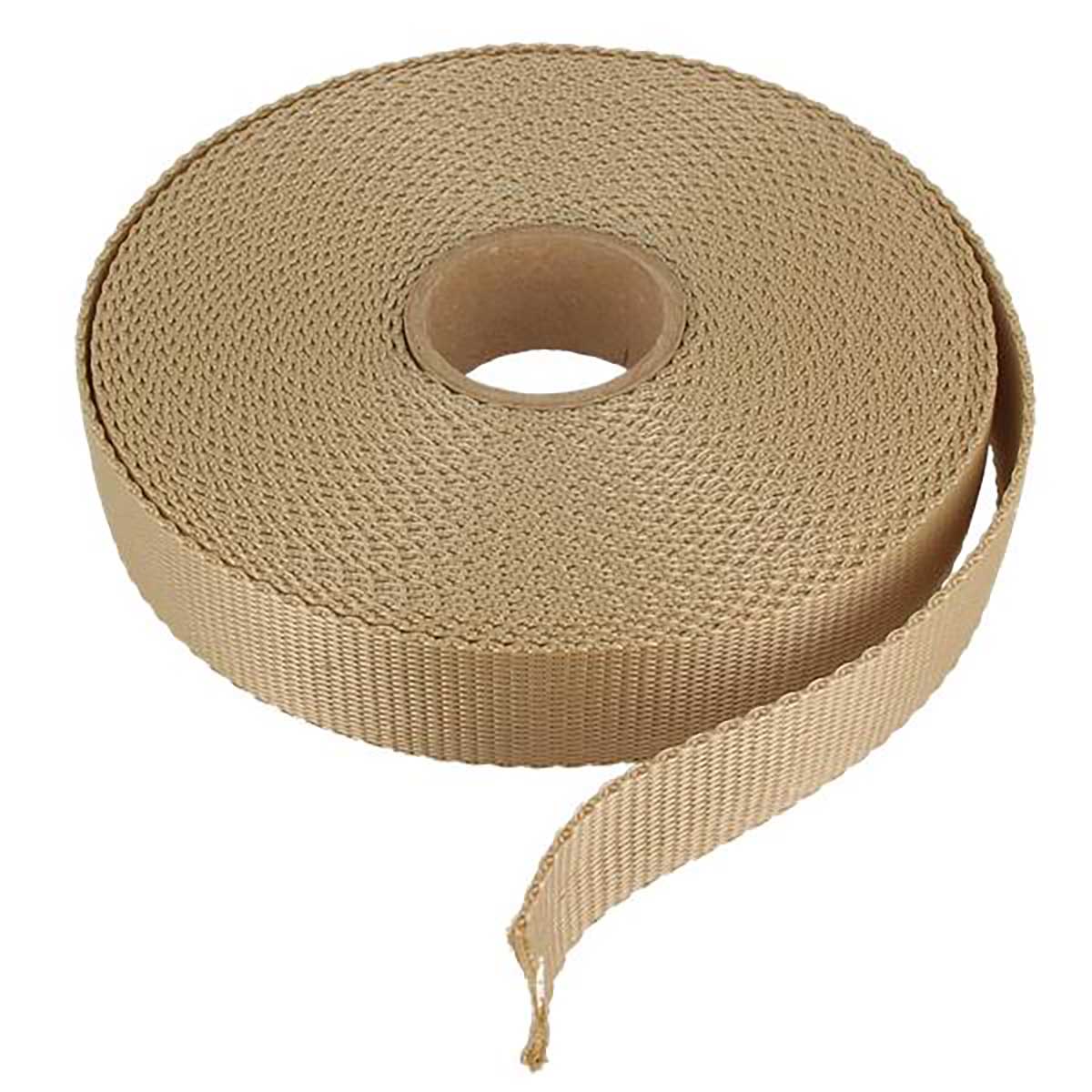
- 2 meters of beige Nylon strap - 30 mm width
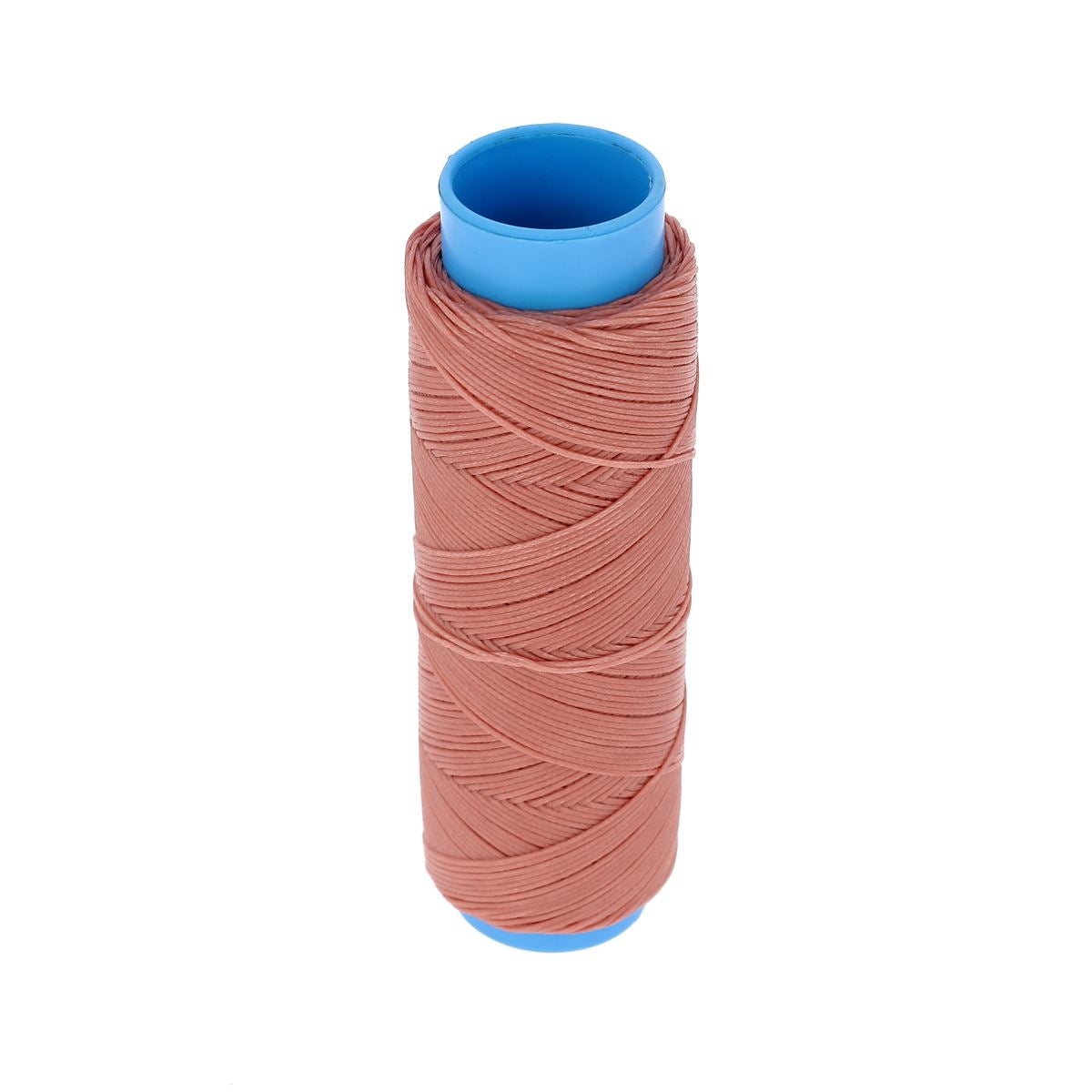
- 1 spool of braided and waxed polyester thread - 0.8 mm diameter - brown
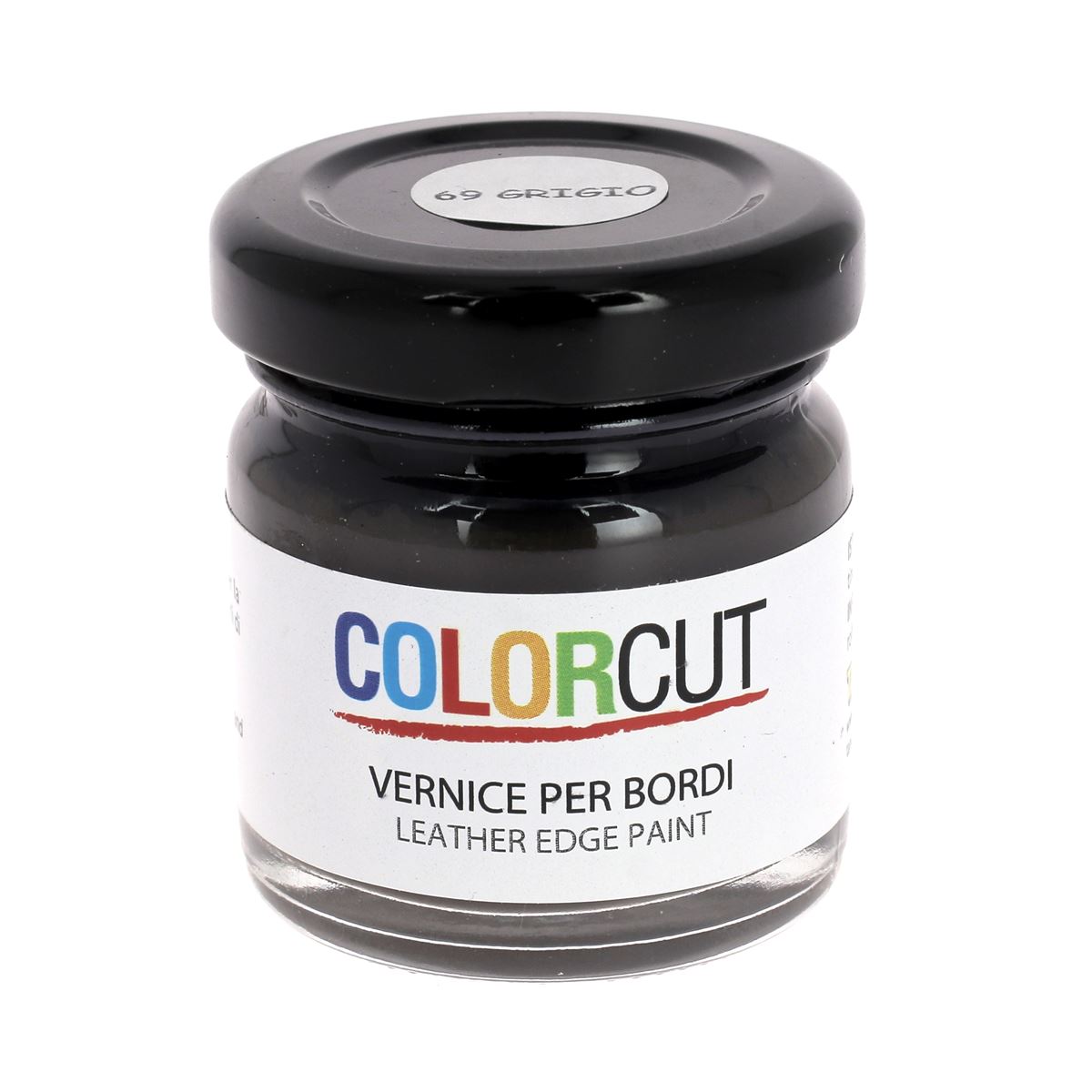
- 1 NOISETTE edge finish - Colorcut - 30 ml
- 1 tube of special leather contact adhesive
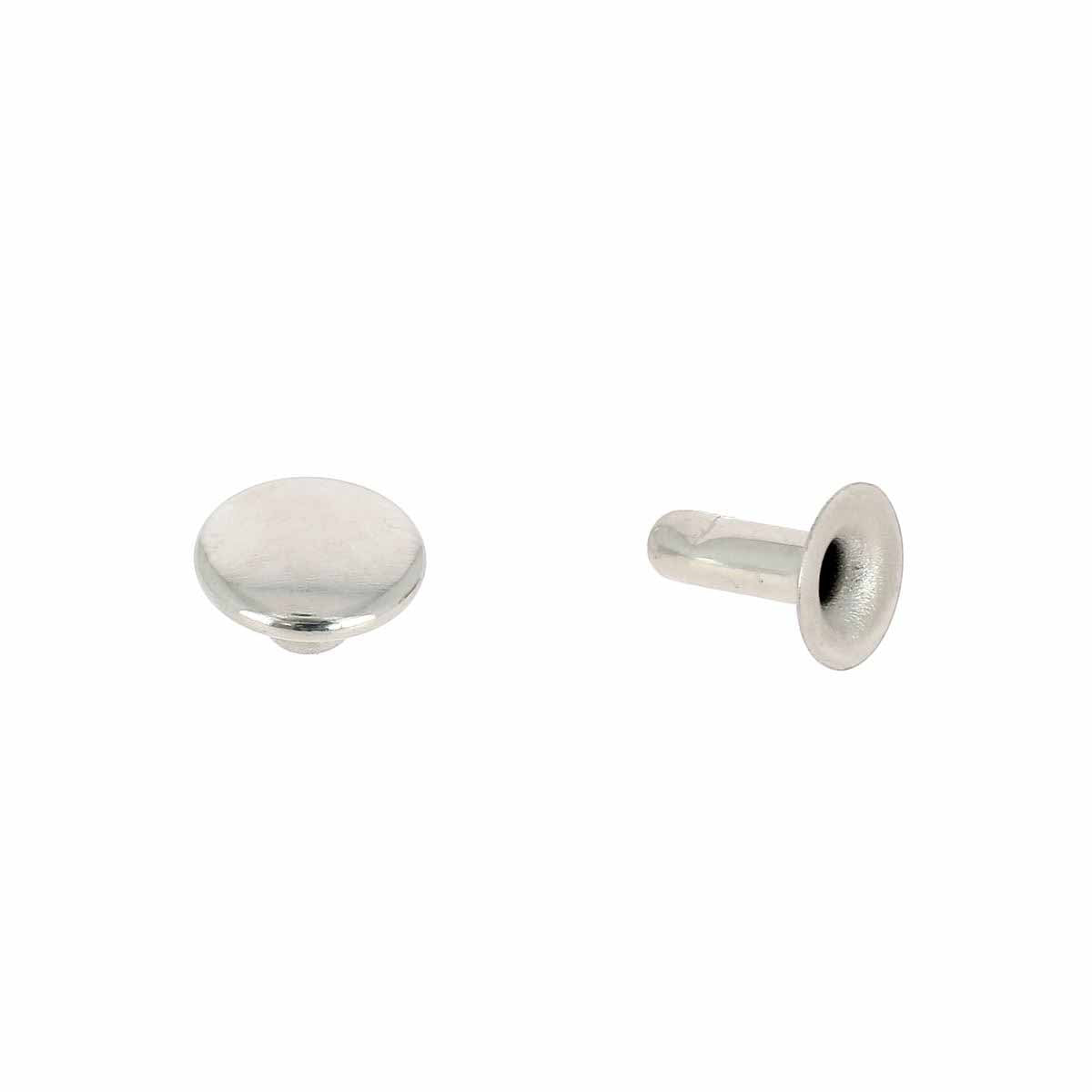
- 1 kit of 24 double cap rivets (T4) and setting tools - 9 mm - antique brass
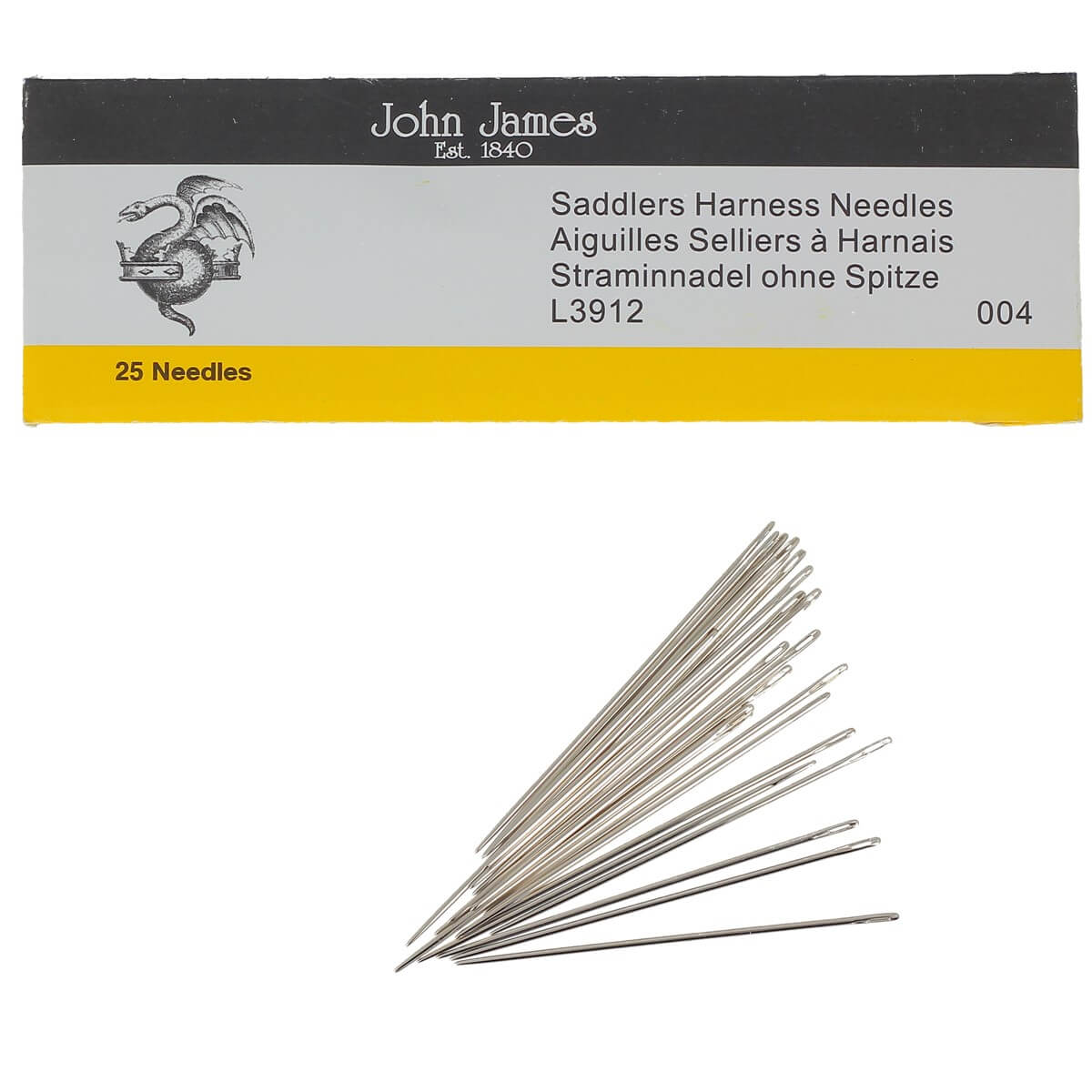
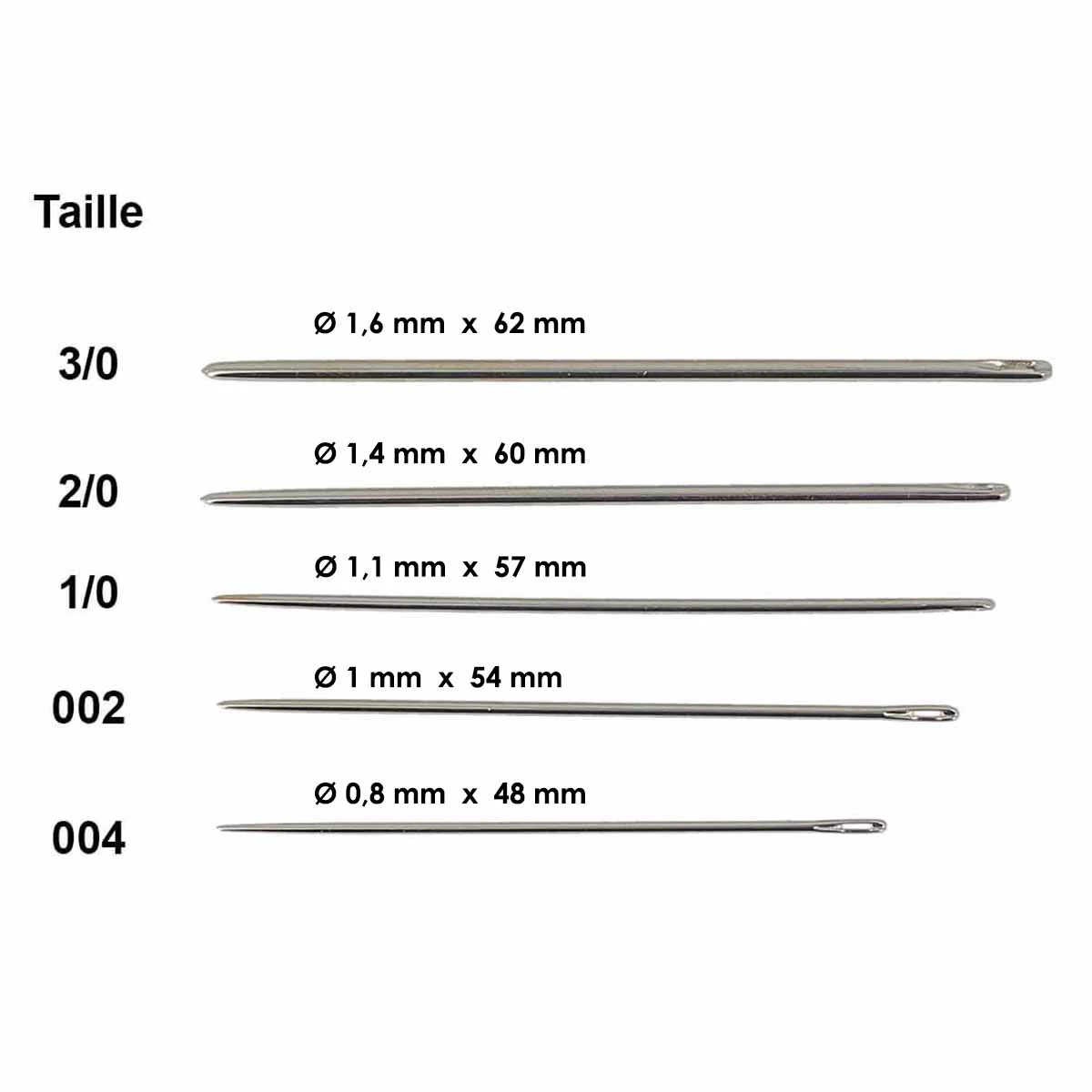
- 1 pack of 25 saddler's needles - round tip - size 1/0 - d=1.1 mm
- 1 LARGE CAT cutout for natural leather keychain to customize (optional)
- 1 round keychain ring - 25 mm diameter (optional)
And the following tools:
- 1 round punch - SEIWA Japan - diameter: 1.5 mm
- 1 craft knife and 1 rotary cutter
- 1 mallet
- 1 fine abrasive sponge - 400 grit
- 1 masking tape
- 1 cobbler's hammer
- 1 ertalon plate
- 1 cutting mat
WHAT IS SIMPLIFIED LEATHER STITCHING?
This "pre-punched" hand-stitching technique for leather makes this tutorial accessible to everyone. You can, of course, choose to do a "standard" saddle stitch.
SEE THE GUIDE >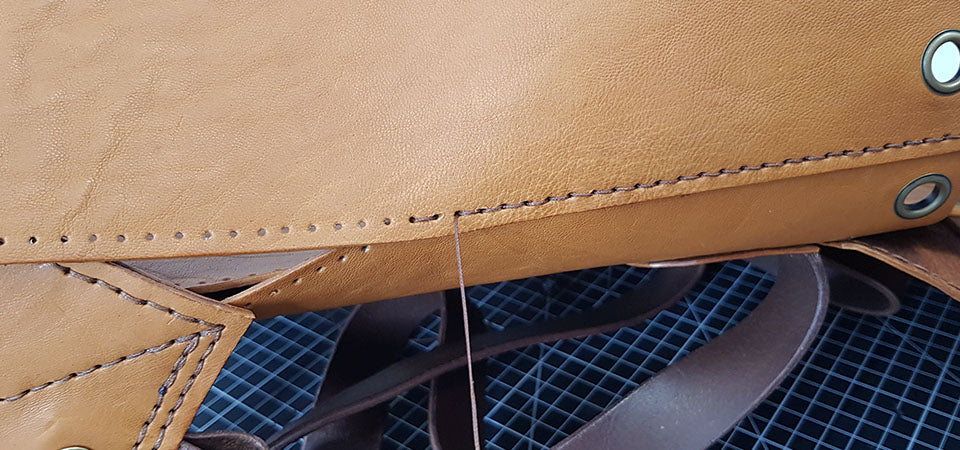
TO GET STARTED:
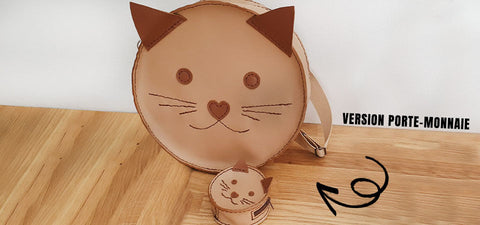
Want to practice before embarking on making a leather backpack? Here's a simpler version, the cat coin purse:
SEE THE COIN PURSE TUTORIAL >
 |
 |
VIDEO TUTORIAL
1. CUT THE PATTERN PIECES
Download the pattern and print it to actual size (download from the tab at the top of the page). Cut out the pattern, leaving about 1 cm margin around the edges of the different pieces.
2. POSITION THE PIECES ON THE LEATHER
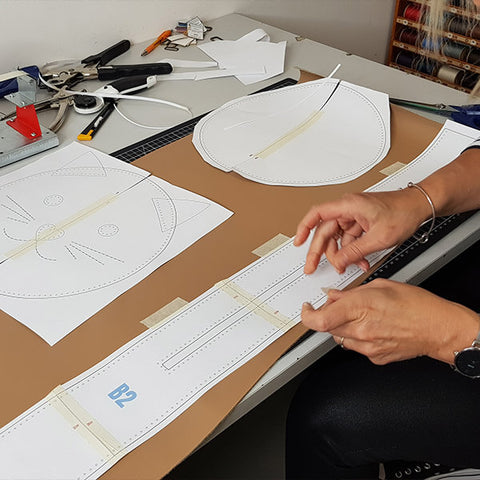
Tape (using masking tape to avoid damaging the leather) the pattern pieces onto the leather hide. Note that pieces n° 5, 6, 7, 8, and 9 (cat's face) should be taped onto the small piece of leather (a different color from the bag's body).
 |
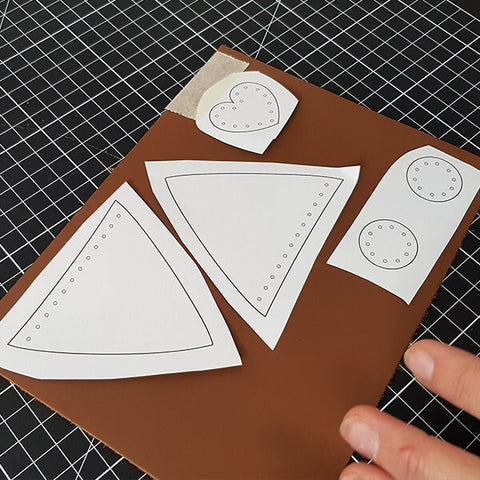 |
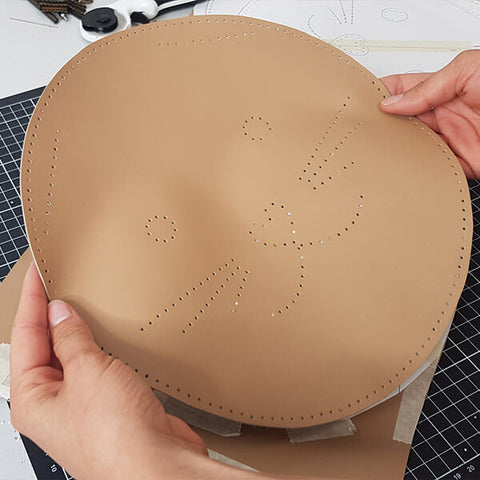
To prepare the pieces for stitching: punch the holes indicated on the pattern using a 1.5 mm diameter round punch.
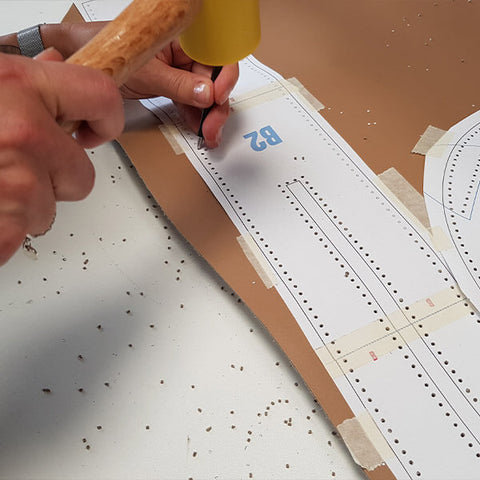 |
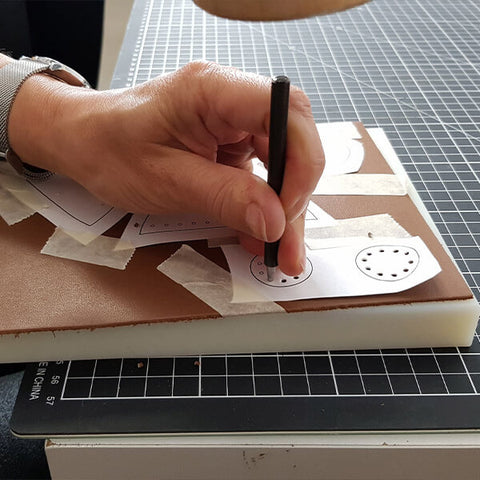 |
Then, cut out the different pieces, following the lines, with a craft knife and/or a rotary cutter. For cutting the eyes, we used a 25 mm round punch.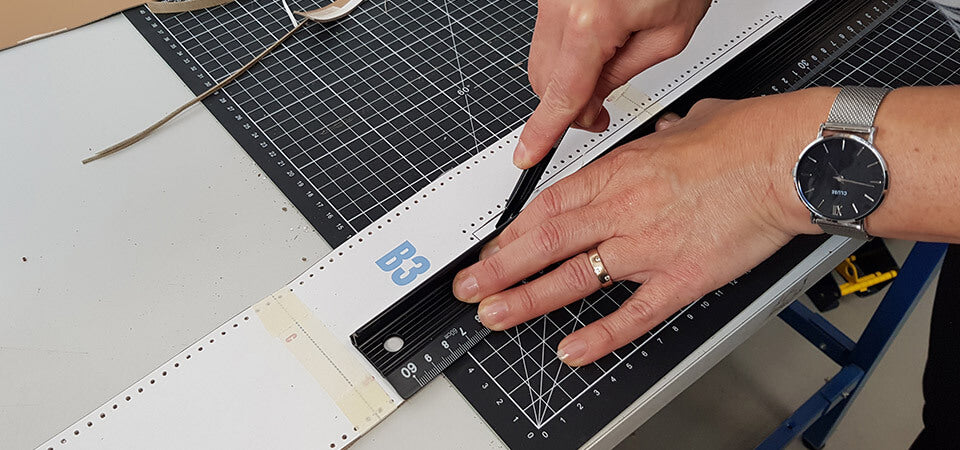
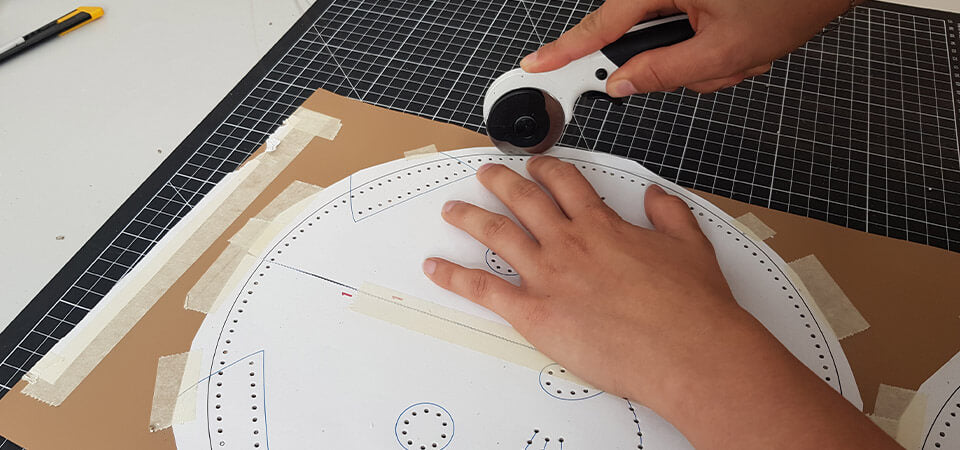
 |
 |
3. WORK ON THE FACE SHAPES
Sand the edges of the small face pieces (P5, 6, 7, 8, 9), the rectangle (P4) and the inner rectangle provided for the zipper (P3) as well as the ends of P3.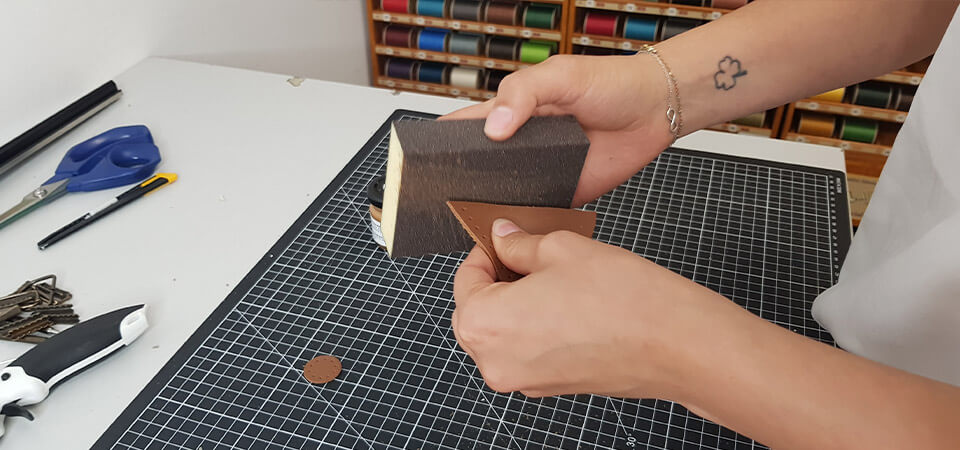
Work the edges of these pieces by applying edge dye. Apply 2 to 3 coats and sand between each coat.
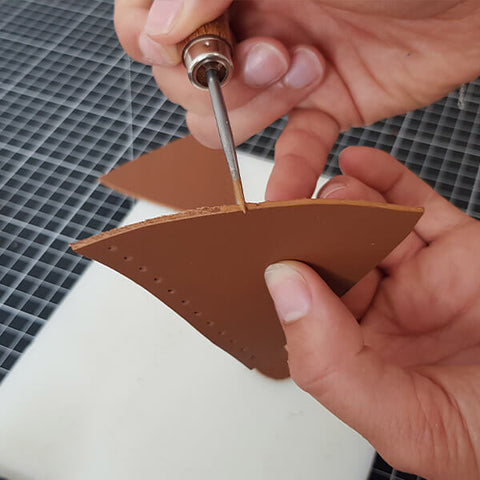 |
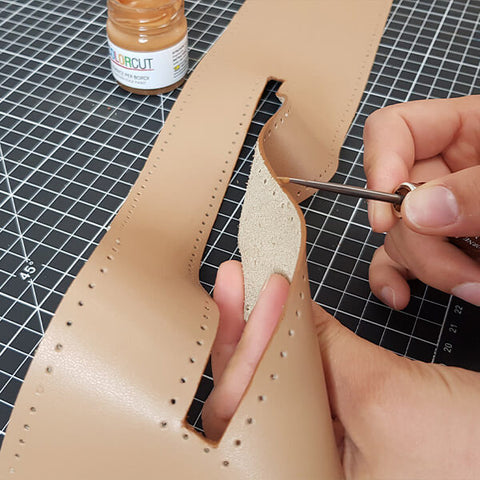 |
4. BEGIN LEATHER STITCHING
Start by stitching the cat's whiskers and mouth. To do this:
Cut the thread: generally equal to 4 or 5 times the length of the seam line.
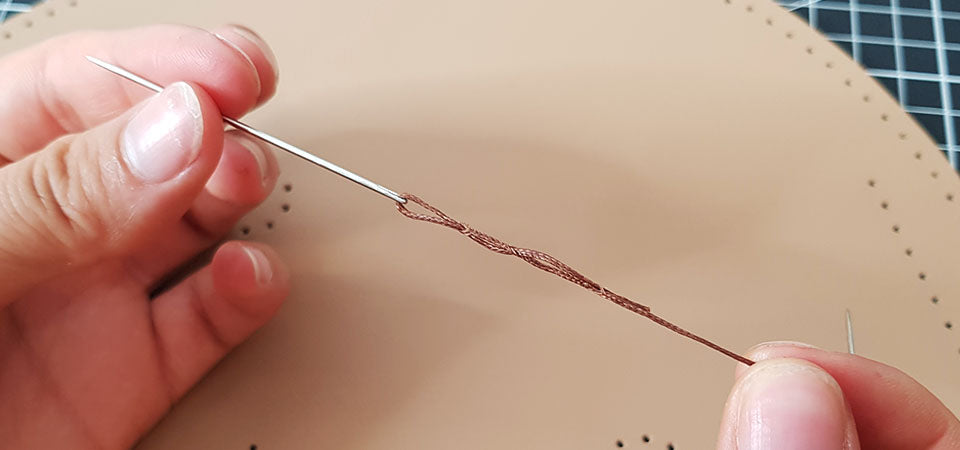
Thread a needle onto each end of the thread:
- Pierce the thread at needle height, then pierce it 2 more times.
- Flatten the end of the thread and pass it through the eye of the needle.
- Pull on the thread to tie the knot (see guide).
- Do the same to thread the other end of the thread onto the second needle.
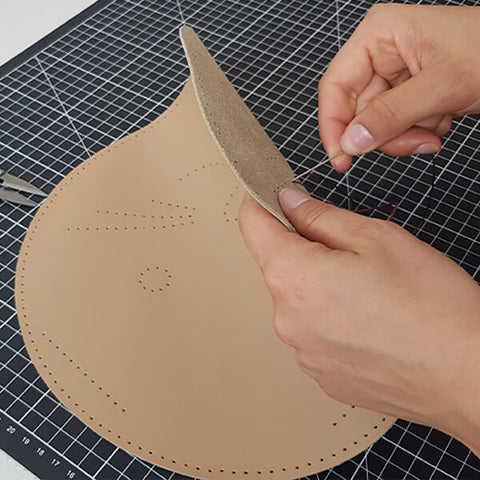
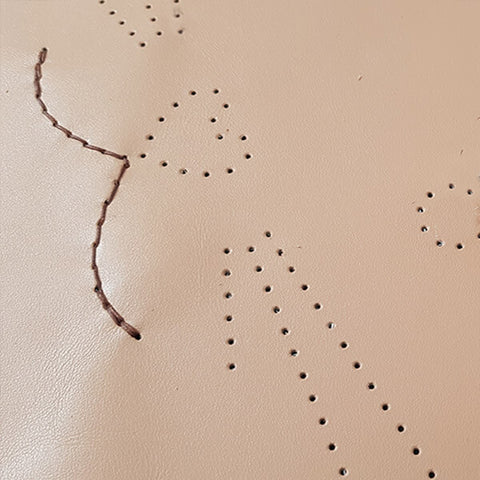
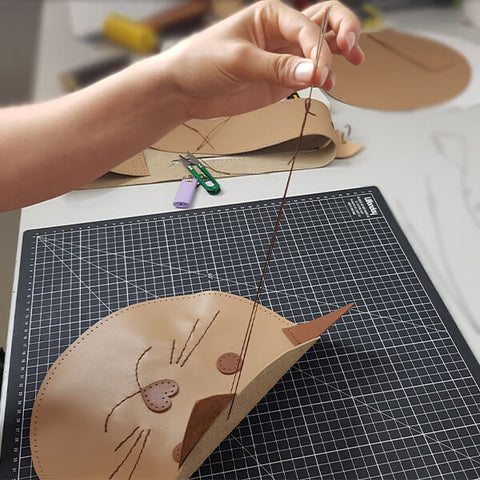
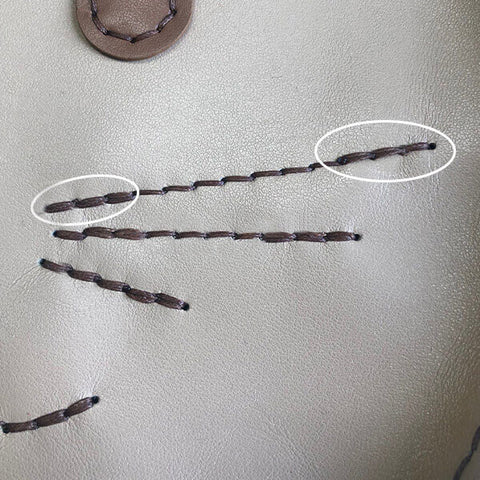
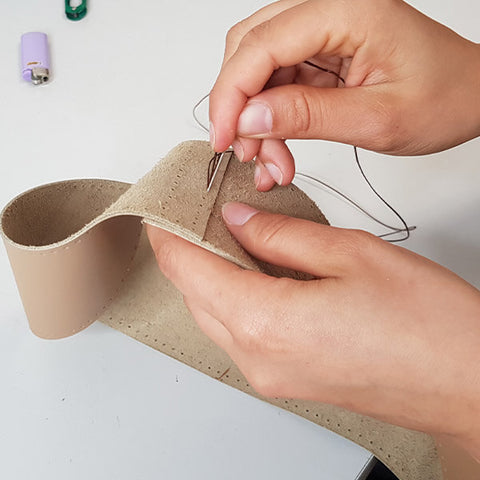
Pass one of the needles through the 4th hole and even out the threads (see photo 3). For aesthetic reasons, we started stitching at the 4th point to make 3 double stitches and thus have symmetry with our ending stitch (the 3 backstitches) => to be done only if the seams do not meet (see photo 4).
Stitch by passing each needle through each hole, one by one.
Then tighten the stitch well.
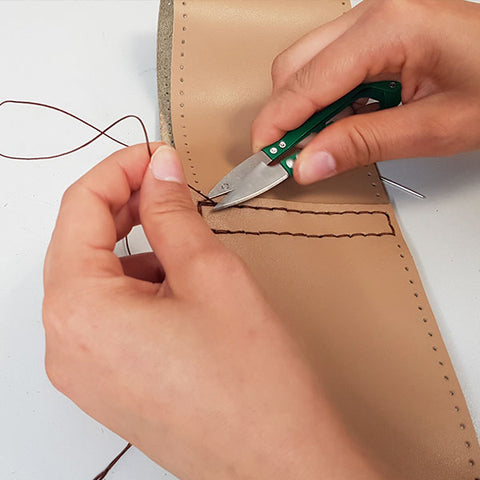
To finish the stitching: make 3 backstitches, cut the thread flush, then burn it (if polyester).
Finally, hammer the seams with a cobbler's hammer.
SEE THE GUIDE ON SIMPLIFIED LEATHER STITCHING >
 |
 |
 |
 |
5. GLUE THE LEATHER PIECES BEFORE STITCHING
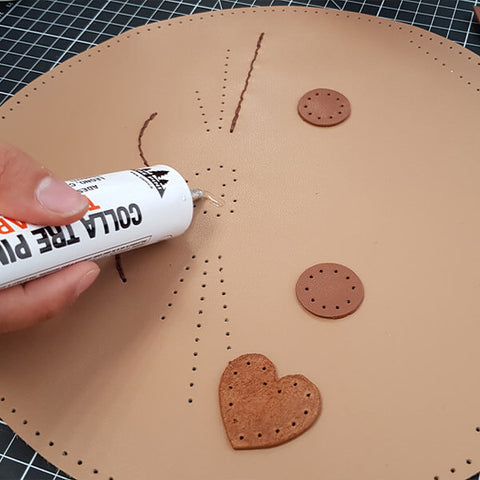
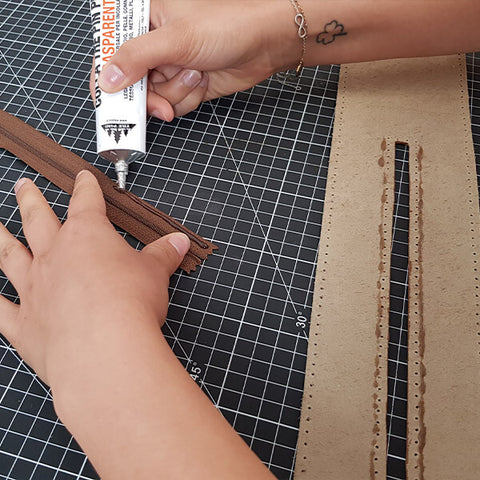
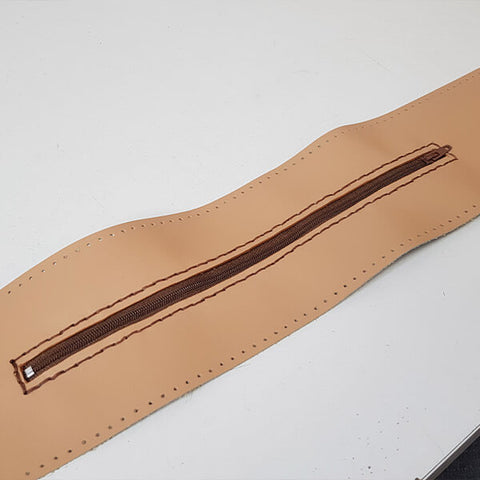
Glue the cat's eyes, nose, and ears with contact adhesive. Wait a few moments for the glue to set before gluing the leather pieces. Also glue the zipper (see photo 2).
 |
 |
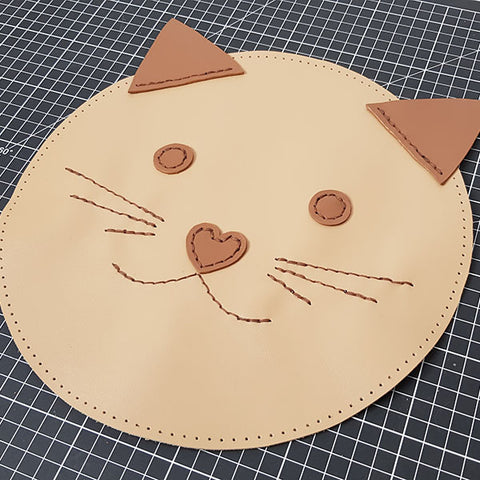
Make the different stitches for the face and the zipper. Tap the seams with a cobbler's hammer to flatten them.
 |
 |
 |
 |
6. FORM THE CURVE OF THE BAG
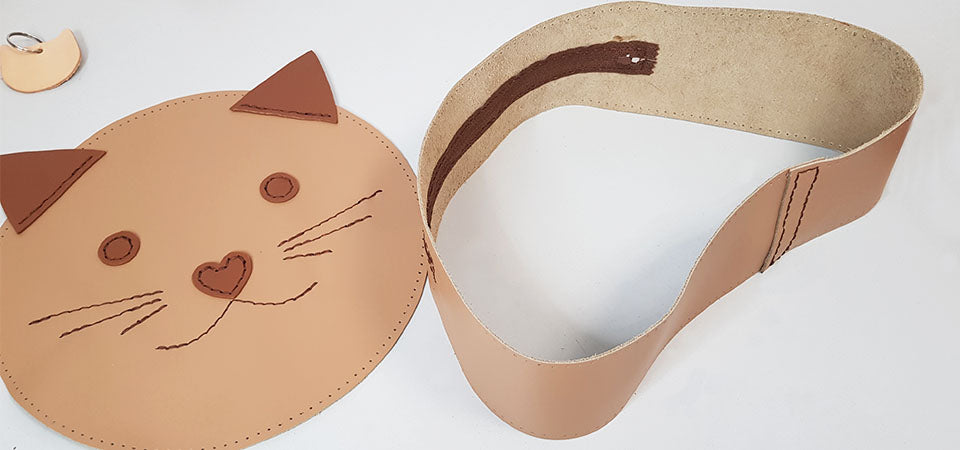
After sewing the zipper, glue the two ends of the strip (P3) to form a circle. Be careful when gluing: check that the holes are perfectly aligned. Then, sew a rectangle to form the curve.
 |
 |
 |
 |
7. CUT AND POSITION THE STRAPS
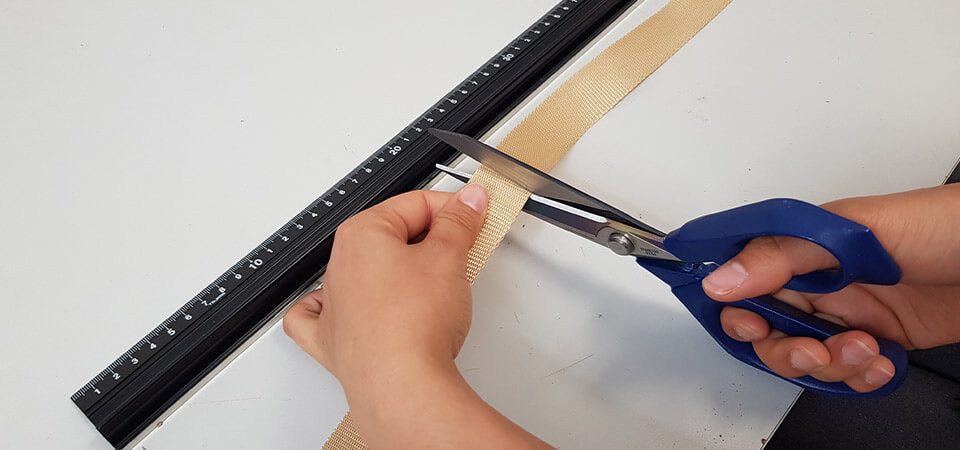
Cut the nylon strap into:
- 2 pieces of 70 cm
- 2 pieces of 15 cm
- 1 piece of 22 cm
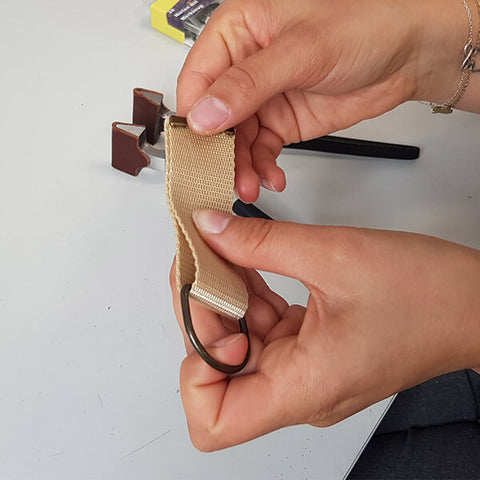
- Pass a D-ring and center it on each 15 cm strap.
- Fold the strap over itself and attach a strap end (and burn off any excess threads for a clean finish).
- Then rivet (T4 rivets) the two layers of the strap to secure the D-ring.
 |
 |
Position each strap on piece n°1 at the indicated location on the pattern (blue dots). Then rivet and sew the pieces.
 |
 |
Secure the end of each strap with a T4 rivet. 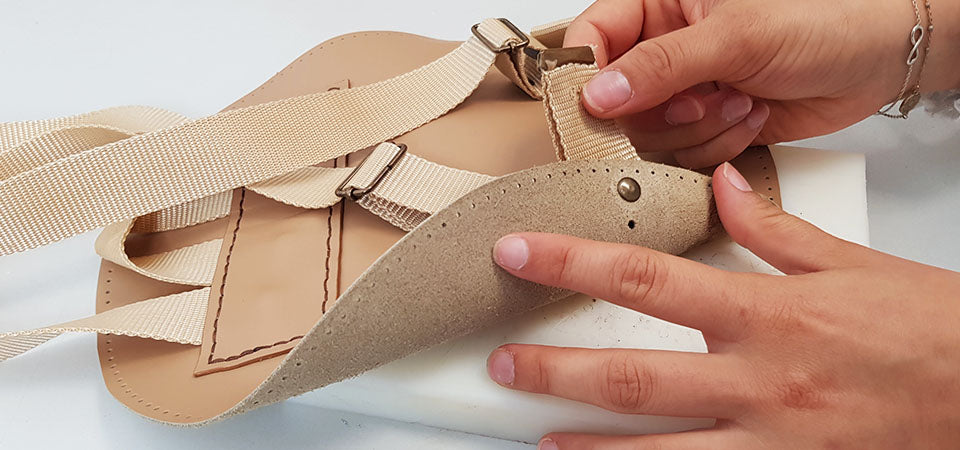
Take the 70 cm straps.
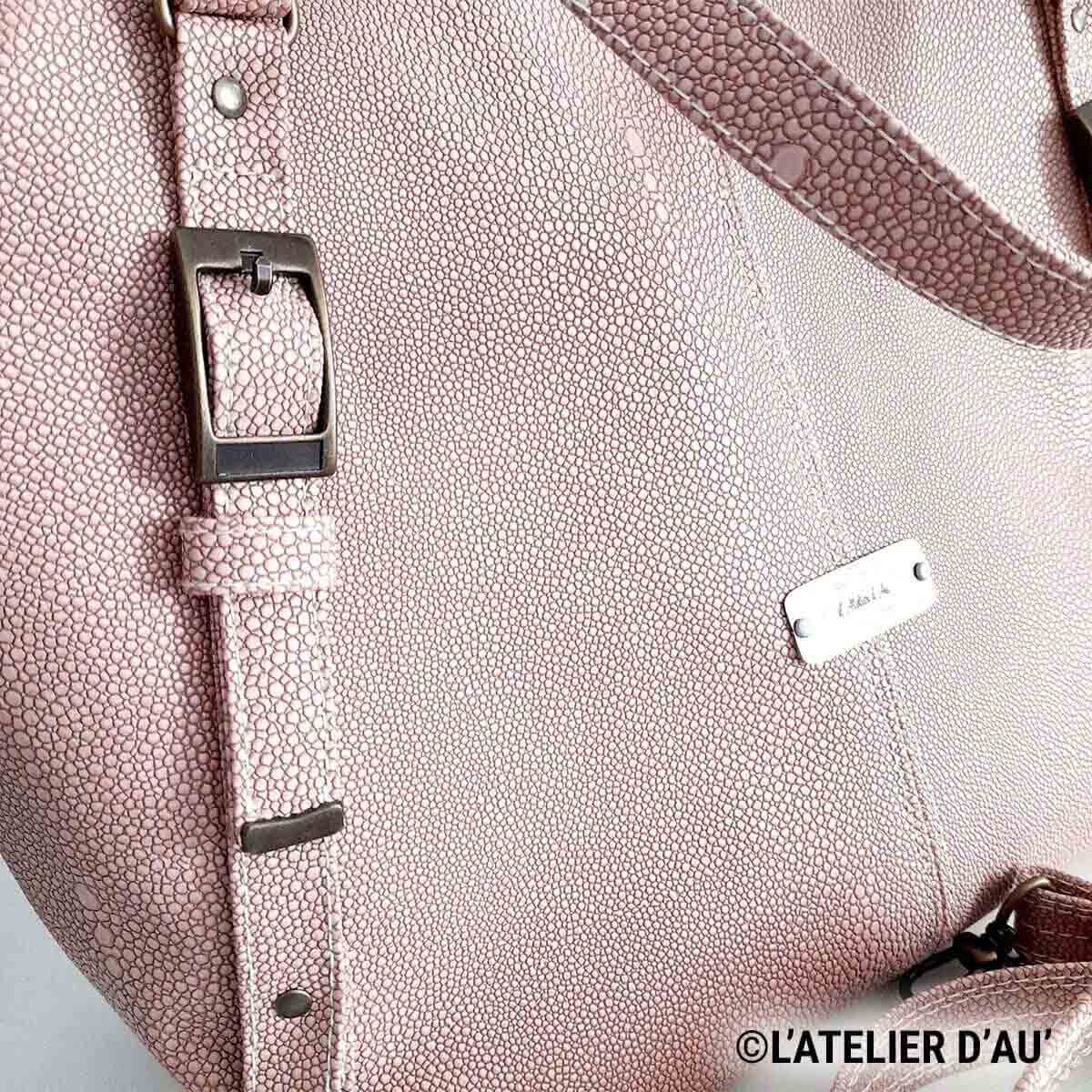
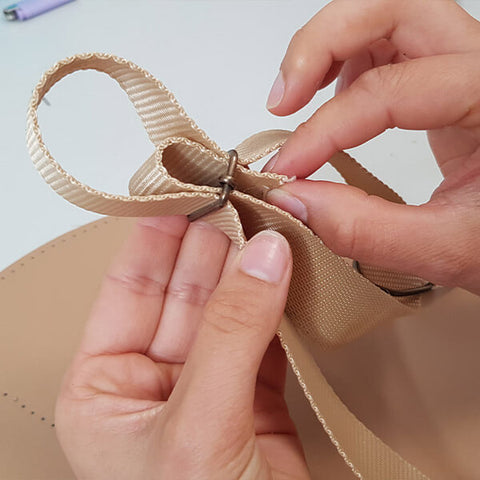
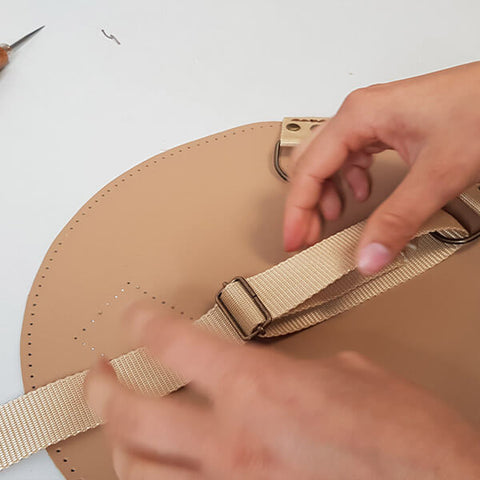
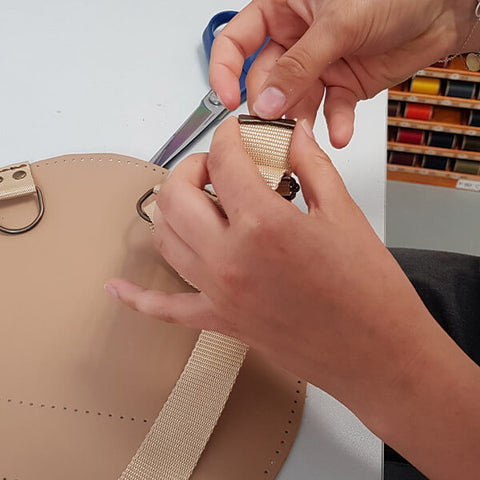
To create an adjustable strap: thread the slide buckle onto the strap, then pass the strap through the D-ring. Re-thread the end of the 70 cm strap through the slide buckle (photo 2). Then, close with a strap end (don't forget to burn off any threads).
 |
 |
 |
 |
To secure the strap well, rivet the two layers of the nylon strap together (be careful to rivet the correct layers).
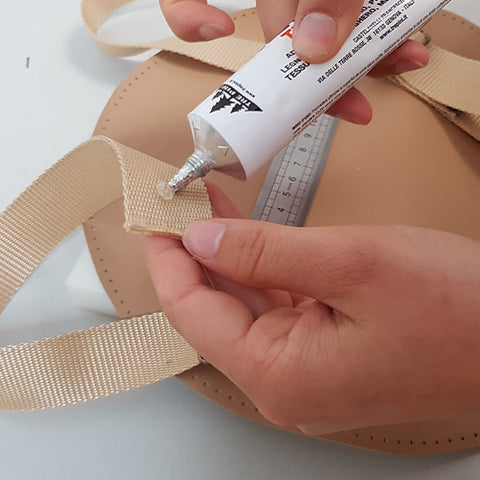
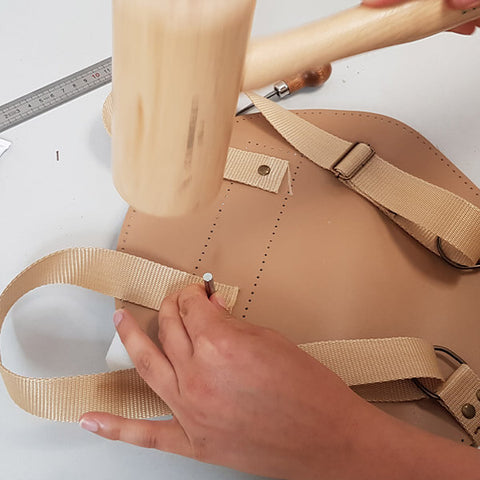
Burn the ends of the nylon straps to prevent fraying. Then, glue the ends of the 70 cm straps into the rectangle provided on piece n°1. Finally, attach the straps with rivets (see hole positions on the pattern).
 |
 |
Take the 22 cm strap.
Glue the ends of the handle into the rectangle, then rivet*.
*If you wish, you can place the rivets after gluing piece n°4 to prevent the leather from "buckling". 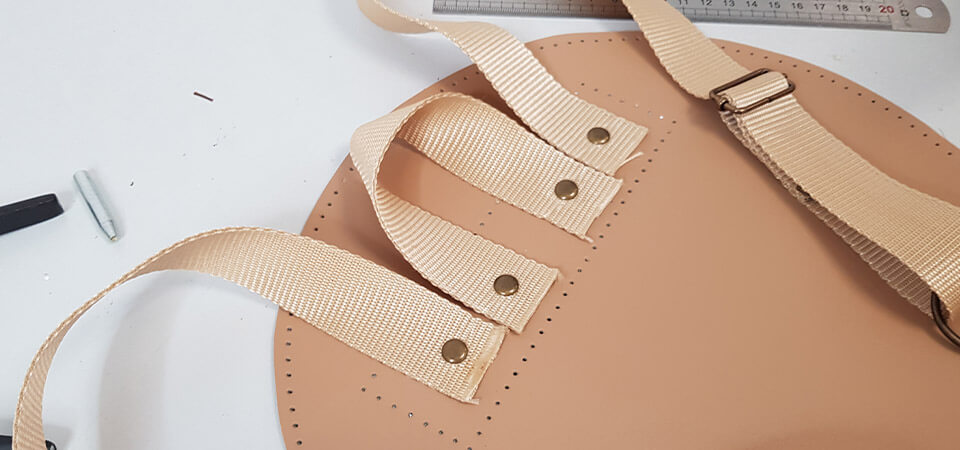
Finally, glue rectangle P4 then stitch it to piece n°1.
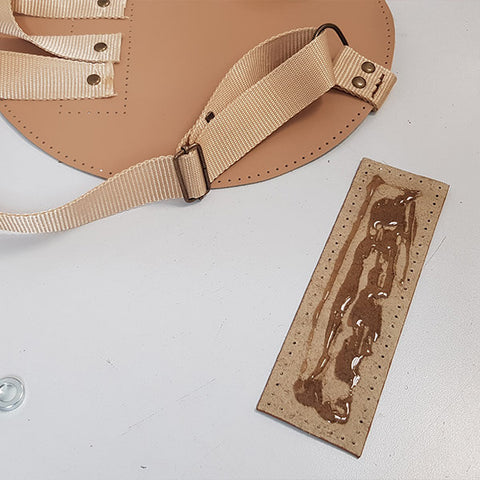 |
 |
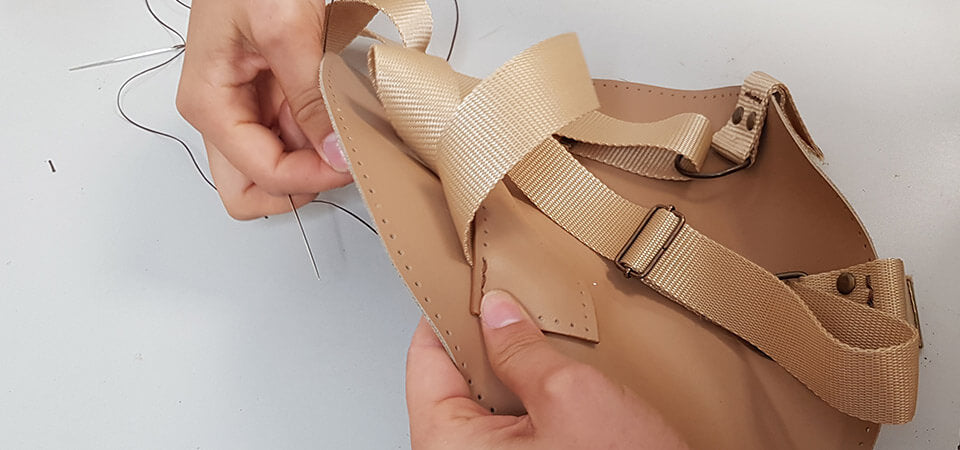
8. SHAPE THE BAG
Before starting to sew, hold the pieces together with sewing clips.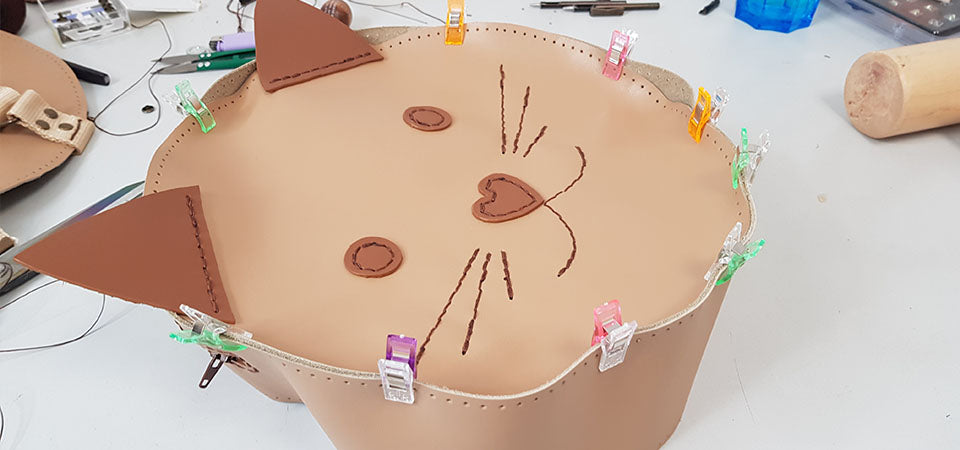
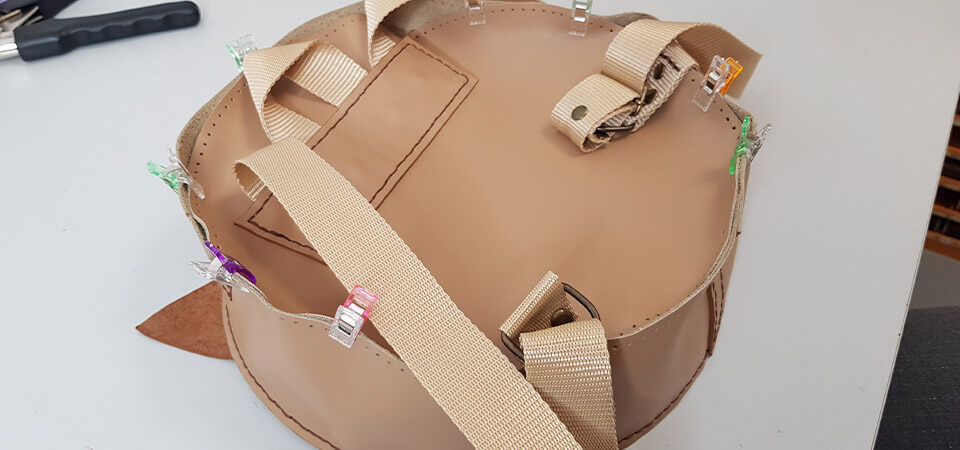
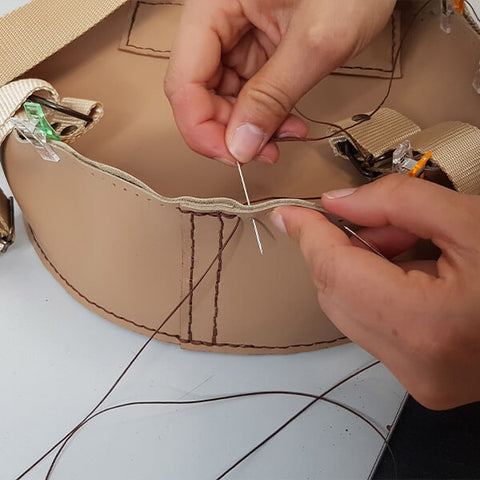
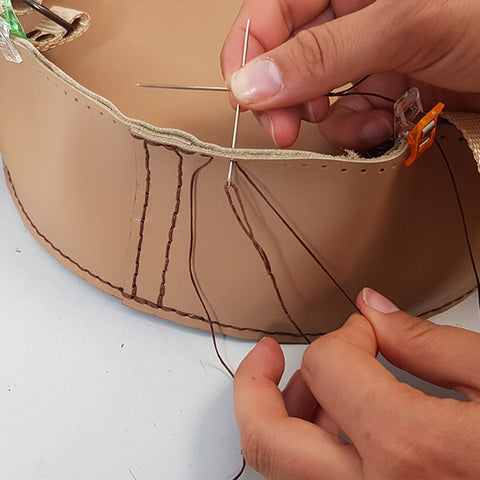
Stitch edge to edge, wrong sides together, piece n°1 and piece n°3, then piece n°2 and piece n°3. Pass each needle through each hole and tighten the stitch well.
 |
 |
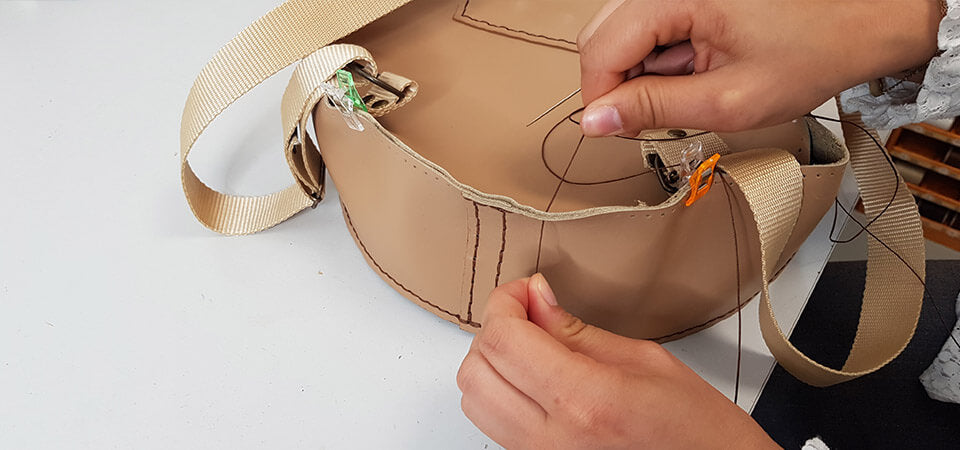
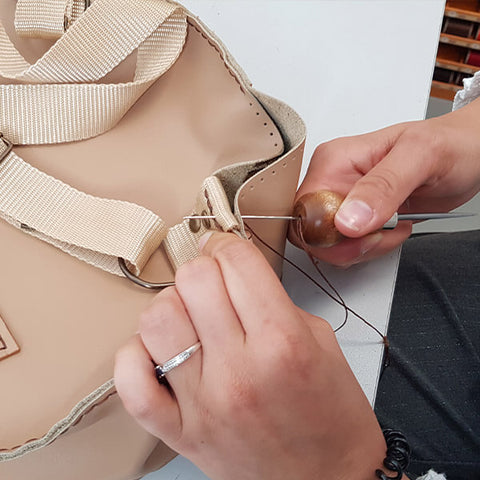
Passing the needle can be more difficult at the straps (too much thickness). Use a round awl and pliers to force the needle through.
 |
 |
Finally, flatten the seams with a joiner's hammer.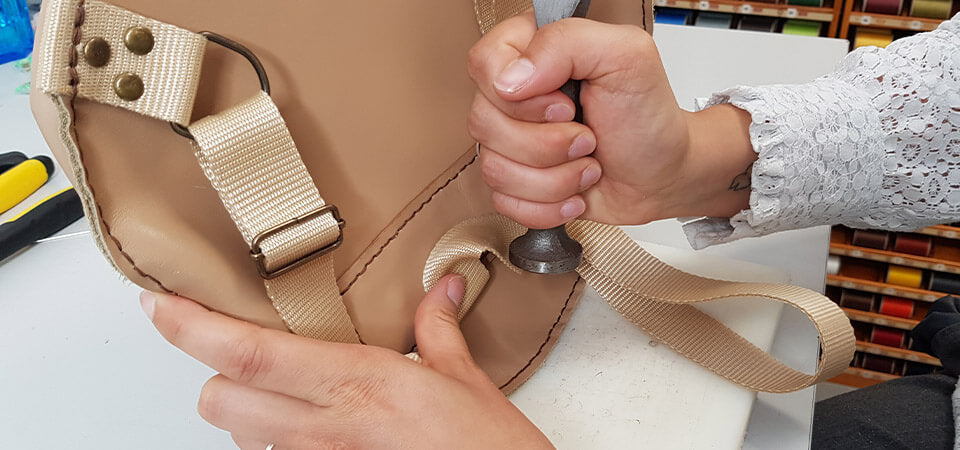
9. FINISH THE EDGES
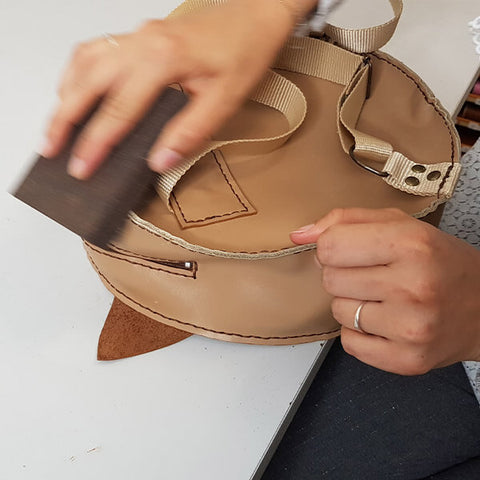
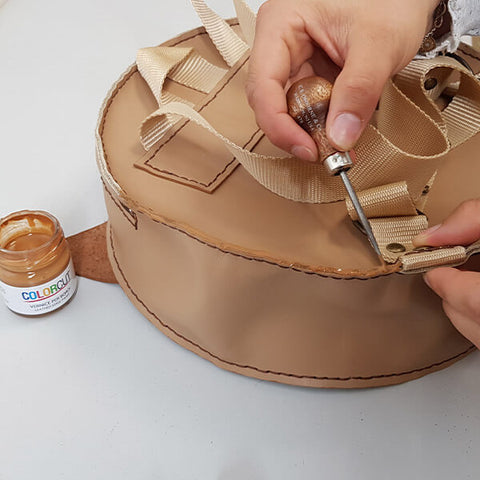
Sand the edges of the backpack, then apply edge dye. Repeat the operation 2 to 3 times if necessary.
 |
 |
10. MAKE THE NAME KEYCHAIN (OPTIONAL)
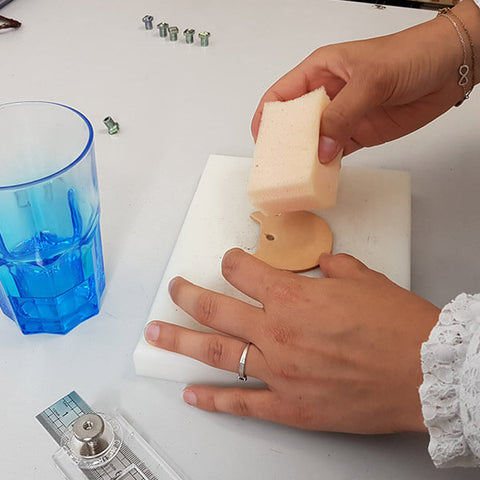
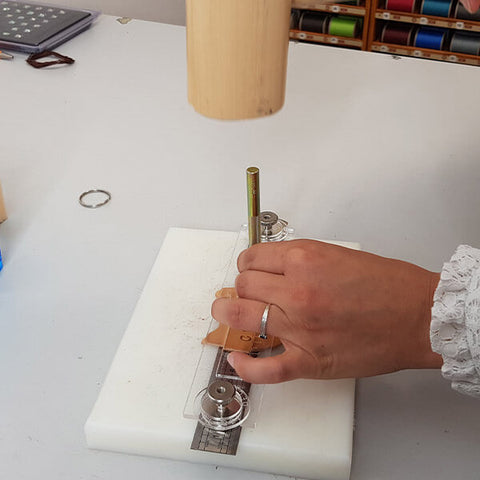
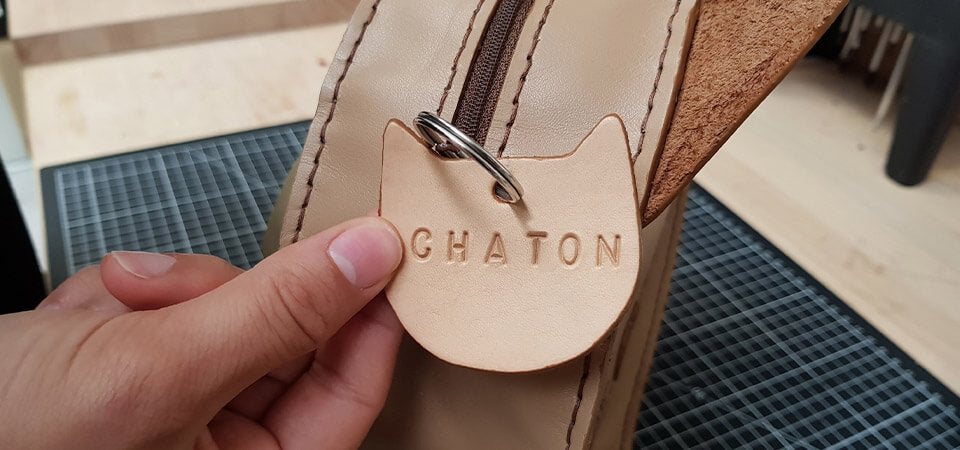
Dampen the cat-shaped keychain. Then, stamp the name with alphabet stamps.
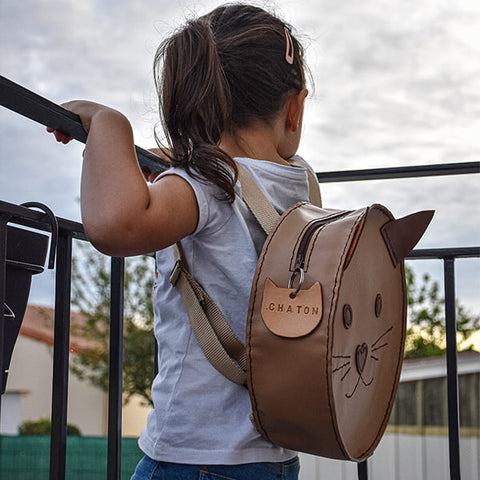
Thread the half-round ring through the pre-drilled hole on the leather cut-out, then attach the keychain to the backpack's zipper. The keychain will make it easier to open the zipper.
SEE THE GUIDE >
 |
 |
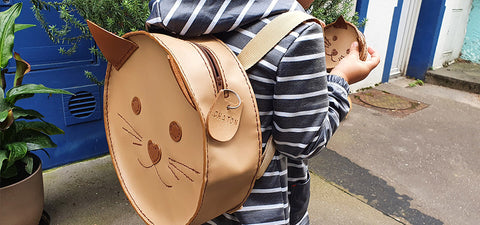
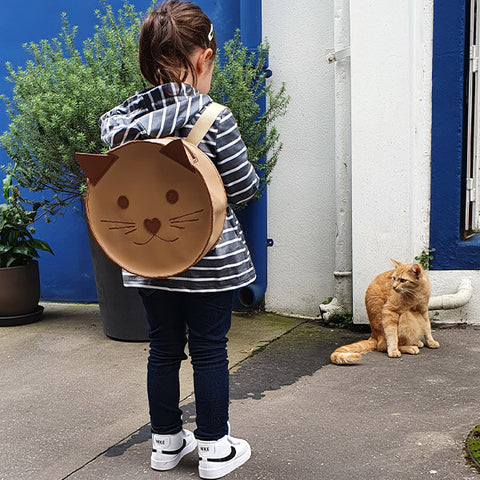
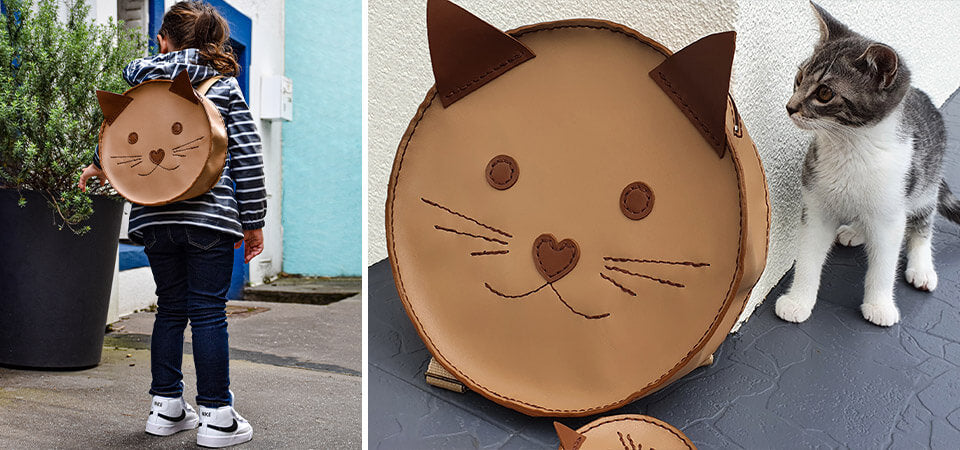
YOUR CAT BACKPACK IS FINISHED!
 |
 |
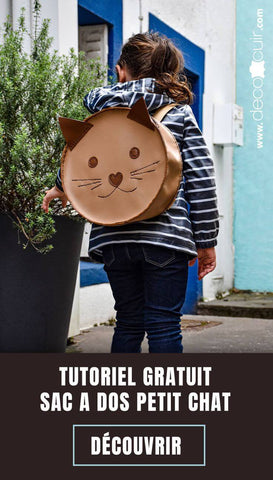
DON'T HESITATE TO PIN THE PHOTOS ON PINTEREST TO SHARE THE ARTICLE!