









MATERIALS NEEDED
To complete this tutorial, you will need:
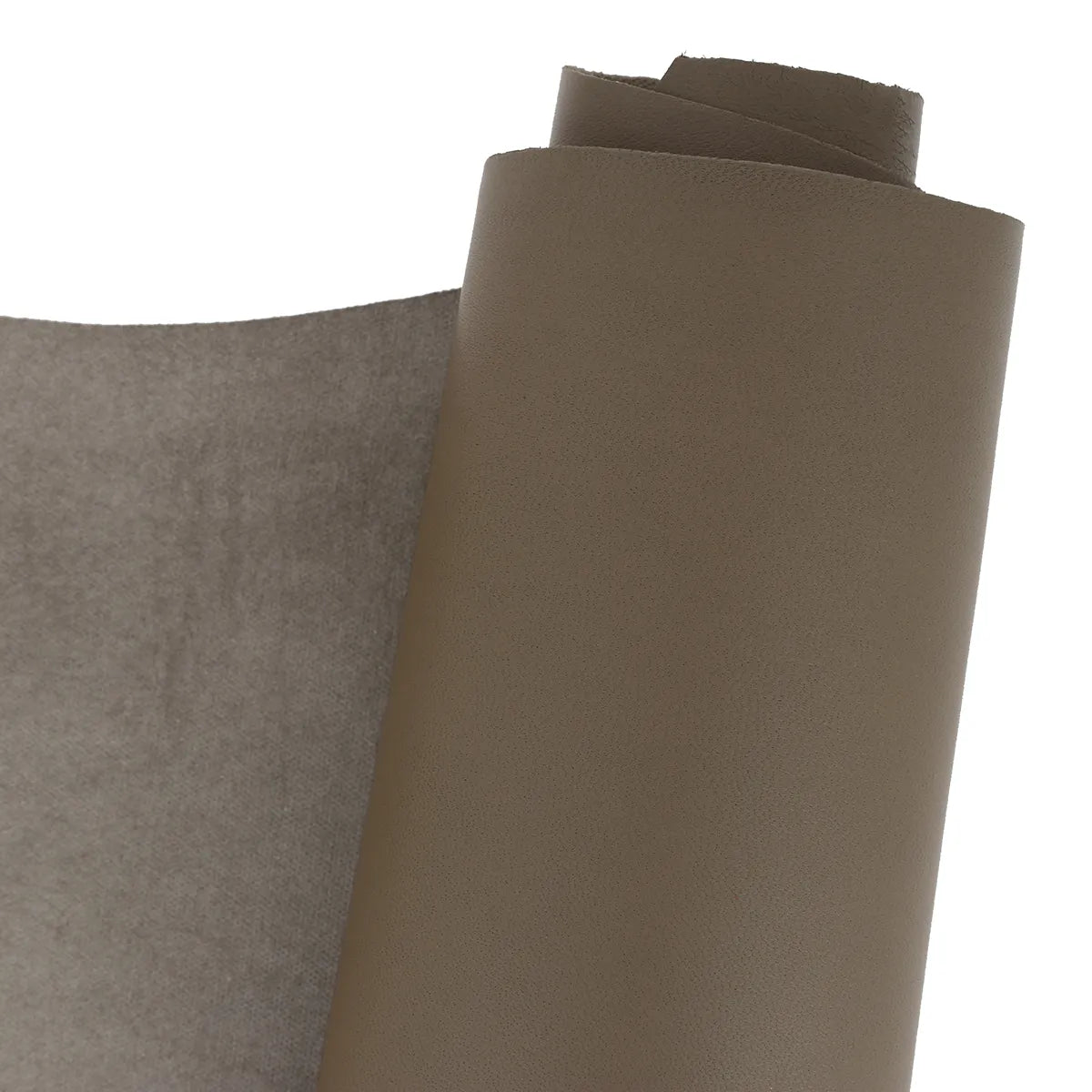
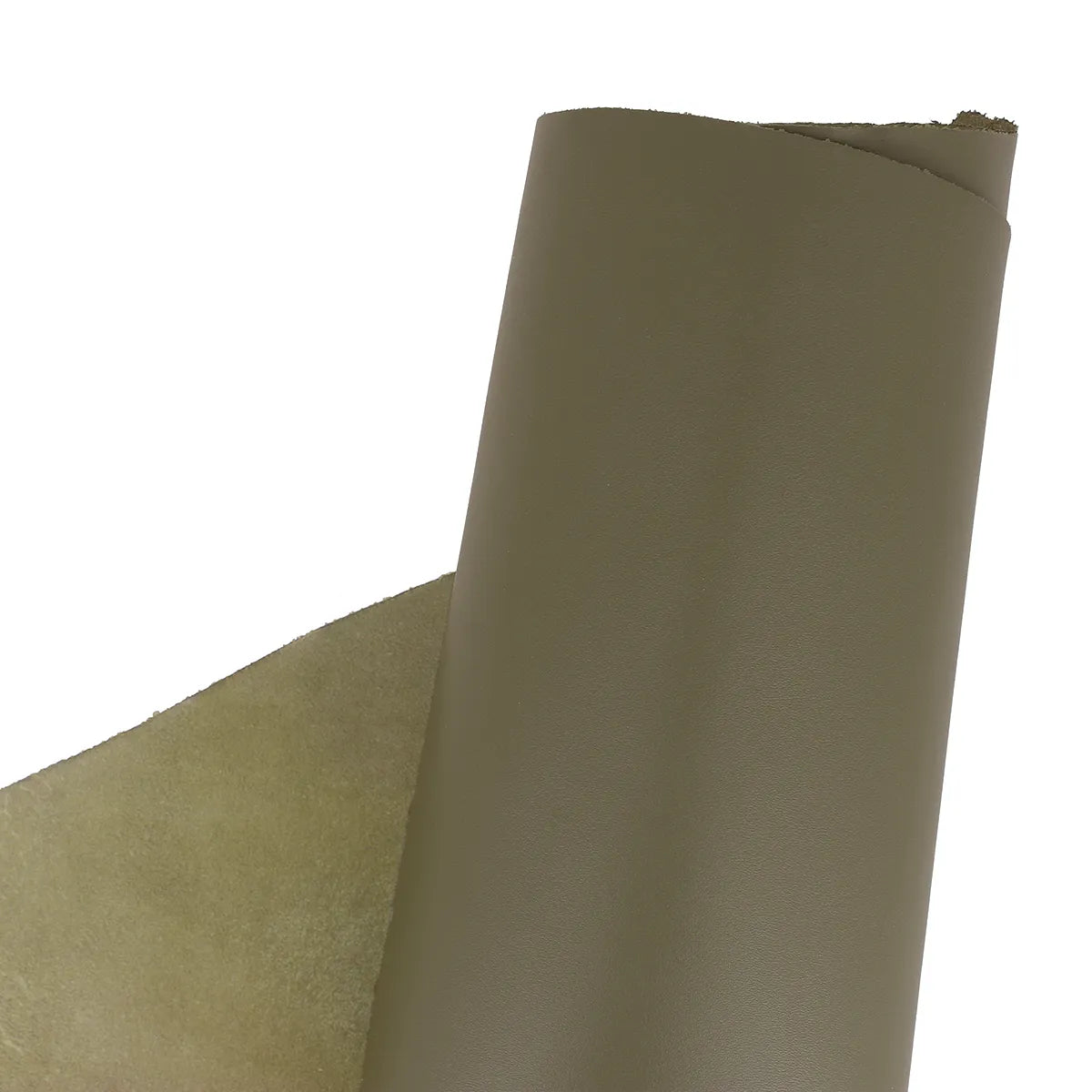
- 1 leather hide - Surface 0.55 m² - Thickness 1 mm
- 1 microfiber Alcantara lining 0.50 x 1.45m
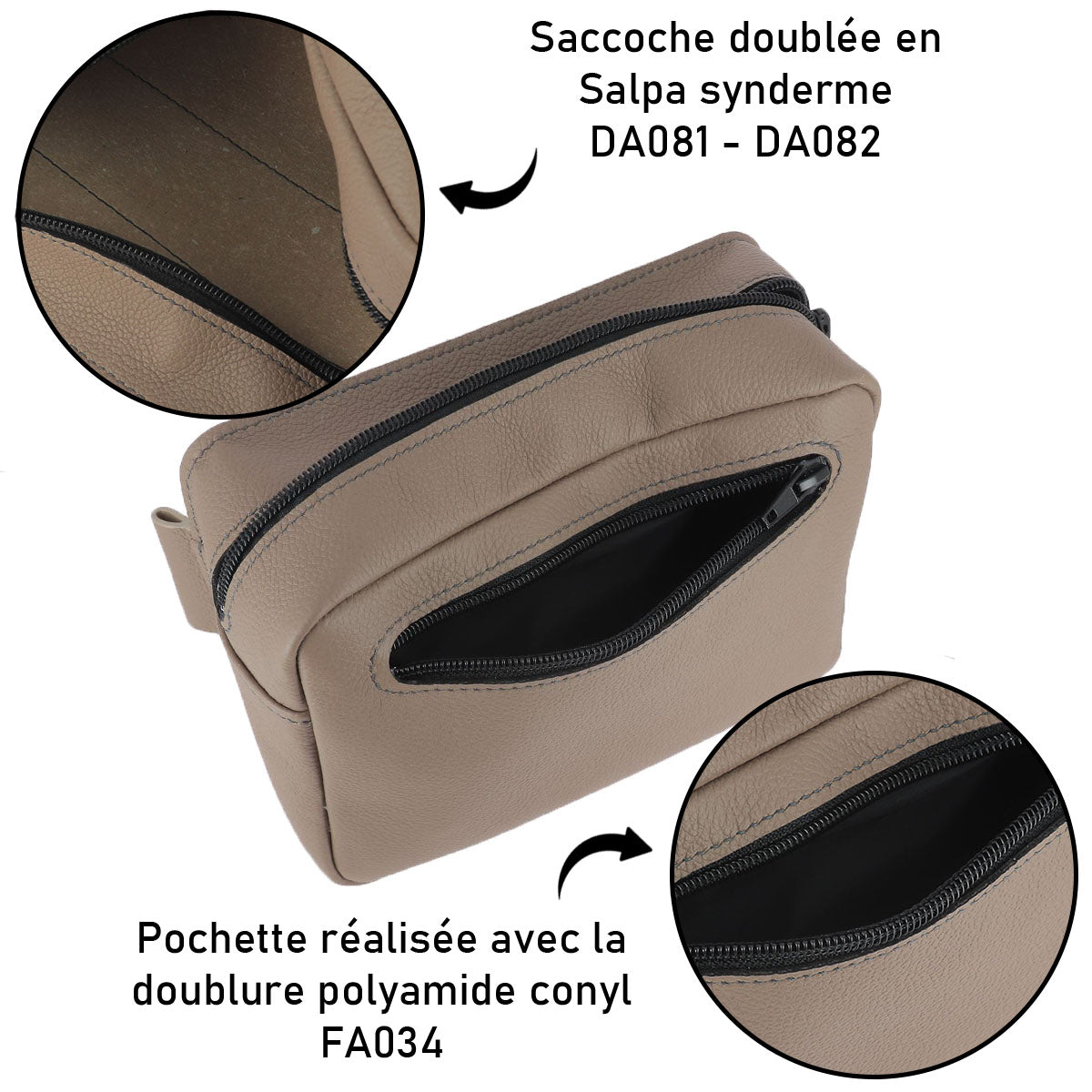
- 1 piece of Salpa reinforcement 30x40 - Thickness 0.4 mm
- 1 piece of Salpa reinforcement 30x40 - Thickness 1 mm
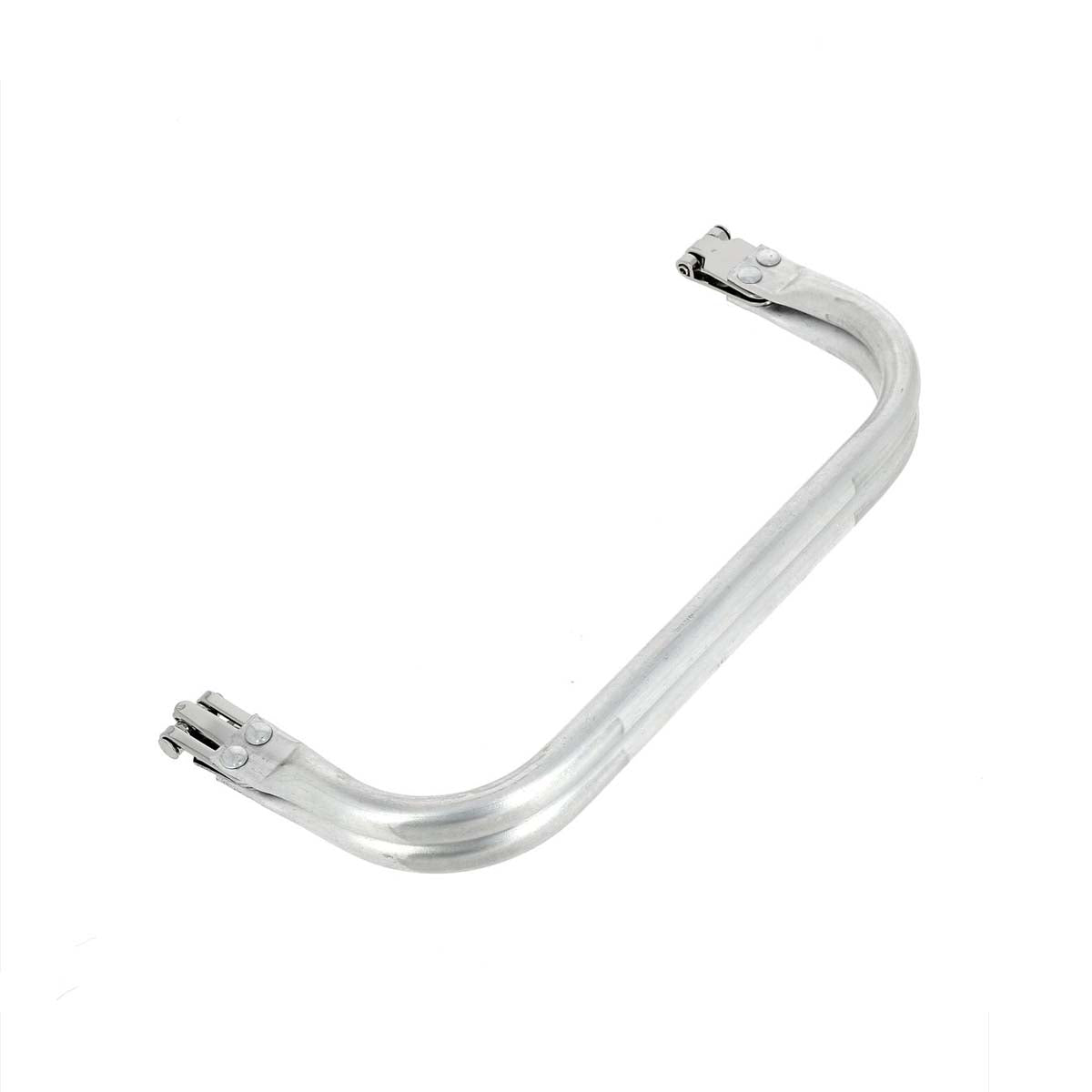
- 1 aluminum tubular bag frame / handle - length 19 cm
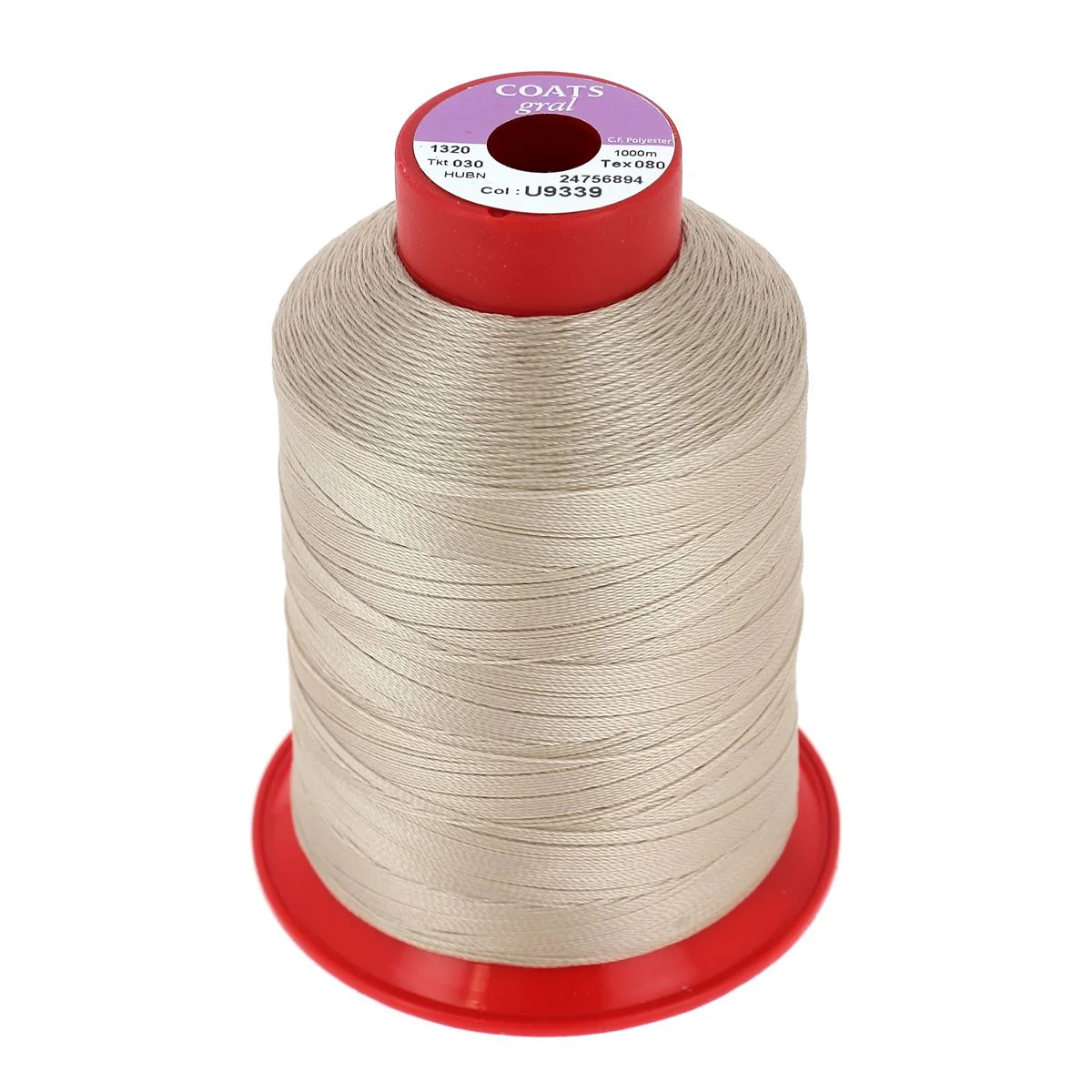
- Spool of GRAL N°30 polyester thread
- Waxed linen thread bobbin MeiSi M50
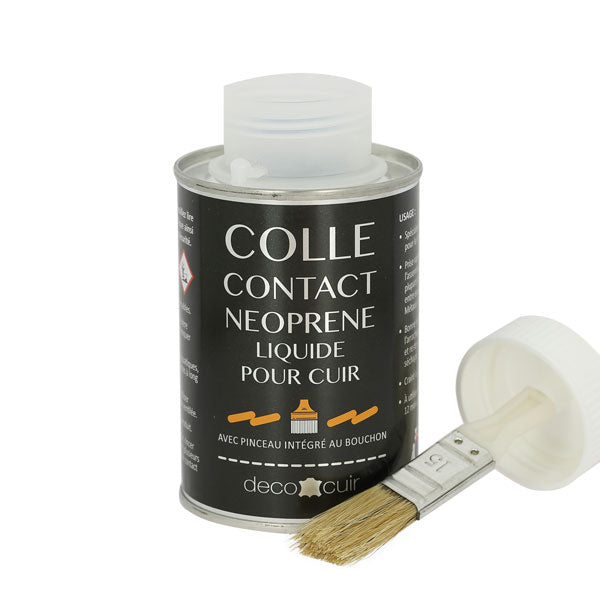
- Neoprene glue
And the following equipment:
Feel free to watch the presentation video below, especially to learn how to adjust the bag frame according to the thickness of your leather!
Tutorial video
1. Glue the pattern
Download the pattern then print it at actual size. Assemble the different pieces using adhesive tape.

Secure the different pattern pieces to the grain side of the leather using masking tape to avoid damaging the leather grain. Also tape the pattern to the lining and salpa pieces.
Warning: before taping pieces P5 to the leather, bond two pieces of leather approximately 10 × 10 cm, flesh side to flesh side. Then, tape the pattern for pieces P5 onto this bonded leather piece.

2. Punch holes and cut
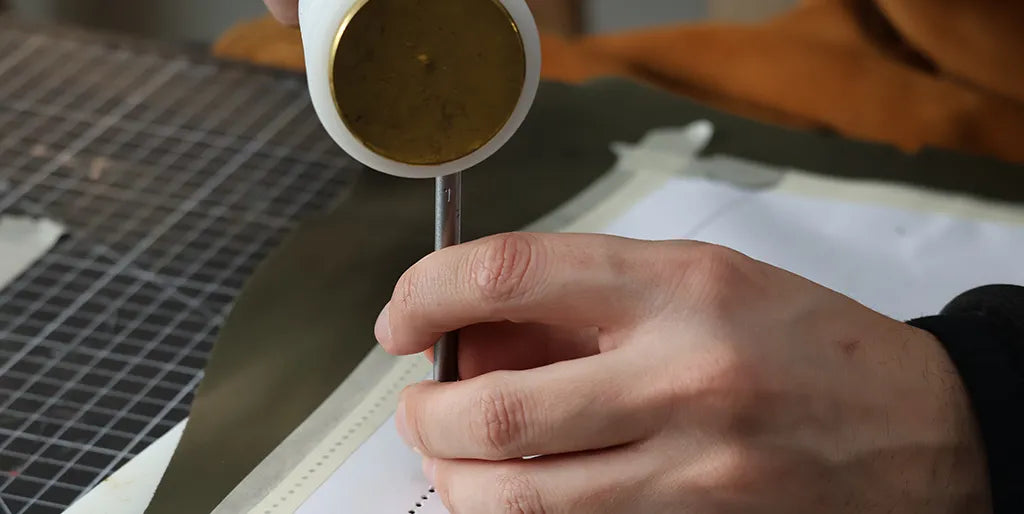
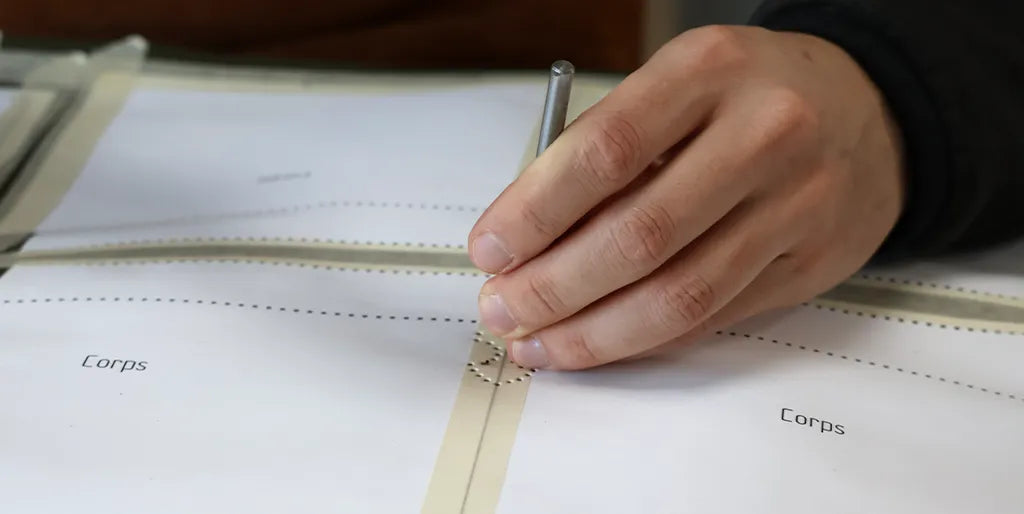
For simplified leather stitching (stitching with holes), punch the stitching holes using a Ø 1 mm punch at this stage. The stitching holes are indicated on the pattern.
For saddle stitching, mark the stitch points with a pricking iron after cutting the pieces.
 |
 |
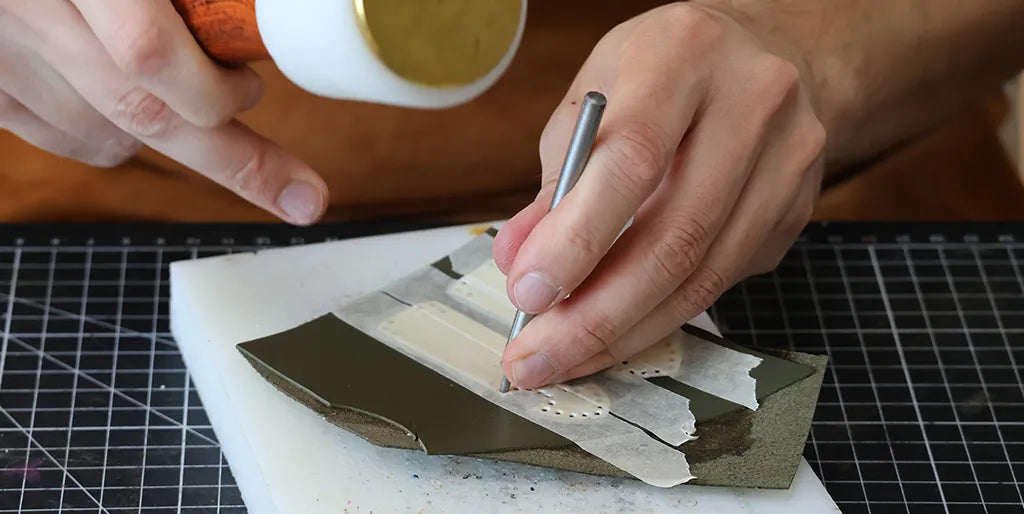
Cut the various leather pieces using a cutter. Note that the rounded corners at the top of pieces P1 and P6 should be cut after gluing the lining (see step 5). For the inner rounded parts of pieces P5, use a Ø 10 mm punch.
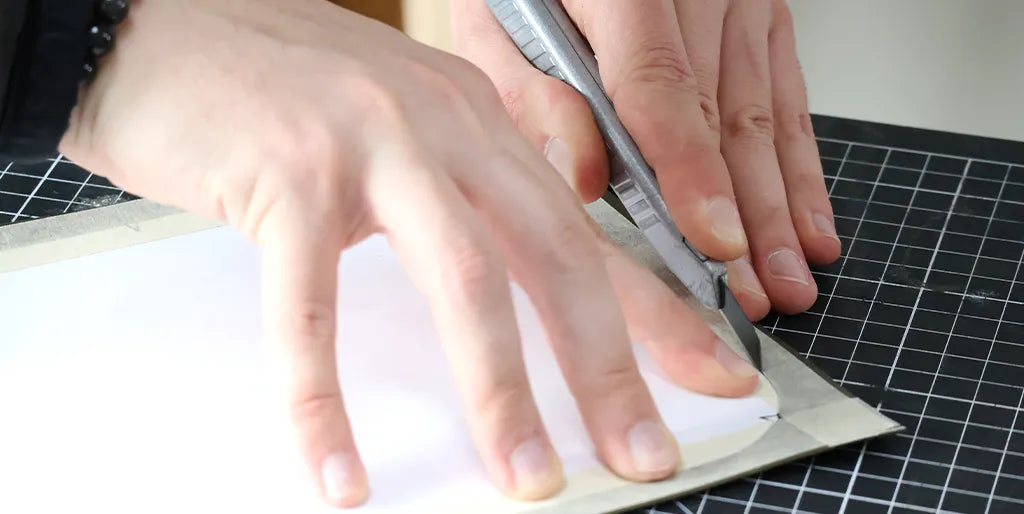
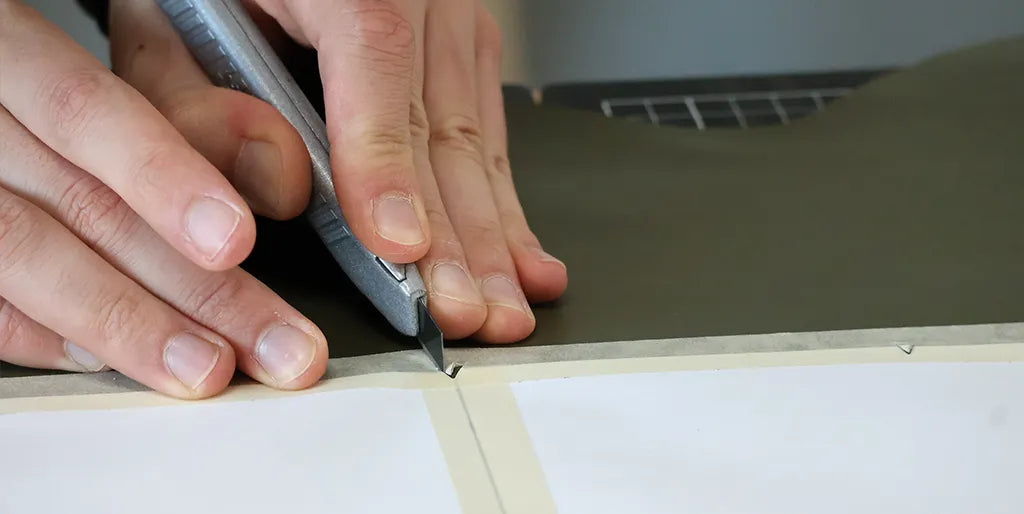
Don't forget to make the notches: they are indicated by V's on the pattern. Notches make assembly easier and help align the pieces.
3. Cut the lining and reinforcement
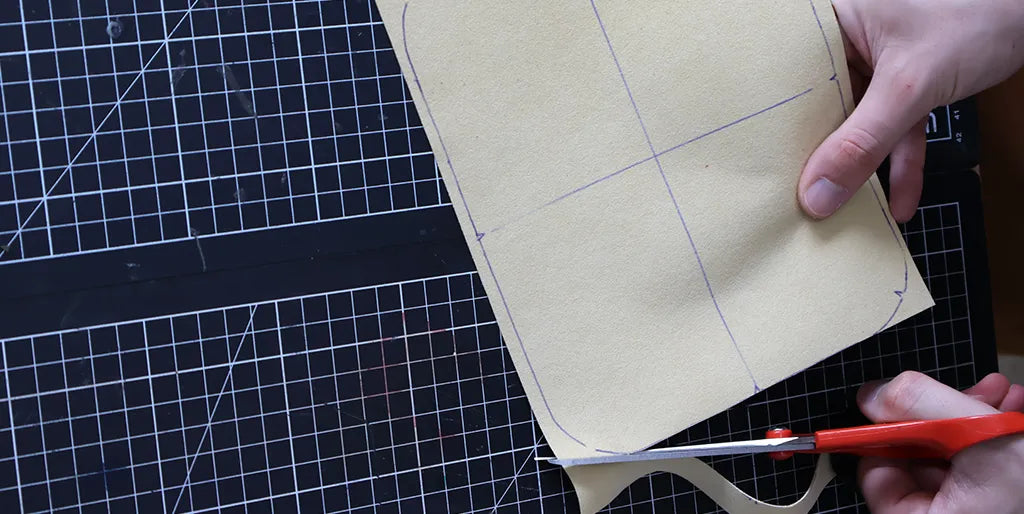
Also cut the lining and salpa pieces. Also make notches on the lining.
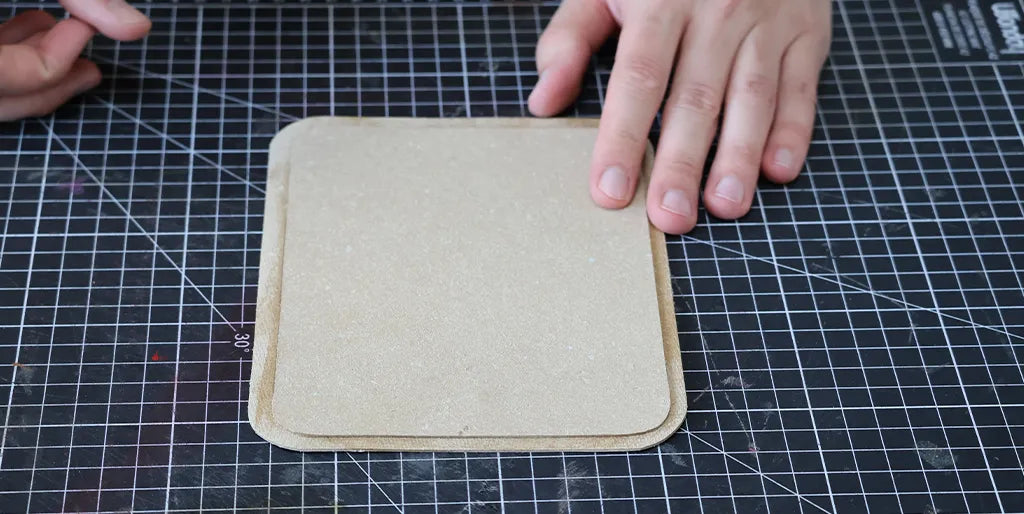
The P4 salpa 1 mm piece is deliberately smaller than the P3 salpa 1 mm piece to avoid extra thickness when the microfiber is folded back (next step).
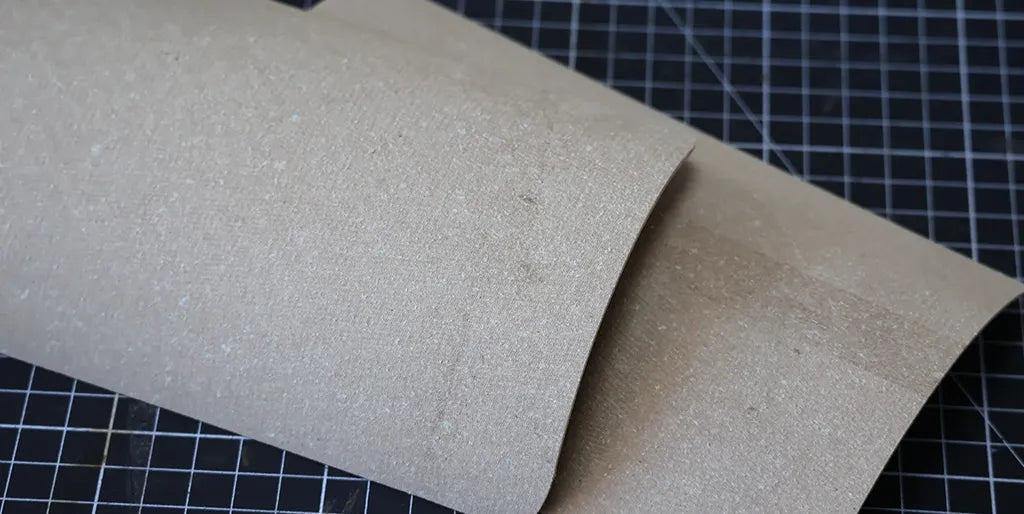
4. Make the base
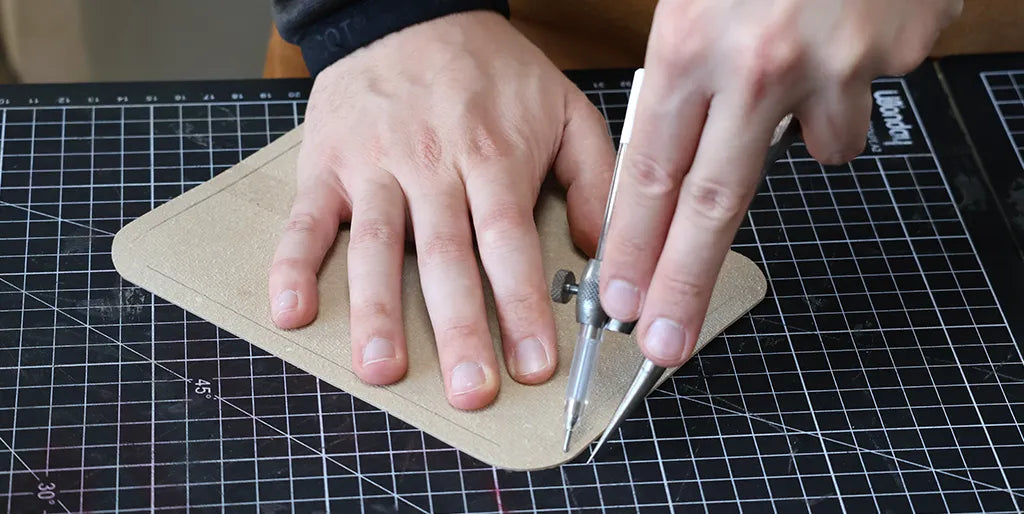
Using a compass, mark 1 cm from the edge of piece P3 in 1 mm salpa to correctly position piece P4 in 1 mm salpa.
Using contact adhesive, bond piece P4 to the center of piece P3.
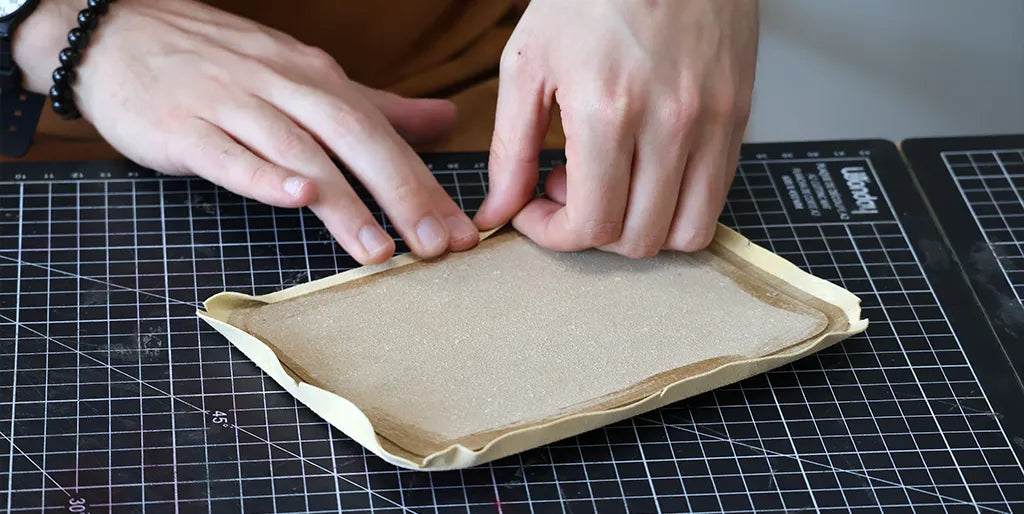
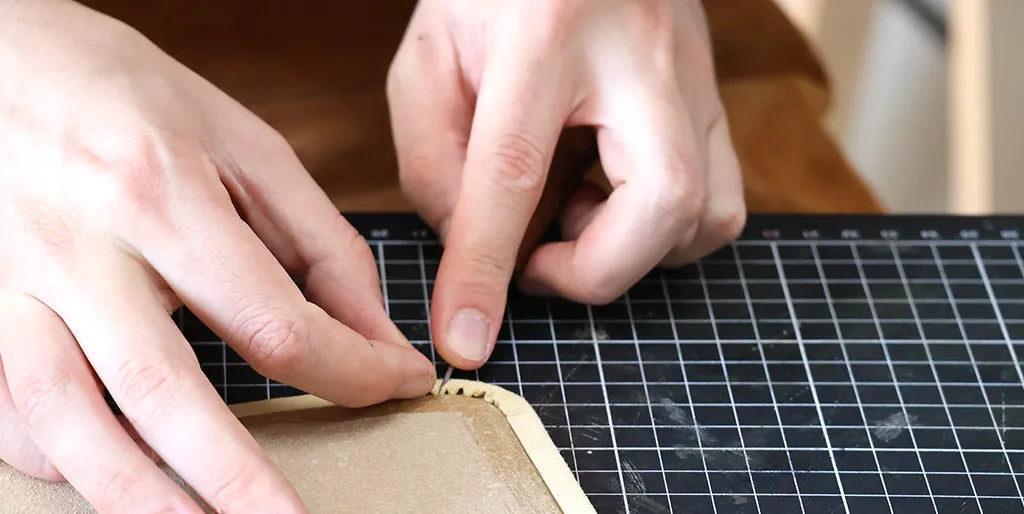
Apply contact adhesive to the back of piece P2 (lining) as well as to the back of piece P3/P4. Then glue the P3/P4 salpa reinforcement to the center of piece P2. Using a round awl, fold the lining over the salpa and flatten the bond with a riveting hammer.
 |
 |
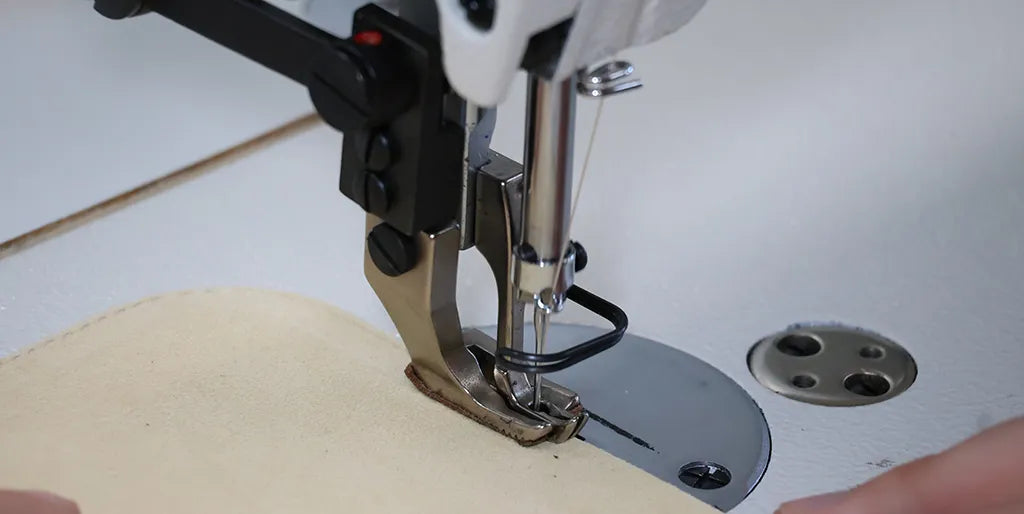
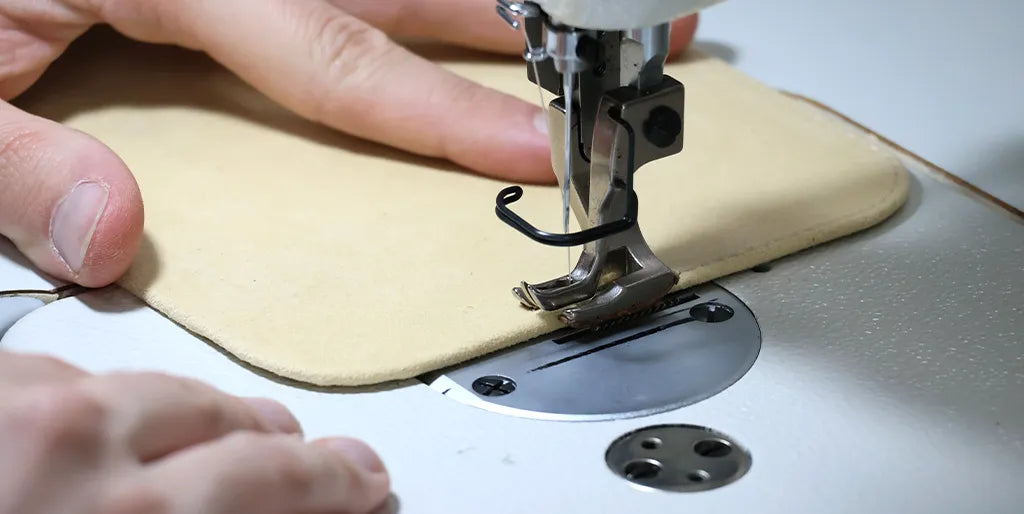
Stitch 3 mm from the edge.
 |
 |
5. Glue the lining
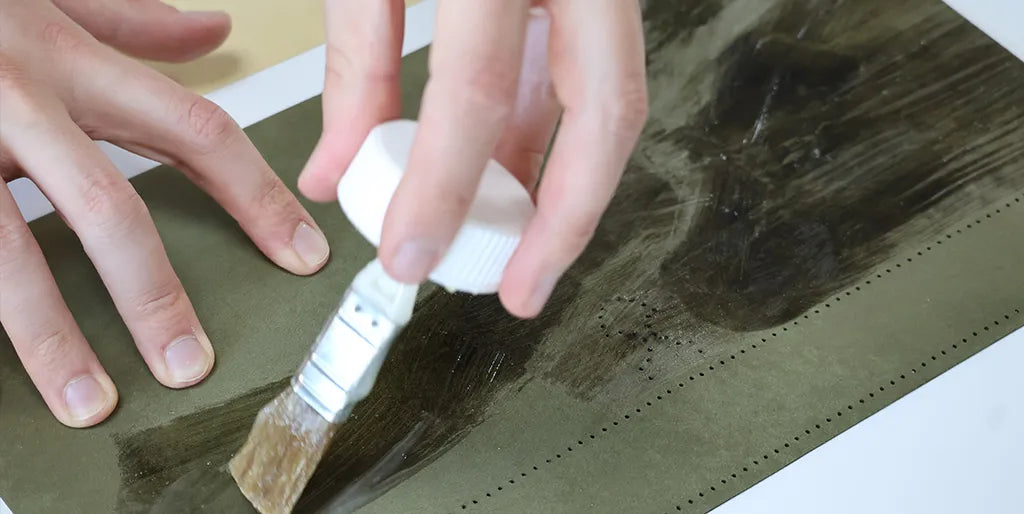
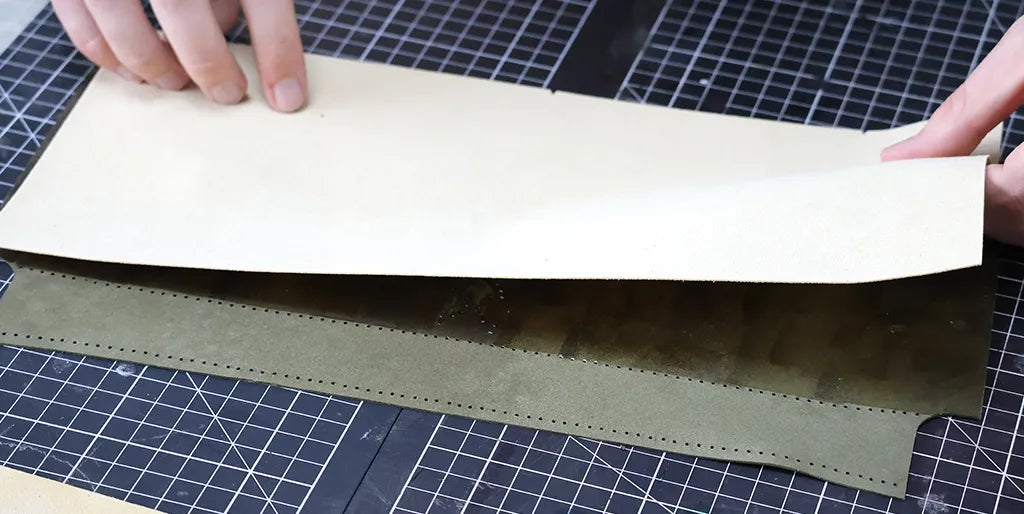
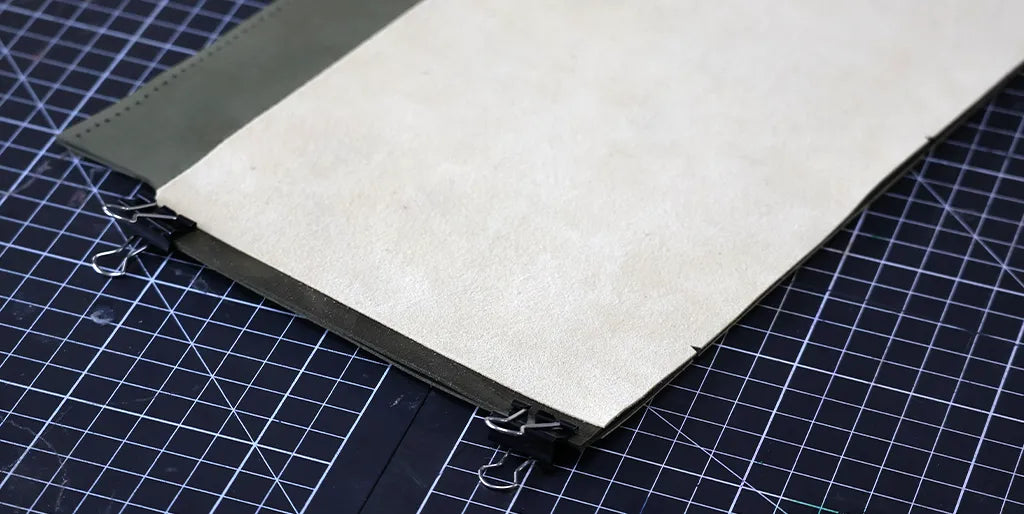
Apply contact adhesive to the back of pieces P1 (leather), at the second stitch line (see photo), as well as to the back of piece P6 (lining). Bond pieces P6 to the bottom of pieces P1. Piece P6 should cover the stitch holes of the second line of piece P1.
 |
 |
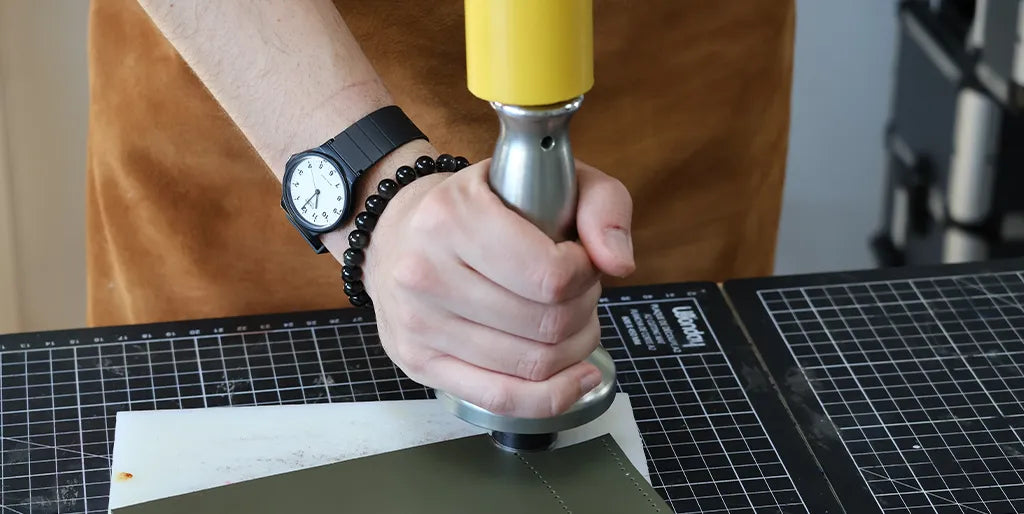
Then, cut the rounded corners at the top of pieces P1 and P6. Use a Ø 25 mm round punch or a cutter.
6. Punch holes
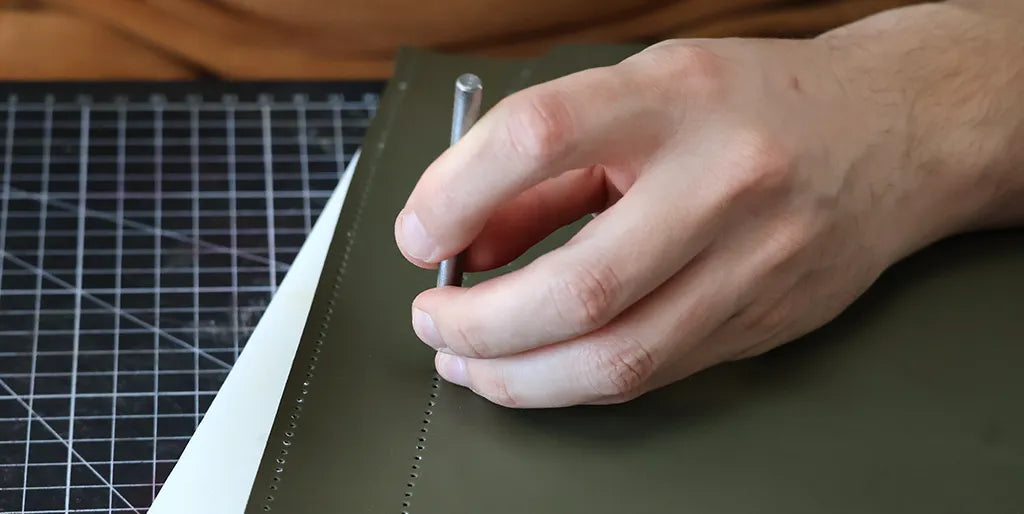
For simplified stitching, after bonding the pieces, punch stitching holes (with a Ø 1 mm punch) in the lining, based on those already punched in the leather.
7. Reinforce the top
To reinforce the pouch, we recommend adding a strip of tear-resistant tape to the top of pieces P1. Note that for simplified stitching, you will also need to punch the tear-resistant tape: proceed in the same way as in the previous step.
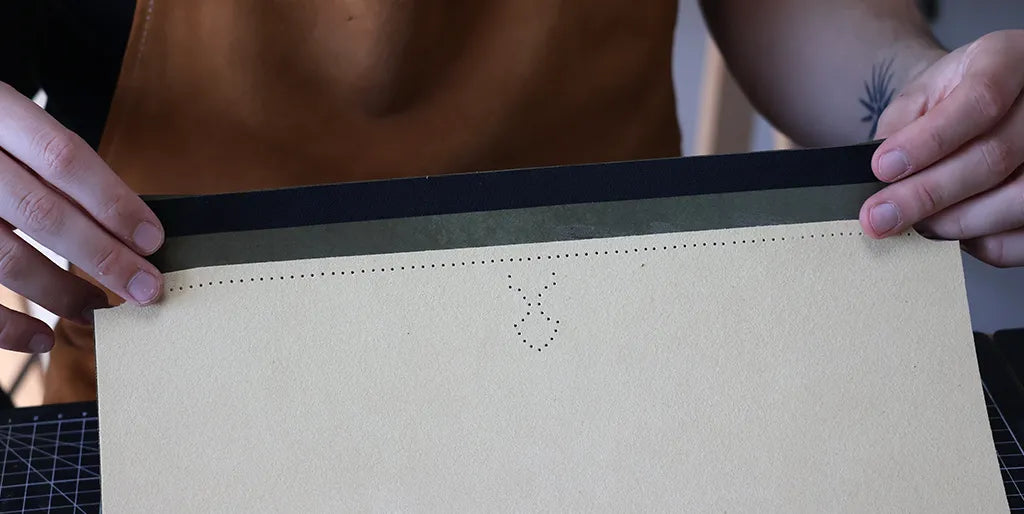
8. Stitch the sides
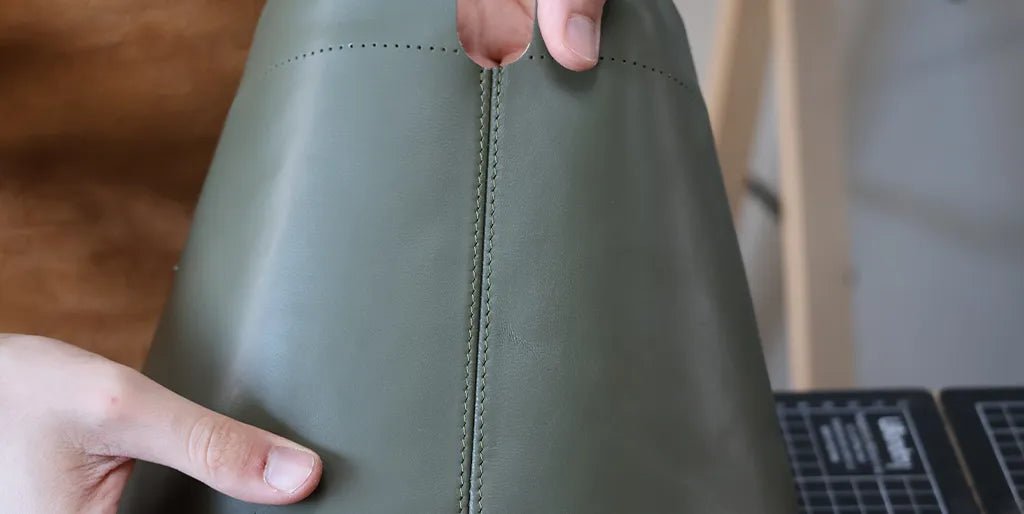
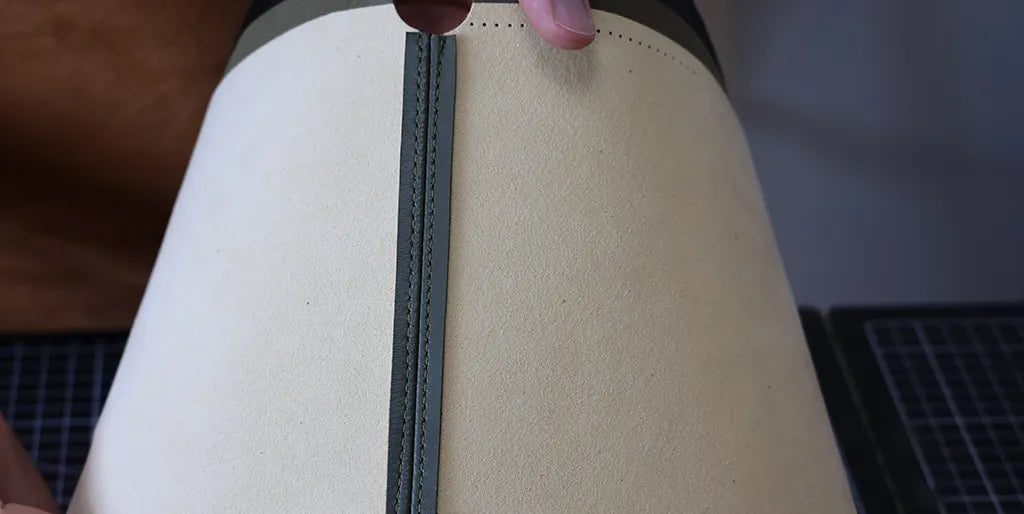
Join the two P1 pieces, right sides together, then machine stitch both widths 7 mm from the edge.
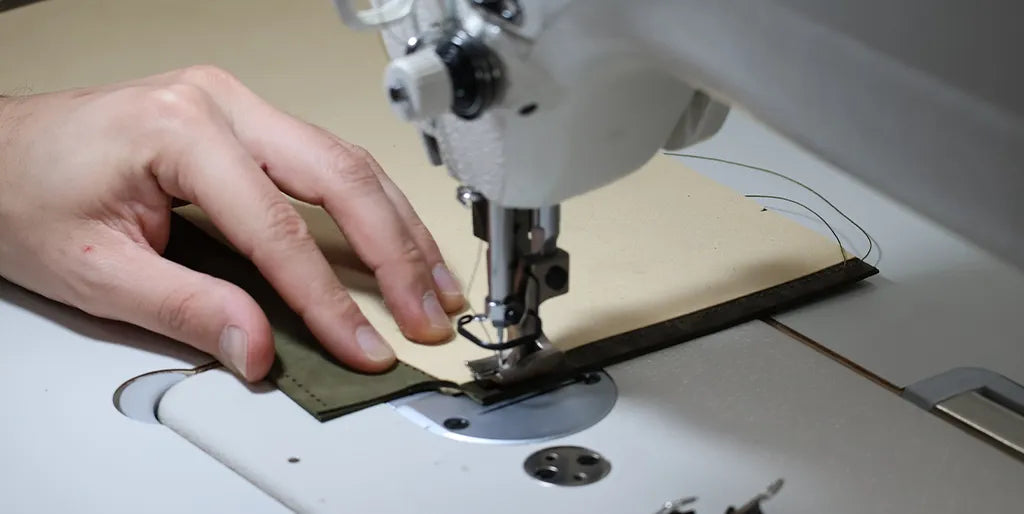
Apply double-sided tape to the inside of the seams, then open the seams. Flatten the bond using a riveting hammer or a leather pressing roller.
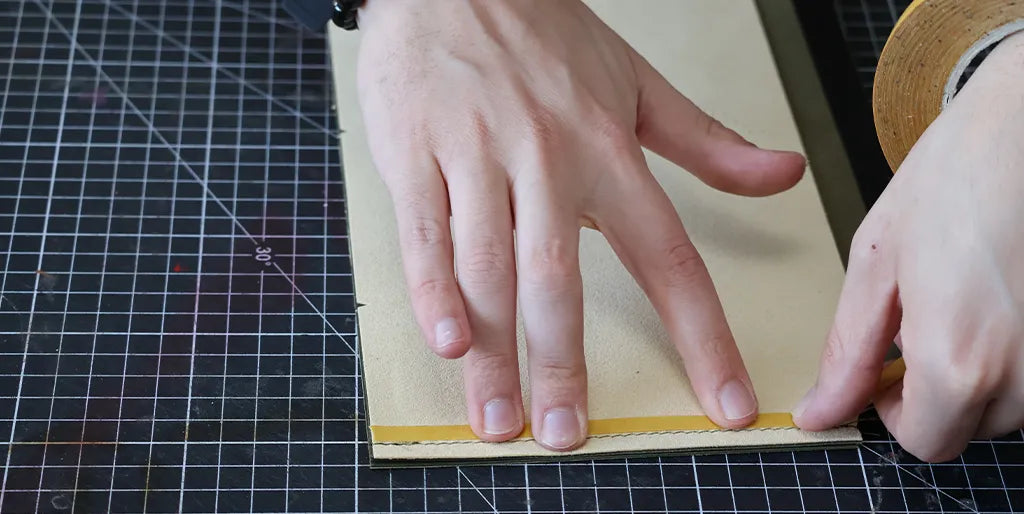
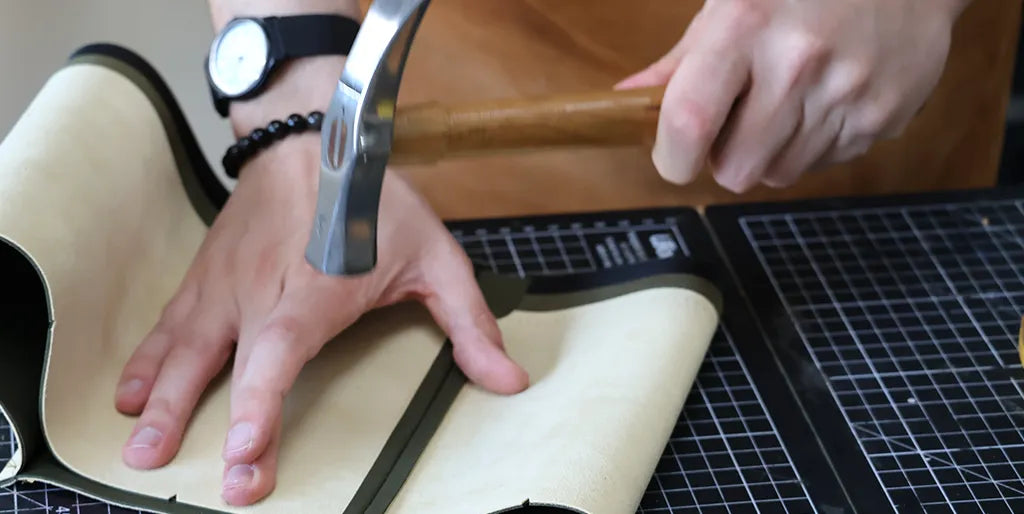
Option: if the leather is too stiff and the seams don't stay open, we recommend topstitching.
 |
 |
9. Sew the bottom
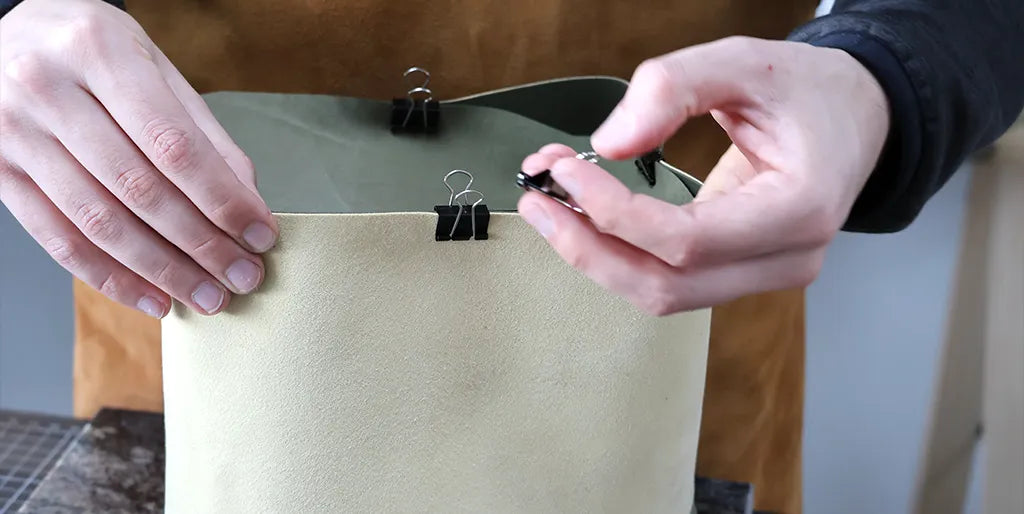
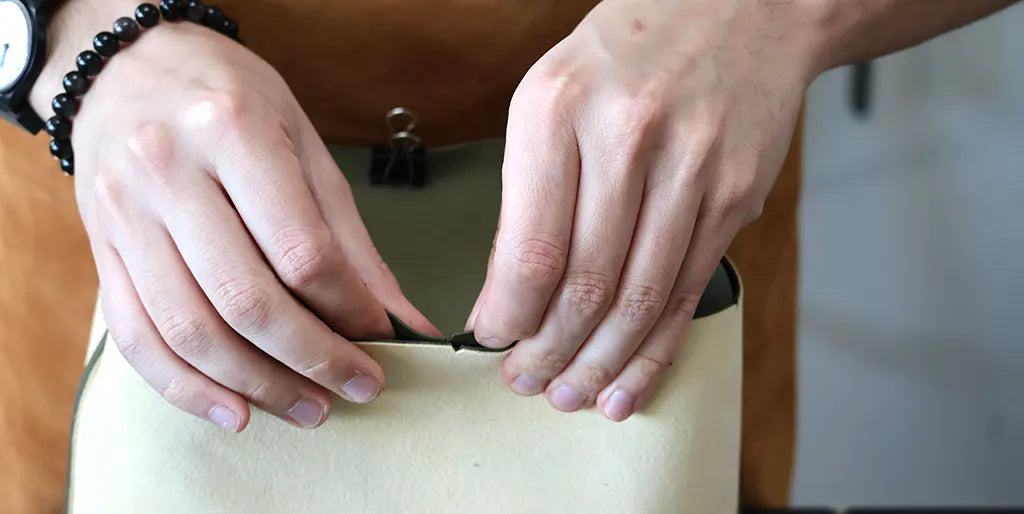
Using sewing clips, attach piece P2 (leather), right side to right side, to the bottom of pieces P1 (leather).
 |
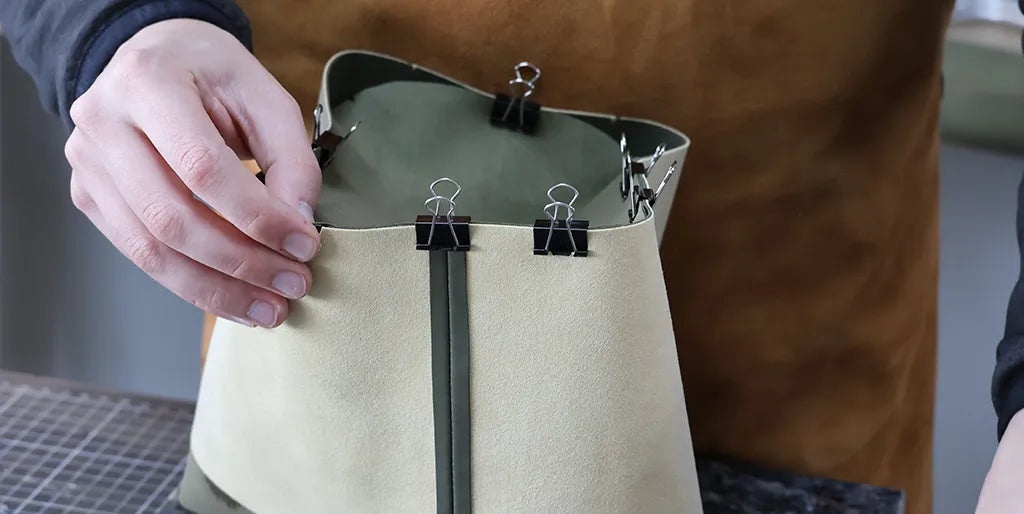 |
Rely on the notches to correctly position the base with the body.
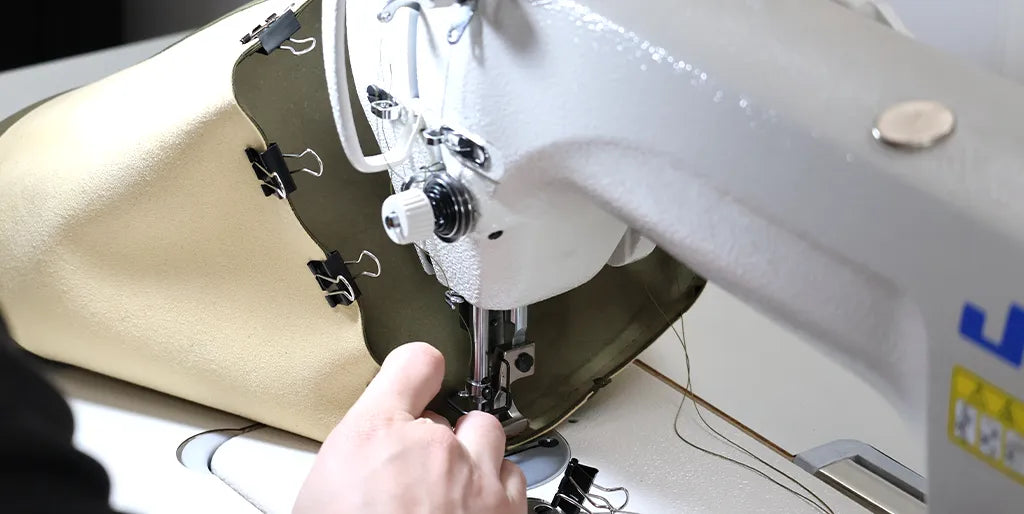
Then machine stitch all around, 7 mm from the edge.
10. Reinforce the bottom
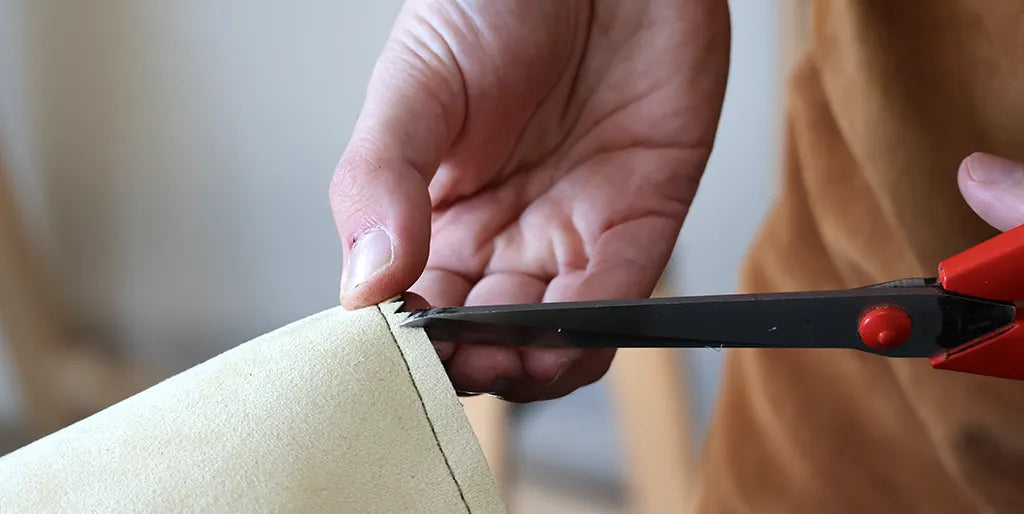
With a pair of scissors, make notches in the corners of the base to facilitate gluing the reinforcement.
 |
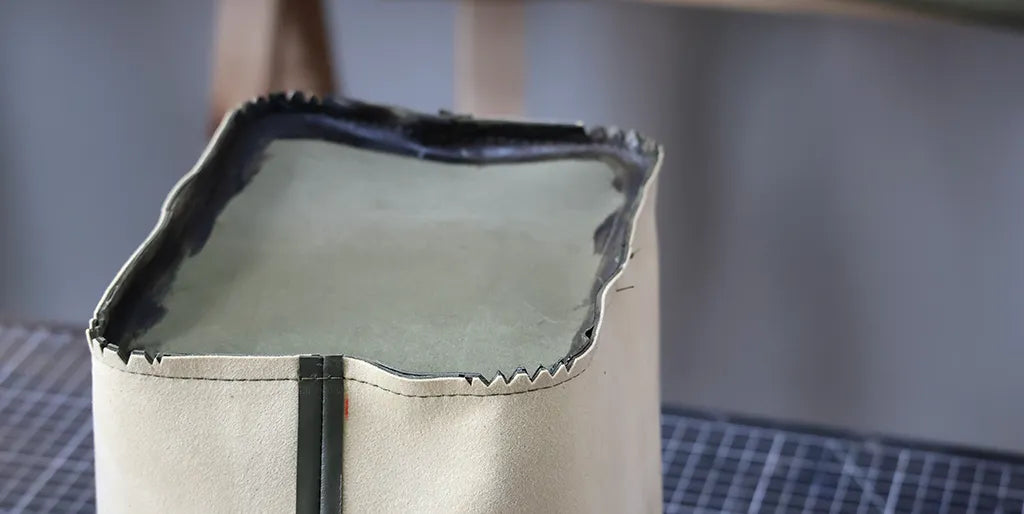 |
Apply contact adhesive to the back of salpa piece P3 (0.4 mm) and to the leather base. Glue the salpa onto the leather and fold the sides, making neat pleats in the corners.
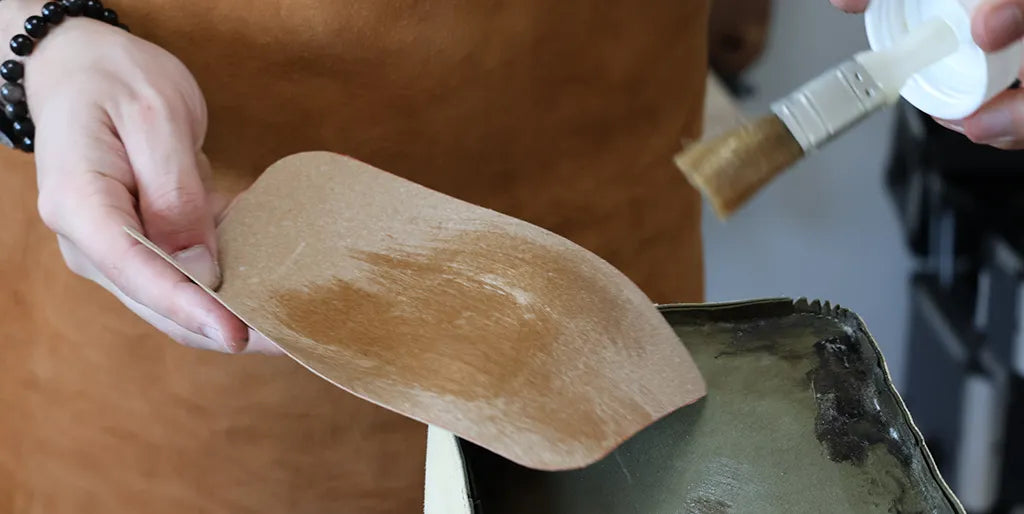
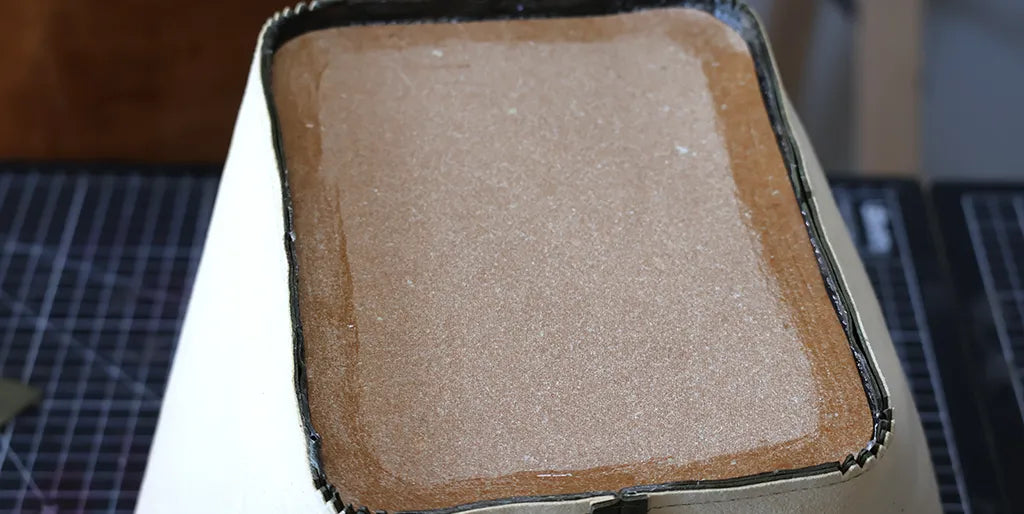 |
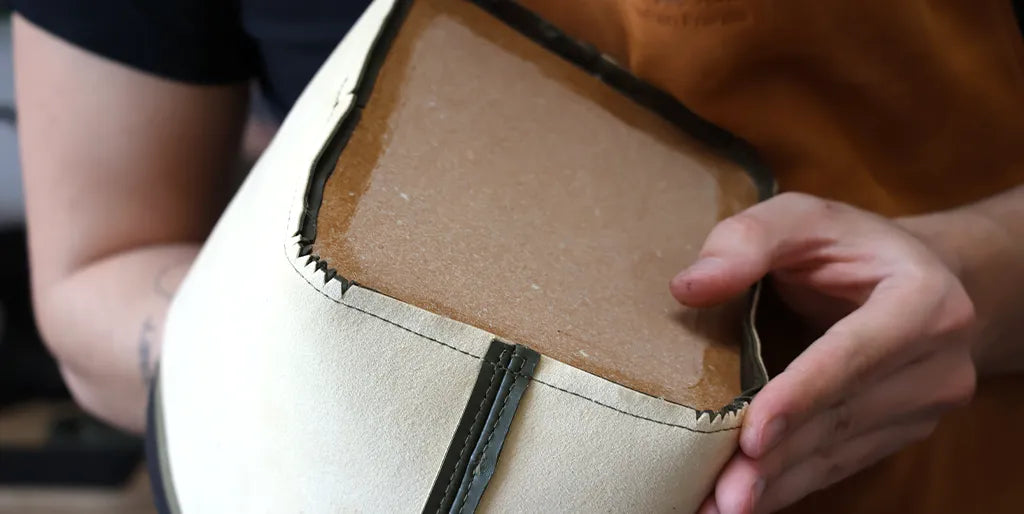 |
11. Shaping
Turn the pouch inside out, then work the shape of the bottom by rolling the seams.
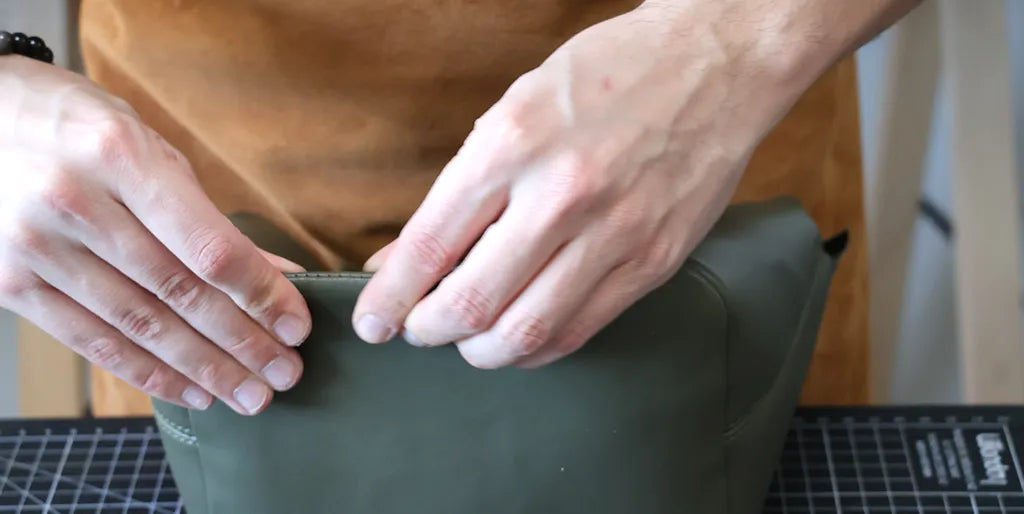
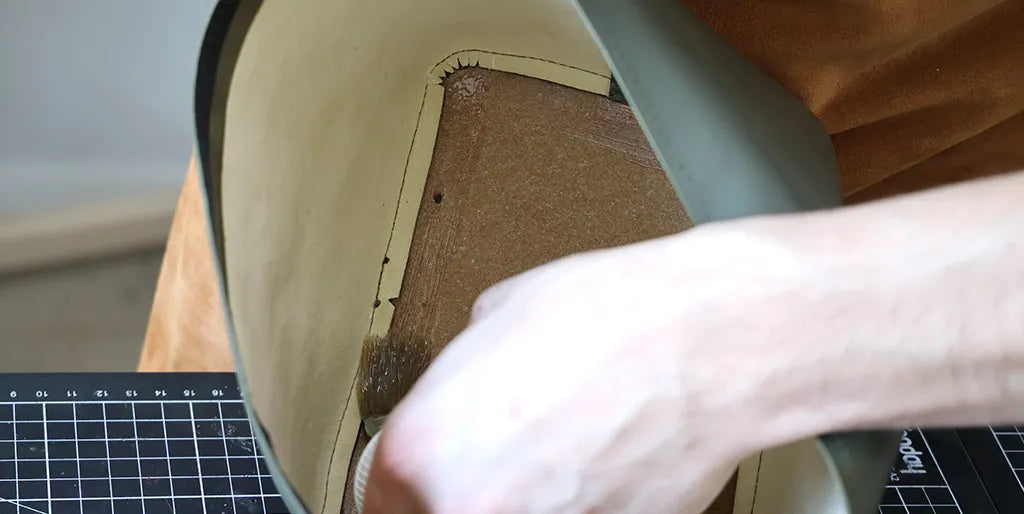
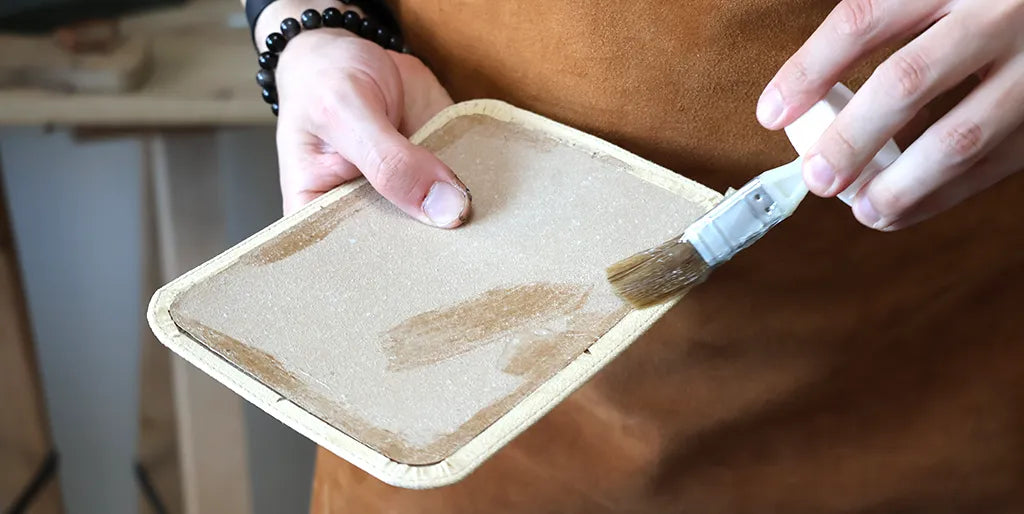
12. Glue the bottom
Apply neoprene glue to the P3 salpa 0.4 mm reinforcement as well as to the P3 salpa 1 mm reinforcement. Glue the bottom inside the pouch, onto the 0.4 mm reinforcement.
 |
 |

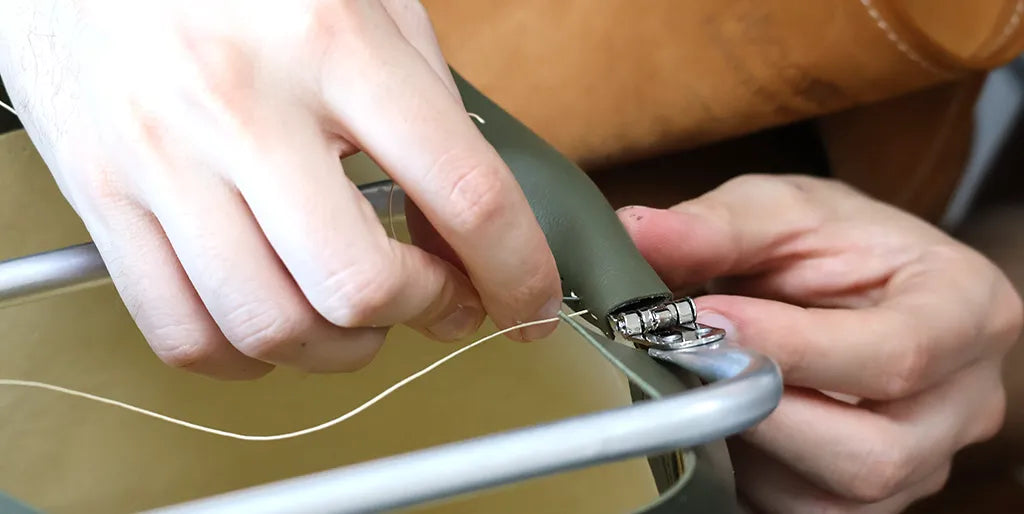
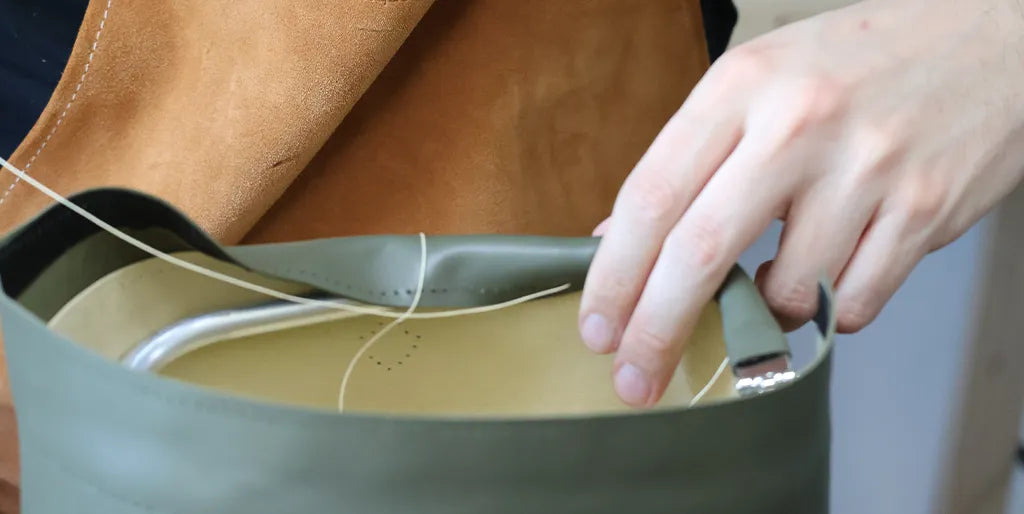
13. Stitch the tubular clasp
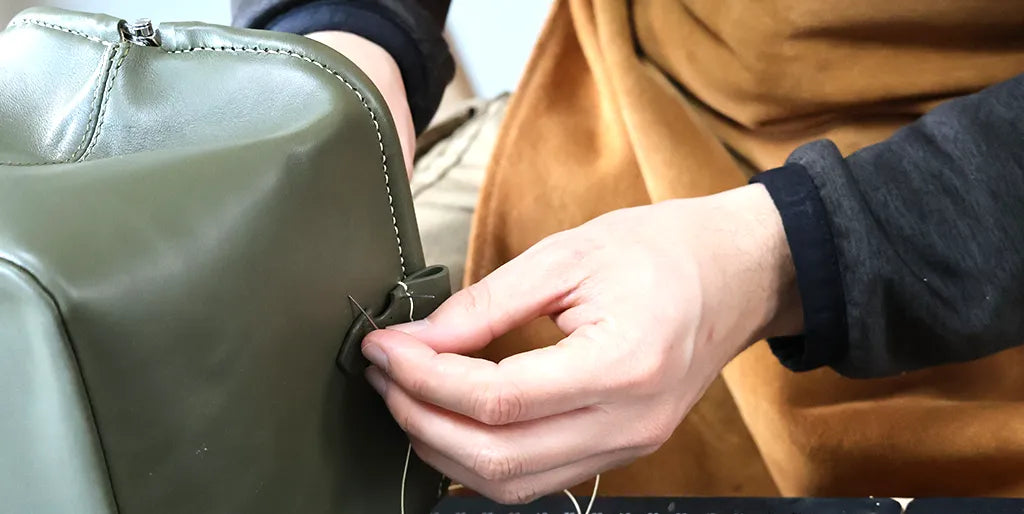
Place the 19 cm tubular clasp between the two stitch lines, then hand stitch (simplified stitch or saddle stitch).
 |
 |
14. Work with pieces P5
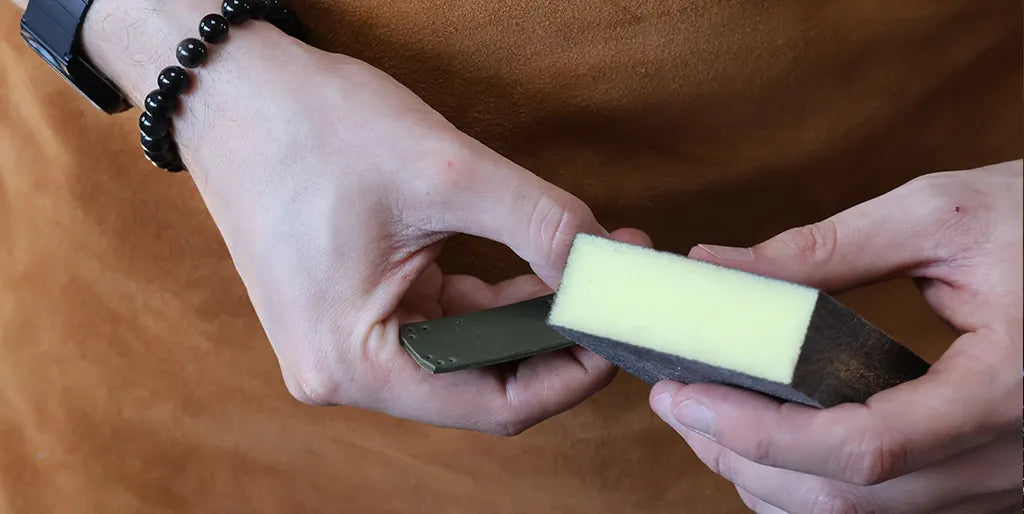
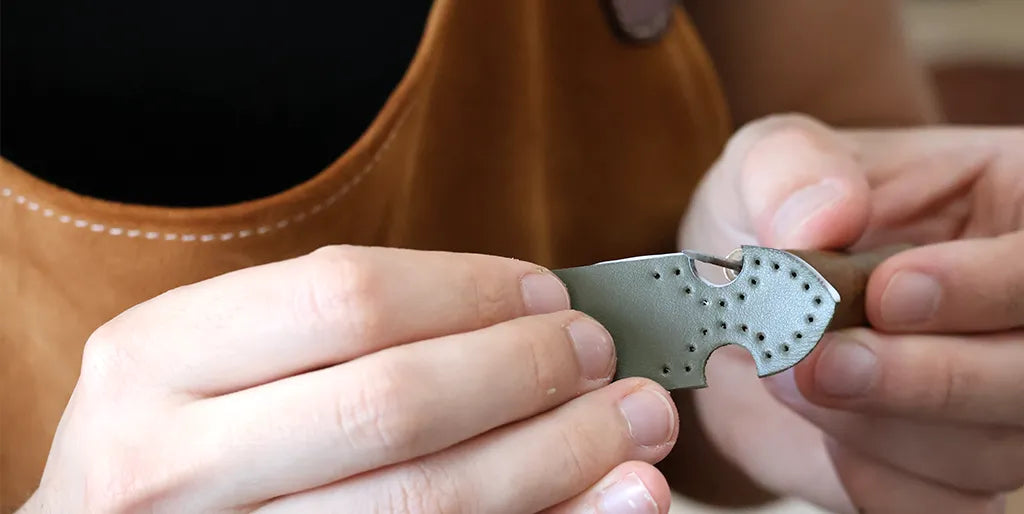
Sand the edges of pieces P5. Apply a layer of edge paint and let dry. Then apply the edge finishing layers.
 |
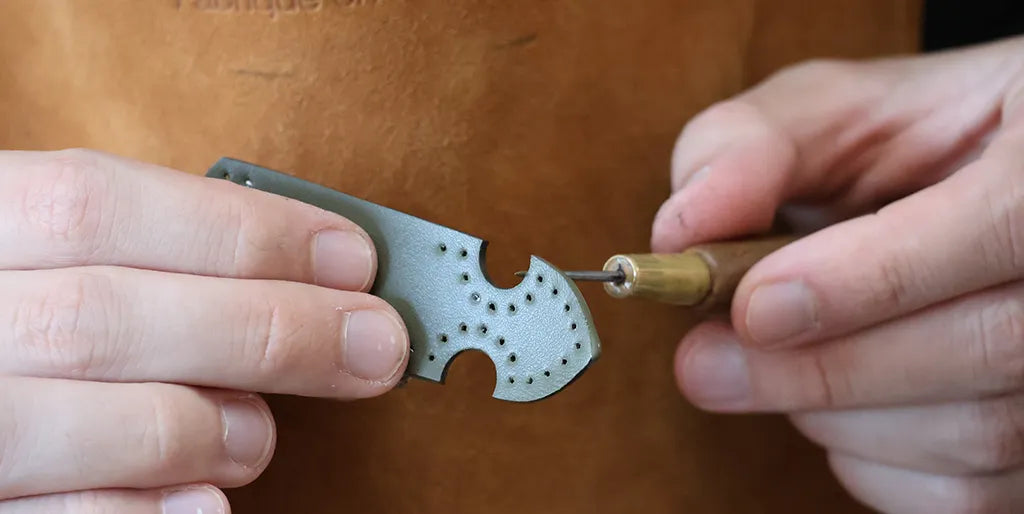 |
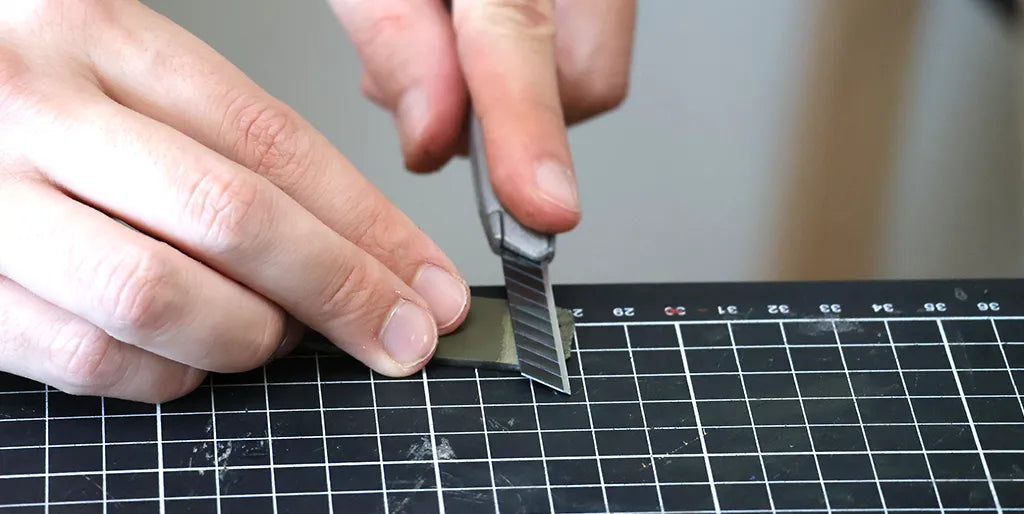
Skive the end of the P5 tabs (the one without the ogive tip). Fold the tabs in half and glue with double-sided tape. This will make stitching easier.
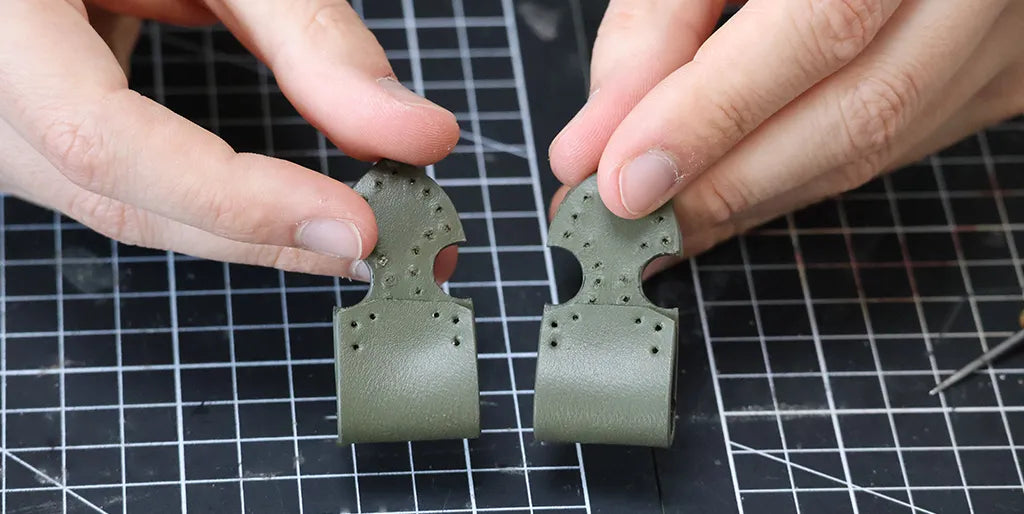
15. Stitching the tabs
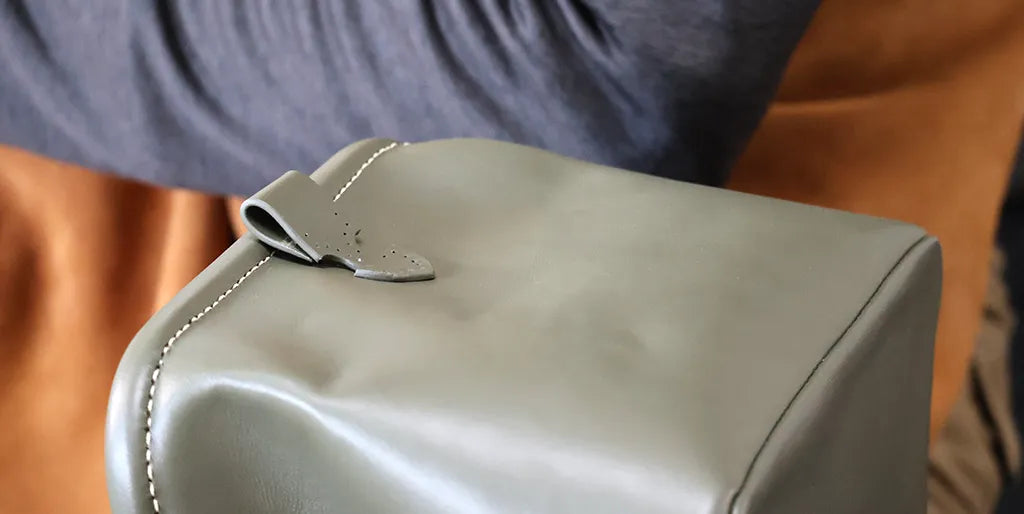
Using double-sided tape, position the P5 pieces in their designated location on the P1 pieces, then hand stitch. Make a saddle stitch on each side of the tab.
 |
 |
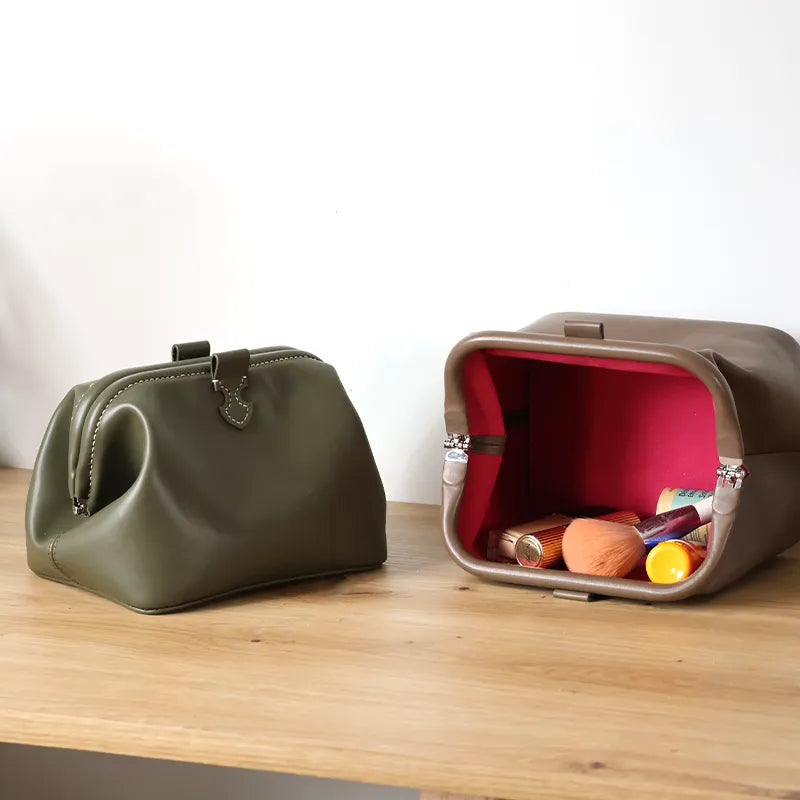
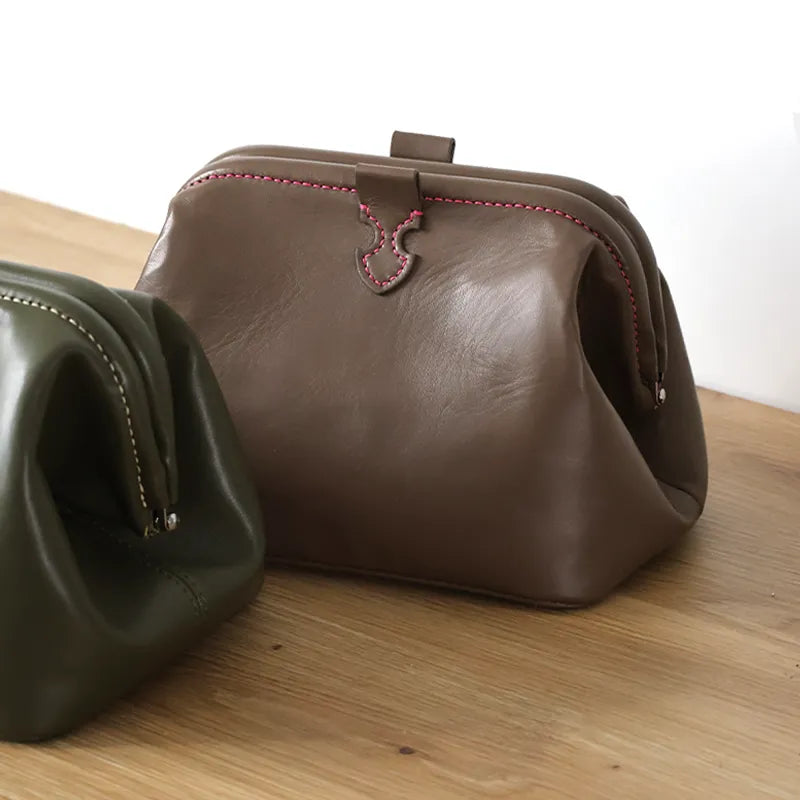
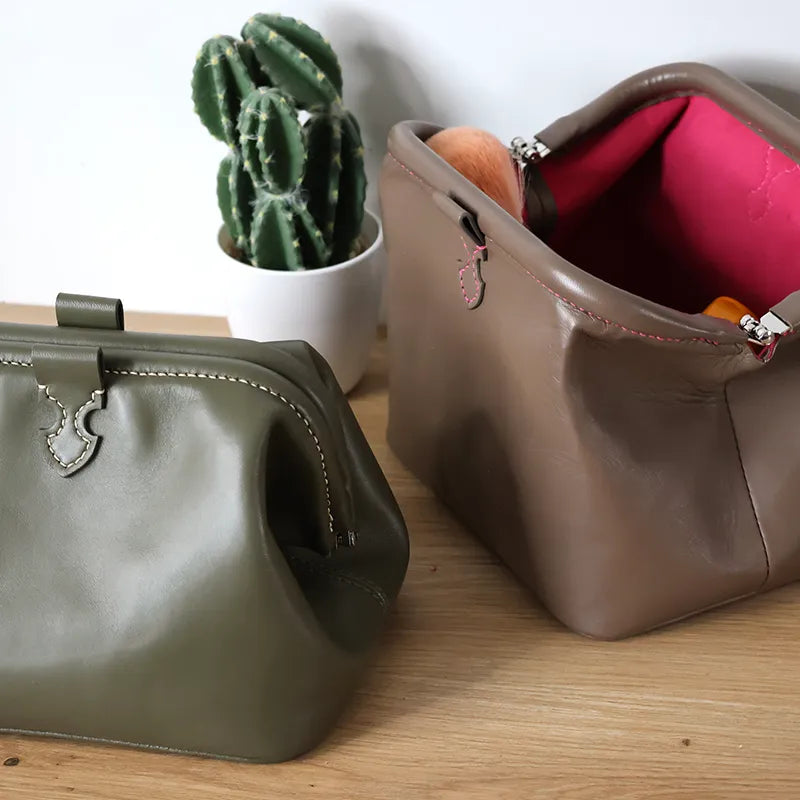
YOU ARE DONE!
 |
 |
Coin purses with kiss clasps
In the same vein, discover our tutorials for making coin purses with kiss clasps!
 |
 |


