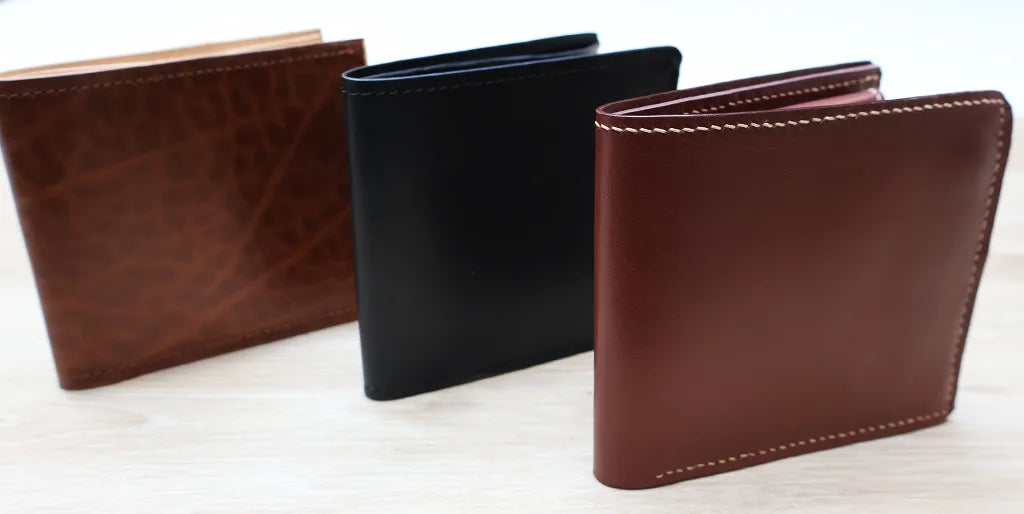
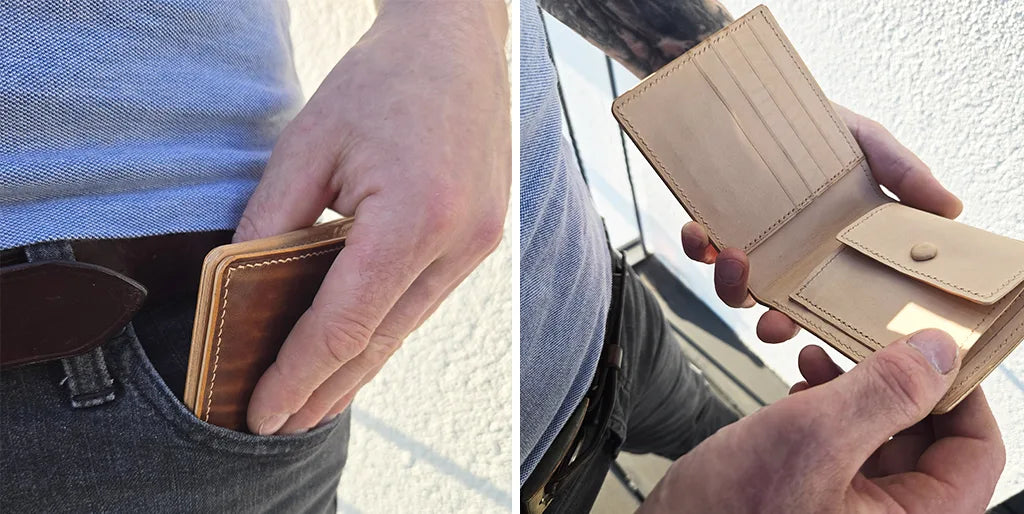
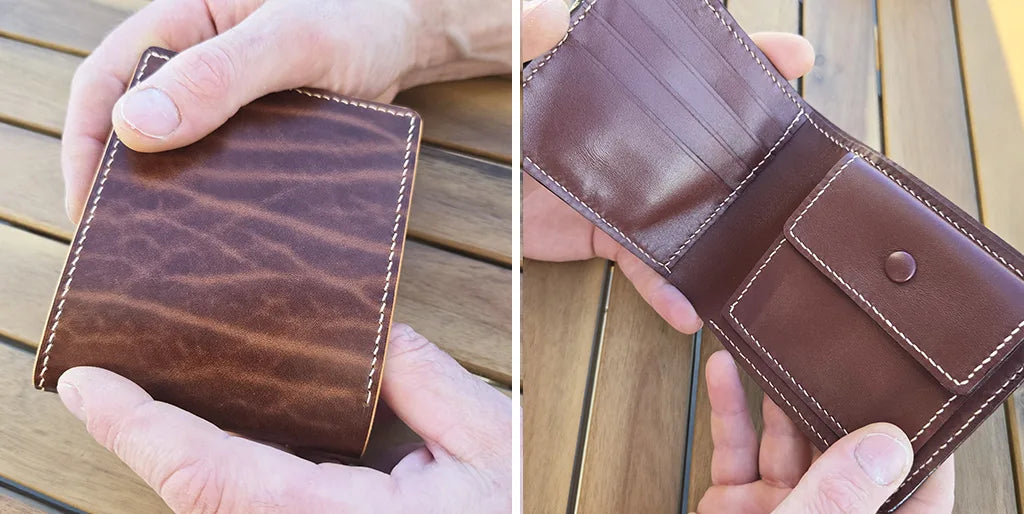
Stitching Options
There are several methods for stitching the leather wallet:
- Hand-stitching with saddle stitch
This method provides very precise results and is ideal for this type of project. The saddle stitch is particularly popular among leather enthusiasts because it is the strongest and most durable stitch.
- Hand-stitching with simplified (pre-punched holes) stitching
Simplified hand-stitching involves punching the stitch holes using a round punch. This technique, which uses straight stitches, is perfect for beginners, as it is simpler to execute while still being aesthetically pleasing.
VIEW PRE-PUNCHED HOLE STITCHING GUIDE
- Industrial machine stitching
For those who prefer machine stitching, it is recommended to use an industrial sewing machine, especially with vegetable-tanned leather. This method is the fastest, but care must be taken with the leather thickness and the machine's ability to handle it.
If industrial machine stitching is chosen for vegetable-tanned leather, the final stitch will need to be done by hand. This last stitch is difficult to achieve even with an industrial machine, due to the thickness and rigidity of the leather.
Also, be aware that machine stitching can mark vegetable-tanned leather.
Leather Choice
To make this wallet, it is recommended to choose leather that is both medium-soft and medium-firm, or firm leather. There are two main types of tanning: vegetable and mineral.
You will also need two different leather thicknesses:
- A thickness between 0.8 mm and 1 mm.
- A second, thinner one (mainly used for linings), approximately 0.5 mm.
Deco Cuir offers split leather pieces, perfect for this type of project.
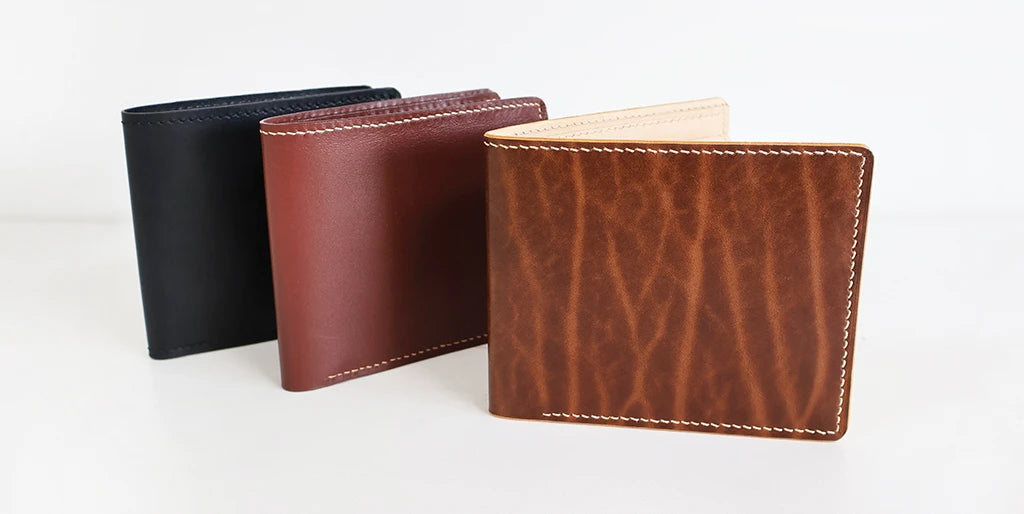
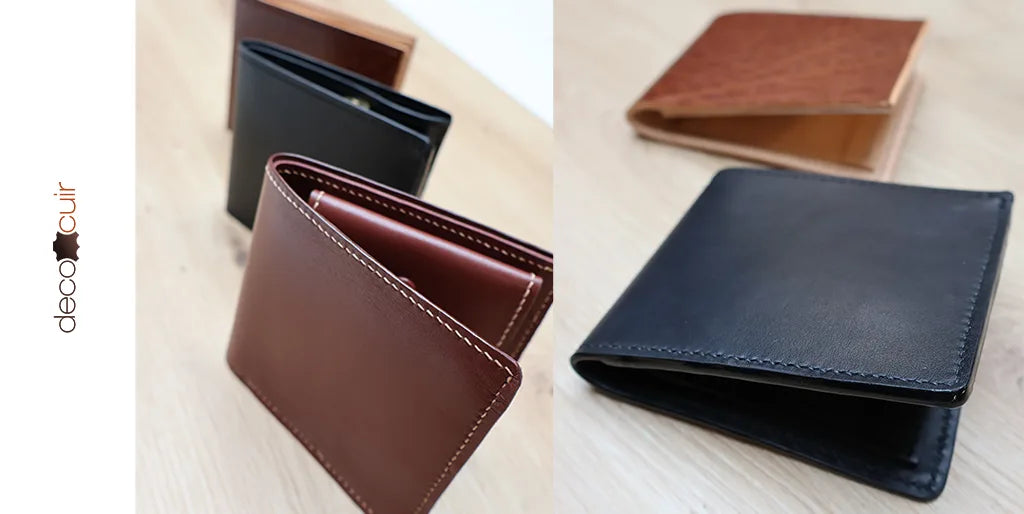
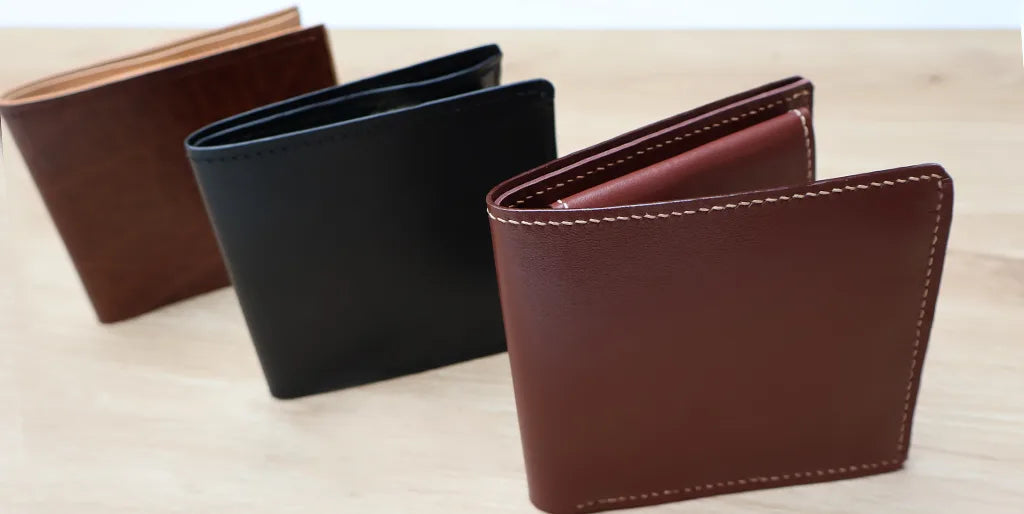
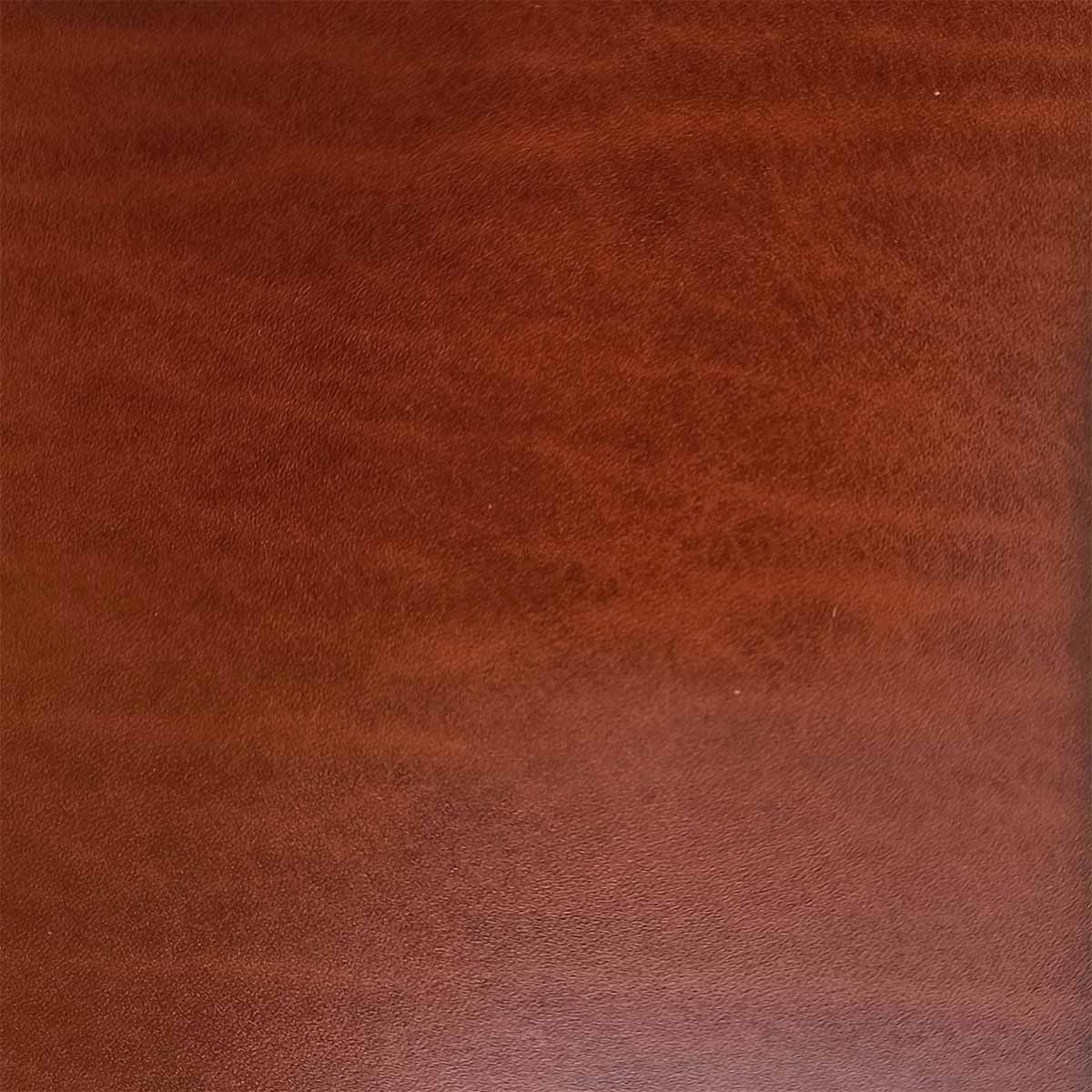
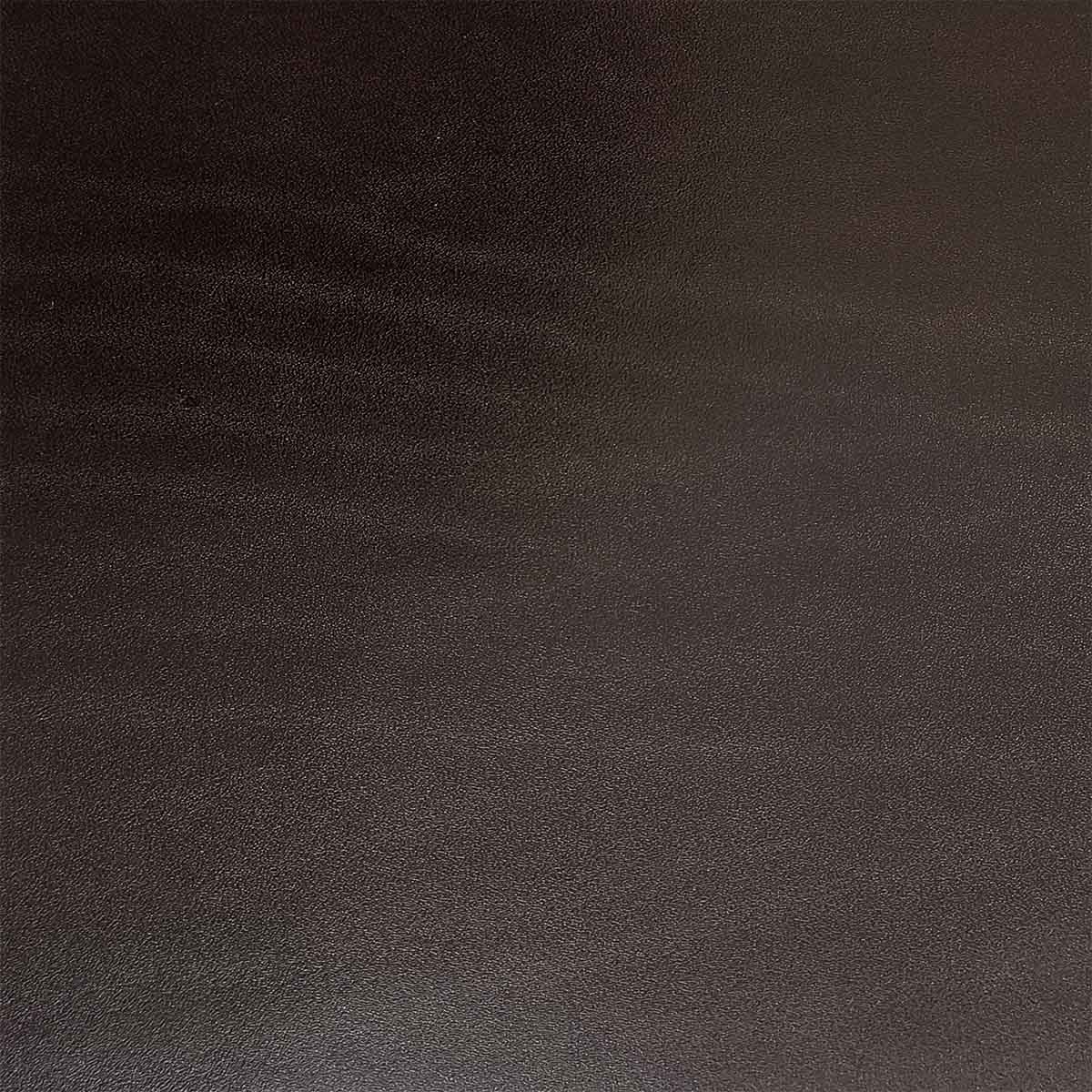
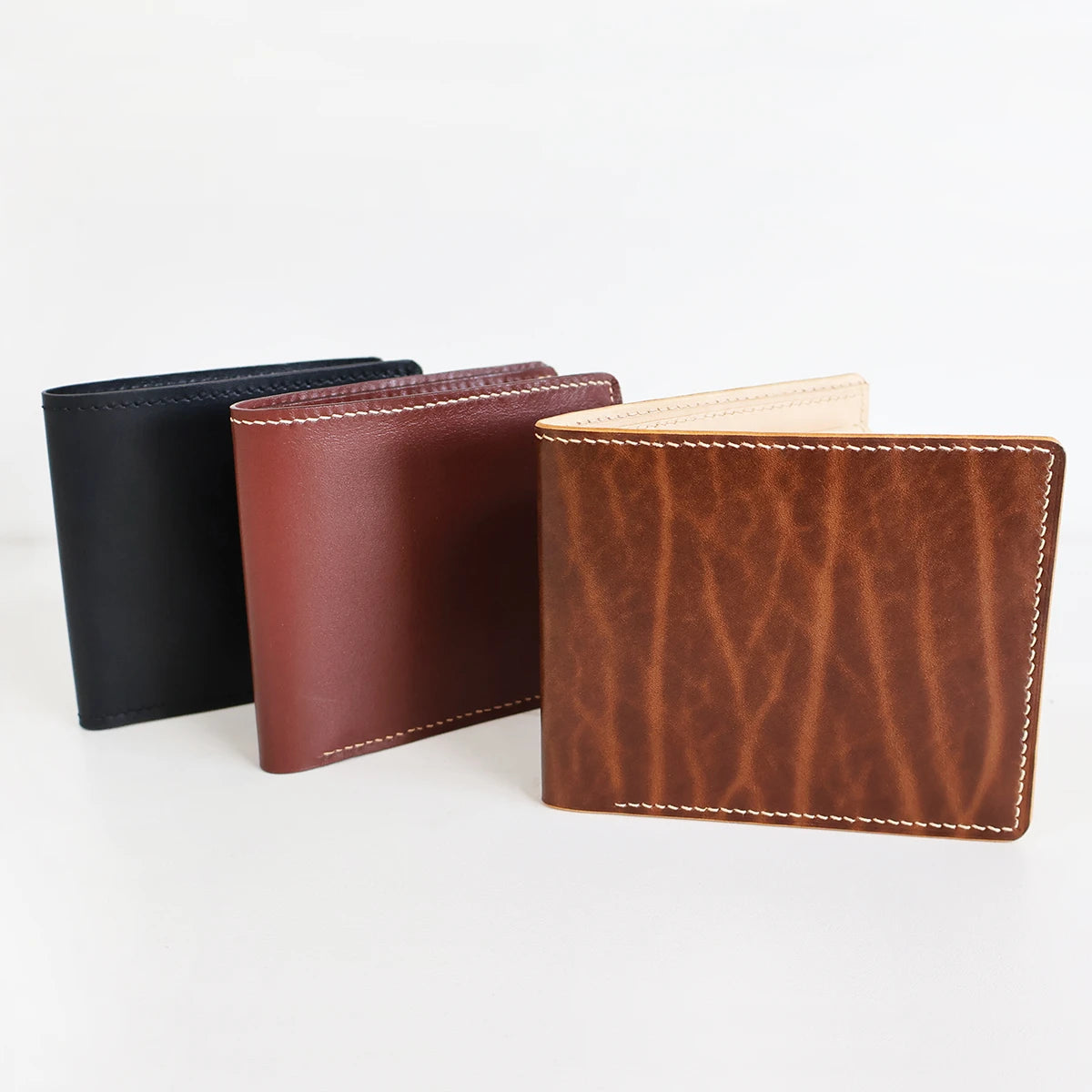
Our selection: In this tutorial, we selected the Satinlys leather range for the mineral-tanned example. Satinlys leather is ideal for this project as it offers a good balance between softness and firmness. We used 0.5 mm thick leather pieces for some parts and 0.8 mm thick pieces for others.
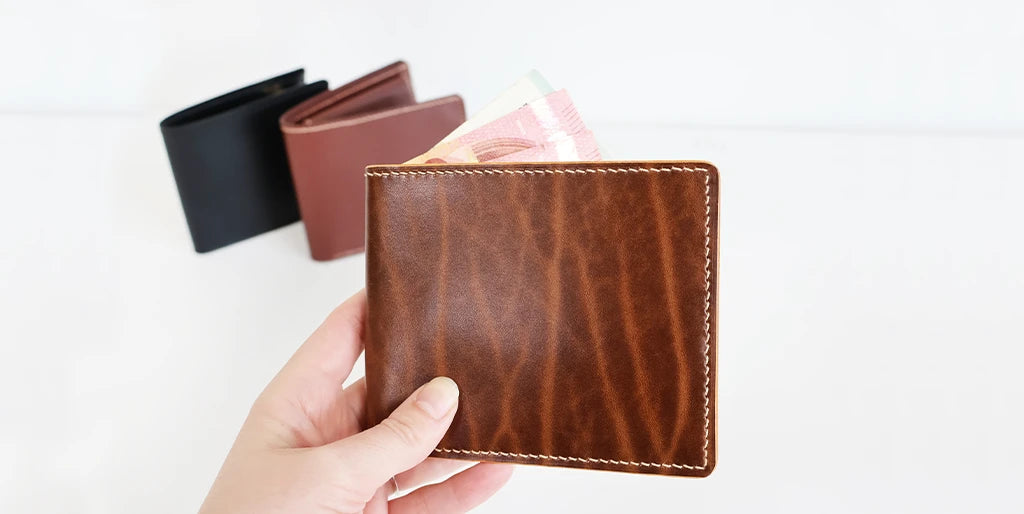
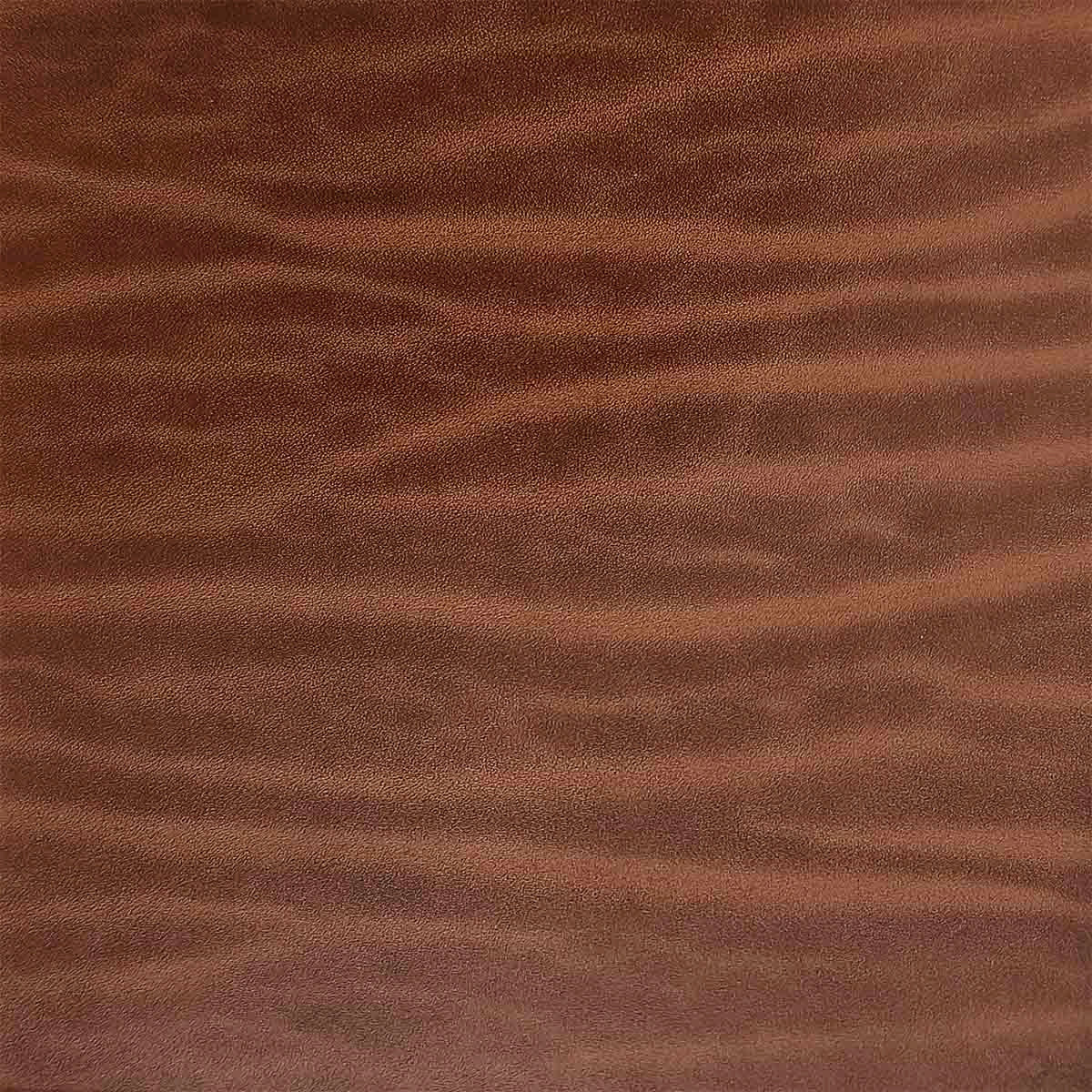
For the vegetable-tanned example, we chose leather from the Sauvage range with a thickness of 1 mm. Due to the thickness of this leather, we reserved it for piece P1 (exterior). For all other pieces, we opted for natural vegetable-tanned leather, 0.5 mm thick.







REQUIRED MATERIALS
Mineral-tanned version:
- 3 pieces of SATINLYS OR NAPPA CALF leather 20 x 30 cm - 0.5 mm thickness
- 1 piece of SATINLYS OR NAPPA CALF leather 30 x 40 cm - 0.8 mm thickness
- 1 piece of SATINLYS OR NAPPA CALF leather 15 x 20 cm - 0.8 mm thickness
Cost: approximately €30.00
Vegetable-tanned version:
- 4 pieces of natural vegetable-tanned leather 20 x 30 cm - 0.5 mm thickness
-
1 piece of SAUVAGE vegetable-tanned leather 20 x 30 cm - 1 mm thickness
Cost: approximately €45.00
Hand-sewing version only:
- 2 cardboards or 1 spool of MeiSi super fine M40 waxed linen thread - ⌀0.45 mm
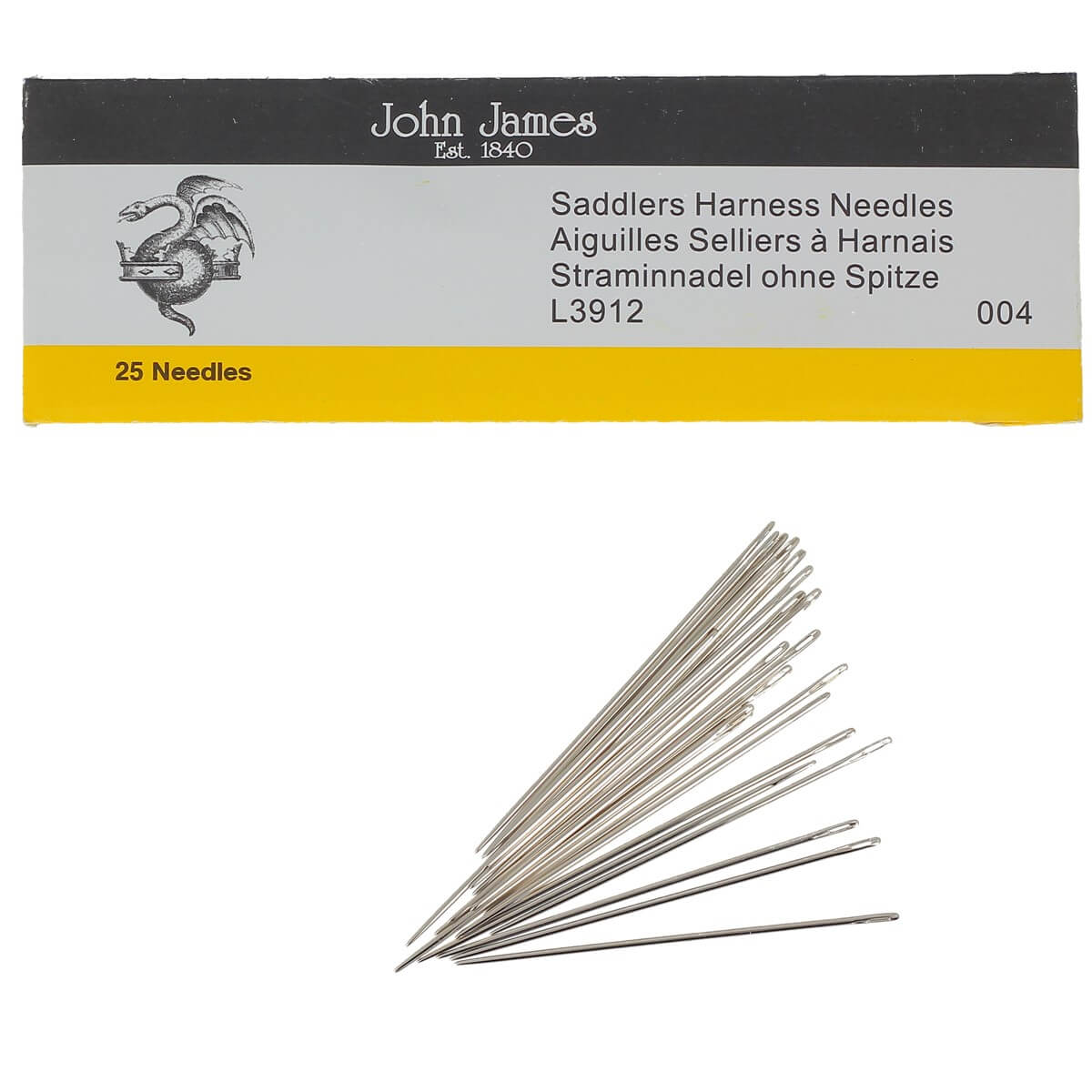
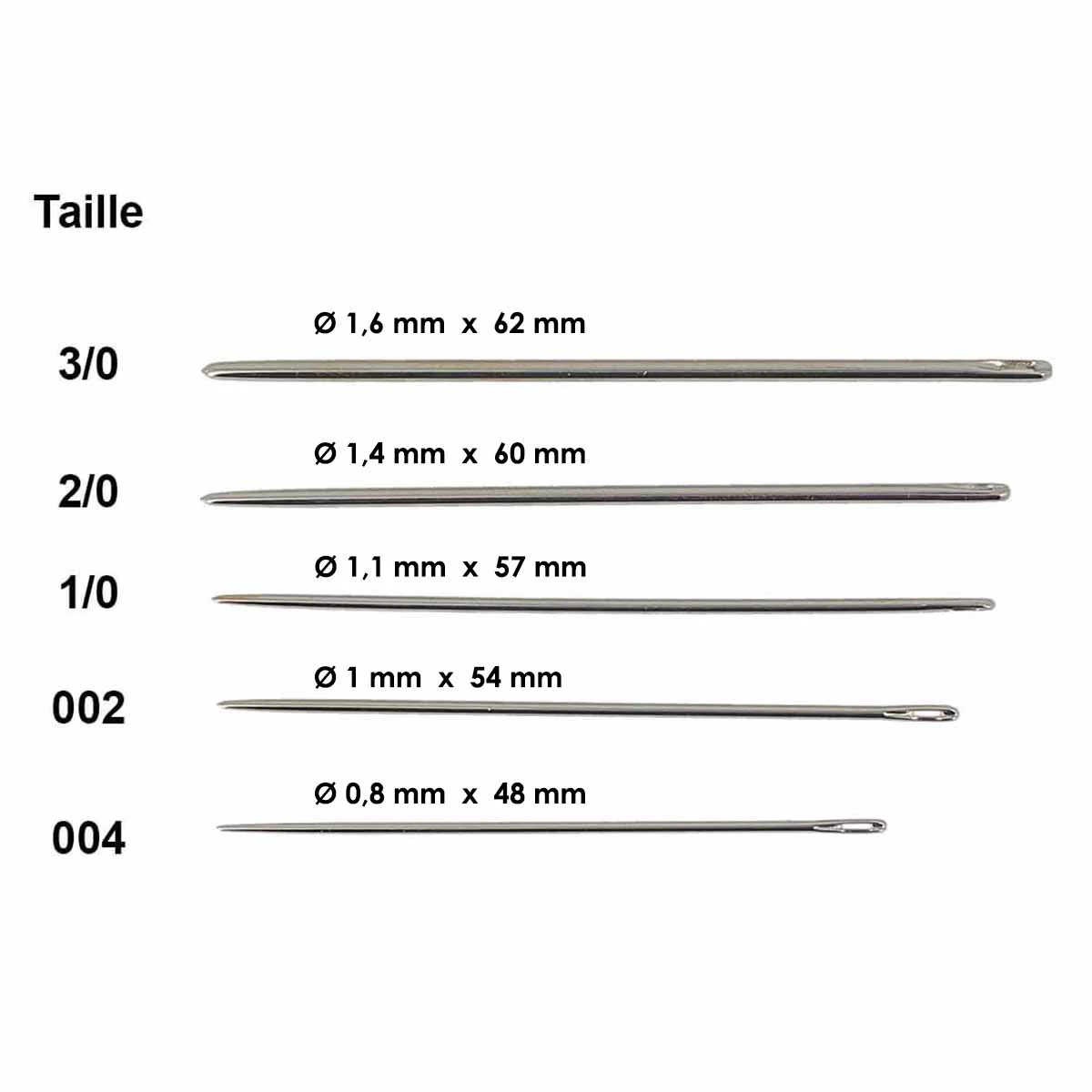
- 2 saddler's needles - Round Tip - John James - ⌀0.80 mm (size 004)
- 1 pair of dividers
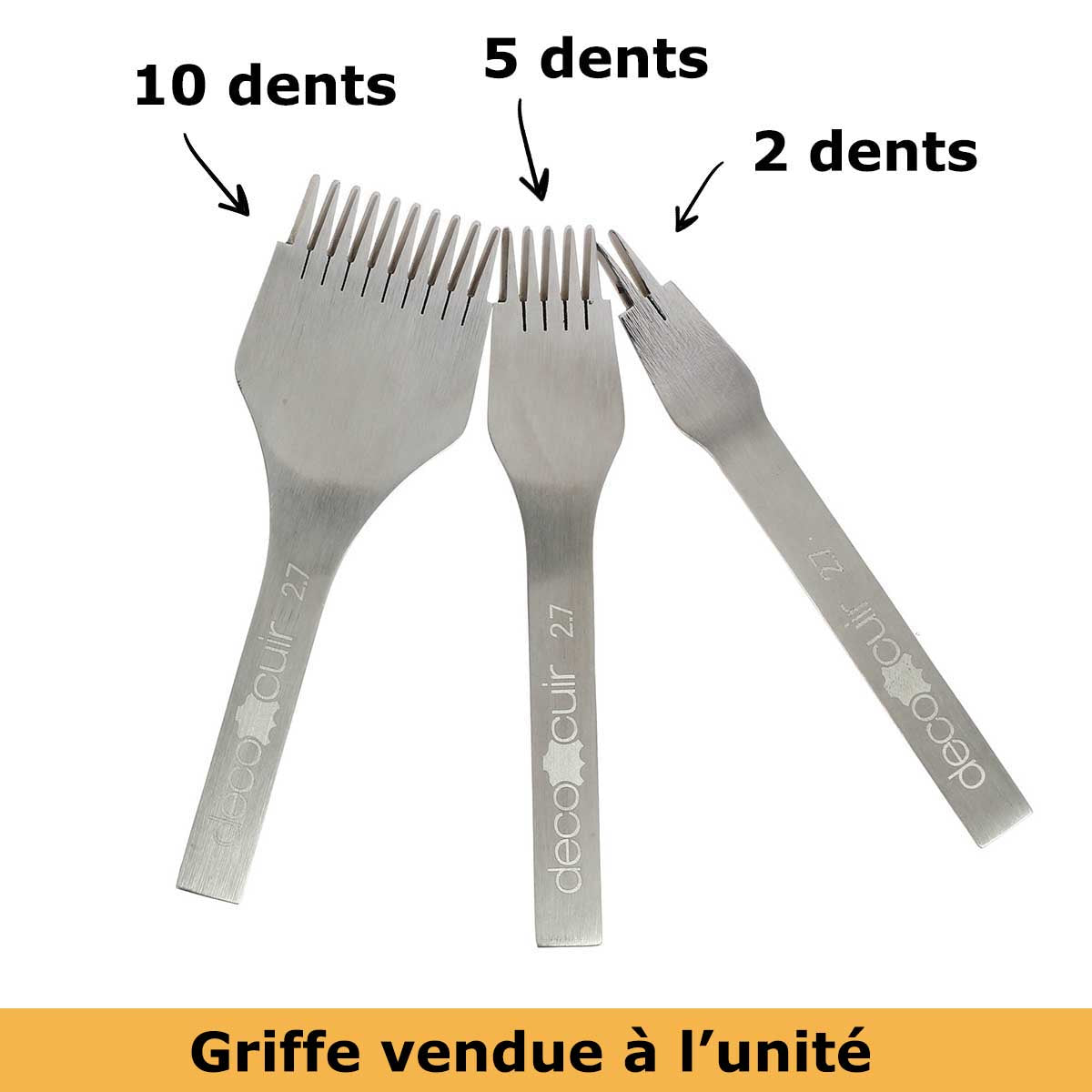
- Stitching chisels with 3.38 mm spacing
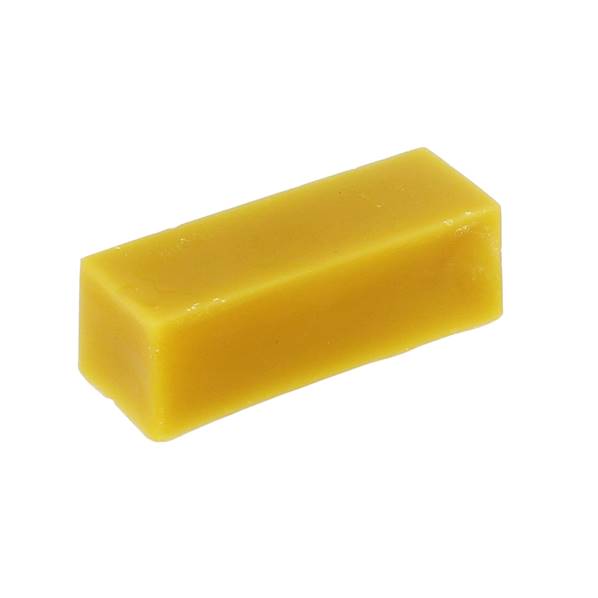
- 1 block of wax
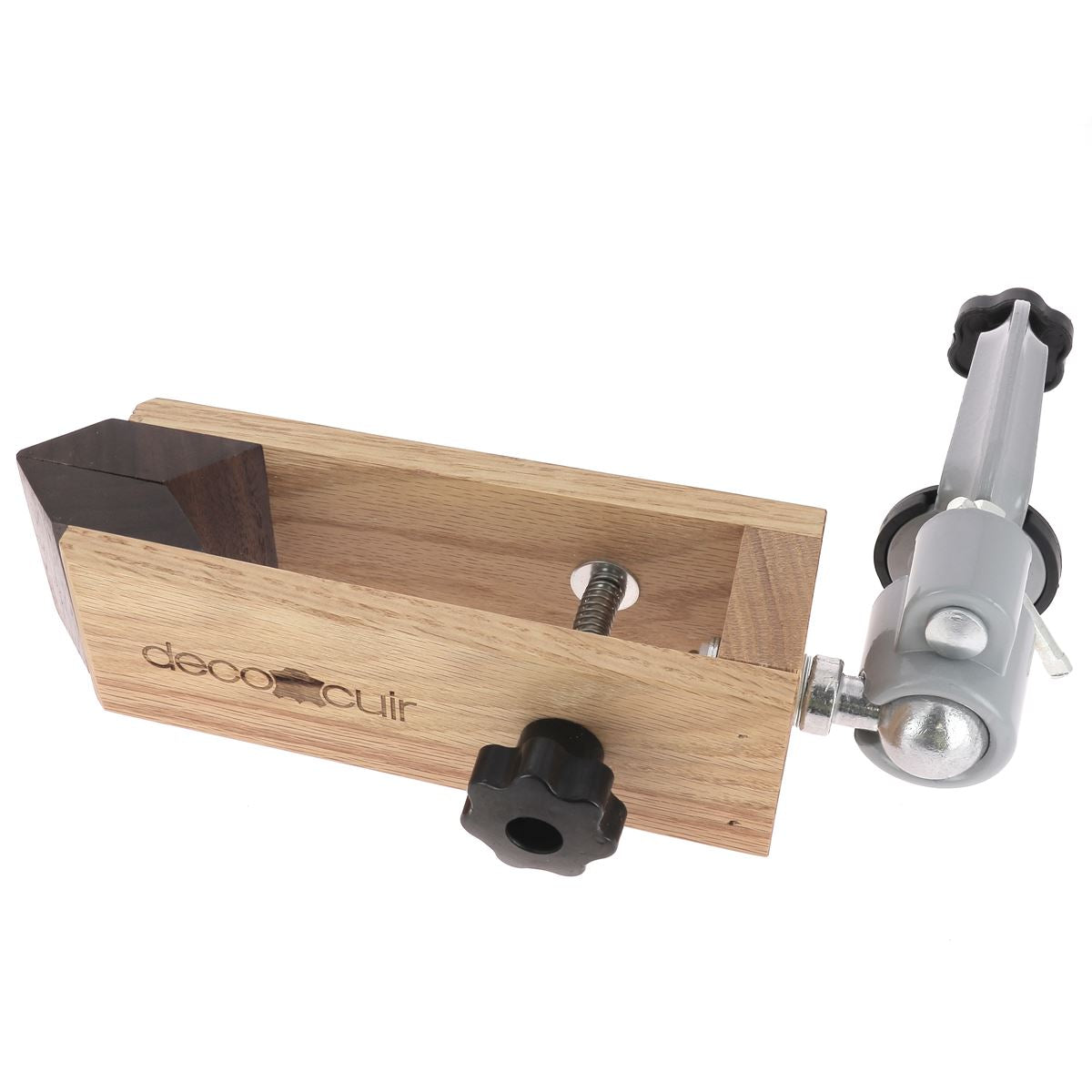
- 1 saddler's clamp or stitching pony
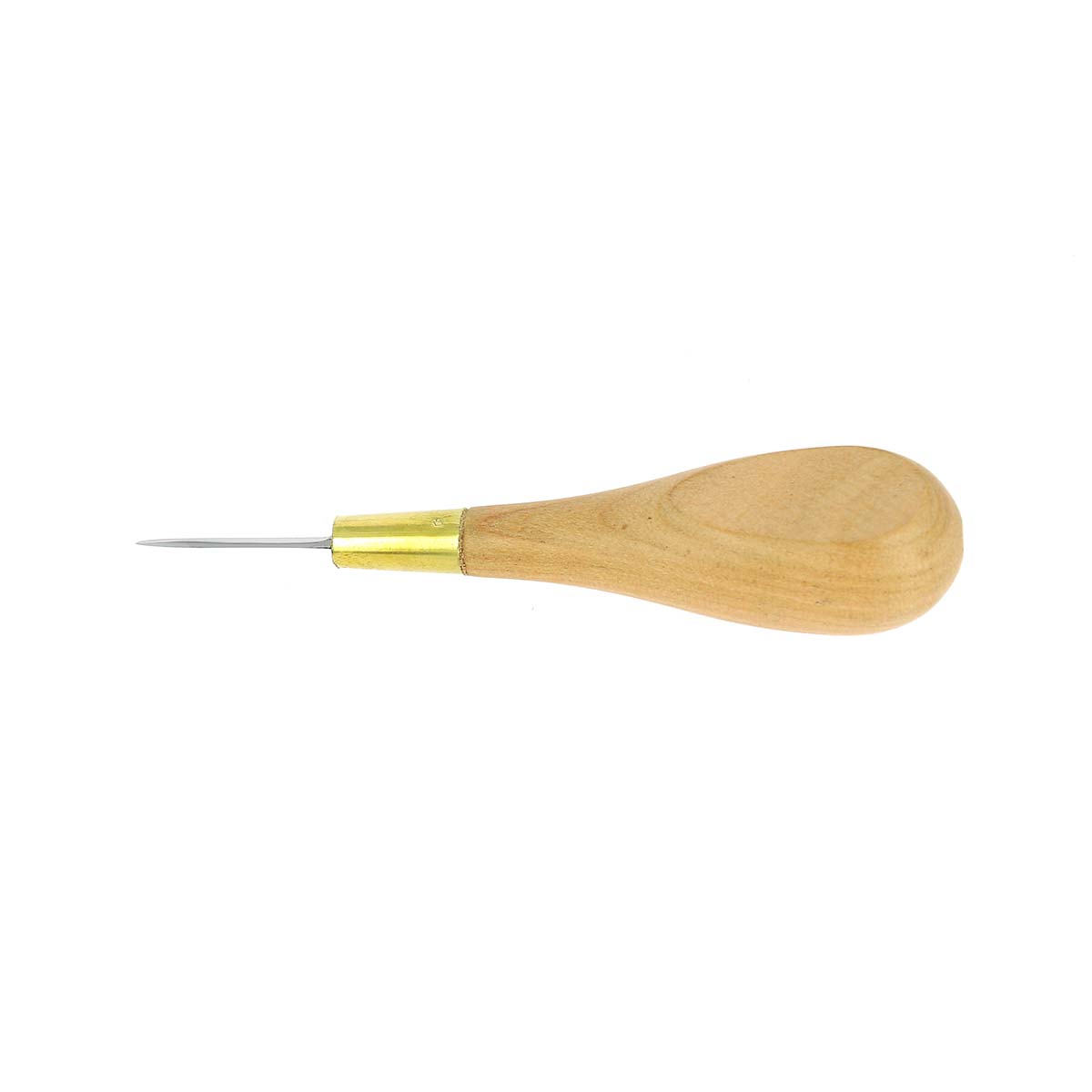
- 1 round awl
- 1 French awl
- 1 joiner's hammer / riveting hammer





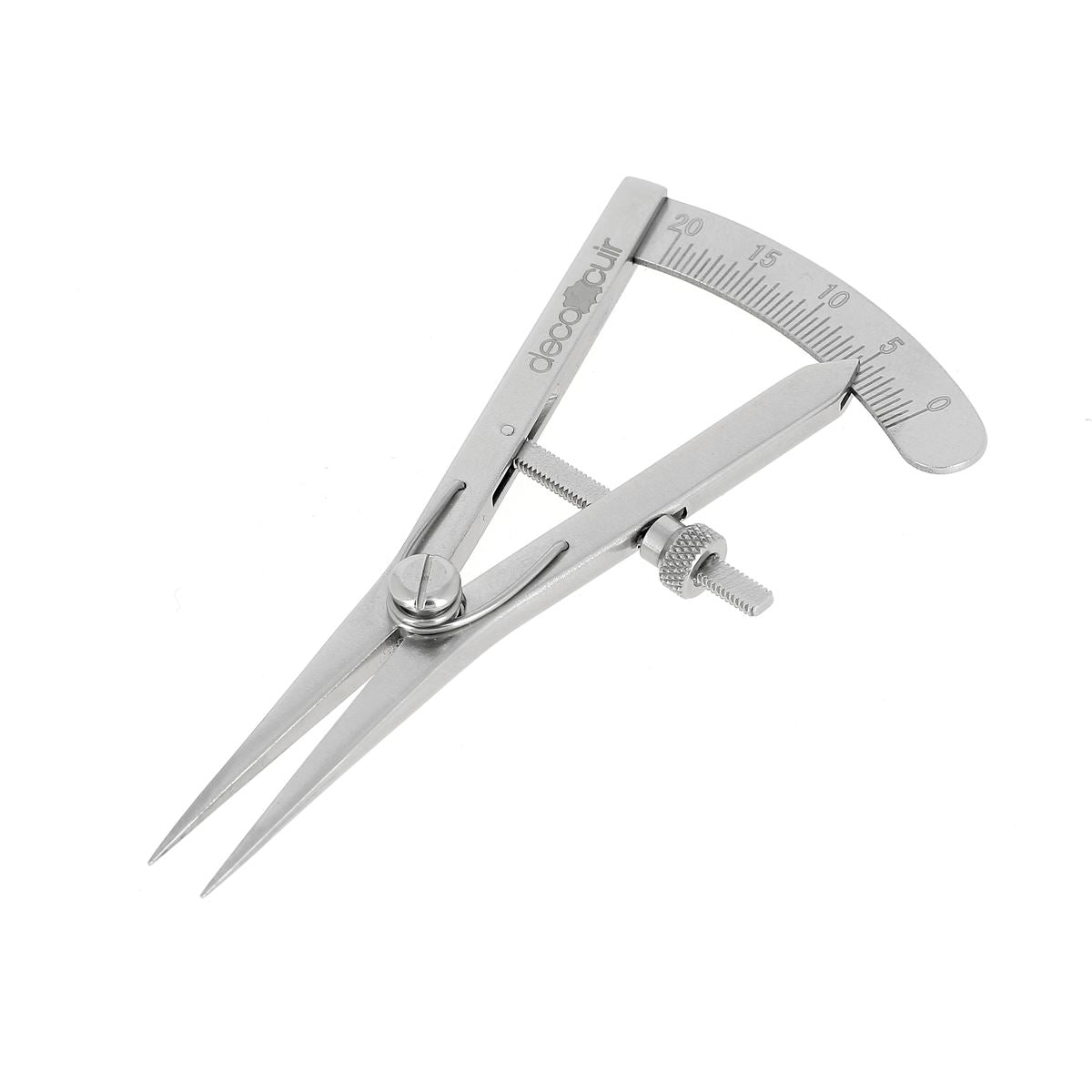
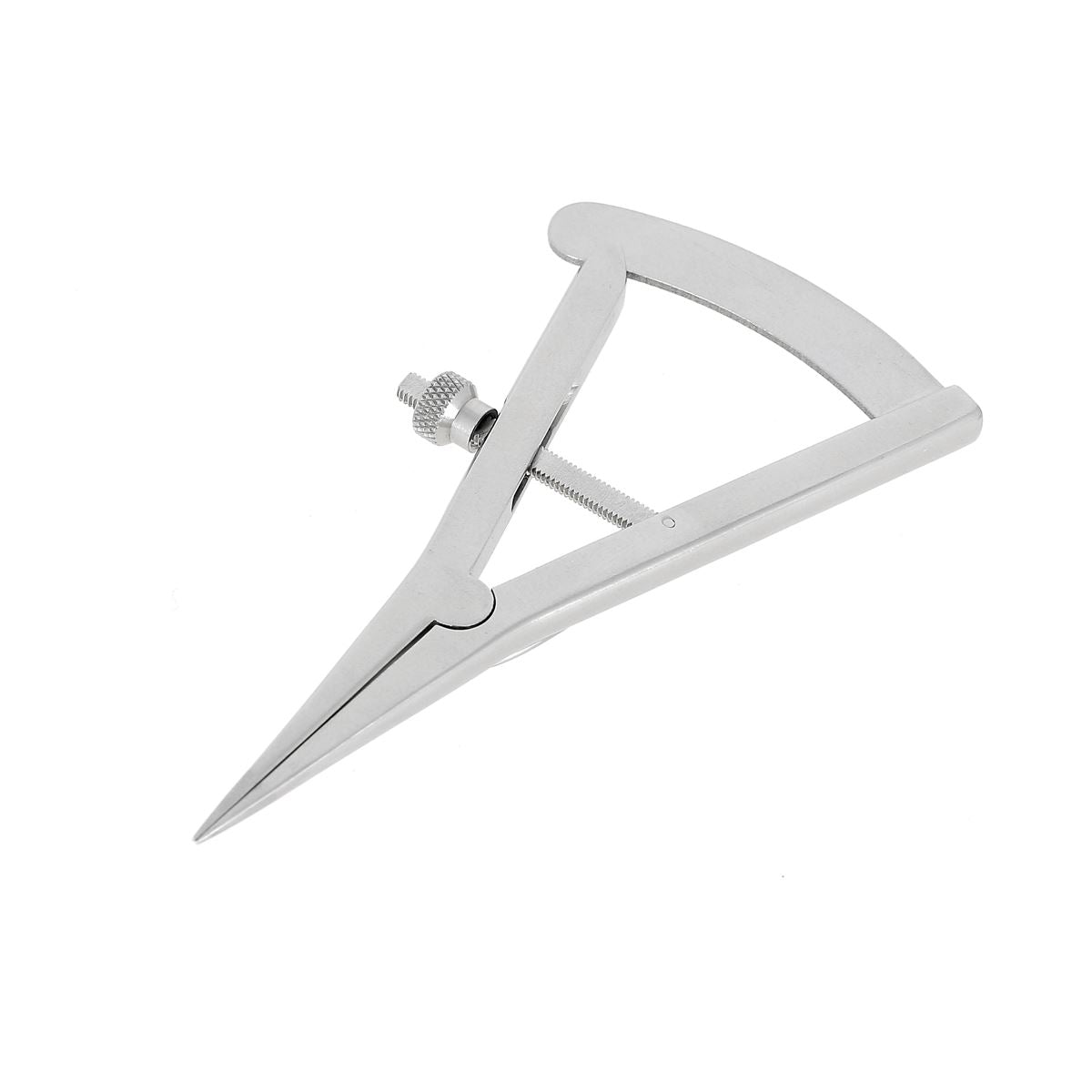
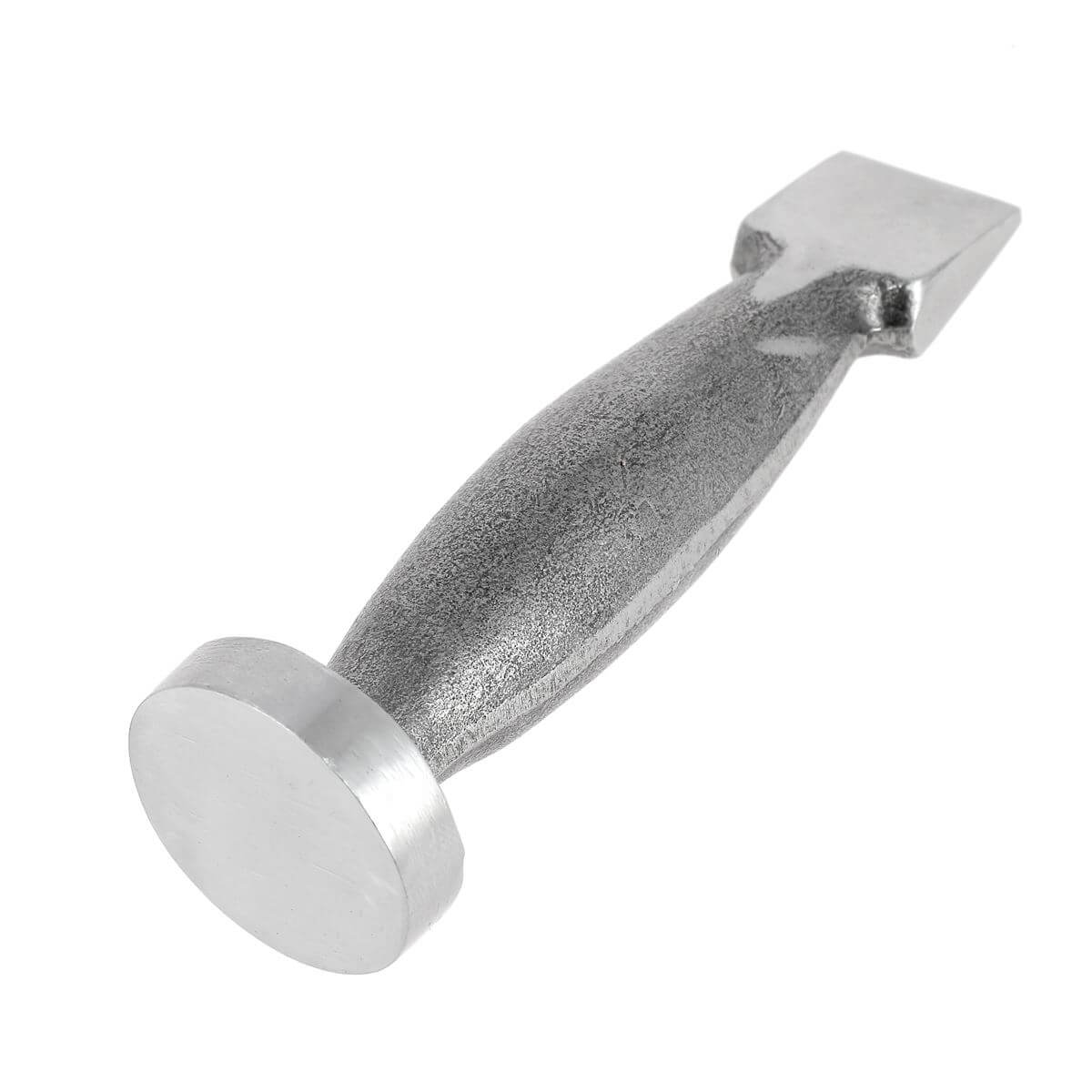

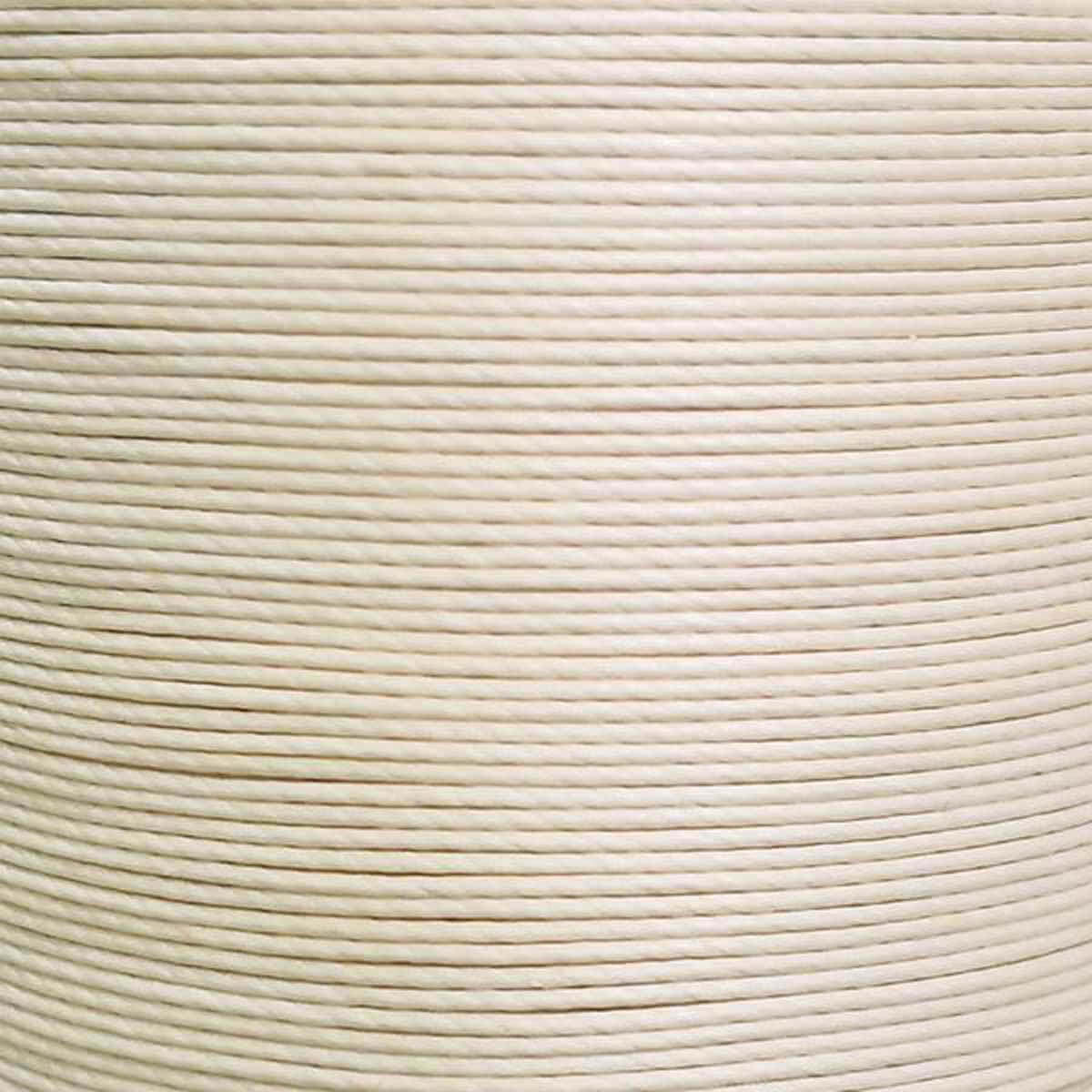

Material list for all versions:
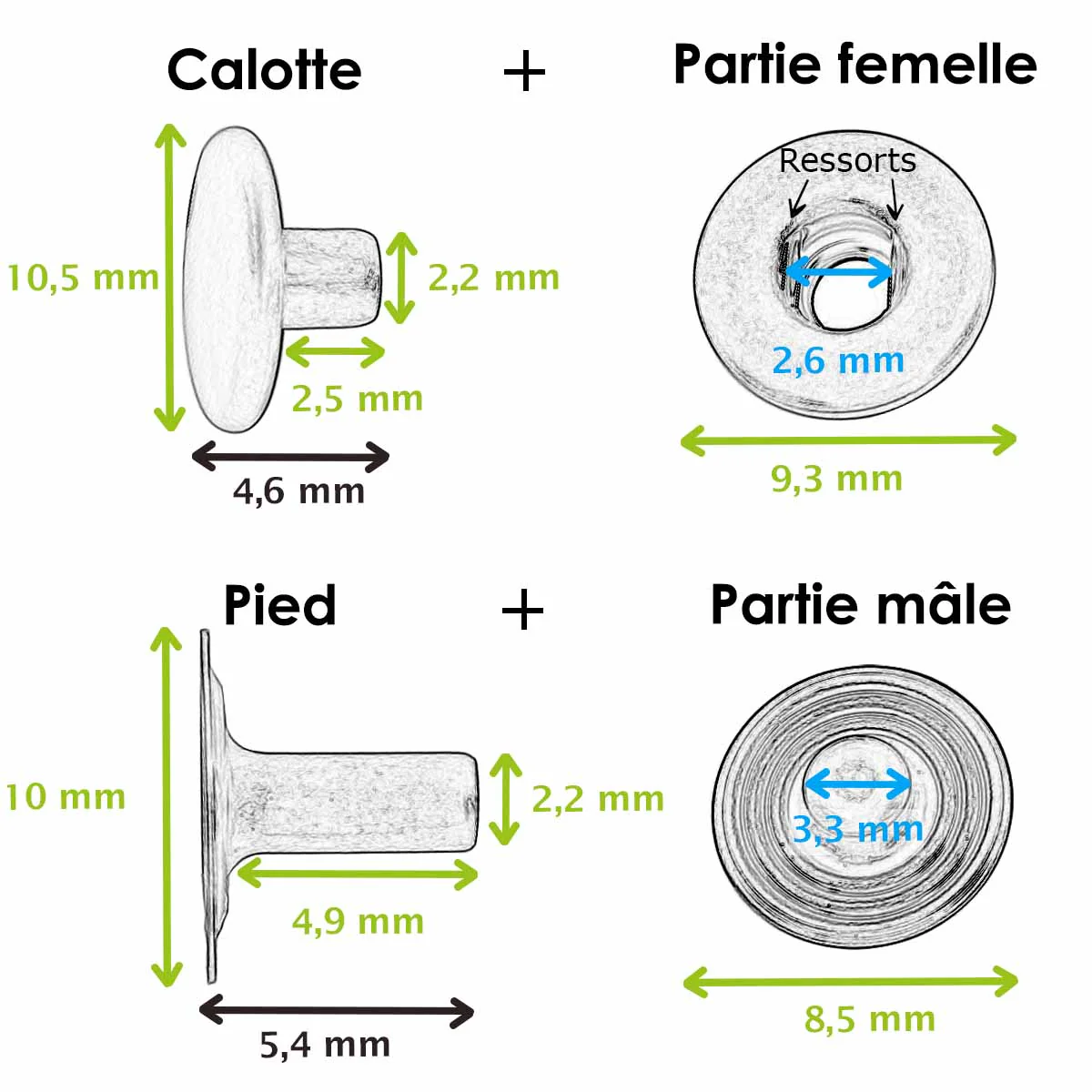
- 1 brass snap button - Ø 10.5 mm + its setting tool
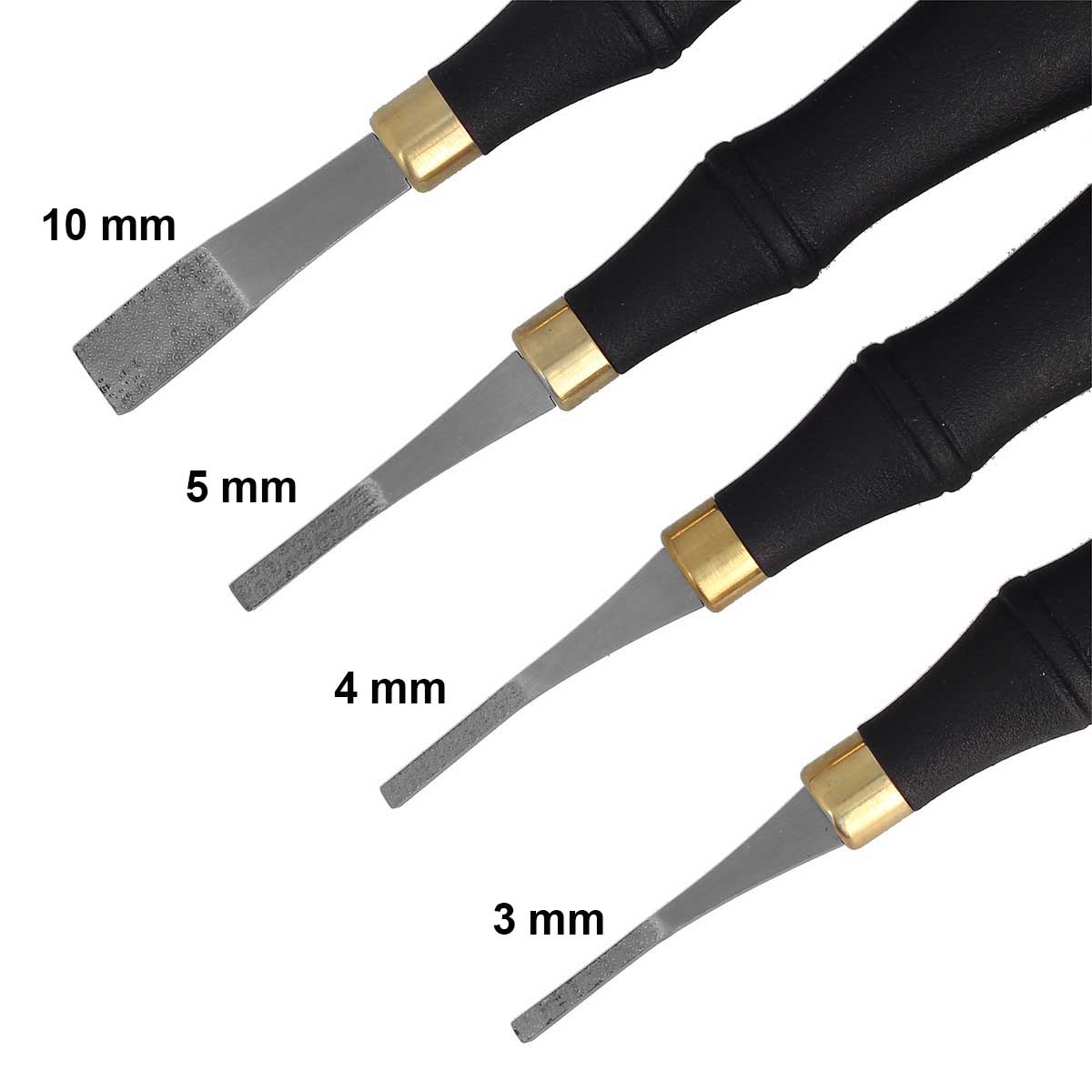
- 1 precision leather rasp file - 4 mm
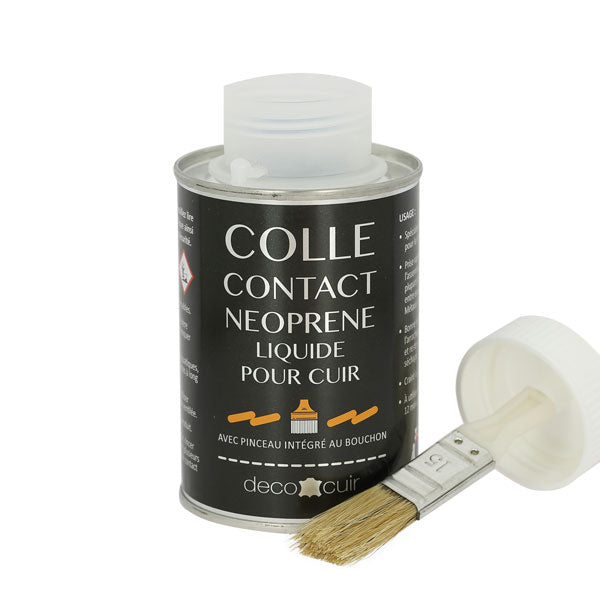
- 1 pot of neoprene glue
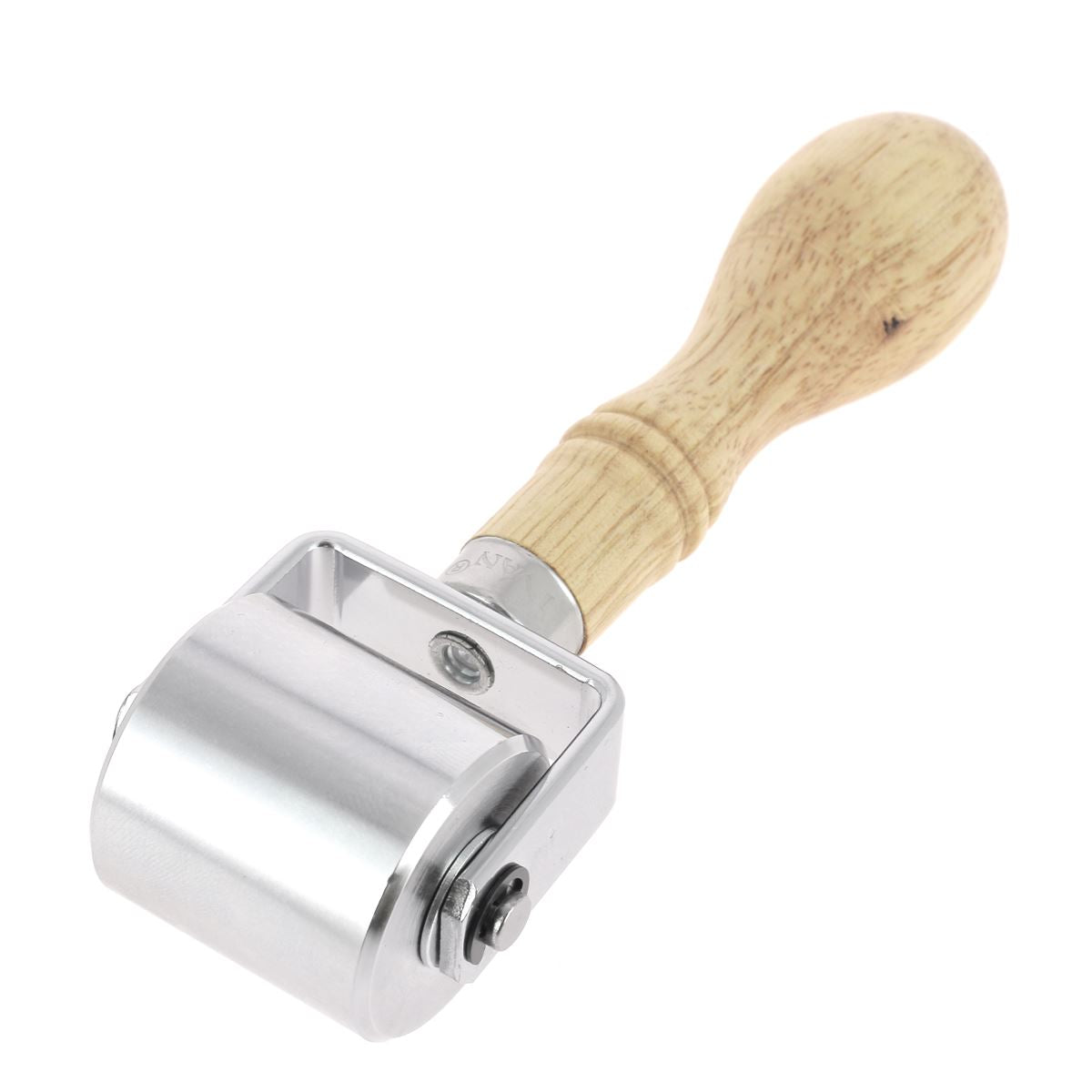
- 1 steel roller - Smooth roller for pressing leather - Ivan
- 1 edge creaser - Deco Cuir
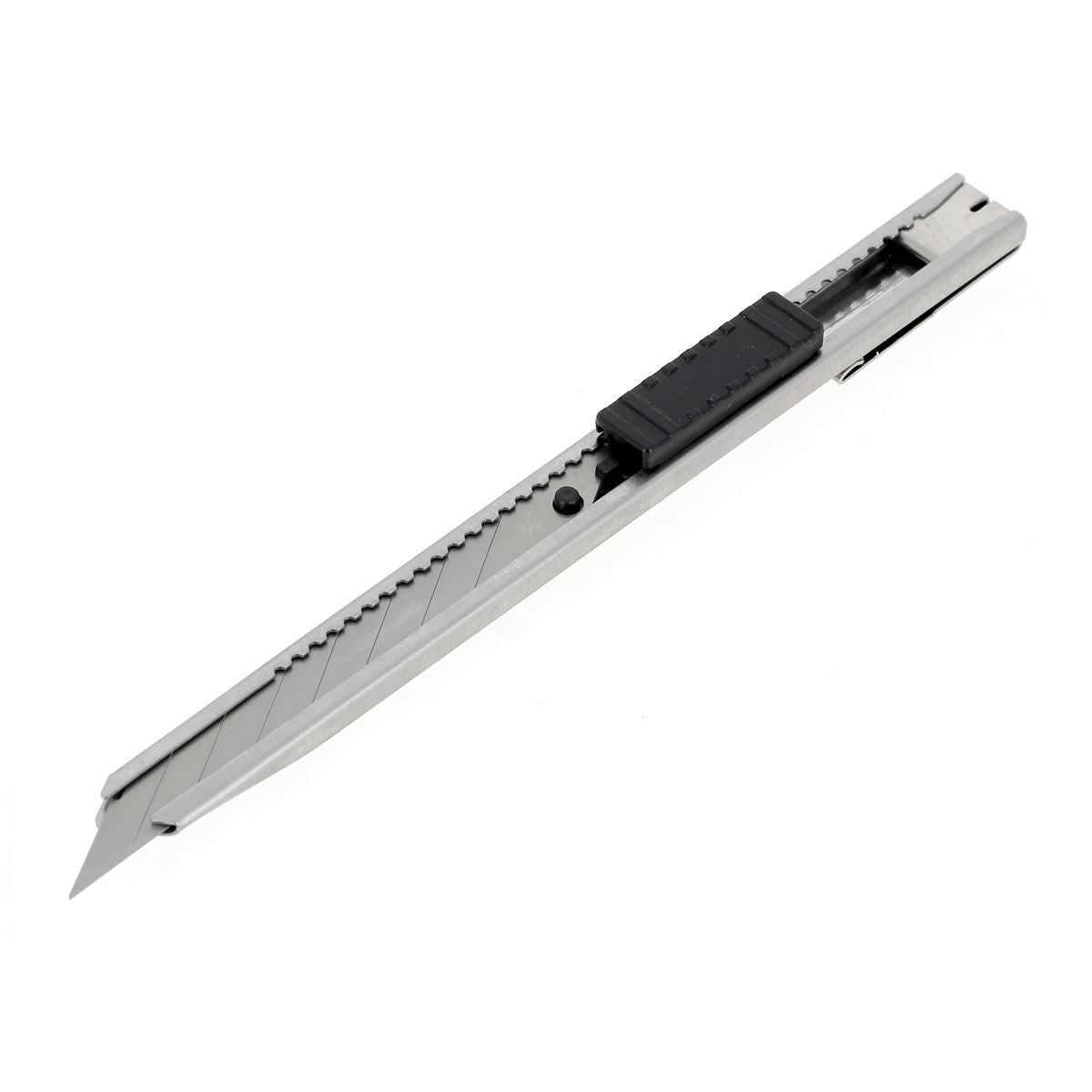
- 1 cutter 9 mm 30° INOX blade
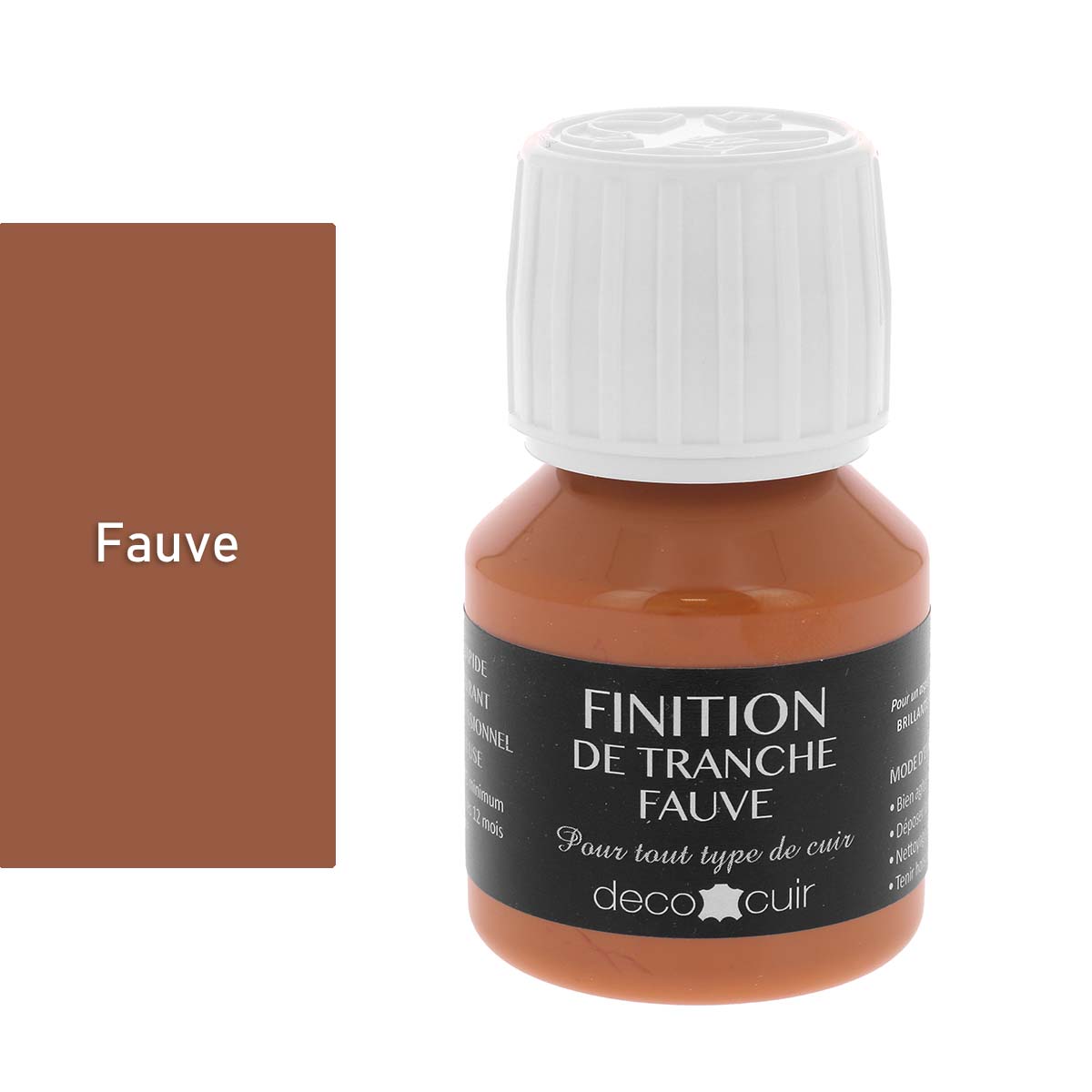
- Edge finish: a pot of edge dye (if mineral-tanned) or tokonole (if vegetable-tanned).








GET THE PATTERN
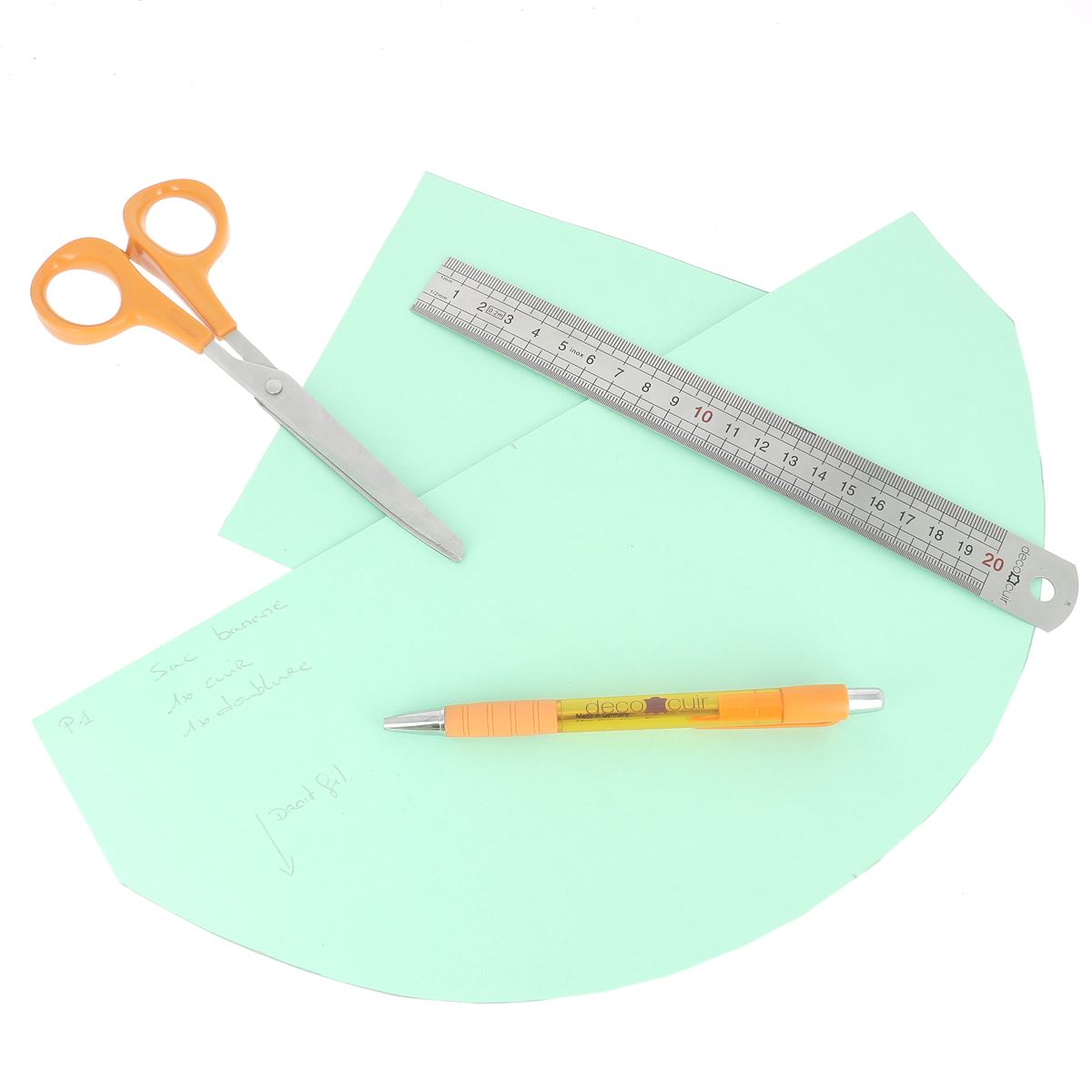
The wallet pattern is available for sale on our website (reference KA210). It is only available as a digital version: PDF to print in actual size and assemble.
We recommend reproducing the pattern pieces on pattern cardboard.

COMPLETE TUTORIAL VIDEO
PART 1: CUTTING
1. Cut and transfer the paper pattern
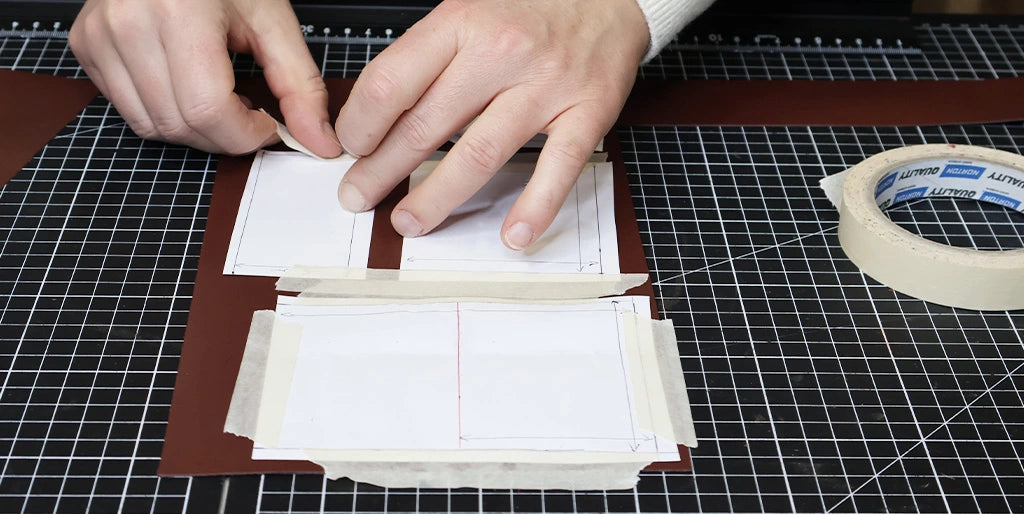
Cut out the pattern then hold it in place with masking tape or a weight on the leather pieces, respecting the indicated thicknesses.
2. Cut out the pattern pieces
Cut out pieces P1 and P2 along the dotted lines of the pattern (cutting allowances) before laminating and trimming them.
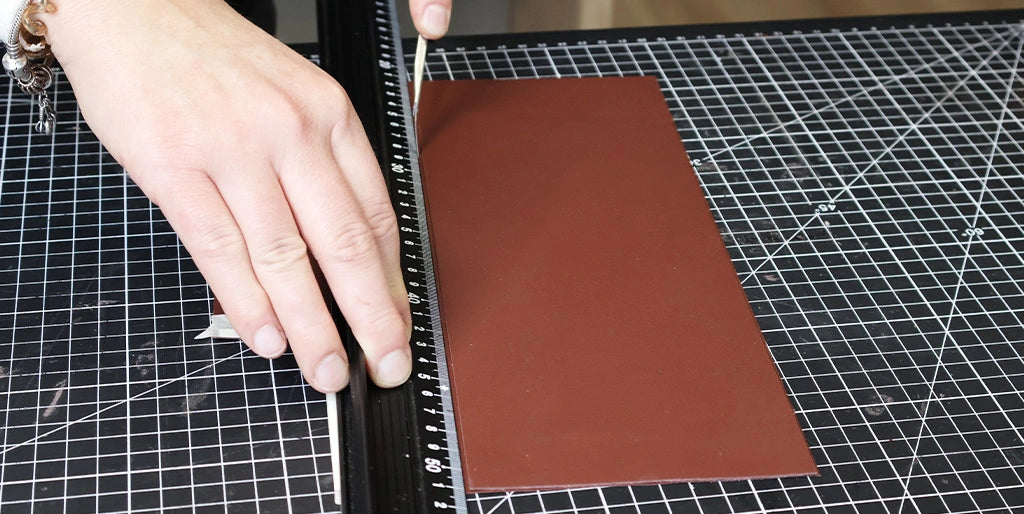
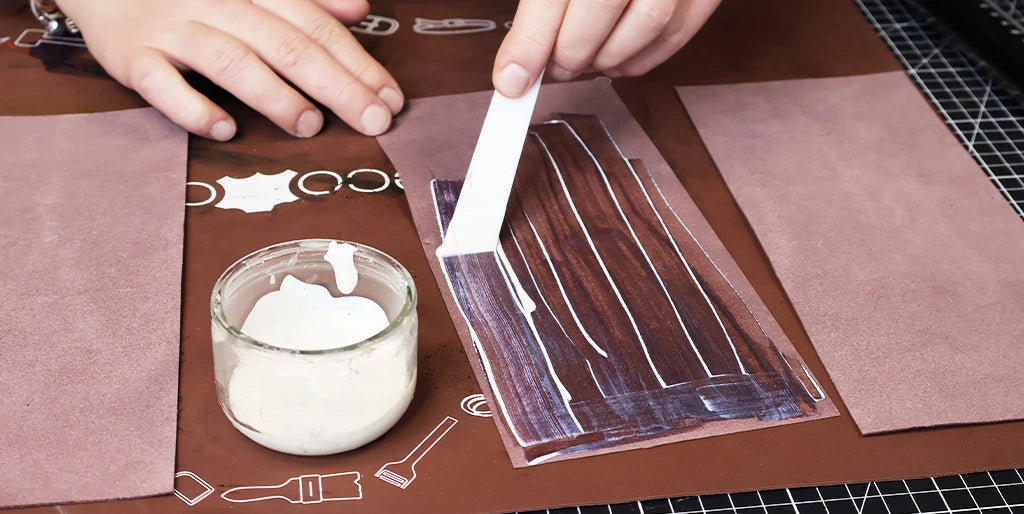
Next, glue the two P1 pieces together, flesh side to flesh side, using contact glue (here, neoprene).
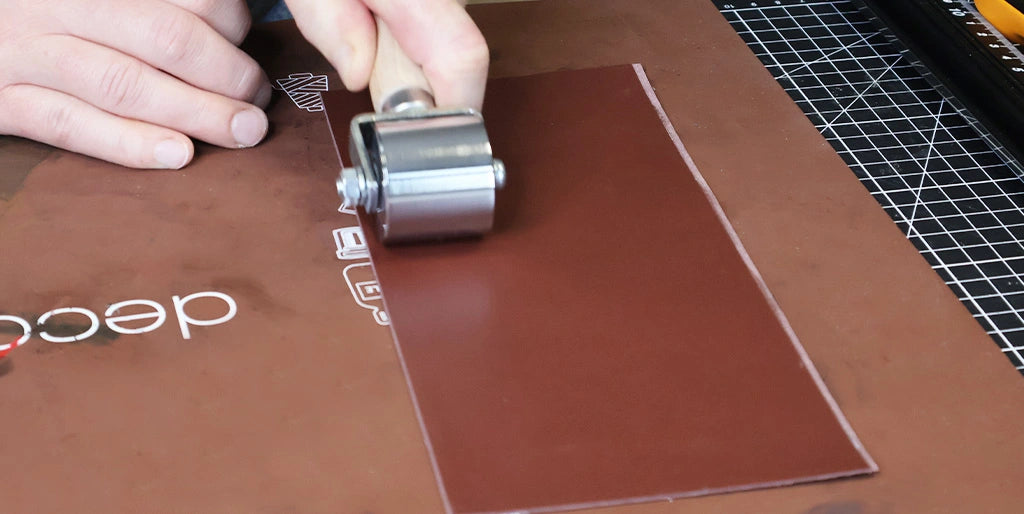
Press the leather to flatten the bond well.
Then cut out the pattern for piece P1 from this doubled rectangle.
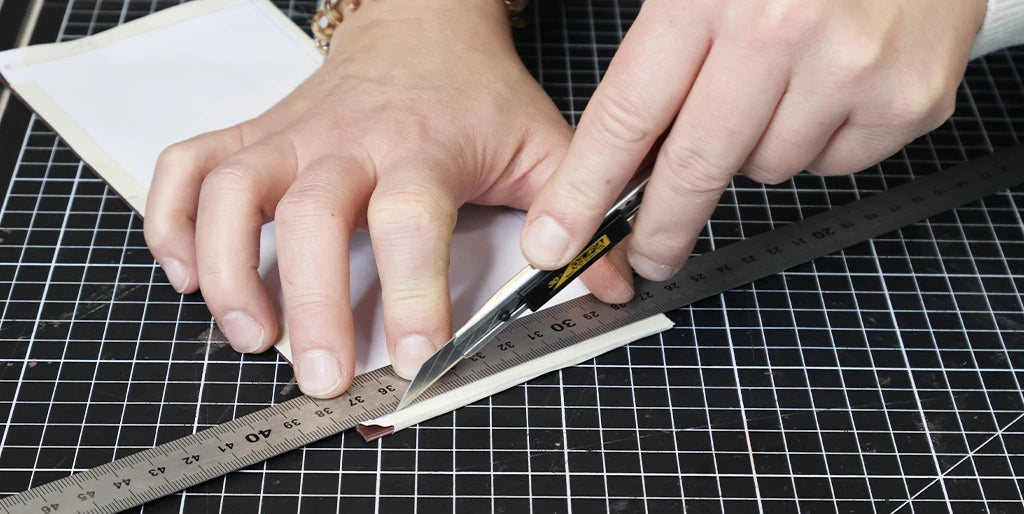
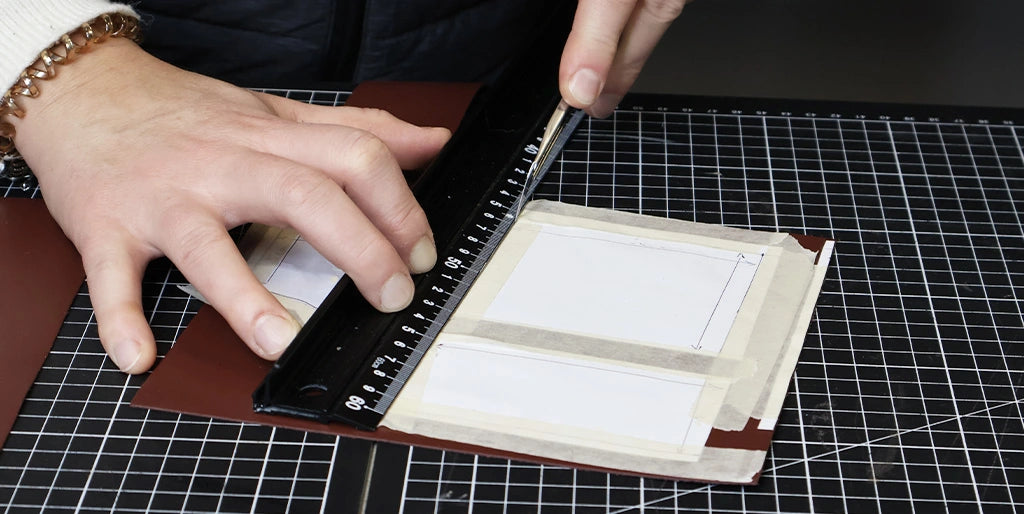
Follow the same steps for pieces P2.
For the other pieces: cut with a cutter following the pattern lines, except for P4 and P7 (B), which should be cut along the dotted lines - cutting allowances (these are lining pieces that will be trimmed later).
For piece P2 (A): mark the four blue dots on the pattern with a round awl. These marks will help you know where to glue the pocket in the following steps.
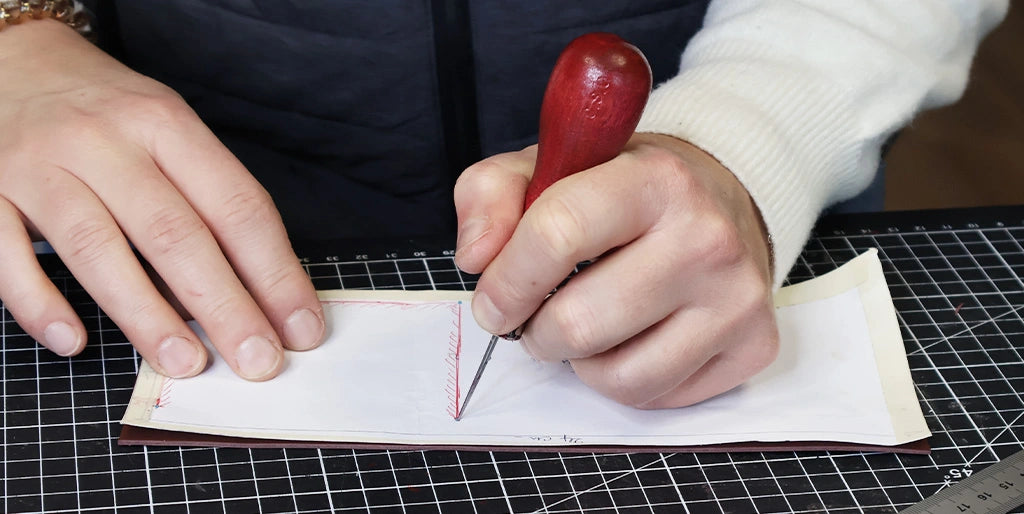
For piece P7: use a round awl to make light markings at the positions of the blue lines on the pattern. These marks will help to correctly glue the cardholder pockets (pieces P8).
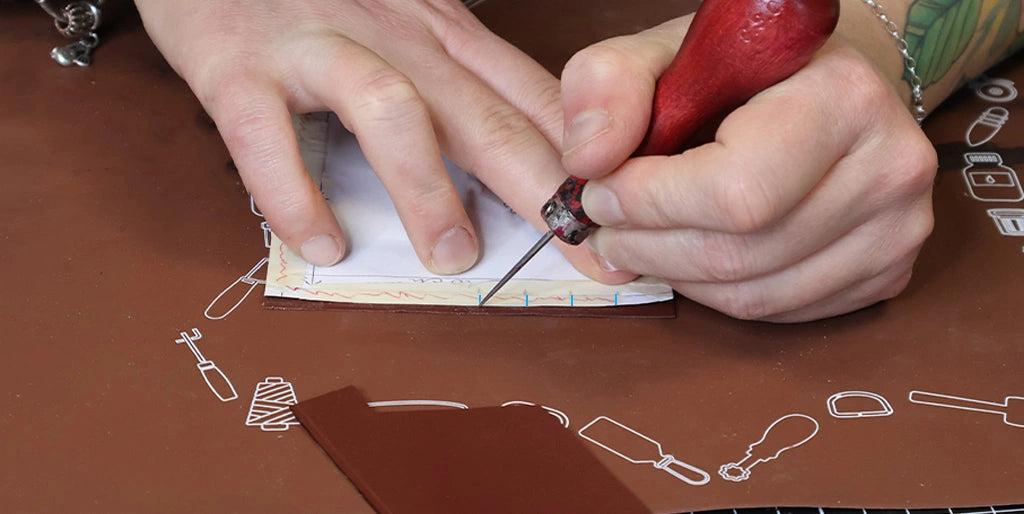
Note: do not immediately punch the Ø3 mm hole for the snap button.
PART 2: THE CARD HOLDER
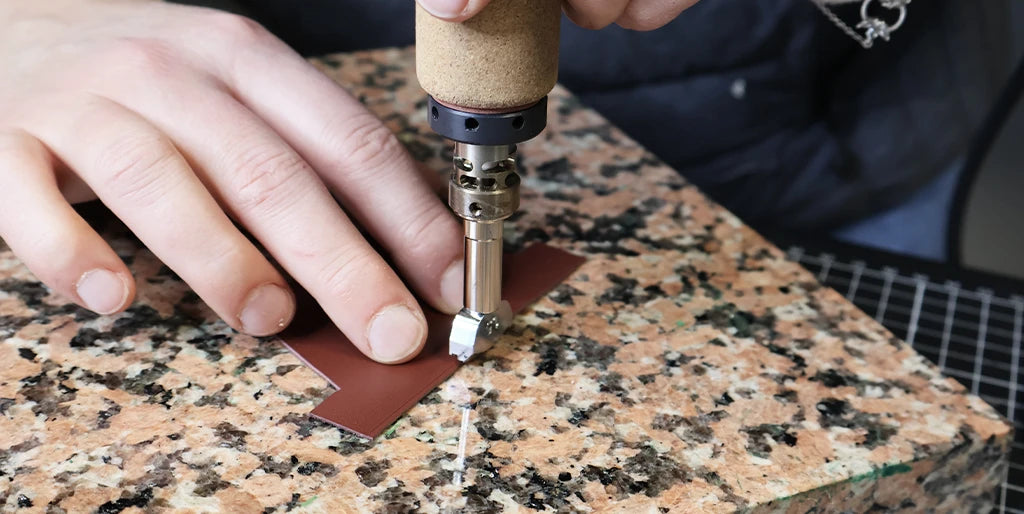
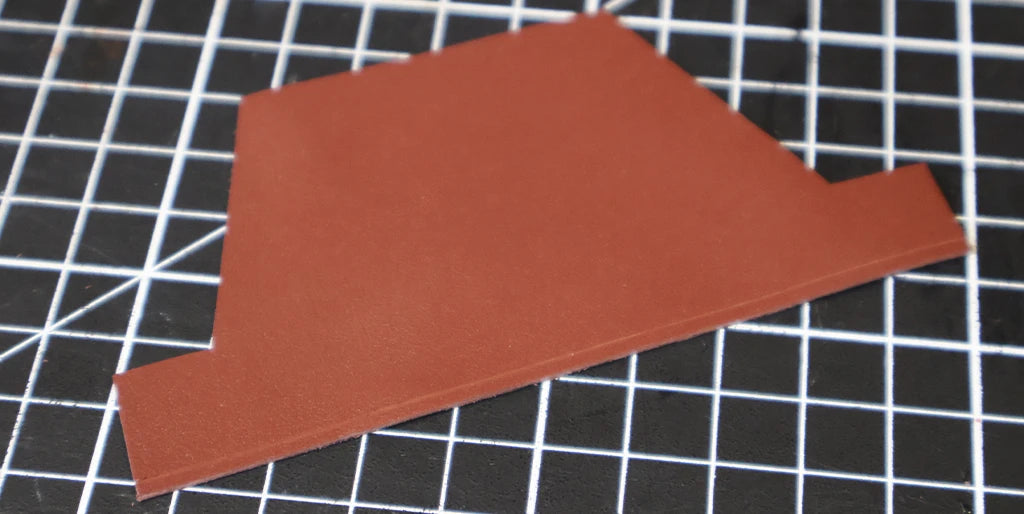
3. OPTION: make decorative fillets
Make decorative fillets on the top of pieces P8 and P9, 1.5 mm from the edge.
For mineral-tanned leather:
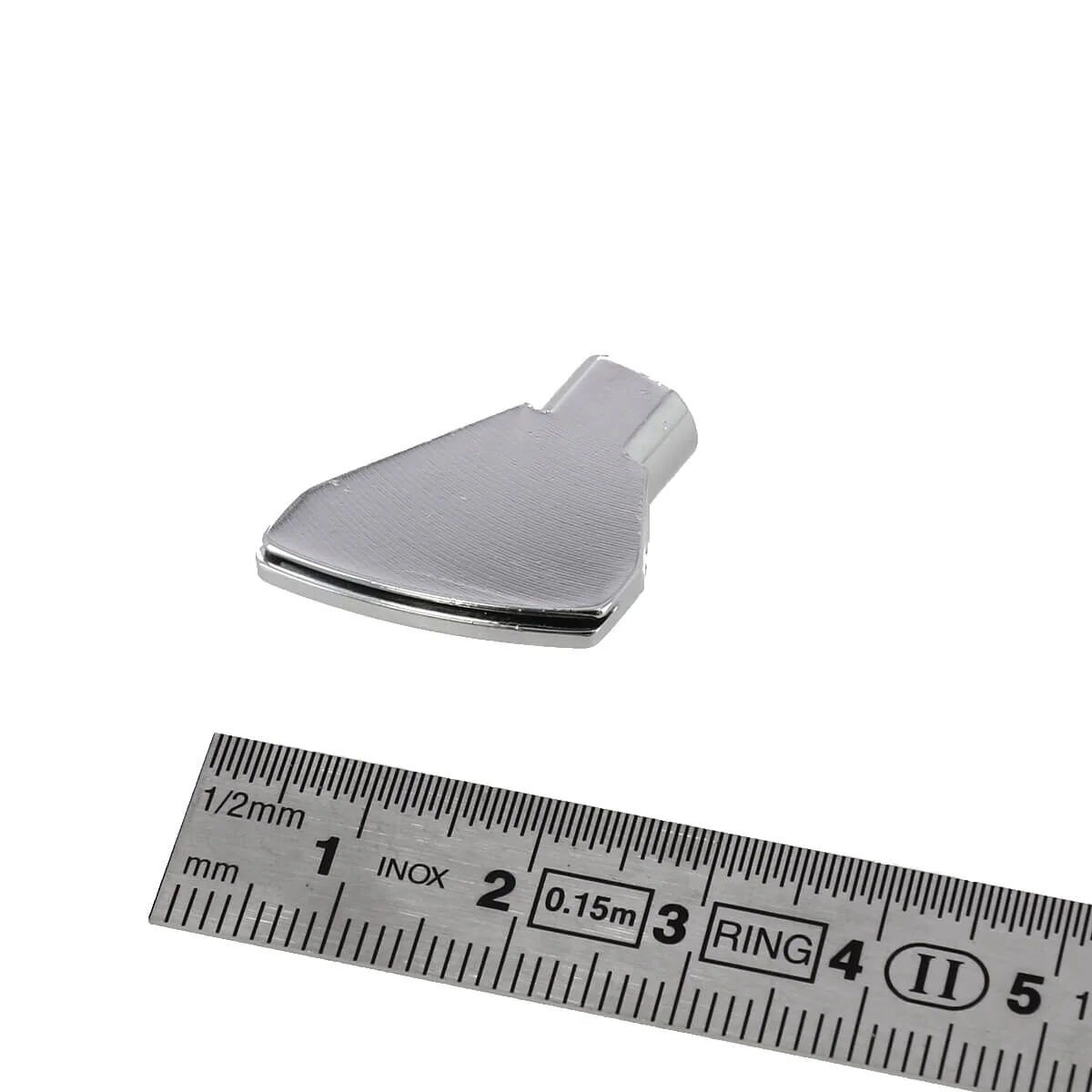
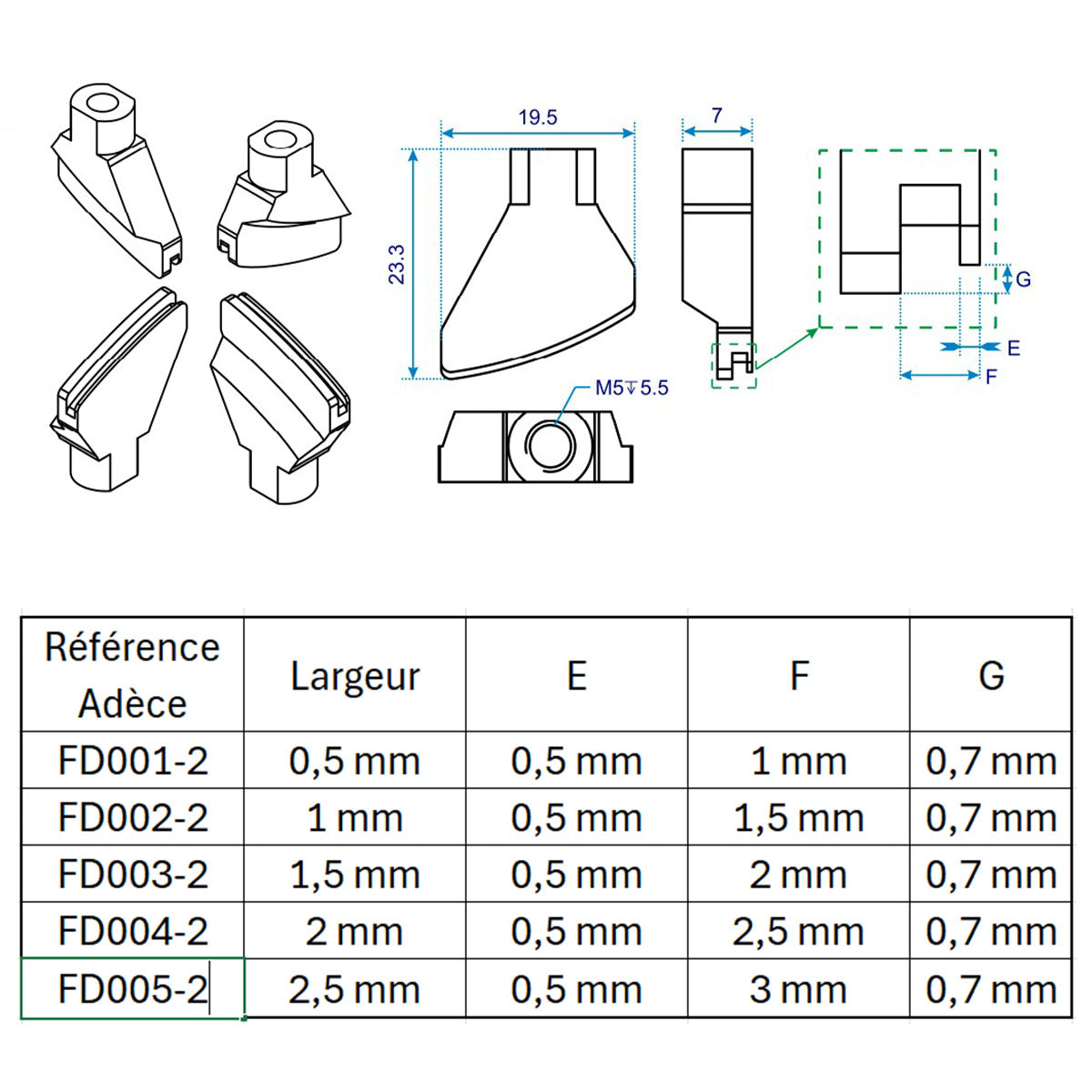
The fillet should be made hot, using a creasing iron.
For vegetable-tanned leather:
The fillet can be made cold with an edge creaser, a pair of dividers, or a folder… or hot with a creasing iron.




4. Finish the edges
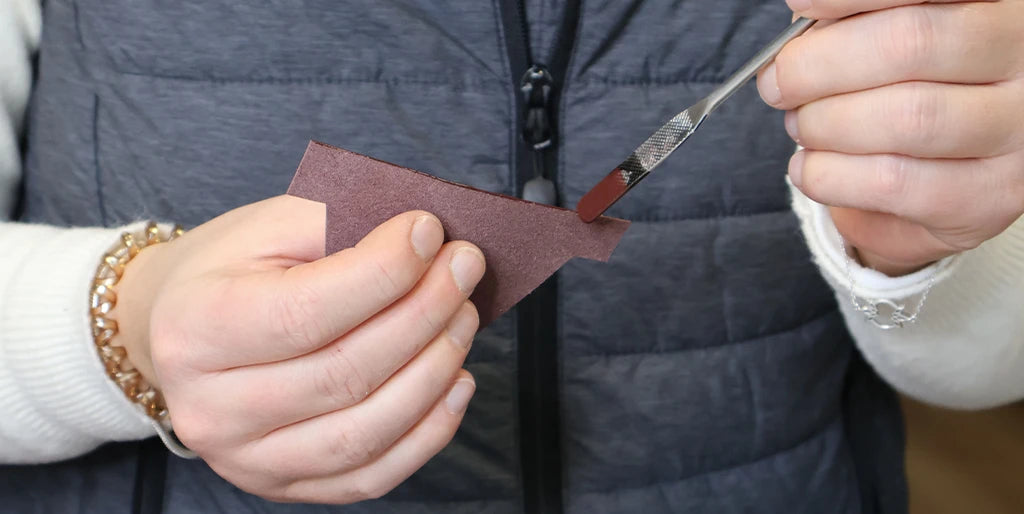
Finish the top edges of pieces P8 and P9 (the length with the decorative fillet). Use edge dye for mineral-tanned leathers and Tokonole for vegetable-tanned leathers.
VIEW EDGE CREASER AND EDGE FINISHING GUIDE
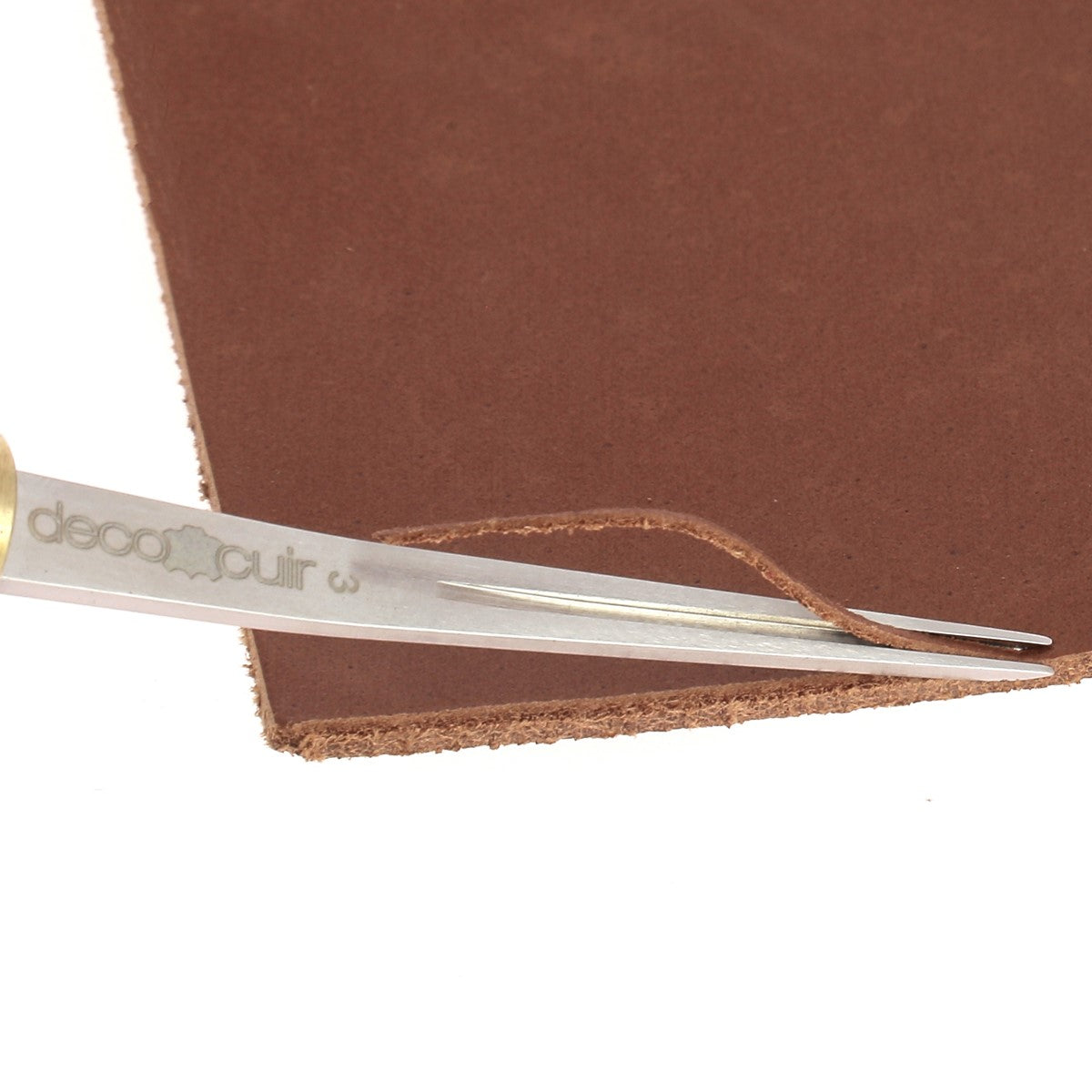
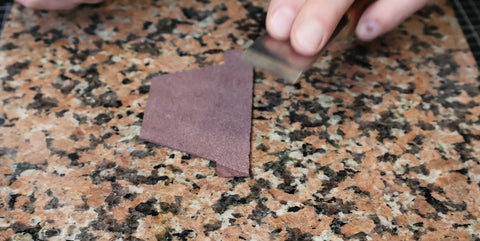
5. Skive the corners
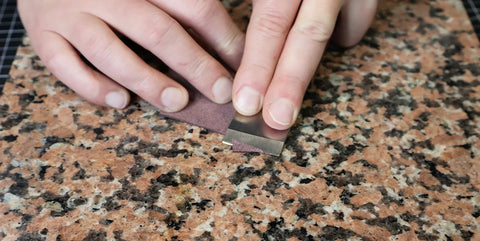
To avoid bulkiness in the cardholder, we recommend lightly skiving the corners of pieces P8 and P9.
 |
 |
6. Assemble the cardholder
To facilitate adhesion, abrade the grain of the leather on piece P7(a), at the pink lines indicated on the pattern. Be careful not to abrade higher than the lines.
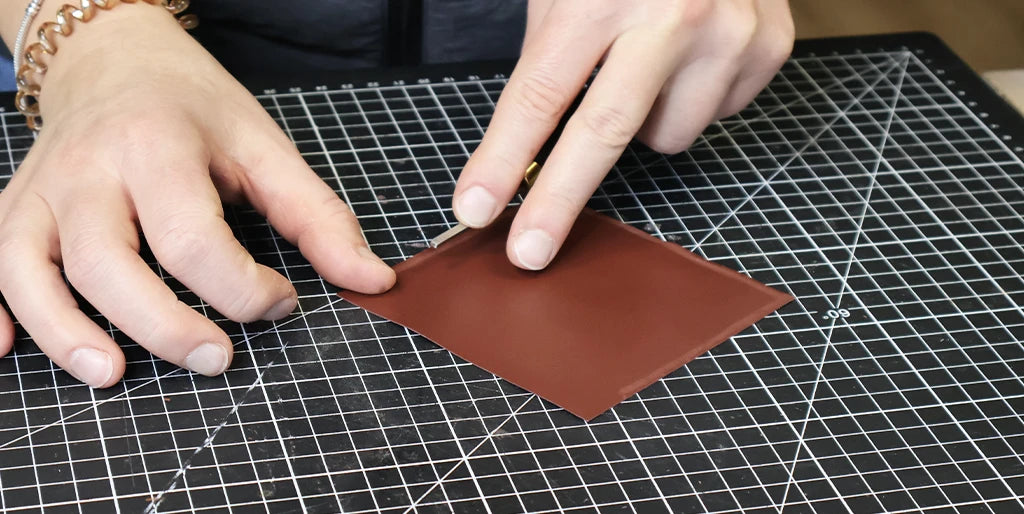
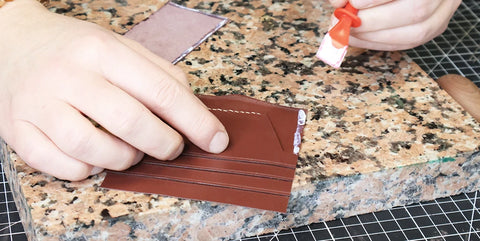
Glue the first piece P8 by applying glue to the bottom of the piece and its two sides. Also apply contact glue to piece P7, 1.3 cm from the top.
See photo ⬇️
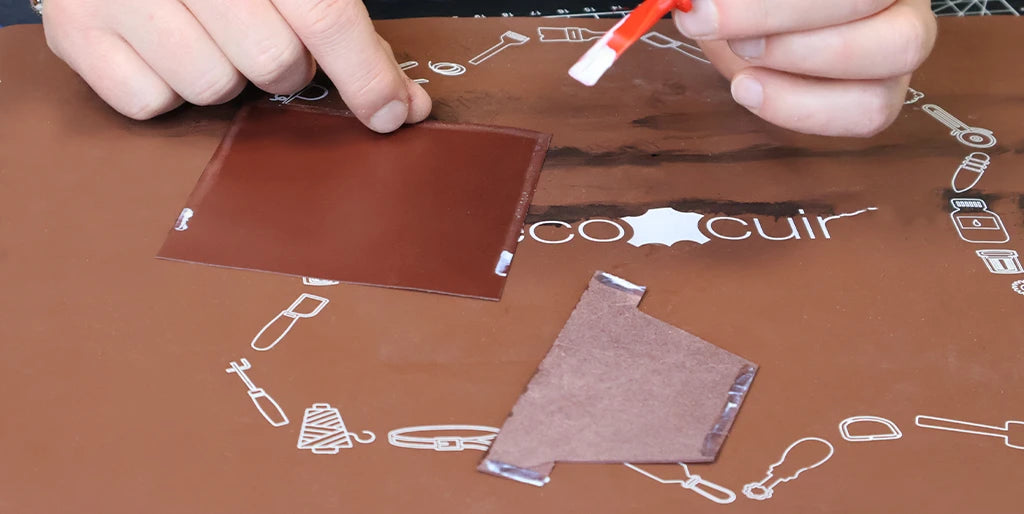
Glue piece P8 onto P7, making sure it is 1.3 cm from the top of piece P7.
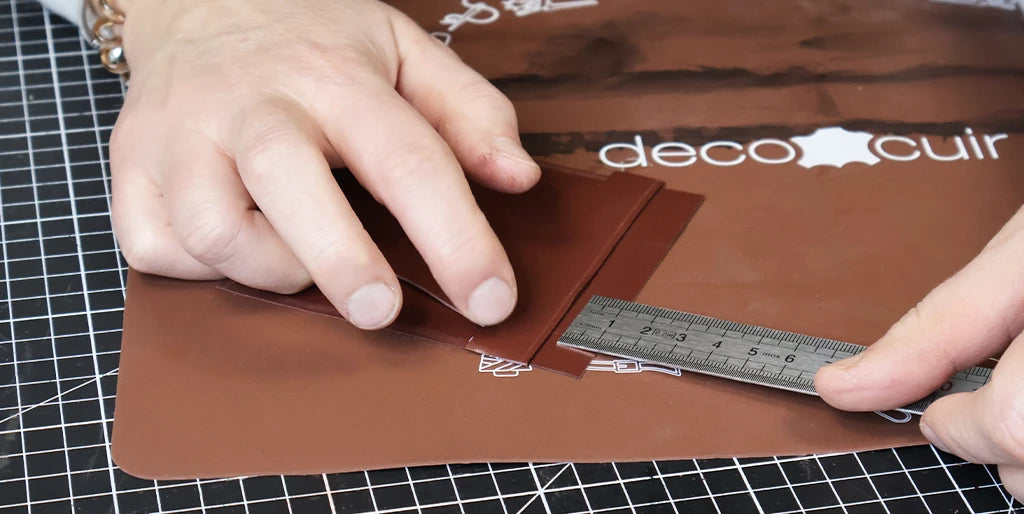
Stitch the bottom of piece P8 to P7. Two stitching options:
- Hand-stitching with saddle stitch
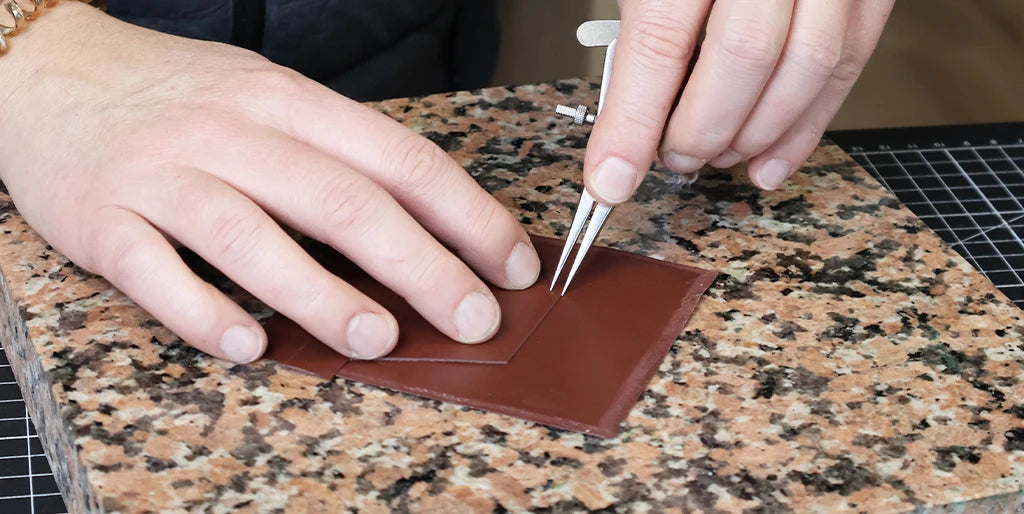
Using dividers, draw the stitch line 3 mm from the bottom edge of piece P8.
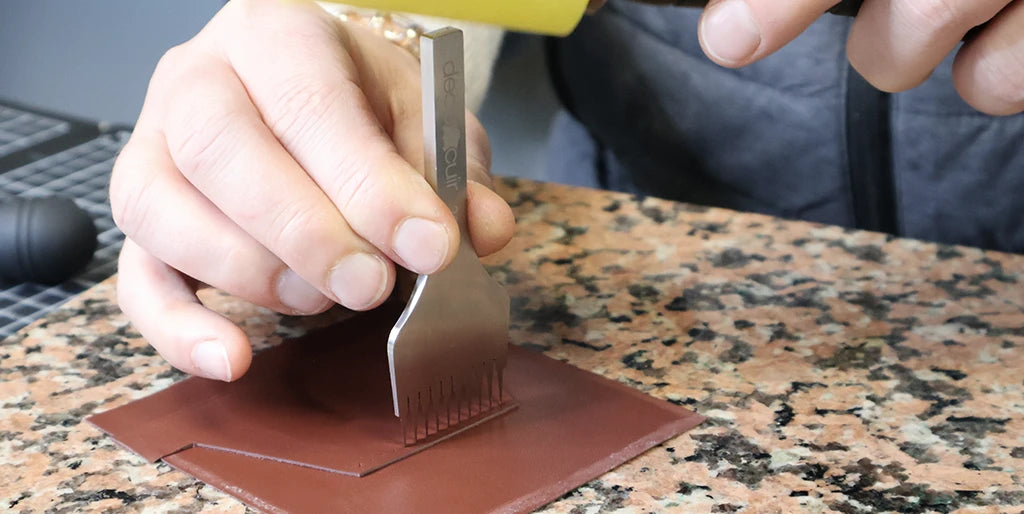
Mark the stitch points with a stitching chisel.
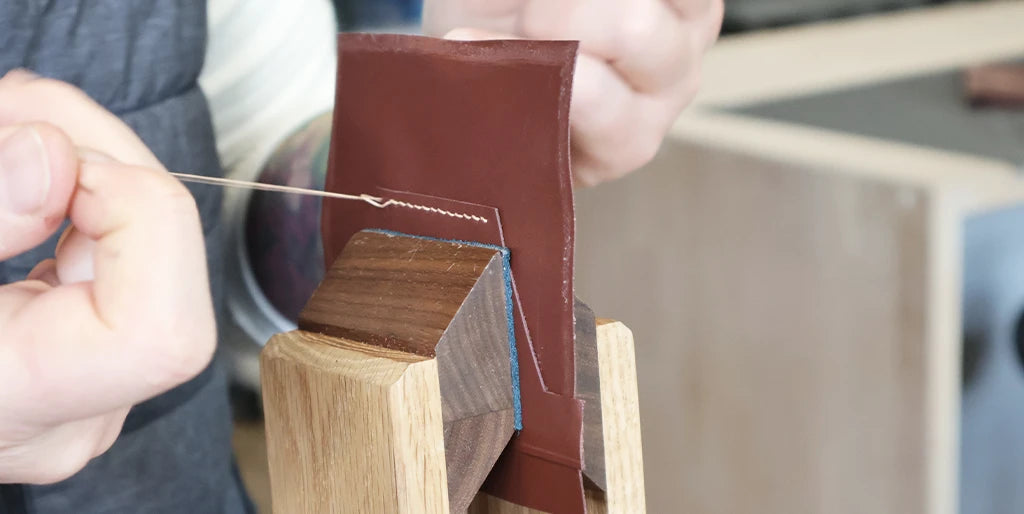
Stitch with saddle stitch.
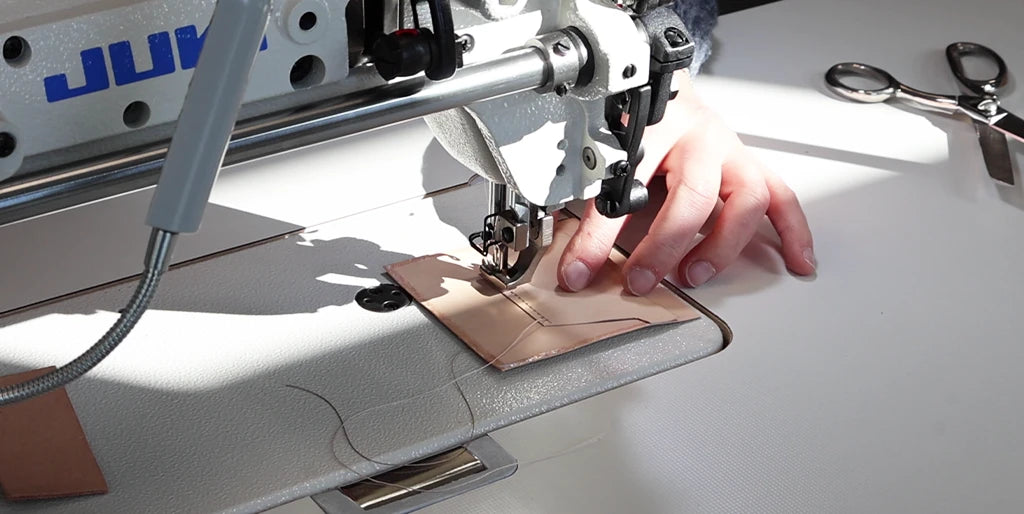
- Sewing with a sewing machine
To save time, this part can be sewn with a sewing machine.
Do the same with the other two P8 pieces.
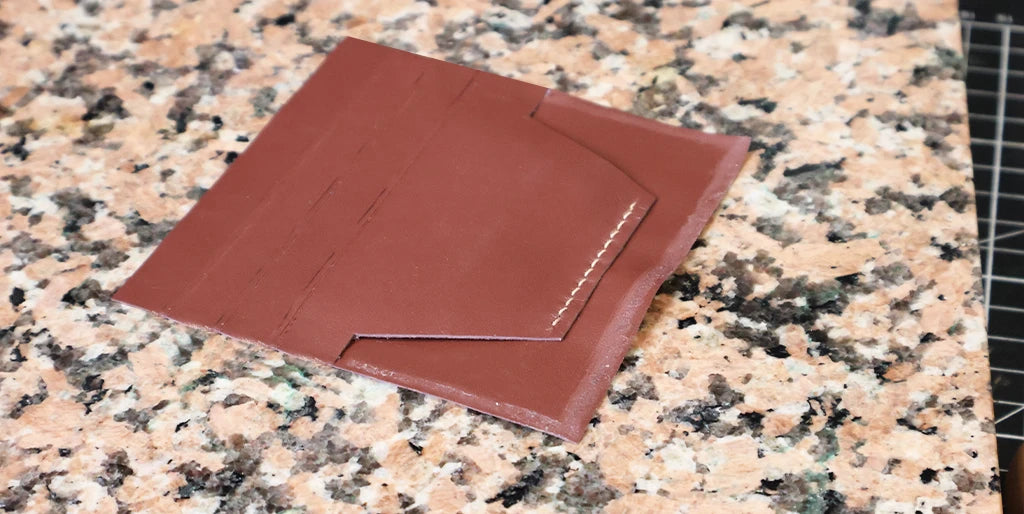
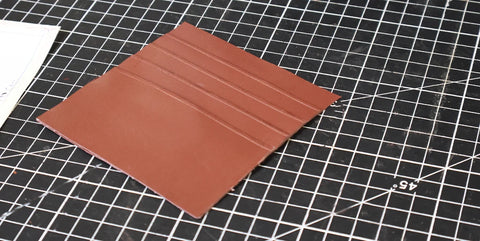
Glue piece P9 to the bottom of piece P7.
 |
 |
7. Laminate and stitch the right side of the cardholder
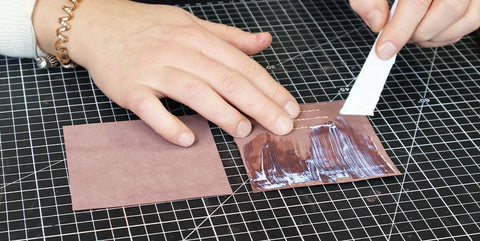
Once all parts are glued, take the second piece P7(b). Laminate the two P7 pieces, flesh side to flesh side, with contact glue.
 |
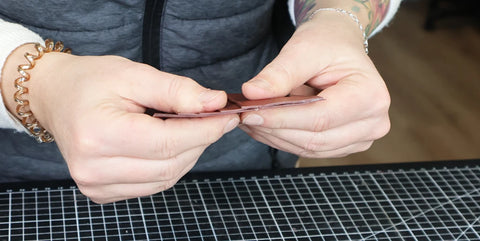 |
Trim.
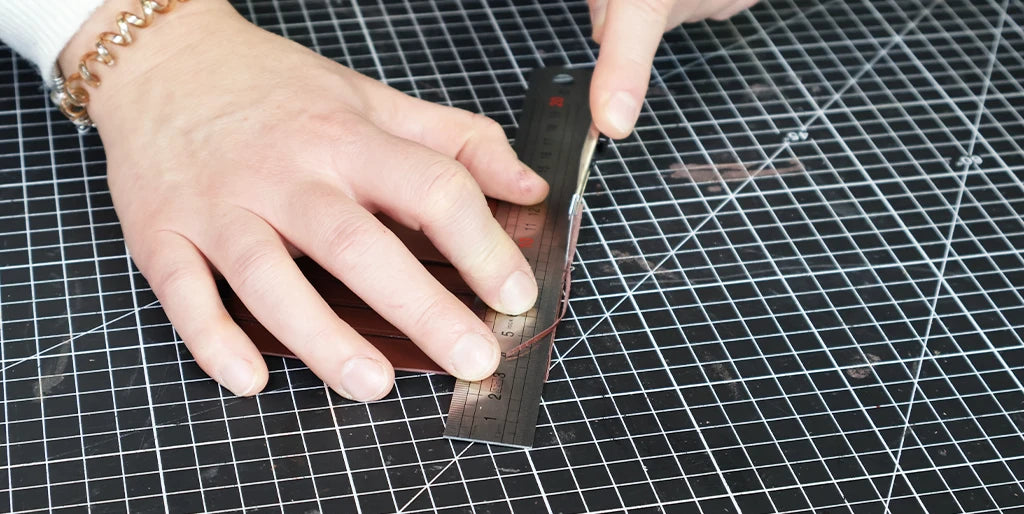
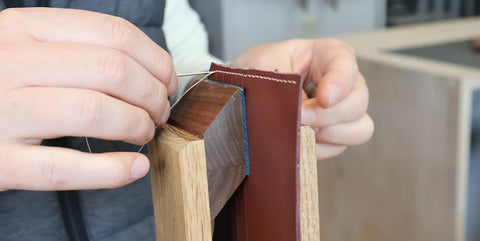
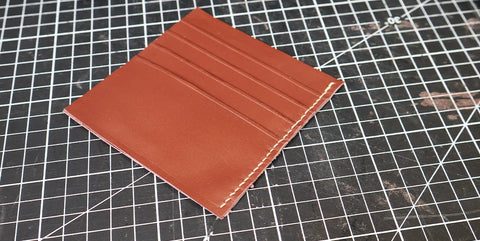
Sew the right side of the card holder (by hand or machine).
Only the right side needs to be sewn, as the other three sides will be sewn later during the final wallet assembly.
If hand sewing:
Using a wing divider, draw a line 3 mm from the right edge of the piece.
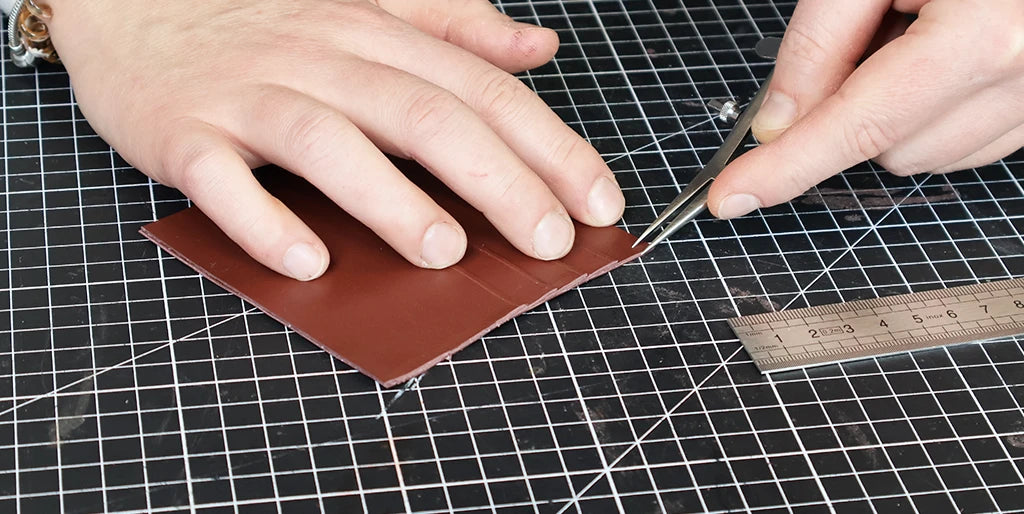
Mark the stitching points with a stitching chisel.
IMPORTANT : To avoid weakening the sides of the card holder, make sure not to mark stitching points on the gaps. We recommend using a two-pronged chisel and offsetting the points if necessary to position them correctly between the different card holder pockets.
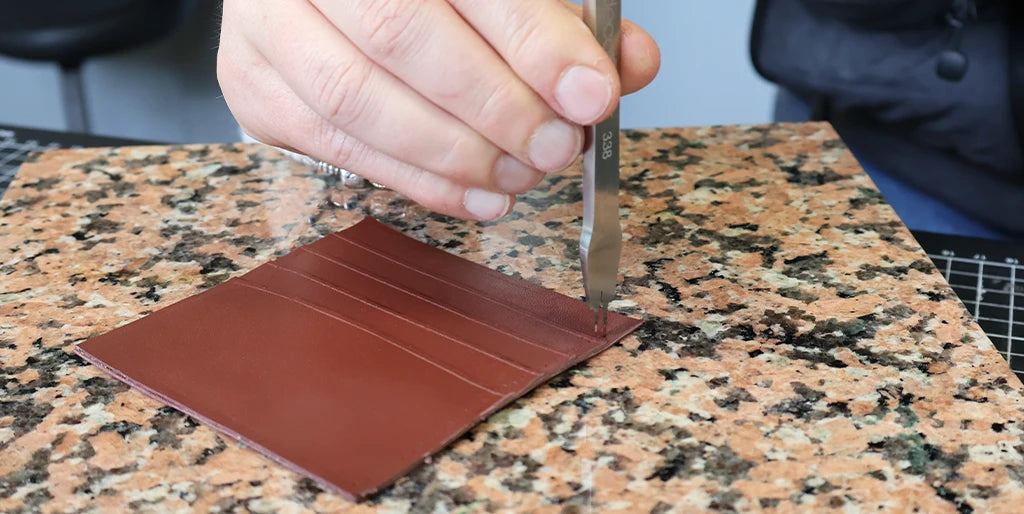
Sew with a saddle stitch.
 |
 |
8. Edge finishing
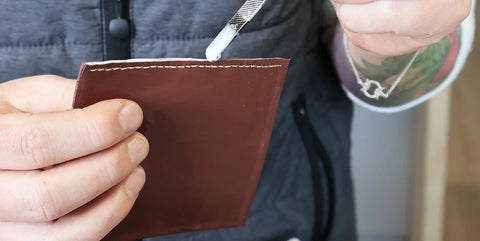
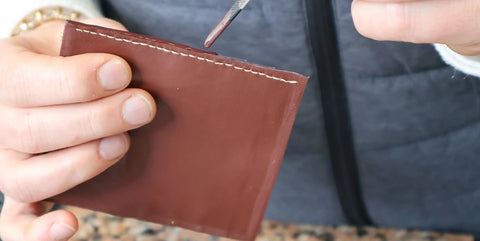
Finish the newly sewn edge. Trim if necessary, sand, and apply an edge finish.
 |
 |
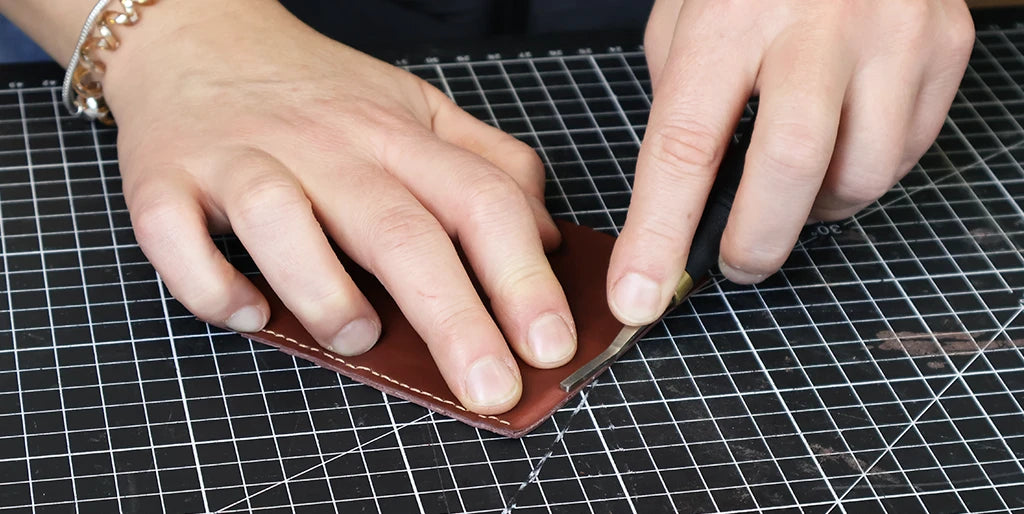
9. Skive the back side
Turn over the card holder and skive the three remaining unsewn sides on the back of the card holder. This will facilitate gluing to piece P2 in the following steps.
PART 3: THE COIN POCKET
For those who never carry coins, it is possible to make another card slot instead of a coin pocket.
10. Install the Ø10.5 MM snap fastener
There are 2 options for installing the snap fastener:
|
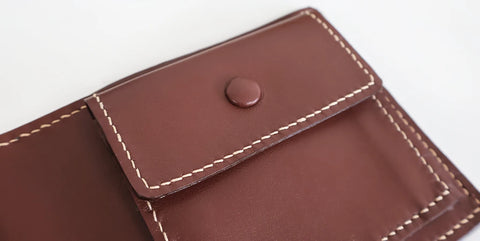
CHOICE 1: COVERED SNAP
|
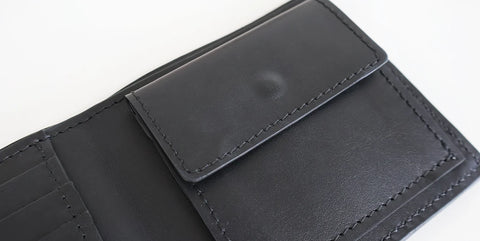
CHOICE 2: CONCEALED SNAP
|
 |
 |
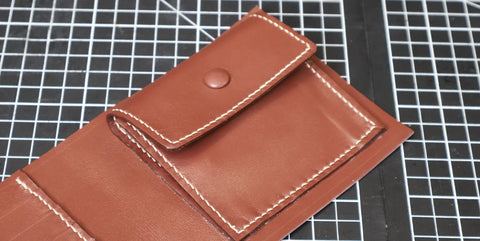
Choice 1: Covered snap
For a discreet and refined snap fastener, it is possible to cover it with the same leather used for the wallet.
Here are the steps to follow:
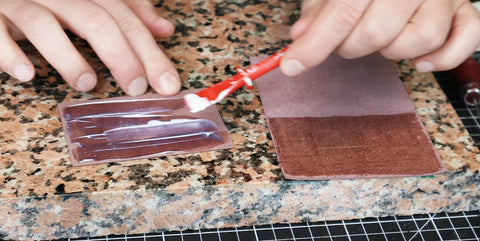
1. Start by gluing the P4 lining to the designated area on piece P3, wrong side to wrong side. And trim.
 |
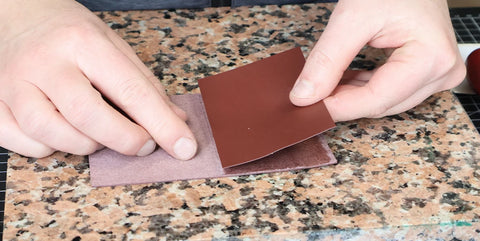 |
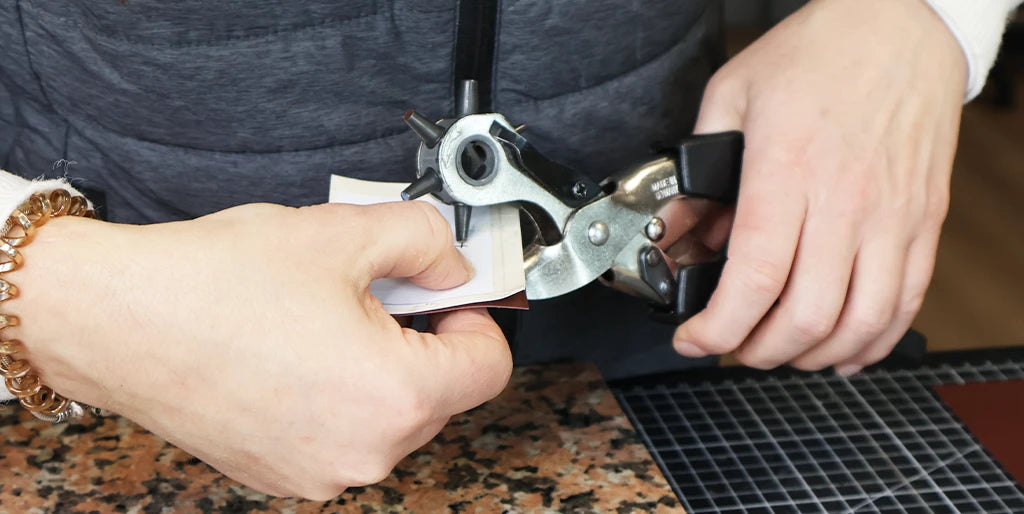
2. Punch Ø 3 mm holes on pieces P3/P4 as well as on piece P5.
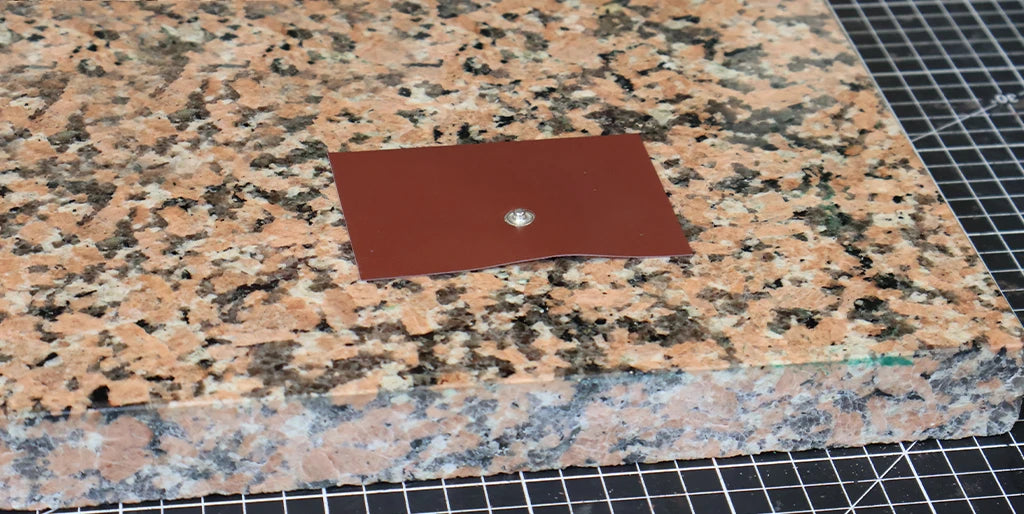
3. Install the snap post on piece P5.
4. Cut a small leather square measuring 5 x 5 cm, with a maximum thickness of 0.5 mm. Apply contact glue to the wrong side of this square.
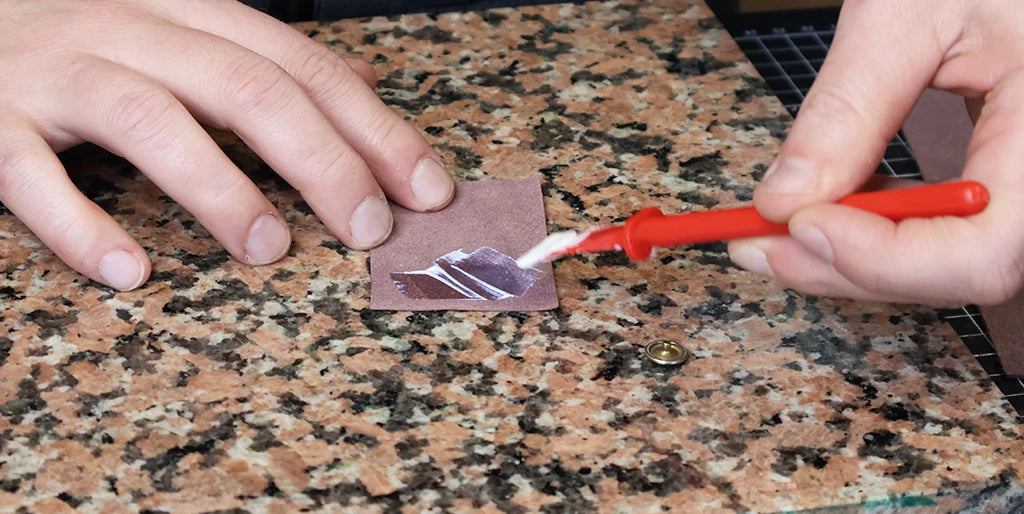
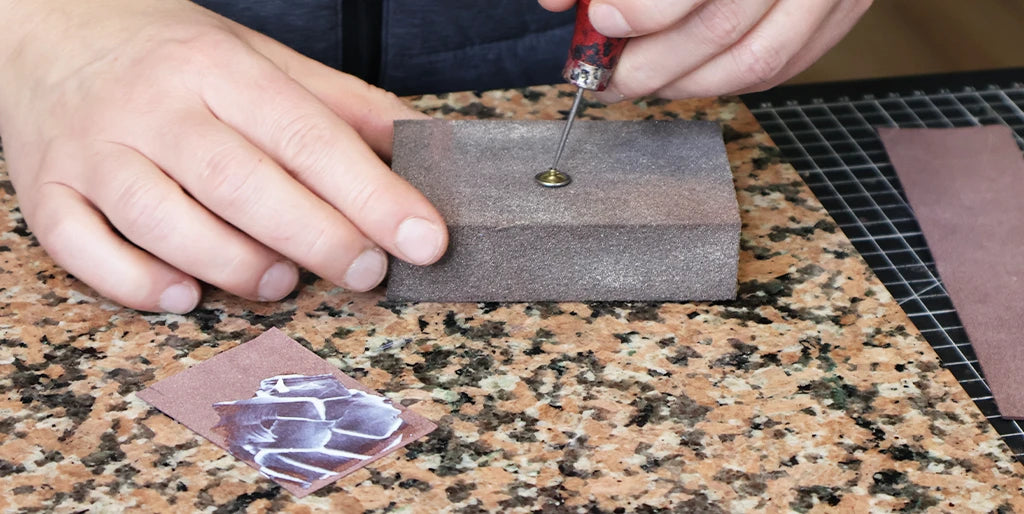
5. Let the glue dry for a few moments, then lightly sand the snap head to improve adhesion.
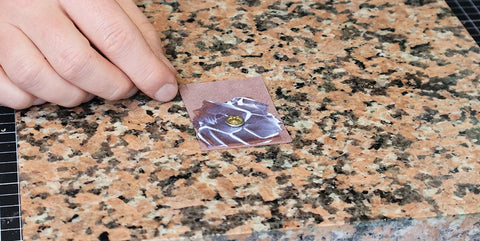
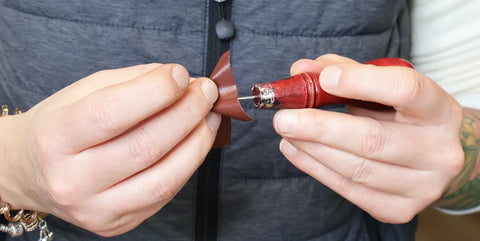
6. Place the snap head in the center of the leather square, then fold the leather towards the inside of the snap.
 |
 |
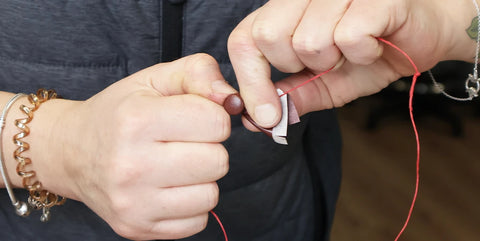
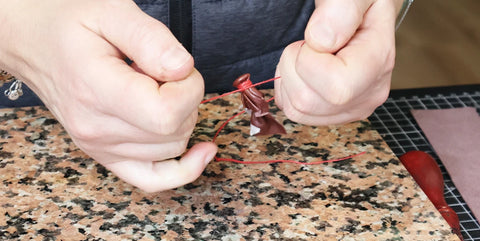
7. With thread, wrap several times around the snap post to stretch the leather towards the inside of the snap. Pull very tight and tie a knot.
Allow the glue to dry for several hours (or even a full day) to ensure a good hold.
 |
 |
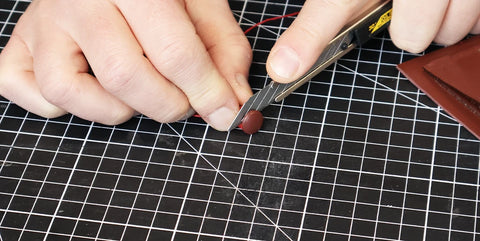
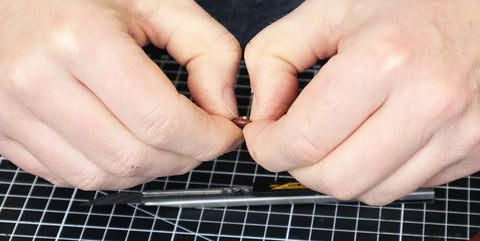
8. Once the glue is dry, use a cutter to cut off the excess leather at the snap head. With your fingernails, gently fold the edges of the leather into the snap.
 |
 |
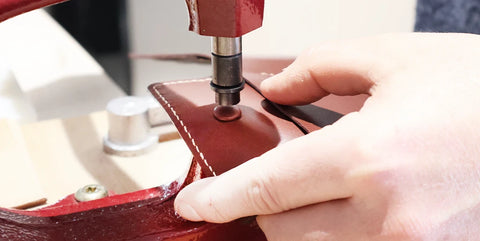
9. Install the snap fastener at the designated location on piece P3/P4.
 |
 |
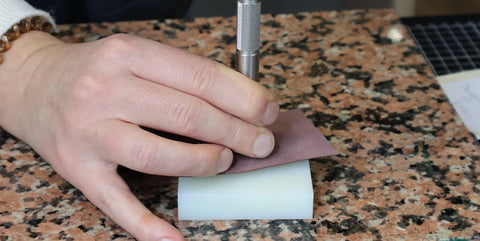
Choice 2: Concealed snap
For an invisible snap fastener, it can be hidden in the lining at the top of the pocket. Here are the steps to follow:
1. Start by punching Ø 3 mm holes for the snap fastener only on pieces P4 and P5. Disregard the hole on piece P3.
2. Install the snap head on piece P5 (pocket front), with the domed part on the flesh side of the leather.
 |
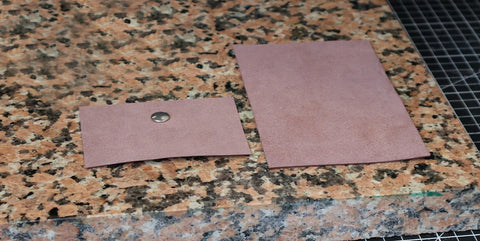 |
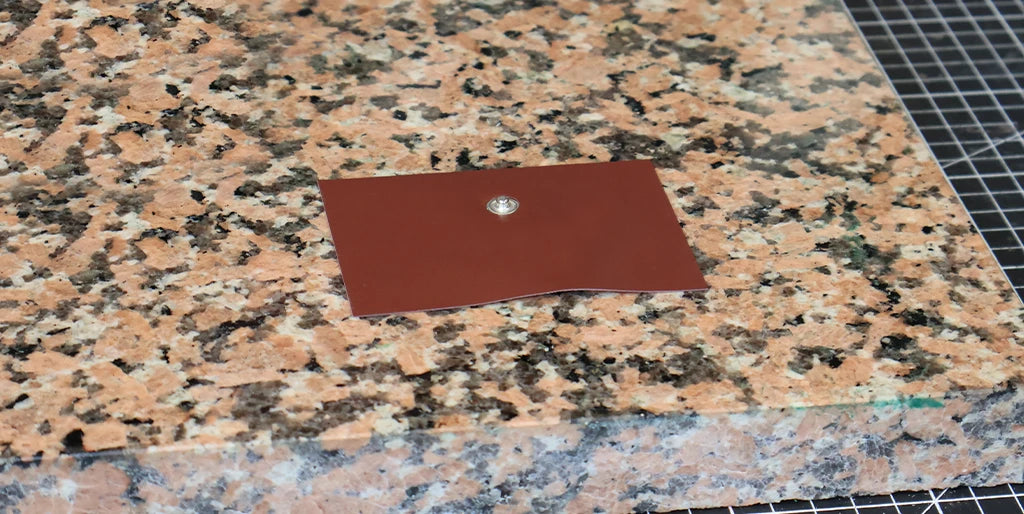
3. Then, install the snap post on piece P4 only (flap lining).
11. Sew the flap lining
If you chose the concealed snap (choice #2): glue the P4 lining to the designated area on P3, wrong side to wrong side. And trim.
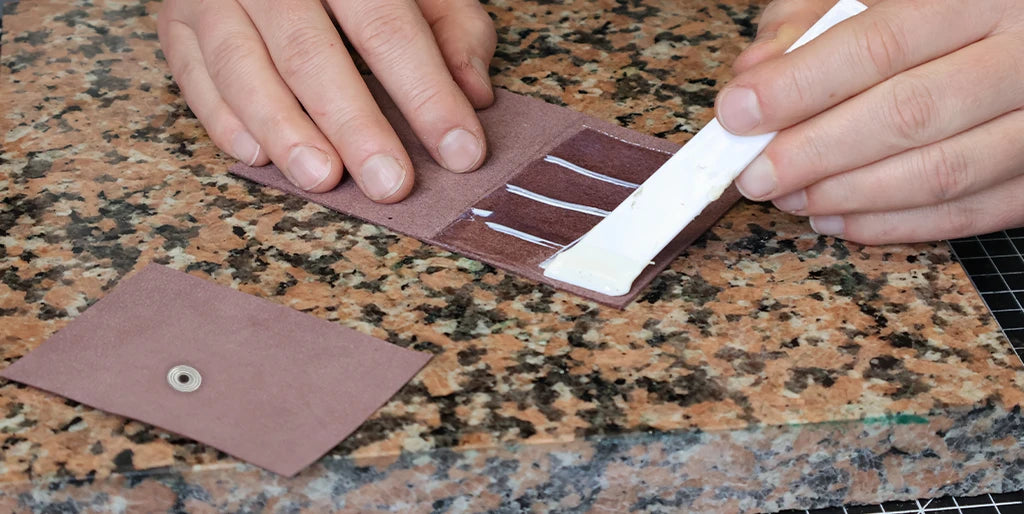
Using a wing divider, draw the stitching line 3 mm from the edge on the upper width and on the two lengths of piece P3, up to where the lining stops.
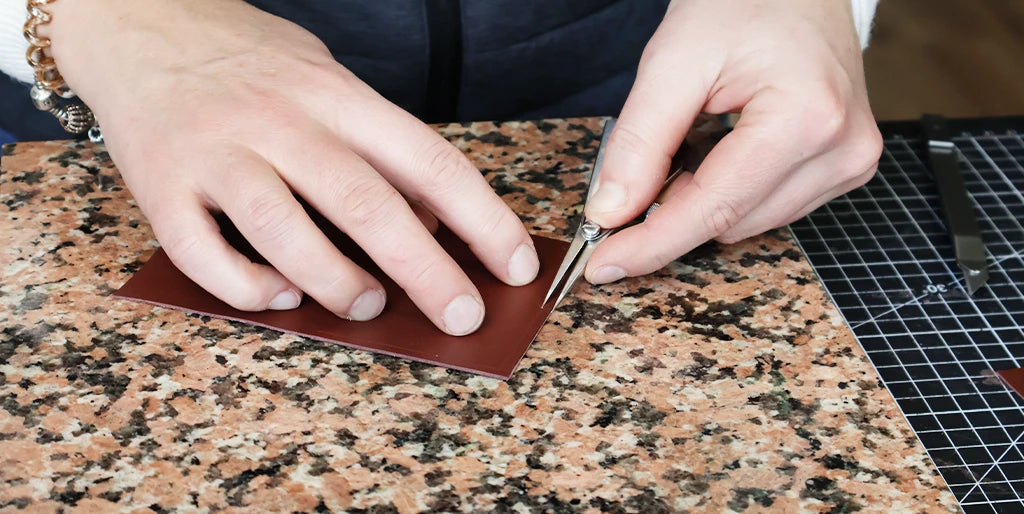
Mark the stitching points with a stitching chisel, on the top width and the two lengths of piece P3, up to where the lining stops.
Reminder: always start by working the corners with a 2-prong chisel: the rule is that the point located in the corner must always point towards the center of the piece. It is also possible to mark the corner with a round awl.
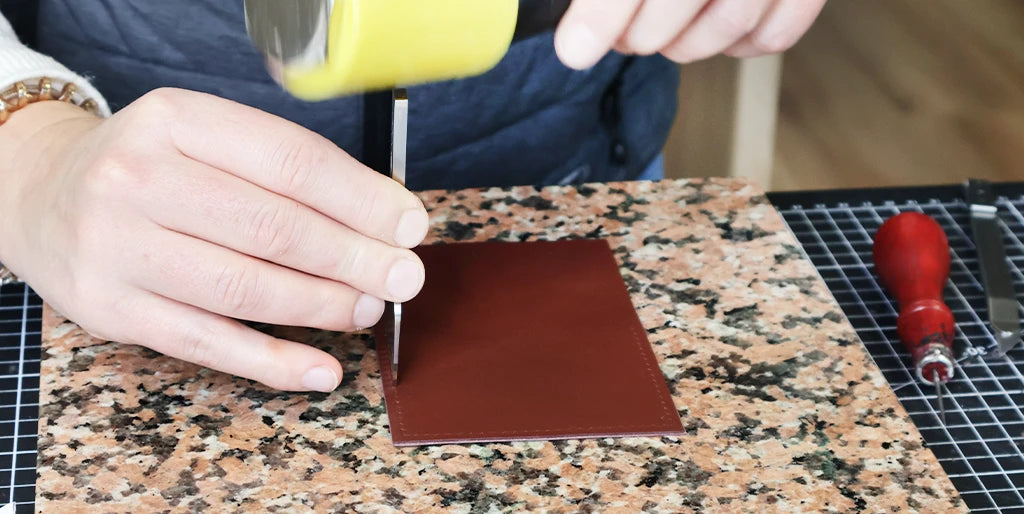
Sew these three lengths.
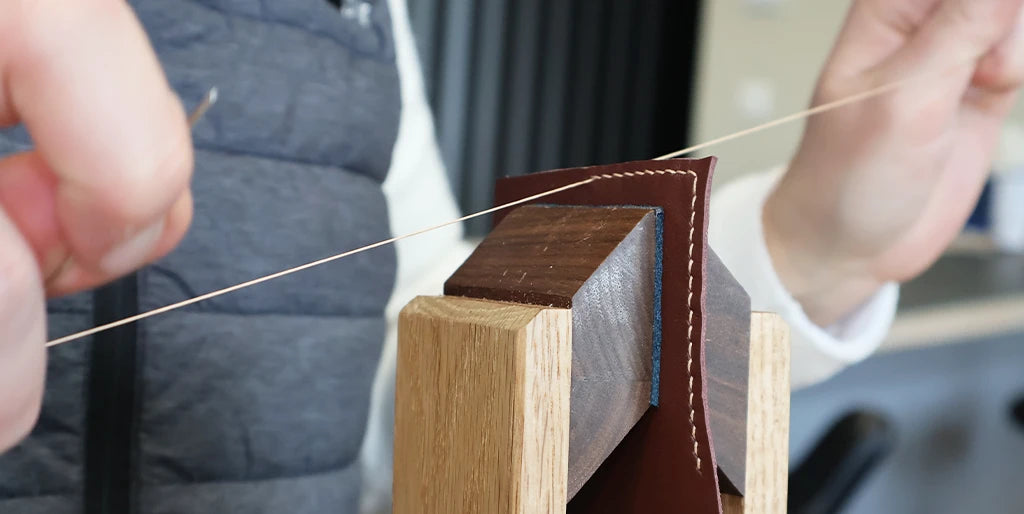
In a second step, sew the remaining line of the lining. Draw the line and mark the stitching points directly on the lining.
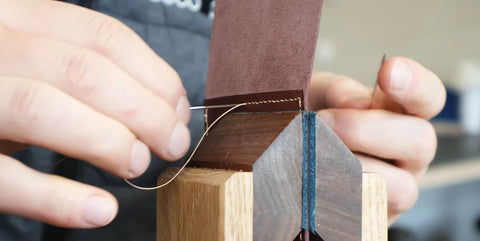 |
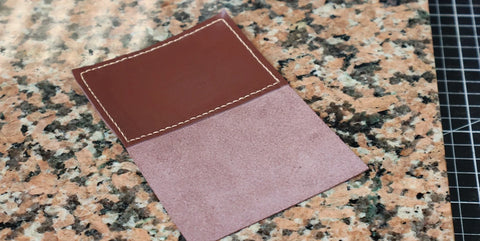 |
Tap the seams with a shoemaker's hammer or a riveting hammer.
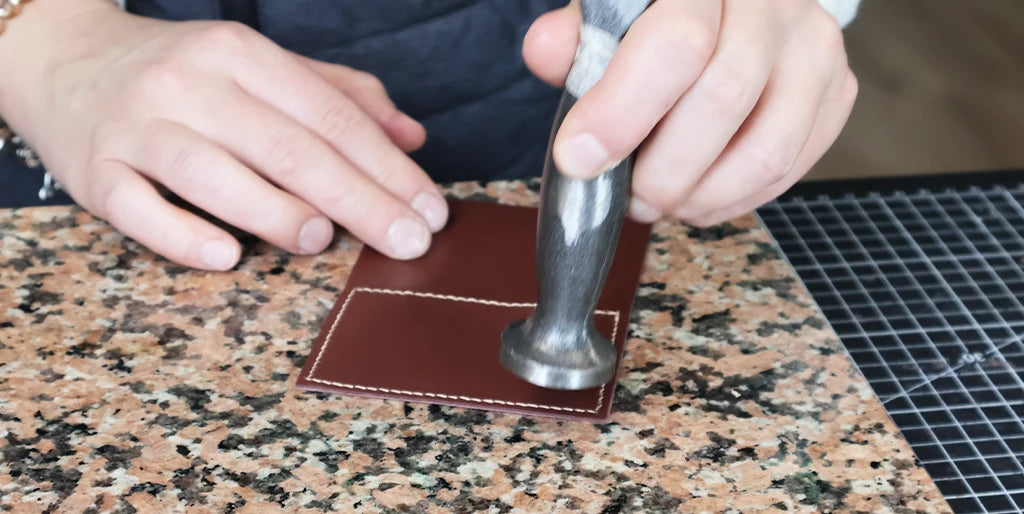
12. Round the corners
Using a cutter, round the upper corners of P3/P4.
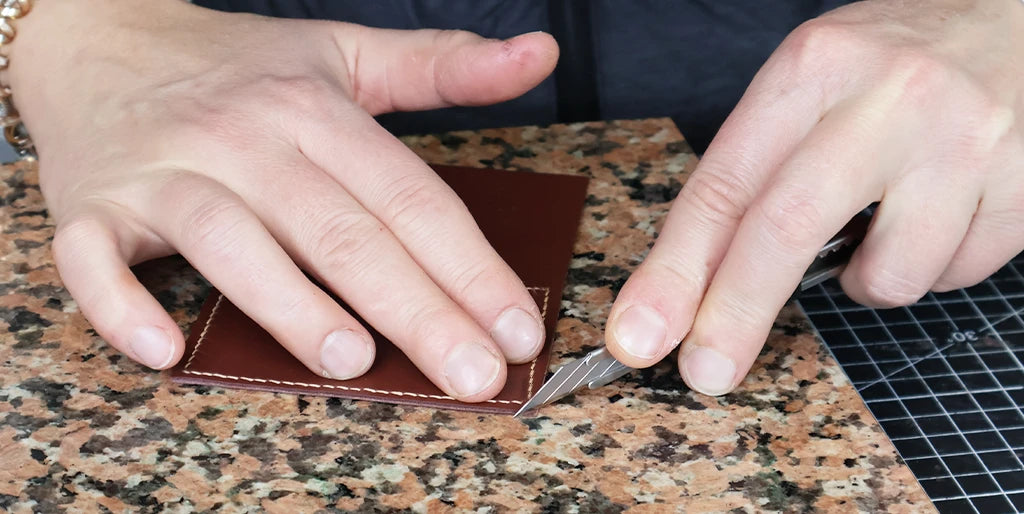
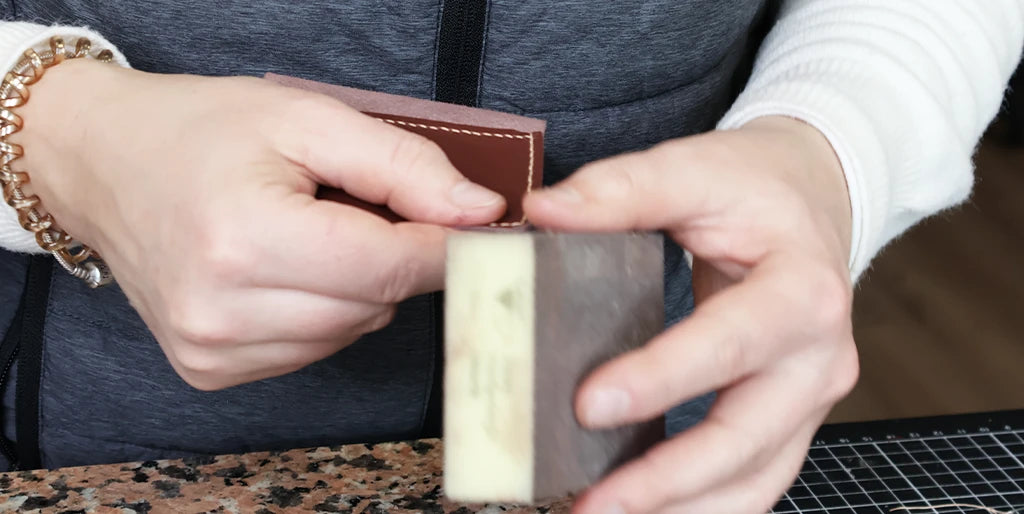
Then, sand the edges with an abrasive sponge.
13. Skive the back of the pocket
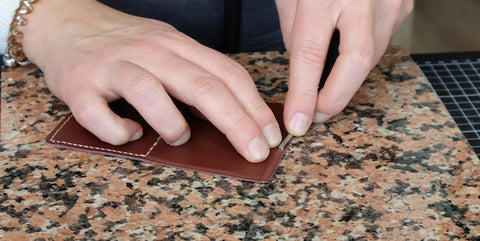
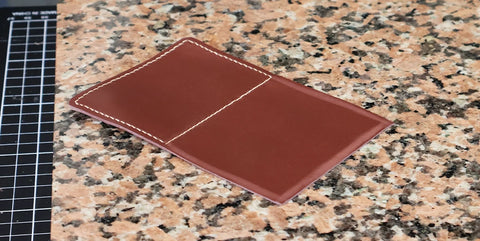
Using a skiving knife, skive the remaining lines (those not sewn) on the face side of piece P3.
 |
 |
14. Sew the rest of the pocket
Using a wing divider, draw the stitching lines 3 mm from the edge of pieces P5 and P6.
Diagram of the lines where to trace the stitching:
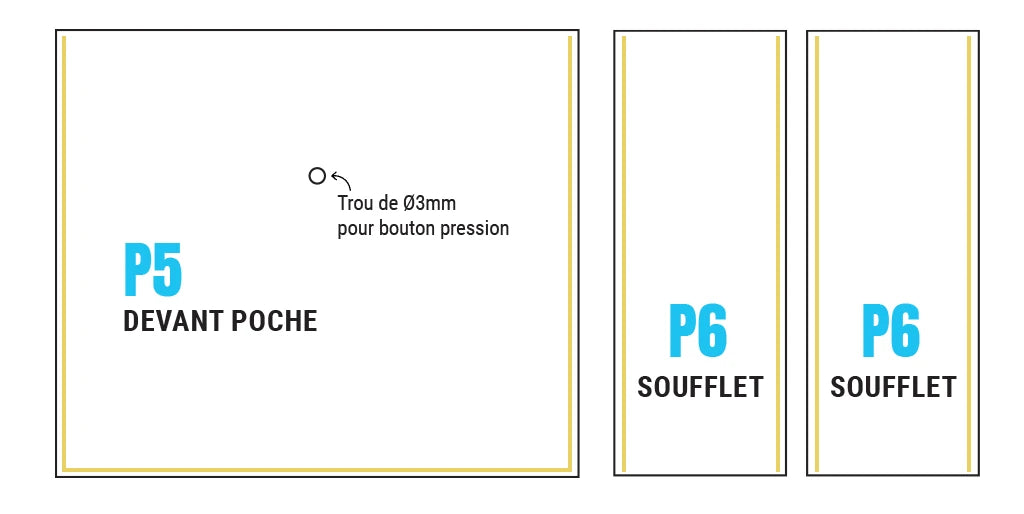
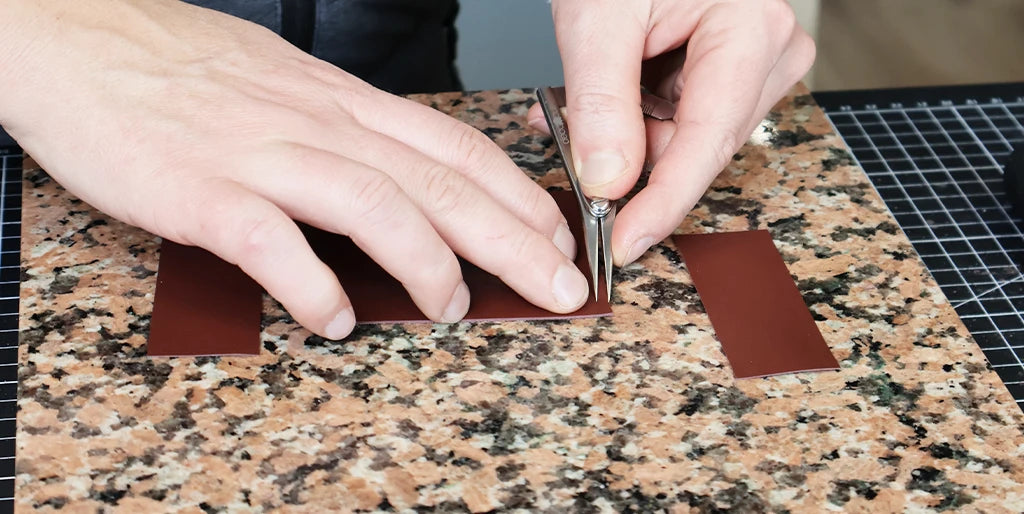
Mark the stitching points on these same lines.
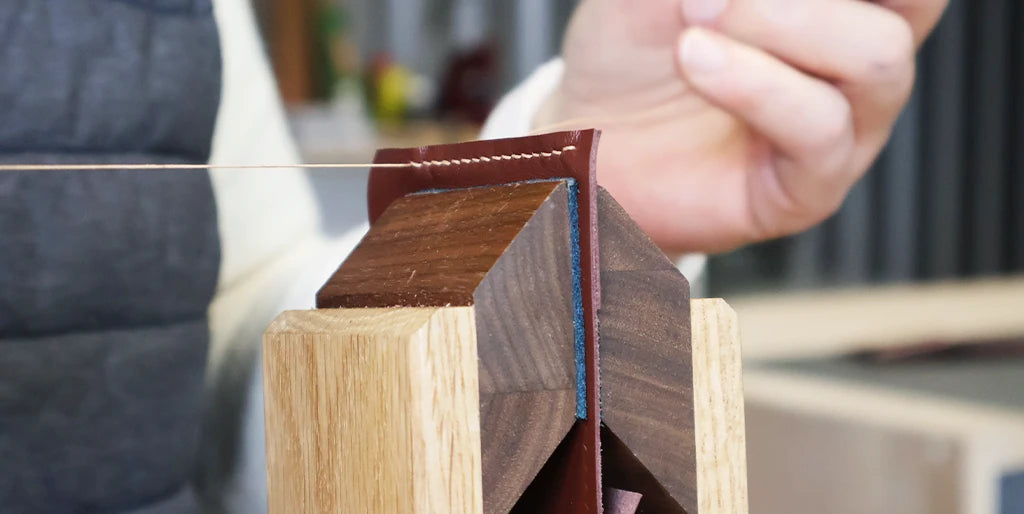
Here, we will make a double-pricking to sew the gussets onto piece P5. This will ensure a beautiful stitch on both sides of the leather (given the thinness of the pieces to be assembled).
Be careful, for double pricking, slightly enlarge the holes with a round awl, not a diamond awl. Make sure not to push the round awl in too deeply to avoid splitting the holes previously made with the pricking irons.
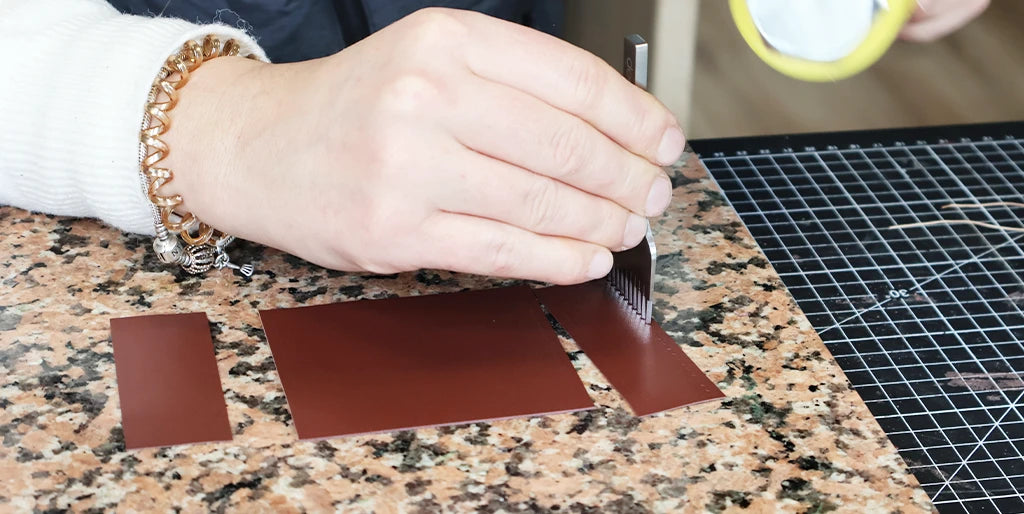
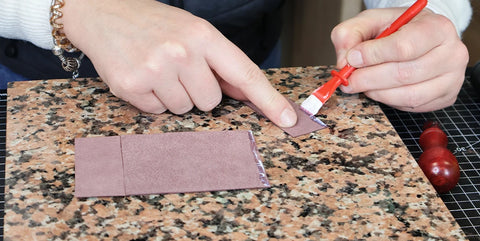
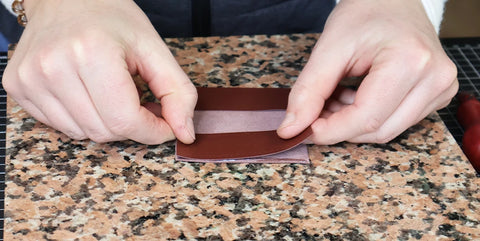
Glue gussets P6 onto the sides of P5, 3 mm from the edge. Flesh side against flesh side.
 |
 |
Then, sew these two lines.
15. Edge finishing
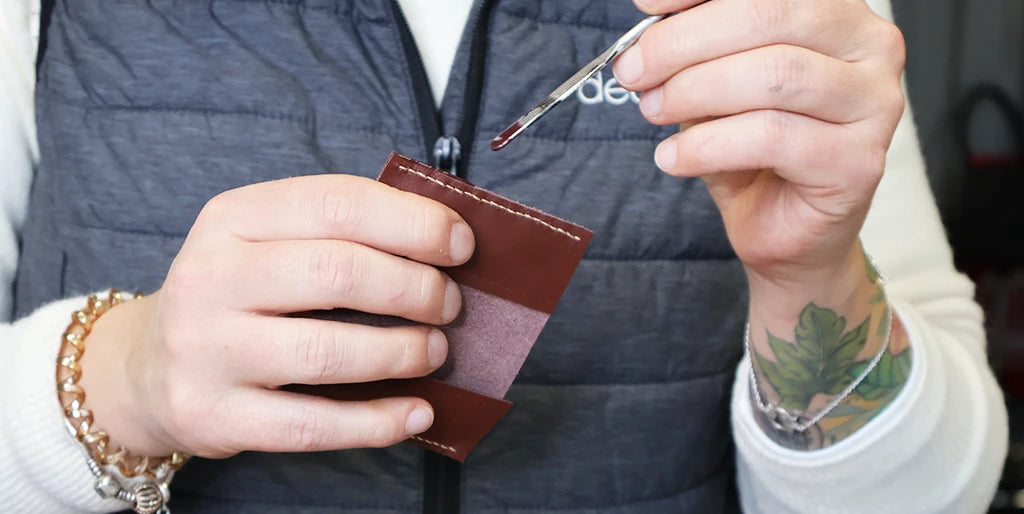
Sand and apply edge paint or Tokonole to all edges of pieces P5 and P6.
16. Glue the front of the pocket to the back of the pocket
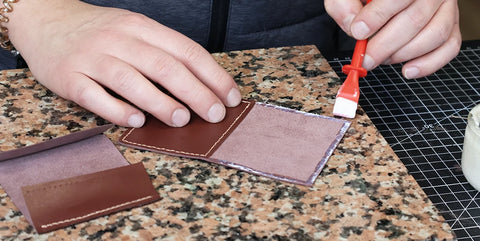
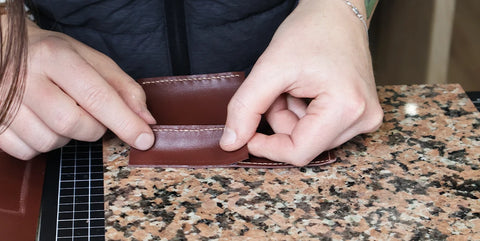
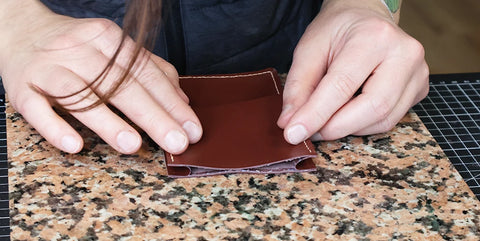
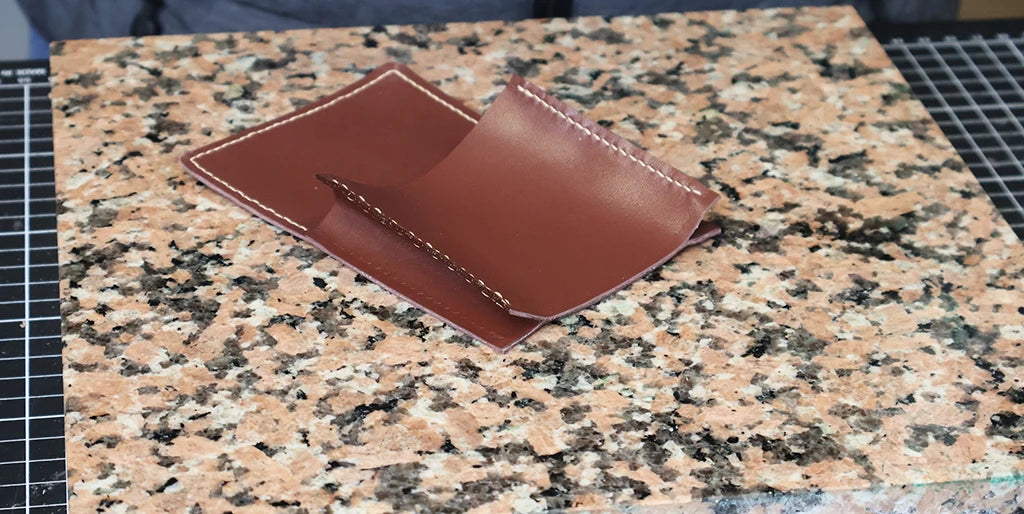
Once the edges of the pocket front are dry, apply contact cement to 3 mm of the unlined sides of piece P3 (on the flesh side of the leather). And on the unsewn lengths of gussets P6.
 |
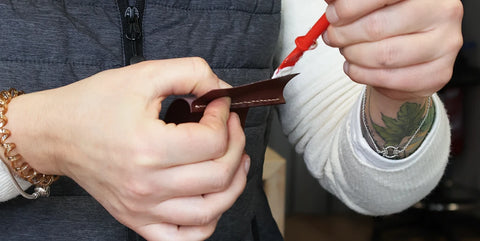 |
Glue the pocket front P5+P6 to P3 and hammer the bond with a joiner's hammer. To properly shape the gussets, fold them before gluing. Refer to the photos below.
 |
 |
17. Edge finishing
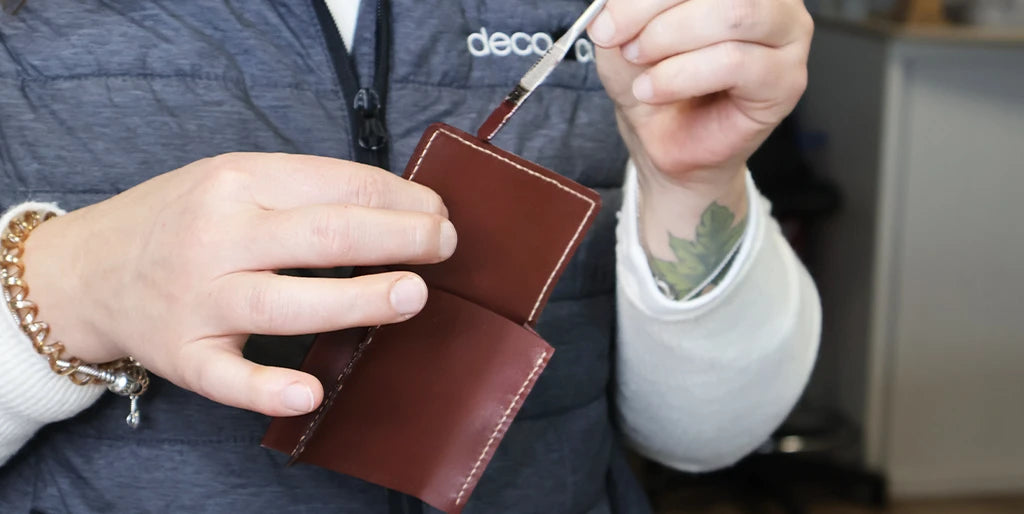
Finish the edges all around the pocket.
If not already done, create a decorative crease on the front of the pocket (optional).
PART 4: THE INTERIOR
18. Prepare piece P2(a)
Using a compass with a 3 mm spacing, draw the pocket placement lines on piece P2(a), as indicated on the pattern.
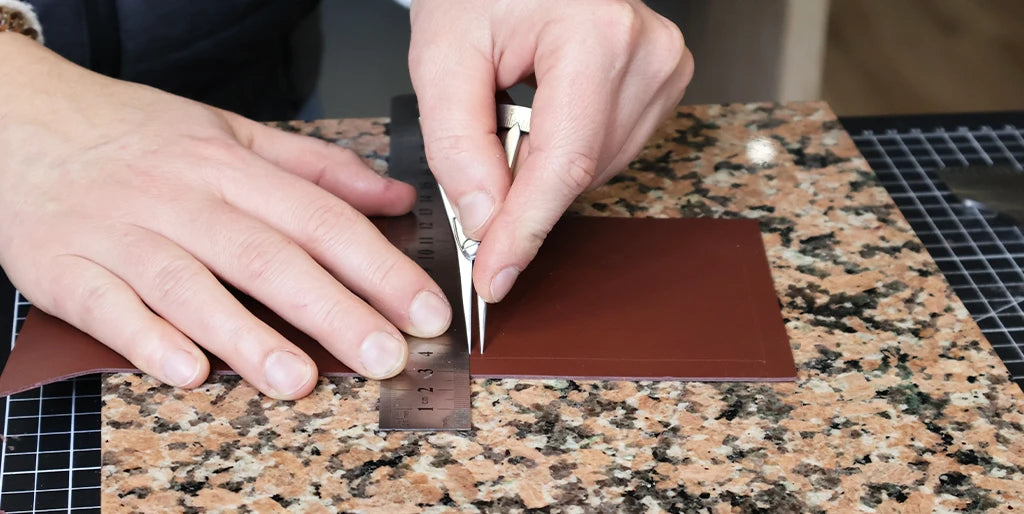
On the inner line, mark the stitch points with a pricking iron.
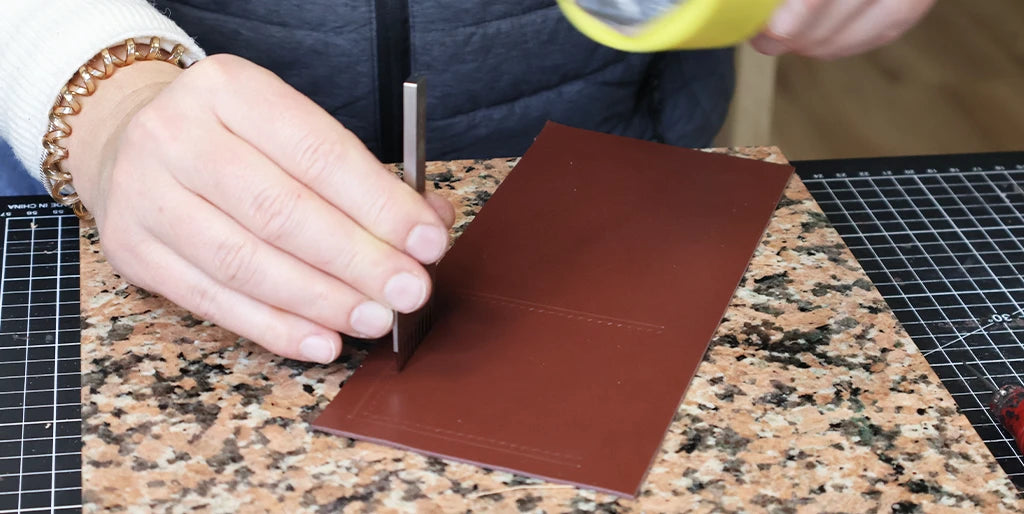
Then roughen this area.
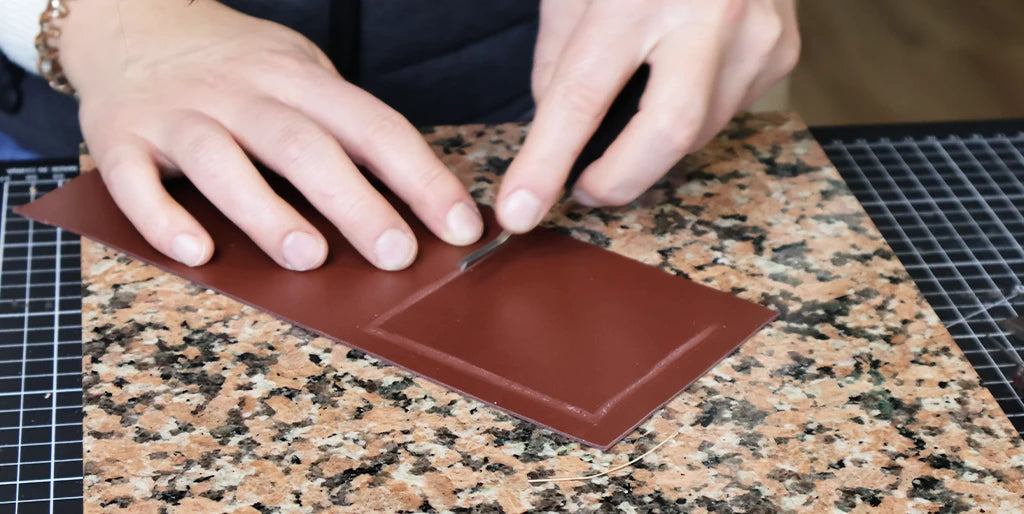
19. Glue the pocket onto P2
On this same area, apply a thin line of contact cement. Also apply glue to the roughened areas on the back of piece P3.
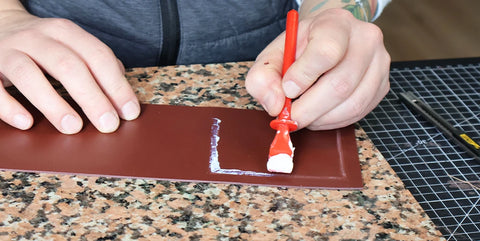 |
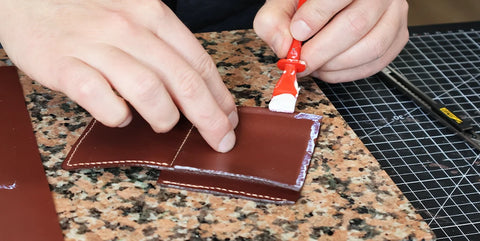 |
Glue the pocket onto piece P2(a), following the outer line drawn with the compass.
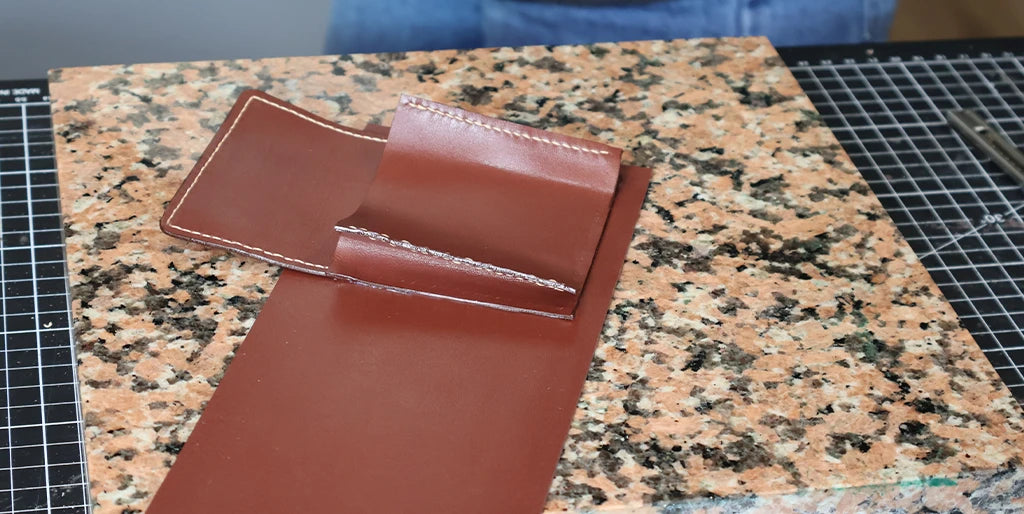
20. Sew the pocket
Sew the remaining lengths of the two gussets with double pricking (use the round awl).
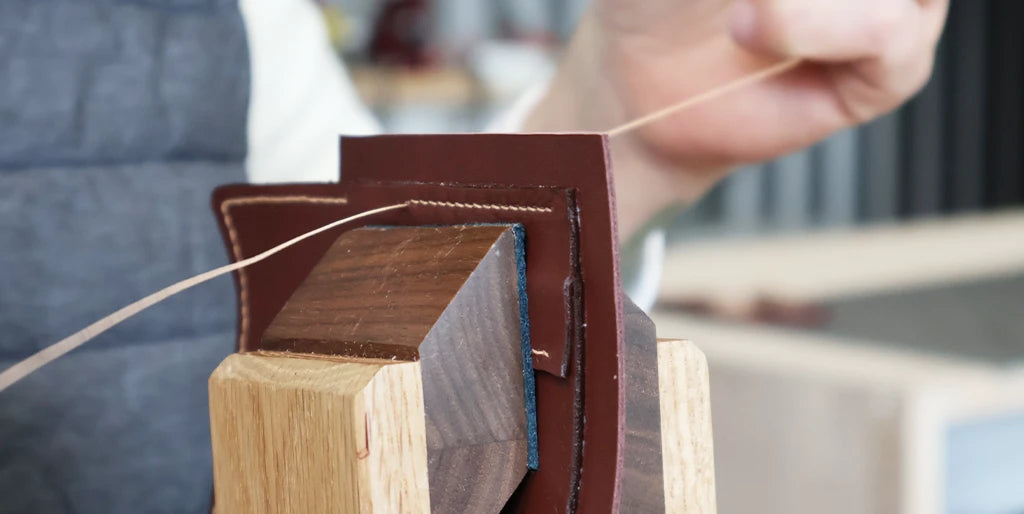
Then, sew the bottom line, making sure to catch the gussets in the seam.
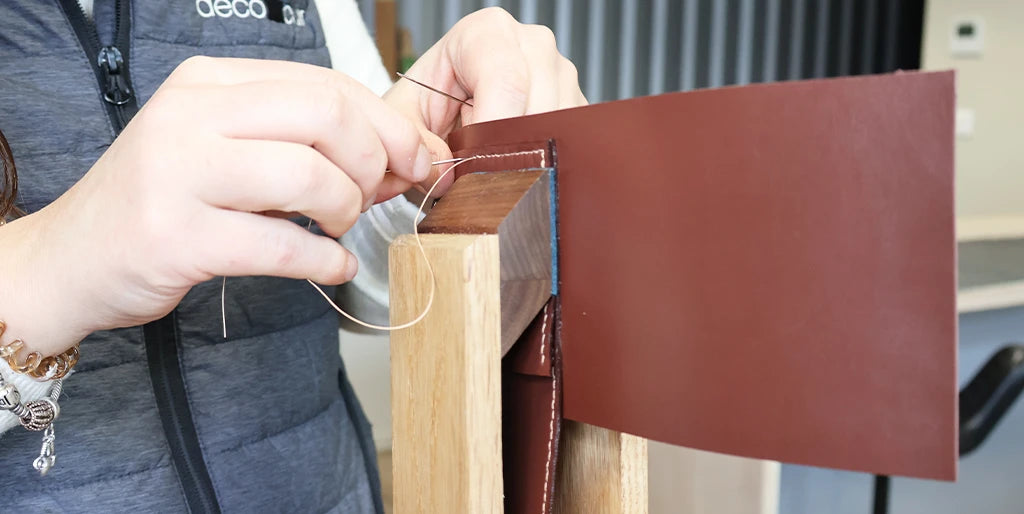
21. Glue the cardholder
Roughen piece P2(a) where the cardholder will be glued (see the pink dashed lines on the pattern).
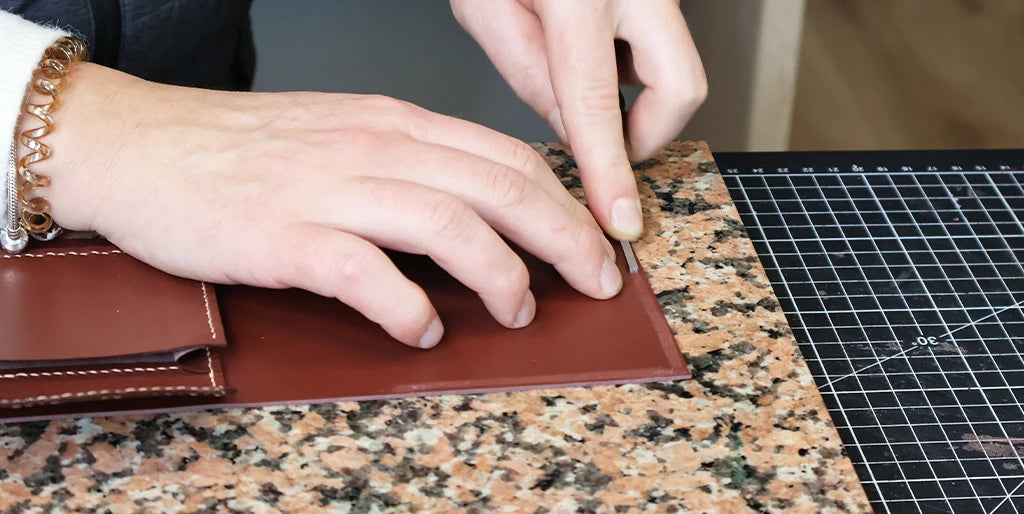
Then, apply contact cement to these three sides and to the three unsewn sides of the cardholder (to the area that was roughened in step 9).
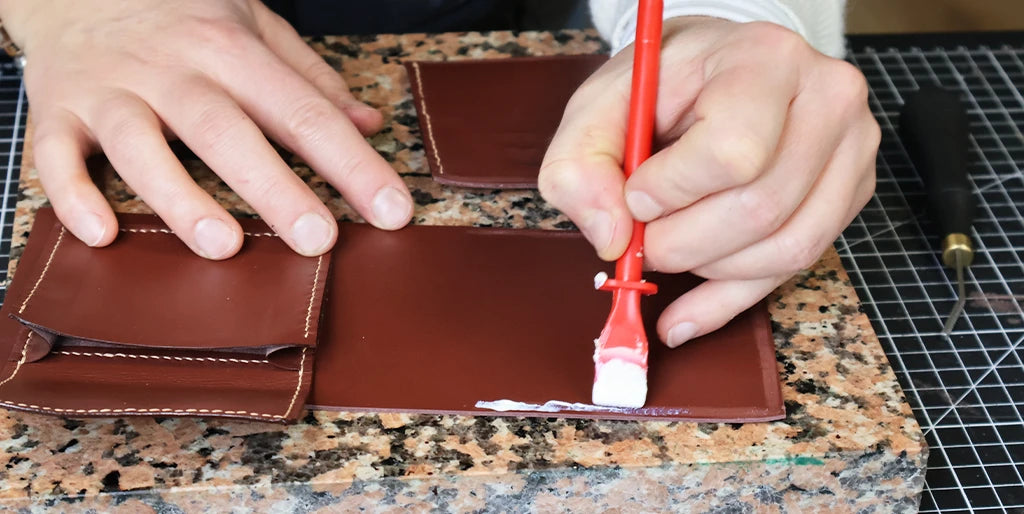
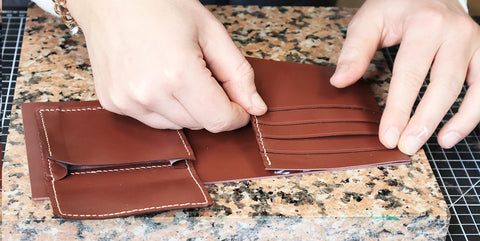
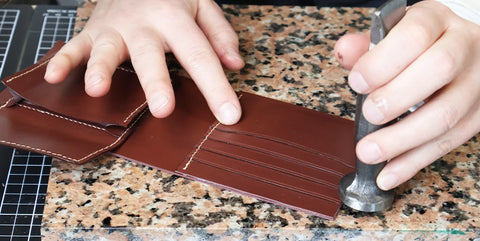
Glue the cardholder to piece P2. Flatten the bond with a joiner's hammer.
 |
 |
22. Draw the stitch lines
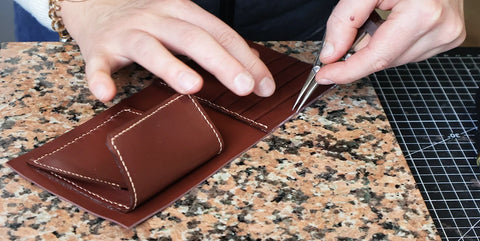
Draw a line 3 mm from the edge all around piece P2, the cardholder, and the pocket. Be careful not to draw the stitch line on the area not to be sewn (middle area).
 |
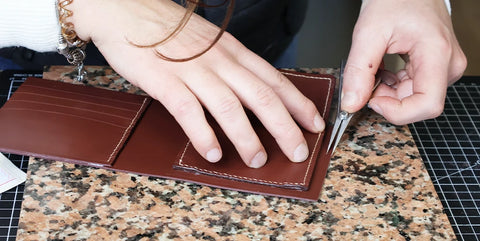 |
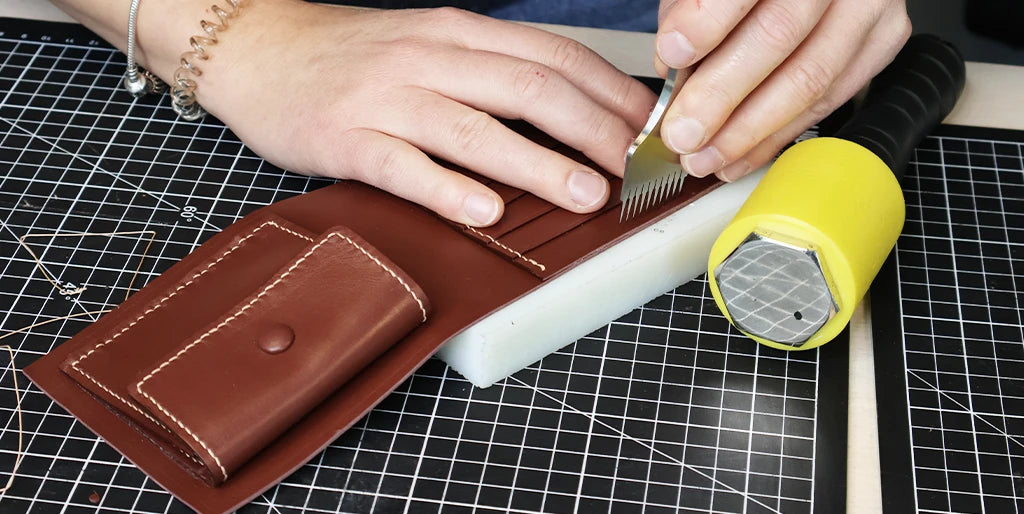
Attention: As in step 7, ensure that the stitch points fall at intervals at the edges of the cardholders: use a 2-prong pricking iron.
23. Option: make the decorative crease
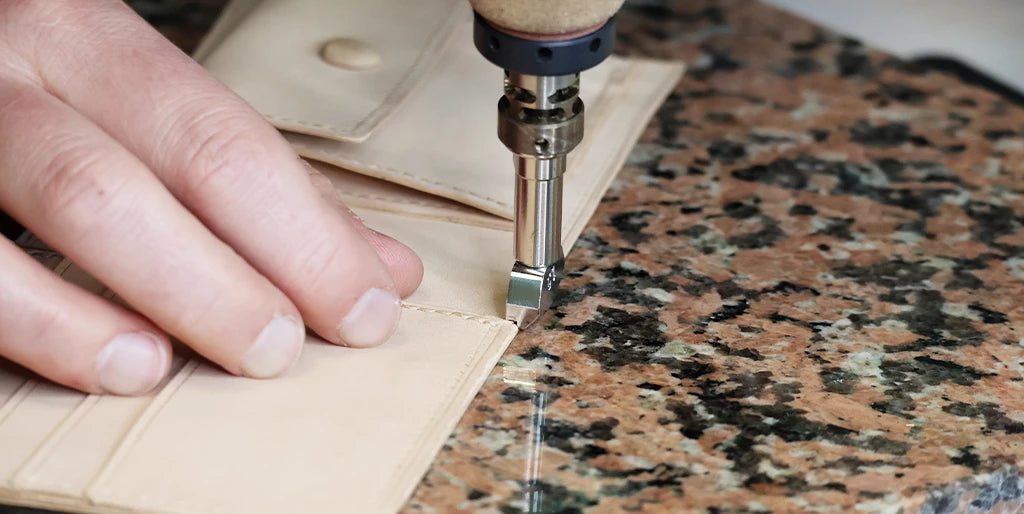
For a professional finish: make a decorative crease all around the piece.
24. Sew the top line of piece P2
Only sew the top line of piece P2 for now.
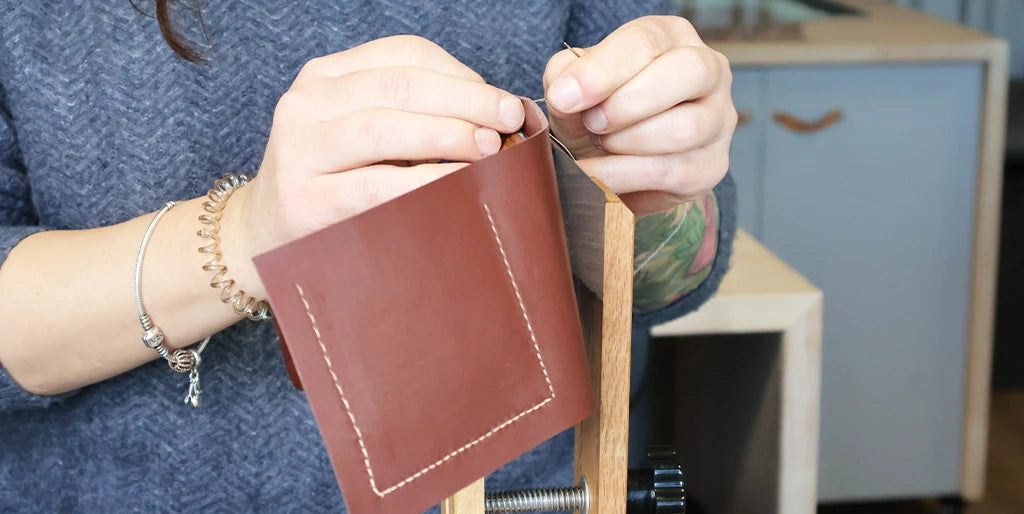
25. Roughen the back of P2
To facilitate gluing with piece P1, roughen the remaining 3 sides of piece P2(b).
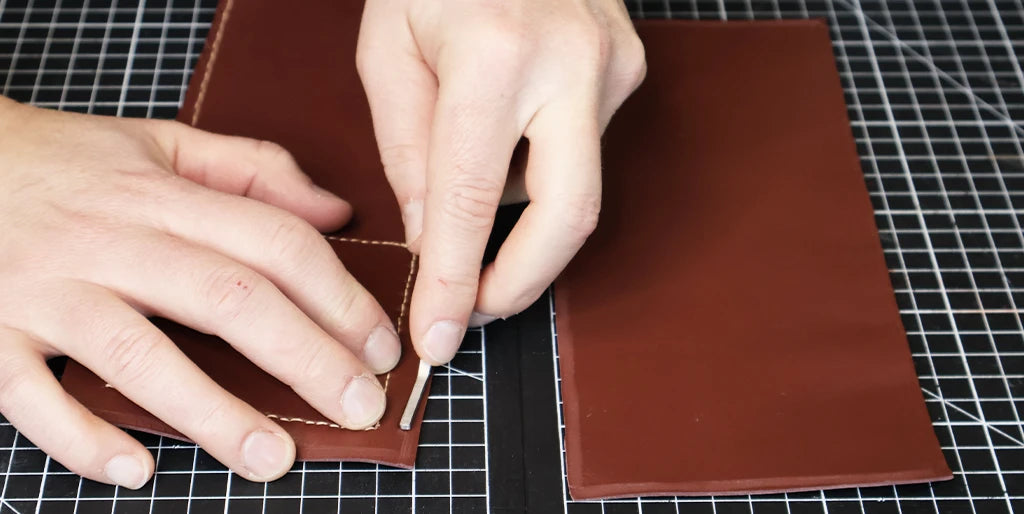
PART 5: THE EXTERIOR
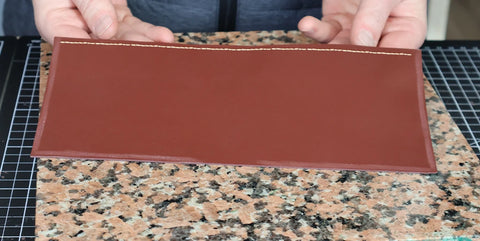
26. Sew the main piece
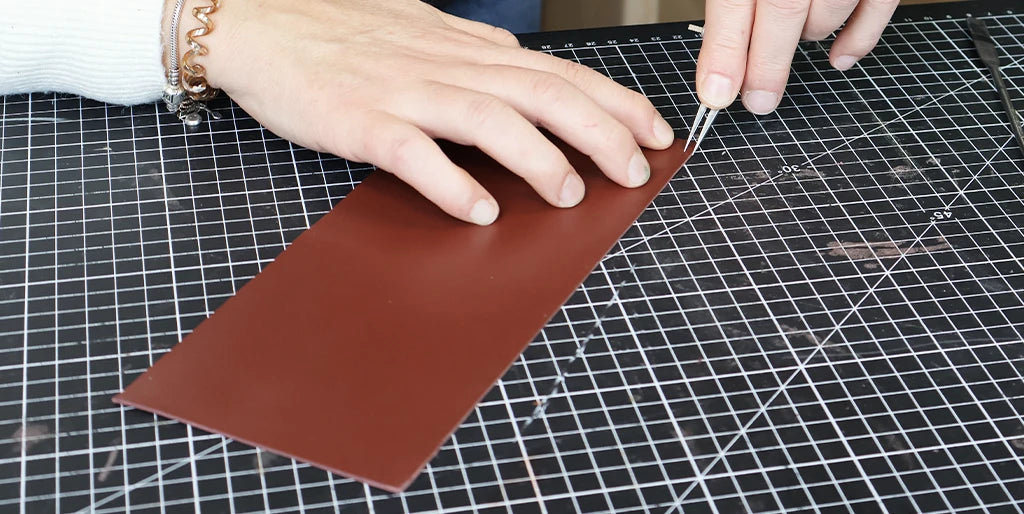
Take piece P1 (large outer piece). With a wing divider, draw the stitch line 3 mm from the edge all around piece P1, except for the "Do not sew area" indicated on the pattern.
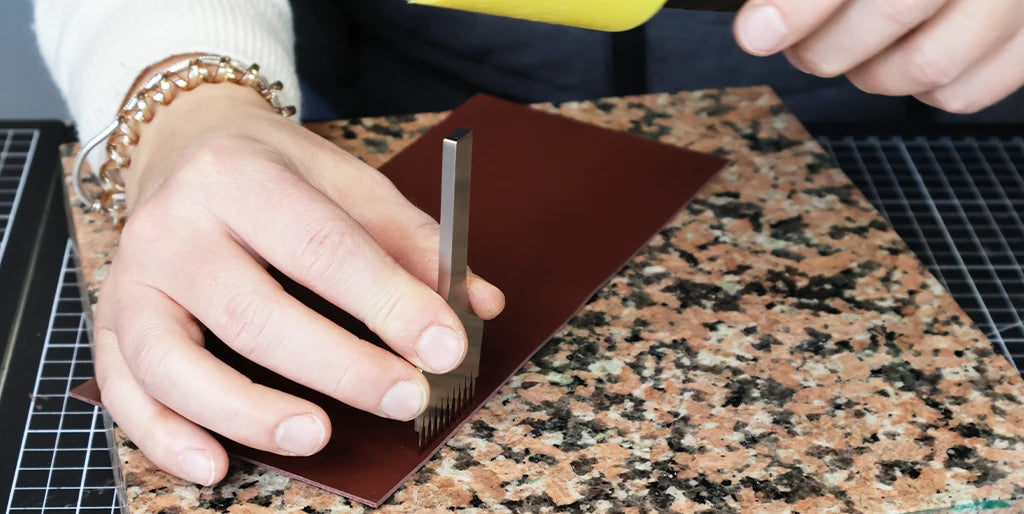
With pricking irons, mark the stitch points all around piece P1, following the stitch line (except on the area not to be sewn).
Make a decorative crease 1.5 mm from the edge all around piece P1.
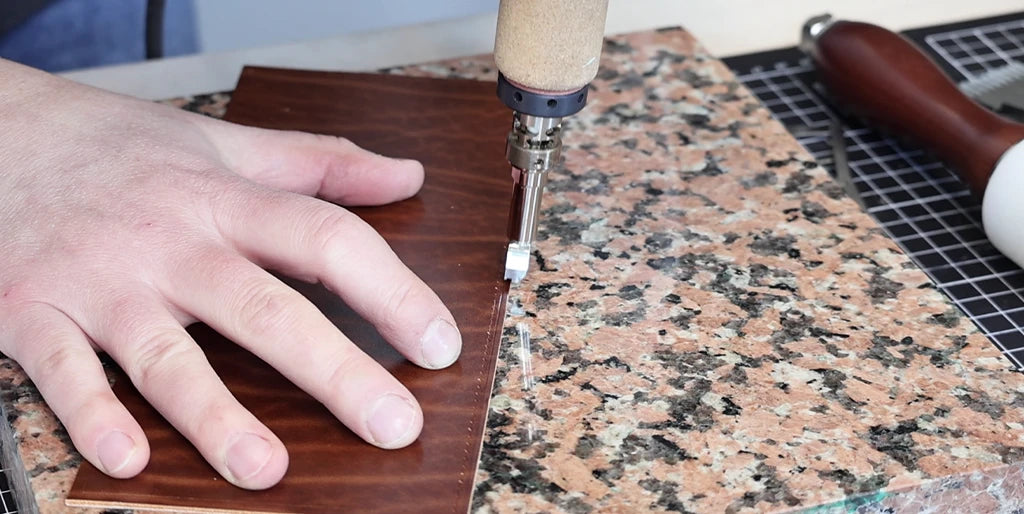
Vegetable-tanned version: bevel the edges all around piece P1.
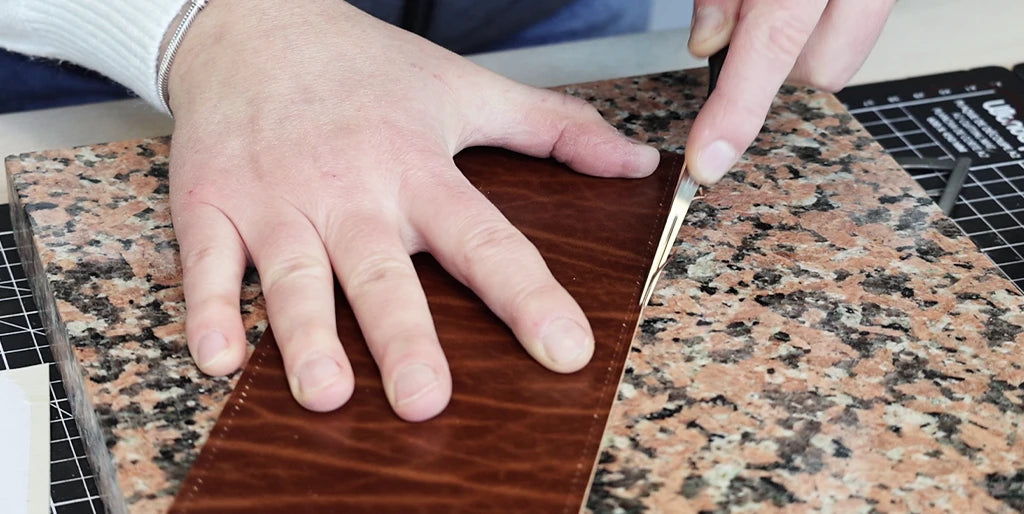
Only sew the top length of piece P1.
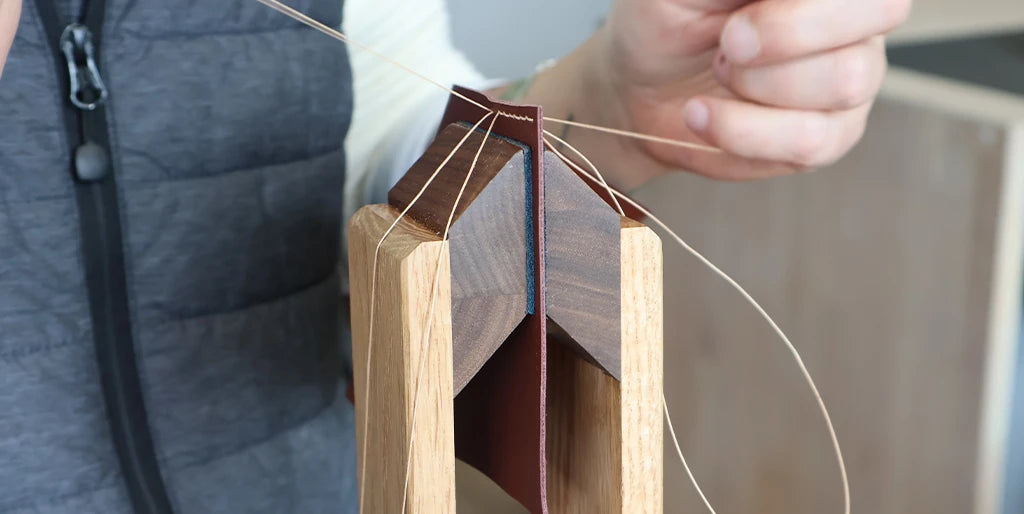
27. Edge finishing
Finish the edge of the length that has just been sewn. Sand, then apply edge dye or Tokonole depending on the chosen leather.
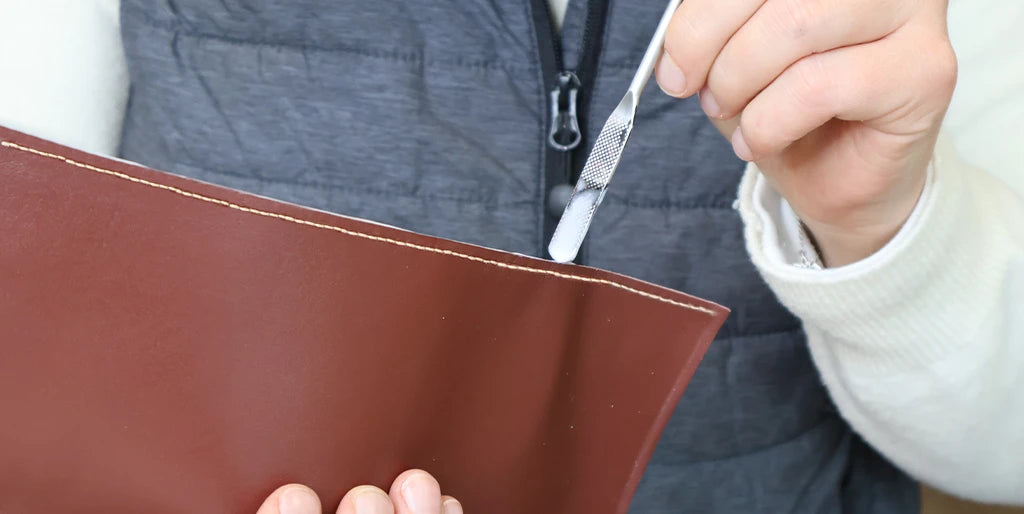
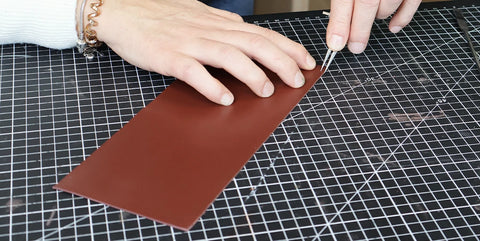
28. Roughen the leather
With a rasp, scratch the leather (interior, lining) on the parts that will then be glued. That is: the two widths, then the bottom length of piece P1, except for the area not to be sewn.
 |
 |
PART 6: FINAL STITCHING
29. Glue pieces P1 and P2
Apply contact cement to the roughened areas on piece P1 and piece P2(b). Be careful not to get glue on the area not to be sewn.
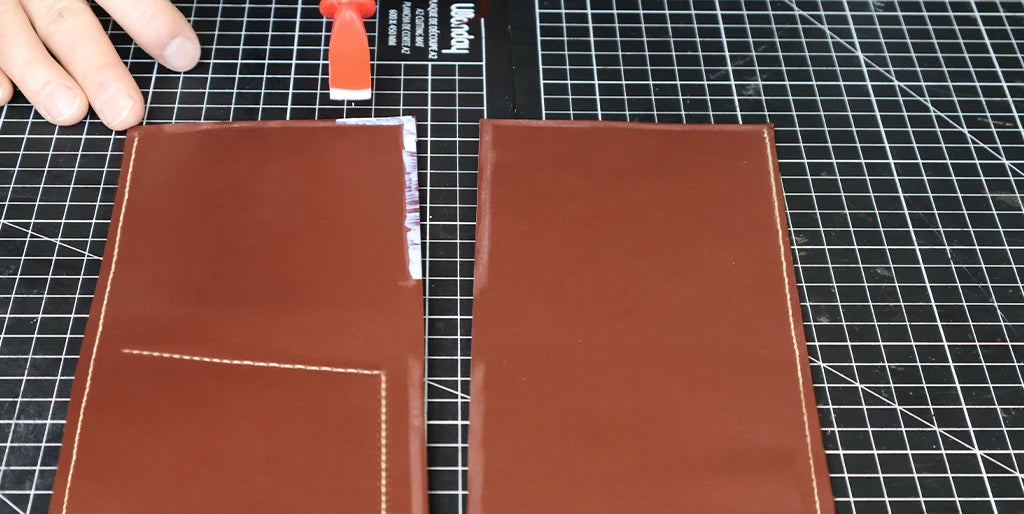
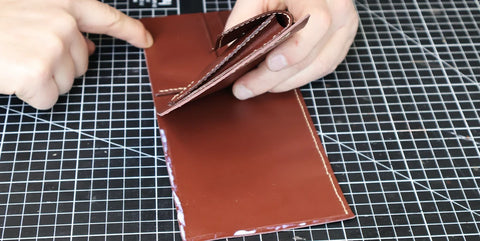
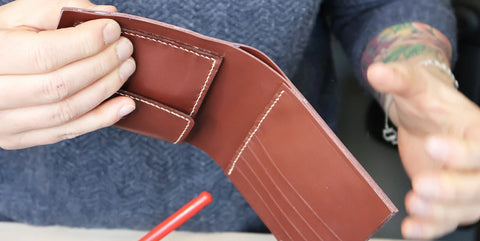
Glue the two pieces together.
 |
 |
30. Sew pieces P1 and P2
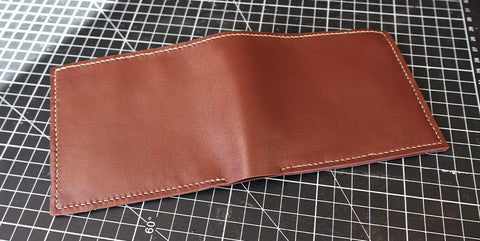
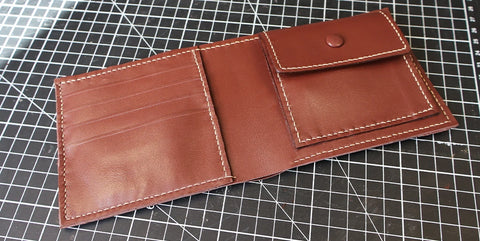
The leather is already pricked on both sides, all that remains is to sew.
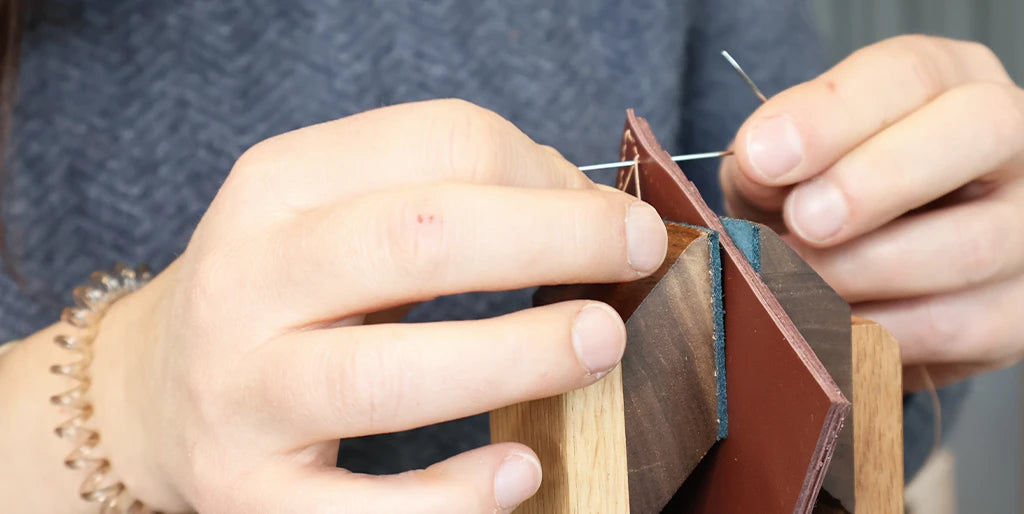
Hand stitching version: be careful, you must use the double pricking method (to get a nice seam): pierce the leather on both sides (with the same pricking irons) and then pierce the stitch points with a round awl (using a diamond awl would create cross-stitches). Be careful not to sew the area indicated on the pattern.
 |
 |
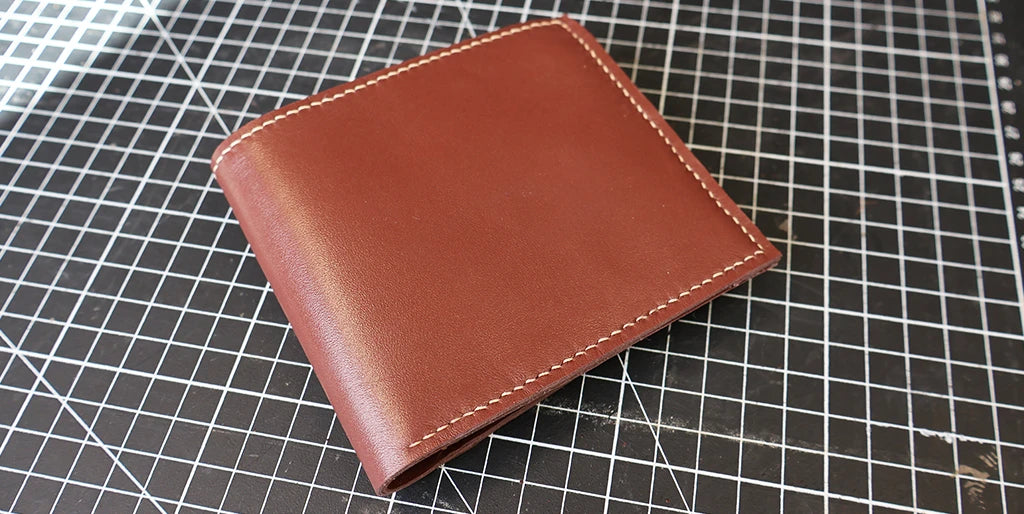
31. Final touches
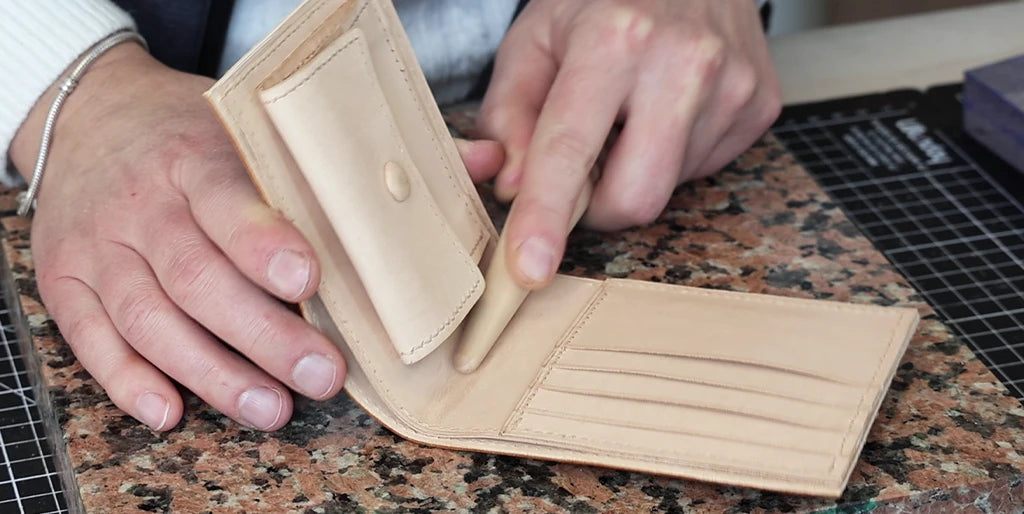
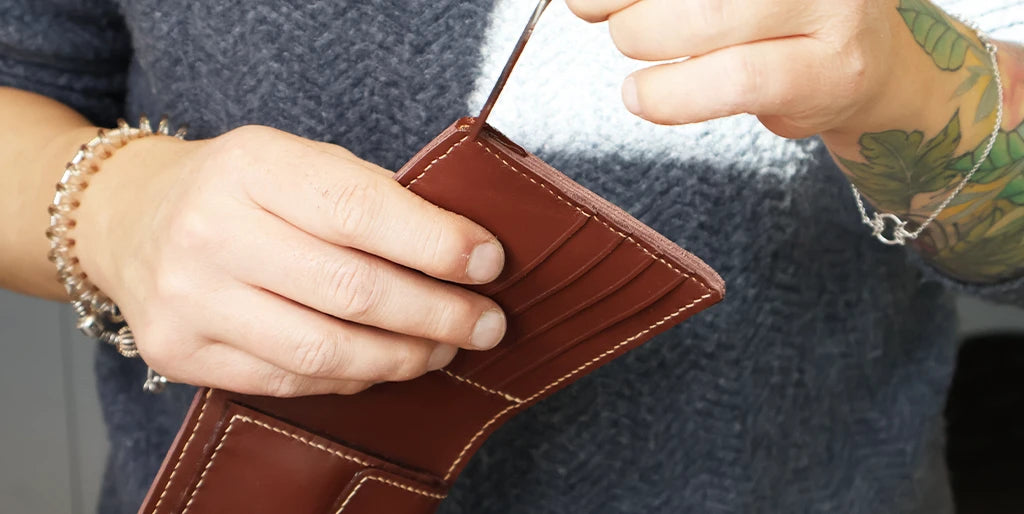
With a bone folder or creaser, mark the fold of the wallet to make it easier to close. Also mark the cardholder pockets to soften them, which will facilitate card insertion.
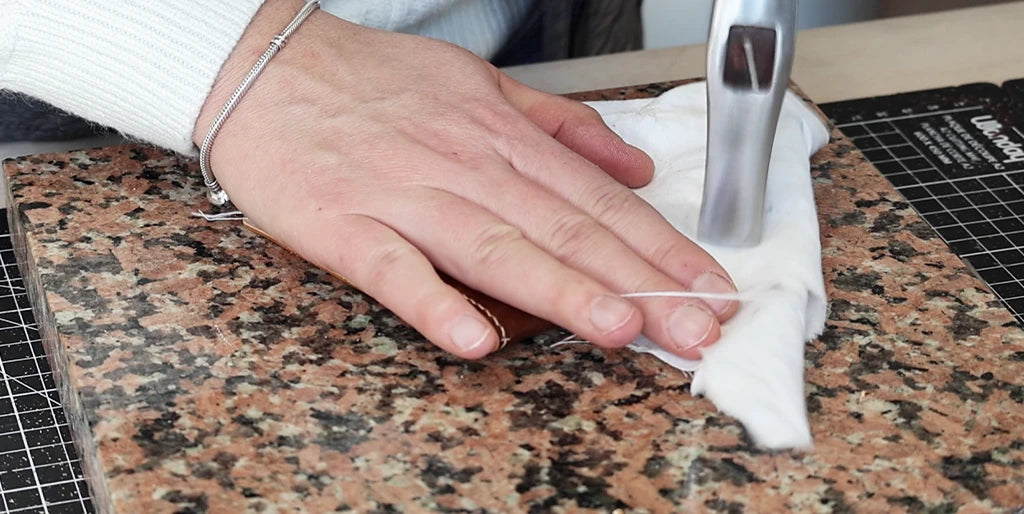
Hammer the fold with a riveting hammer. Protect the leather with a cloth.
Slightly round the four corners with a cutter. Then, sand to form a nice curve.
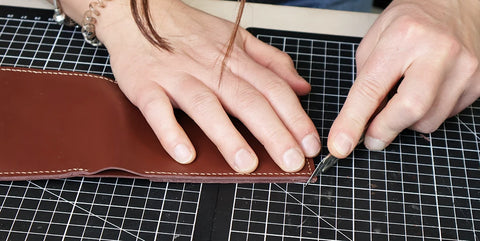 |
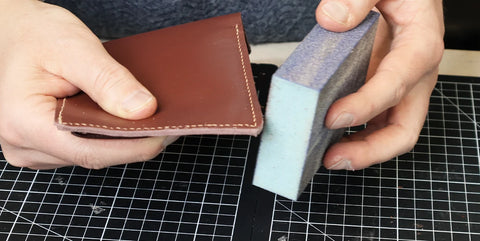 |
Work on the remaining edges.
Personalization
You can personalize your wallet with initials, a word, a logo... using hot stamping (vegetable and mineral tanning) or cold stamping (vegetable tanning only).
Congratulations, you're done!