


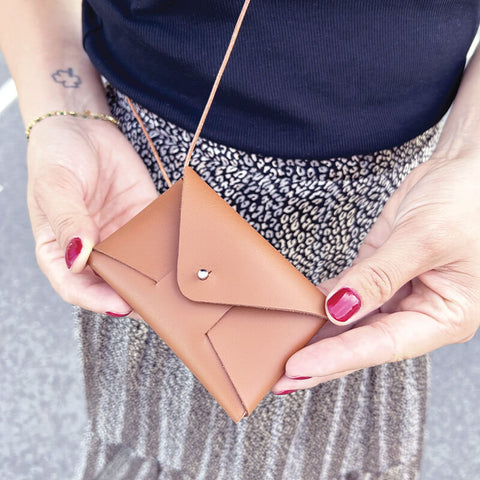
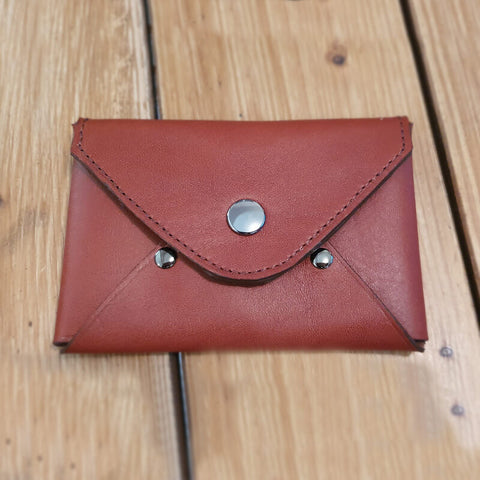
Version #1 – Seamless
MATERIALS NEEDED
- 1 piece of leather 20 x 30 cm - Firm - Thickness 1.3 to 1.8 mm
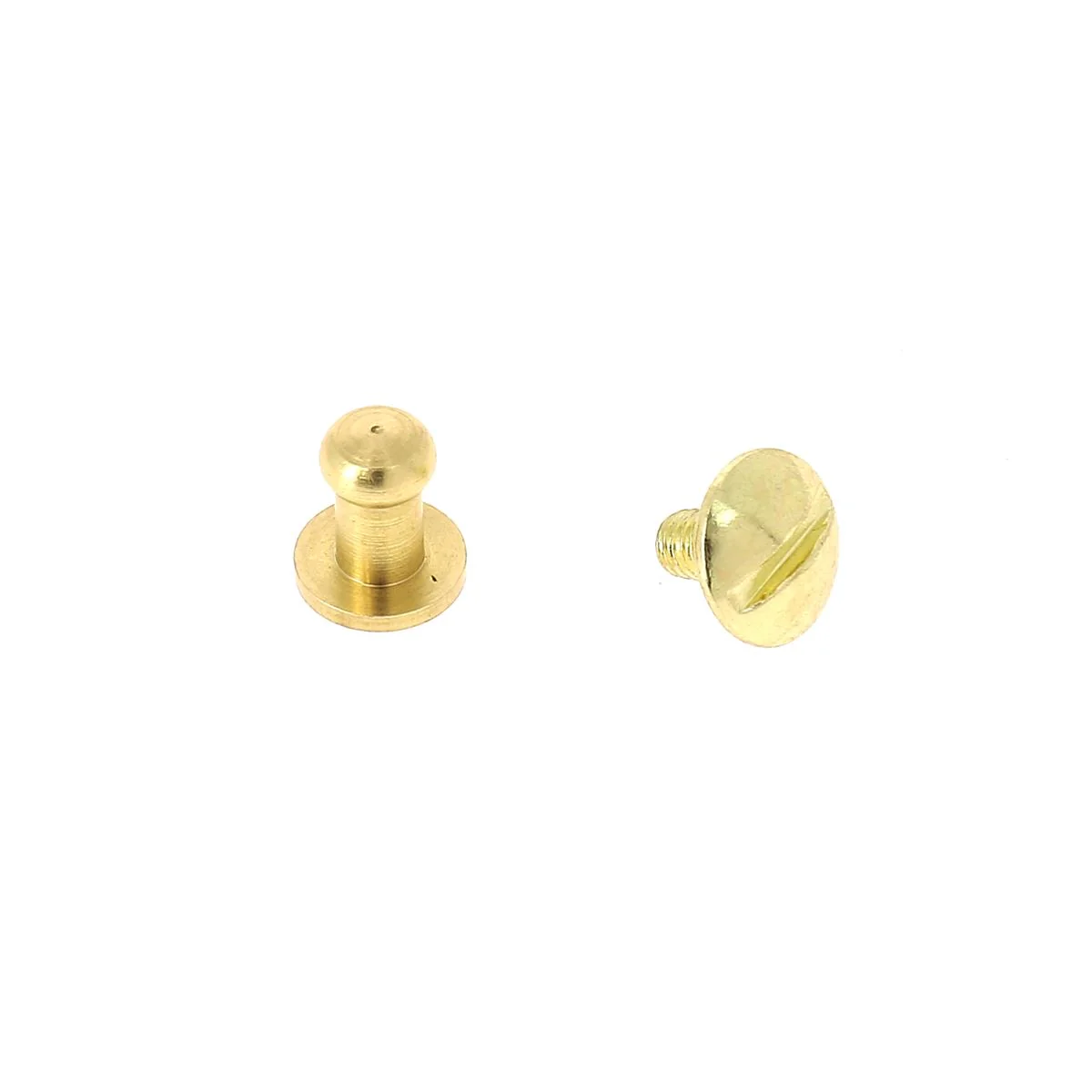
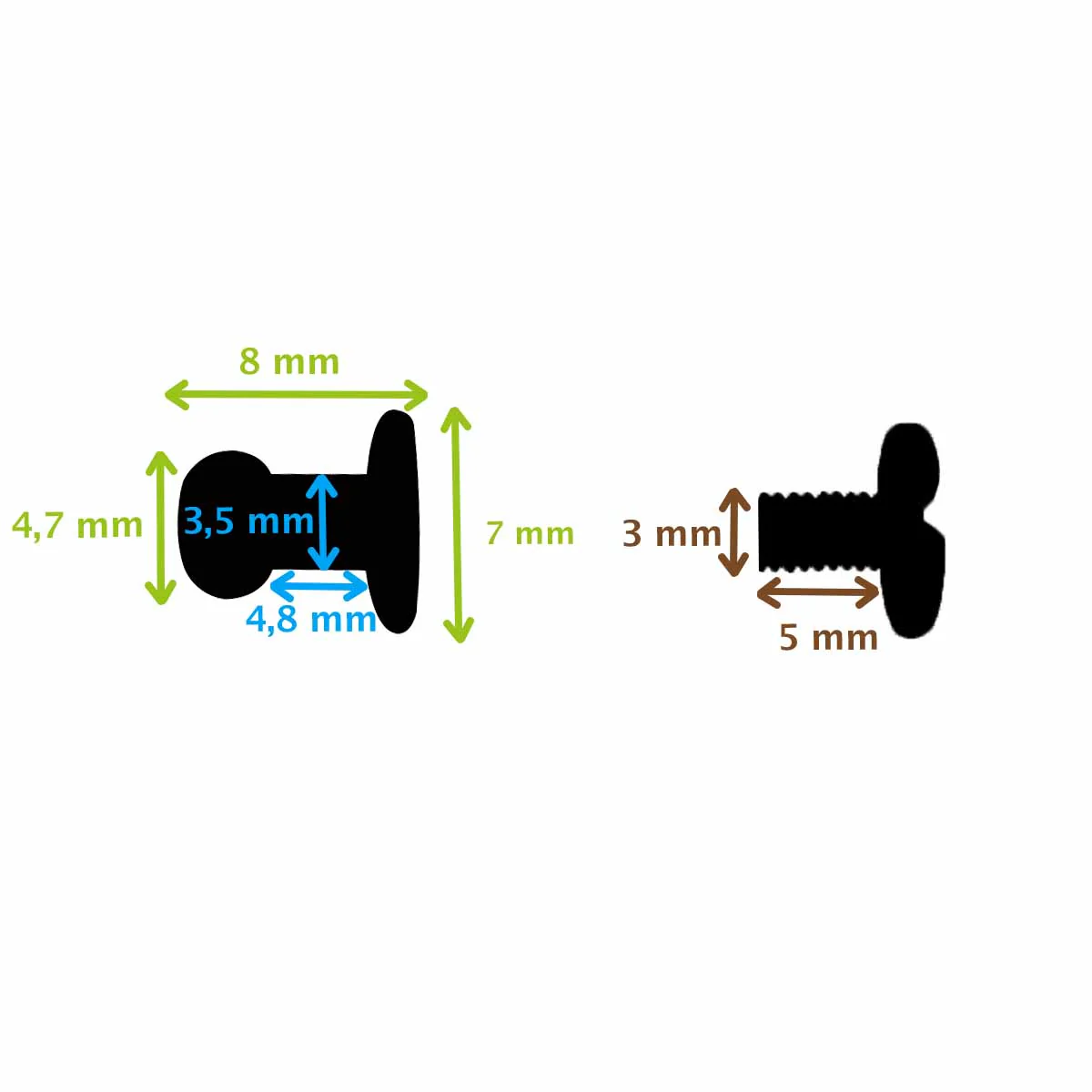
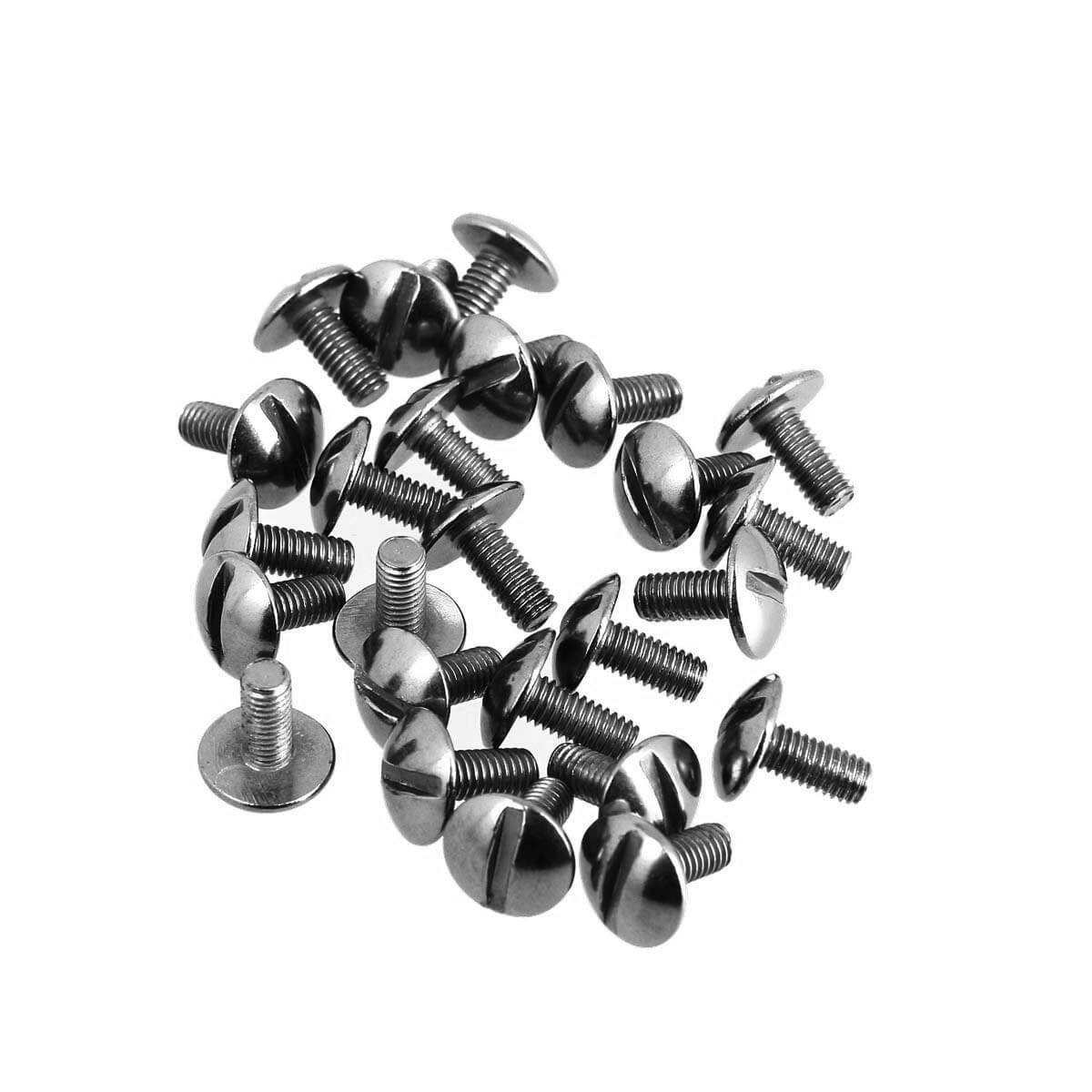
- 1 collar button
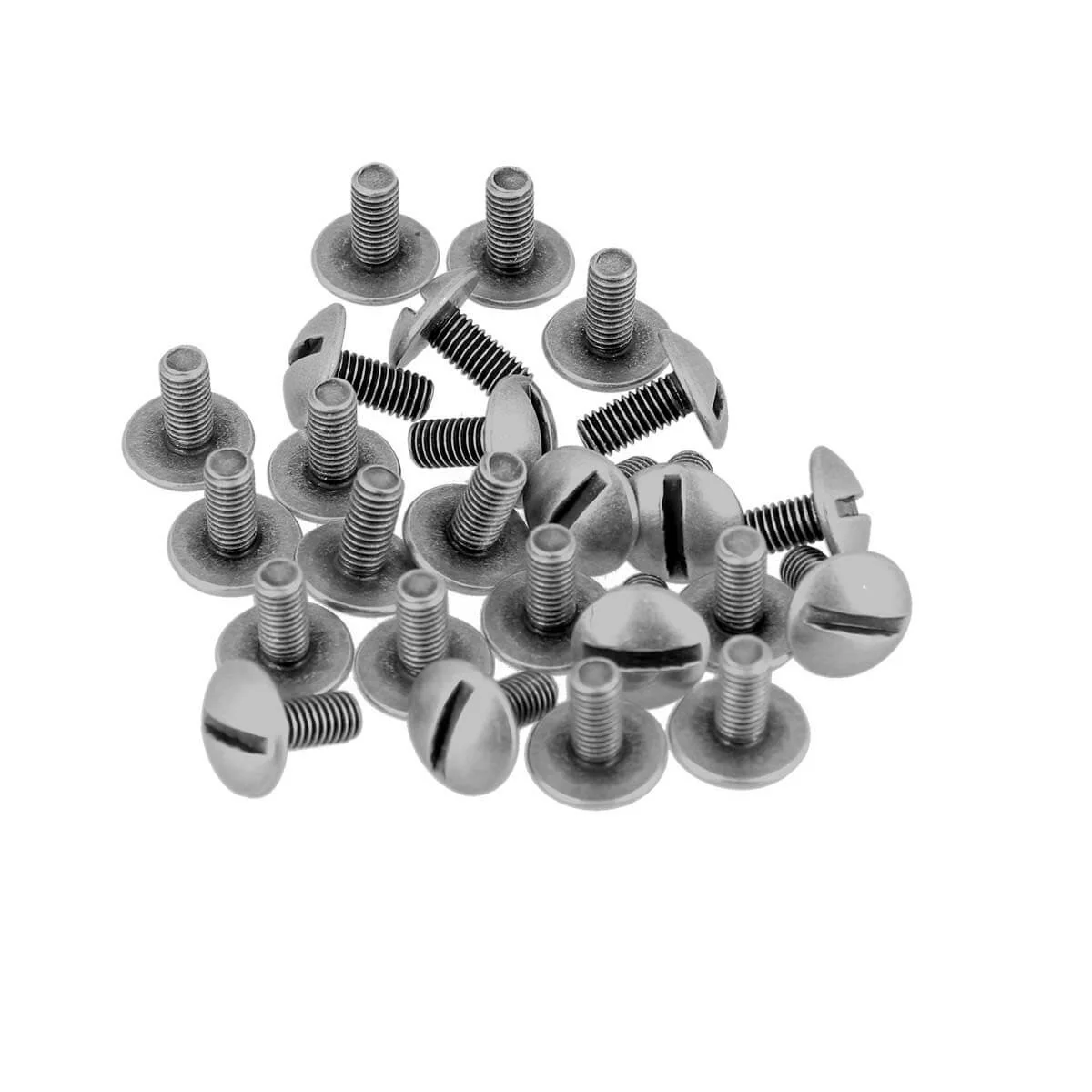
- 1 3 x 7 mm screw
- 1 cutter and 1 ruler
- 1 Ø 3 mm hole punch
- 1 mallet


-
Blue


-
Blue


VIDEO
1. CUT THE PATTERN
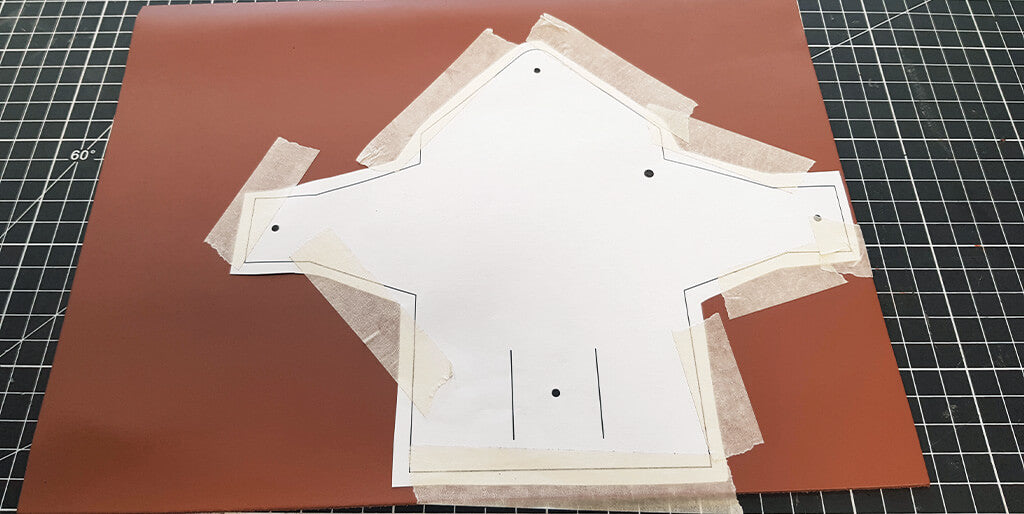
Cut out the pattern, leaving a 5 mm margin around the lines. Then place and secure the piece on the leather using masking tape.
2. PUNCH THE HOLES
Punch the various 3 mm diameter holes using a mallet and a round hole punch.
3. CUT THE SLOTS
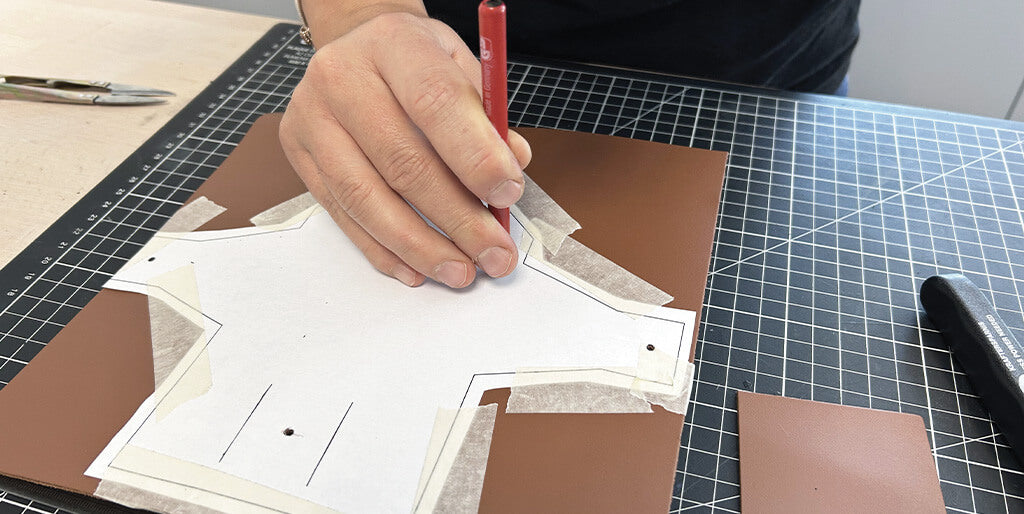
Using a cutter, cut the 2 slots, each 3.2 cm long.

4. CUT THE PIECE
Then cut out the entire piece following the outline.

5. ATTACH AN EYELET
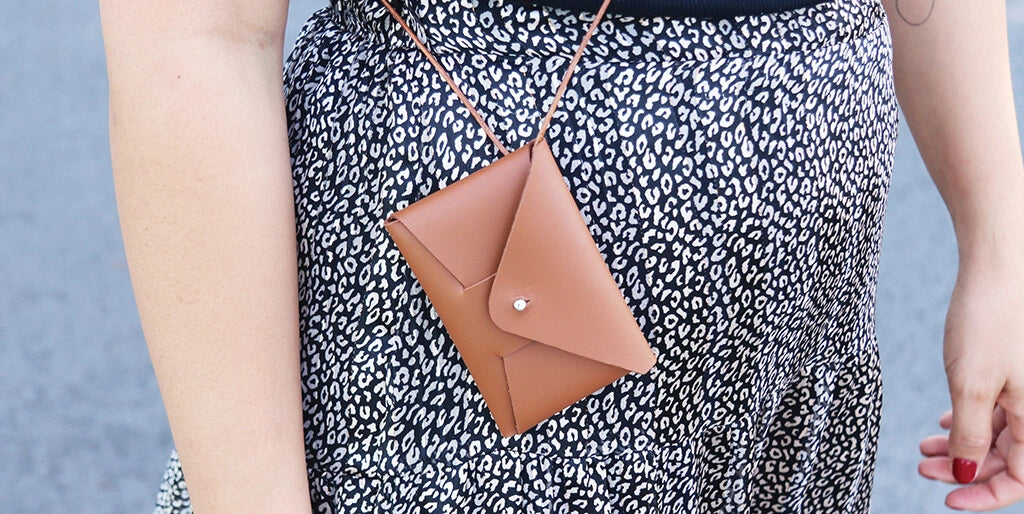
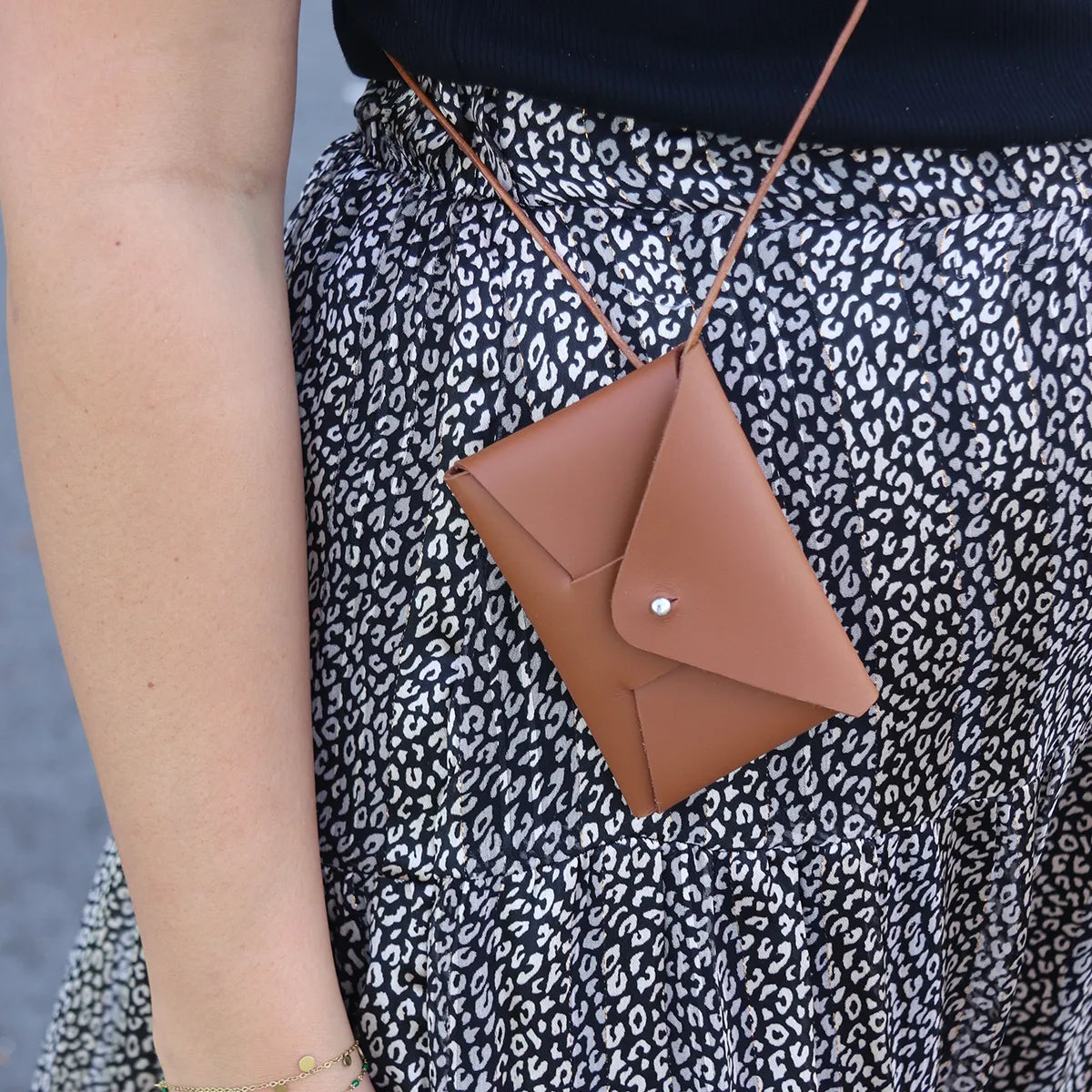
OPTIONAL: To be able to wear the card holder as a shoulder bag (with a round leather lace), attach a Ø 4 mm eyelet at the location indicated on the pattern.
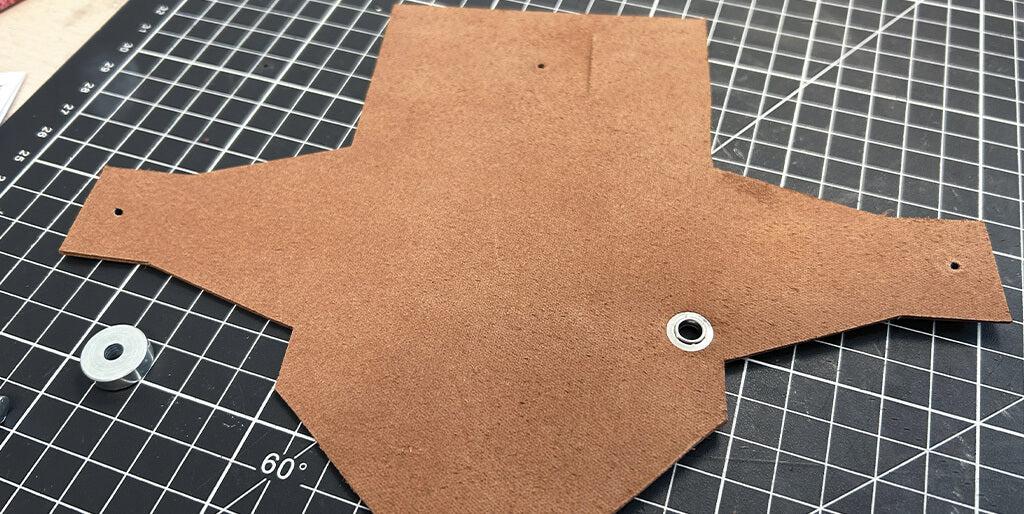
6. FOLD THE CARD HOLDER
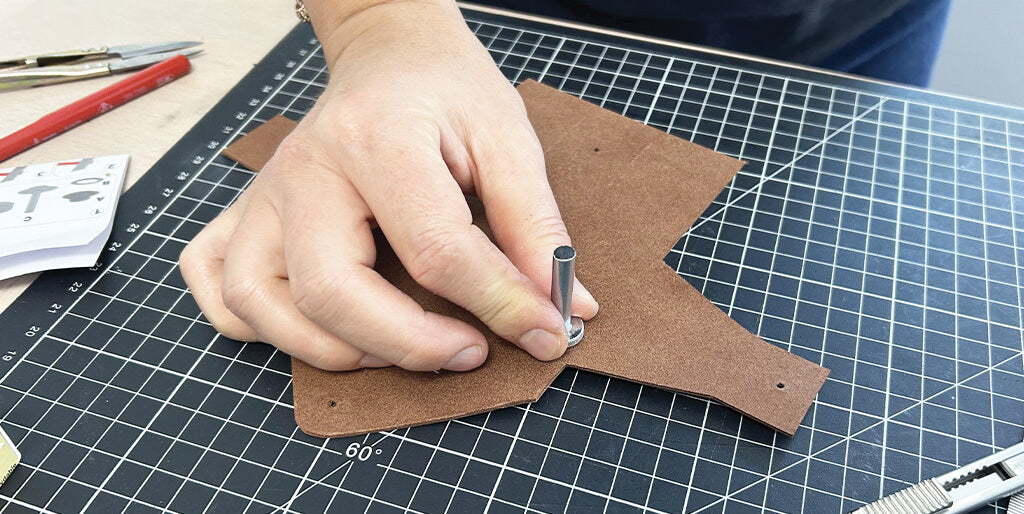
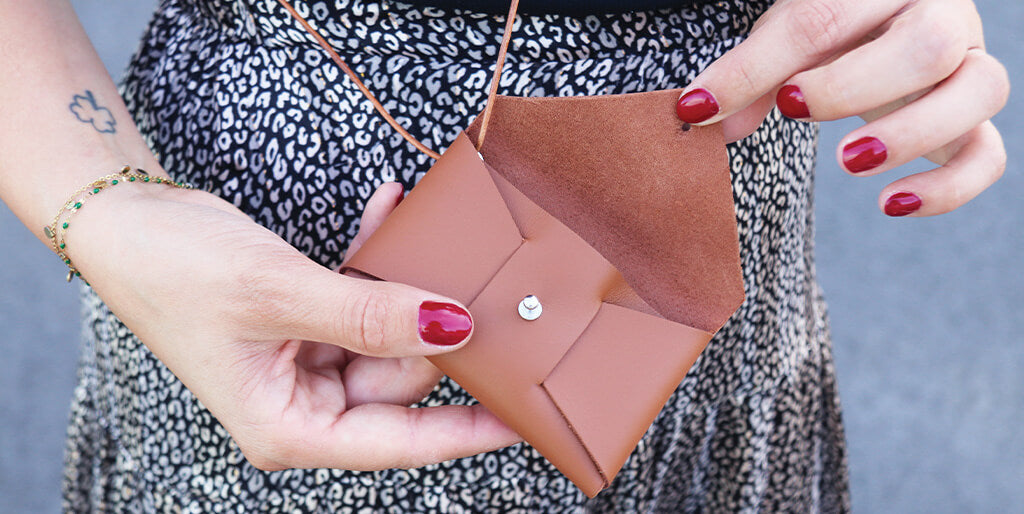
Insert the two tabs into the card holder's slots. From the inside, insert the 3 x 7 mm screw of the collar button (through all three holes), then screw on the collar button.
 |
 |

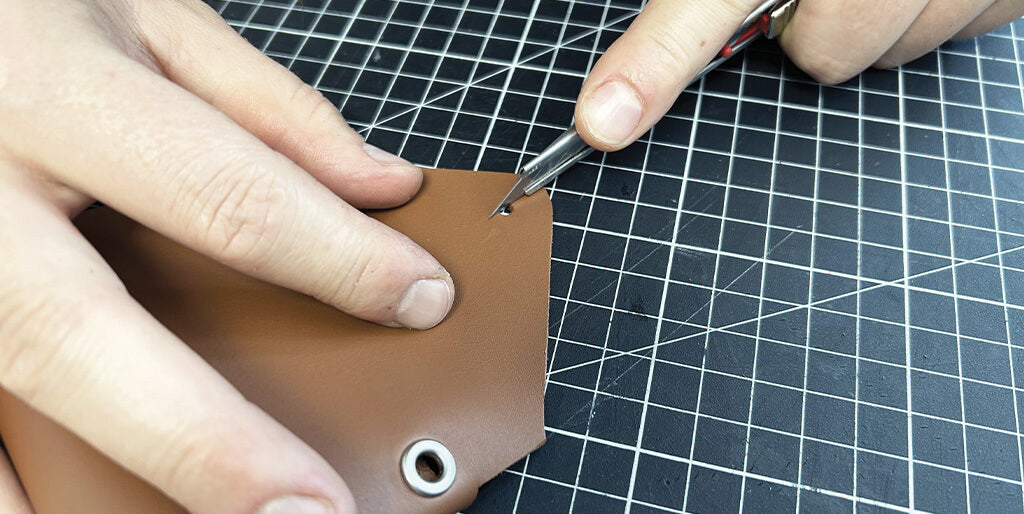
7. MAKE THE COLLAR BUTTON INCISION
With a cutter, make the slit for the collar button head.
YOU'RE DONE!
Version #2 – With stitching
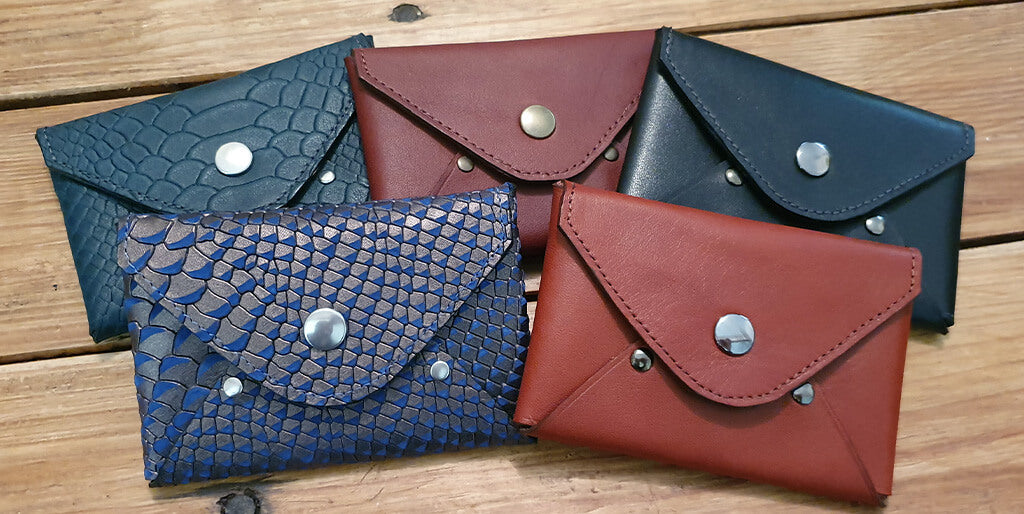
Here is the tutorial for the stitched card holder. This version is slightly larger than the second version. The card holder will be more finished than the first version. We offer two versions: with machine stitching and with hand stitching.
-
Blue





If possible, opt for firm leather and have a 15 x 20 cm piece with a skived thickness (0.8 mm) for the card holder and the inner flap.
MATERIALS NEEDED
- 1 piece of firm calf leather 20 x 30 cm - Thickness 1.4 mm (Deco Cuir Sauvage Range)
- 1 piece of firm calf leather 15 x 20 cm - Thickness 1 mm (Deco Cuir Sauvage Range)
- 1 round hole punch Ø3 and Ø4 mm
- 1 snap fastener Ø12 mm and setting tool
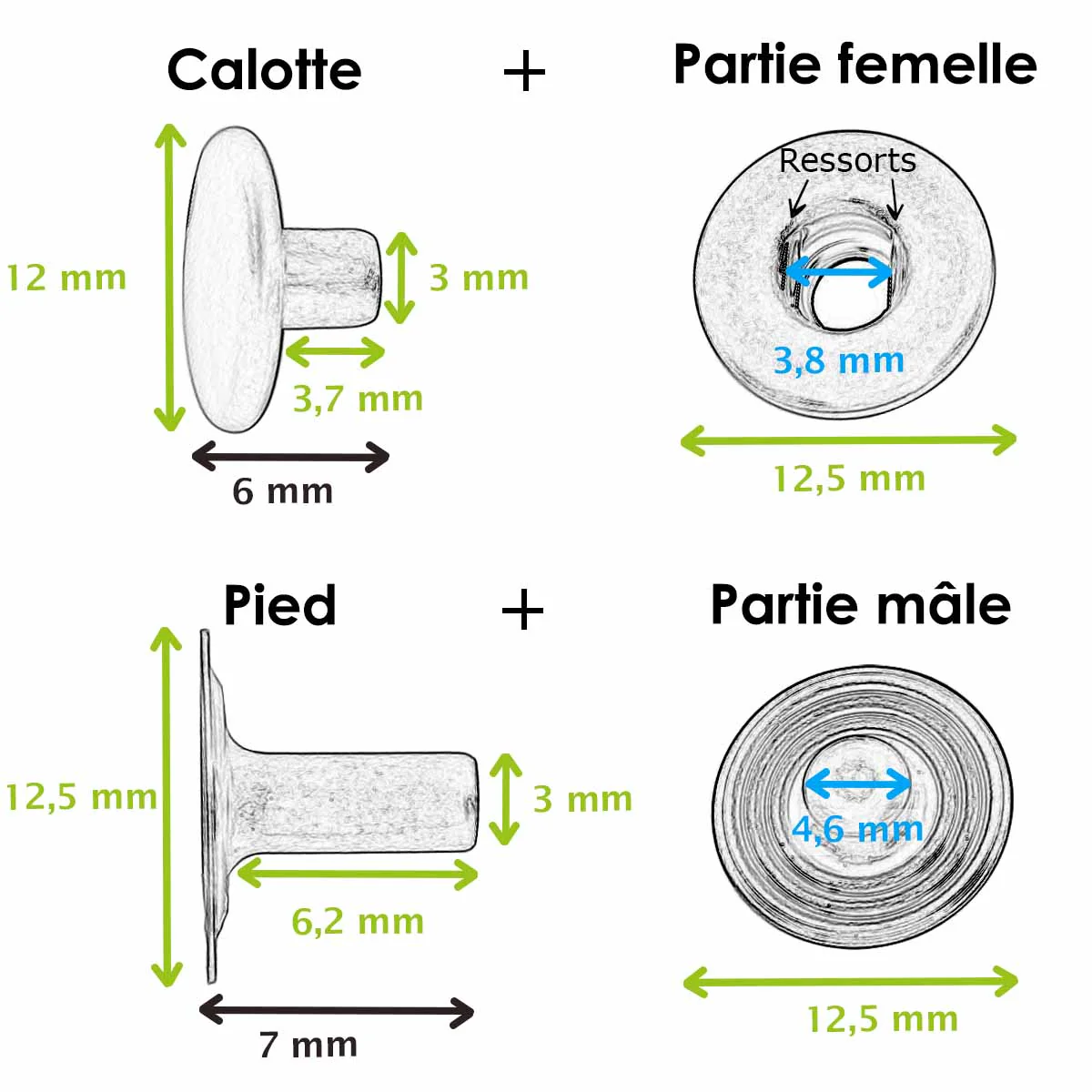
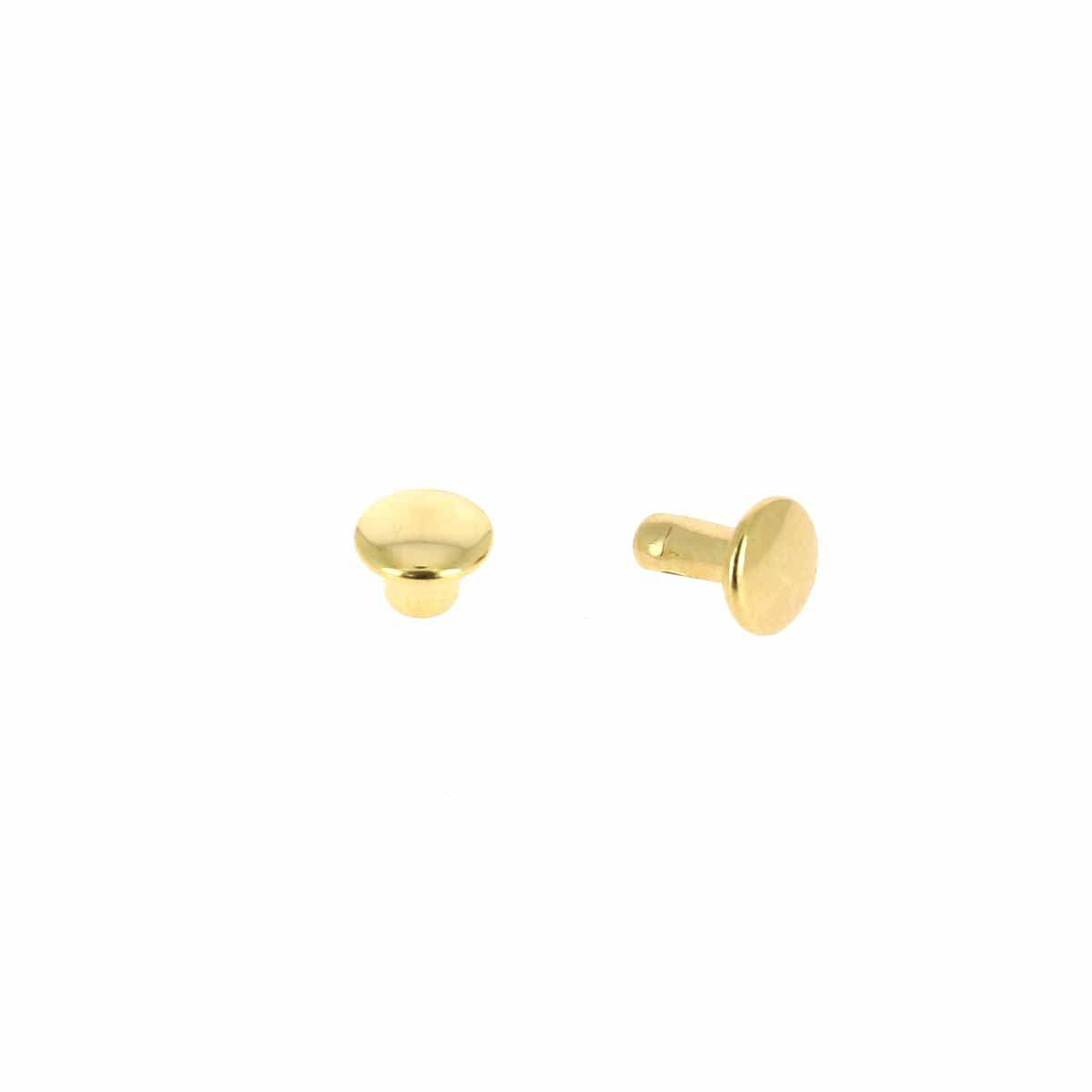
- 2 T2 double cap rivets and setting tool
- Double-sided adhesive tape
- Alphabet stamps and a scrap of vegetable-tanned leather (for marking)
- 1 silver pencil
Optional: creaser iron or manual creaser for edge finishing






1. CUT THE PATTERN
- Print the second pattern, cut it out and make the holes (4 and 3 mm).
The pattern includes patterns for both machine-stitched and hand-stitched versions.
- Using the silver pencil, trace the 4 pieces on the leather as well as the holes.
- Cut out the pieces using a ruler and a cutter.
The pencil is erasable on most leathers with a simple eraser (do not use on vegetable-tanned leather). We recommend doing a test beforehand to verify the erasable function on your leather or to trace your pieces on the flesh side.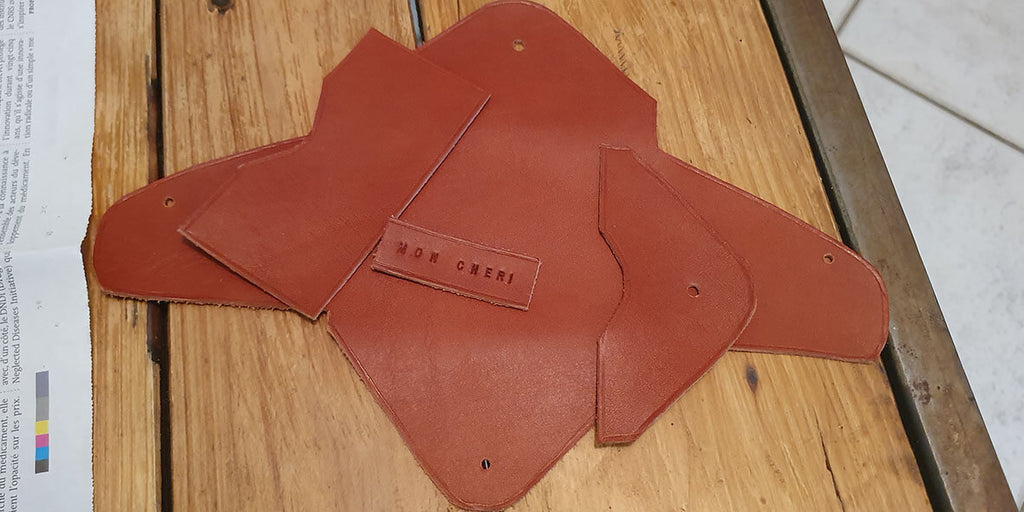
Simplified stitching version: punch 1 mm diameter stitching holes before cutting the leather.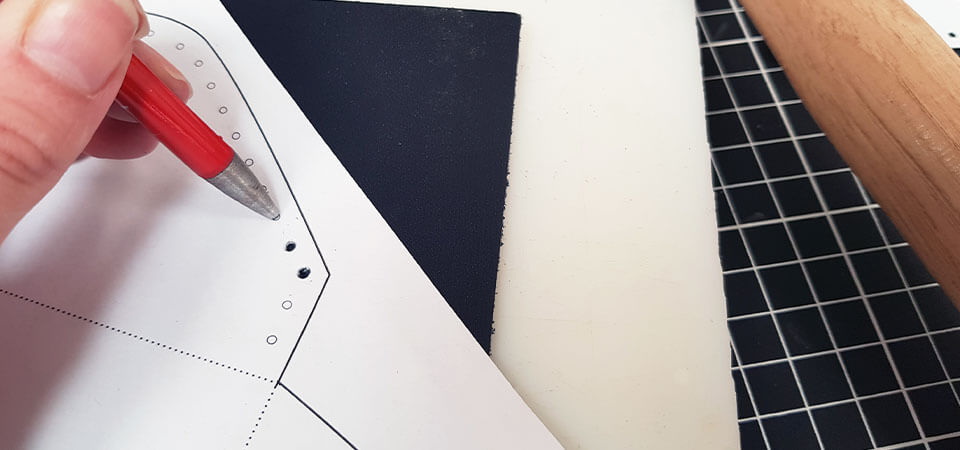
2. MARK PIECE NO. 4 WITH A PERSONALIZED MESSAGE
Thoroughly moisten the piece with a sponge and then stamp the alphabet tools. Note that this is only possible on vegetable-tanned leather. You need to wet your leather with a sponge and water, then strike the tools with a mallet.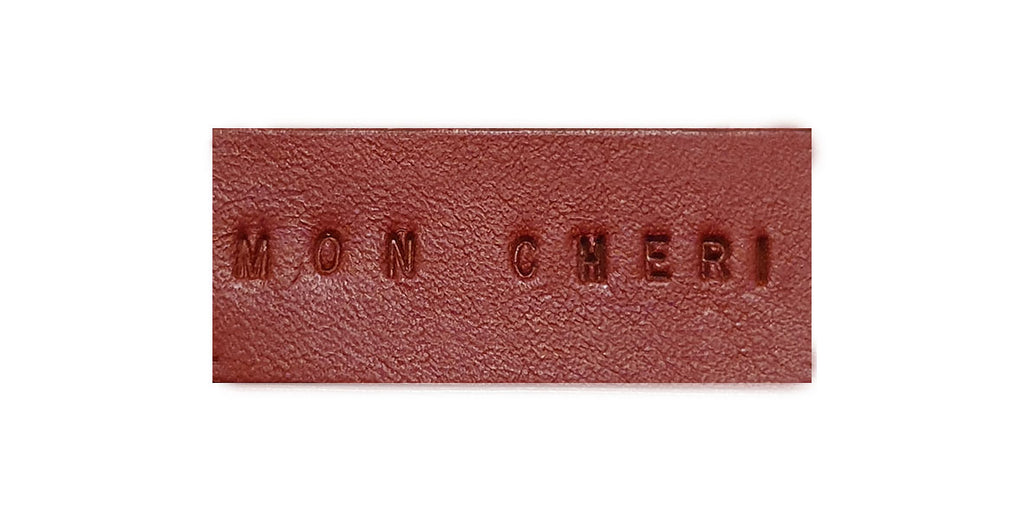
3. EDGE FINISHING
- Prepare the edges with light sanding (fine abrasive sponge - 800) – always sand in the same direction and at a 45° angle.
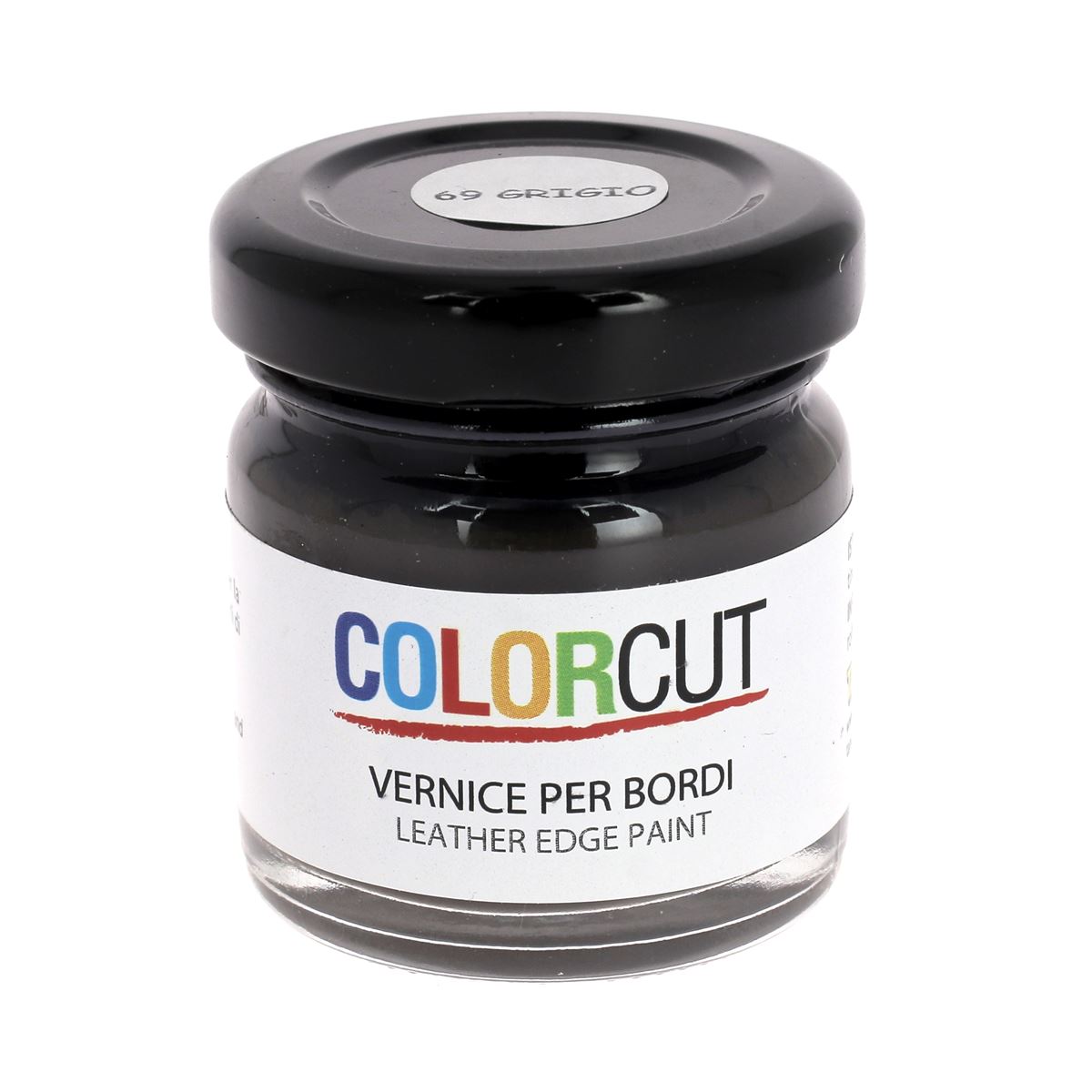
- Apply the edge paint with a sponge, awl, roller pen, etc.
- Apply the necessary number of coats to achieve the desired result. We recommend applying 3 coats of edge wax.
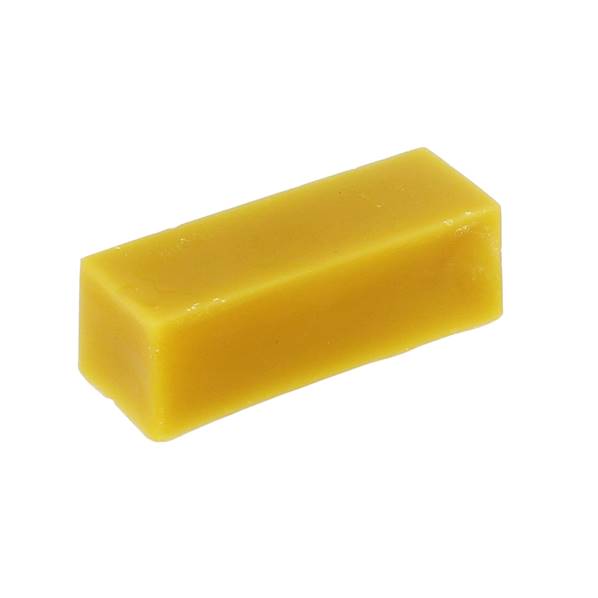
- Wait for the paint to dry completely, then polish the edges with beeswax: rub beeswax onto the edges and then buff with a cloth.
Attention: For piece no. 3, we recommend working only on the lower edges, as the upper edges should be worked on once the piece is sewn onto the main piece (no. 1).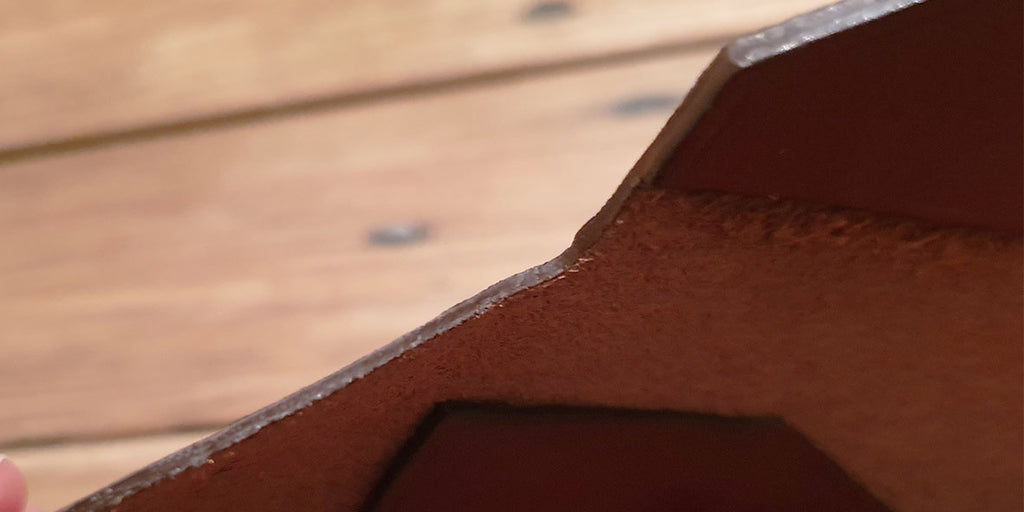
The little extra: finish the edges with a creasing iron or a manual creaser and create a decorative line all around your pieces.
LEARN MORE >
|
|
|
4. GLUE AND STITCH PIECE NO. 3 ONTO PIECE NO. 1
Apply neoprene or water-based glue to the flap of piece #1 (backside – flesh side) and to the back of piece #3 (contact glue = both sides). Wait a few minutes for the solvent to evaporate, then glue the pieces together.
Don't forget to finish your edges afterwards (see previous step).
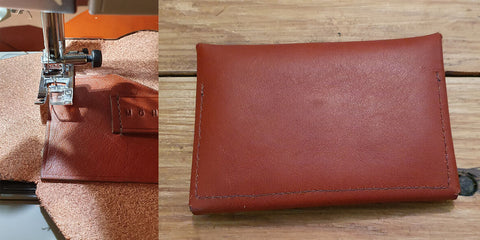
The little extra: for machine stitching, we recommend a Teflon foot, a special leather needle, and 100% polyester thread. Be aware that your machine must also be able to handle thick materials.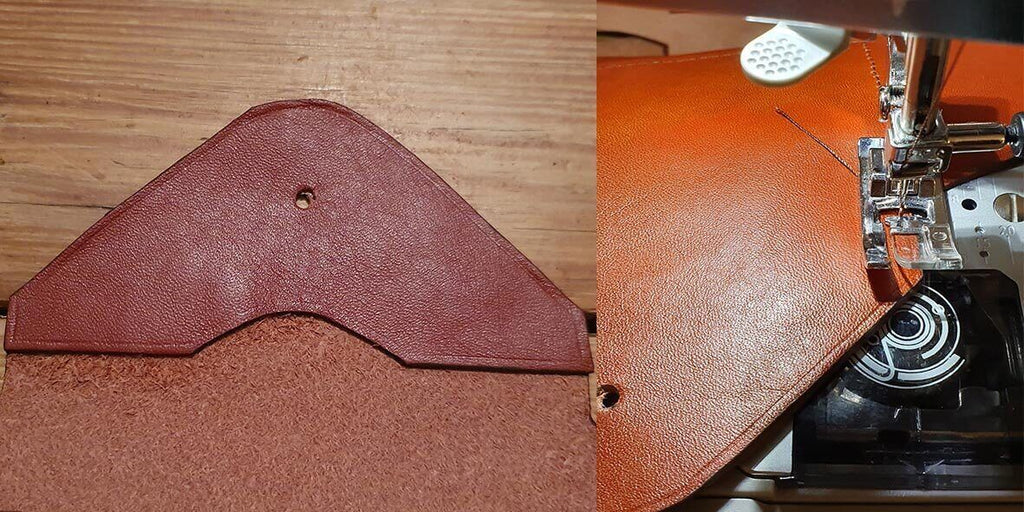
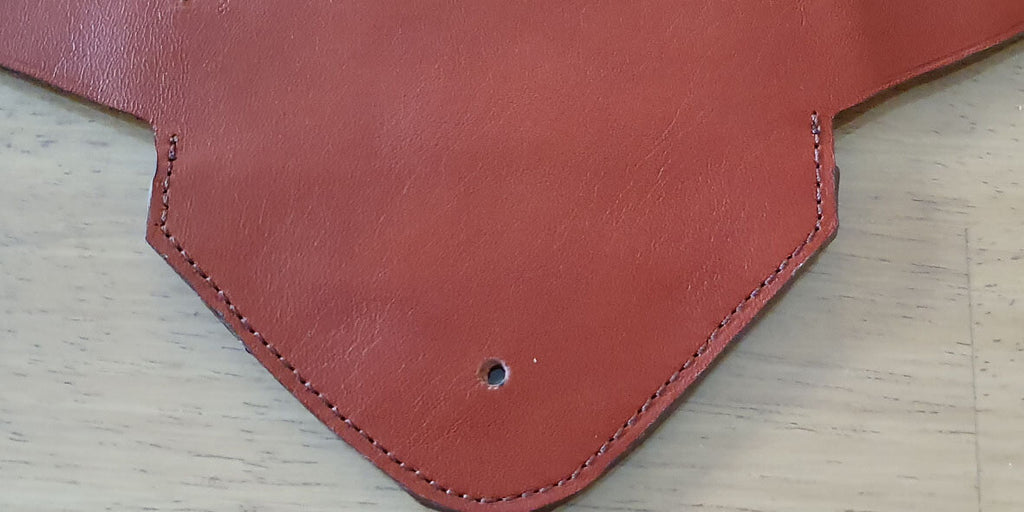
Simplified sewing version: To begin sewing, cut a thread equivalent to 5 times the length to be sewn. Then, thread a needle through each end of the thread.
Sew by passing each needle through each hole. At the end of the seam, make 3 backstitches and hammer the seams with a joiner's hammer/mallet.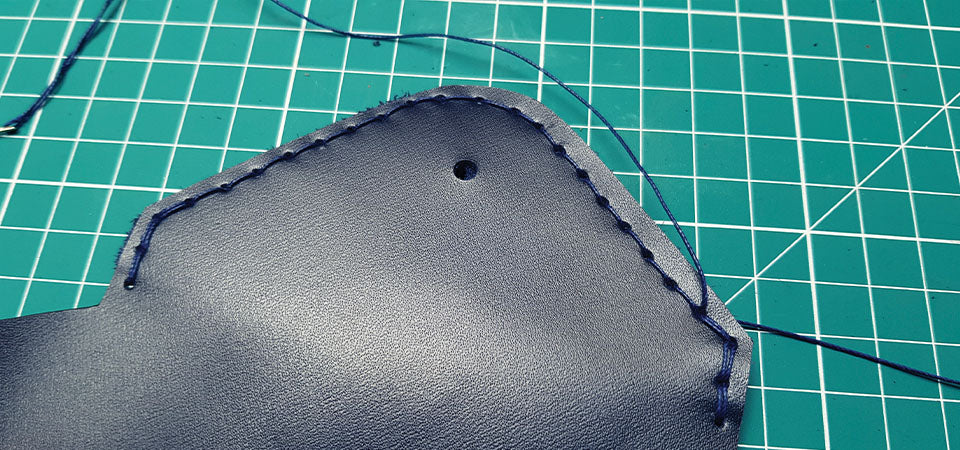
MACHINE SEWING TIP:
HOW TO MACHINE SEW >
MACHINE SEWING TIP:
GUIDE TO SIMPLIFIED HAND SEWING (WITH HOLES) >
5. GLUE AND SEW PIECE NO. 4 ONTO PIECE NO. 2
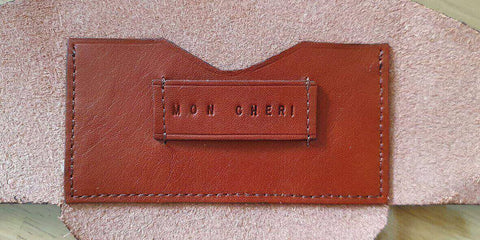
Glue the label with the personalized message onto the card holder using neoprene glue. Then stitch the label along its two (widthwise) ends.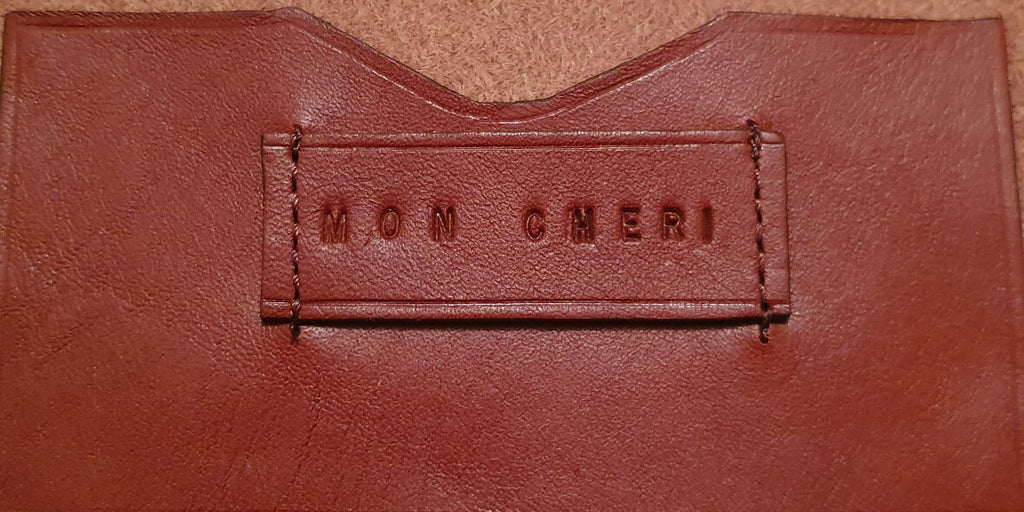
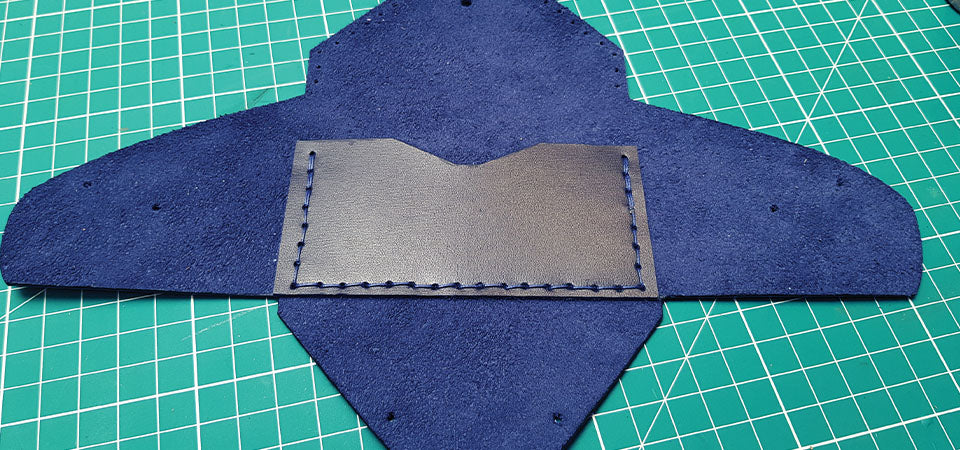
6. SEW THE CARD HOLDER ONTO THE MAIN PIECE
Sew the leather card holder in the center of the main piece. Use double-sided tape to position it on piece #1. Do not sew the upper part of the card holder.
 |
 |
7. GLUE THE ENDS TOGETHER
Apply neoprene glue to each end of the main piece (right back and left front) and wait a few minutes for the solvent to evaporate before gluing the pieces together. Then do the same to glue the lower flap. This will prevent coins from falling out!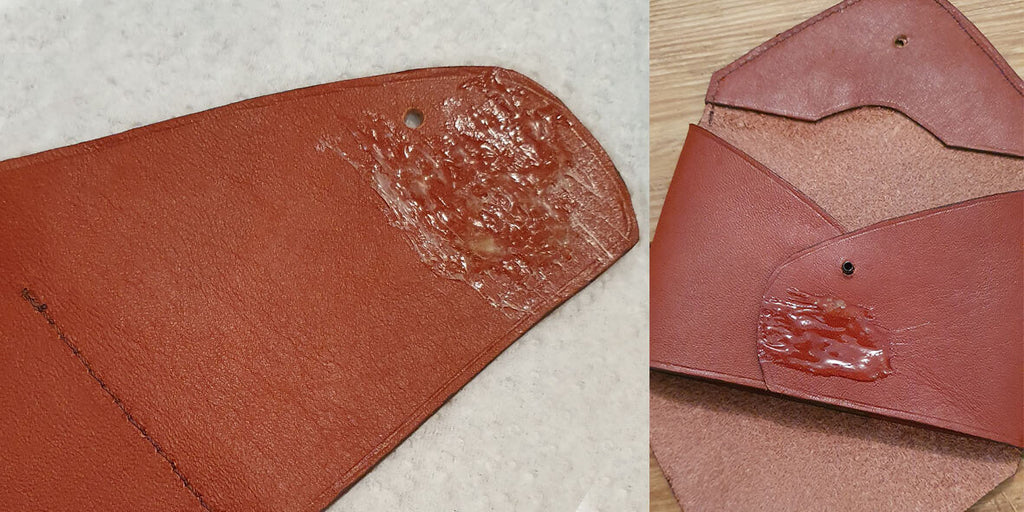
8. ATTACH THE SNAP FASTENER
Using the setting tool of your choice (strike handle, pliers, etc.), attach the snap fastener – 12mm diameter.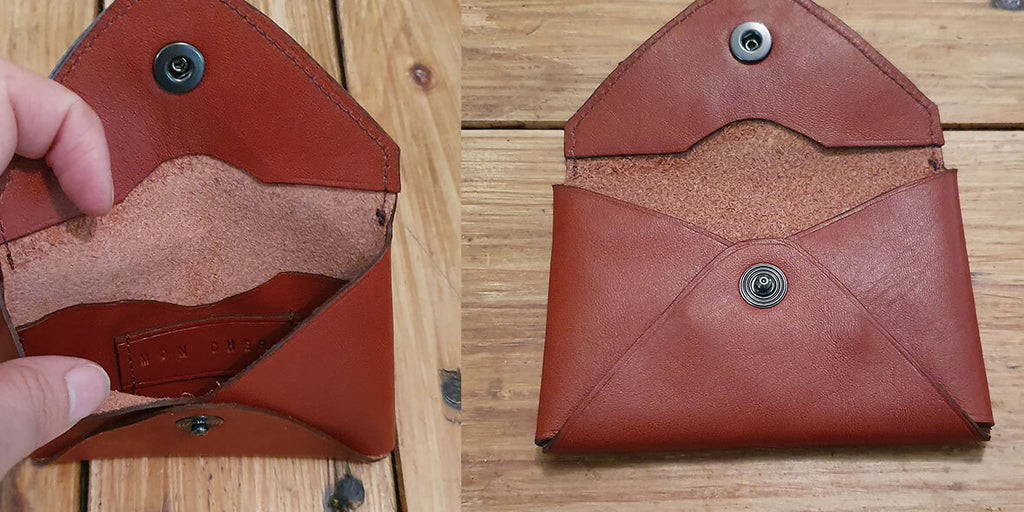
9. ATTACH THE RIVETS
To ensure you don't lose any money, we recommend attaching 2 rivets to the front of the leather card holder/coin purse. The holes are indicated on the pattern.
If you don't have a setting kit: screw chicago screws in place of rivets and put a collar button in place of the snap button.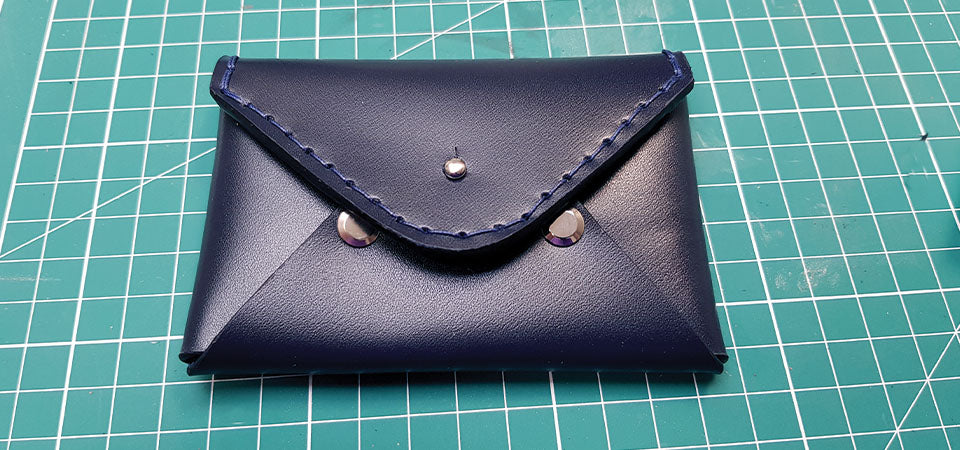
TIP
If the flesh side of your leather isn't very attractive, you can use double-sided tape to attach a piece of fabric to the central part of the card holder/coin purse.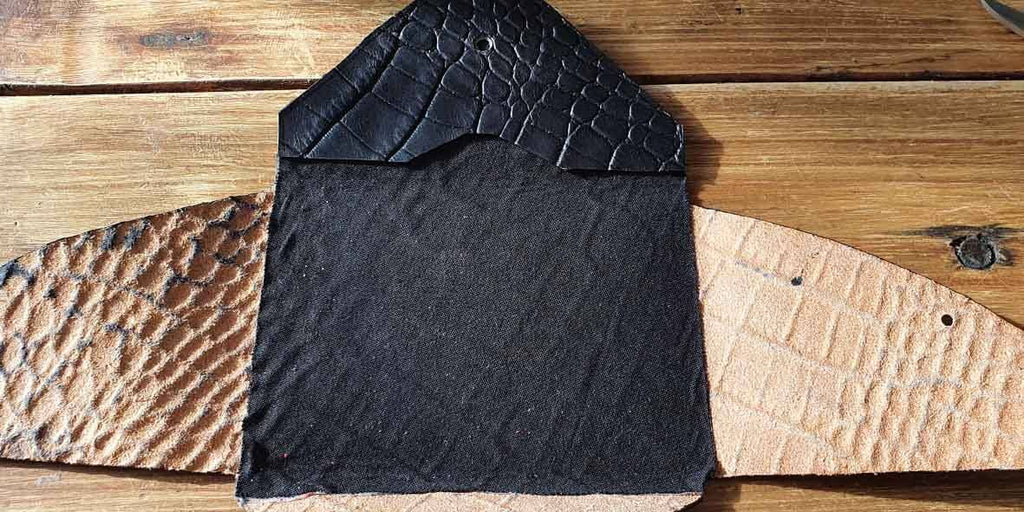
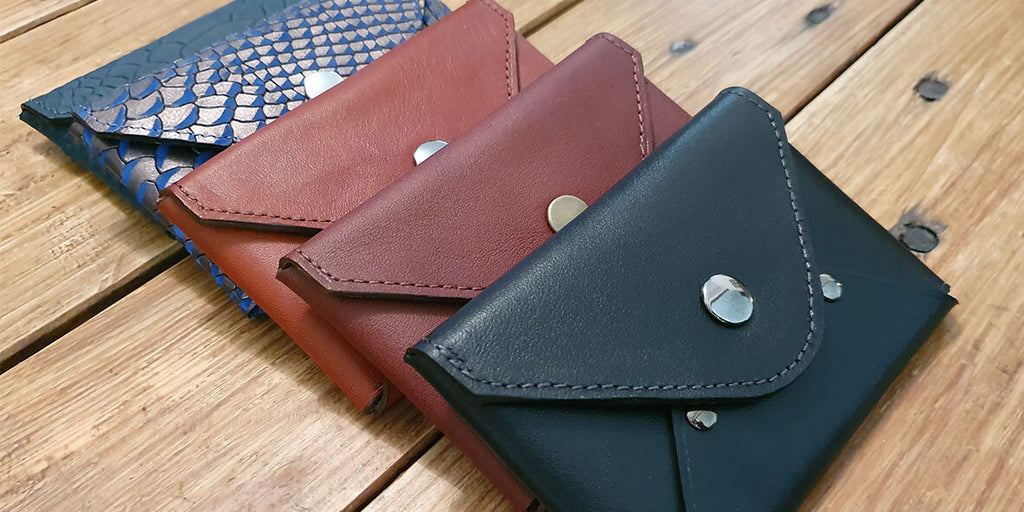
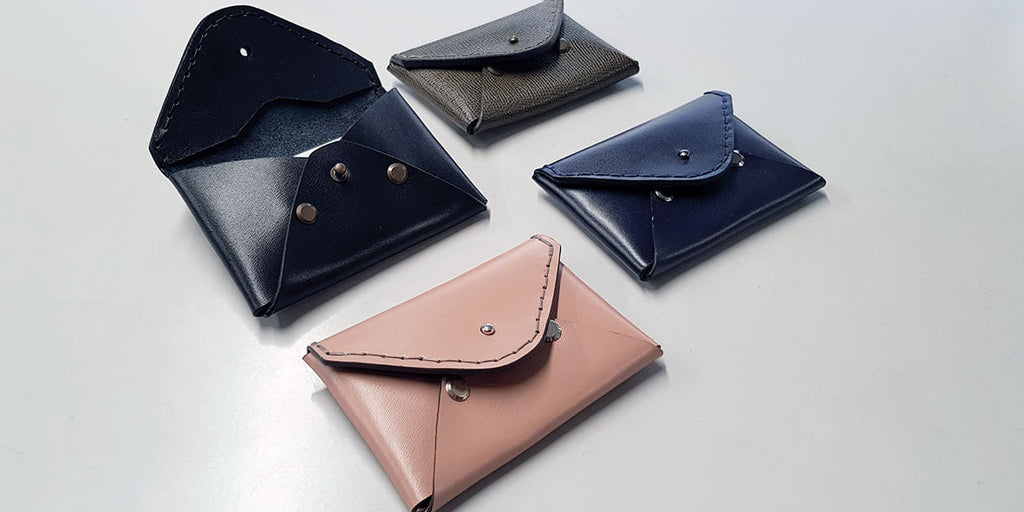
ENVELOPE POUCH
Also discover our leather cutouts to make an envelope pouch.
Final dimensions of the pouch:
Width: 20 cm
Height: 15 cm
Thickness: 2.5 cm


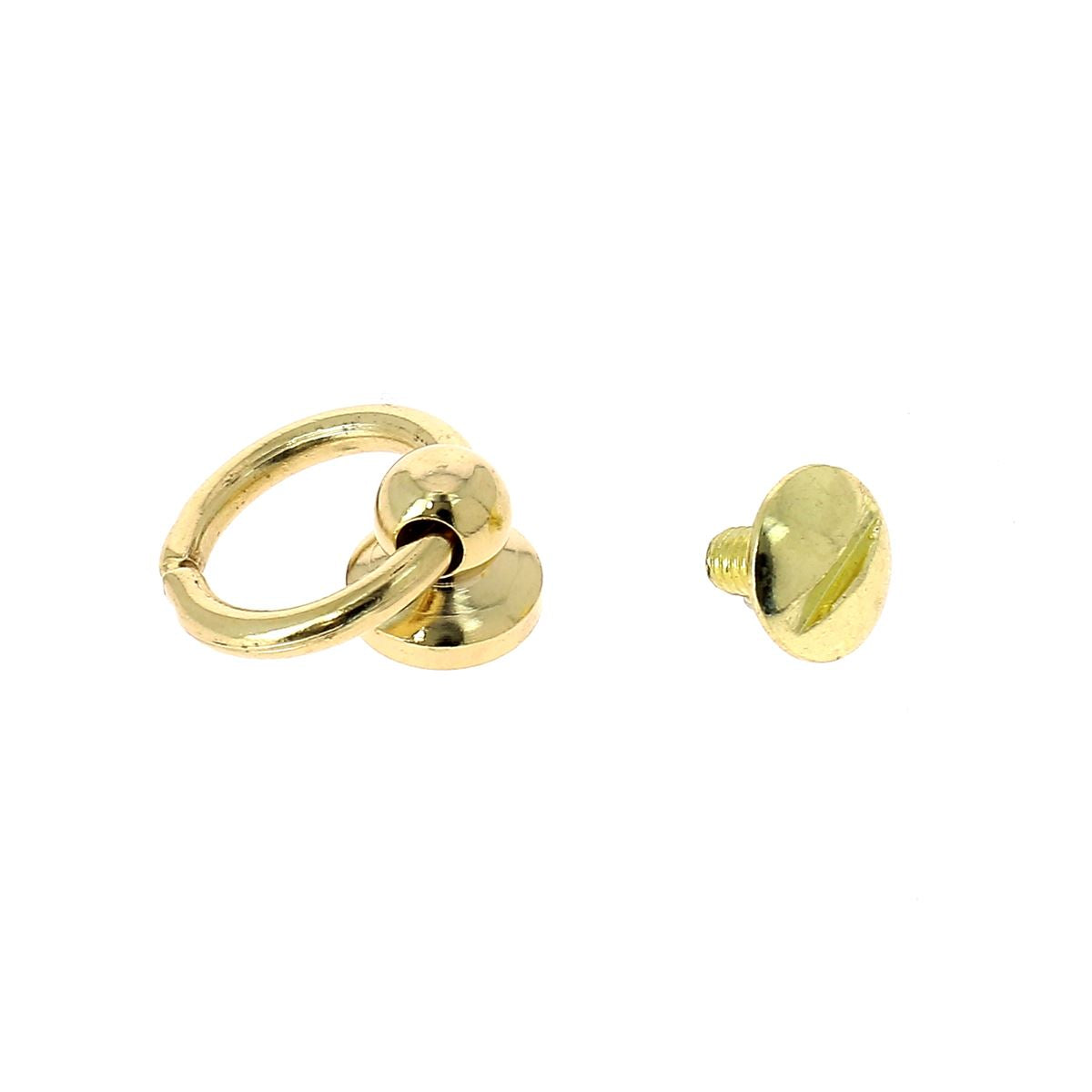
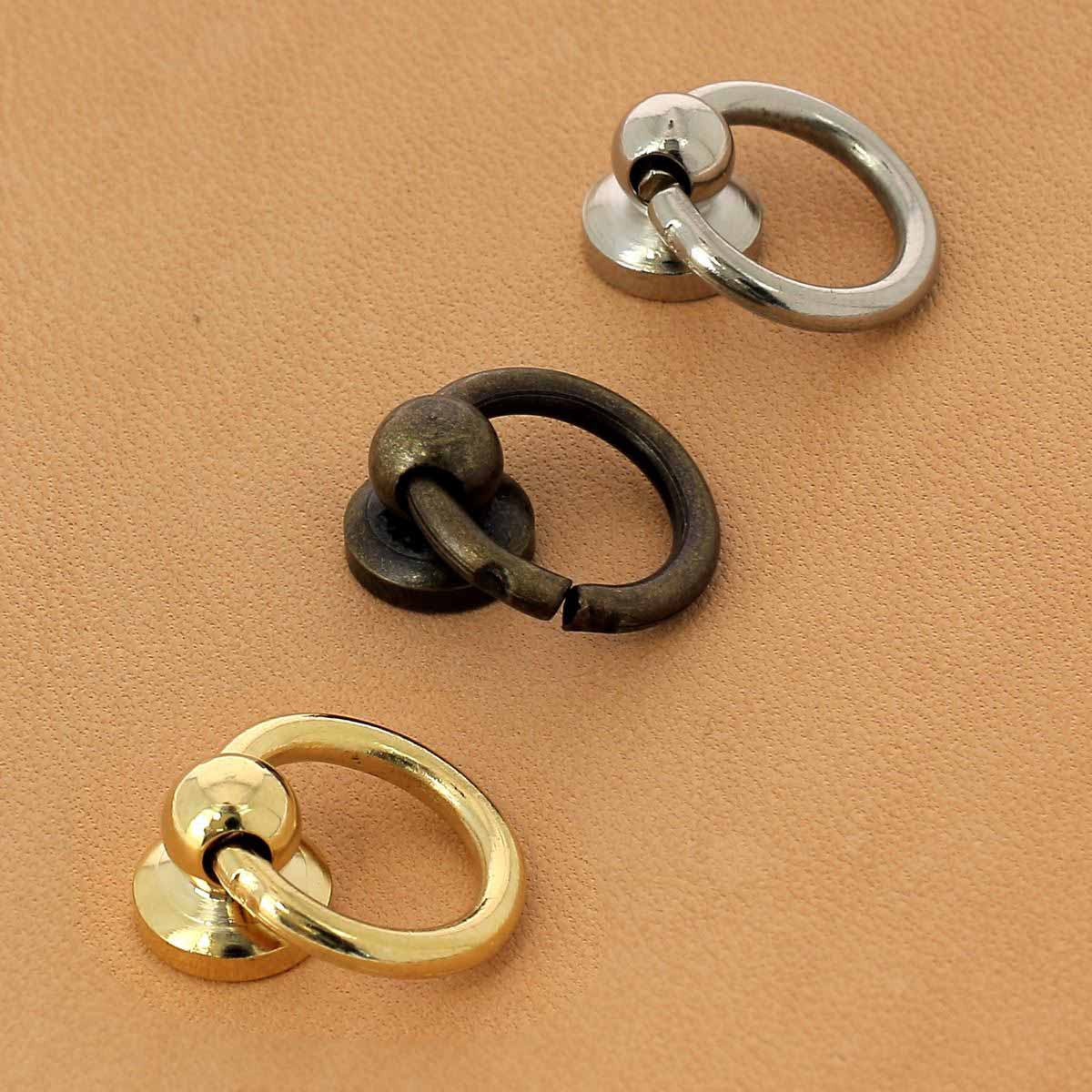
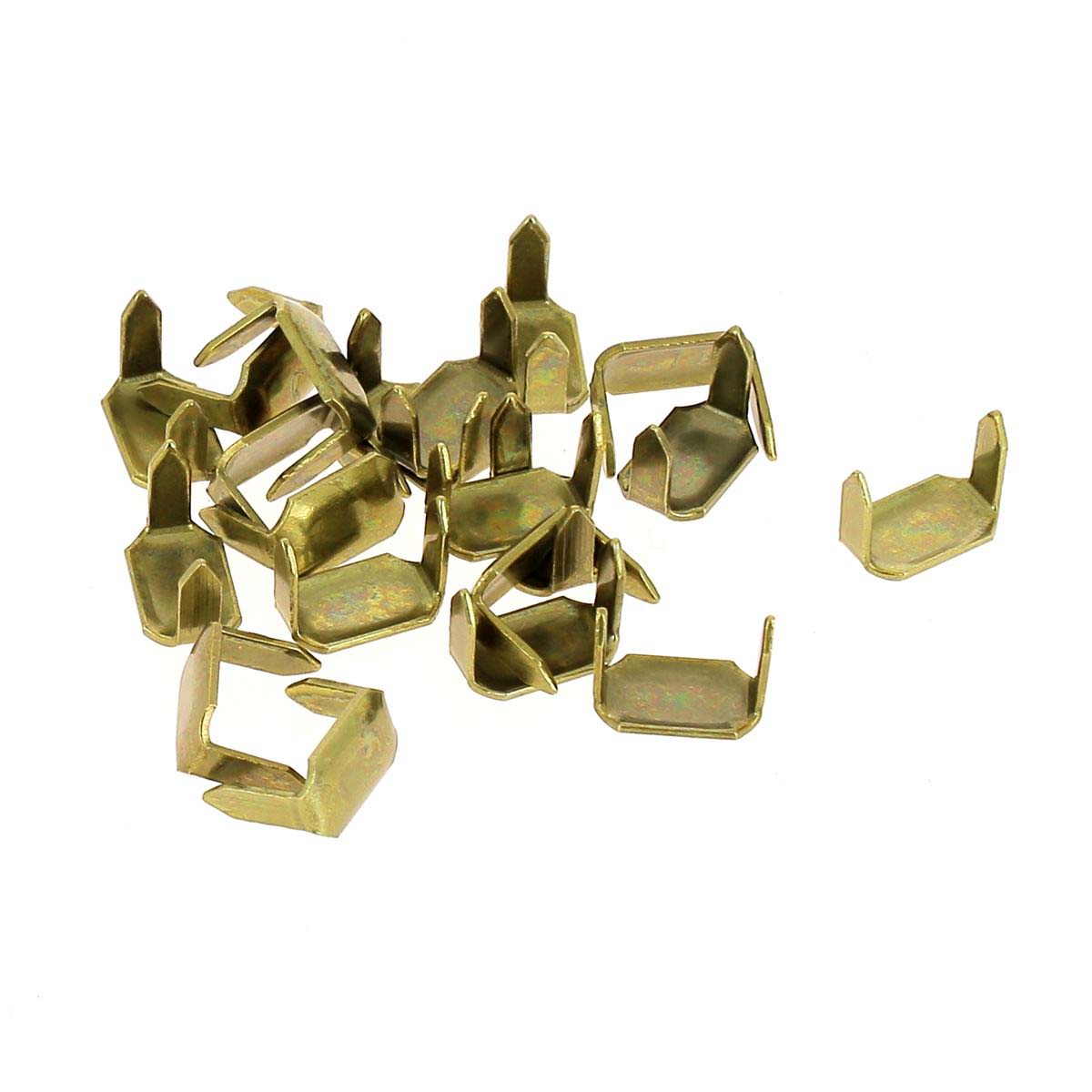


MINI LEATHER POUCH
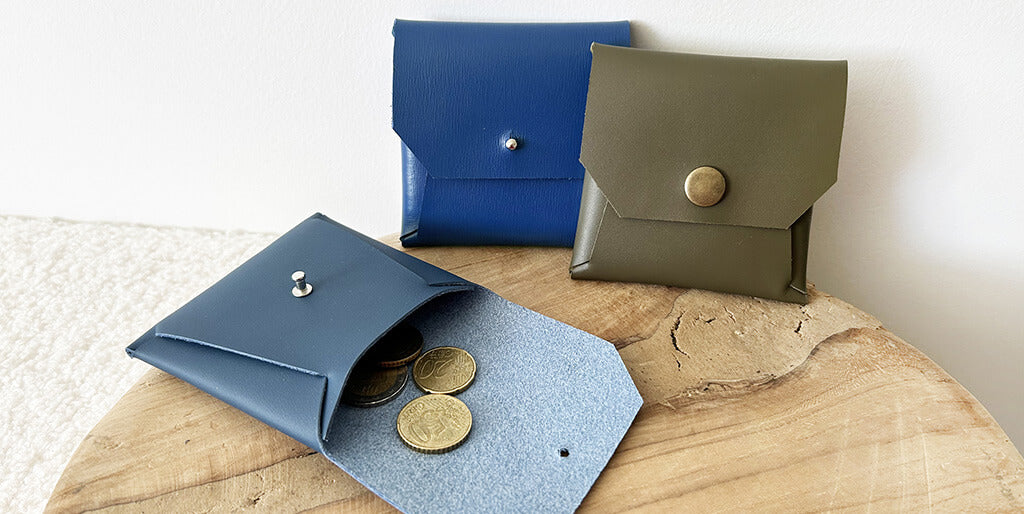
Also discover another version of a seamless leather coin purse / mini-pouch.
Final dimensions of the pouch:
- Height: 9 cm
- Length: 9 cm
- Thickness: 1 cm


2 comments
Ramdaya
Merci, j’ai tellement envie d’apprendre et plein d’idées, je me former avec votre contenu,.Merci pour le partage je ferais de même
Anonymous
Merci, très bonne idée simple à réaliser même avec les enfants