


What are the advantages of a British stitch?
One of the main advantages of this stitch compared to the saddle stitch is that it is almost foolproof and does not require specific tools.
This technique is particularly suitable for the following situations:
- Hand-sewing a zipper
- Hard-to-reach areas
- Hand-turned stitching
- Assembling leather and fabric (practical for flexible materials)
The appearance of the seam differs depending on the side:
It is considered a decorative stitch.
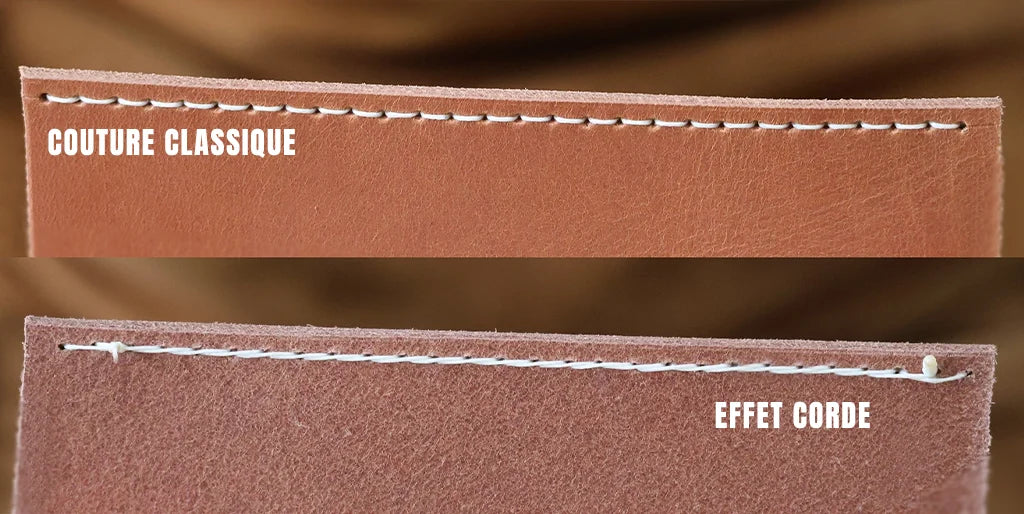
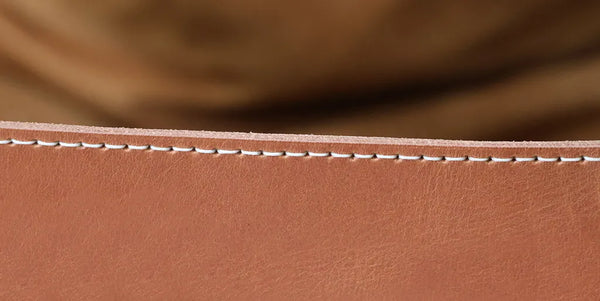
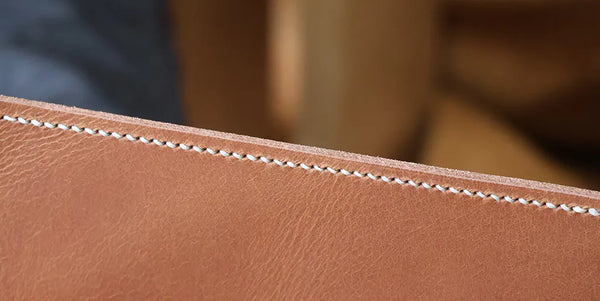
- On one side, it offers a classic, stitch-by-stitch look
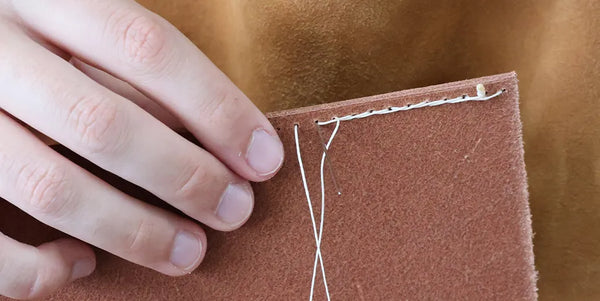
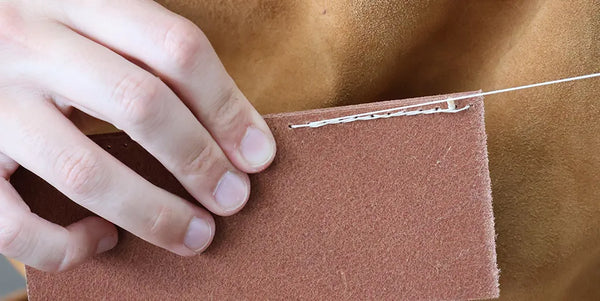
- On the other, a twisted, "cord" appearance
You can choose the visible result according to your project. Here, we have created the "cord" look on the back and the "stitch-by-stitch" look on the front.
Please note: if the "cord" effect stitch is made on the grain side (visible side of your creation), the seam becomes more vulnerable to external aggressions (especially friction).
Different variations
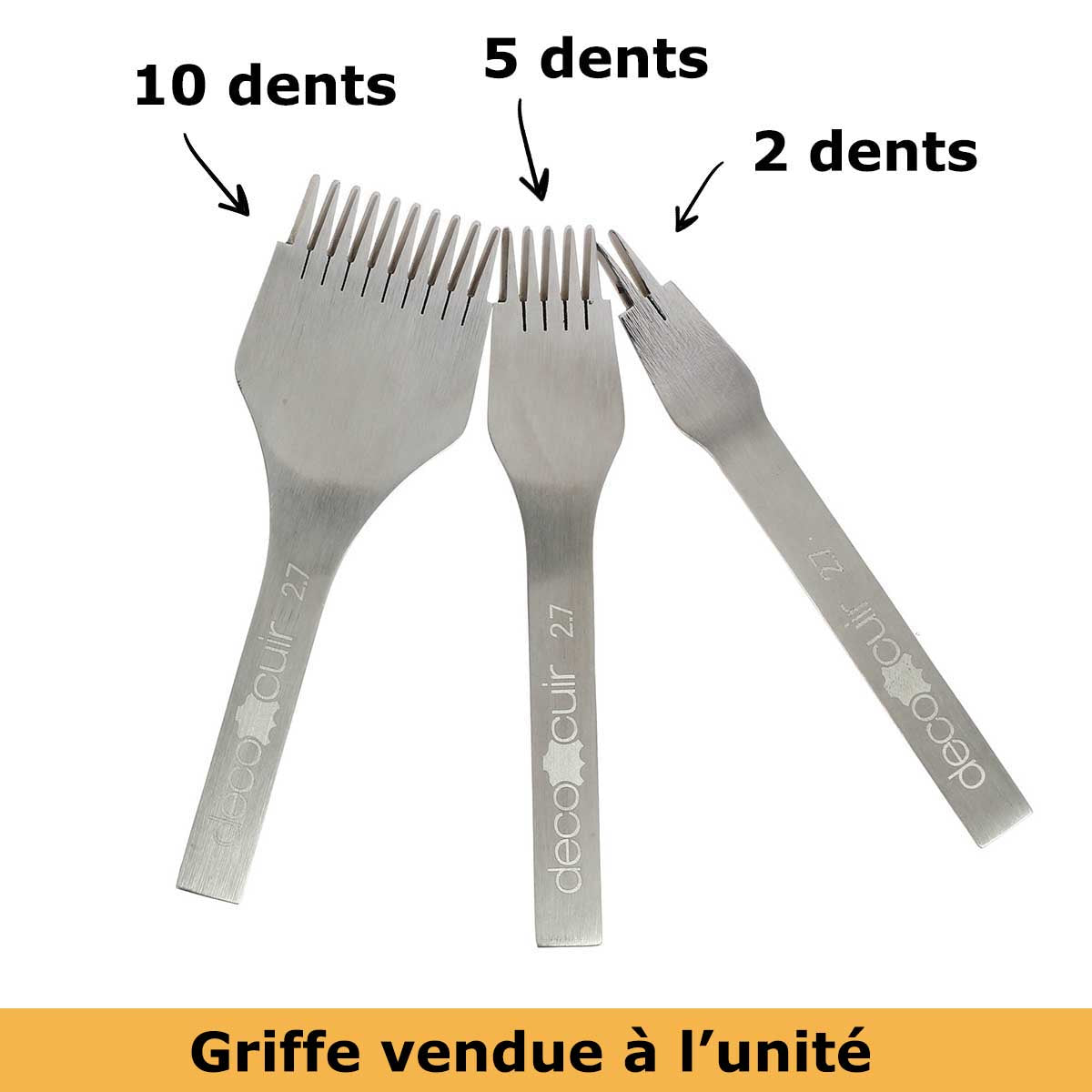
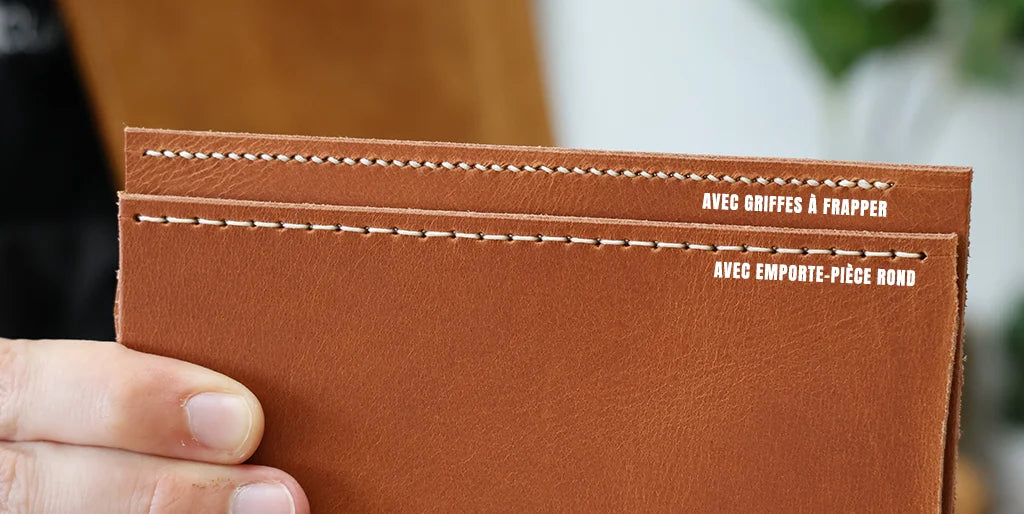
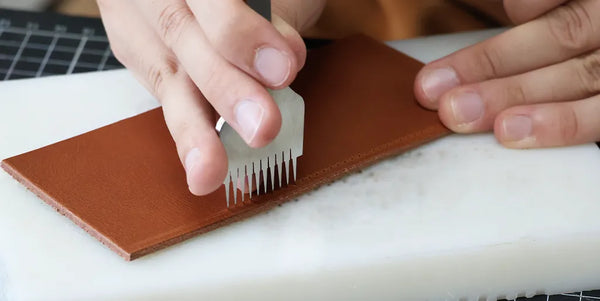
The British stitch is made with a single thread and needle. The stitch holes can be punched with a Ø 1 mm round punch (for a straight result) or marked with pricking irons and punched with a diamond awl (for a more angled look, similar to the saddle stitch).
👉 Watch the technique in video!
1. Prepare the thread
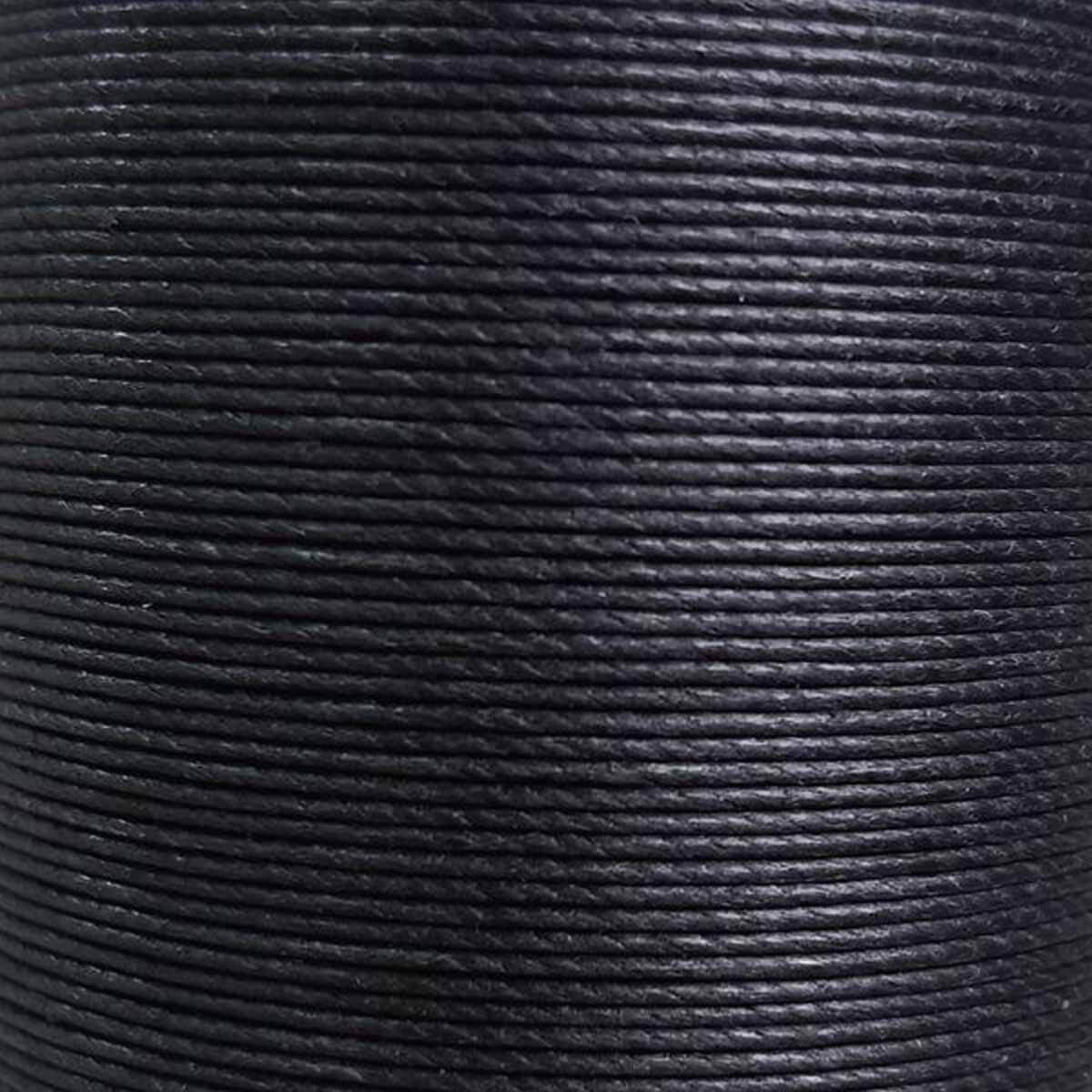
Cut an arm's length of linen thread or braided and waxed polyester thread. If using linen thread: wax it with beeswax (pass it 3 times, then wipe it).
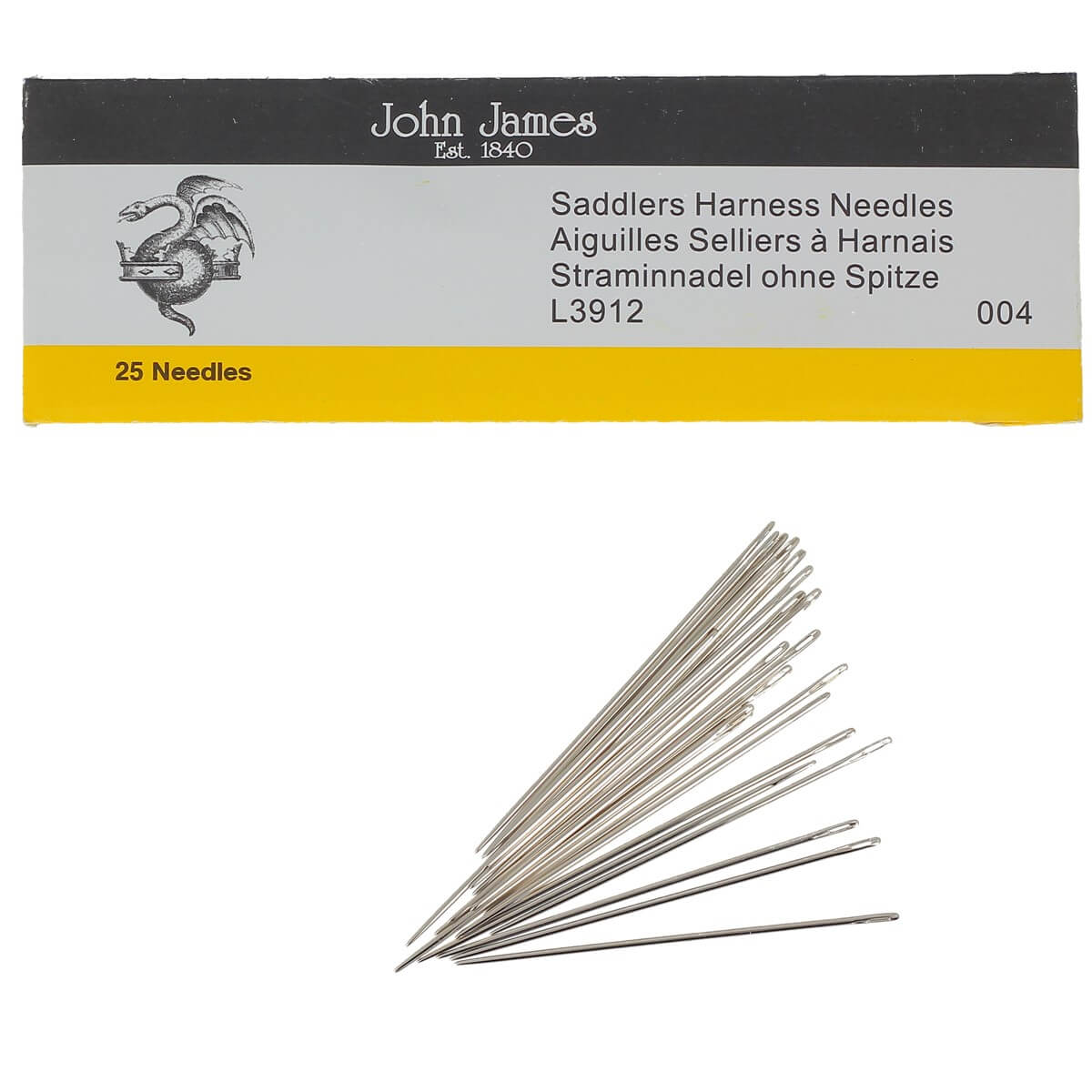
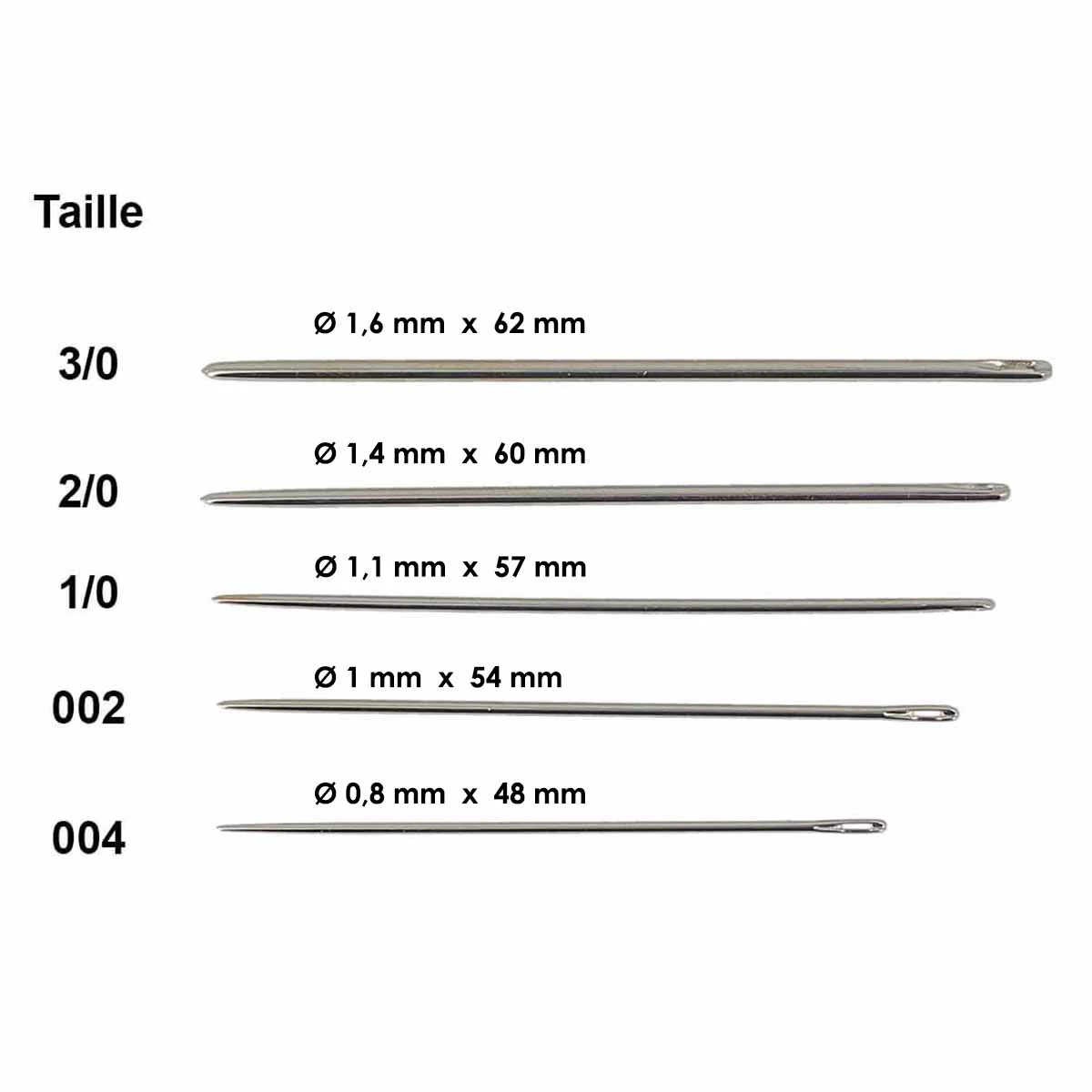
GUIDE: WHICH THREAD AND NEEDLE TO CHOOSE?
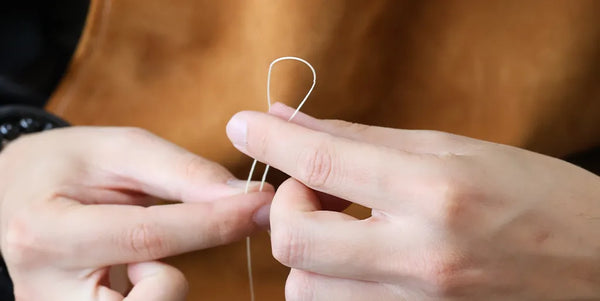
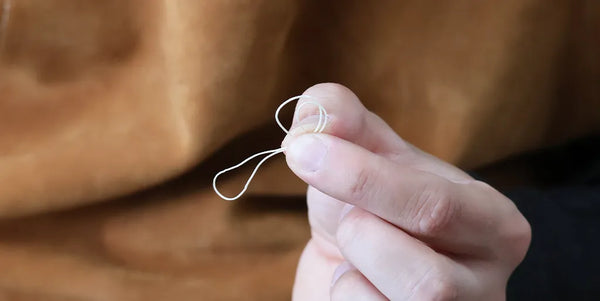
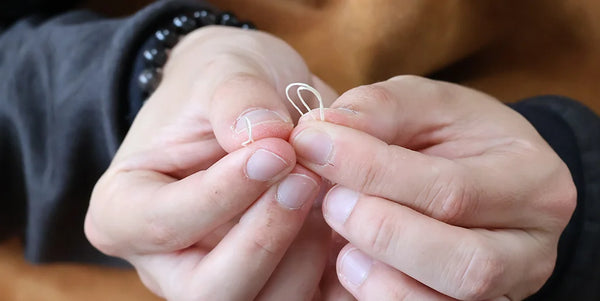
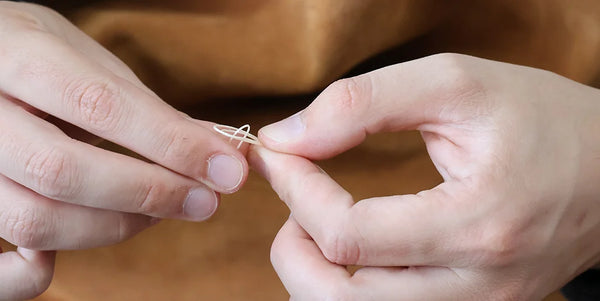
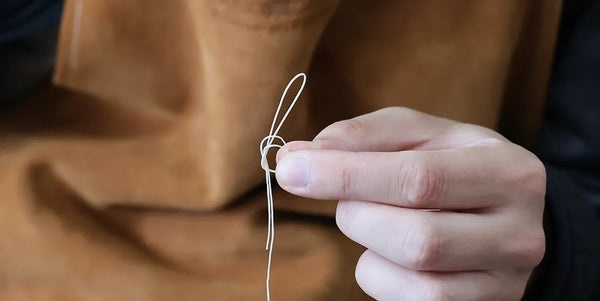
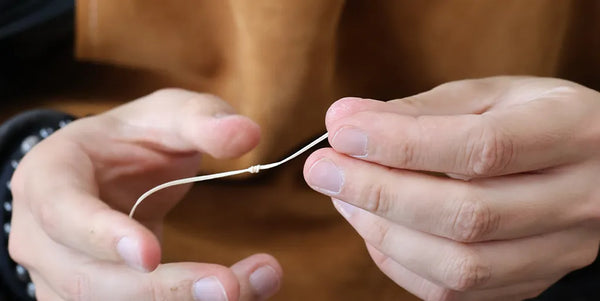
Make a knot at one end of the thread:
- Form a loop by folding the thread.
- Pass the end of the thread through the loop twice.
- Tighten to secure the knot.
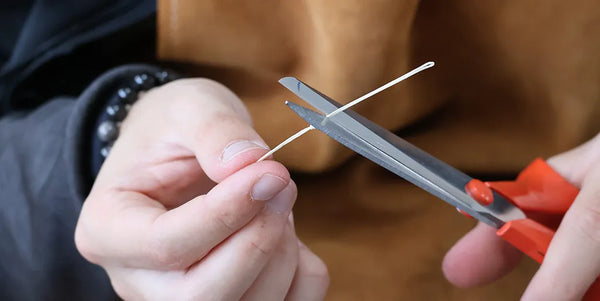
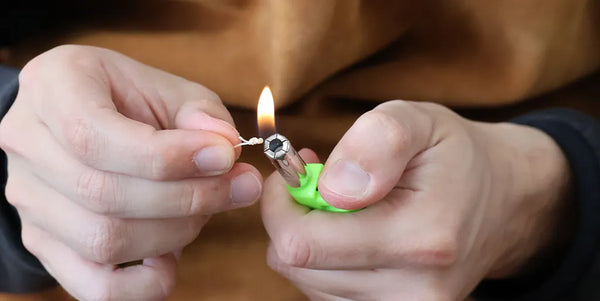
- Cut off the excess, then slightly burn (only for polyester thread).
 |
 |
 |
 |
 |
 |
 |
 |
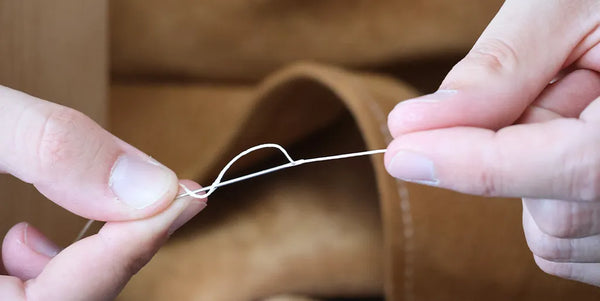
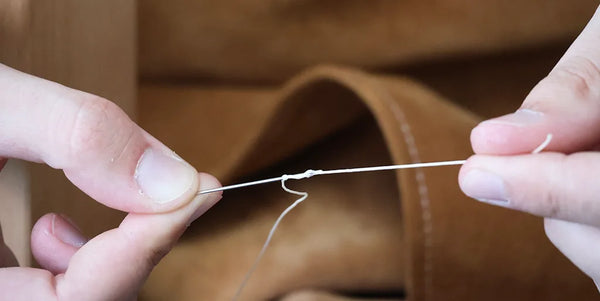
At the other end, thread a needle:
- Prick the thread about one needle length from its end, then prick it twice again.
- Slightly flatten the end of the thread, then pass it through the eye of the needle.
- Pull the longer part of the thread, towards the eye, to form the knot that will hold the needle in place.
 |
 |
2. Pierce the stitching holes
Two options are possible:
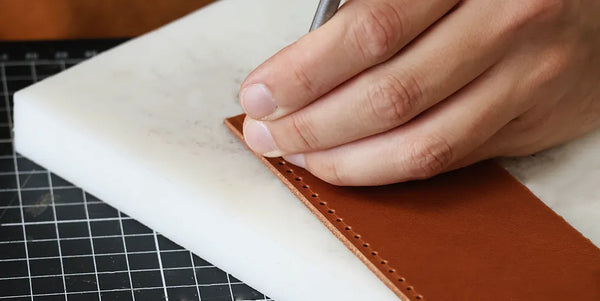
Straight stitch version:
Pierce stitching holes with a Ø 1 mm punch.
 |
 |
Angled stitch version:
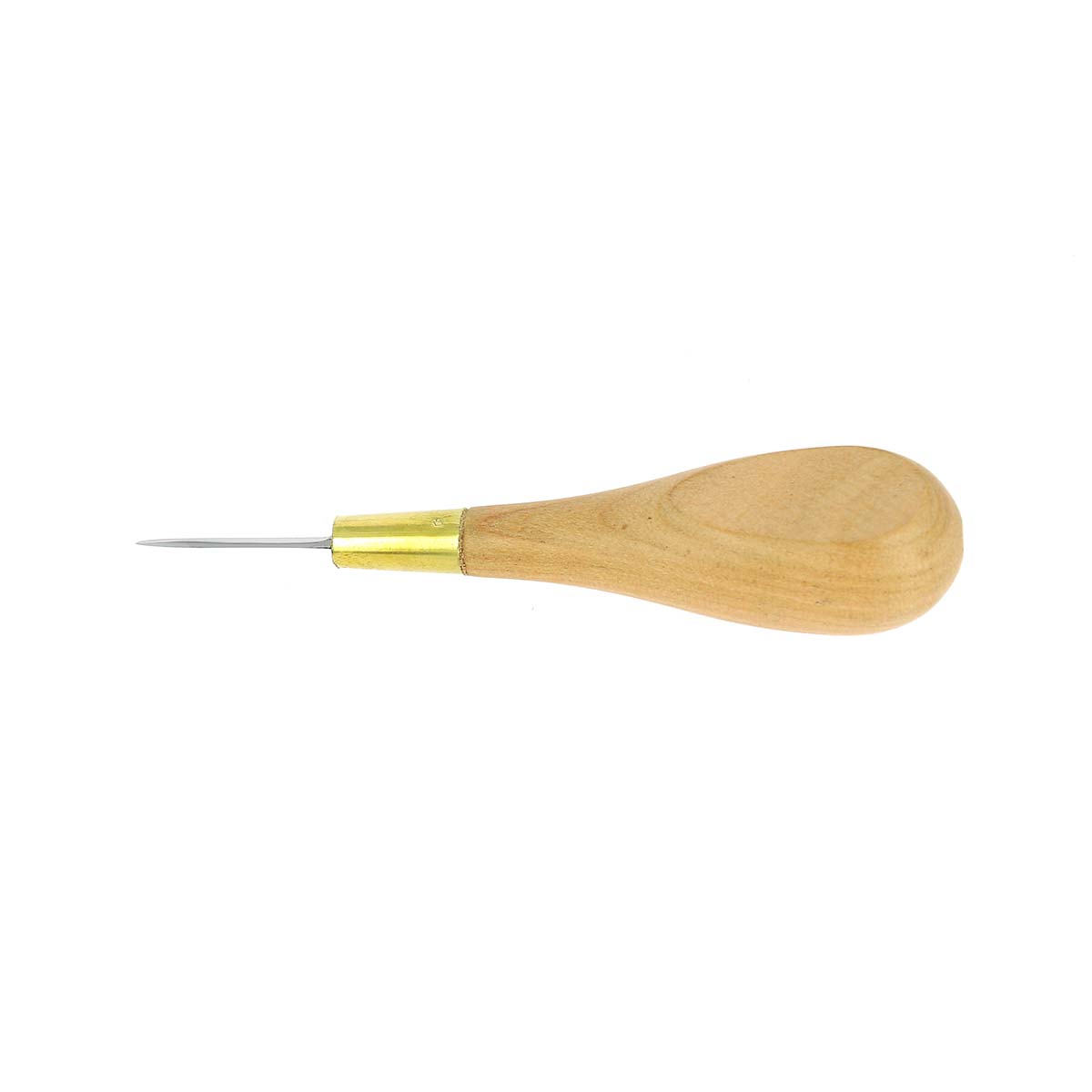
Mark the stitch points with a pricking iron then pierce the holes with a diamond awl.
 |
 |
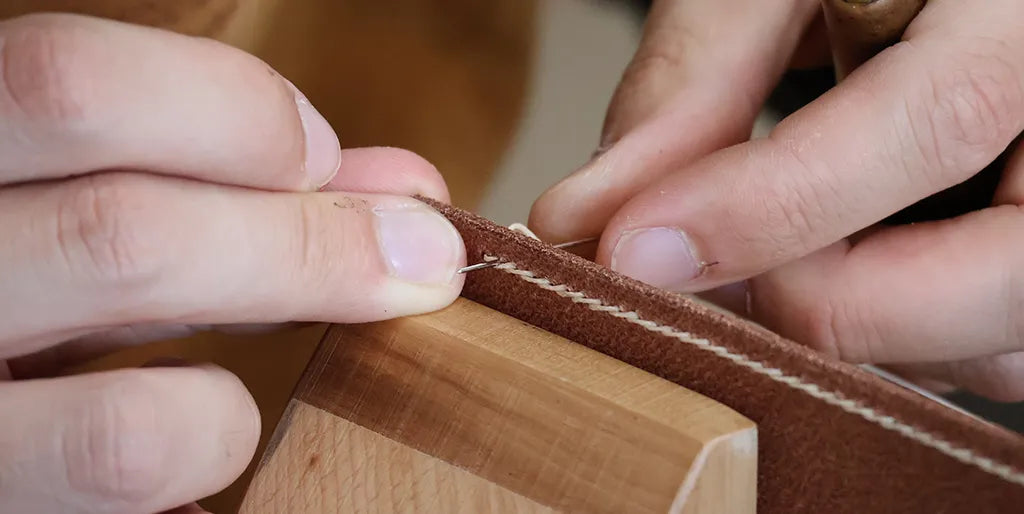
3. Sew the British stitch
Start stitching by passing the needle through the second hole, from the back or front of the leather, depending on the desired finish.
To get a "cord" effect on the back, place the knot on the back of the leather.
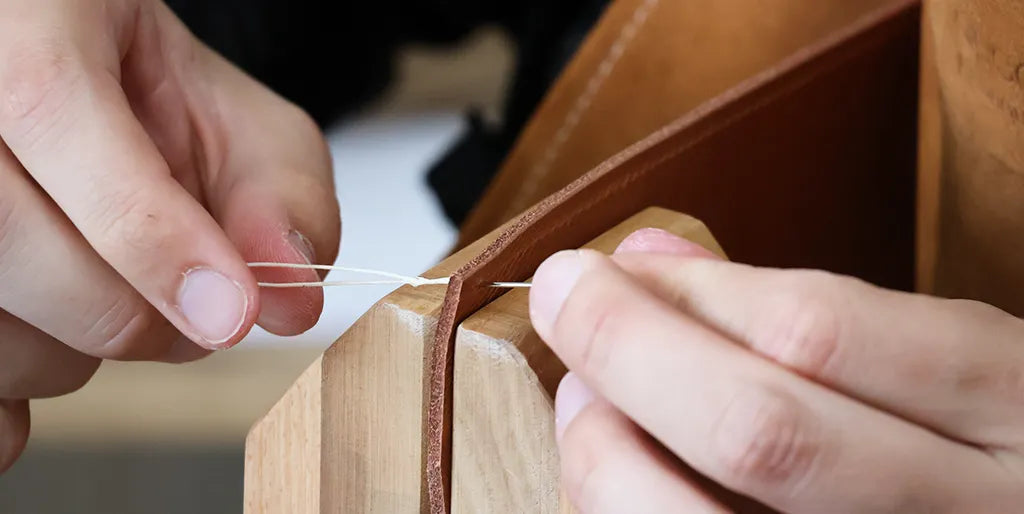
Then, pass the needle through the first hole on the front of the leather.
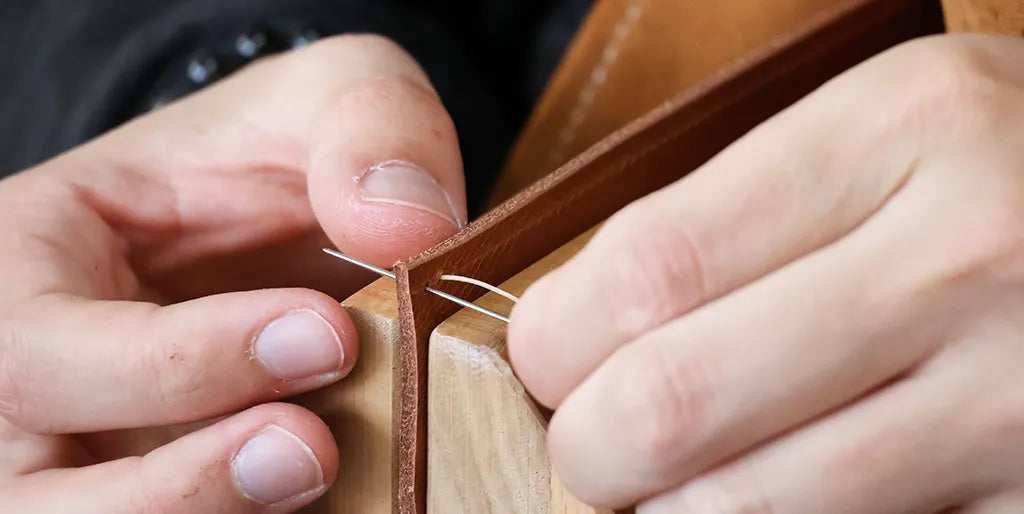
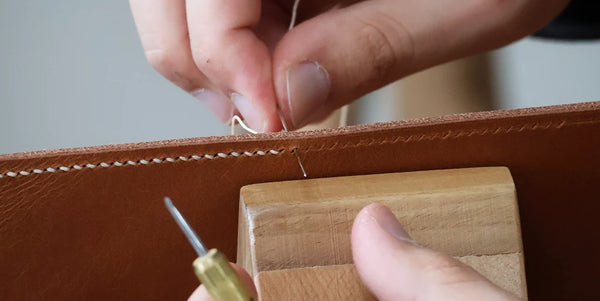
Next, repeat the following movement:
➡️ advance two holes, then go back one hole
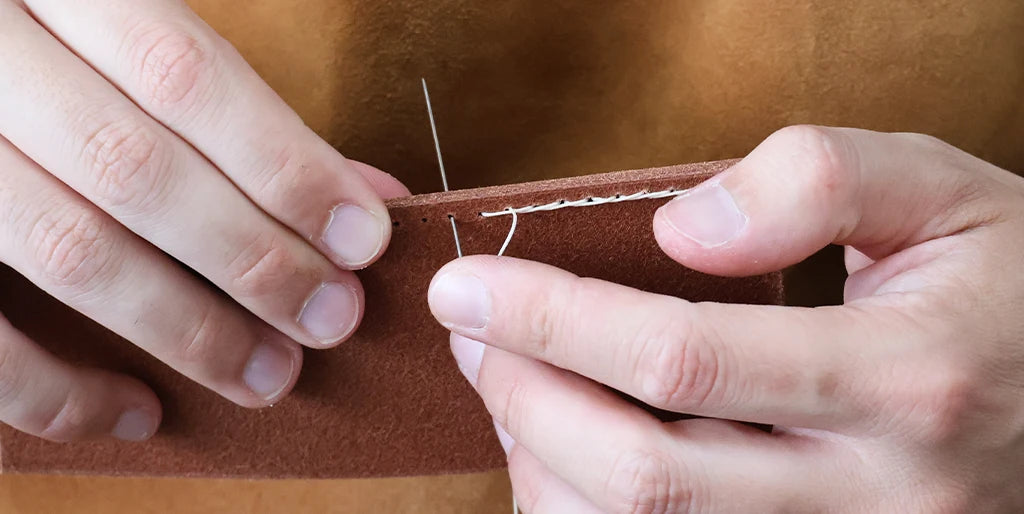
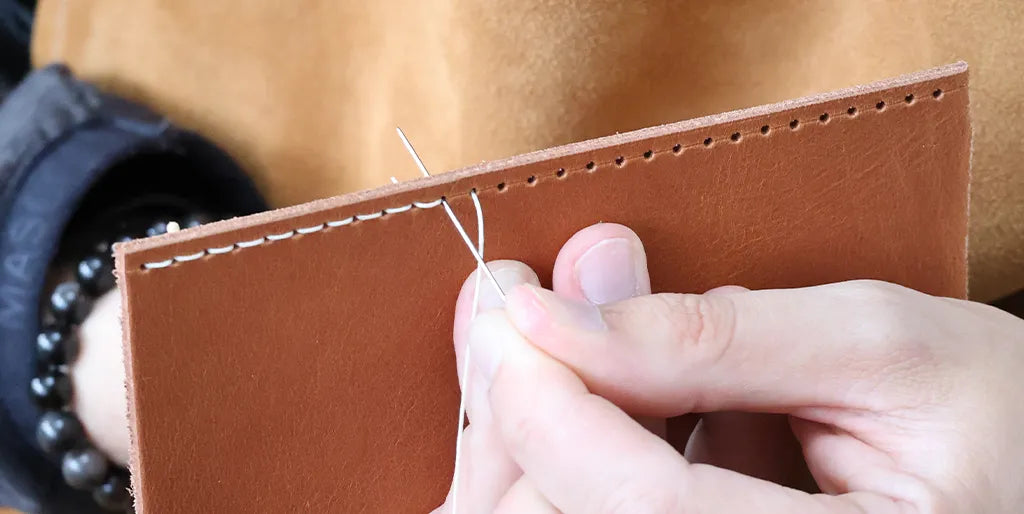
Use a diamond awl to get an angled stitch (version with marking irons).
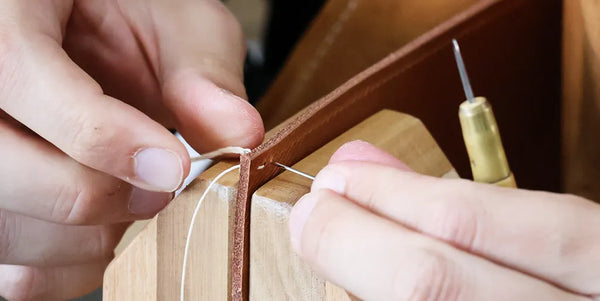 |
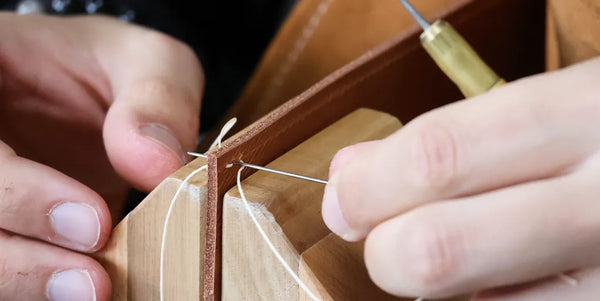 |
 |
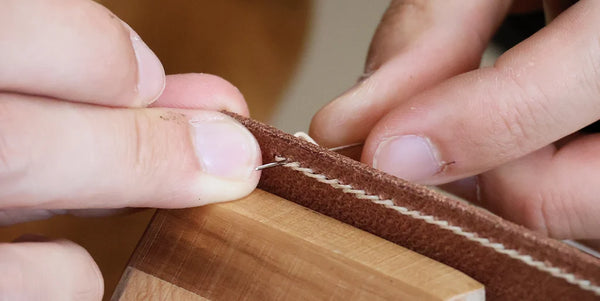 |
Continue until the end of the seam. Always keep the thread loop downwards and pass the needle through the top of the seam for a consistent result.
 |
 |
4. Finish the seam
At the end, two options:
- Make three backstitches
- Make a knot by passing the needle through the thread of the previous stitch
Burn the ends if using polyester thread.
You have finished your British stitch! ✨
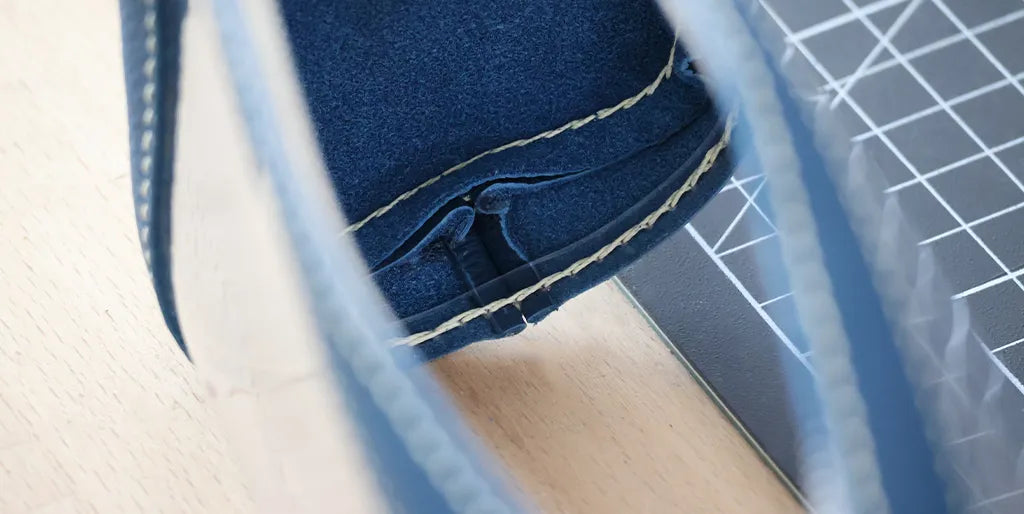
A tutorial to practice!
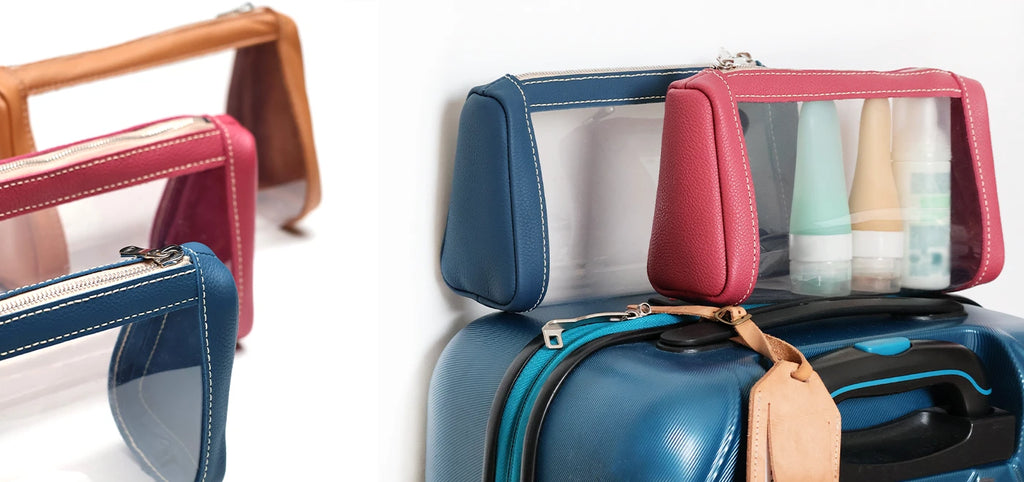
Discover the tutorial for sewing a transparent toiletry bag in leather and PVC. This bag is sewn with the British stitch, ideal for practice.