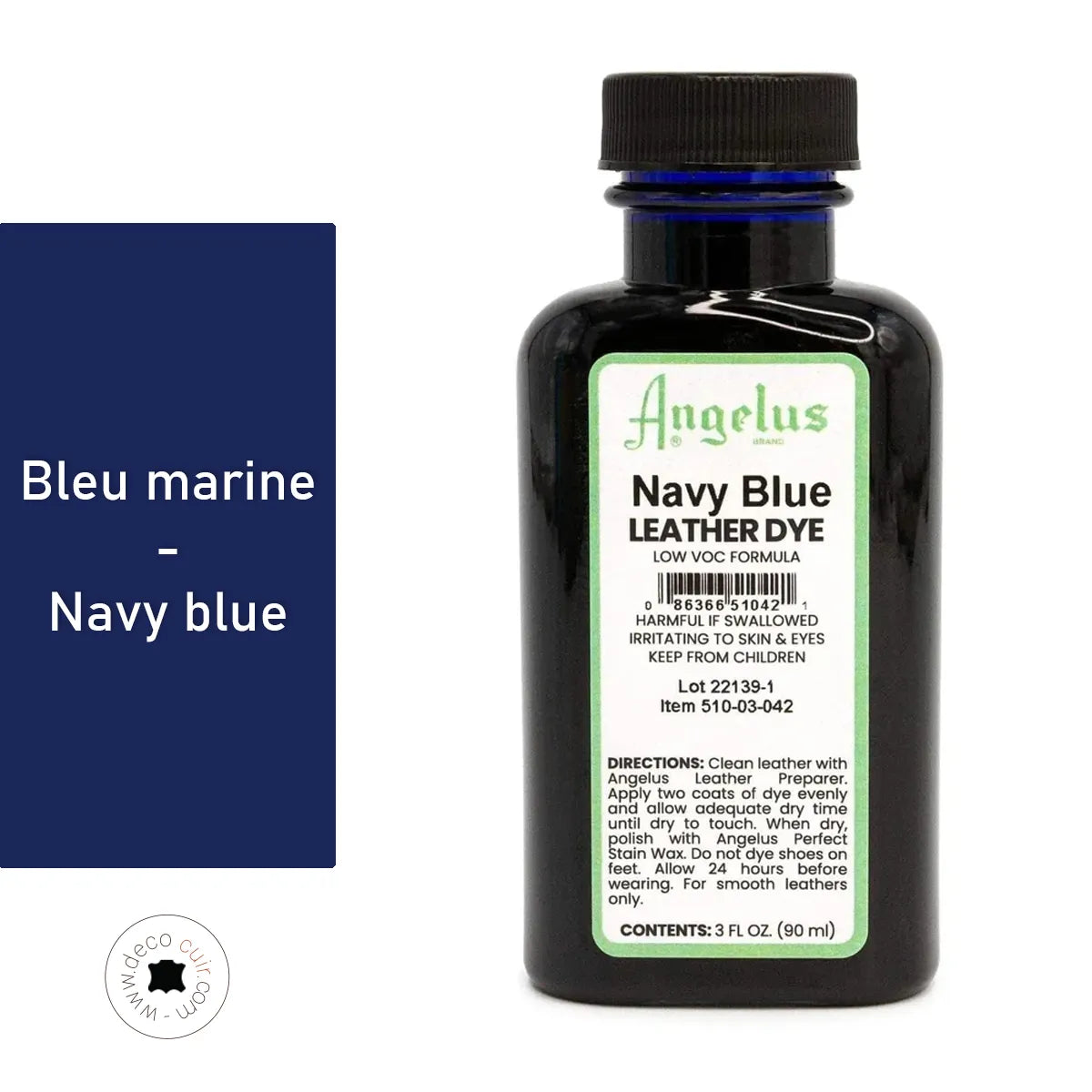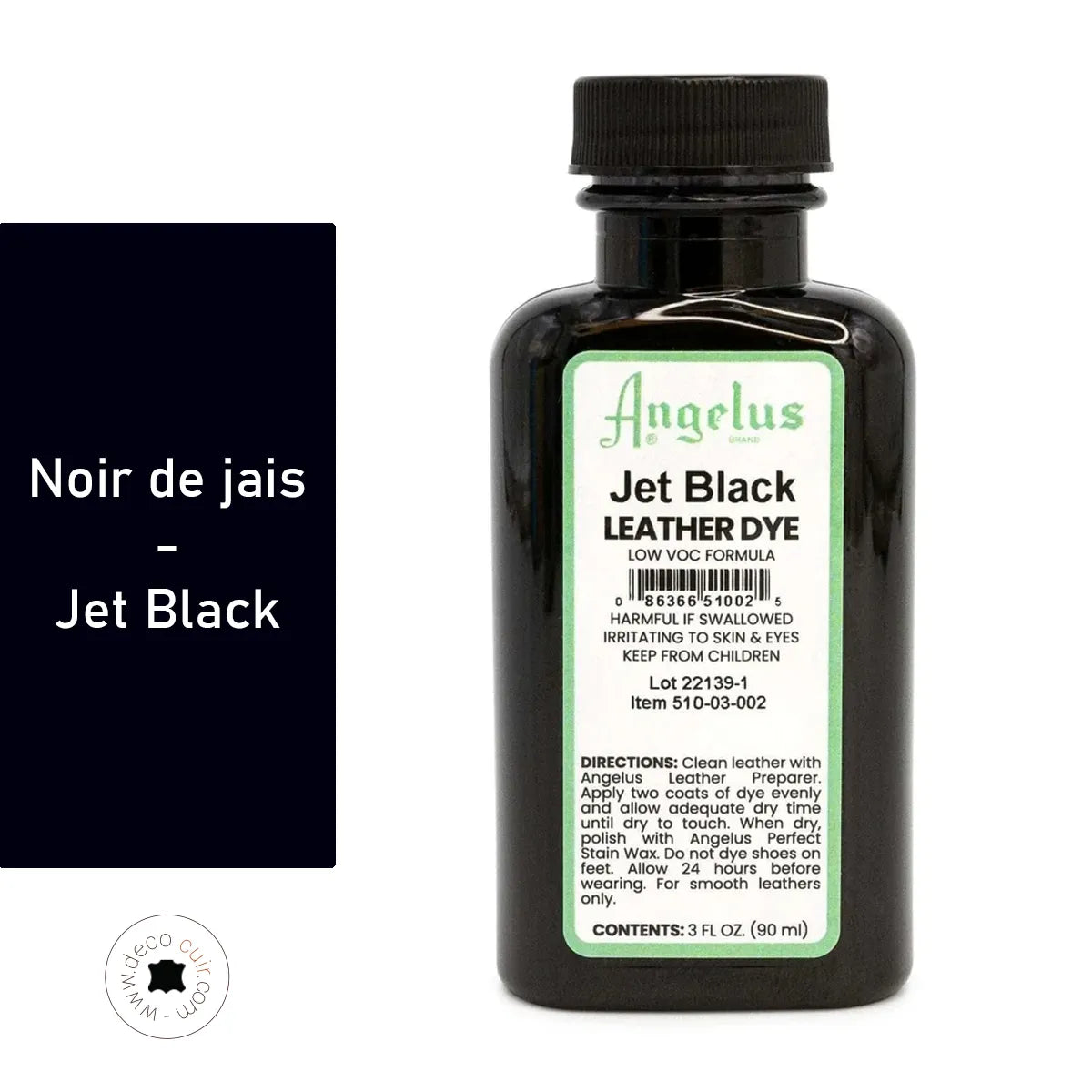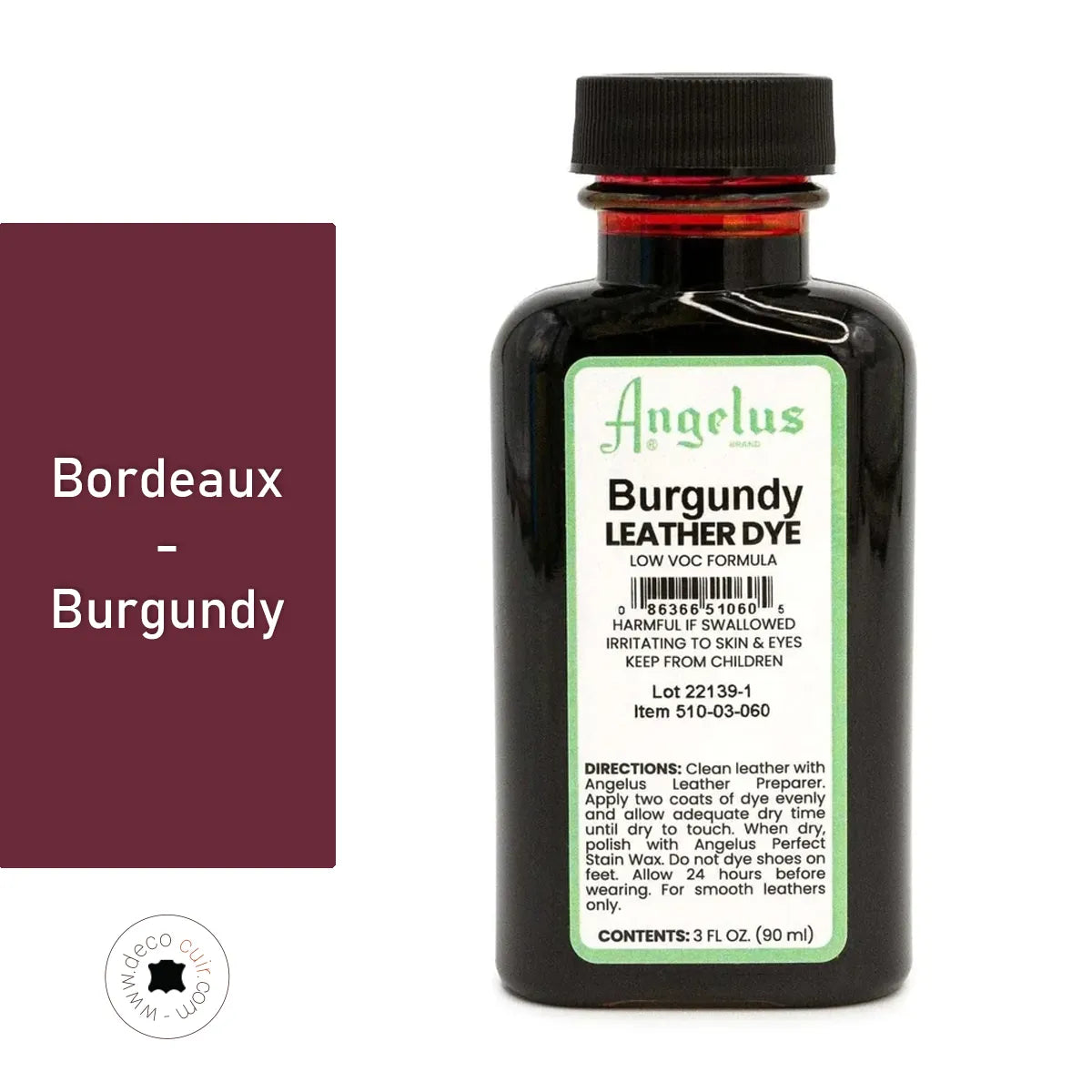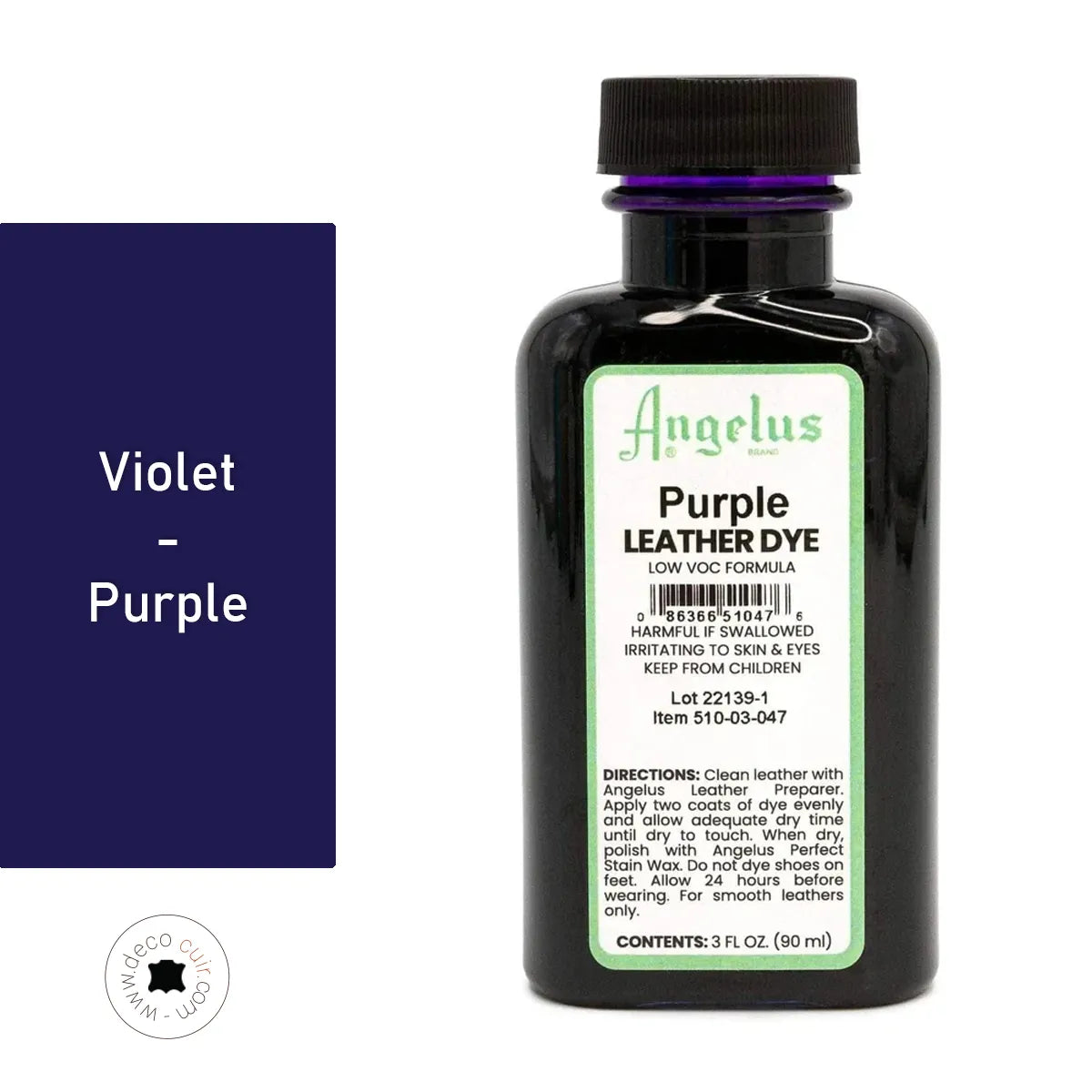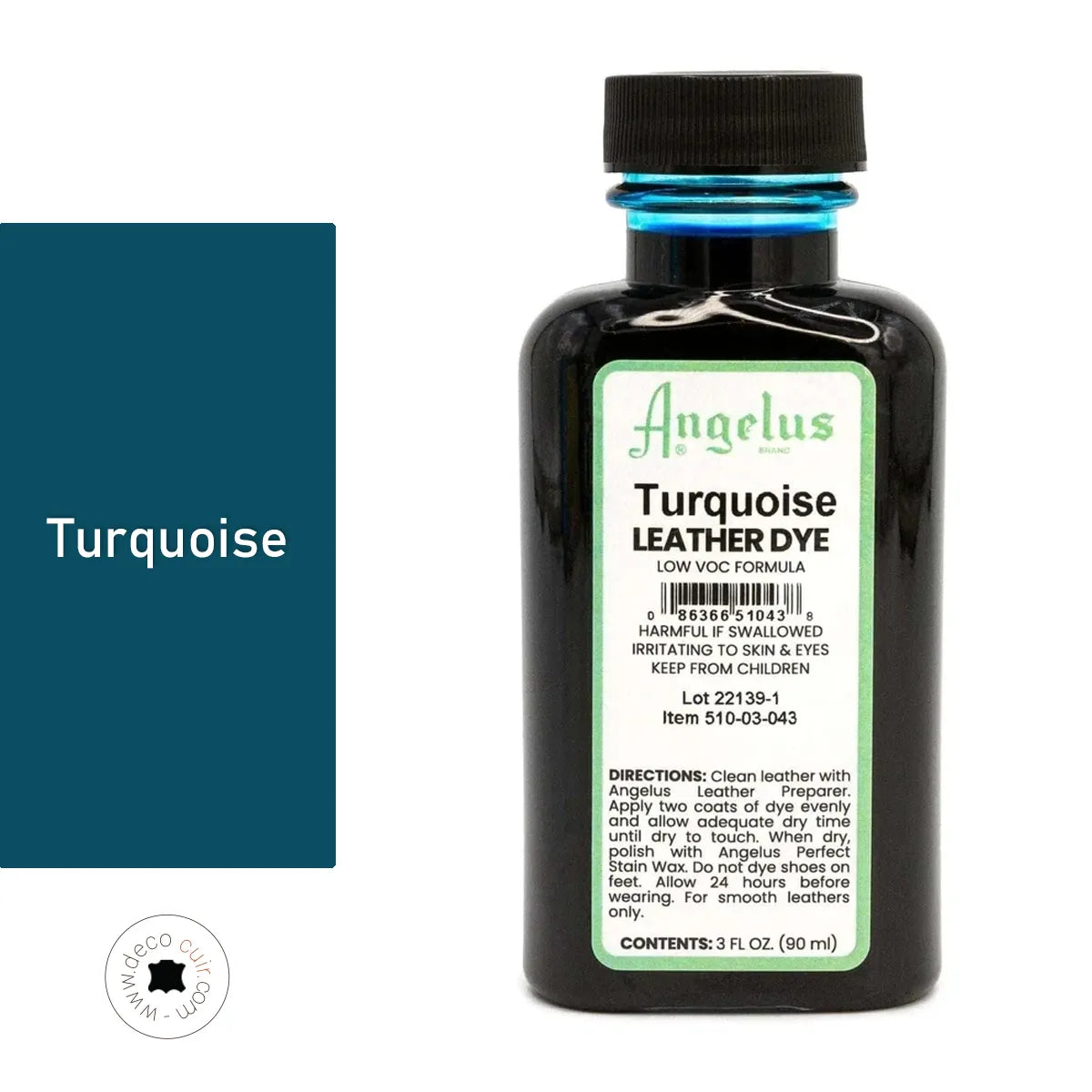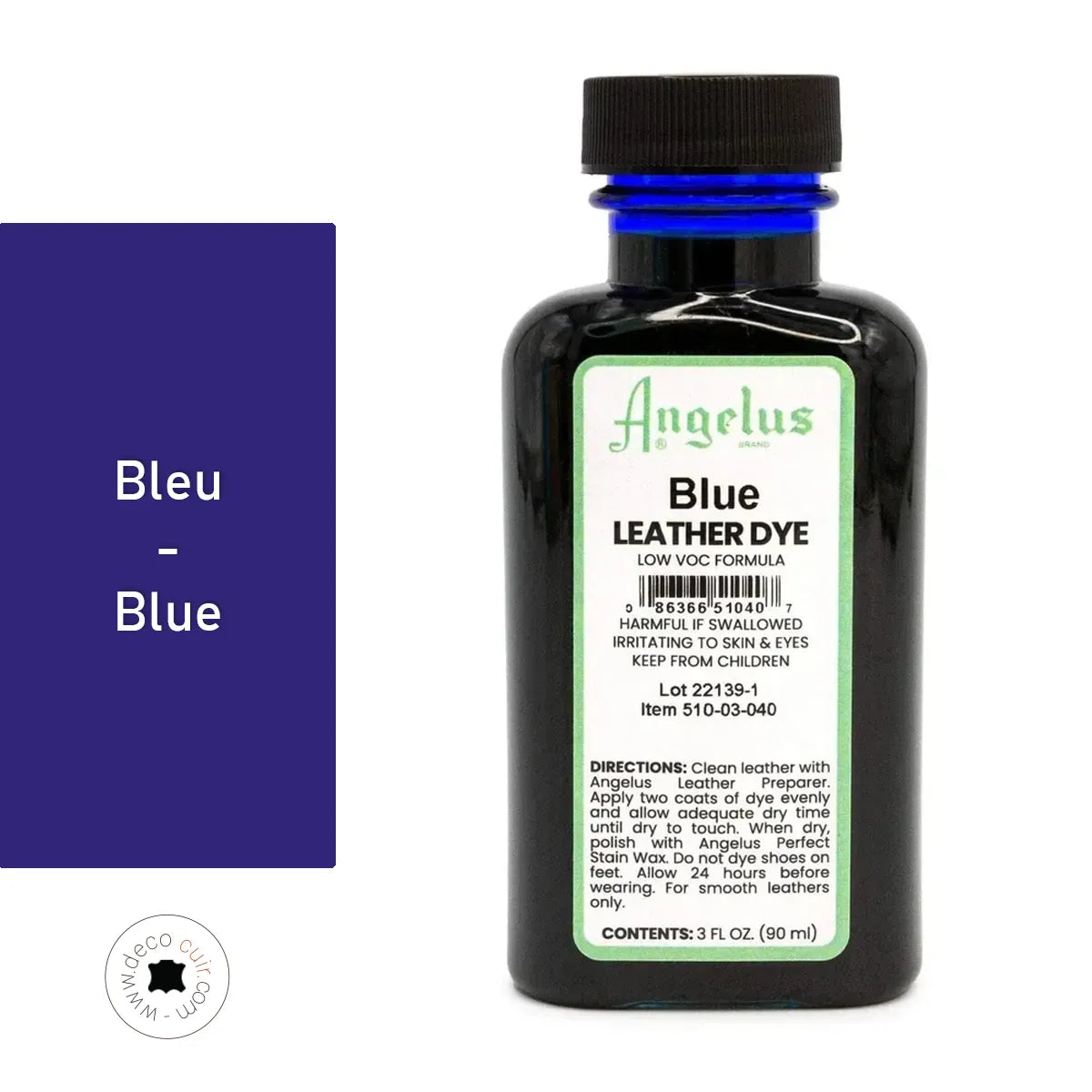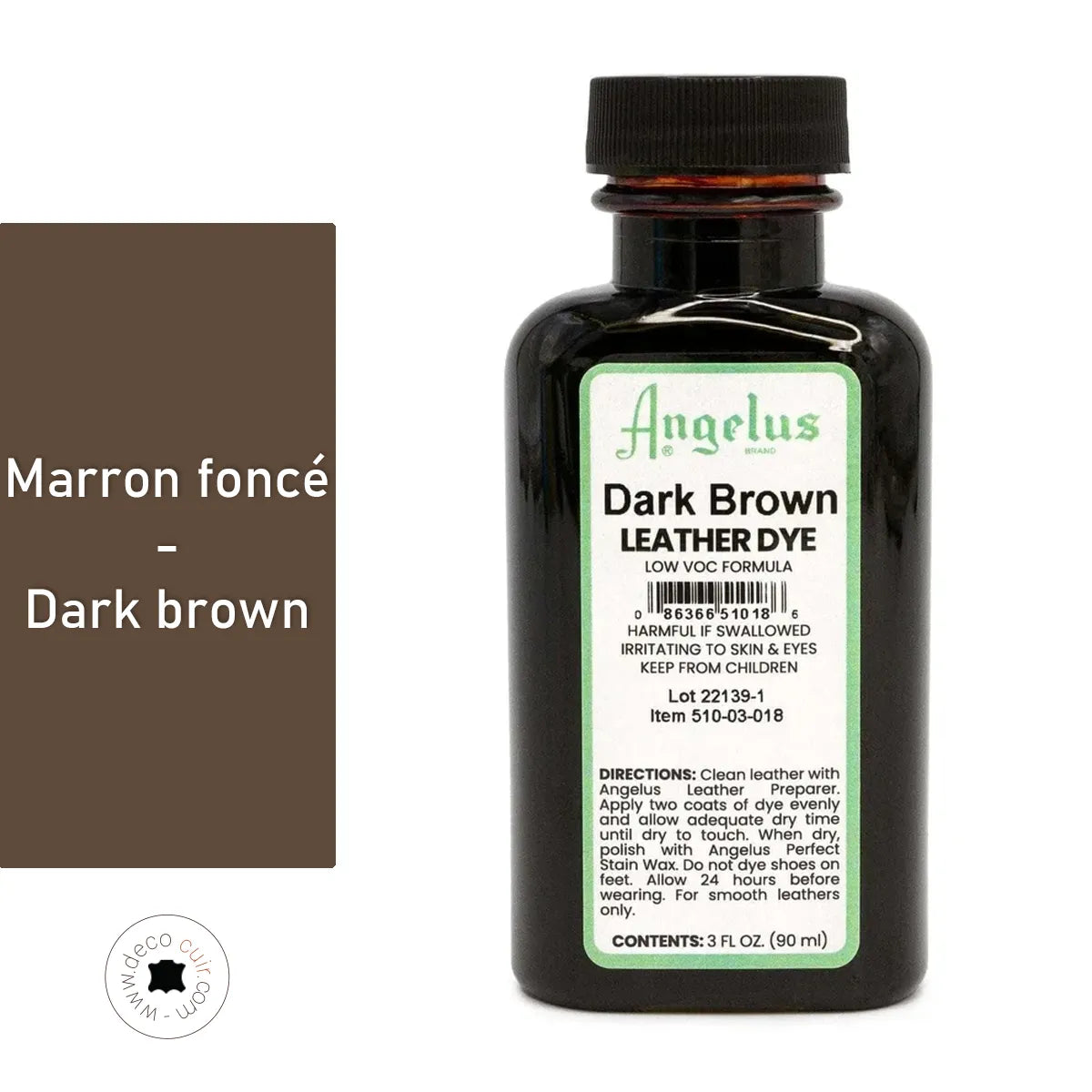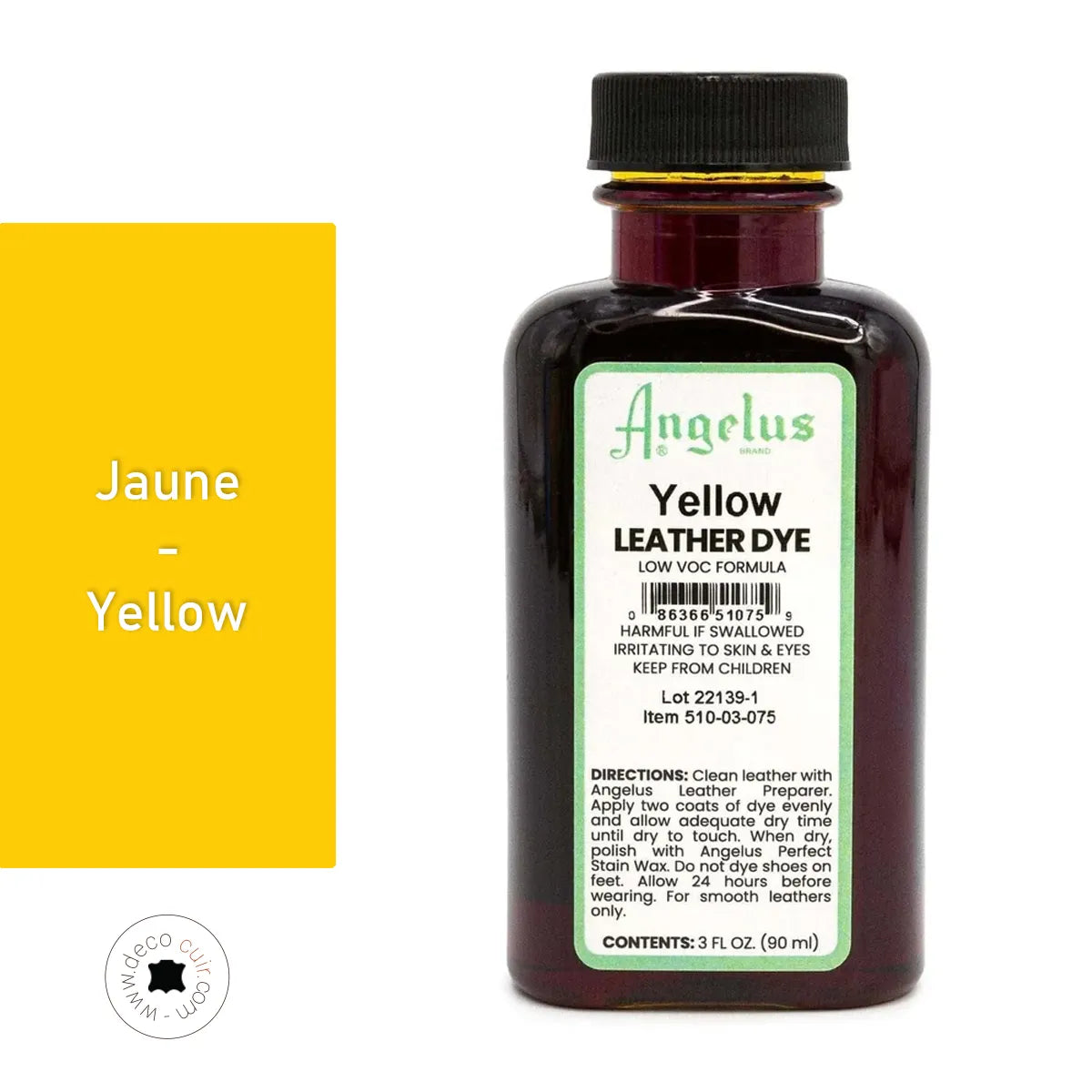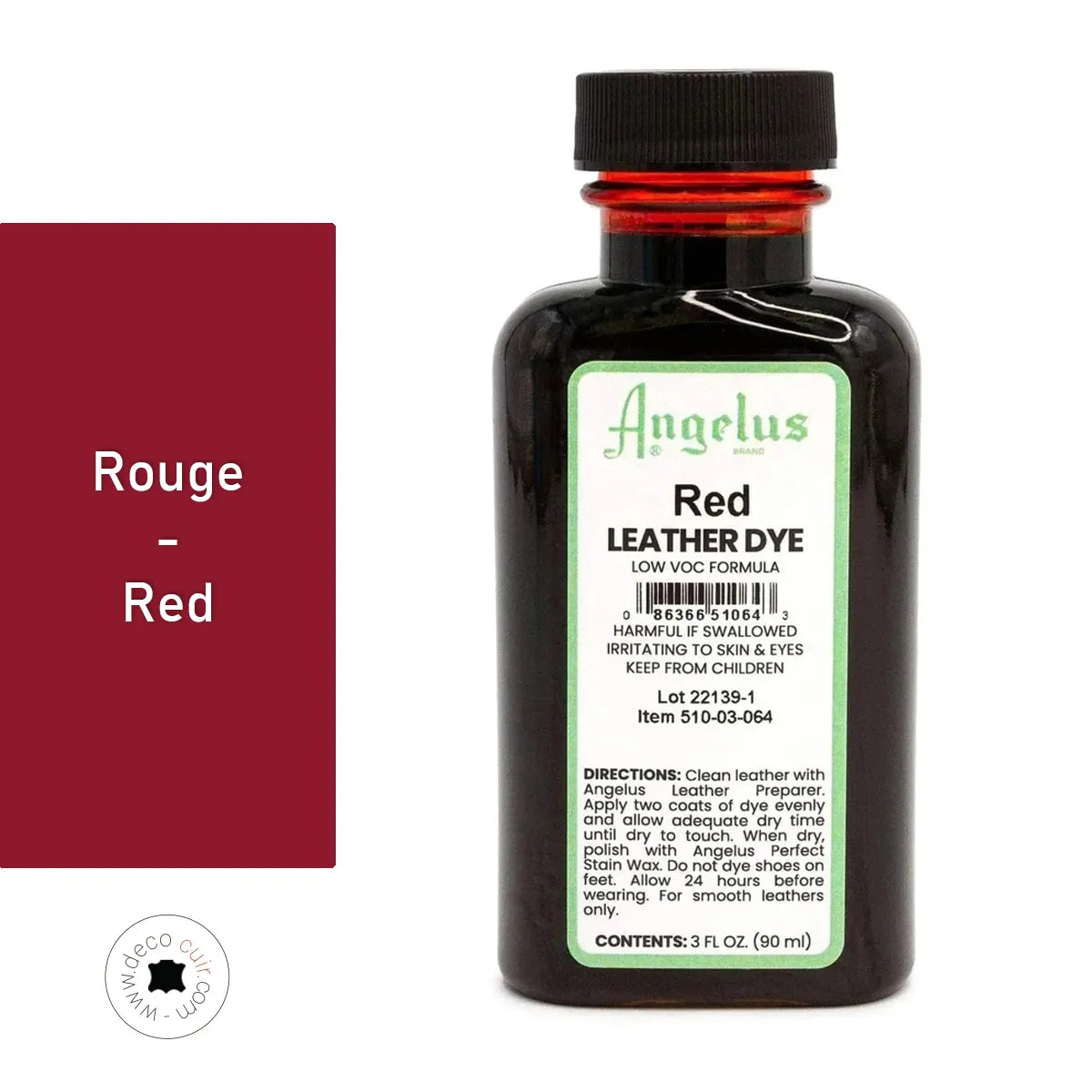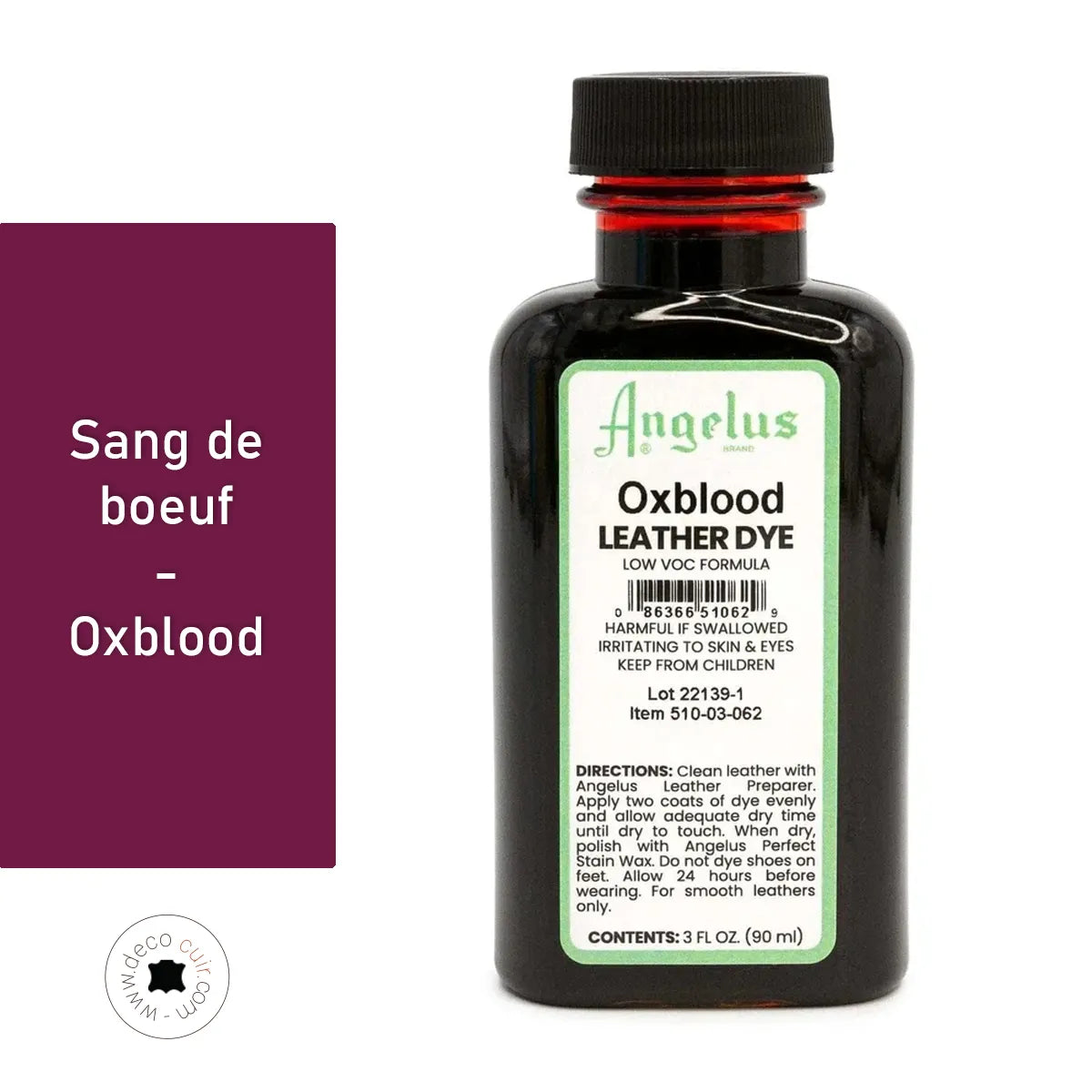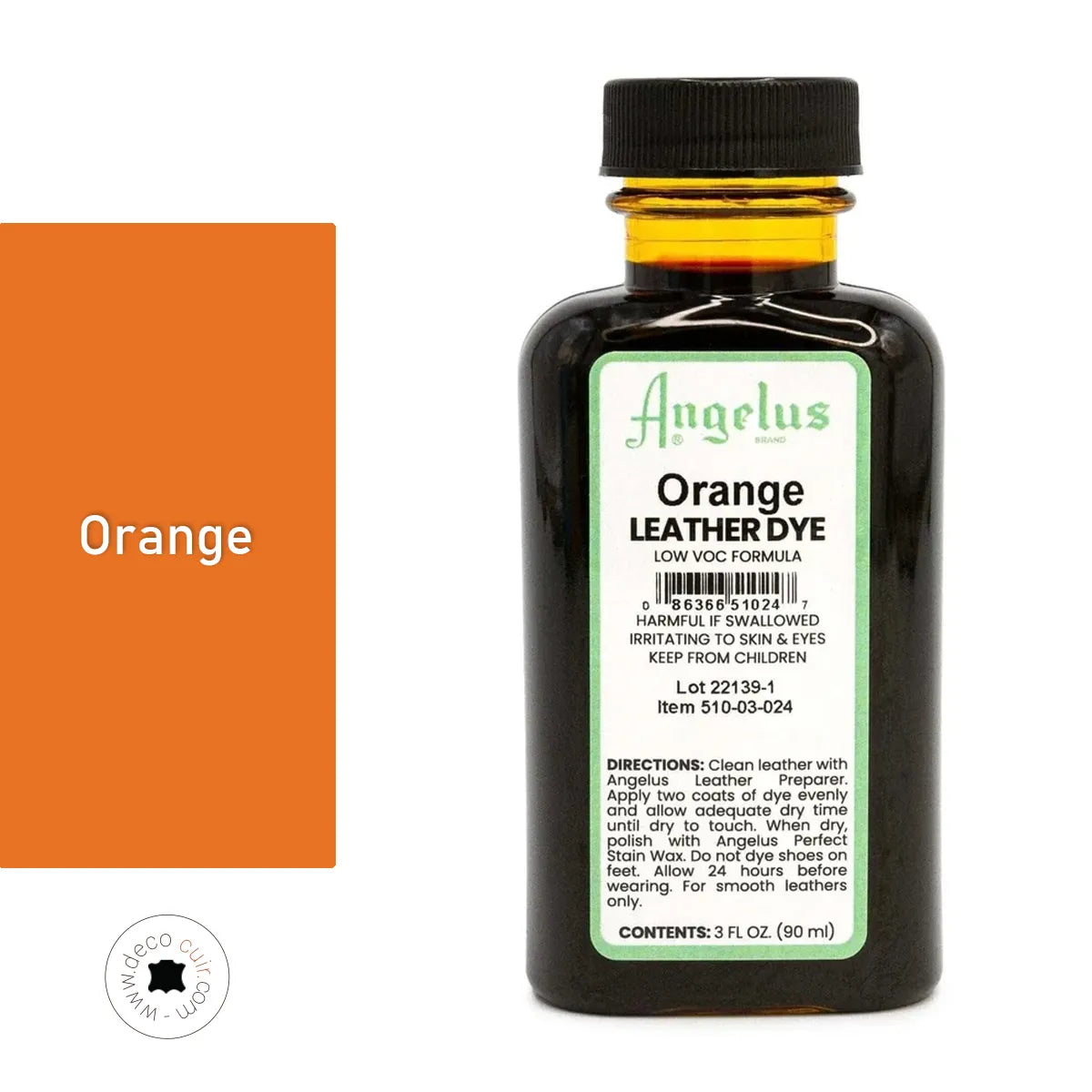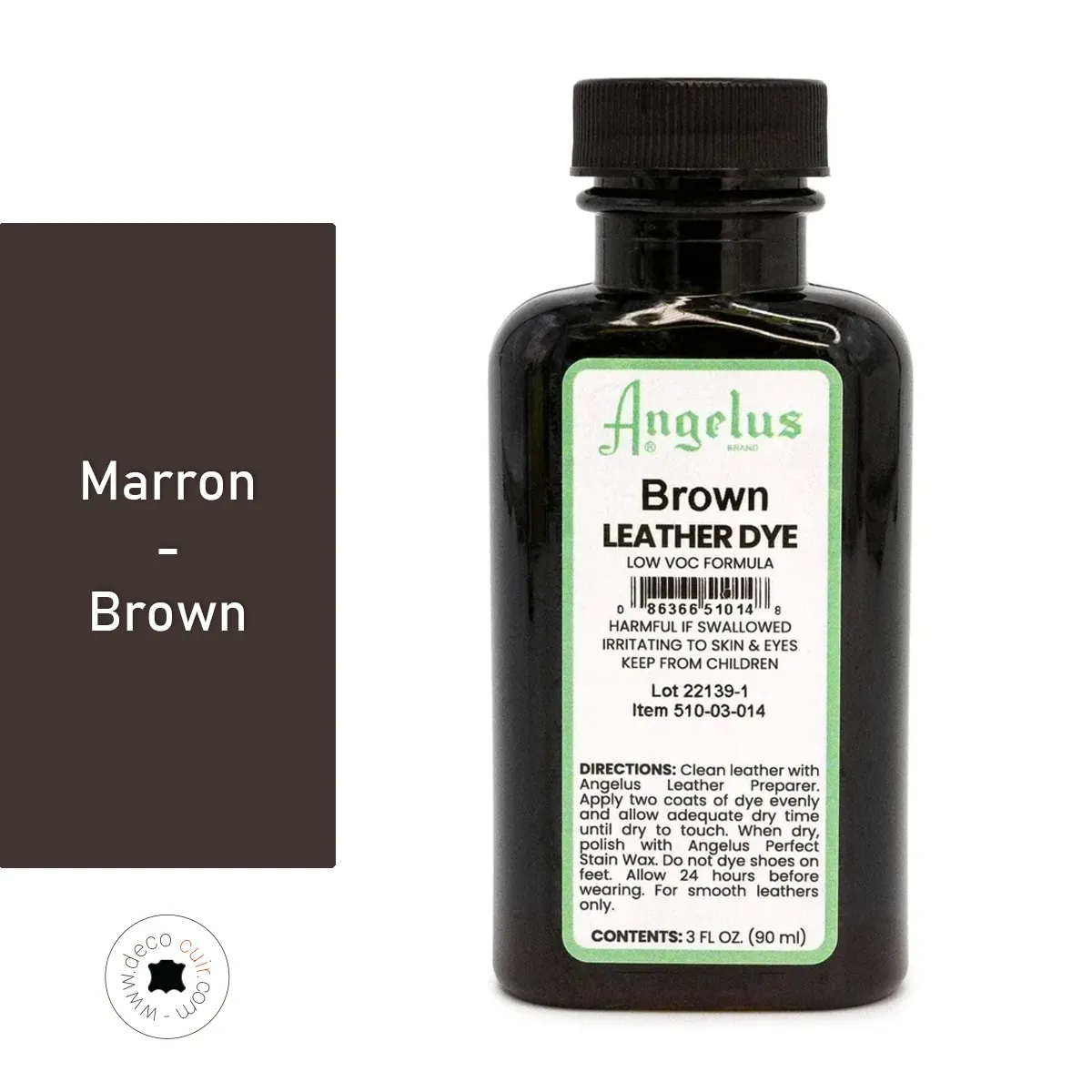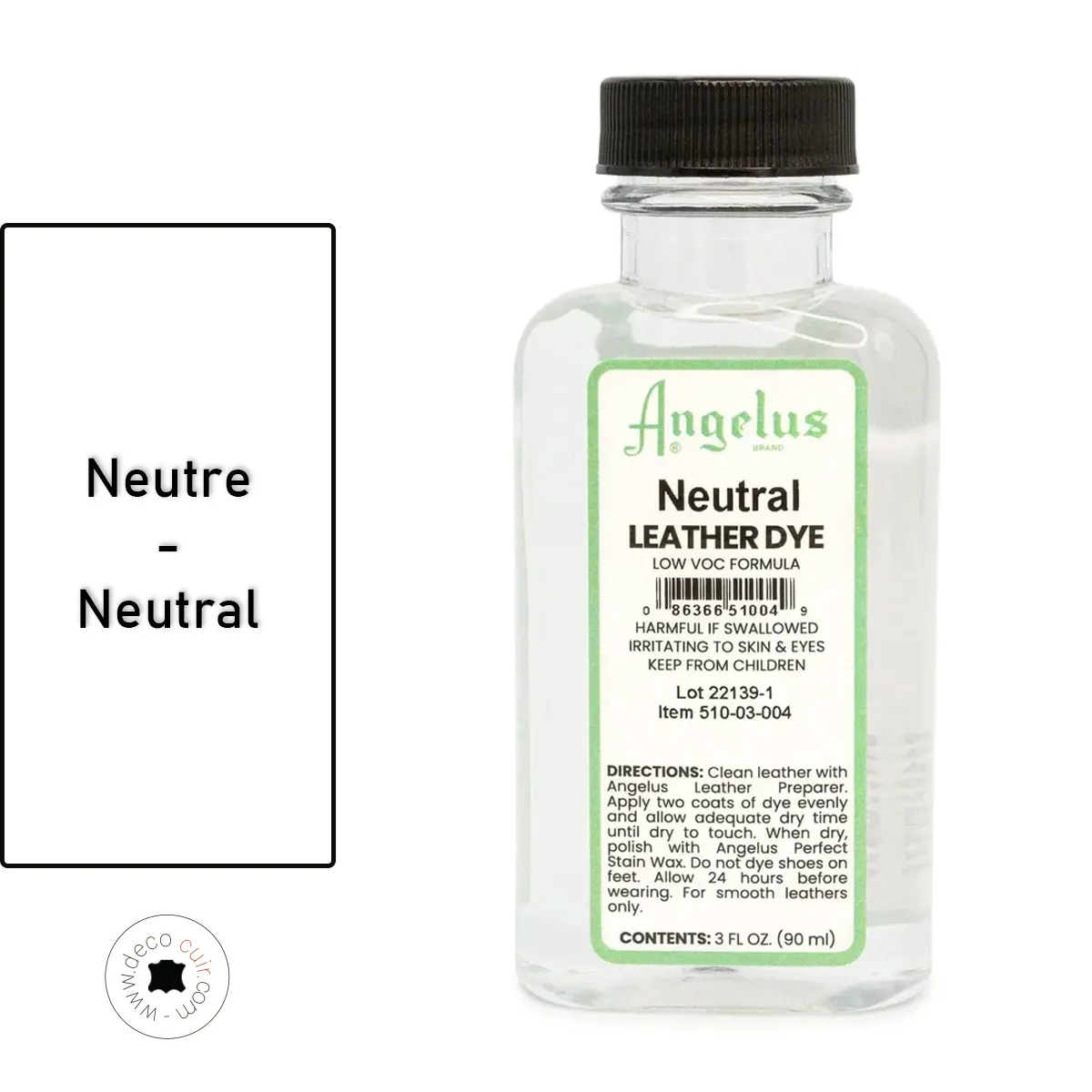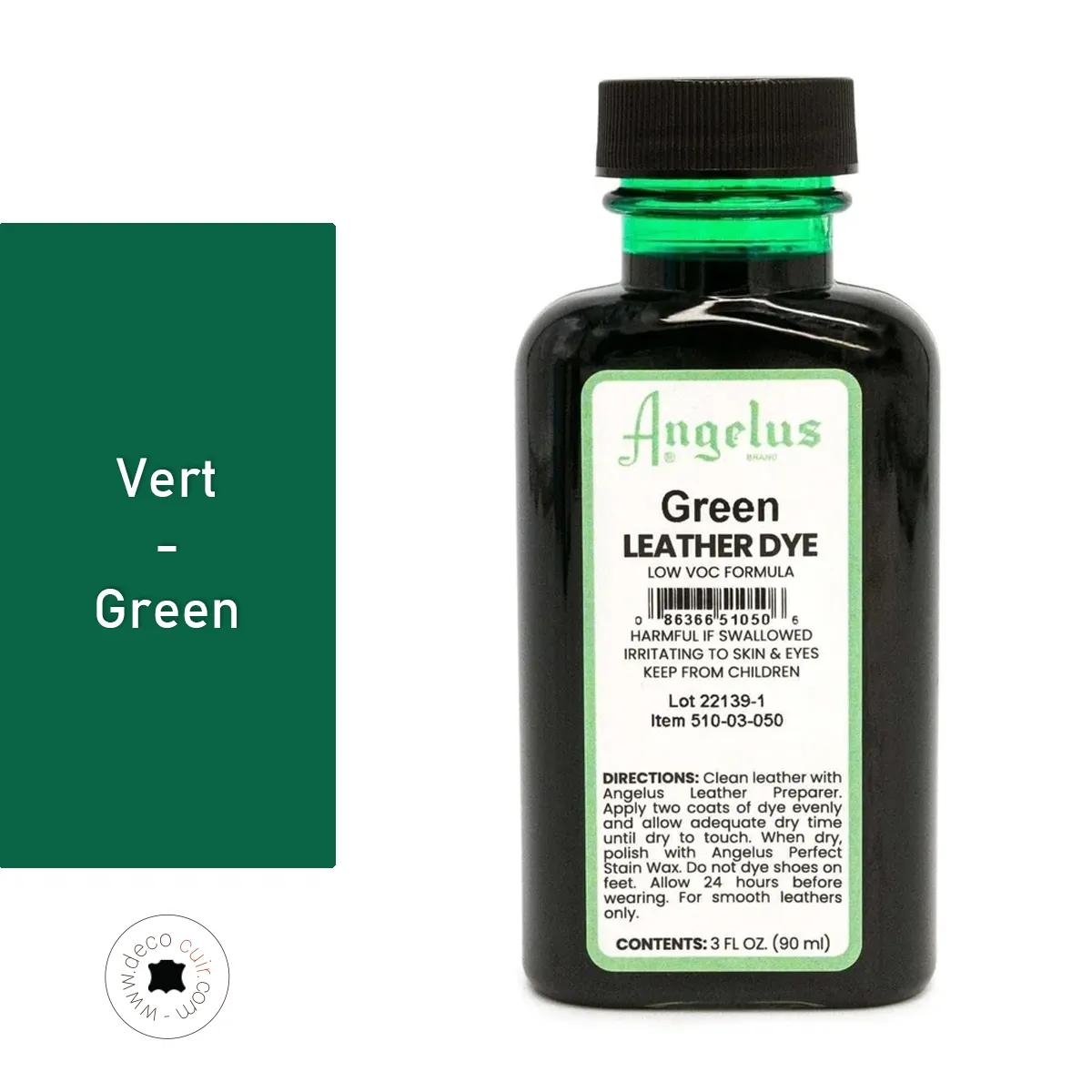
Discover Angelus's range of low-VOC (volatile organic compound) leather dyes at Deco Cuir. From deep black to vibrant yellow, including burgundy, turquoise, and green, these brilliant shades will meet all your project needs: sneaker customization, shoe or leather goods restoration, saddlery creation...
These dyes penetrate deep into the leather for rich, permanent color, without the harsh chemical odors of alcohol-based dyes.
Each 90 ml (3 fl. oz.) bottle comes with a ready-to-use wool dauber. The shades can be mixed to create custom colors. The Neutral dye can be used to lighten a color.
What's the difference between Angelus leather paint and Angelus leather dye?
Angelus leather paint deposits a layer of color on the surface of the leather. It covers any color.
Angelus leather dye penetrates deep into the leather fibers for permanent color. The final color therefore depends on the leather's original shade. It is necessary to use a dye darker than the original color (dye cannot lighten leather).
The choice between paint and dye depends on your project: - opt for dye if you want to preserve the natural grain of the leather. - choose paint if you are looking for an opaque finish or to obtain a color lighter than the original leather.
Dyes formulated with low VOCs are more environmentally friendly and healthier. They are more pleasant to use indoors because they do not release harsh chemical odors. Their formula is also non-flammable, a benefit for storage and handling.
The absence of alcohol slightly extends the drying time between each coat: 10 to 25 minutes for low-VOC dye versus a maximum of 10 minutes for alcohol-based dye. This longer drying time offers the advantage of greater
Whether you want to customize or restore a bag, belt, jacket, wallet, or shoes, this dye adapts to all smooth leather surfaces, without cracking over time. For use on nubuck, velvet, or suede leather, use Angelus Suede Dye.
How to apply Angelus low-VOC leather dye?
1. Clean and degrease the leather with Angelus Leather Preparer and Deglazer to ensure uniform impregnation and better color retention over time. The product will remove oils, greases, and old finishes. Allow the Angelus Preparer and Deglazer to dry thoroughly for at least 24 hours before dyeing.
2. Apply the dye with the provided wool dauber, a brush, a sponge, a dye pen, or an airbrush in a thin, even coat. Saturate the applicator well to dye a large surface. For a small area, use a smaller amount of dye or a brush for more precision.
Allow 10 to 25 minutes to dry between each coat and wait 24 hours for complete drying before handling and proceeding to the next step. Several coats can be applied depending on the desired color intensity.
3. Buff the leather with a cloth to remove excess pigments.
4. Apply a nourishing balm, polish (for shoes), or protective varnish after dyeing to nourish the leather dried by the dye and protect it.
We advise you to test Angelus leather dye on a leather scrap or a hidden area before full application to your leather.
Unlike some water-based leather dyes, it is not necessary to moisten the leather before dyeing. Water could dilute the dye and cause stains.
Angelus: A Popular Brand for Customization
Founded in 1907, the Angelus brand has established itself over time as a global reference for leather care and customization, particularly for sneakers and athletic shoes.
Made in the United States, Angelus leather products are recognized by professional artisans and DIY enthusiasts for their quality.